Mammootty and Mohanlal: Heroes of Kerala

I have never seen a Mollywood film all the way through, but I know all about Mammootty and Mohanlal. If you’ve spent any time at all in Kerala, you’ve met them: at the barber, the supermarket, the mobile phone shop, the inside of your rickshaw. From these various static vantage points, their visages keep a close eye on everything that goes on in any given town. It goes without saying that Mammootty and Mohanlal are always on TV in Kerala, often on more than one channel at a time. Wherever you go, whatever you do, the state’s two superstars are looking over your shoulder. And that is only the beginning of their influence.

…read more at The NRI

Bangin’ Out In Bangalore

It was at a packed intersection in Koramangala that the general absurdity of a night out in Bangalore first became apparent. Vikram, our stylish college student friend, was driving Em and I to the MG Road area and its assortment of bars and pubs, blasting an addictive dance track on the stereo, but the music wasn’t going to push us through this red light faster. As we waited for the lights to change, a woman in rags holding a crying child approached the window. “I don’t care if you can’t dance, just wanna see that ass bounce,” bellowed the speaker system as she held her hand out to us, then to her mouth, then to us again. I pushed a ten-rupee note into her hand and wound the window up. She stayed in the same spot as the lights changed and watched us as we pulled away, her flat expression unchanged by our encounter.

…read more at The NRI

The 00s: Film (Documentary) – Intro and 10-6

When it comes to the line between fiction and documentary film, I agree with Werner Herzog: such a line is unnecessary, and essentially imaginary.  Separating them as fabrication and fact takes something away from both: the truth that can be captured in a story written and performed well, and the art exercised by a director presenting the beauty of real events.  A far more worthwhile approach is to consider both simply as films.  You can learn as much about yourself watching a film from a Charlie Kaufman script as you can be entertained by Michael Moore polemic, right?  And anyway, when you have people like Herzog mixing truth and untruth in all of his films – documentary or otherwise – to quite magical effect, it is sometimes impossible to choose which category the film you’re watching belongs in.

Nevertheless, bookstores need sections to separate one genre from another, and blogs do too.  So here we are.

The 00s brought much wider recognition and appreciation for documentary cinema, and I would suggest two chief factors in this.  The first is called Bowling for Columbine, and I’ll talk more about that further down the page.  The second is called the Internet, opening up a massive global audience for all kinds of films and an ideal platform for docs – the proliferation of other media and information online makes it quick and easy to obtain as much or as little information about something as you would care to.  Added to that, making a film is much simpler nowadays with digital video and cheap and powerful editing software, so legions of budding filmmakers are able to produce something for nothing and then put it online for the world to see.

I’m one of those budding filmmakers.  Here are ten documentary films produced in the 00s which eventually inspired me to get started on my own movie (coming soon, watch this space…)

10. Jackass Number Two (Jeff Tremaine, 2006)

Weren’t expecting that, were you?  The Wikipedia page states, “Jackass Number Two is a compilation of various stunts, pranks and skits, and essentially has no plot.”  A remarkable document of extreme behaviour, voyeurism and (arguably) Dadaism, it is also one of the most entertaining films of the 00s – but only if you have the stomach to watch Steve-O attach a leech to his eyeball, or Chris Pontius insert his penis into a snake’s cage.

9. Darwin’s Nightmare (Hubert Sauper, 2004)

Perhaps the 00s’ most depressing film; certainly the one which made me feel most sick and sad at the state of the world and the human race.  Lake Victoria used to be a typical African lake, basically as it would have been millennia ago, until Europeans introduced the Nile perch – a particularly large and tasty fish – into its waters.  Within years the ecological balance became completely unhinged, and as this film shows, the ripples reach out from the water and into the lives of every person living in the area.  While I sometimes pine for those innocent days of ignorance before I saw Darwin’s Nightmare, this is a desperately important film that everyone who professes to care about their fellow man owes it to themselves to see.

8. Waves (Li Tao, 2005)

Read my full review for a closer look, but where sweeping statements are concerned, it isn’t too much of a stretch to say that this effort from first-time director Li Tao was the most enlightening and inspiring film to come out of New Zealand in the 00s.  If nothing else, it was certainly the most moving, and offered a restrained yet deeply intimate portrait of the life of teenaged Chinese going to school abroad.  This is something that happens everywhere from Wellington to Washington, and Tao has made the film about the experience.  After seeing it, I prayed that it would reach as wide an audience as possible so the greatest number of eyes could be opened, and minds broadened.  The DVD can be ordered here.

7. Bowling for Columbine (Michael Moore, 2002)

Bowling for Columbine was the film that brought documentaries (back?) into the mainstream.  Grossing millions and garnering an Oscar, it cut a swathe through the film market and brought the masses to see that they could be entertained as they were being informed.  In many cases, it showed people such as myself that there are alternatives to mainstream media.  Its biggest impact, however, was probably to promote Moore’s personality to the point where his next film would gross over US$100 million – staggering for a ‘documentary’ – and his movements and polemic became worldwide current events.  In the wake of its cultural relevance, it might be easy to forget how good Columbine is; while Moore occasionally messes with the truth in order to keep the viewer hooked, he crafts a superb viewing experience that keeps you amused, shocked and riveted for the duration.  The best moment comes when Marilyn Manson has his turn to speak and, with no pomp whatsoever, quietly sums up the entire movie.

6. DiG! (Ondi Timoner, 2004)

Truly demonstrating the benefit of hard work and dedication, Timoner spent seven years following The Dandy Warhols and The Brian Jonestown Massacre and managed to edit weeks of footage into DiG!, one of the best films about music.  It has at its centre the towering talents and ego of Anton Newcombe, who would surely be a bigger star than the Dandies’ chiselled frontman, Courtney Taylor-Taylor, if he followed his rival’s music business motto: “if it’s good, it’s fun; if it’s bad, it’s funny”.  The film follows as the two bands start off as close friends, living and jamming together, then steadily drift apart under the gaze of Newcombe’s increasingly unhinged wild grin.  Tambourine player Joel Gion’s perpetually amused attitude is a joy for every moment that he’s on screen.

For the second half of the list, click here.

Everyday Mornings on the Indian Railways

Taking advantage of the extraordinary Indian Railways is a regular component of my life in Kerala. Being a hardworking Technopark salaryman I have to catch the train to and from work most days, which in and of itself is not all that remarkable; people do that all over the world, from Tokyo to London to Los Angeles. What makes my journey unusual, as I’ve mentioned before, is the fact that I’m the only regular who is a white man – the saip in their midst. How much I should interact is a constant dilemma as I try to balance the expectations of whoever it is I talk to, the many others watching, and indeed, the expectations I have of them.

…read more at The NRI…

Profile: Indra Nooyi – Chairperson & CEO, PepsiCo

The most powerful woman in the post-millennial business world is an NRI. It’s official. Forbes says so. For four years running, the distinguished business magazine has ranked Indra Nooyi at the top of its Most Powerful Women in Business list, as well as placing her third on its Most Powerful Women list in 2008 and 2009. She is the chairperson and CEO of PepsiCo. She shares a birthday with Bill Gates. She counts Henry Kissinger as a close personal friend. She is married with two daughters, one adult and one teenaged. She is an avid supporter of the New York Yankees. Still, while a profile of this remarkable woman can call upon any number of career highlights and snippets of family information, one question remains in doubt: who is the real Indra Nooyi?

…read more at The NRI…

The 00s: Overlooked or Underrated Films – Part 2

I realised as I was writing up Part 1 that the films on this list may be overlooked or underrated, but none of them are obscure.  Indeed, they are all basically American movies.  I guess that reflects how many films are made in America, and particularly how many of them come to global attention; as a result, there are more American films that slip by without due notice.  Fortunately, I have a sieve.  Onward…

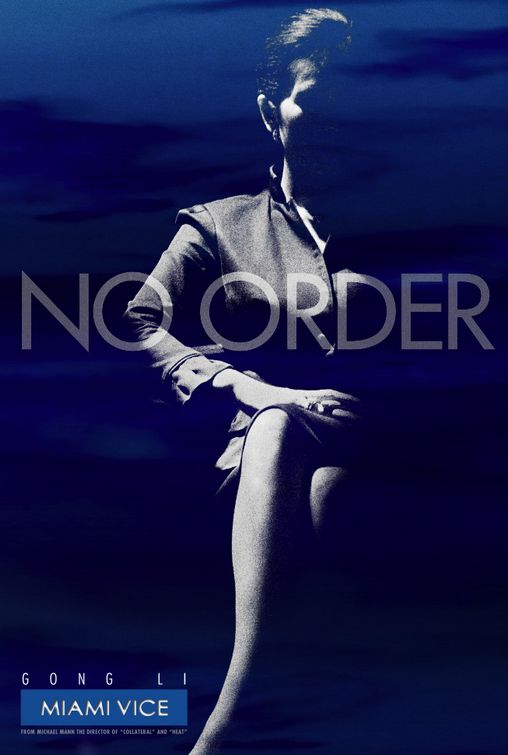
Miami Vice (Michael Mann, 2006)
Collateral, as Mann’s first DV-at-night opus, won the plaudits, but while the foundation of Miami Vice – its script – is shakier and less balanced than the handheld camerawork, for me it is a much better film.  If you are a viewer who appreciates grand moments or, as Herzog puts it, ‘adequate images‘, this epic ode to mateship and violence satisfies for its entire running time.  Strangely for a big-budget buddy action movie, it has more in common with Le Cercle Rouge than Bad Boys 2… though there are elements of both styles at work here.  Watch it with an open mind and try to not to worry about the plot, which really is just a bare frame on which to hang thick mood and atmosphere.  And that DV camerawork by Dion Beebe?  Mesmerising.

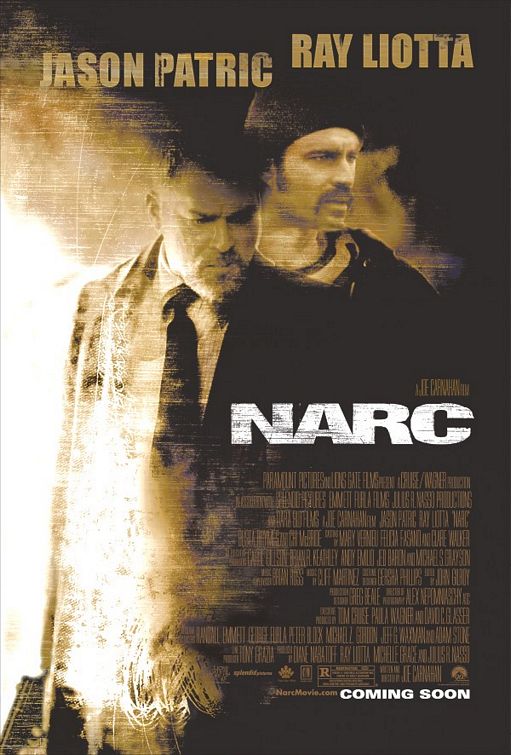
Narc (Joe Carnahan, 2002)
Carnahan’s chief reference point for his debut film was The French Connection, and it’s not hard to see the best of 70s crime flicks in Narc.  Carnahan has since expunged the credit on his CV with his offensively poor follow-up, Smokin’ Aces, but here the balance between script, character, acting and technique was just right.  Opening with perhaps the best chase scene of the 00s (definitely think twice about your tolerance for hyper-real violence before clicking that link) and then following Jason Patric’s weary cop through an investigation into the death of near-psychotic Ray Liotta’s detective partner, Narc pulls no punches and leaves a deeply satisfying imprint.

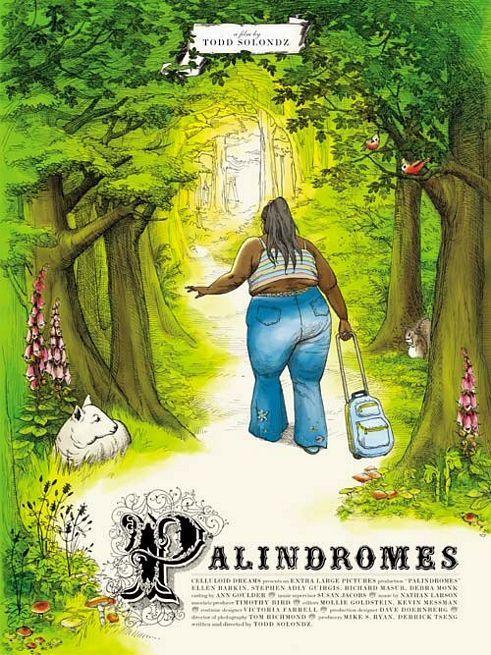
Palindromes (Todd Solondz, 2004)
Solondz is best-known for his study in audience discomfort Happiness, but admirers of that film will understand that its warmth lies in how seriously it takes its cast of misfits, and as such will find plenty to enjoy here.  Again, Solondz constantly skirts the ‘too-far’ line, but in this story of a teenage girl (played by 11 different actors) who wants nothing other than to have a baby, he hits the mark on a number of truths surrounding the Abortion Question and the notion of free will.  Like Kinsey, this is not a film for water cooler dissection, but an open-minded approach to watching it brings great rewards.

Ravenous (Antonia Bird, 1999)
(OK, not technically the right decade, but it didn’t gain a following until the 00s, and this is MY list.)  Ravenous is one of the most unusual and fascinating films I’ve seen, and one of my most adored.  A story of cannibalism during the Western expansion in 1800s America, it is funny, dark, graphically violent and strangely poignant.  It draws you into its off-kilter world from the get-go, and if I were a film academic, I could find much to extrapolate from its frequently hinted-at theme of opposing forces duking it out for good and evil.  The key to its success is its score by Michael Nyman & Damon Albarn, about which I have written before, which you will remember long after the credits end.

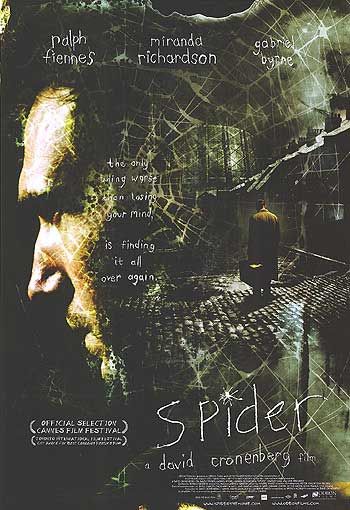
Spider (David Cronenberg, 2002)
Before he made the most wildly overpraised fail of the decade, Cronenberg produced this low-key stunner with Ralph Fiennes as a mumbling schizophrenic (what is it with me and schizophrenia?) and his battle with his memory.  Cronenberg displays an impeccably sure hand and Fiennes is excellent, but Miranda Richardson steals the show playing Fiennes’ mother, his father’s mistress, and his landlady.  A brooding, masterful study of an outcast’s reality.

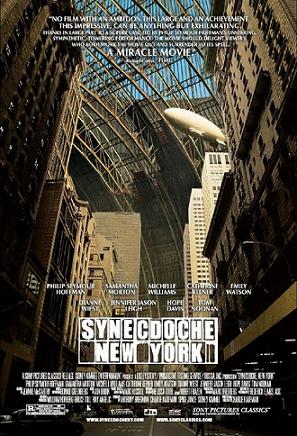
Synecdoche, New York (Charlie Kaufman, 2008)
I HATED this film the first time I watched it, finding it to be the most self-consciously gloomy offence to the medium in years; watching it again with my girlfriend, she gently coaxed me to see it with open eyes and by the end of that second time through, I knew I would never shake it from my mind.  Roger Ebert quipped that it’s a film you should only see if you’ve seen it already.  As such, it demands a degree of familiarity with its meta-referentiality and intensely dark subject matter – an existential nightmare, with loved ones becoming distant and bodily functions shutting down – so that its deep, resonant beauty can come to the surface.  I’ve since watched it twice more, and it grows in stature every time as it reveals more of itself.

Wet Hot American Summer (David Wain, 2001)
The funniest comedy of the decade – I never thought I would be so tickled by a summer camp movie.  Those with a taste for absurd humour are guaranteed huge laughs – the jokes come thick and fast, varying between subtle and completely over-the-top, and all are delivered to perfection by an ensemble cast led by Janeane Garofalo, David Hyde Pierce and Michael Showalter.  My favourite character, though, would have to be Paul Rudd’s Andy, the classic doesn’t-give-a-shit hunk with the best dumb grin in movie history.  Oh, and it has an awesome soundtrack.  Just watch it already.

Imprints: ‘A Prairie Home Companion’, LCD Soundsystem – ‘This Is Happening’

A Prairie Home Companion (Robert Altman, 2005): Altman’s final film, about the end of a famous radio show. Light and breezy but with an emotionally resonant core. Wonderful performances from an all-star ensemble cast. Death, or at least ending, casts its shadow over every scene – sometimes literally. Recommended.

LCD Soundsystem – This Is Happening: ‘Dance Yrself Clean’ kicks things off in memorable LCD style – maybe James Murphy’s best lyrics yet – but then oscillates between the sublime and the ridiculous, much like ‘Sound of Silver’ did, but more frequently and with deeper troughs. If ‘Dance Yrself Clean’ is a career highlight, ‘Pow Pow’ is a never-to-be-forgotten embarrassment. Worth a look.

The 00s: Overlooked or Underrated Films – Part 1

A number of films are released each decade that deserve a good deal more positive attention than they get.  These films are awarded that great consolation prize of the movies, entry to the hall of the underrated or overlooked, for many reasons.  A hopeless and misleading marketing campaign can doom the film’s intention.  It might simply not have enough money behind it to generate enough interest for a successful run. The elite at Cannes or Venice might choose to pass it by in favour of overpraising something less deserving.  In rare cases, such as in that of the first film listed below, a director’s runaway infamy might overshadow his masterpiece.

The following is my list of underrated works of the 00s, and they were made with widely varying intentions, perhaps more than my main list of the best of the 00s.  For one, comedy is much better represented here (good God, I’m becoming the Oscars).  I would be quite happy to put many of them in the ‘best ofs’, and dare say I would prefer to do a marathon of these than the generally drier, heavier set in the other list, but they are here because they each, as far as I can perceive, warranted closer inspection than they were allowed. So, in alphabetical order…

Apocalypto (Mel Gibson, 2006)
I went gleefully to the theatre when Apocalypto was released, eager to see what deliciously violent mishmash Mad Mel had thrown together.  In the build-up to its release, the trailer for this historical Mayan epic included a shot of Gibson himself hangin’ with the boys, and a shot had been leaked of a Holocaust-style pile of bodies with Wally, from the ‘Where’s Wally?’ books, obvious among them.  Added to that, Gibson was charged one of the more memorable DUIs of the decade, and his previous film was The Passion of the Christ.  Believing I would love every minute, but with a healthy ironic detachment, I suddenly found myself riveted and in awe: here was a film with extremely pure and genuine intentions of telling a simple universal story, telling it with considerable filmmaking skill, and never letting you leave the edge of your seat.  Its HD photography looks phenomenal and at nearly two and a half hours, it isn’t a moment too long.  One of the best action films of this, or any decade?  Absolutely.

Birth (Jonathan Glazer, 2004)

There were few positive voices among the scathing mass of critics as Birth started getting its first notices. I won’t go so far as to say that the naysayers missed the point, as they might simply place the highest emphasis in their film analysis on believability. For me, it is atmosphere: a sense of being involved with something, being drawn into a specifically composed world of sound and vision. From the simple, beautiful prologue – we follow a man running in snowy Central Park and watch as he has a heart attack, and is perhaps reborn, with the accompaniment of Alexandre Desplat’s extraordinary score – Birth is riveting and not a little disquieting, with Nicole Kidman’s best work at its centre.

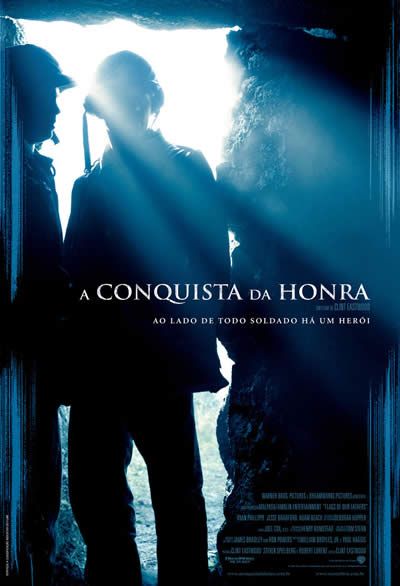
Flags of Our Fathers (Clint Eastwood, 2006)
Its companion Letters from Iwo Jima may be the better film, but the idea here is much more interesting: what is the reality of an iconic image of war (in this case, the American flag-raising on Iwo Jima), and how does the dichotomy between that reality and how it is presented back home affect the soldiers involved?  With such wide scope, a lesser director could have crashed and burned trying to keep all the plot strands in focus and avoiding jingoism.  Fortunately, Eastwood’s sure hand guides Flags of Our Fathers through a deeply satisfying and thought-provoking series of events with an appeal that welcomes the whole world to listen, not just Americans.

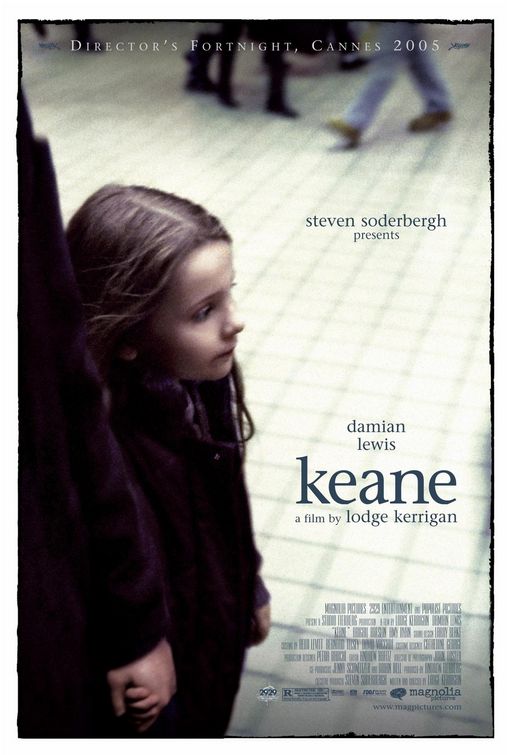
Keane (Lodge Kerrigan, 2004)
A brilliant meditation on mental illness and paranoia, handled with rare sensitivity.  Damian Lewis’ portrayal of the title character may go to the edge, but never over the top, and Abigail Breslin (of Little Miss Sunshine fame) shows her natural talent and ease in front of the camera.  Worth seeing, at the very least, for one of the cleverest cuts of the 00s, from one character to another (?) – something I had to rewind and watch again a couple of times so I could marvel at it.

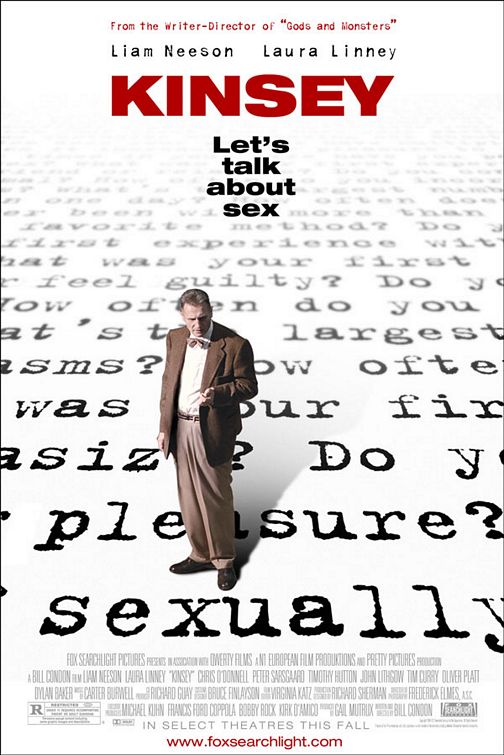
Kinsey (Bill Condon, 2004)
Biopics remain one of the chief stocks-in-trade for the Hollywood machine, alongside those blasted sequels and comic books, and it felt like the 00s were dealt with more of them than any previous decade.  While Ray, Walk the Line and Capote et al received the most attention and plaudits for their mostly clean-and-easy approach, this look at the life of the world’s most famous sex researcher delves deep into the taboo and somehow manages to stay focused and fascinating even while following the subject’s entire life.  A mature and highly provocative work for which the advisory “viewers discretion is advised” seems woefully inadequate.

Kiss Kiss Bang Bang (Shane Black, 2005)
One of the funniest and most entertaining films of the 00s, with Robert Downey Jr’s dumb petty thief and Val Kilmer’s gay private eye trading one-liners and an intricate plot filled with opportunities for hilarity.  Endlessly rewatchable to pick up all the lines you missed and marvel at the inspired, delectable writing and acting.

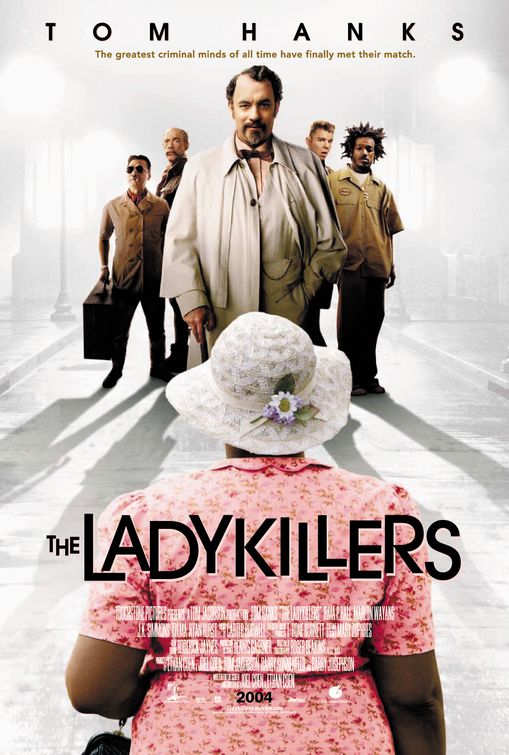
The Ladykillers (Joel & Ethan Coen, 2004)
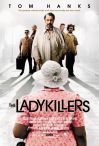
I’m yet to find anyone to support me with this one, widely criticised as the weakest and most pointless film in the Coens’ canon.  Personally, I find their preciousness more irritating than interesting – with a few notable exceptions – but with this remake of a classic (which, to my embarrassment, I have not yet seen), the brothers’ whimsical approach fits perfectly with the material.  It must be said, however, that the film benefits greatly from one of the great comedic performances I’ve seen, by Tom Hanks of all people, and from a series of wonderful supporting turns led by Irma P. Hall.  Still, it’s a technical marvel with a great soundtrack and the product of two revered filmmakers clearly having fun.

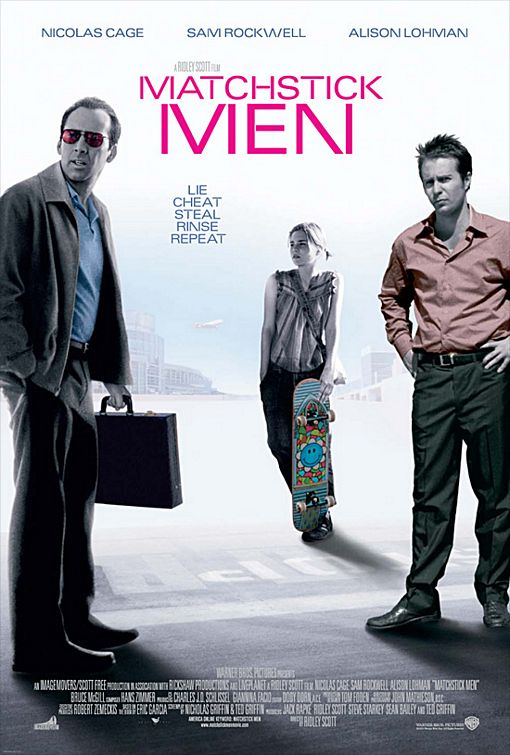
Matchstick Men (Ridley Scott, 2003)
This simple, clever film merits only a one-sentence mention on legendary Brit Scott’s (now a knight of the realm) Wikipedia page.  However, amongst all the big-budget dross he turned out in the 00s – another look at that Wikipedia entry reminds of just how much crap he dumped on the slate – Matchstick Men quietly came and went with little recognition.  It is in fact a tight, well-acted and amusing look at a con man with OCD who discovers he has a 14-year-old daughter.  Nicolas Cage (in his increasingly rare Taking it Seriously mode) and Alison Lohman are outstanding in the central roles.  As I left the theatre, I couldn’t shake the delighted grin from my face.

For part 2, click here.
The 00s: Film (Fiction) – 15-11

15. The Wrestler (Darren Aronofsky, 2008)

The Wrestler, another true American chronicle, flows on nicely from Jesse James at #16 (though they’d make for a pretty dispiriting double bill).  Mickey Rourke’s Randy the Ram, one of the finest characterisations of the 00s, knows that away from the bright lights of the ring he’s nothing.  When he’s forced to give it up and work the punters from behind a supermarket deli counter, he finds the moves in real life aren’t choreographed to guarantee the right response; same goes for his varyingly unsuccessful attempts with women, including his own daughter.  Aronofsky’s technique pulls us in close – much of the film is spent looking over Randy’s shoulder – and forces us to care about this sad, washed-up beast who ultimately becomes a truly tragic figure hung out to dry by an American society that no longer had a use for his fame.
Classic moment: With the sounds of the ring still echoing, Randy marches to his new work arena through cardboard boxes and crates rather than yelling fans and steam machines.

14. Adaptation. (Spike Jonze, 2002)

Charlie Kaufman’s meta-screenplays made him the closest thing to a celebrity screenwriter in the 00s.  He will appear twice on this list and once on the Underrated list; first with Adaptation., a satisfying and surprisingly funny inversion of the writing/filmmaking process.  I was among the few that found Being John Malkovich more self-indulgent than brilliant, but while Adaptation. is even more firmly focused on its maker, it actually tells a good story and never stops striving to entertain… and yes, I know those specific elements are supposed to be ironic references to the very horrors of Hollywood excess I banged on about in part 1, but when you have two Nicolas Cages at the top their game and a still-fresh director using all his talents to get the most out of an already remarkable script, how can you not be engaged?
Classic moment: Robert McKee, the world famous screenwriting guru, teaches Charlie Kaufman, the world’s most famous screenwriter, a lesson in his art.

13. Half Nelson (Ryan Fleck, 2006)

The most mature movie regarding drug abuse in the 00s was Half Nelson, the story of an inner-city schoolteacher who understands exactly how his addiction limits him but, in a world he knows is going to the dogs, lacks the motivation to kick it.  Fleck and his partner Anna Boden hoped to wake a few people up from the apathy of modern life and, with Gosling’s fine performance, fashioned a unique and powerful voice in Dan Dunne, a schoolteacher who is already jaded in his mid twenties.  As is so often the case it is the innocence of a young girl that gives him pause, but instead of getting lost in life lessons and forced interactions, the whole thing stays real from first to last.  It’s sad that you can’t say that about too many recent films.  I guess it just makes them even more precious when they come along.
Classic moment: Dan meets up with his ex-junkie girlfriend and, too strung out and nervous to focus, turns it into yet another display of obsessive self-awareness.

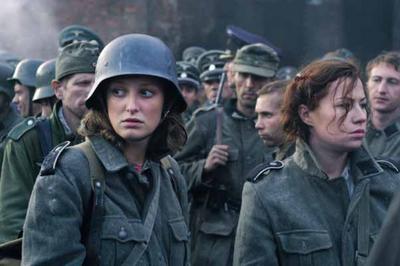
12. Downfall (Oliver Hirschbiegel, 2004)

Before it became one of the more famous internet memes in history, Downfall was the film about the fall of Nazi Germany and the last days of Hitler.  It serves no great purpose to talk about its individual aspects, because all of them are so exceptional as to be unsuitable for holding up to scrutiny.  While Downfall lacks the innovation of other films on this list, and thus places lower than my words might suggest, it gets inside its subject to a rare degree and appears to reflect absolutely the reality of what happened, why it happened, how it felt.  It’s like nobody needs to make any more  movies about Hitler’s bunker ever again because that movie, in all its sad and powerful glory, has already been made.
Classic moment: While saying goodbye to his staff, Hitler pauses poignantly at his terrified secretary Traudl Junge and gives her a smile which could almost be viewed as hopeful.

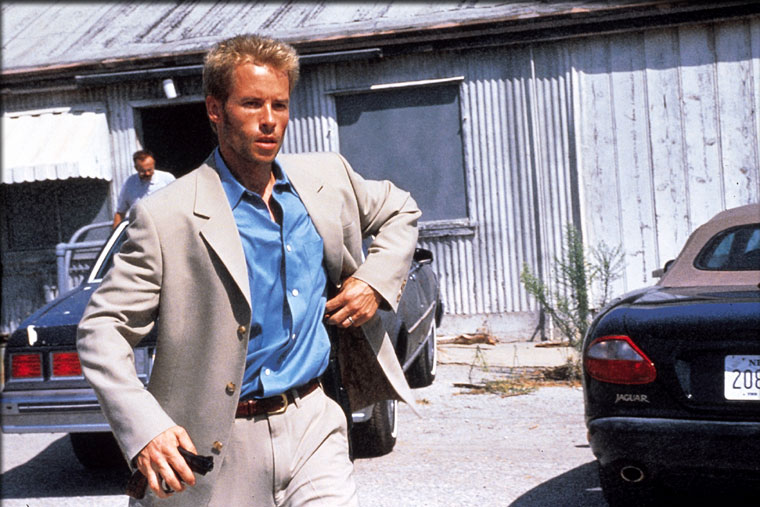
11. Memento (Christopher Nolan, 2000)

Hello, superstar director.  I remember when you made small-budget movies about the mind.  Now you make mega-budget movies about the mind, and your impressive track record keeps you firmly entrenched as one of the very few hopes for a smart Hollywood (even if The Dark Knight, um, wasn’t actually that good).  Still, I’d be very much surprised if you ever made anything that came close to this, a perfect triumph of ideas and thought through cheap sets, cheap locations and (then) cheap (though excellent) actors.  The lessons of Memento about wilfully distorting one’s own reality have remained with me since that first baffling, exhilirating viewing, and I imagine I will struggle with them for the rest of my days.  I’m sure that one of these days soon you’ll make a dud, a Christopher Nolan film that sucks, but it’s okay;  I expect that.  And all will be forgiven, as soon as I throw on the DVD and watch that Polaroid undevelop for the umpteenth time.
Classic moment: Leonard’s short-term memory loss causes him to forget why he’s running… at a particularly inopportune moment.

<< #20-16 || #10-#6 >>

Kerala: Drinking to the Max

I found out about the BBC’s recent big story about Kerala when I was browsing in the Reliance World internet café below my office.  One of my colleagues – a Malayali, same as 95% of the people who work in my Technopark office – came to me with a big grin on his face.  “Hey, did you hear there was a story about Kerala in the BBC today?”  I told him I hadn’t, but was quickly interested to know what it was about.  Kerala in the news! Exciting!  “Yeah,” he said, grin still fixed to his face.  “It said that Kerala consumes the most alcohol in the whole of India!

There it was on the BBC’s front page.  ‘Kerala’s love affair with alcohol’ read the headline in bold type.  I had expected an appreciation of the palm trees and backwaters seen in Incredible!ndia, or something equally charming and inoffensive, but this was an exposé of the state’s runaway drinking culture.  Normally, when there is bad international press about your homeland, you tend to react with either shame, disgust, protest or a combination of the three.  My colleague, however, seemed almost overjoyed to tell me that he and his fellow Malayalis were becoming world renowned for their drinking prowess.  A typical reaction of a young male anywhere, I guess, but it neatly sums up the attitude here.

…read more at The NRI…