You don’t have to look far into the horizon of the mass media or the blogosphere to understand the size and darkness of the cloud hanging over next month’s Commonwealth Games in Delhi. Over here, a Reuters reporter asks how Delhi’s poor will benefit from the Games and finds no good answers; there, an IBNLive staffer suggests that the big winner will be corruption. Indeed, my colleague Vivek Dehejia has roundly denounced the CWG and gone as far as to say that he hopes that they fail. In the midst of all this bad press, there must be something good to say, somewhere, about something. Right?
Imprints: Four Lions; Erykah Badu & dan le sac vs Scroobius Pip
Four Lions (dir. Chris Morris, 2010): I have never seen a film like this before. It feels like an entirely new kind of satire – very smart, provocative, and extremely funny. Hard to see me finding any better new films than this before the year’s out. Somewhere between highly recommended and essential.
Erykah Badu – Worldwide Underground: Saw the Badu light when I watched Dave Chappelle’s Block Party, and this is a fantastic (if somewhat poorly sequenced) album. She’s like a superhuman, so otherworldly. ‘I Want You’ is a phenomenal track, and Lenny Kravitz’s guitar at the end is RAD. Recommended.
dan le sac vs Scroobius Pip – Logic of Chance: Another solid offering from this beats merchant/spoken word duo. It’s not as good overall as their previous Angles, but it has I think their best track so far in ‘Five Minutes’, and definitely their most catchy – and probably the most enjoyable three minutes of pop all year – in ‘Cauliflower’.
“feeling the power and force, yet utter lightness, of our deep interconnectedness”

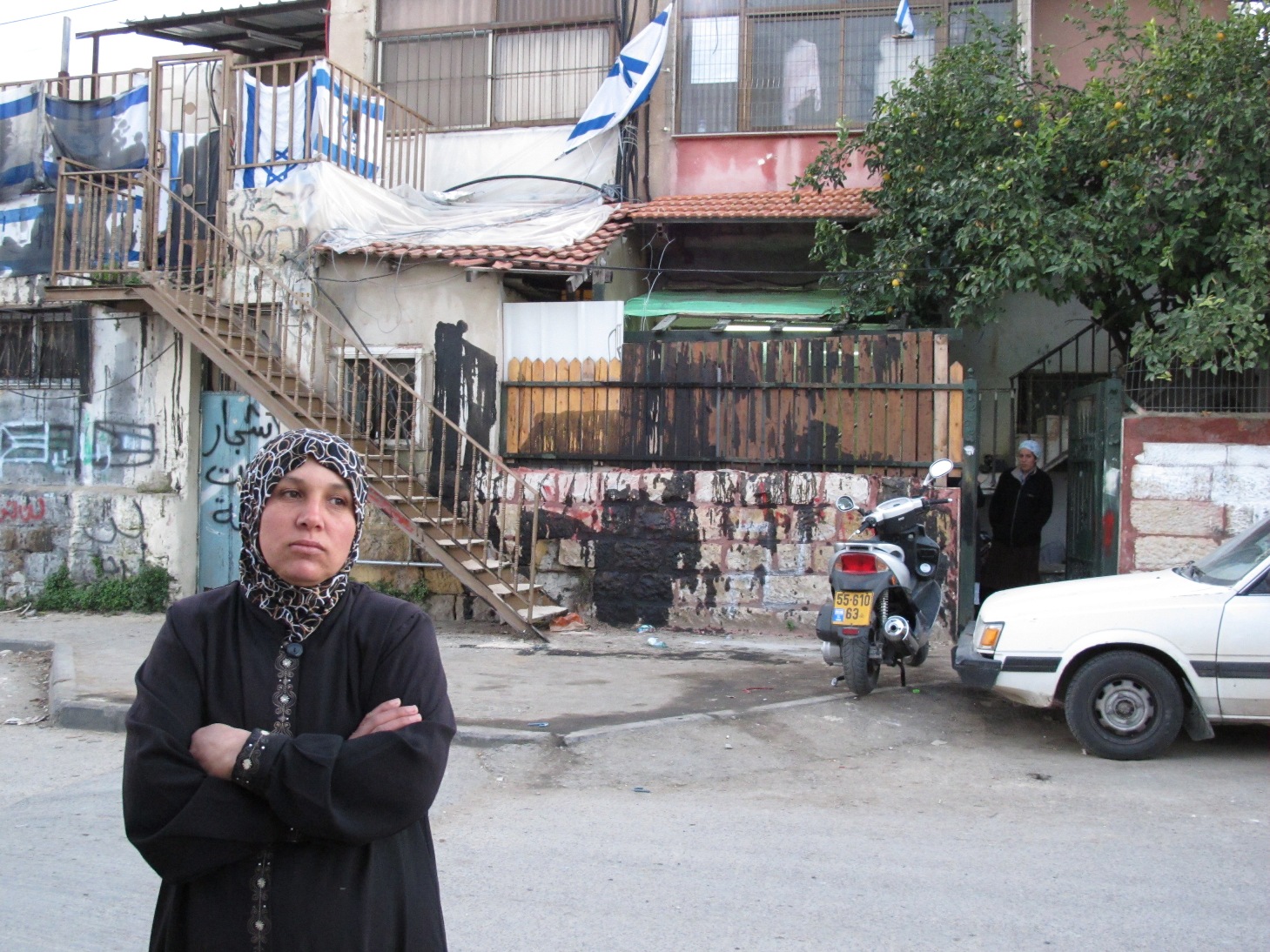
Katie Schuessler is the author of the road less traveled, a blog of her experiences travelling and volunteering in Palestine, Israel, India and Japan. The majority of her posts are from her time spent in Palestine and give a sense of the culture, landscape and people of a place that most of us only know about from news reports, as well as giving an inside look at human rights issues.
She is also a photographer, and all of the images in this post (except the peace portrait) are taken from the vast archive posted on her site. Click each one for larger size.
I discovered her blog in an odd way: looking at referrers to this site, I followed one and found it was a spam page with all Kerala-related links. Her blog was listed directly below mine as she was writing about her travels in Kerala at the time, and after clicking on it I wound up spending an hour reading through the archives. Perhaps this chance path speaks to the interconnectedness she mentions below.
Passionate and personal, her entries have a considered-yet-raw quality about them that implies an immediate clarity of her surroundings, and a well-honed belief system that nevertheless remains open to change.
***
BHM: Why did you start blogging?
KS: i started my blog specifically because i wanted people to see what was happening in the west bank through personal stories and photos, and the whole thing kind of took off from there. it was great to publish my photos and writing while traveling, and nice to give my friends and family an easy way to see what i was up to.
BHM: You mention a journal in your writing. Do you see ‘the road less traveled’ as an extension of that journal?
KS: i’ve often contemplated blogging etiquette; what sorts of things are acceptable to a broad audience, and what sorts of things does one keep to oneself? my paper journal holds much more personal information about my experiences, ideas, and even art that i may never post, whereas the blog is only peripherally personal. i’d say the two complement each other quite nicely, but if anything, the paper journal is an extension of the blog.
BHM: Can you elaborate a little on that last sentence (‘if anything, the paper journal is an extension of the blog’)?
KS: i think there are some thoughts and perceptions of mine that don’t belong on the web. for instance, when i wrote about my roommate snoring like a tuba, it felt a bit too personal and i kind of regretted it. i do think there is a time and place for such intimate expressions, and for me they manifest in my paper journal. even though my posts get pretty personal — talking about breakups, life revelations and identity crises — i never get into the gritty day-to-day details like what i ate for breakfast or who i’m spending time with on a given day. i don’t really have stringent rules about what i can and can’t post, but i hope to maintain a certain professionalism and thoughtfulness on the road less traveled that is positively absent in my paper journal.
BHM: Describe something that is beautiful to you.
KS: there is something remarkable about laying in savasana (‘corpse pose,’ usually the last posture of any yoga asana practice) and feeling each cell of my body vibrating with the postures i’ve just done. from there, i like to visualize how each cell makes up my body as a whole. then i think about how more cells make up all the people and objects around me, and how we are all part of one larger cell. then i think of how this larger cell is part of the whole community surrounding us, which is made of similar cells comprising yet another big cell. this process continues to expand until i’m seeing the whole earth as one cell and feeling the power and force, yet utter lightness, of our deep interconnectedness. it’s beautiful.
BHM: What is your first memory of taking photographs?
KS: my parents gave me my first ‘real’ camera for my sixteenth birthday. it was a pentax k-1000. i spent a long time photographing flowers around the front yard of their house. focusing the manual lens was a magical experience. prior to that i had photographed with a point-and-shoot but there is absolutely no comparsion with using a manual camera. it gave me a whole new way of experiencing the world visually. later, when i went to pick up that first roll of film from the processor, i realized that i hadn’t loaded it properly and it was completely blank.
BHM: Did you display photographs publicly anywhere before you started your blog?
KS: yes, but not for quite some time. most recently i had a solo exhibition at the public library in tucson, arizona, but that was in may of 2008. it was a portrait project where i asked those who i photographed to write about peace between israel and palestine onto each of their respective photographs.

BHM: I found your blog through an ad site about Kerala that also linked to mine, but I added it to my bookmarks largely because of the Palestine posts. Did your experience there have an effect on your belief system?
KS: before i left for palestine, i felt that i understood the situation. because i grew up jewish, i had the israeli and zionist perspective pretty well-covered. to learn more about palestine, i read books, magazines, and lots of online news. but unfortunately nothing could have prepared me for the reality of being there. there is no book that can describe what it’s like to live in a refugee camp under constant military surveillance. there is no magazine article that can (or that is willing to, perhaps) describe what it’s like to pass through checkpoints on a daily basis and be subjected to regular interrogation. it seems to me that there is a slow, agonizing process of trying to break people down via constant degradation — whether it’s unfair distribution of water, a refusal to grant permits to travel, housing demolition, regular raids, arrests, and murders, or even just simple, constant military presence. what’s remarkable is, the people living under that illegal occupation have such open hearts. if any part of my belief system has changed as a result of this experience, it’s that i have more faith in the strength of the human spirit. on the flip side of that, i am more puzzled than ever by the cruelty and out-of-handedness of humans making war.
BHM: Off the top of your head, which photo that you’ve posted on your blog holds most meaning for you?
KS: this is a tough question. the first photo that springs to mind is of a boy in mysore, india. he was part of a group of kids who i was visiting to drop off some photos. the kids were going nuts for the gora and the camera. somehow, amidst the chaos and silliness and posing, he gave me his full self, full of childlike innocence but also the maturity of someone who has seen a lot. it’s meaningful to me to have been able to catch that moment.

BHM: Is there a post on your blog that you are most proud of?
KS: i think it’s the two posts (here and here) about water rights in the west bank. it’s a fascinating subject to me, and at the crux of the human rights deprivations happening there. i learned so much when i researched for that post, and felt that it was very important for people to learn about. there is no arguing about water — it’s vital for everyone.
BHM: Name two countries: one you’d love to visit, and one you’d love to visit again.
KS: i’m on an africa kick right now, but it’s hard to narrow it down to just one country. i’d probably start in east africa: somalia, kenya, uganda, ethiopia…and i would like to do another trip to palestine and india (if they’re on the same ticket, does it count as one?).

BHM: A simple question for last: do you believe in God?
KS: yes, i believe in god. not in the sense of a man with a white beard and heaven and hell. but in the sense of a guiding creative force of the universe. and a trust in the earth. and a belief in our innate interconnectedness as inhabitants of this planet. and a sense of the power each of us holds to make a positive difference in our lives and the lives of others. this is divinity.
***
This is the inaugural post for Inside the Bloggers Studio, an ongoing project of short interviews with bloggers I read and admire. (Apologies to James Lipton.) To view the archive, click the category tag in the ‘By Category’ section at the top right of this page.
Indian English Class (aka Doing The Needful)
do the needful at the earliest – Anyone who deals with Indian businesspeople or outsourcing will be familiar with this one. According to Wikipedia, it’s a remnant of early-to-mid-20th Century British English that has died out in the native speakers but lives on in this and a couple of other colonies. Search for it in Google, with quotes, and the first few results are humorous Western perspectives of the phrase, but then you have another 260,000 results of people actually posting that phrase on the internet. Add ‘kindly’ in front and the field narrows to a paltry 103,000. I can only hope that in each case, the needful was indeed done. At the earliest. (Earliest what?)
A Dog’s Life
Marley probably didn’t have the most auspicious start to life. She started out a stray pup, destined to be separated from her mother and to wander Varkala’s cliff in search of charity from tourists dining at Western-style restaurants and cafés. She would have had limited success at this, essentially a cuteness competition with the other puppies and dogs hanging around the area, until she grew big enough to be ready to have pups of her own. At that time, the restaurant and shop owners would have hounded her out, condemning her to a life of trotting and sleeping around Varkala’s streets, maybe venturing out to the cliff or beach from time to time, running in packs with other strays, and probably not living very long purely because she wasn’t blessed with genes that would make her grow big and strong.
The 00s: Film (Documentary) – 5-1
5. Dear Zachary: A Letter to a Son About His Father (Kurt Kuenne, 2008)
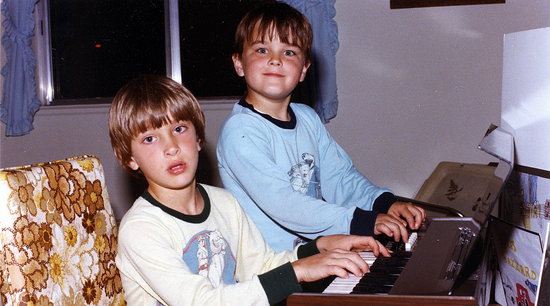 Nothing can really prepare you for Dear Zachary, short of reading and digesting the entire plot summary before diving in. For those easily upset, I would recommend doing this, or perhaps steering clear completely. It is director Kuenne’s version of the events surrounding the death of his close childhood friend Dr. Andrew Bagby at the hands of a woman named Dr. Shirley Turner, and his effort to record as much of Bagby’s life as possible for his yet-to-be-born son, Zachary. As such, the film is a completely subjective account, following Kuenne’s race around North America and England trying to capture people’s memories on tape, following his own emotions and mood through a variety of notable editing choices. This was the most impassioned film I saw in the 00s. Again, be warned: you’ll never be the same afterwards, especially if you have kids of your own.
4. Dark Days (Marc Singer, 2000)
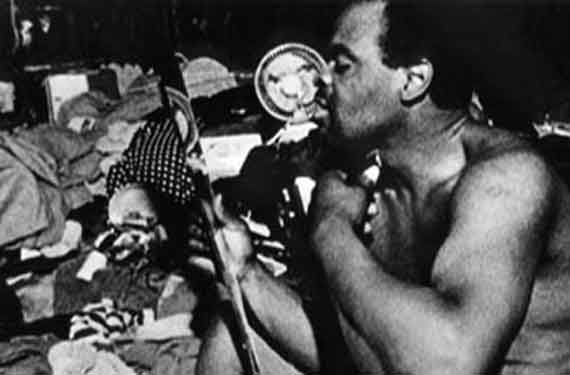 Singer, an untrained filmmaker who hasn’t directed since, was drawn by the plight of the homeless living in a New York City Amtrak subway tunnel, and decided to help them by making a film with them that would get them out. What resulted was a fascinating ethnographic document, superbly shot on black and white and scored by DJ Shadow, depicting real lives as lived and proving that in a lot of ways, these guys are just like us. While it’s surprising to see how well some of these guys can live, you’re aware that every single day is another struggle, wracked with uncertainty. This is a film which helps the viewer to see an oft-maligned section of society with fresh eyes. Watch the first 10 minutes here.
3. Spellbound (Jeffrey Blitz, 2002)
 Spelling bees seem to me a very American institution, so it isn’t too surprising that a film following eight teenagers in their quest to win the National Spelling Bee would play like such a chronicle of the American Dream. There are the immigrants – the Indians (so many) and Mexicans; there is the white bread girl from Connecticut; there is the loner from Missouri; there is the ADHD wunderkind from New Jersey; there is the inner-city black girl from DC. All have their own, fascinating stories, with widely varying ideas of what the word ‘success’ means, and as we grow to know and love them, the tension of the finals becomes almost unbearable. I remember feeling bathed in a sweet glow of hopes and dreams afterwards, and in a way, I hoped that these kids would never grow up.
2. Anything by Adam Curtis (Century of the Self, The Power of Nightmares, The Trap)
 Some films are ‘important’; Adam Curtis’ films, on the other hand, are absolutely essential. Cutting deep into the building blocks of society and finding patterns everywhere, Curtis tackles subjects as monumental as the transition of Western thought from community-based to individual-based, or the political shift from promoting positive freedom to promoting negative freedom. Curtis’ approach is fact-based, backed up by archive footage found after months of trawling the BBC’s archives, and the results are surprisingly entertaining once you get used to the format. More than that, though, his films are eye-openers in every sense of the word, and I would personally say that they have changed the way I see the world. If I had to single one out for higher praise, the four-hour Century of the Self is probably the one that impressed me most. All are available for free online here. Do yourself a favour and check them out.
1. Grizzly Man (Werner Herzog, 2005)
 With his majestic Grizzly Man, Herzog’s soothing Bavarian voice pretty much sums up life, the universe and everything. Timothy Treadwell is his subject, a man who rejected society and turned to bears, and like many of the films on this list, the fascinations of Herzog’s work are largely psychological: what led Treadwell to this fate? What does he truly believe? How much of his reality is a delusion? Herzog confronts the abyss as he so often does – with a grave but knowing outlook – and explains to us what we see. You’ll laugh, and you may cry; you’ll surely be riveted by an incredible subject, and truly great filmmaking. This is a film that would place at or near the top of any decade list. Part 1 is here.
To go back to the previous part, the intro & #10-6, click here.
The Great Cricket Swindle
In my childhood, I had two dreams: (1) to play for the New Zealand cricket team, and (2) for there to be cricket on television every day. In view of the fact that I am currently here writing this article instead of in Sri Lanka with the Black Caps, we can safely assume that (1) did not come true. (2), however, most certainly has, and in amongst the deluge of statistics and ludicrously controversial no-balls, I finally understand that old maxim: be careful what you wish for.
…read more at The NRI…
The Moustache Maketh The Man
I was at a work meeting a few months ago when something curious happened. We were sitting at a long table, and I noticed that on the opposite side from where I sat, every person had a moustache. As I looked along their faces, all focused intently on the boss’s rhetoric, I was spontaneously seized by a powerful urge to burst out laughing. It seemed so hilarious, like this unofficial uniform – absurd, almost, if it weren’t for the fact that I wore a moustache myself.
…read more at The NRI…
What Happened to M. Night Shyamalan?
With the release of The Last Airbender last month, M. Night Shyamalan’s reputation – already damaged by a lukewarm response to The Village and outright critical disgust at Lady in the Water and The Happening – has reached new depths. Celebrated film critic Roger Ebert, who once championed Shyamalan’s natural skill and craft, wrote a ½ star out of 4 review and began with the following: “The Last Airbender is an agonizing experience in every category I can think of and others still waiting to be invented.” This is it, the nadir of one of the world’s more famous NRIs. Having had the film world at his feet a decade ago, in 2010 he cannot possibly sink any lower…
…read more at The NRI…
Business vs Pleasure in Varkala
Varkala’s cliff area is essentially a lawless zone, a modern-day Deadwood. Okay, perhaps that’s stretching it, but compared to Bangalore with its strictly policed 11:30pm curfew, The Cliff is debauchery incarnate. In traditional-minded Kerala, Varkala is a strange outpost of Western freedoms – a sort of tiny imitation Goa – and the contrast with its surroundings is marked. Bodies lie strewn about the place, some of them topless; people flirt openly and flaunt their sexuality; alcoholic beverages are consumed; someone over there may even be sparking up a joint. And that’s just the beach.
…read more at The NRI…
 Jdanspsa Wyksui