Books and movies of March to mid-June 2025

Hi friend,

New job and sleep regressions — first the kids, now also me — have pushed these little arts appreciation notes into the background. So here’s an omni-update to cover the last three and a half months.

First, really quickly, I made a couple of YouTube homages as a birthday present for Tara. The first apes Japan Eat, who uploads one-minute shorts every day about eating food in Japan at restaurants, convenience stores and food alleys. His speedy, mostly monotonous delivery masks a genuine desire to like the food that’s put in front of him and the knowledge to place it in some kind of context. He particularly focuses on smaller, out-of-the-way places, as evidenced by his constant references to ‘mom and pop restaurants’, and he’s way harder on the bigger or more popular establishments. Anyway, I pretended he came to Paraparaumu and ate a piece of cheesecake at Hudson’s in Coastlands Mall:

The second pays tribute to Fairbairn Films, two Aussie brothers offering commentary on 21st Century life by shouting at each other. Jeff and I didn’t get the sight lines anywhere near right for this, and I’m obviously reading, but still, I’m pleased with the writing and it was great fun to make.

Have you made anything lately? Now to the books and movies.

*

BOOKS

Faves

Alice’s Adventures in Wonderland
by Lewis Carroll, 1865

Finally got to the source. I don’t think it’s hyperbole to say this book goes beyond centrality to the Western literary canon; it’s fundamental to the Western idea of childhood as a place of fancies and nonsense and constant threat. I suppose Carroll follows the Brothers Grimm in that tradition, though his fey landscape is less grim and more absurd. His writing is very readable considering it’s 160 years old, and I suppose it’s that accessibility, along with the many fascinating images and characters conjured, that helps the myth persist. I found it interesting that I couldn’t get a read on Alice, who blunders from one peril to the next, munches almost constantly on snacks, and stroppily refuses to accept this strange world on its terms, all while characterised by Carroll as gentle and courteous to all and rendered in Tenniel’s illustrations as soft and long-lashed, but severe, a kind of porcelain doll with oddly adult features. I wonder what the real Alice made of her.

Gentlemen Prefer Blondes
by Anita Loos, 1925

It’s not often you read a hundred-year-old book and feel like it could have been written yesterday. I guess Lorelei Lee would’ve been on her phone an awful lot if so. I mean on the page she seems fully formed and recognisable as a contemporary figure. Contemptible, untrustworthy, still somehow innocent, perhaps because of the quirks of prose and misspellings, and because a parade of probably even worse men keep dropping everything to pursue her. I was darkly fascinated and will have to reread Gatsby to see if this was the actual great American novel of that year.

The Great Gatsby
by F. Scott Fitzgerald, 1925

For me, ‘The Great Gatsby’ invokes stuffiness and school classrooms, even though I’ve read it before, not at school, and know exactly how incisive and cynical it is about high society and America itself. It’s the title, which sounds lofty enough in itself and isn’t helped by its association in the hundred years since with essay structure: introduction, point 1, point 2, point 3, conclusion. Reading it again, there could be no other title. We all know Gatsby isn’t great, though in his polite and straightforward pursuit of an honourable but misguided goal, he is greater than pretty much everyone else in the book. And of course, he isn’t even Gatsby either. I’m pretty well fed up with the idea of the great American novel written by a white man that skewers the American Dream and leaves you disenchanted — but, truly, here is that great American novel.

Of Walking in Ice: Munich – Paris: 23 November – 14 December, 1974
by Werner Herzog, 1978

This review pretty much nails it for me, especially the last line:

“This is Herzog in the maelstrom of transformation into myth while remaining a man with hungers and pains and compassion.”

The man is so closely attuned and devoted to his own legend that the reason for his long walk — mentor Lotte Eisner’s ill health — becomes secondary to the walk and the man walking it, most of all the liminal spaces expanding inside his head in the pouring rain and snow. (He is thoroughly soaked throughout.) To be fair, it’s a journal scrawled out in real time, not intended for publication, but he still went ahead and published it anyway. A flight of fancy somehow still recognisable and rooted to the real world, much like his films.

New releases

Theft
by Abdulrazak Gurnah, 2025

Loved Gurnah’s talent for drawing you into a story here. This is a sharp focus novel of rooms and subtle looks, and I smashed through it. I’m not sure where that ending came from, though. That one guy’s ambition was always there, true, but it went unexpectedly off the charts in the final third. And I’m not sure I buy the other two, seems a bit contrived romance to me. But so what? Solid, a pleasure to read. My first novel by a Tanzanian.

Dream Count
by Chimamanda Ngozi Adichie, 2025

This book took me some time to plod through, I think because only one or two story threads really captivated me enough to draw me back whenever I had free time. Overall it’s a frustrated and sometimes frustrating collection of moments and lives, sitting comfortably in financial privilege most of the time but most compelling when the focus is on a less comfortable character, whose wants and hopes and dreams are so much clearer than the rich women into whose orbit she fortuitously spins, and, in her plain-thinking way, spins them properly off course. Adichie has such a talent for spinning a yarn in rich prose, and I feel enriched by her literary gifts, but also sometimes irritated by her predisposition to write characters fortunate enough to be so self-obsessed.

Universality
by Natasha Brown, 2025

Not sure what I’m supposed to think. Anti-diversity shills are taking over the world, column inch by column inch? The ‘marketplace of ideas’ (man I hate that phrase) is still in the pocket of the usual pale males? Either Brown is a satirical galaxy brain beyond my simple reckoning or I’m just not buying what she’s selling. The scene-setting magazine article that opens the novel is the longest section and the best; once we’re flitting around in people’s heads, the prose and story fall over. The working class make the barest intrusion into the world of these characters and the mastermind kingpin around whom the plot turns feels very low stakes to me. Competing for fleeting and quickly forgotten scrolls. Is all that the point? Is the climax supposed to feel so anti-climactic? Is it a commentary on all the time we waste debating identity politics while the world burns?

Children’s

Whetū Toa and the Hunt for Ramses
by Steph Matuku, 2021

More chaotic and episodic than the first one as Whetū and Tori the cat ride starbeams to all sorts of weird, wonderful, and properly frightening worlds. The climax takes place in a land of machine overlords and mammal enslavement. Grim. But there’s a point to it all, some great messages for kids (and adults), and they’re subtly driven home. Not sure my character voices are on point but the children were well into it and laughed a lot.

The Secret Wreck
by Linda Chapman, illustrated by Mirelle Ortega, 2022

Is this the end of Mermaids Rock?! (The series, I mean, not the characters’ home, which remains very much intact.) It sure seems like it. These kids are getting too big and adventurous and complex for brief sallies away from their wee patch of sea floor. Soon they’ll be going to university, and falling in love, and circumnavigating the globe powered by nothing but snack powder packets and perpetual phosphorescent tubes concocted by Naya in her lab — assuming she uses her powers for good, not evil. Exciting for the kids, with the usual positive messages about working together and to your strengths.

The rest

Sabine’s Notebook
by Nick Bantock, 1992

Exquisitely designed exercise in frustration, not the good kind. Fragile man seeks liberation from self, but world is self.

The Dark Forest
by Cixin Liu (translated by Joel Martinsen), 2015

I had the same feeling as with Iain M. Banks novels: that working on the grandest scales and following the boldest flights of fancy inevitably gets a bit silly, like lining up the entirety of your unfathomably expensive space war fleet to be dispatched by a single alien probe in one clean fell swoop. The ideas are so compelling that it doesn’t really matter and I flew through 550-odd pages. It’s the middle-of-trilogy novel so I don’t think I can properly consider it until I’ve read the last one, which I will, next year.

*

MOVIES

TANGLED
directed by Byron Howard & Nathan Greno, 2010

Wife absolutely adores it. I found it quite forgettable on first viewing many years ago, but I’m starting to see the positives, particularly a somewhat realistic portrayal of parental abuse in an animated children’s film — calculated but seemingly offhand negging, persistent gaslighting, plus of course the textbook incarceration in inescapable tower… Is that a positive? Well, my kids are going to come across people like this in life, and seemingly already are, so it’s helpful to see that on screen and see how they can be liberated from that, although it shouldn’t have to take a man riding in on a horse. Or pursued by a horse. There are also some truly spectacular visuals, and with a trip to DisneySea planned for November, I’m genuinely excited to be surrounded by those lanterns too (if I’m lucky).

PENGUINS
directed by Jeff Wilson & Alastair Fothergill, 2019

We’d had kind of a rough run with movie night choices, and for this turn, I wanted something:
-short
-funny
-physically comedic
-not animated
-without dead parents
Because there’s only so many times my daughter can come out of bed at 9:08pm with an anguished look on her face and say, “I don’t want to die” or “I don’t want you to die” before you think hey, we’ve got a sensitive one here, maybe we aim really low for a year or two and steer clear of all those classic family movie shortcuts to drama involving absent parents or orphanhood or visceral on-screen murder of the noblest lion ever to lead the animal kingdom. So, in a panic, I chose PENGUINS, a cutesy documentary with Ed Helms narrating and voicing a heavily anthropomorphised story about the world’s clumsiest penguin. And the kids laughed, and it held their attention, and learned a thing or two from the unreal 4K cinematography of brutal, desolate Antarctica. I never thought I’d say this, but thank you, Disney.

HOW TO TRAIN YOUR DRAGON
directed by Dean DeBlois & Chris Sanders, 2010

Same as the first time — I don’t really get it because I don’t lose my mind every time Toothless appears, as my wife did and as my kids now also do. Like, these deranged, high-pitched sounds whenever Toothless moved sideways, or looked up and then down again. It’s not that the film overall has nothing else — it is charming enough and occasionally surprising — but what would be its reason for existence, and most of the creative choices, without the need to sell stuffed Toothless toys?

RATATOUILLE
directed by Brad Bird, 2007

King stay the king. Yeah, it’s about fine dining and criticism, to which you might say, who gives a shit? Well, RATATOUILLE and Peter O’Toole made me give a shit.

*

Music next time!

Love b

Books and movies on January-February 2025

Hi friend,

I’ve been spending most of my time so far this year planning a trip to Japan, tamping down impostor syndrome as I begin a new job, and getting to the end of Dragon Quest XI on the Nintendo Switch. Somehow, a few books and movies have crept under the shutters. May I share them with you?

*

BOOKS

The Lord of the Rings: The Fellowship of the Ring
by J. R. R. Tolkien, 1954

Back for another crack at LOTR more than twenty years after the first, when film fever was at its height and my attention span absolutely did not stand up to all the songs and poems. Now, I am the right side of 40 and ready to meet Tolkien in his vast and carefully tended garden — because it is a garden, if you pay close attention to the extended descriptions of plant matter. And you should! It’s a quest, it’s an epic war between good and evil, but for me it’s most of all a showcase for the art of description, a ramble through many varied environments all rendered in rich detail: forests, concert halls, craggy peaks, forbidding caves, and enchanted lands of mysterious sprites. Why wouldn’t the world’s forces band together to protect such an array of extraordinary settings from the forces of evil? There are petty squabbles and narrow minds, and we have to make sure that’s as big as our problems ever get. I now plod into book two in full knowledge of all that lies ahead and find myself surprisingly willing to make the journey, just to see it all through the poet’s eyes.

The Lord of the Rings: The Two Towers
by J. R. R. Tolkien, 1955

If the first part was gathering a party and exploring the garden, this part is understanding the scale of the threat, the stakes, and seeing exactly how dark and hard-edged things can get. It strikes me that Frodo of the books is much wiser and clearer-headed than Elijah Wood’s wide-eyed interpretation, but it’s been a while since I saw the films; twenty years, in fact. I struggled to push through this one, to be honest. I think the encroaching endless night makes the reader’s journey mirror that of our heroes. Still, Tolkien’s powers of description and world building leave me in awe.

Backyard Campout / Dance Divas (Ella & Olivia #26 and #33)
by Yvette Poshoglian, illustrated by Danielle McDonald, 2020 / 2023

Old mate Yvette has published several dozen books at this point, mostly these single-sitting tales of siblings learning some basic lesson and having fun along the way, so I thought maybe it was a full-time gig… nope. She still holds down a job with the NSW Department of Education. This leads me to consider whether writers should be out in the world by day, honing their observational senses and keeping up with the hopes, cares, and dreams of real people, then going home to reflect that in their writing. More than that, it reminds me (again) that there is nothing keeping me from ‘making the blank page blink’, as Ashleigh Young put it. Anyway: the kids don’t need me to read them stories this basic anymore.

Whetū Toa and the Magician
by Steph Matuku, 2018

Awesome to read my super-Pākeha kids a fun, silly, ambitious yarn with a te ao Māori perspective. I had my doubts but they were hooked from the first chapter and laughed often. It’s pretty anarchic stuff but I sense a broader theme emerging that will no doubt be developed in subsequent books as Whetū explores her powers further.

The Calvin and Hobbes Tenth Anniversary Book
by Bill Watterson, 1995

I’ve hung out with Calvin and Hobbes many times but never their creator, who has much to say here about the comics industry of the late 80s and early 90s and about his dedication to a particular set of principles. It’s hard to disagree, especially on the point that merchandising can only ever cheapen the original art.

Katherine Carlyle
by Rupert Thomson, 2015

A propulsive and compelling read, though it meanders aimlessly, exists mainly to indulge Thomson’s fantasies of walking away, and ends abruptly and weakly. All this is also true of last year’s ‘How to Make a Bomb’ aka ‘Dartmouth Park’, which is almost the same narrative but from an older man’s perspective rather than a young woman’s. It’s almost impossible to feel sympathy for either protagonist, and the more recent novel at least bears the authenticity of Thomson himself being an older man; but Kit… there’s something fundamental about Kit, namely her existence as an IVF baby and her over-identification with the eight years she spent literally on ice, that I find intriguing. It’s a pity Thomson does little more with it than follow a solipsistic thread when the material could’ve had real thematic weight. Still the master of metaphor and simile, though.

*

MOVIES

PADDINGTON IN PERU
directed by Dougal Wilson, 2024

Forgettable. I appreciated the many nods to Herzog, but I think the magic is gone.

LILO & STITCH
directed by Chris Sanders & Dean DeBlois, 2002

This looks and feels absolutely fantastic from the off. Unbelievable that it was made by Disney, the corporate behemoth whose core business is meticulously curated, once-in-a-lifetime tourist experiences based on ruthlessly acquired intellectual property, because this movie has almost total contempt for the gormless tourists wandering around Lilo’s Hawaiian village. There’s the big, sunburnt guy who keeps dropping his ice cream, but pay particular attention to the lobotomised patrons at David’s fire juggling show, especially the guy in sunglasses and a blue singlet, whose open-mouthed grin shows his engagement with local culture and traditions will never go deeper than these two minutes. In time, the most grittily impressive story elements will be swallowed up as too many characters carry out too many chase scenes that go on too long, and another flat turn from Daveigh Chase, who ruined the English dub of Spirited Away, doesn’t help. But here is a family film that renders poverty in surprisingly close detail, even if ‘found family’ is a bit of a lazy solution. Charming, chaotic and deeper than expected.

THE SECRET LIFE OF PETS 2
directed by Chris Renaud, 2019

Kids’ choice for movie night. Cross-cuts across three different storylines featuring all your favourites from the first film (what were they, Mitch? Dave? Scratcher? I didn’t see it tbh) and a few exciting new guys (here comes Cogmonster!). Mostly harmless and bloodless, albeit with some lazily one-note and vindictive villains, adding up to ‘be brave’ and ‘look at the animals do things animals don’t usually do’.

BEAUTY AND THE BEAST
directed by Gary Trousdale & Kirk Wise, 1991

Better every time I see it, and the gold standard for anything Disney has produced in my lifetime. These were the days when Disney just tried their hardest to make an animated Broadway musical, with all the creative departments filled by proven stage legends. As a kid I would never have given this the time of day, and while my kids sat through the whole thing, they didn’t especially enjoy it. Maybe lines like “I’m incredibly good at expec-tor-at-ing” and the irredeemably parochial cast of villagers don’t strike you as remarkable until you’re grown up.

DECISION TO LEAVE
directed by Park Chanwook, 2022

Mostly style over substance. I think this about most Korean films and I’m not sure where my prejudice comes from, but look, I tried to describe the plot of this film to my wife and we both started laughing halfway through. The thing about it I can’t shake, and which I think I owe to living in a country where indigeneity and land rights are such a prominent part of our public discourse, is Seo-rae’s (Tang Wei, excellent) identification with the mountain her grandfather left her and the intergenerational scars hinted at by the extreme decisions she makes in this story. In my thinking, Seo-rae’s deepest love is for that mountain, and it’s when her head is turned from it that she truly loses her way.

*

More soon — very soon, in fact —

Love b

Jdanspsing Wyksui + books, movies and music of January 2024 (JWletter #66)

Hi friend,

The end of TinyLetter means more Jdanspsa Wyksui. I’ve been sending out a monthly roundup of my reading, watching and listening for a few years now, and while I liked TinyLetter’s naked simplicity, the JWletter probably always belonged here. So: welcome to the fold, you strange monster.

You can subscribe to all new posts using the little email form on the sidebar at the right of this page – or the one right underneath this paragraph. Type in your email address, click Subscribe, then confirm by clicking the link in your email. We’ve all done this before.

For those who have come across from TinyLetter: thanks!

For those wondering why they should subscribe to film and literature criticism from yet another a cishet white dude whose knowledge of most fields, including film and literature, rarely rises above that of the dilettante: fair enough. You might prefer to check out a few more varied and/or experienced voices who deserve a larger audience: Deepanjana Pal, Jazial Crossley, Dan Slevin.

In case it helps you decide whether to stick around, my reviewing style is to look for what’s different about a book, or film, or song, and be honest about how I personally respond to it. I read widely across time, genre, and author demographics, and I skew positive because I tend to look for the best in people and their work. Sometimes I phone it in. Very occasionally, I put the boot in (see: Tuesdays with Morrie, How High We Go In The Dark).

Okay, on with the books, movies, and music of January 2024.

BOOKS

Dartmouth Park
by Rupert Thomson, 2023

Thomson’s premise here is one that would have me walking straight on by, were it any other author: white man in mid-fifties, existential crisis, leaves wife, searches for meaning overseas, delusions of grandeur. (A clue: this novel will be released in the UK this year under the title ‘How To Make A Bomb’.) It isn’t that Philip is wrong — the design choices that created our modern societies are almost uniformly flawed, and something needs to change — but he is not the truth-teller he thinks he is. Thomson is such a good writer that you almost empathise with him, even as his actions from the get go reveal him to be untrustworthy; meanwhile, the world he wanders through, often aimlessly, is vivid in its characters and details, from the weathered setts and high balconies of Cádiz to the stark landscape around Theo’s house in rural Crete, not to mention the starkness of Theo’s existence. Thomson adds another layer of difficulty by formatting the story in verse, like what Bernardine Evaristo calls ‘fusion fiction’, which actually makes it easier to read than if it were in full paragraphs and sentences. I found it compelling, shot through with one memorable scene after another, though the ending was a little frustrating and relegates the character Philip treats worst to stock status.

We Are Here: An Atlas of Aotearoa
by Chris McDowall and Tim Denee, 2019

Magnificent. A point in time in the history of this land, seen from most imaginable angles. Perfectly titled and carefully curated.

Tell You What: Great New Zealand Nonfiction, 2015
edited by Jolisa Gracewood and Susanna Andrew, 2014

We have some bloody good writers in this country. There were only a handful of pieces I didn’t really connect with. Favourites were by Simon Wilson, Gregory Kan, Lara Strongman, Megan Clayton, Leilani Tamu, Tina Makereti, David Herkt.

Werner Herzog – A Guide for the Perplexed
by Paul Cronin and Werner Herzog, 2014

This is longer and more comprehensive than Herzog’s superb biography but covers much of the same ground. I questioned the need to read it at all but quickly understood that if Herzog is speaking (or writing), I’ll be fascinated, even if I’ve heard the story before. There is a risk with Herzog that everything mundane about your life, all your foibles and failures and everything you’ve signed up to in modern society, is rendered petty and pointless and you might as well quit your job and pick up a camera and make something ecstatic happen through sheer will. I know, but mate, I have a mortgage.

Seven Brief Lessons on Physics
by Carlo Rovelli, 2014

The book I’ve been seeking for a while. Simple and elegant and very eye-opening for someone as ignorant of the basics as me. More accessible than A Brief History of Time. Probably still won’t seek out more detailed physics texts.

MOVIES

THE BOY AND THE HERON
directed by Hayao Miyazaki, 2023

I think THE BOY AND THE HERON owes many of its very positive reviews to critics’ love and affinity for Hayao Miyazaki — a true giant not just of the last four decades of cinema but of its entire history — and the worlds and wonders he’s gifted across a dozen or so meticulously crafted feature films. I wonder how a younger viewer unfamiliar with Miyazaki or his influence would respond to this one.

My guess is they’d at least be somewhat dazzled by the incredibly detailed animation; beyond that, they’d notice horror movie tropes throughout, particularly in the first half hour, and the video game logic that dominates the film once Mahito steps into the shadow world. He is a fundamentally blank protagonist, for a start, inexpressive even as he sprints through tunnels crumbling into the void. And that shadow world isn’t really a world at all; it’s a series of set pieces, generally populated by a different sidekick and a different set of villains, which Mahito must outwit so he can continue his quest. You can almost imagine a tutorial at the start of each episode explaining how to use the controller to achieve the movements and actions required to progress, or a series of hints to nudge you towards the correct solution. I don’t mean to invoke video games as an epithet, but there’s a limit to what you can do with character and theme when you’re bouncing from one grand edifice to another, especially without the rendering of open spaces between each, such as you’d find in the most recent Zelda games.

Miyazaki seems to have created this world to finally sign off. He is 83, and his films, which take years to produce, are like feats of endurance for everyone involved. There’s a grand-uncle character, also at the end of his life, who seeks a successor. But in the film’s denouement, Miyazaki seems to understand that no one else can keep up with his imagination and work ethic, no one’s going to carry it on in the same way after he’s gone. You could read Mahito as a cypher for Miyazaki’s son Goro, whose work as a director has consistently fallen well short of his father’s unfair benchmark. But I’m not sure THE BOY AND THE HERON is as simple as a rehashing of their (quite difficult) real-life relationship. It probably requires multiple viewings to see it from the necessary angles. Notice how I haven’t mentioned the heron, or the two mothers, or the mostly absent father, or Miyazaki’s seeming hatred of all birds.

I was a bit tired so I spent much of the film on the verge of nodding off. But like the critics, I’m a longtime Miyazaki fan, too, so at this film’s destructive climax, I really felt that this was the ultimate end (for real this time) of this great director’s artistry and imagination — and I couldn’t stop myself from weeping. My wife turned to me as the credits rolled and announced, “Well, that was incoherent!” Then: “Oh God! Are you all right?” I will be, love, because at the very least, we’ll always have MY NEIGHBOUR TOTORO.

MUSIC

An Unnatural History
by LYR

Bandcamp

Sometimes Spotify’s algorithms really get me. God knows why they dropped the careful intonements of Poet Laureate of the United Kingdom Simon Armitage, backed by musicians Richard Walters and Patrick J Pearson, into my ‘Popular new releases’. LYR (Land Yacht Regatta) aren’t popular, and they’re certainly divisive in this household, with my wife and children grimacing every time I put them on. Those of a weirder, weightier bent will be drawn initially to Armitage’s spoken word — which repeatedly references the fauna of Barnsley and its former Natural History Museum, which “disappeared under somewhat mysterious circumstances” — then to Walters and Pearson’s alternately mournful and rocking tunes that more than back him up. The effect is to amplify the power of written word and of song when brought together, but also to emphasise the permeability of time, connecting what once was with what now is — and even with what can be imagined. I’ve never been to Barnsley but this record makes me feel like I’m standing on Eldon Street, watching the Tesco bags and the fox cubs go by.

Wall of Eyes
by The Smile
Bandcamp

Jonny Greenwood’s unsettling strings and discordant guitars and piano; Thom Yorke wandering, again the unglimpsed seer (see also), one of the “grains of sand slipping through our hands”. Doors opening, doors closing, selves multiplying and vanishing. The aim here seems similar to their work with Radiohead: to twist the human world so its excesses, its muddles and its strangest expressions of love are in floodlights; to be cynical and earnest at the same time. I, too, am both cynical and earnest about this record, and about most of what Radiohead and its members have put out over the last ten years. For example, I see Yorke is back on his car crash stuff again in ‘Bending Hectic’, which starts quiet and builds to a crescendo over eight surprisingly short minutes. “We’re just riding on those things – we’re not really in control of them“: we’ve heard it before, mate, in ‘Airbag’, ‘Killer Cars’, etc. But those are great songs, too, and the perspective’s different here, and Tom Jenkins’ jazz-trained drums fit perfectly in a way Phil Selway’s more precise style might not. So I keep listening.

Things of 2022

Front Page

We Some of us tend to uncertainty. The first draft of this post had multiple questions in each section, and as I age, it seems I have more questions than answers, even about my own experience of the world. I know I am a husband, father, public servant, in roughly that order. Nearing forty and a little greyer still. I celebrated my fifth wedding anniversary, and my children’s fifth birthdays — yes.

I ate mostly vegetables. I got a sweat up about twice a month on average. I got accustomed to multigenerational living in a million-dollar house in an area of quintile 5 social deprivation, i.e. ‘most deprived’. (It’s probably more like an $850k house now.)

I’ve tried to strip those questions out to give my writing a more concrete foundation. The truth is I live, like all of us, on shifting sands, increasingly unsure I can trust my own senses, let alone the ground beneath my feet.

Travel

I think we’re finally getting family holidays right. Sojourns of years past have been marked by squabbling and exhaustion and long days in the car are giving way to pleasant jaunts with shorter squabbles, generally cheerful weathering of inconvenience… and, yes, long days in the car. Hard to get away from those in Aotearoa New Zealand.

Certainly the kids’ (and consequently our) improved sleep is a big part of it, which is true of all aspects of life. But it’s all so much purer and more acute on holiday, where you’re cut loose from the cradle of habit and routine. Clothes in bags and a sandy piles on the floor rather than the usual drifts flowing out of baskets in the living room, bedroom, hallway. Washing cutlery as you use it, not piling it up in the sink.

In February, Lake Rotoiti in the Bay of Plenty. Omicron was surging but we went anyway. We walked out of our caravan, crossed the narrow road to the playground, and crossed that to stride into such inviting water, which seemed to offer not just its own cool shallows but also the reflected contents of the skies above. It rained and drizzled half the time but we kept going back in anyway, cavorting and laughing and floating like a perfect sitcom family, tracking sand back into the caravan afterwards.

We came in from one such swim after the Rotorua Redwoods tree walk, settled in for afternoon rest (them: laptop, me: ebook), then ate some dinner and got ready to drive back for the much-anticipated Redwoods Nightwalk, which promised colourfully lit trees and “34 exquisite lanterns” to brighten the final night of our holiday.

The kids leapt into their car seats and waited while I hunted for the car keys. I hunted, and I hunted, and I hunted; the keys were nowhere. I thought back to the way we’d bounded straight from car to lake when we’d gotten back to the caravan that afternoon. Surely the keys hadn’t stayed in my pocket? Surely they weren’t at the bottom of that huge lake, concealed in the surface reflections by day and in the dark by night?

After an hour of searching, and swearing, including with my phone torch in the water, we gave up and took the kids back in for bed. They were upset but handled it pretty well. Weathering inconvenience, or parental failure.

I set an early alarm and slept fitfully, knowing failure to locate the keys meant a substantial bill to cut a new one, and at the very least, a late departure for home. When the alarm went off at dawn, I crept out to comb that lake. But first, another quick check of the ca-

Ah. There they were in Juney’s seat. Right where her bum had been for the duration of the previous night’s frantic search.

We didn’t get to the Redwoods Nightwalk this time, but we did get to drive home.

*

In November, a week in Tāmaki Makaurau/Auckland. COVID very much around once more, but we didn’t get it this time either, although Tara picked something up early and had to miss our ferry ride across to Devonport. The kids loved the dry sand at the playground and, a few metres away, the wet sand and wavelets of the beach, studded with many brilliant shells and objects that they collected for close to an hour until it was time for possible the worst fish and chips I’ve ever had. Then back to the ferry with heavier legs and darkening circles under eyes via a last toilet stop.

They were just about to haul the gangway back on board when I realised I didn’t have the tog bag, which also held their drink bottles and other small items that would be missed. “We can’t wait,” said the captain. So off we went to get the bag, and back to the playground for ten minutes, and back to the ferry once more, kids “actually happy to play some more”. Eventually we made it back to the central city and trudged ten minutes to our absurdly central accommodation, fuelled by lollies.

I know I only talk about the times things go wrong but as a parent, I am rarely prouder of myself or my children than when there’s a balls-up far from home and we find a way to get through it.

Books

These books I loved:

  • The Books of Earthsea by Ursula K. Le Guin
  • On Warne by Gideon Haigh
  • We Have Always Lived in the Castle by Shirley Jackson
  • Trust by Hernan Diaz

Very occasionally, a book comes into your life that’s not only addictive and a formal marvel but also changes how you see the world. Trust is one such book. Diaz’s meticulous research into early 20th Century capital and finance shows, but more than that, so does his deep reading of novels and autobiographies of the time, all of which are reflected in Trust’s nested four-part structure. I read it twice in 2022; I also listened to a two-and-a-half-hour interview with Diaz about how he pulled it all off. For a book that’s so much about the artificial creation of value, it was worth every second.

These books I liked:

  • My Brilliant Friend by Elena Ferrante
  • To Paradise by Hanya Yanagihara
  • In the Margins by Elena Ferrante
  • How to Loiter in a Turf War by Coco Solid
  • Stories of Your Life and Others by Ted Chiang
  • Foreverland: On the Divine Tedium of Marriage by Heather Havrilesky
  • How to Stay Sane by Philippa Perry
  • Small Deaths by Rijula Das
  • A Line Above the Sky by Helen Mort
  • The Seven Moons of Maali Almeida by Shehan Karunatilaka
  • The Last Policeman by Ben H. Winters

Of these, To Paradise is the one I find myself thinking back to most often. Yanagihara’s clean, methodical prose masks some pretty half-baked thinking — but it does get you thinking, and it’s propulsive in moving the narrative forward. Side note: I read To Paradise on the back of a famously negative (and in my opinion quite unfair) review by Becca Rothfeld in the Times Literary Supplement: “so unusually terrible that it is a sort of anti-accomplishment, the rare book that manages to combine the fey simplicity of a children’s tale with near unreadable feats of convolution […] There is nothing to recommend it to anyone.” Well! Sign me up!

I would also like to recommend Foreverland to anyone in a long-term relationship. It’s frank, funny, and takes away all that societal pressure to be the perfect spouse.

These books I found disappointing:

  • The Secret History by Donna Tartt
  • The Word for World is Forest by Ursula K. Le Guin
  • The Hydrogen Sonata by Iain M. Banks
  • Railsea by China Miéville

Three giants of my reading life above. I’ll return to them all, but probably not to Tartt, whose rich plonkers irritated me from page one.

This book I actively hated:

  • How High We Go in the Dark by Sequoia Nagamatsu

A thoroughly exploitative catalogue of grief in which children are subjected to particular suffering as shortcuts to provoking an emotional response, never realistically rendered, their suffering a footnote to the lessons we must all take from the nobility of their often grotesque deaths. It’s the Tuesdays with Morrie of speculative fiction.

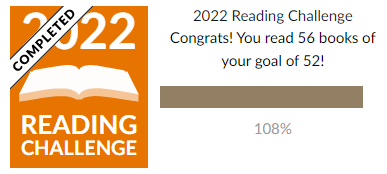
But here’s the real story of my reading in 2022:

Screenshot of successful Goodreads 2022 Reading Challenge showing 56 books read, with goal of 52 (108%)

Whoa yeah. And I owe it all to my children, who one day wandered away from the picture books at the library and into the junior fiction section, and suddenly we were onto chapter books — particularly:

  • Andy Griffiths & Terry Denton’s Treehouse series
  • Kiwi author Stacy Gregg’s Spellbound Ponies series
  • and most of all, the Secret Kingdom, churned out at a rate by a pseudonymous collective of hired guns known as ‘Rosie Banks’.

It’s incredible to watch my kids’ faces grin and grimace with the action as I read each book to them. And the way Juney will stare off at some version of events in her mind’s eye while Nora fixes her gaze on my face, watching the characters speak through me. They live for stories.

Don’t ask me why, but when I read them their first Secret Kingdom book (Wildflower Wood if you must know), I accidentally gave Summer the voice of Moss as played by Richard Ayoade in The IT Crowd and now I can never change it. You can probably guess which of Ellie, Summer, and Jasmine is the kids’ favourite.

Music

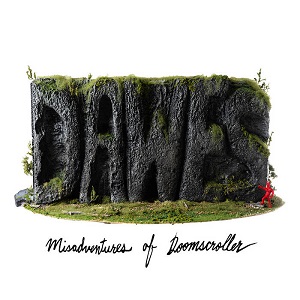
Best Hardcore Album AND Best Album Under 30 Minutes AND My Favourite Record of the Year:

It’s so solid all the way through, and so manageable at a tick over 26 minutes, I might just listen to it again right now.

Best Prog-Rock Album AND Best Album Title:

I had to listen to this because of the title, which so succinctly describes how my biggest weakness defines me. The music is relaxed and jazzy and has room to breathe, with lyrics that revel in ambivalence, simultaneously railing against our collective inertia and allowing us the joy of relaxing into it.

Best Glitchpop Album AND Most Uncomfortable Listen:

Glitch Princess by yeule

Much of yeule’s lyrics are about a disconnect between self and body, how they hate that their emotional scars are printed all over it. Their keenness for you to join them in their discomfort will put as many people off as the autotuned vocal snippets and chopped-up machine noise, I’m sure. I was quite happy to sit with it.

Best Synthpop Album AND Most Assured Album By Someone Who Kind of Hates Making Music:

Laurel Hell by Mitski

She almost swore off music altogether a couple of years ago, eaten up by being “a product that’s being bought and sold and consumed”, and yet here she is with music that seems to know exactly what it’s doing, summing up the world in the space of a song, leaving you wanting more.

Best R&B Album:

Three Dimensions Deep by Amber Mark

Everyone else will be picking Beyoncé here but I once again failed to get into her music. And anyway, I have Amber Mark to take me beyond the stars, shaking her head and breathing the obligatory “damn, I fuckin’ made it”.

Movies

IN CINEMAS

Three weeks apart in April-May, I had my only cinemagoing experiences of 2022 — and what excellent choices they were.

EVERYTHING EVERYWHERE ALL AT ONCE tries so much — visually, tonally, thematically — and pulls off almost the lot. I laughed, I cried, I cringed. I shook my head in disbelief. The high-concept plot, asinine gags, and fight scenes are all fine, but the first 20 minutes of the film are among the most thrilling I’ve seen in years, featuring the always excellent Michelle Yeoh sucking you right into the whirlwind of Evelyn’s daily war: taxes, customers, gay daughter, ailing dad, sweet but ineffectual husband. Fundamentally, it’s a film about parents and children — about how you just want your kid to fucking LISTEN, or how you just want your mum to actually SEE who you are and take you seriously for once. But it piles so much more on top of that, which would choke and flatten most films but somehow elevates this one. Loved it.

AFTER YANG also sets up a narrative crackling with possibility. What a fulfilling sensation it is to get to the end and find out it’s basically about people being nice to each other, and trying really hard to understand each other, and keeping what’s good about humanity alive in an increasingly tech-driven world, rather than any drama based on withheld or concealed information. I thought about it for weeks afterwards.

NEW, BUT WATCHED ON A LAPTOP OR TV

Putting the above in the top two slots, here’s a quick ranking of other new-to-NZ films of 2022:

  • 3) THE LOST DAUGHTER
  • 4) THE WORST PERSON IN THE WORLD
  • 5) THE RESCUE
  • 6) SUMMER OF SOUL (…OR, WHEN THE REVOLUTION COULD NOT BE TELEVISED)
  • 7) THE BOB’S BURGERS MOVIE
  • 8) TURNING RED
  • 9) TITANE
  • 10) LICORICE PIZZA
  • 11) SHANG-CHI AND THE LEGEND OF THE TEN RINGS

Liked the top four a lot, didn’t particularly care for the others, which is the first time I’ve said that about a Paul Thomas Anderson film. Men may be shit but is that reason enough to run off with a boy, who is unfortunately becoming a man, at the end?

NOT SO NEW

And some highlights from my other viewing of 2022:

  • DEREK DELGAUDIO’S IN & OF ITSELF
  • FREE SOLO
  • EMMA.
  • SOUND OF METAL
  • THE PEANUTS MOVIE
  • COLUMBUS (rewatch #3)
  • MASTER AND COMMANDER: THE FAR SIDE OF THE WORLD (rewatch #2)
  • BATTLESHIP POTEMKIN

I recommend watching any of these, but I had the most fun watching EMMA. That’s how you do a period comedy-drama.

If for some reason you want the full record of my 2022 viewing, here’s the Letterboxd link, where you can also follow my reviews in 2023.

Health

2022 was the year of dodging COVID. I think. Our house saw everything but a positive test: high temperatures, snotty noses, deepening fatigue, gastroenteritis on repeat. And my mother-in-law in the annex had no sense of smell for six months and still can’t walk fifty metres without feeling wiped out for the rest of the day, her well-worn impression in the sofa nearly always occupied, her neurologist convinced she has in fact had COVID. But still: no positive test.

In 2023, we will surely get COVID, whether or not we continue to mask in indoor public spaces. As someone in my orbit said: “Everyone should just chill. Just get over it, accept it. It’s here, it’s not going away.” (Update: I’m posting this in mid-February because we’ve had COVID, already.)

*

One Sunday night in approximately September, I struggled to sleep. And it’s been the same every Sunday night since.

Many people over the years have told me of their nightly battle with consciousness and their increasingly desperate attempts to flee it. Every time, I would think: I am so lucky. With rare exceptions, I’m out within ten minutes of my head hitting the pillow. I may be up in the night with unsettled kids; I may be awake too soon when the alarm goes off. But getting off to sleep has never been a problem, until now.

Sleep is so fundamental, it affects everything else in your life. We know this. So, suddenly, I’m analysing the impact of anything I do that isn’t sleep. Sunday night is the main offender, so is it work stress, or perhaps weekend sleep-ins throwing off my routine? Am I eating or looking at my phone too close to bedtime? Are my exercise habits insufficient? Do I need my spouse there in the bed with me? Do I have the right pillow, the right blanket, the right mattress? If I could just get the variables perfect, I could sleep fine.

I mentioned this to some older colleagues. Oh, yeah, they said. Sunday nights are trouble. I was more horrified than relieved to hear this was a common affliction because it made me think I was destined to fall into this pit and never get out, just like everyone else. They advised me not to look at the clock at all once the sun goes down and to try melatonin, or ibuprofen. I haven’t — yet.

Sports

Something about small amounts of indoor football.

Something about volunteering at the Women’s Cricket World Cup, the joy and hope of Amelia and Jess Kerr’s embrace after icing a big warm-up chase against India, the despair of the White Ferns’ tame and fearful exit on home soil.

Something about Lionel Messi completing football at the 2022 FIFA Men’s World Cup. That no-look 30-yard pass through his marker’s legs for Montiel to run onto and score, the sort of genius that makes two goals in the final seem insignificant. As ‘McNizar 24’ put it in a YouTube comment that has garnered over 2,700 likes: Did you realize that in every moment of football, there’s always have Ronaldo and Messi.

Tech and Gaming

My stupidest ever life event happened in 2022. On an otherwise unmemorable afternoon in late October, I completed my 1000th match in New Star Soccer, a football game for mobile phones, thereby achieving the game’s final award.

I first played New Star Soccer as a browser game in 2011 — and I played it a lot. But a succession of low-end laptops failed to render its very limited graphics without microsecond pauses, and as gameplay is based around fast clicking, I became too frustrated to continue various long careers in the game.

Then, in 2021, I downloaded the mobile version, which suffers no such glitching. And so: 1000 games, completed at a rate of about three a day. I told Tara of this monument to wasted time and she was shocked: “You play a mobile game? And you’ve played one thousand matches in it?!”

The longitudinal nature of this achievement, combined with the lack of challenge in the gameplay beyond about year three in the game world, meant there wasn’t much of a dopamine hit when the awards screen ticked over to 100%. And as soon as I finished that final season, I retired and stopped playing the game completely. It gave me a final score:

You, like me, might be wondering where this ranks me globally. Well, I’ve googled a few times but am yet to find the New Star Soccer community online, so am unable to tell whether this is an okay score, a good score, or a great score. Which means there’s a remote possibility I’m the world’s greatest ever New Star Soccer player.

*

Through the YouTubers Zero Master and decino, I rekindled my childhood fascination with DOOM and discovered a world of untold riches in its still-strong modding community, coming up to 30 years since the first game’s release.

Through playing many cooperative games with Tara, I deepened my love of the Nintendo Switch console and actually almost want my own Switch.

People

I was confined to barracks for much of 2022. As I say: high temperatures, snotty noses, deepening fatigue, gastroenteritis on repeat. You don’t want to be taking that shit out into the world. And for a few months there, when Omicron was first on the lash, we stayed home to protect ourselves and particularly my vulnerable mother-in-law. Even the kids, who would come to love their kindy days once we arbitrarily decided it was safe to send them. It wasn’t good for any of us mentally, spending all that time at home. But it kept us apparently free of COVID.

Now the kids are off to school and really becoming themselves, full of more questions and ideas than ever.

I didn’t get around to tying this post off neatly. Didn’t actually complete it, if you look at the rushed placeholder content above, the paucity of images, and this anticlimactic conclusion. Still: time passes, we carry on.

PARASITE (2019) (W)

My fellow attendees walked out of the cinema with grins on their faces — “a superb black comedy!” “uplifting!” “they were resilient!” — while I left in a fug of depression, convinced both families were locked into their respective prisons (one gilded, one grimy) doomed to fight their private battles in the tight limitations of capitalism. It seems Bong had ambitions of provoking both responses, a serious commentary and a work of farce. Clearly he has succeeded. But, as you may also feel about the cultural appropriation of native American tropes near the end, I have reservations.

PARASITE’s key shortcoming is its failure to properly engage with the poor family’s poverty. They are so hard up as to have had all their phones disconnected, and so beaten down by their situation that they lie around their semi-basement in a stupor. Then, when the plot-driving opportunity to tutor a rich student presents itself, they suddenly have access to a hair and wardrobe department — actually, the daughter’s locks are fabulous from the first scene — and the iron confidence of high-stakes scammers. At that benighted level of society, tasks like getting a new phone contract take on Herculean impossibility, let alone showing up at a prospective employer’s workplace with a suit, a tie, and a memorised script to convince the rich man you belong in the support structure of his world.

I never believed their situation was as desperate as it looked because they were able to extract themselves from it so easily. When they do literally lose everything, they are back on their feet within hours. It’s too convenient.

Pity, because so much about this film is compelling. I could almost feel the impersonal chill of that art gallery of a home, the expensive fabric draped around the rich mother’s shoulders — who, incidentally, is the most complete and consistent character, also in a stupor when introduced. The schemes to establish the illusion are superbly executed. A scene in which a character smokes a cigarette on a toilet achieves a rare and ugly beauty. The film’s final lines beautifully express the fantasy of overcoming poverty while also addressing how much easier it ought to be.

I just wish it had tried harder to examine the reality of life in the underclass, especially as it tosses the rich family to the curb in its final act. Which suggests Bong, himself a rich man, is on the side of the poor, disinterested in telling the full story of what our society does to the wealthy, desperate to present how it keeps so many people down, but not sufficiently motivated to tackle the paralysing breadth of their predicament.

Originally posted as a ★★★½ review of Parasite on Letterboxd https://boxd.it/XfYz7

Empathic pain response: Green Room (2015)

Green Room chessboard floor
Image by Angela Wolf (Flickr)

There are many more gruesome deaths in Green Room, but for some reason — I can’t explain why — the one that really got me was the machete to the throat. This poor sucker, whose red laces mark him out as a neo-Nazi redshirt, gets one shotgun blast away before being incapacitated by a mic stand. One of our heroes charges at him, blade in hand, and strikes one vicious blow to the left side of his neck. The shotgun falls to the floor, and as blood drains from the wound, his body follows.

A few seconds after the machete struck his flesh, I felt a pain in the exact same spot on my neck. Left side, about four inches across. The pain lingered through the rest of the film, through the drive home — through the rest of the night until I went to bed and fell asleep. As I write this, a full 24 hours after leaving the theatre, recollection of that scene brings the pain back. It’s the first time a film has provoked such a strong mirror neuron response in me.

But why that particular wounding? To a minor character, and in a comparatively minor fashion? I don’t know. That’s the sort of response Green Room wrings from you: visceral, unexpected, disorienting. It expertly builds and maintains tension, populates the screen with memorable and believable characters, and shows you the ‘how’ of what’s happening without muddying the waters with the ‘why’. It delivers the thrills you expect without pandering. It’s a genre classic.

The greatest love of all: Toni Erdmann (2016)

corp.jpg
Image via jvc (Flickr)

I’m reminded of the efforts to sell The Death of Mr Lazarescu as a comedy because it didn’t fit into any other marketable box. Toni Erdmann is not a comedy, and the ‘prankster’ father present in every synopsis barely resembles the Winfried/Toni Erdmann we meet in the film. No, this is a deeply depressed and bitter film, filled with frustration at what market forces and globalisation are doing to people of all ages and at all levels of society.

As the father and daughter, Sinonischek and Huller give us two of the saddest characters of 21st Century film. The seams that hold their lives could tear at any moment, and they can keep from falling apart for a while, but the time will come when they realise there is no point trying any more and they might as well have a full breakdown. Winfried is a failed husband and failed father, blundering through one encounter after another, his alienation becoming his defining characteristic. Ines is an exceptionally competent business consultant, capable of turning her own blunders into leverage in a heartbeat, and the fact that she is so good at her job has stripped away everything else, turned her into an emotional husk, alternately raw and unfeeling. They both need a hug.

Thankfully, director Ade has a lot of warmth towards these characters. Perhaps it would have been more of a comedy if she didn’t. But she works so hard to make you care about them, and the actors give all they have, especially Huller. You so want them to connect with each other, or with anything, really, and it’s so hard to see them keep missing. It’s a better, more excruciating film for that warmth.

Did I say it wasn’t funny? Oh, no, it’s funny. It’s piss-funny in places, especially in the final hour. The situations are funny, expertly written and performed to get the laughs, but you’re relieved as much as amused. A few moments are profoundly moving and funny at the same time.

Will they be okay, though? Probably not. The world isn’t getting any friendlier. Toni Erdmann is a remarkable film for our times, one that I may one day call great.

Respect: Tower (2016)

tower.jpg
Image via wattsbw2004 (Flickr)

I spent a lot of the running time of Tower wondering: why make this film? A terrible mass murder happened 50 years ago, and in the reporting of the outstanding Texas Monthly journalist Pamela Colloff, definitive records of the events already exist. So why film one of those pieces? And why animate it? And why drag the survivors through it one more time?

In retrospect, I can put a lot of those questions to the side. My suspicion of director Maitland and his team has given way to a kind of grudging respect. Though his treatment of this dreadful subject is a little showy, the extended animated sequences make it seem far more real than straight re-enactments would have, and he takes you inside a mass shooting in a way that no other film I’ve seen has. (The obvious comparison is with Elephant, which is a lesser film by comparison.)

Most importantly, Maitland’s focus is squarely on the survivors. The ultimate point is the correct number of times for this story to be told — Colloff or not — is however many times the survivors are willing to tell it. This film witnesses their suffering and bravery, something they were largely denied at the time. That alone makes it worthwhile.

No budget, no genre, no problem: Chronesthesia (2016)

Chronesthesia
Image by glix (Flickr)

I found lots to like about Chronesthesia.

The high-concept premise seems like a gimmick at first, but it earns its big climax and all the editing trickery along the way. The ‘mental time travel’ idea is both a way into the story and an effective means of pushing it forward.

The characters are well-realised people, from youngest to oldest, and their conversations feel authentic, whether they’re meeting cute or arguing, whether or not they’re generations apart. You really feel an emotional investment by actor/director/editor/writer Weal in all of them, even in the smaller supporting roles, and he deserves extra credit for that, especially as he is the star of the film and in nearly every scene. It could so easily have been a straight-up vanity project. Perhaps he realised the quality of the talent opposite him and decided to give them room to do their thing.

Wellington looks marvellous. We already knew that, but Duncombe’s cinematography shows it off in style. Because this is a no-budget film, I also have to mention the sound quality, which is impeccable.

This is a rare film that takes mental illness seriously, to the point that large chunks of dialogue explore its effects on and place in society. A character with mental illness is treated with consistent respect, despite at times being a potential danger to the people around him. Not just a plot device after all!

The only thing I would change is the title. Being a New Zealand film, and hence a product of British English, it should be ‘Chronaesthesia’. But I’ll give them a pass if it gets them an American distribution deal.

The audacity of hope: Tanna (2015)

8422834972_43d24c5d22_z.jpg
Photo by sydneydawg2006 (Flickr)

The Romeo and Juliet comparison is obligatory, so let’s get that out of the way.

But no, really, Tanna is a lot like Romeo and Juliet. Except it’s set in tribal lands in Vanuatu, where residents have rejected money, Christianity, democracy, and t-shirts, instead choosing a traditional life. And this story really happened, only a few decades ago.

And instead of going all in with the tragedy, it ends with hope — the hope that if you look at the consequences of certain customs, and see how tragic they can be, you can find another way. The hope of charismatic and thoughtful leadership, with speeches backed by action. The hope that minds can change.

It’s so easy to be cynical about such sentiments. You hear them so often from politicians and they so rarely amount to anything tangible. But that’s truly how Tanna made me feel! I would never want to live the way the Yakel do, but I think we can all learn something from them, or at least be reminded of how we are capable of learning.