Things of 2022

Front Page

We Some of us tend to uncertainty. The first draft of this post had multiple questions in each section, and as I age, it seems I have more questions than answers, even about my own experience of the world. I know I am a husband, father, public servant, in roughly that order. Nearing forty and a little greyer still. I celebrated my fifth wedding anniversary, and my children’s fifth birthdays — yes.

I ate mostly vegetables. I got a sweat up about twice a month on average. I got accustomed to multigenerational living in a million-dollar house in an area of quintile 5 social deprivation, i.e. ‘most deprived’. (It’s probably more like an $850k house now.)

I’ve tried to strip those questions out to give my writing a more concrete foundation. The truth is I live, like all of us, on shifting sands, increasingly unsure I can trust my own senses, let alone the ground beneath my feet.

Travel

I think we’re finally getting family holidays right. Sojourns of years past have been marked by squabbling and exhaustion and long days in the car are giving way to pleasant jaunts with shorter squabbles, generally cheerful weathering of inconvenience… and, yes, long days in the car. Hard to get away from those in Aotearoa New Zealand.

Certainly the kids’ (and consequently our) improved sleep is a big part of it, which is true of all aspects of life. But it’s all so much purer and more acute on holiday, where you’re cut loose from the cradle of habit and routine. Clothes in bags and a sandy piles on the floor rather than the usual drifts flowing out of baskets in the living room, bedroom, hallway. Washing cutlery as you use it, not piling it up in the sink.

In February, Lake Rotoiti in the Bay of Plenty. Omicron was surging but we went anyway. We walked out of our caravan, crossed the narrow road to the playground, and crossed that to stride into such inviting water, which seemed to offer not just its own cool shallows but also the reflected contents of the skies above. It rained and drizzled half the time but we kept going back in anyway, cavorting and laughing and floating like a perfect sitcom family, tracking sand back into the caravan afterwards.

We came in from one such swim after the Rotorua Redwoods tree walk, settled in for afternoon rest (them: laptop, me: ebook), then ate some dinner and got ready to drive back for the much-anticipated Redwoods Nightwalk, which promised colourfully lit trees and “34 exquisite lanterns” to brighten the final night of our holiday.

The kids leapt into their car seats and waited while I hunted for the car keys. I hunted, and I hunted, and I hunted; the keys were nowhere. I thought back to the way we’d bounded straight from car to lake when we’d gotten back to the caravan that afternoon. Surely the keys hadn’t stayed in my pocket? Surely they weren’t at the bottom of that huge lake, concealed in the surface reflections by day and in the dark by night?

After an hour of searching, and swearing, including with my phone torch in the water, we gave up and took the kids back in for bed. They were upset but handled it pretty well. Weathering inconvenience, or parental failure.

I set an early alarm and slept fitfully, knowing failure to locate the keys meant a substantial bill to cut a new one, and at the very least, a late departure for home. When the alarm went off at dawn, I crept out to comb that lake. But first, another quick check of the ca-

Ah. There they were in Juney’s seat. Right where her bum had been for the duration of the previous night’s frantic search.

We didn’t get to the Redwoods Nightwalk this time, but we did get to drive home.

*

In November, a week in Tāmaki Makaurau/Auckland. COVID very much around once more, but we didn’t get it this time either, although Tara picked something up early and had to miss our ferry ride across to Devonport. The kids loved the dry sand at the playground and, a few metres away, the wet sand and wavelets of the beach, studded with many brilliant shells and objects that they collected for close to an hour until it was time for possible the worst fish and chips I’ve ever had. Then back to the ferry with heavier legs and darkening circles under eyes via a last toilet stop.

They were just about to haul the gangway back on board when I realised I didn’t have the tog bag, which also held their drink bottles and other small items that would be missed. “We can’t wait,” said the captain. So off we went to get the bag, and back to the playground for ten minutes, and back to the ferry once more, kids “actually happy to play some more”. Eventually we made it back to the central city and trudged ten minutes to our absurdly central accommodation, fuelled by lollies.

I know I only talk about the times things go wrong but as a parent, I am rarely prouder of myself or my children than when there’s a balls-up far from home and we find a way to get through it.

Books

These books I loved:

  • The Books of Earthsea by Ursula K. Le Guin
  • On Warne by Gideon Haigh
  • We Have Always Lived in the Castle by Shirley Jackson
  • Trust by Hernan Diaz

Very occasionally, a book comes into your life that’s not only addictive and a formal marvel but also changes how you see the world. Trust is one such book. Diaz’s meticulous research into early 20th Century capital and finance shows, but more than that, so does his deep reading of novels and autobiographies of the time, all of which are reflected in Trust’s nested four-part structure. I read it twice in 2022; I also listened to a two-and-a-half-hour interview with Diaz about how he pulled it all off. For a book that’s so much about the artificial creation of value, it was worth every second.

These books I liked:

  • My Brilliant Friend by Elena Ferrante
  • To Paradise by Hanya Yanagihara
  • In the Margins by Elena Ferrante
  • How to Loiter in a Turf War by Coco Solid
  • Stories of Your Life and Others by Ted Chiang
  • Foreverland: On the Divine Tedium of Marriage by Heather Havrilesky
  • How to Stay Sane by Philippa Perry
  • Small Deaths by Rijula Das
  • A Line Above the Sky by Helen Mort
  • The Seven Moons of Maali Almeida by Shehan Karunatilaka
  • The Last Policeman by Ben H. Winters

Of these, To Paradise is the one I find myself thinking back to most often. Yanagihara’s clean, methodical prose masks some pretty half-baked thinking — but it does get you thinking, and it’s propulsive in moving the narrative forward. Side note: I read To Paradise on the back of a famously negative (and in my opinion quite unfair) review by Becca Rothfeld in the Times Literary Supplement: “so unusually terrible that it is a sort of anti-accomplishment, the rare book that manages to combine the fey simplicity of a children’s tale with near unreadable feats of convolution […] There is nothing to recommend it to anyone.” Well! Sign me up!

I would also like to recommend Foreverland to anyone in a long-term relationship. It’s frank, funny, and takes away all that societal pressure to be the perfect spouse.

These books I found disappointing:

  • The Secret History by Donna Tartt
  • The Word for World is Forest by Ursula K. Le Guin
  • The Hydrogen Sonata by Iain M. Banks
  • Railsea by China Miéville

Three giants of my reading life above. I’ll return to them all, but probably not to Tartt, whose rich plonkers irritated me from page one.

This book I actively hated:

  • How High We Go in the Dark by Sequoia Nagamatsu

A thoroughly exploitative catalogue of grief in which children are subjected to particular suffering as shortcuts to provoking an emotional response, never realistically rendered, their suffering a footnote to the lessons we must all take from the nobility of their often grotesque deaths. It’s the Tuesdays with Morrie of speculative fiction.

But here’s the real story of my reading in 2022:
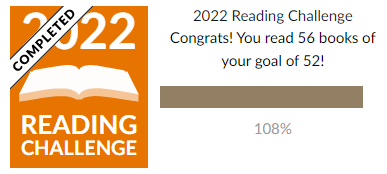
Screenshot of successful Goodreads 2022 Reading Challenge showing 56 books read, with goal of 52 (108%)

Whoa yeah. And I owe it all to my children, who one day wandered away from the picture books at the library and into the junior fiction section, and suddenly we were onto chapter books — particularly:

  • Andy Griffiths & Terry Denton’s Treehouse series
  • Kiwi author Stacy Gregg’s Spellbound Ponies series
  • and most of all, the Secret Kingdom, churned out at a rate by a pseudonymous collective of hired guns known as ‘Rosie Banks’.

It’s incredible to watch my kids’ faces grin and grimace with the action as I read each book to them. And the way Juney will stare off at some version of events in her mind’s eye while Nora fixes her gaze on my face, watching the characters speak through me. They live for stories.

Don’t ask me why, but when I read them their first Secret Kingdom book (Wildflower Wood if you must know), I accidentally gave Summer the voice of Moss as played by Richard Ayoade in The IT Crowd and now I can never change it. You can probably guess which of Ellie, Summer, and Jasmine is the kids’ favourite.

Music

Best Hardcore Album AND Best Album Under 30 Minutes AND My Favourite Record of the Year:

It’s so solid all the way through, and so manageable at a tick over 26 minutes, I might just listen to it again right now.

Best Prog-Rock Album AND Best Album Title:
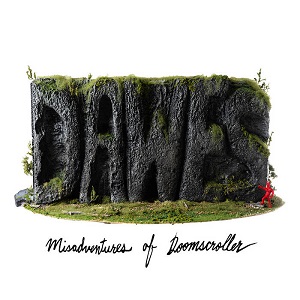
I had to listen to this because of the title, which so succinctly describes how my biggest weakness defines me. The music is relaxed and jazzy and has room to breathe, with lyrics that revel in ambivalence, simultaneously railing against our collective inertia and allowing us the joy of relaxing into it.

Best Glitchpop Album AND Most Uncomfortable Listen:

Glitch Princess by yeule

Much of yeule’s lyrics are about a disconnect between self and body, how they hate that their emotional scars are printed all over it. Their keenness for you to join them in their discomfort will put as many people off as the autotuned vocal snippets and chopped-up machine noise, I’m sure. I was quite happy to sit with it.

Best Synthpop Album AND Most Assured Album By Someone Who Kind of Hates Making Music:

Laurel Hell by Mitski

She almost swore off music altogether a couple of years ago, eaten up by being “a product that’s being bought and sold and consumed”, and yet here she is with music that seems to know exactly what it’s doing, summing up the world in the space of a song, leaving you wanting more.

Best R&B Album:

Three Dimensions Deep by Amber Mark

Everyone else will be picking Beyoncé here but I once again failed to get into her music. And anyway, I have Amber Mark to take me beyond the stars, shaking her head and breathing the obligatory “damn, I fuckin’ made it”.

Movies

IN CINEMAS

Three weeks apart in April-May, I had my only cinemagoing experiences of 2022 — and what excellent choices they were.

EVERYTHING EVERYWHERE ALL AT ONCE tries so much — visually, tonally, thematically — and pulls off almost the lot. I laughed, I cried, I cringed. I shook my head in disbelief. The high-concept plot, asinine gags, and fight scenes are all fine, but the first 20 minutes of the film are among the most thrilling I’ve seen in years, featuring the always excellent Michelle Yeoh sucking you right into the whirlwind of Evelyn’s daily war: taxes, customers, gay daughter, ailing dad, sweet but ineffectual husband. Fundamentally, it’s a film about parents and children — about how you just want your kid to fucking LISTEN, or how you just want your mum to actually SEE who you are and take you seriously for once. But it piles so much more on top of that, which would choke and flatten most films but somehow elevates this one. Loved it.

AFTER YANG also sets up a narrative crackling with possibility. What a fulfilling sensation it is to get to the end and find out it’s basically about people being nice to each other, and trying really hard to understand each other, and keeping what’s good about humanity alive in an increasingly tech-driven world, rather than any drama based on withheld or concealed information. I thought about it for weeks afterwards.

NEW, BUT WATCHED ON A LAPTOP OR TV

Putting the above in the top two slots, here’s a quick ranking of other new-to-NZ films of 2022:

  • 3) THE LOST DAUGHTER
  • 4) THE WORST PERSON IN THE WORLD
  • 5) THE RESCUE
  • 6) SUMMER OF SOUL (…OR, WHEN THE REVOLUTION COULD NOT BE TELEVISED)
  • 7) THE BOB’S BURGERS MOVIE
  • 8) TURNING RED
  • 9) TITANE
  • 10) LICORICE PIZZA
  • 11) SHANG-CHI AND THE LEGEND OF THE TEN RINGS

Liked the top four a lot, didn’t particularly care for the others, which is the first time I’ve said that about a Paul Thomas Anderson film. Men may be shit but is that reason enough to run off with a boy, who is unfortunately becoming a man, at the end?

NOT SO NEW

And some highlights from my other viewing of 2022:

  • DEREK DELGAUDIO’S IN & OF ITSELF
  • FREE SOLO
  • EMMA.
  • SOUND OF METAL
  • THE PEANUTS MOVIE
  • COLUMBUS (rewatch #3)
  • MASTER AND COMMANDER: THE FAR SIDE OF THE WORLD (rewatch #2)
  • BATTLESHIP POTEMKIN

I recommend watching any of these, but I had the most fun watching EMMA. That’s how you do a period comedy-drama.

If for some reason you want the full record of my 2022 viewing, here’s the Letterboxd link, where you can also follow my reviews in 2023.

Health

2022 was the year of dodging COVID. I think. Our house saw everything but a positive test: high temperatures, snotty noses, deepening fatigue, gastroenteritis on repeat. And my mother-in-law in the annex had no sense of smell for six months and still can’t walk fifty metres without feeling wiped out for the rest of the day, her well-worn impression in the sofa nearly always occupied, her neurologist convinced she has in fact had COVID. But still: no positive test.

In 2023, we will surely get COVID, whether or not we continue to mask in indoor public spaces. As someone in my orbit said: “Everyone should just chill. Just get over it, accept it. It’s here, it’s not going away.” (Update: I’m posting this in mid-February because we’ve had COVID, already.)

*

One Sunday night in approximately September, I struggled to sleep. And it’s been the same every Sunday night since.

Many people over the years have told me of their nightly battle with consciousness and their increasingly desperate attempts to flee it. Every time, I would think: I am so lucky. With rare exceptions, I’m out within ten minutes of my head hitting the pillow. I may be up in the night with unsettled kids; I may be awake too soon when the alarm goes off. But getting off to sleep has never been a problem, until now.

Sleep is so fundamental, it affects everything else in your life. We know this. So, suddenly, I’m analysing the impact of anything I do that isn’t sleep. Sunday night is the main offender, so is it work stress, or perhaps weekend sleep-ins throwing off my routine? Am I eating or looking at my phone too close to bedtime? Are my exercise habits insufficient? Do I need my spouse there in the bed with me? Do I have the right pillow, the right blanket, the right mattress? If I could just get the variables perfect, I could sleep fine.

I mentioned this to some older colleagues. Oh, yeah, they said. Sunday nights are trouble. I was more horrified than relieved to hear this was a common affliction because it made me think I was destined to fall into this pit and never get out, just like everyone else. They advised me not to look at the clock at all once the sun goes down and to try melatonin, or ibuprofen. I haven’t — yet.

Sports

Something about small amounts of indoor football.

Something about volunteering at the Women’s Cricket World Cup, the joy and hope of Amelia and Jess Kerr’s embrace after icing a big warm-up chase against India, the despair of the White Ferns’ tame and fearful exit on home soil.

Something about Lionel Messi completing football at the 2022 FIFA Men’s World Cup. That no-look 30-yard pass through his marker’s legs for Montiel to run onto and score, the sort of genius that makes two goals in the final seem insignificant. As ‘McNizar 24’ put it in a YouTube comment that has garnered over 2,700 likes: Did you realize that in every moment of football, there’s always have Ronaldo and Messi.

Tech and Gaming

My stupidest ever life event happened in 2022. On an otherwise unmemorable afternoon in late October, I completed my 1000th match in New Star Soccer, a football game for mobile phones, thereby achieving the game’s final award.

I first played New Star Soccer as a browser game in 2011 — and I played it a lot. But a succession of low-end laptops failed to render its very limited graphics without microsecond pauses, and as gameplay is based around fast clicking, I became too frustrated to continue various long careers in the game.

Then, in 2021, I downloaded the mobile version, which suffers no such glitching. And so: 1000 games, completed at a rate of about three a day. I told Tara of this monument to wasted time and she was shocked: “You play a mobile game? And you’ve played one thousand matches in it?!”

The longitudinal nature of this achievement, combined with the lack of challenge in the gameplay beyond about year three in the game world, meant there wasn’t much of a dopamine hit when the awards screen ticked over to 100%. And as soon as I finished that final season, I retired and stopped playing the game completely. It gave me a final score:

You, like me, might be wondering where this ranks me globally. Well, I’ve googled a few times but am yet to find the New Star Soccer community online, so am unable to tell whether this is an okay score, a good score, or a great score. Which means there’s a remote possibility I’m the world’s greatest ever New Star Soccer player.

*

Through the YouTubers Zero Master and decino, I rekindled my childhood fascination with DOOM and discovered a world of untold riches in its still-strong modding community, coming up to 30 years since the first game’s release.

Through playing many cooperative games with Tara, I deepened my love of the Nintendo Switch console and actually almost want my own Switch.

People

I was confined to barracks for much of 2022. As I say: high temperatures, snotty noses, deepening fatigue, gastroenteritis on repeat. You don’t want to be taking that shit out into the world. And for a few months there, when Omicron was first on the lash, we stayed home to protect ourselves and particularly my vulnerable mother-in-law. Even the kids, who would come to love their kindy days once we arbitrarily decided it was safe to send them. It wasn’t good for any of us mentally, spending all that time at home. But it kept us apparently free of COVID.

Now the kids are off to school and really becoming themselves, full of more questions and ideas than ever.

I didn’t get around to tying this post off neatly. Didn’t actually complete it, if you look at the rushed placeholder content above, the paucity of images, and this anticlimactic conclusion. Still: time passes, we carry on.

Shayne P Carter

I finished reading Shayne Carter’s autobiography Dead People I Have Known (Victoria University Press). It’s an excellent book: reflective, honest, occasionally moving, occasionally funny. It also contains the best descriptions of music since AMADEUS.

I saw Carter perform one time, a Dimmer farewell gig at Bodega in 2012. Bodega is now closed, its central, eyeline-spoiling pillar a collective sigh in the memory of Wellington’s gig-going faithful.

From my vantage point at the extreme right of the room, I gripped the bar on which my beer bottle rested while Carter ripped through one face-melting, feedback-laden guitar solo after another. He seemed in a mood to indulge his fingers more than his voice that day, and that was fine with me. I barely remember him speaking, let alone singing.

What I do remember is his body doubled over in submission to his guitar. His fringe hung down over his sharp-featured face. His lips pursed out in a demonic grin. He must have spent half the gig in that pose.

“The facial expressions,” my friend and I agreed over a beer a few months later when the subject of Shayne Carter live came up. “The facial expressions.”

Years later, she would edit his book. And I would borrow the book from another friend, whose photos are in the book. Just so you know how small New Zealand is.

And I say again, it is an excellent book, worth reading even if you couldn’t name a single one of his songs. It’s almost as good as his facial expressions.

Cheezy Weezys

I was at Waikanae’s famous Fed Up Fast Foods fish ‘n’ chip shop with Stephen when I first encountered Cheezy Weezys.

I felt like they should have been advertised on an A4 printout in all-caps Arial Black, like all the other speciality items, but there they were on the big menu alongside hot dogs and spring rolls, as if they’d always been there.

We speculated as to what Cheezy Weezys might be. I suggested six or seven strips of mozzarella, battered and deep fried. Stephen proposed a scoop of chips with plasticky orange cheese squirted all over them from a bottle.

A subsequent image search proved Stephen right. Given they were called Cheezy Weezys, he was always going to be right.

But we didn’t order the Cheezy Weezys. I decided not to risk it, which is unlike me, because I usually try any old rubbish if it’s junky enough.

In the ensuing weeks, Cheezy Weezys seemed to be everywhere. I assure you, I’d never seen them on a fish ‘n’ chips menu before that rainy evening in Waikanae, and I’ve eaten a lot of fish ‘n’ chips. But there they were, again and again without fanfare, about $5.20 a pop.

Last weekend, when we went away to Foxton Beach, I cracked. Not only did Mr Grumpy’s have Cheezy Weezys, they also had Curry Chips, Cheese and Gravy Chips, and Blood ‘n’ Guts Chips. I ummed and aahed and eventually decided on Blood ‘n’ Guts Chips.

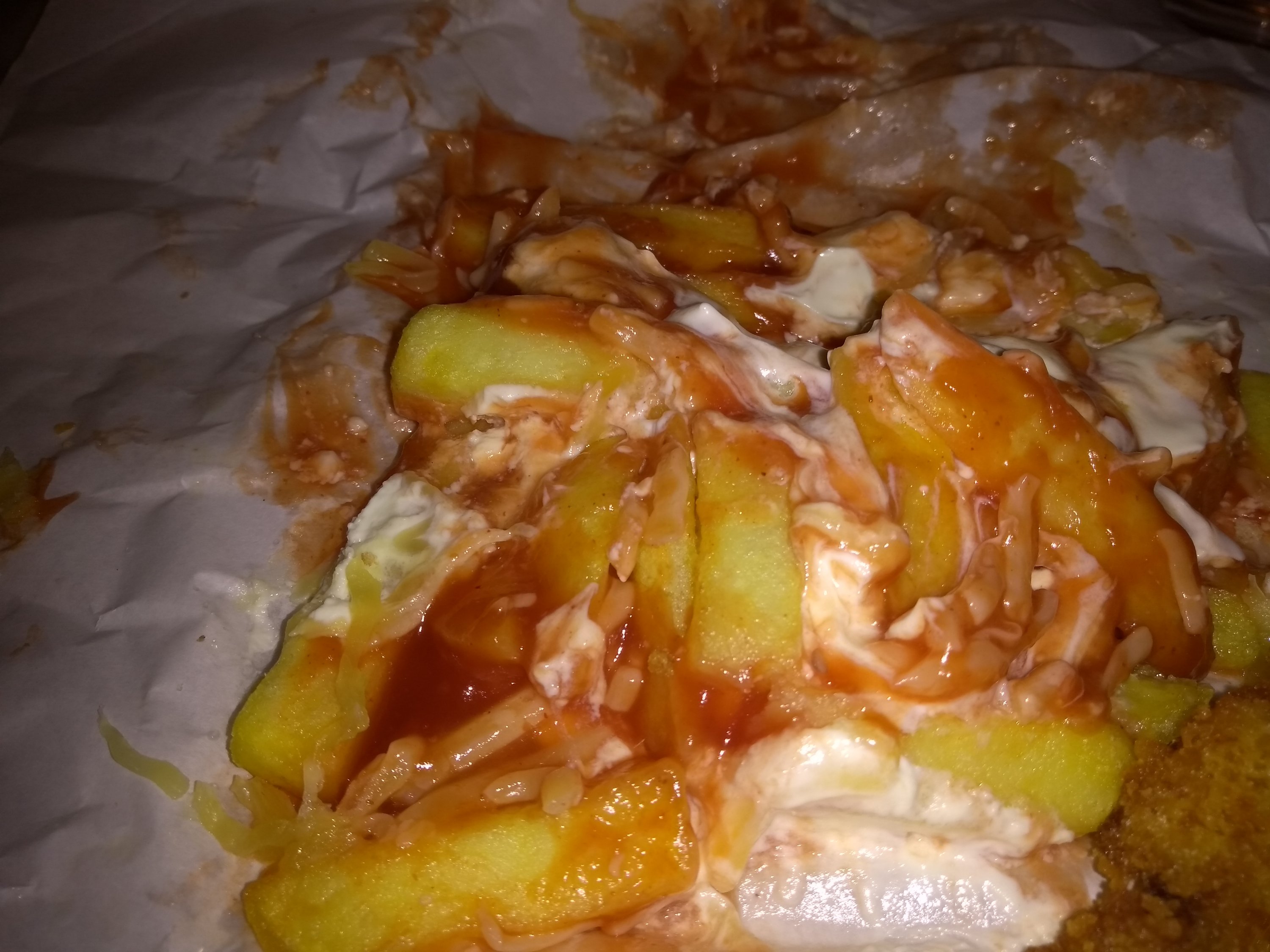
This is what they handed over:

That’s a scoop of chips, tomato sauce, sour cream, and grated cheese from one of those ready packets with loads of de-caking powder at the bottom.

Needless to say, my fascination with novelty hot chips is cured.

The call bell

Ding goes the call bell.

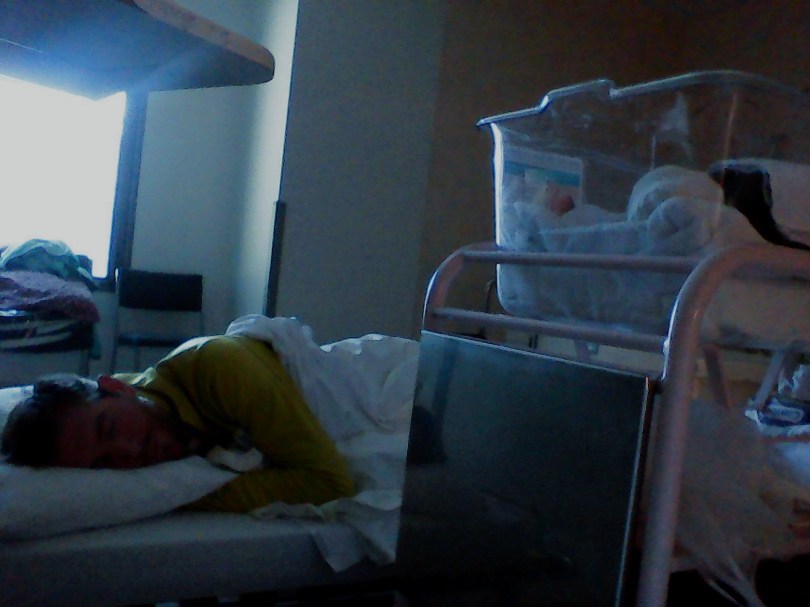
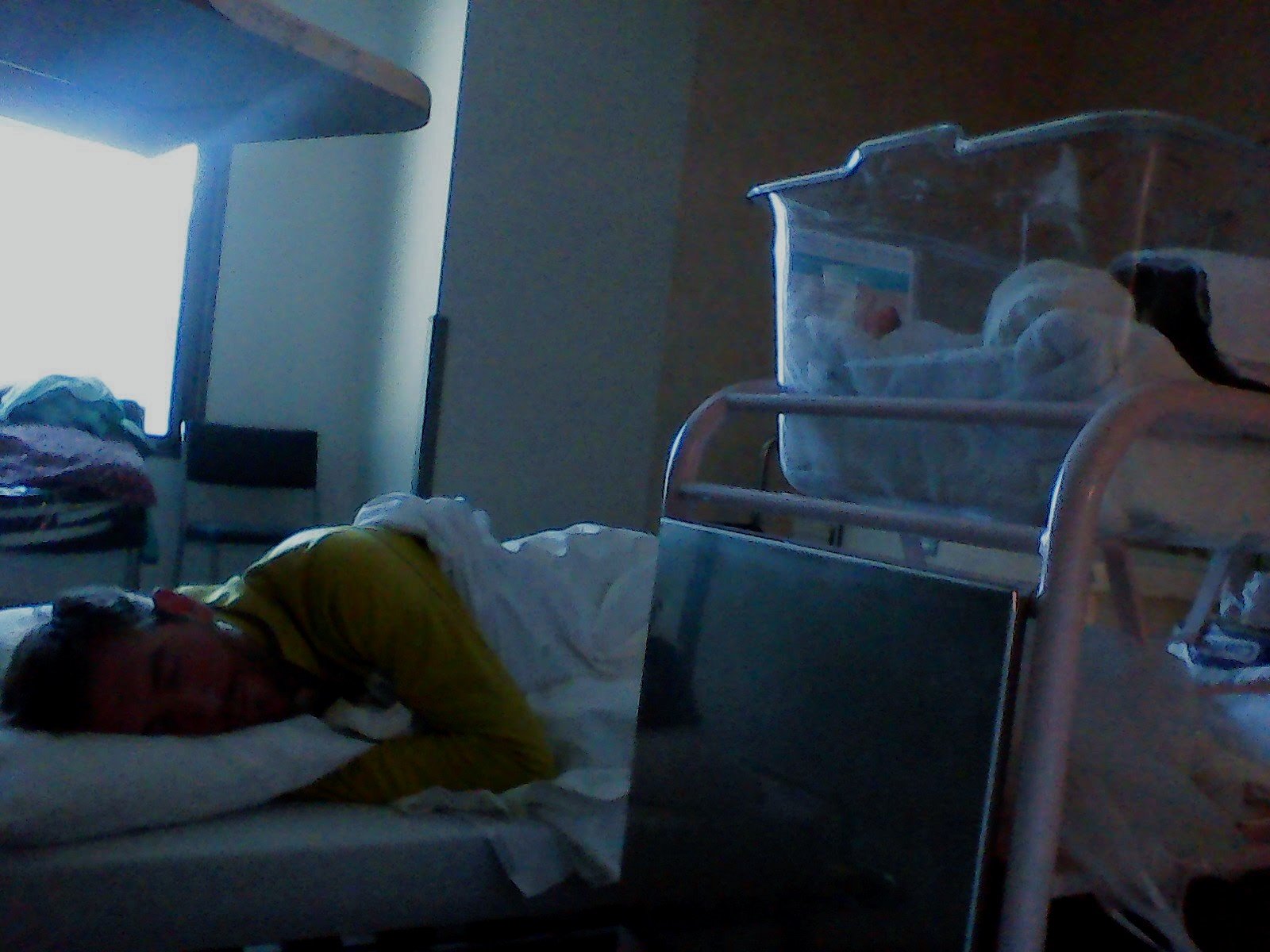
I pressed the button fifteen minutes ago when Tara’s tramadol wore off, four hours since the previous dose. A big, angry wound in her abdomen is giving her acute pain. One of our twin infants dozes in my lap, the other in a cot. Tara lies in bed, brows knitted in pain and exhaustion.

It’s about 2am.

There’s a speaker right outside our room. Every couple of minutes, the call bell dings again.

We’re waiting on one of the two overnight duty midwives to come and assist us. After a few more dings, she arrives, and we ask for more pain relief. Of course, she says, and promptly leaves.

Another fifteen minutes pass. In one of the other two dozen rooms served by two midwives, someone else presses the call button. Ding.

Approximately thirty-five minutes after I initially hit the button, the midwife returns with the tramadol. Tara ingests it and waits for it to take effect. Eventually, after a full hour of agony, she gets some relief.

Ding goes the call bell, on through the night and day, summoning health professionals that don’t exist.

*

This is far from the most gruelling episode of our six-day hospital experience when the kids were born, but it’s one that stays with me. It’s symptomatic of a system that is desperately under-resourced.

You look back on times like that and think, well, we got through it. And people are more than willing to tell you it’s just something you have to get through. Some people, anyway.

But I’m sharing this tiny story today because a much worse case of maternity ward understaffing and negligence is being widely reported. A baby died after a labour and birth in which everything that could go wrong did go wrong. Individuals made mistakes but the system overall is accountable.

And if so many people are ringing the bell to say that the system is inadequately resourced, that midwives are constantly at breaking point, that having a baby outside business hours loads significant risk into an already risky process, that the trauma of their hospital birthing experience haunts them for years, why are we still talking? Is anyone listening?

Ding.

War of the worlds

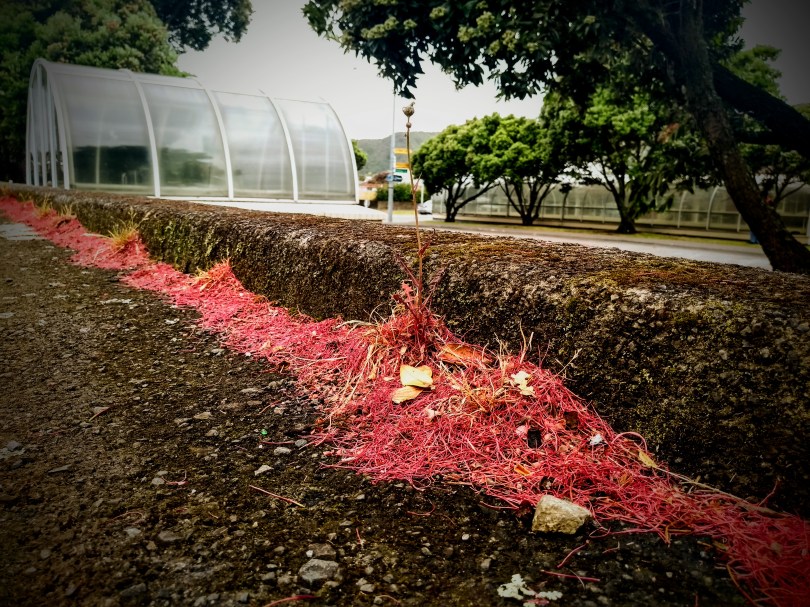
Pōhutukawa stamens collected in gutter by road

It’s been cool and damp in Wellington today. Cue a dozen overheard conversations in the office about it being a typical Wellington summer, i.e. over in a flash and barely there to begin with.

In reality, the sun has shone bright in blue skies recently and will shine again soon. But in order to belong, you must sign up to the mass delusion.

Christmas time is however ending. I know this because everywhere I go, I see millions of brilliant red pōhutukawa stamens collected in drifts on the footpath, like the spreading alien tendrils in War of the Worlds.

The pōhutukawa is also known as the New Zealand Christmas tree because of its vague resemblance to holly and its seasonal blossoms. When the flowers die, their crimson threads fall to the ground in clumps, the blood of Tawhaki under our feet. They’re beautiful and then they’re gone. They are our hair that has fallen out.

You can be sure they’ll be back next spring, though, until we’ve burned it all down — back from the underworld, leaping for the heavens, caught in flight on evergreen branches.

Other people’s breakfasts are strange

weet-bix wheat biscuits in bowl with no milk and spoon
via cogdog (Flickr)

It’s 9:45am on a Wednesday and I’m sitting at my desk in the office, eating a rather unsatisfactory bowl of wheat biscuits. Late breakfast — second breakfast, in fact, as I grabbed a chocolate twist from the railway station supermarket on the way to the office. The chocolate twist is a) a regular payday treat, b) a foot-long monstrosity of croissant pastry and brittle, plasticky chocolate, and c) bloody delicious if you have an appreciation for coarser pleasures. Where I usually eat some wheat biscuits at about 8am for breakfast, payday treat chocolate twist stodges up my belly until at least 9:30am, at which time I grudgingly add more stodge.

Anyway. Unsatisfactory? What is it that makes this particular bowl of wheat biscuits unsatisfactory? Well. This may take some time and effort on both our parts but I will attempt to explain.

My office is cold. Two clothing layers at least. That makes chilled milk from the fridge less palatable than it usually might be, like smoking on a hot day: why drink liquid fridge when you’re already shivering? So today, I had the idea of pouring some milk from the bottle into a mug and heating it — just a little! — in the microwave. I’m a genius, I thought to myself as the microwaved blared radioactivity and loud beeps at me.

I poured the milk from the mug into the bowl of wheat biscuits (which also contained yoghurt, un-microwaved, but that’s not important right now), and marched out of the kitchen with an excited grin on my face.

By the time I’d reached my desk, the wheat biscuits were already beginning to disintegrate. Too quickly. I should have known I was in trouble. The first bite made my error plain: I’d overheated the milk very slightly from ‘glacier’, through the intended sweet spot of ‘council swimming pool in summer’, to to the unfortunate ‘lukewarm’. The entire bowl was sullied. Oh, I’ll eat it, don’t worry about that, but I’ll also come on here and complain about it.

It brings to mind a shocking experience in my youth. Staying the night at friends’ houses was a frequent joy of childhood, and it was always interesting to compare the breakfast routines of other families with those of my own. Often, my friend and I would emerge from slumber to an array of branded cereals, some in tall, airtight receptacles, and a jug of milk alongside them on the dining table. I would wonder if this was the weekday standard or a special effort from mum for a weekend visitor (me). It certainly bore no resemblance to the one or two cereals in the dark pantry at my own home.

One time, I stayed over at the farm house of my friend Chris, he of his own trail bike and air rifle, both of which terrified me. Two aspects of this breakfast were particularly unusual.

First was the jug of raw, unpasteurised milk on the table, ultra-fresh from the milking sheds a few hundred metres away. I decided on wheat biscuits and placed two in my bowl, thinking it a potential faux pas to take my usual three or four. Then I began to weigh up whether or not I was all right with consuming milk of known provenance. It was fine to open the cartons delivered at home by the milkman every Monday and Wednesday; that was Milk, its mysterious origin obscured by industry, conveniently expelling any thought of actual animals from my head. But this stuff had been inside a cow just a few hours before I sat down. I wasn’t sure I could deal with that.

As I hovered on the brink, the second unusual thing happened – the shocking thing. Chris’ mum picked up the just-boiled kettle, that strange, noisy object that occasionally furnished me with hot Milo but otherwise meant nothing – I wouldn’t drink tea or coffee until my twenties. Then she carried it over to Chris, who had also taken two wheat biscuits, and poured boiling water all over them.

My eyes went wide. This seemed abhorrent. I was sure Chris would object. But he didn’t; he just reached for the sugar (another item you’d never see on our breakfast table). I couldn’t believe it. This is normal? To obliterate all texture from the wheat biscuits and transform them, instantaneously, into mush? This is what you want?

I was so confused and appalled, I didn’t see what was coming. Chris’ mum came to my bowl, kettle in hand. Then she poured boiling water all over my wheat biscuits.

To be honest, I don’t really remember what happened next. I think I copied Chris exactly: a spoonful of sugar, then the milk (if I wasn’t going to object to molten wheat biscuits, I couldn’t very well draw the line at raw milk). I imagine we downed our piping hot sludge and headed out on the dreaded motorbike, the air rifle slung over Chris’ shoulder.

Chris and his family sold the farm and moved away soon after. We didn’t keep in touch.

No budget, no genre, no problem: Chronesthesia (2016)

Chronesthesia
Image by glix (Flickr)

I found lots to like about Chronesthesia.

The high-concept premise seems like a gimmick at first, but it earns its big climax and all the editing trickery along the way. The ‘mental time travel’ idea is both a way into the story and an effective means of pushing it forward.

The characters are well-realised people, from youngest to oldest, and their conversations feel authentic, whether they’re meeting cute or arguing, whether or not they’re generations apart. You really feel an emotional investment by actor/director/editor/writer Weal in all of them, even in the smaller supporting roles, and he deserves extra credit for that, especially as he is the star of the film and in nearly every scene. It could so easily have been a straight-up vanity project. Perhaps he realised the quality of the talent opposite him and decided to give them room to do their thing.

Wellington looks marvellous. We already knew that, but Duncombe’s cinematography shows it off in style. Because this is a no-budget film, I also have to mention the sound quality, which is impeccable.

This is a rare film that takes mental illness seriously, to the point that large chunks of dialogue explore its effects on and place in society. A character with mental illness is treated with consistent respect, despite at times being a potential danger to the people around him. Not just a plot device after all!

The only thing I would change is the title. Being a New Zealand film, and hence a product of British English, it should be ‘Chronaesthesia’. But I’ll give them a pass if it gets them an American distribution deal.

Jonah looms large

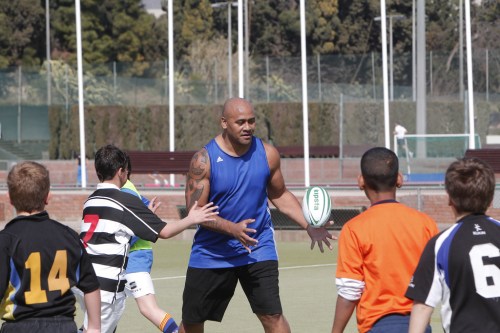
Jonah Lomu Global Sports Forum Barcelona
Jonah Lomu at the Global Sports Forum in Barcelona, 2011. Photo by Global Sports Forum (Flickr)

I don’t much care for TV news now. But when I was a kid, I would be in front of the TV every night at 6:40pm without fail. That was when the sports news was read by Clint Brown, or Bernadine Oliver-Kerby, or Peter Williams, or whoever was in the chair that day.

Sometime in 1993, at the back end of the sports bulletin, there was a brief item about a loose forward from Wesley College named Jonah Lomu. Low-angle footage showed him rampaging to the try line from about half way, first bulldozing his opponents out of his path, then skinning them with speed incongruous with the number 8 on his back. I was eight years old and thought to myself, “Bloody hell.”

A couple of months later, again at the end of the sports news, he appeared once more. “Jonah Lomu from Wesley College continues to make waves in the Auckland first XV competition.” Or something like that. It was like an action replay of the earlier item: Lomu gets the ball around half way, Lomu charges through his hapless markers, Lomu sidesteps the fullback, Lomu outruns the covering defenders. Lomu scores.

A year or so later, after a barnstorming performance at the Hong Kong Sevens in 1994, Jonah Lomu was in the All Blacks. A year after that, following his famed exploits at the 1995 Rugby World Cup, he was the biggest star in the history of rugby union. Of course I watched all that in rapture, even if that 1995 final didn’t work out the way I (or Lomu) would have hoped.

The next time I really paid close attention to Jonah Lomu was during the 1996 Hong Kong Sevens tournament. This was long before the days of managed workloads and sabbaticals for All Blacks, even for critical first-team players like Lomu. He showed up for the tournament with his normally sleek black hair dyed brown and braided (at least, that’s what my memory of the live telecasts tells me). The new hairstyle made him look older and rougher, more a tank than the speeding bullet of old.

Lomu’s role in the team was no longer that of ‘superstar’. The NZ sevens hero of ’96 — the guy I would run outside to imitate in the back yard — was 20-year-old Christian Cullen, and Lomu worked more to set up tries for his younger teammate than to score them himself. In one match, against an opposition so helpless they might as well not have turned up, Lomu threw an American football-style pass from the left touchline to the right-hand side of the field, where Cullen cantered in for another five points. I sat there, mouth agape, as replays confirmed Lomu’s feat. How could he do that in a rugby match? Surely there’s some sort of law against it?

Before the tightly contested final against Fiji, the broadcasters showed a package of Lomu sevens highlights from the previous year, when he had that familiar jet black crop of hair. They then cut to Lomu live, braids returned to that classic Lomu hairstyle, playfully sidestepping a Hong Kong Sevens mascot with a huge smile on his face. With his hair so short and his grin so wide, he looked like a schoolboy. New Zealand won the match and the tournament, almost single-handedly because of Cullen, but Lomu lingered in my mind: the cool guy who would chuck the rugby ball from one side of the field to the other, and who would muck around with the mascot before a huge final. Everything in his stride. (You can see snippets of the American football-style pass and the pre-final cavorting in this highlights package.)

One more memory. In 1997, my mother, who was almost entirely indifferent to rugby, somehow secured us tickets to a highly anticipated Blues vs Hurricanes Super 12 match at Eden Park. These were the days of the great Blues: Sean Fitzpatrick, Zinzan Brooke, Michael Jones, Olo Brown, Robin Brooke, Carlos Spencer, Joeli Vidiri, Lee Stensness, Brian Lima, Adrian Cashmore, and Jonah Lomu. But the Hurricanes had Christian Cullen and a talented young winger named Tana Umaga. The match was one of the great Super Rugby games, ending 45-42 to the Blues. I think even my mother got a bit caught up in the spectacle.

That — 1997 — was the year after Lomu was diagnosed with the kidney disorder that would dictate much of the rest of his life. He spent most of the Super 12 season off the field, and he failed to score a single try. But he was in the team for that Hurricanes match. The media was full of doubts over whether he would ever be the same Lomu again, both speeding bullet and tank. There was plenty of speculation among the public, too, about whether we’d seen the best of this great All Black. So whenever he received the ball, there was a hush of attention around the stadium. But he didn’t do a lot with it. Normally, he’d just take the tackle and secure the ball for the next phase, rather than trying anything Lomu-esque.

Then, at one point in the second half, the ball was thrown wide to him, deep in the Blues’ territory. With a slim chance to beat his marker — Umaga — on the outside, he suddenly blew past him and sprinted forty metres upfield. It seemed to happen in an instant: one moment he was sizing up his marker, the next he was being tackled in the opposition half. What had we been thinking? Of course he still had it. He might not be quite so damaging any more, but he was still Jonah Lomu.

*

We all knew he didn’t have long. But dead at 40? So soon after yet another busy slate of promotional work at the 2015 Rugby World Cup? I guess he wasn’t the type to give much warning.

The truth is that Jonah Lomu has only intermittently been a part of our lives for over a decade now. His status as rugby-s first global superstar ensured media and promotional work around World Cup time, but for every four years in-between, there might only be the occasional news item about his private life or his treatment; the kind of news item that appears well before 6:40pm in the nightly bulletin. Now that he’s gone, he will be the first item, and the second, and the third.

Almost every New Zealander knows one Jonah Lomu moment, which involves Mike Catt. Others, especially those of us in our early-to-mid thirties, might remember quite a lot more. Lomu was our hero, in the sense that Achilles was the hero of Greece: he did things that none of us would ever be able to. I find it hard to believe that someone who loomed so large during my childhood is dead. Bloody hell. At least we have our memories, and we’re charging through them now, crashing into them, sidestepping them, sprinting past them, as we try to keep the legend alive.

John Key, the waitress, and ownership

John Key not sorry for being a man t-shirtIn case you’re not already aware, New Zealand Prime Minister John Key has acknowledged apologising to an Auckland waitress for repeatedly pulling her hair on several visits to a local cafe, describing the incidents as “in the context of a bit of banter that was going on”. It is also however in the context of Key previously pulling this girl’s hair and this girl’s hair, and in the context of Key wearing the above t-shirt during the 2014 NZ election campaign — which was when the cafe hair-pulling incidents took place.

When you pay your $4.50 in a cafe, that gets you ownership of a frothy drink to consume, and temporary use of the vessel it’s served in. It doesn’t entitle you to any kind of hall pass to treat the cafe staff as you please. You don’t temporarily own them, or any part of their body.

When you’re elected Prime Minister of New Zealand, that gets you stewardship of the nation’s legislative system and representation of the nation’s people and interests on the global stage. It doesn’t entitle you to ownership of the nation, or any of its people. You cannot go about the place doing as you please just because you’re Prime Minister. You are a servant of the people, rather than having them in your power.

If you’re a man, you are the beneficiary of centuries of patriarchal dominance in society — especially if you’re a white man. Your experience of the world is different from that of women, who have been oppressed for centuries and continue to be oppressed in obvious and subtle ways. (Take a look outside the gender binary and the oppression gets even worse, as it also does for those who are not light-skinned.) A penis doesn’t allow you to treat women in a way you would not treat men, or to exert ownership over them in any way.

There’s a different kind of ownership. It entails owning up to your mistakes and vowing not to repeat them. It entails respect for yourself and for those you meet. It entails owning your masculinity consciously, even though centuries of patriarchal dominance mean you’re rarely reminded of it — certainly not in the way women are reminded of their oppression on a daily basis. It entails a responsible approach to one’s place in society, especially if you’re at the very top of the pyramid. And it entails taking responsibility for the consequences of your actions.

In New Zealand, John Key is now a central part of the narrative of ownership and entitlement by the rich, by the powerful, by white people, and by men. That narrative needs to change. I might once have said it needs to change from the ground up, that the culture of male entitlement and abuse of power is best addressed at home, at work, and — yes — in the local coffee shop. But perhaps a top-down approach is better, especially while the topic is hot. Some ownership of the issue by NZ’s most powerful man, and one of the most cultishly supported figures in NZ’s political history, would be welcome.

Things of 2014

Front Page

As a child, I would often think about turning 20 in the year 2004, 30 in the year 2014, and so on. While 20 seemed within reach, I didn’t imagine I would ever actually turn 30; it seemed too distant and grown-up a number to attach to myself.

But now I am 30. I’ve breached the asymptote. And I’ve come out the other side feeling much the same. I constantly refer to myself as not being a ‘real grown-up’ or ‘proper person’ yet, perhaps because I still don’t have kids or a mortgage or a clear career path. And yet I am in my thirties, and a lot more of my thoughts are taken up with long-term planning. After all, I am sure I want kids, and a house, and a satisfying career. I just don’t feel quite ready for them yet. The itch to travel still tingles, and I expect I will scratch it before I embark wholeheartedly on any of the above legacies. Round up a few other 30-year-old New Zealanders and see how many say the same thing.

A lot of what follows is about me, but for much of it, there’s someone important beside me.

Sports & Leisure

Indoor footy remained integral to my physical well-being in 2014, as it was in 2013 and 2012. But it became one of many athletic pursuits rather than my sole half hour of proper exercise each week.

Early in our relationship, Tara explained that she used to be just as sloth-like as me and passed endless wasted hours on Reddit. She wasn’t happy, so she started hiking, tramping, and scuba diving instead, replacing idleness with a thirst for new outdoor experiences.

When you spend so much time with someone who has so much energy, that thirst will become part of your life, too, and you have a choice to reject or embrace it. After a few weekends of farewelling Tara as she headed off on another expedition in her trademark yellow cap, I embraced it. I went tramping in the Tararua Range, hiking in the Orongorongo Valley, swimming at Titahi Bay, stand-up paddle boarding at Port Nicholson, and wire-walking at Porirua, all things I would have hesitated to even attempt in the past. Now I marvel at how much the world has to offer, and I occasionally wonder how much I’ve missed over the years.

It wasn’t that I was necessarily afraid of any of these things. It was just that it all seemed to take up so much time. But all I did with that time, sunny day or no, was sit on the computer and chastise myself for not doing any writing. I’m finding that as a general rule, it’s better to be outside.

On an international scale, the success of the Black Caps (New Zealand’s national cricket team) in 2014 has been a great source of joy and even made me shake my head in amazement at times. It began with a one-day series win in January and a glorious fightback to draw the Basin Reserve Test in February, both against India. I was there for the fifth one-dayer, and I watched nearly every ball of the Basin Test, including the one Brendon McCullum dispatched to the backward point boundary to reach his triple century. Those five days were probably my favourite five days of the year for they also encompassed a super Valentine’s Day out at Wellington Zoo, a successful and sunny dinner party on the deck with Tara’s family, and an Italian dinner with Tara to celebrate six silly months together.

There was also the Football World Cup, which is always a joy. This was my favourite ‘fuck yeah’ moment.

Music

My favourite album of the year was Morning Phase by Beck — great song after great song — and my favourite 90 seconds of a song this year was the final 90 seconds of closer ‘Waking Light’.

Those 90 seconds feel like the meandering calm of Morning Phase finally breaking the shackles and bursting out into triumph — but it’s still tinged with all the uncertainty that preceded it. Morning Phase seemed dark and depressed to me at first, but with each listen, I found it more and more beautiful, even as an underlying sadness remained. Beck seems to aim for ambivalence rather than assuredness with this album. I think that’s why I like it so much.

I also enjoyed Lost in the Dream by The War On Drugs and rediscovered Floating Into The Night by Julee Cruise. I didn’t give Syro or a whole lot of other new albums enough of a go. There was a lot of music I missed, largely because I now live with someone who has different tastes in music. And music is one of many areas of life subject to renegotiation when someone moves in with you.

In 2014, Tara introduced me to songs by Auditorium, Cloud Cult, Avalanche City, Sam Cooke, Semisonic, Disney heroes and heroines, the a cappella stars of Pitch Perfect, Hanson, and some Mutton Birds albums I hadn’t previously heard. I’ve liked some of these songs, and she’s liked some of the ones I’ve played for her. Our shared command of Spotify has been an interesting and enjoyable challenge. Rewards have included butchered harmonies and spontaneous living room dancing.

Politics

We played board games while watching the NZ general election results roll in on TV, the sound muted. We shook our heads and swore repeatedly, and once the frustration faded, a week or two of disbelief set in: how are we so out of touch? I thought the Greens might bump up to 15% of the vote, and in the wake of Dirty Politics and Key’s relentless jiving, I assumed National’s vote would decrease. Instead, National romped to the biggest party vote since the start of the MMP era, and we on the left are still sitting down and having a think about it all.

My opinion is that in New Zealand, as in Australia and maybe in other parts of the world, people want strong leadership more than they want strong policy. In other words, voters want someone who will get things done, regardless of what those things are and whether they are in the voter’s own interest. The left in NZ didn’t seem to offer that.

As the dust settled, I made a vow to broaden my horizons outside the white liberal bubble of central Wellington so I have a more accurate picture of New Zealanders’ overall political sentiment. I haven’t done much about that, but I hope the Labor and Green parties have.

Film

The only film I saw twice in 2014 was GONE GIRL, largely because it was such a phenomenon that I knew multiple people who wanted to see it. That isn’t to say I didn’t like the film; I really enjoyed it, and in some respects — especially the ending — it worked a lot better than the book. It was interesting to read the book after seeing the trailer, then watch the full film after reading the book, meaning I had the actors in my head as I read but didn’t know what was going to happen. My conclusion is that Ben Affleck was perfect for the role and Rosamund Pike, who actually had to act, outshone him. And Carrie Coon outshone them both.

My favourite film of the year is tricky. There are quite a few contenders: BOYHOOD, THE TALE OF THE PRINCESS KAGUYA, VOICES FROM THE LAND, and UNDER THE SKIN. The latter was particularly memorable, one of those rare films that’s so unsettling I couldn’t shake its sounds and visions for weeks. I also really liked NOAHTHE LUNCHBOX, THE DARK HORSE, and WHAT WE DO IN THE SHADOWS.

But I have to go with ONLY LOVERS LEFT ALIVE, which left me buzzing with ideas and appreciation of cinematic craft. I hadn’t liked the Jim Jarmusch films I’d seen previously — they seemed too self-consciously aloof to let me in — but this was a delight in every way, from Tom Hiddleston’s centuries-old ennui to the incredible music, most of it by Jarmusch’s band SQÜRL. I didn’t think it was possible to get me engaged in a story about vampires, but ONLY LOVERS LEFT ALIVE did it by grounding them in the real world: what it would it really be like to live for hundreds of years? How would you survive? What would you learn about life on Earth? This film answered those questions, and asked a few more. I loved it.

And then there were the losses, particularly Robin Williams and Philip Seymour Hoffman, whose greatness is now a void in cinema. Neither of them will make any more films, and both cases but especially Hoffman’s, that is a great loss to the medium.

Tech

I bought a new phone in 2014, a Motorola Moto G. It’s pretty good so far. And my main computer keeps overheating and powering off, which sometimes makes me very angry. I still get angry at inanimate objects, technology more than anything else, and it’s still embarrassing to the point of making me feel like a spoilt little kid every time.

Books

Deno started a book club in 2014, and because I like Deno and want to read more books, I joined up. So far we’ve read some interesting books and repeatedly pushed back our deadlines, which I assume is what most book clubs do.

Travel

For the first time since 2006, I spent none of the calendar year outside of New Zealand. Instead, I got to know new parts of my country — Paraparaumu, Porirua, the Rimutakas, Taranaki, the Tararuas, and more — and revisited old favourites like West Auckland’s beaches.

Travel experiences became more about the adventure itself than the destination, and more about the company than the sights (although the sights were often exceptional). Tara witnessed just about everything I witnessed, and she usually instigated the trip. She is the lead explorer in our relationship and pushes us steadily on to the next adventure as soon as the last one is over. Her family call her the Labrador, partly because she goes a bit crazy if she doesn’t go for a walk each day.

People

As I am now 30, more and more of my friends are getting married. I was even best man at a wedding — that of my oldest friend Stephen, who married Cayley in March. That was a good day.

More and more of my friends are having kids, too. I’m watching them grow up photograph by photograph, video by video, nearly always smiling and happy. Their childhoods are being edited into a selective stream of joyous firsts and daily moments of delight. That sounds a little cynical, but I think it’s a privilege to be able to see those kids at all. I would rather see them all a lot more often and get to know them as people, rather than as two-dimensional flashes of colour, but my Facebook feed is the next best thing. And their parents — my friends — are changing too. A little more weight behind their eyes, a little more openness in their smiles.

I already had a family, but in 2014, I gained another family. Cathy, Jeff, Richard, Ruth, and Kazu have all become an integral part of my life in a very short space of time. We play a lot of board games — preferably ones that involve protracted arguing and shouting, like The Resistance — and we go on walks, picnics, tramps, swims, and holidays. Here I thought you weren’t supposed to get on with your in-laws. I fear these positive relationships in a new area of my life come at the cost of my relationships with family and friends; that the time and energy I’ve used to forge new bonds is limited and needs to be doled out more carefully. Finding a better balance of time spent with people important to me is the biggest thing I have to work on in 2015.

Through it all is Tara, there at my side — or stopped behind me, more likely, to run her hands through long grass or shift a snail from the pavement to the bushes. She adds so much colour to my world and somehow lightens each of my steps — into cold river water, into the vicious slope of another hill, or into the woods with twenty kilograms on my back. She is the constant source of love and intellectual stimulation that sustains me. With Tara, more than in any other part of my life, I am lucky.