Things of 2023

Front Page

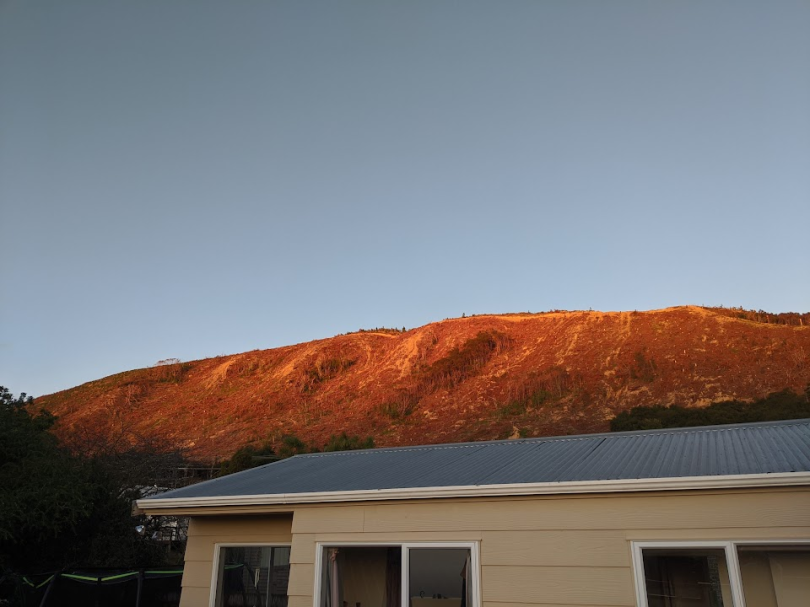
An earth-coloured hill glows orange in the sunset light above a house with a grey steel roof, like a wave of dirt about to swamp the house.

As I write this on the first morning of the new year, it is pissing down outside — droplets visibly multiplying and scattering as they smash into the neighbour’s roof — but from my vantage point, looking west towards Kāpiti, the sky is all blue except a single rising tuft of white cumulus floating steadily north. Like the sky’s thinking two things at the same time. In the time it’s taken to write this paragraph, the rain has stopped.

I turned 39 in 2023, dad, husband, writer of emails, and I tried to change my mind to be more like that sky. To be comfortable holding all the competing narratives of contemporary society in my head, at least for a minute, and find a few clean toeholds on this precipice of climate change, recurring conflict, populism, and artificial intelligence, which I could use to write this entire post for me right here in the WordPress web app.

I have this one sometime friend who has a way of finding exactly the right words for your weak points so they ring in your head for years. When I messaged him for the first time in a while, he replied, ‘When did you get so sober?’ Mate, I’ve always been this sober.

As always, this wrap-up is mainly a record for me, but I think there’s something in it for everyone.

Books

A child sits in a green folding chair and reads next to a fairy garden.

Getting my father-in-law into Jhumpa Lahiri was a top achievement of 2023. So was reading three books by her, including Roman Stories, newly translated from the Italian she now customarily writes in, dark and disenchanting in a way her older stories only hinted at.

Those Lahiri reads pushed my 2023 reads by women of colour up to ten. I read 40 books by women and 22 books by people of colour. This is out of 65 books read in 2023. Ratios are improving. Smug righteousness expanding.

These books I loved:

  • Changing Planes by Ursula K. Le Guin (2003) (re-read)
  • The Luminaries by Eleanor Catton (2013) (re-read)
  • Slow Days, Fast Company by Eve Babitz (1977)
  • Pride and Prejudice by Jane Austen (1813)
  • Parable of the Sower by Octavia E. Butler (1993)
  • Every Man For Himself and God Against All by Werner Herzog (2023)

Those re-reads early in the year were a treat, especially The Luminaries, which I felt more able to meet at its level than when I was first under its spell in 2013. I read it straight after racing through Birnam Wood, which I also really enjoyed. In The Luminaries, things start in a mess and steadily get sorted; in Birnam Wood, there’s hope at the start and absolutely none at the end.

A big thank you to Auntie Cheryl for introducing me to Eve Babitz, who writes the most interesting stories about the most vacuous people and situations. I’ve never spent time in Los Angeles or California but her ear for dialogue and talent for description almost convince me that I have.

Finally reading Austen was perfect for our anniversary weekend away. Pride and Prejudice is one of Tara’s favourite books; I knew the story but I didn’t know about Austen’s mastery of character, language, and tone on every page, her wit, her tenderness.

By contrast, finally reading Butler’s totally unsentimental near-future hellscape was every bit as much of a gut punch as I’d been led to expect, and more. There’s fire everywhere, most of all in the protagonist Lauren, whose drive towards change is as intense and ruthless as the scorched landscape around her.

But if there’s one book I’ll look back on most, it’s Herzog’s incredible autobiography, which is packed with incredible yarns and told with the narrative spark of a practised raconteur. No one could ever agree with Herzog about everything but I think most readers will find the perfect final pages hard to resist. Thank you Mummyji for putting it on my shelf.

These books I liked:

  • I’m Working On A Building by Pip Adam (2013)
  • Audition by Pip Adam (2023)
  • Birnam Wood by Eleanor Catton (2023)
  • Masters of Doom by David Kushner (2003)
  • The House on Mango Street by Sandra Cisneros (1983)
  • The Namesake by Jhumpa Lahiri (2003)
  • The Lowland by Jhumpa Lahiri (2013)
  • Roman Stories by Jhumpa Lahiri (2023)
  • Dear Mr. Henshaw by Beverly Cleary (1983) (re-read)
  • L. A. Woman by Eve Babitz (1982)
  • Tales of the Tikongs by Epeli Hau’ofa (1983)
  • The Fire Next Time by James Baldwin (1963)
  • Black Vodka by Deborah Levy (2013)
  • Things I Don’t Want To Know by Deborah Levy (2013)
  • Crook Manifesto by Colson Whitehead (2023)
  • Beyond a Boundary by C. L. R. James (1963)
  • White Cat, Black Dog by Kelly Link (2023)

A decent list implying a pretty good hit rate from those 65 books, especially considering I didn’t actively hate any of them. You may however notice how my reading skews to this century, which I aim to improve upon in 2024. For the bored or curious, here’s my reading list.

A quick postscript for Sherryl Jordan, a favourite of my childhood and whose The King’s Nightingale challenged and fascinated me in 2021. She died on 15 December. The Juniper Game, with its telepathy and nascent sexuality, was one of the most memorable and influential reads of my childhood, putting some of my burgeoning feelings into florid language. Re-reading it as an adult, I was struck by how inappropriate and objectifying some of that language was, but that doesn’t make its impact on my young mind any less true.

Sport
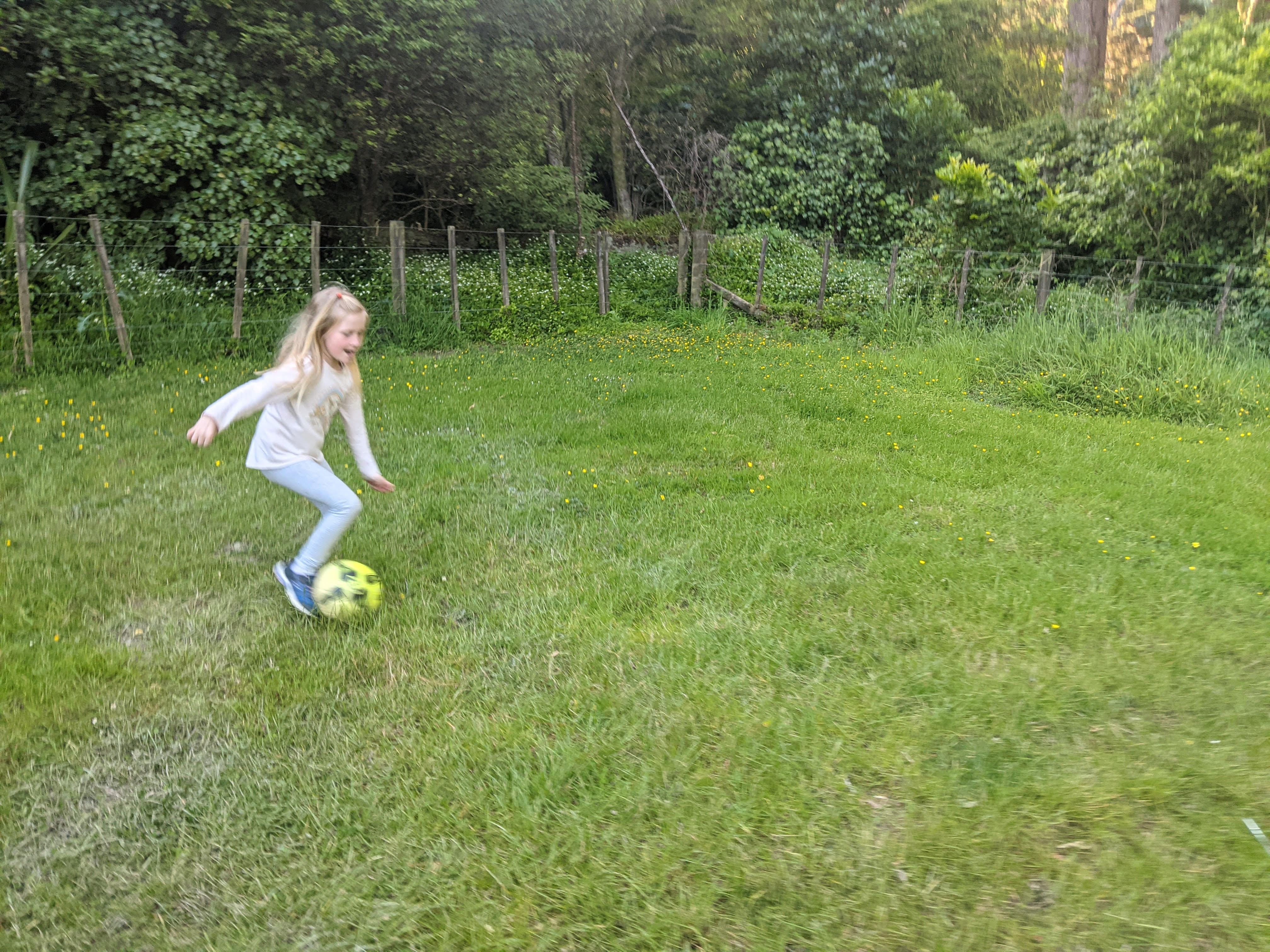
A child kicks a yellow football in motion blur in the corner of a well-grassed country field.

The FIFA Women’s World Cup football tournament was held in Aotearoa New Zealand and Australia in 2023. My kids became aware of it thanks to a McDonald’s Happy Meal promotion featuring Panini cards with players on them; score one for corporate sponsorship. They were particularly interested in ‘the red girl’, aka Spain captain Olga Carmona. Why? “Because daddy’s favourite colour is red.”

After New Zealand opened the tournament with a shock win over Norway, I was determined to ride the wave of public interest and get the kids along to the first match in Te-Whanganui-a-Tara Wellington, between Costa Rica and Spain. A shout-out here to Anne, who scored us two free tickets, and to the official FIFA ticketing app, which had me shitting bricks with all its terms and conditions and restrictions.

Not content with ferrying the kids an hour south in mid-winter at night to sit on uncomfortable bucket seats for a couple of hours, I decided to up the difficulty by driving to Porirua and taking the train the rest of the way to the stadium.

“Are you sure about this?” said Tara, who had an assignment due, meaning I was solely responsible for the success or failure of the endeavour. “It’ll be fine, they’ll be fine, we’ll be fine, I’ll be fine,” I said, over and over.

We parked up and staggered over to the train platform in several layers of warm clothing, which we promptly shed in the stuffed and overheated confines of the train carriage. I found the kids a seat and crouched awkwardly next to them as they looked blankly at the sea of colour and noise all around them. Spanish fans, mostly.

We finally found pockets of space on the long, wide, concrete concourse leading up to the gates of Sky Stadium, or ‘Stadium’, as it was known for the duration of the tournament. I took the kids’ hands and we ran towards the floodlit temple before us, full of night time energy and the buzz of an international sports crowd. This was dampened somewhat by the confiscation, in an otherwise smooth entry process, of the off-brand water bottles I’d packed for the kids. The FIFA terms and conditions were always going to get me somehow. We stood with shouting people in the beer and wine queue for ten minutes to get two bottles of spring water for ten bucks.

Then we found Anne and Kazu and made our way into the stadium and up to our seats, way up the back under cover and with a little space on either side. I handed the kids their lunchboxes but they just held them on their laps as they took it all in, the flags and face paint and clothing in the stands around them, the brightly lit green rectangle a hundred metres distant from our elevated position. Kazu gave them little hand warmers to put in their pockets. Anne shared her lollies. Then the game kicked off.

It was terrifically one-sided. Spain put on a clinic and peppered Costa Rica’s goal from the outset, to the extent that the neutral crowd took to roaring every time the ball went into Spain’s half — so, about three roars in the first 45 minutes, by which time it was 3-0 to Spain. The Costa Rica goalkeeper suffered leg cramps later in the match.

During those long spells of Spanish possession and attack, the crowd satisfied its need to make noise through stadium waves. I would like to say the kids were interested in the football, but this was what they really remembered: watching the wave ripple around the opposite side of the stadium, as if thousands of hands became a single conscious entity, and then being part of the wave themselves.

I decided to drag us off to an early train rather than see out the full match and risk missing an even later and certainly far more congested train. High on the energy and wisdom of the crowd, they were disappointed to leave. As we disembarked from the train in Porirua, they spotted a huge poster for the World Cup. They talked about it excitedly, pretending it had been put up especially for them.

A few weeks later, after years of turmoil and controversy, Spain won the final against England with a goal from — who else? — the red girl, Olga Carmona. (Then the president of the Spanish football federation kissed Jennifer Hermoso on the lips during the presentation — Jennifer Hermoso, who literally ran further than any other player in the entire tournament, at the tail end of a glittering career in the game. #SeAcabo.)

Travel

A woman and a man smile in the foreground, with a view of pointed green hills of farmland behind.

Tara and I celebrated ten years together with a quiet August weekend in Te Rohe Potāe, the King Country. Our car playlist was so good I missed the turn-off at Bulls, so we ended up having our early afternoon tea stop at Parikino Lookout halfway between Whanganui and Raetihi on the winding, storm-battered State Highway 4. There was an exceptional view of rugged, pointy farmland clawed back from the ripples of ancient tectonic shifts, a landscape I particularly identify with Aotearoa. There was also the most extreme and bigoted graffiti I’ve ever seen, Nazi swastikas and all, carved with prejudice into the picnic table.

Our Airbnb hosts at Ōwhango showed us our digs, a rustic studio converted from a 19th Century jailhouse (how’s that for a metaphor?), then left us alone completely. We loaded more wood into the firebox and headed off to Taumarunui for dinner at the local Thai place and BARBIE at the Regent Cinema. The big table in the middle of the restaurant seated a group of women dressed in whatever pink clothing they could find, mostly pyjamas. “I wonder where they’re going after dinner,” Tara said.

The cinema was everything I’d hoped for. Family-run, thinning wall curtains and sagging sofas in the lobby, cracked leather seats in the auditorium, Nibble Nook. The only heat source was a vent above some underfloor radiators down the front, so Tara put on her woolly hat and warm gloves for the show. The women from the restaurant came in soon after us, waving and calling out to various folks who were already seated. I expected the image to be flat and the sound tinny, but they’d clearly put money into bringing the tech up to date.

The following day, we ate lunch at the outstanding Blue Hill Cafe in Ōwhango — it’s worth a detour — and went for a walk by the Whakapapa River. Apparently there are blue mushrooms in that bush. I saw one once when I was a child in the Kaimai Range over Te Aroha way and couldn’t believe this toy section thing sticking up in all that green. We didn’t see any this time.

A two-night stay, so for us, the above is a pretty relaxed itinerary. I read a book of New Zealand sports quotes compiled by Joseph Romanos. We sat in the spa a lot and lay next to each other by the fire, chatting.

I’ve said this before but Tara changed my life. As we reflected on our ten years together, I couldn’t believe how much we’ve packed in, considering how often I feel like I’m lazy and coasting. Tara drives this. She’s like Lin Manuel-Miranda’s Alexander Hamilton, never satisfied, always looking to the next new thing. The other day, we were at the beach and I remembered going to the same beach twelve years prior and just sitting on the sand, unsure of what to do. It’s because of Tara that I now see beaches — and forests and mountains and trails — as places of boundless possibility.

On that first night, when we returned from Taumarunui, the skies cleared to reveal a fuller expanse of stars than we’re accustomed to down our way. We stood arm-in-arm on the driveway for a few minutes as our eyes adjusted and pinpricks of light bled out into clusters and nebulae, alternately marvelling in wonder and bullshitting each other with made-up constellations. Our relationship in a nutshell.

Movies
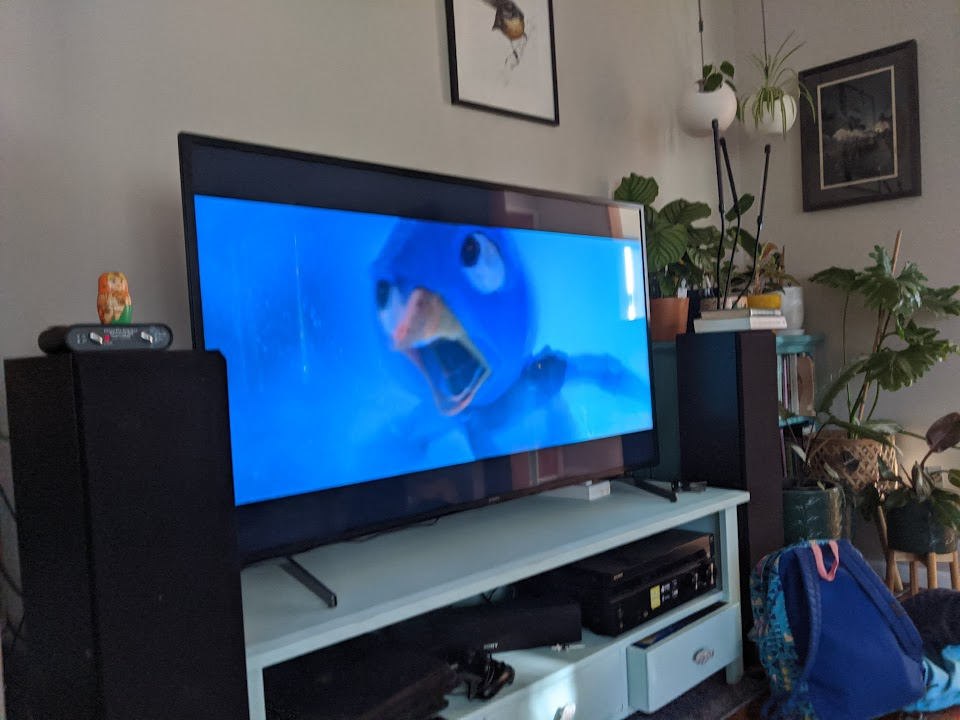
A living room television showing a still from the film Super Mario Brothers.

IN CINEMAS

I saw eight films in a cinema in 2023. Here they are in chronological order, with five-word reviews and rankings in brackets. Same follows for everything else I saw this year.

  • BROKER: Kore-eda, you let me down (8)
  • SUZUME: Lush anime, fine wordless climax (6)
  • ROBOT DREAMS: Mechanised whistling, do you remember? (3)
  • ENNIO: Talking heads, three diverting hours (5)
  • HOW TO HAVE SEX: Consent need not be blurred (2)
  • BARBIE: Accidental Wes Anderson speechifying nothing (7)
  • GODZILLA MINUS ONE: Budget of only $15m, how? (4)
  • STOP MAKING SENSE: Talking Heads, 90 perfect minutes (1)

NEW, BUT WATCHED ON A LAPTOP OR TV

  • GLASS ONION: A KNIVES OUT MYSTERY: Looks expensive, no real value (meh)
  • RED, WHITE & ROYAL BLUE: Snappy dialogue in twee romance (eh)

NOT SO NEW

  • THE HUNT FOR RED OCTOBER (rewatch): It’s never let me down
  • EVERYTHING EVERYWHERE ALL AT ONCE (rewatch): Simple story a new way
  • THE MUMMY (rewatch): Hottest cast of all time?
  • PETITE MAMAN: Inner child work, concise, masterful
  • PU-239: Passion project never gets going
  • DREDD: Comically violent diving in slomo
  • BLINDSPOTTING: Verbal rhythms and racial undercurrents
  • THE NAMESAKE: Penn’s better as stoner Kumar
  • RIO GRANDE: It’s about vibes, not facts
  • BEVERLY HILLS CHIHUAHUA: Not as shit as expected
  • BILL BAILEY’S REMARKABLE GUIDE TO THE ORCHESTRA: I liked early Bill best
  • 21 JUMP STREET: Wacky, fundamentally conservative buddy comedy
  • 22 JUMP STREET: More gags, more Tatum mumbling
  • POKEMON: THE ARCEUS CHRONICLES: Kids’ choice every movie night
  • POKEMON: SECRETS OF THE JUNGLE: They didn’t like this one
  • LEGALLY BLONDE: “You’ve NEVER SEEN LEGALLY BLONDE????”
  • PONYO (rewatch): Strange, inventive, woolly, distinctive Miyazaki
  • WHAT’S LOVE GOT TO DO WITH IT: Well-intentioned, progressively minded failure
  • JOUR DE FETE: A film that’s just silly
  • LES OLYMPIADES (aka PARIS, 13th DISTRICT): Audiard’s cheat codes dazzle again

Health
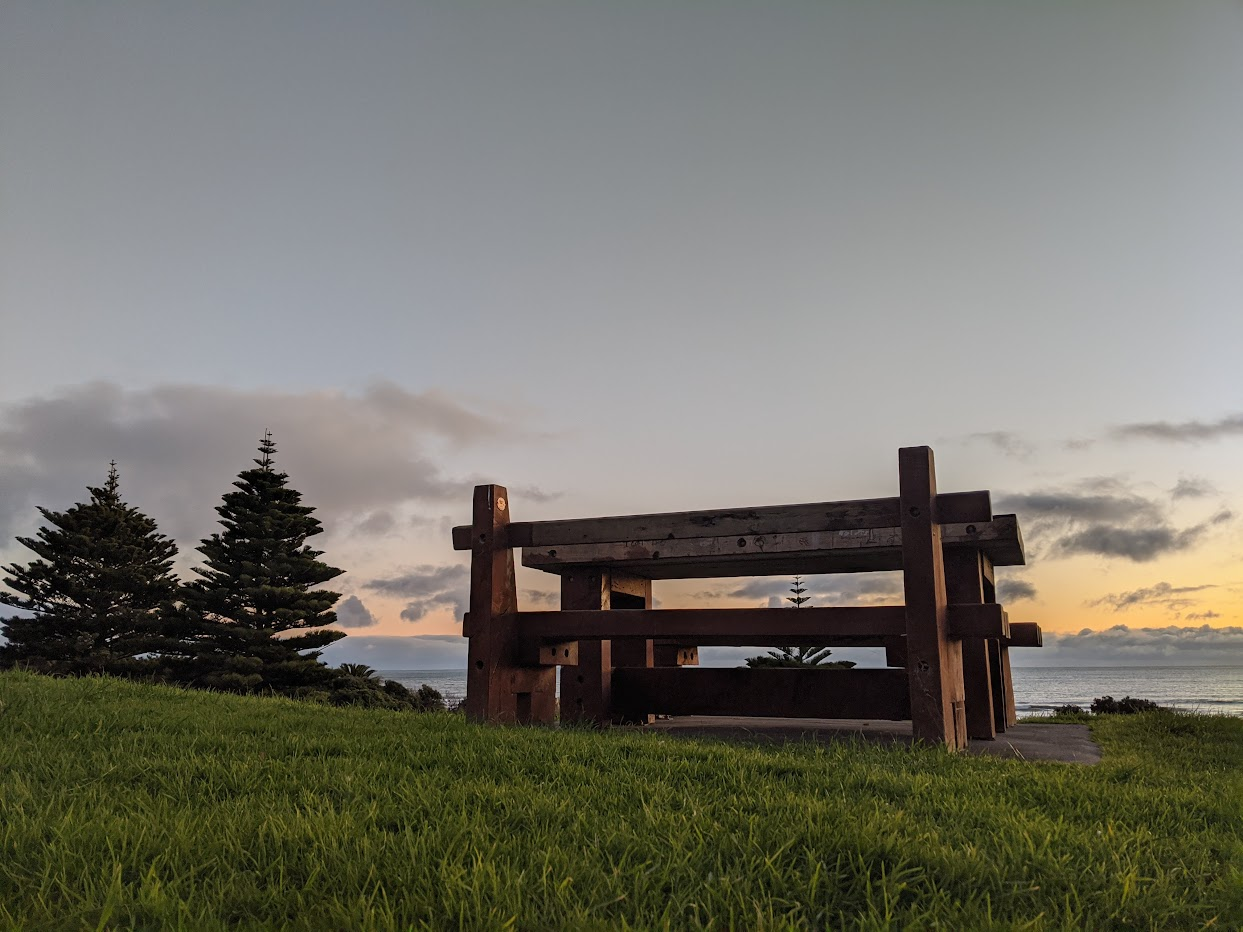
A wooden picnic table on grass in the foreground is shot to resemble a piece of modern art. The sun sets over the sea in the background. Two large trees are at the left of the image.

“You need to start taking better care of yourself,” said the counsellor. I knew this well enough already, but hearing a professional say it within five minutes of our first consultation made it the bright flashing light of my inner life. I have a tendency to put others’ needs above my own, and to self-sabotage in occasionally alarming ways during moments of crisis. I say moments because I’m fortunate never to have suffered any chronic mental ill health. But the acute nature of some of the moments leading up to those counselling sessions meant something had to change.

Start taking better care of yourself. Start, with the unspoken implication to continue. I successfully introduced regular breathing exercises and regular free writing into my routine. I continued to drink plenty of water and eat a relatively balanced diet. I made a few abortive attempts to introduce regular exercise and regular friend time; my health goals for 2024 are right there. Consistently restorative sleep is something for the longer term, when the kids are older and my wife’s sleep schedule aligns better with mine. It would also help if the cat didn’t leap onto the bed about 6am every morning to let me know her food plate remained mostly full.

The counsellor also recommended a solid chunk of time with no responsibility to anyone but myself. With Tara’s support, I booked a night in a holiday home out by the beach, filled a backpack and walked out there one hot April afternoon. I shut the curtains and let time stretch out more than it has in years. I watched two movies from start to finish and read an entire novel in one sitting.

This came in the middle of a week off work, and by the Friday, I felt like my long-elevated baseline stress level was coming down. Then Haku, the larger and fluffier of our two beautiful, stupid cats, got run over. I finished my week of stress leave forking over all our savings in an attempt to save his life, then signing the euthanasia forms and stroking his ruff while the needle went in.

*

Tara says Haku’s death was unquestionably the most difficult time of the year. For me, it was finally contracting COVID-19 at the start of February. Considering the tendency to discuss ‘the pandemic’ in the past tense nowadays, this note is appropriately buried well down the page. But it was the most difficult thing I faced all year and arguably its defining feature, unquestionably a contributor to my seeking counselling a couple of months later, though I was lucky not to develop anything like long COVID.

What I didn’t realise was that when I got COVID-19, Tara would have COVID-19 too. I always imagined simply a week off, shut away in some room of the house with books, a laptop and meals and snacks brought to the door. Instead, we had to tag team through the routine of caring for two young children and ourselves, both bitterly resentful every time we had to haul ourselves out of bed, denying cuddles to the dearest people in our lives. Other things I remember: sprawling for hours in a bean bag on the deck during the hottest week of summer; punching a door in anger when my kids were hurting each other again; the persistent scent of sea water deep in my nose.

Music

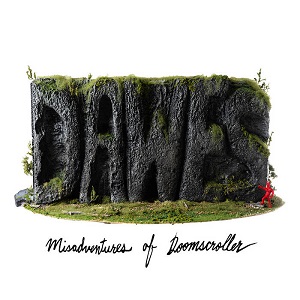
Collage of album covers mentioned in the text.

As the year ran out I found myself turning back to the first 2023 album that really got into my bones: CACTI by Billy Nomates. How’s that for an artist name that gives no fucks? Her working class pop pans back to pandemic lockdowns and spits in the face of anyone who dares question, most of all herself, but it’s also addictive and full of vivid imagery. She got a pasting after her Glastonbury set, which featured her singing and vibing in her inimitable fashion (“I feel like you don’t get to see a lot of un-delicate female movement,” she told The Guardian) and nothing but a backing track to accompany her. I think it kicks arse.

Someone else who came back stronger in 2023 was yeule with softscars. Another arty type who doesn’t like capital letters or punctuation, which usually puts me off, but their music, though still occasionally abrasive, is richer and smoother than 2022’s striking Glitch Princess. They operate even closer to the edge than Billy Nomates; that title is a reference to the remnants of self-harm, and in the bridge of standout ‘sulky baby‘, they sing: ‘I’m staring at you from the cliff / I’m looking down, I feel the bliss / I wanna jump, but I see your eyes’. The growing confidence and range in their sound suggests they’ll get even better if they stay this side of the brink.

L’Rain blessed us with a new album, I Killed Your Dog (if that puts you off, be aware she sings “I am your dog” on the title track). It’s hard to top the stop-you-in-your-tracks opening of 2021’s Fatigue, which made my world turn for months; eventually I warmed to I Killed Your Dog‘s gentler, jazzier rhythms, L’Rain’s groove still echoing with the 21st Century malaise I crave but more eager this time to leave the world behind and just hang.

There was also interesting new music from:

Clementine Valentine, The Coin That Broke The Fountain Floor, divinely inspired if patchier than their glorious last record as Purple Pilgrims;

H. Hawkline, Milk For Flowers, six full years since the brilliant I Romanticize and studded with a few fresh classics like the sprawling pleasures of ‘Denver‘;

Buck Meek, Haunted Mountain, whose solo work is way better than anything he’s done with Big Thief IMO;

and The New Pornographers, Continue as a Guest, who I clicked with in a big way this time. Track after hook-driven track I just couldn’t get enough of. I like that title, too, calling to mind half-hearted web browser sessions and general dipping of toes.

But what I really want to tell you about is the music I listened to while I was at work. Which means it was the music I listened to more than anything else this year. Because I’m invariably working with words and trying to shut out office noise, my work choices tend more towards instrumentals and electronica, which is what I’ve always jived with best.

It starts with Rắn Cạp Đuôi Collective and *1, heavy, pulsing, sweaty, and screaming, these guys throw a kitchen sink’s worth of sonic experiments at nine tracks and push the whole thing out the door at less than a half hour’s listening time. One moment it’s like a cloud, the next an electric shock. Perfect for dispelling distractions and knocking out that draft.

I was put off by the controlled feedback on track one of Imagine This Is A High Dimensional Space Of All Possibilities by James Holden and removed it from my Spotify downloads without completing a full listen. Fortunately, a friend insisted I give it another go. It’s so well named and always puts me in a better frame of mind.

Montreal-based Maara took me back to the early 00s of house with The Ancient Truth. That bassline on ‘Just Give Me Time‘ is trance-inducing all by itself; add a propulsive beat, swirling vocal samples, and what sounds to me like iterations on calm surf rolling into shore.

Slightly more challenging — it got funny looks from my wife when I chose it during dinner prep, but she’d be grateful if she knew I could’ve chosen Rắn Cạp Đuôi — was Beta Librae with DAYSTAR. Beta Librae really conjures the thumping bass melodies and flashing lights of the club at 3am here, and I tell you what, I got some work done. (Not that it can’t be pretty.)

And Leon Vynehall released a couple of singles this year. One of them, ‘Duofade‘, came out on my birthday and is the best kind of Vynehall: surprising, innovative, but still a tune, calling to mind the best of Four Tet and Burial.

Finally, something I listened to more than most other music this year can’t be found online. Someday soon, Ashish Seth will rework the hour of unreleased material he knocked into a tentative LP and shared with me at the very start of the year, and I’ll be able to share the wealth. It’s as moodily evocative as ever and has some spellbinding, transcendent moments. Meantime, go and check out Firstborn.

Tech and Gaming

Two children play an arcade version of Mario Kart.

The internet was slow again, the mobile browser page wouldn’t load, so I smacked my Google Pixel 2 with the heel of my right hand. Childish, really, and far from the first time I’ve destroyed an innocent electronic device in a fit of rage.

Not to worry. I had my old Moto G 5 ready to pick up the SIM card and chug along with me. Then I tried to open a car door while holding it in the same hand and it slipped and landed face down on the concrete. Smash, but this one hurt a lot less. I mean it was a pure accident this time.

Time for a new phone, and you know what? The Pixel 2 was so perfect — small, affordable, great camera, powerful enough to do all the things I wanted it to — I decided to get another. So that’s what I have now.

Now, at the very end of the year, the speaker and microphone on Tara’s phone suddenly stopped functioning. It’s a damned shame but she does have a long-serving Google Pixel, and another Pixel 2 could be ours today for only $139. Watch this space.

Is it even a good phone, though? I guess it depends what you want from these things, which in our case isn’t much. Calls and texts; decent photos; YouTube; Spotify; podcasts; some quickly jotted notes. A bit of social media (ancient social media like Facebook and Instagram, not TikTok, although I think I’ve finally kicked X (formerly Twitter)).

The bigger question is coming fast: when should the kids get their own phone or screen-based device? There’s a movement to keep smartphones out of kids’ hands as long as possible, and Tara and I both like the sound of that, because how much have they added to our lives? And what would they have taken away from us if we’d had them when we were growing up?

The reality is always more complicated. The evidence suggests smartphones contribute to mental ill health in young people, but they’re also growing up in a world that expects them to be attached to screens at work and play. Right now, I can be comfortable knowing both of these statements are true, but there’ll come a time when we’ll have to set our stall out on one side or the other.

Politics

The year in news began with yet more images of Jacinda Ardern. Then competing images of Christophers Hipkins and Luxon. Now, images of Luxon, Winston Peters, and David Seymour. Day to day, I’m not sure who’s actually in charge, but their faces will saturate our front pages if they have anything to do with it.

The new government’s effort to reduce the amount of visible te reo Māori is a dogwhistle and a distraction from the deeper impacts when landlords and employers have restored powers of unilateral termination, not to mention the kettle of climate change being boiled harder and harder by more grunty cars, more farting cows, and more primary resource extraction. BUT — it is gratifying to see how te reo Māori persists undaunted, as if a happy majority didn’t even notice the government change.

Most recently, I noticed te reo front and centre in TV coverage of the Super Smash, New Zealand’s domestic Twenty20 cricket tournament. Finn Allen smoked another slog over the mid-wicket boundary and ONO flashed up on the screen, followed by SIX. This is just what we do now.

People

A family poses for a photograph in front of a railway crossing sign. One of the children is coughing.

Nora and Juney are now six. They go to school and forget all about us, then come home and demand afternoon tea. They finally fall asleep without one or both of us in the room. They read a bit, and count to a hundred, and ask whether this moment is actually a dream and whether you can still think after you die. As their conscious exponentially expands, I know less and less about them — and that’s how it’s supposed to be with kids. They slough away their dependence on you in fits and starts. If you’re doing it right.

Tara and I remain extremely fortunate to have her parents’ 24/7 support as we attempt to grow these small people into functional humans. Jeff has taken them to and from school all year, and he almost always agrees to another boing on the trampoline, even when he’s interrupted in the middle of cooking dinner. Cathy has been stuck in bed or on the sofa with long COVID all year, but still she puts her hand up to look after the kids if Tara and I need to go out for a bit. I can’t even remember what it was like before we all moved in together.

As for Tara, she has acquitted herself so spectacularly well in two years of part-time creative writing study that she’s about to embark on a Master’s degree and write a real-life book. She does need me to put the punctuation in the right place — commas almost always go inside the quotes, dear — but apart from that, the hard work and the talent are entirely hers. When she wasn’t upstairs all evening with the study door shut, we marked the close of each day with an hour or two next to each other on the sofa, distilling the day’s events, chewing over our existential crises, looking to the future, and watching Taskmaster. So much Taskmaster (thank you Ed).

In the final weeks of December, I was delighted to spend some time with almost every member of my close family. Thanks to Tara’s incredible skill at birthday present selection, I even flew Sounds Air to Nelson to spend a weekend with my dad. What a superb town Nelson is! Especially on my stepmother’s e-bike: a return trip to Saxton Oval on the Saturday, a ride along the green paint to the River Kitchen and the Suter Art Gallery on Sunday. I don’t get much time with my dad and hadn’t visited him in Nelson in the two and a half years he’d lived there, so this weekend was one of the highlights of the year.

And then one more year becomes one more year, as the song goes. I fear the future and try to suppress it with plans. I stack them up and watch them fall. But there’s always a few that slip through to fruition, imposing some shape on my memory. Past, present, future, all polygons and rhomboids in my mind, a teetering structure always on the brink. Kia whakatōmuri te haere whakamua. I walk backwards into the future with my eyes fixed on my past.
Things of 2022

Front Page

We Some of us tend to uncertainty. The first draft of this post had multiple questions in each section, and as I age, it seems I have more questions than answers, even about my own experience of the world. I know I am a husband, father, public servant, in roughly that order. Nearing forty and a little greyer still. I celebrated my fifth wedding anniversary, and my children’s fifth birthdays — yes.

I ate mostly vegetables. I got a sweat up about twice a month on average. I got accustomed to multigenerational living in a million-dollar house in an area of quintile 5 social deprivation, i.e. ‘most deprived’. (It’s probably more like an $850k house now.)

I’ve tried to strip those questions out to give my writing a more concrete foundation. The truth is I live, like all of us, on shifting sands, increasingly unsure I can trust my own senses, let alone the ground beneath my feet.

Travel

I think we’re finally getting family holidays right. Sojourns of years past have been marked by squabbling and exhaustion and long days in the car are giving way to pleasant jaunts with shorter squabbles, generally cheerful weathering of inconvenience… and, yes, long days in the car. Hard to get away from those in Aotearoa New Zealand.

Certainly the kids’ (and consequently our) improved sleep is a big part of it, which is true of all aspects of life. But it’s all so much purer and more acute on holiday, where you’re cut loose from the cradle of habit and routine. Clothes in bags and a sandy piles on the floor rather than the usual drifts flowing out of baskets in the living room, bedroom, hallway. Washing cutlery as you use it, not piling it up in the sink.

In February, Lake Rotoiti in the Bay of Plenty. Omicron was surging but we went anyway. We walked out of our caravan, crossed the narrow road to the playground, and crossed that to stride into such inviting water, which seemed to offer not just its own cool shallows but also the reflected contents of the skies above. It rained and drizzled half the time but we kept going back in anyway, cavorting and laughing and floating like a perfect sitcom family, tracking sand back into the caravan afterwards.

We came in from one such swim after the Rotorua Redwoods tree walk, settled in for afternoon rest (them: laptop, me: ebook), then ate some dinner and got ready to drive back for the much-anticipated Redwoods Nightwalk, which promised colourfully lit trees and “34 exquisite lanterns” to brighten the final night of our holiday.

The kids leapt into their car seats and waited while I hunted for the car keys. I hunted, and I hunted, and I hunted; the keys were nowhere. I thought back to the way we’d bounded straight from car to lake when we’d gotten back to the caravan that afternoon. Surely the keys hadn’t stayed in my pocket? Surely they weren’t at the bottom of that huge lake, concealed in the surface reflections by day and in the dark by night?

After an hour of searching, and swearing, including with my phone torch in the water, we gave up and took the kids back in for bed. They were upset but handled it pretty well. Weathering inconvenience, or parental failure.

I set an early alarm and slept fitfully, knowing failure to locate the keys meant a substantial bill to cut a new one, and at the very least, a late departure for home. When the alarm went off at dawn, I crept out to comb that lake. But first, another quick check of the ca-

Ah. There they were in Juney’s seat. Right where her bum had been for the duration of the previous night’s frantic search.

We didn’t get to the Redwoods Nightwalk this time, but we did get to drive home.

*

In November, a week in Tāmaki Makaurau/Auckland. COVID very much around once more, but we didn’t get it this time either, although Tara picked something up early and had to miss our ferry ride across to Devonport. The kids loved the dry sand at the playground and, a few metres away, the wet sand and wavelets of the beach, studded with many brilliant shells and objects that they collected for close to an hour until it was time for possible the worst fish and chips I’ve ever had. Then back to the ferry with heavier legs and darkening circles under eyes via a last toilet stop.

They were just about to haul the gangway back on board when I realised I didn’t have the tog bag, which also held their drink bottles and other small items that would be missed. “We can’t wait,” said the captain. So off we went to get the bag, and back to the playground for ten minutes, and back to the ferry once more, kids “actually happy to play some more”. Eventually we made it back to the central city and trudged ten minutes to our absurdly central accommodation, fuelled by lollies.

I know I only talk about the times things go wrong but as a parent, I am rarely prouder of myself or my children than when there’s a balls-up far from home and we find a way to get through it.

Books

These books I loved:

  • The Books of Earthsea by Ursula K. Le Guin
  • On Warne by Gideon Haigh
  • We Have Always Lived in the Castle by Shirley Jackson
  • Trust by Hernan Diaz

Very occasionally, a book comes into your life that’s not only addictive and a formal marvel but also changes how you see the world. Trust is one such book. Diaz’s meticulous research into early 20th Century capital and finance shows, but more than that, so does his deep reading of novels and autobiographies of the time, all of which are reflected in Trust’s nested four-part structure. I read it twice in 2022; I also listened to a two-and-a-half-hour interview with Diaz about how he pulled it all off. For a book that’s so much about the artificial creation of value, it was worth every second.

These books I liked:

  • My Brilliant Friend by Elena Ferrante
  • To Paradise by Hanya Yanagihara
  • In the Margins by Elena Ferrante
  • How to Loiter in a Turf War by Coco Solid
  • Stories of Your Life and Others by Ted Chiang
  • Foreverland: On the Divine Tedium of Marriage by Heather Havrilesky
  • How to Stay Sane by Philippa Perry
  • Small Deaths by Rijula Das
  • A Line Above the Sky by Helen Mort
  • The Seven Moons of Maali Almeida by Shehan Karunatilaka
  • The Last Policeman by Ben H. Winters

Of these, To Paradise is the one I find myself thinking back to most often. Yanagihara’s clean, methodical prose masks some pretty half-baked thinking — but it does get you thinking, and it’s propulsive in moving the narrative forward. Side note: I read To Paradise on the back of a famously negative (and in my opinion quite unfair) review by Becca Rothfeld in the Times Literary Supplement: “so unusually terrible that it is a sort of anti-accomplishment, the rare book that manages to combine the fey simplicity of a children’s tale with near unreadable feats of convolution […] There is nothing to recommend it to anyone.” Well! Sign me up!

I would also like to recommend Foreverland to anyone in a long-term relationship. It’s frank, funny, and takes away all that societal pressure to be the perfect spouse.

These books I found disappointing:

  • The Secret History by Donna Tartt
  • The Word for World is Forest by Ursula K. Le Guin
  • The Hydrogen Sonata by Iain M. Banks
  • Railsea by China Miéville

Three giants of my reading life above. I’ll return to them all, but probably not to Tartt, whose rich plonkers irritated me from page one.

This book I actively hated:

  • How High We Go in the Dark by Sequoia Nagamatsu

A thoroughly exploitative catalogue of grief in which children are subjected to particular suffering as shortcuts to provoking an emotional response, never realistically rendered, their suffering a footnote to the lessons we must all take from the nobility of their often grotesque deaths. It’s the Tuesdays with Morrie of speculative fiction.

But here’s the real story of my reading in 2022:

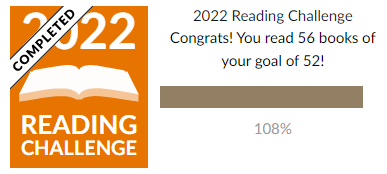
Screenshot of successful Goodreads 2022 Reading Challenge showing 56 books read, with goal of 52 (108%)

Whoa yeah. And I owe it all to my children, who one day wandered away from the picture books at the library and into the junior fiction section, and suddenly we were onto chapter books — particularly:

  • Andy Griffiths & Terry Denton’s Treehouse series
  • Kiwi author Stacy Gregg’s Spellbound Ponies series
  • and most of all, the Secret Kingdom, churned out at a rate by a pseudonymous collective of hired guns known as ‘Rosie Banks’.

It’s incredible to watch my kids’ faces grin and grimace with the action as I read each book to them. And the way Juney will stare off at some version of events in her mind’s eye while Nora fixes her gaze on my face, watching the characters speak through me. They live for stories.

Don’t ask me why, but when I read them their first Secret Kingdom book (Wildflower Wood if you must know), I accidentally gave Summer the voice of Moss as played by Richard Ayoade in The IT Crowd and now I can never change it. You can probably guess which of Ellie, Summer, and Jasmine is the kids’ favourite.

Music

Best Hardcore Album AND Best Album Under 30 Minutes AND My Favourite Record of the Year:

It’s so solid all the way through, and so manageable at a tick over 26 minutes, I might just listen to it again right now.

Best Prog-Rock Album AND Best Album Title:

I had to listen to this because of the title, which so succinctly describes how my biggest weakness defines me. The music is relaxed and jazzy and has room to breathe, with lyrics that revel in ambivalence, simultaneously railing against our collective inertia and allowing us the joy of relaxing into it.

Best Glitchpop Album AND Most Uncomfortable Listen:

Glitch Princess by yeule

Much of yeule’s lyrics are about a disconnect between self and body, how they hate that their emotional scars are printed all over it. Their keenness for you to join them in their discomfort will put as many people off as the autotuned vocal snippets and chopped-up machine noise, I’m sure. I was quite happy to sit with it.

Best Synthpop Album AND Most Assured Album By Someone Who Kind of Hates Making Music:

Laurel Hell by Mitski

She almost swore off music altogether a couple of years ago, eaten up by being “a product that’s being bought and sold and consumed”, and yet here she is with music that seems to know exactly what it’s doing, summing up the world in the space of a song, leaving you wanting more.

Best R&B Album:

Three Dimensions Deep by Amber Mark

Everyone else will be picking Beyoncé here but I once again failed to get into her music. And anyway, I have Amber Mark to take me beyond the stars, shaking her head and breathing the obligatory “damn, I fuckin’ made it”.

Movies

IN CINEMAS

Three weeks apart in April-May, I had my only cinemagoing experiences of 2022 — and what excellent choices they were.

EVERYTHING EVERYWHERE ALL AT ONCE tries so much — visually, tonally, thematically — and pulls off almost the lot. I laughed, I cried, I cringed. I shook my head in disbelief. The high-concept plot, asinine gags, and fight scenes are all fine, but the first 20 minutes of the film are among the most thrilling I’ve seen in years, featuring the always excellent Michelle Yeoh sucking you right into the whirlwind of Evelyn’s daily war: taxes, customers, gay daughter, ailing dad, sweet but ineffectual husband. Fundamentally, it’s a film about parents and children — about how you just want your kid to fucking LISTEN, or how you just want your mum to actually SEE who you are and take you seriously for once. But it piles so much more on top of that, which would choke and flatten most films but somehow elevates this one. Loved it.

AFTER YANG also sets up a narrative crackling with possibility. What a fulfilling sensation it is to get to the end and find out it’s basically about people being nice to each other, and trying really hard to understand each other, and keeping what’s good about humanity alive in an increasingly tech-driven world, rather than any drama based on withheld or concealed information. I thought about it for weeks afterwards.

NEW, BUT WATCHED ON A LAPTOP OR TV

Putting the above in the top two slots, here’s a quick ranking of other new-to-NZ films of 2022:

  • 3) THE LOST DAUGHTER
  • 4) THE WORST PERSON IN THE WORLD
  • 5) THE RESCUE
  • 6) SUMMER OF SOUL (…OR, WHEN THE REVOLUTION COULD NOT BE TELEVISED)
  • 7) THE BOB’S BURGERS MOVIE
  • 8) TURNING RED
  • 9) TITANE
  • 10) LICORICE PIZZA
  • 11) SHANG-CHI AND THE LEGEND OF THE TEN RINGS

Liked the top four a lot, didn’t particularly care for the others, which is the first time I’ve said that about a Paul Thomas Anderson film. Men may be shit but is that reason enough to run off with a boy, who is unfortunately becoming a man, at the end?

NOT SO NEW

And some highlights from my other viewing of 2022:

  • DEREK DELGAUDIO’S IN & OF ITSELF
  • FREE SOLO
  • EMMA.
  • SOUND OF METAL
  • THE PEANUTS MOVIE
  • COLUMBUS (rewatch #3)
  • MASTER AND COMMANDER: THE FAR SIDE OF THE WORLD (rewatch #2)
  • BATTLESHIP POTEMKIN

I recommend watching any of these, but I had the most fun watching EMMA. That’s how you do a period comedy-drama.

If for some reason you want the full record of my 2022 viewing, here’s the Letterboxd link, where you can also follow my reviews in 2023.

Health

2022 was the year of dodging COVID. I think. Our house saw everything but a positive test: high temperatures, snotty noses, deepening fatigue, gastroenteritis on repeat. And my mother-in-law in the annex had no sense of smell for six months and still can’t walk fifty metres without feeling wiped out for the rest of the day, her well-worn impression in the sofa nearly always occupied, her neurologist convinced she has in fact had COVID. But still: no positive test.

In 2023, we will surely get COVID, whether or not we continue to mask in indoor public spaces. As someone in my orbit said: “Everyone should just chill. Just get over it, accept it. It’s here, it’s not going away.” (Update: I’m posting this in mid-February because we’ve had COVID, already.)

*

One Sunday night in approximately September, I struggled to sleep. And it’s been the same every Sunday night since.

Many people over the years have told me of their nightly battle with consciousness and their increasingly desperate attempts to flee it. Every time, I would think: I am so lucky. With rare exceptions, I’m out within ten minutes of my head hitting the pillow. I may be up in the night with unsettled kids; I may be awake too soon when the alarm goes off. But getting off to sleep has never been a problem, until now.

Sleep is so fundamental, it affects everything else in your life. We know this. So, suddenly, I’m analysing the impact of anything I do that isn’t sleep. Sunday night is the main offender, so is it work stress, or perhaps weekend sleep-ins throwing off my routine? Am I eating or looking at my phone too close to bedtime? Are my exercise habits insufficient? Do I need my spouse there in the bed with me? Do I have the right pillow, the right blanket, the right mattress? If I could just get the variables perfect, I could sleep fine.

I mentioned this to some older colleagues. Oh, yeah, they said. Sunday nights are trouble. I was more horrified than relieved to hear this was a common affliction because it made me think I was destined to fall into this pit and never get out, just like everyone else. They advised me not to look at the clock at all once the sun goes down and to try melatonin, or ibuprofen. I haven’t — yet.

Sports

Something about small amounts of indoor football.

Something about volunteering at the Women’s Cricket World Cup, the joy and hope of Amelia and Jess Kerr’s embrace after icing a big warm-up chase against India, the despair of the White Ferns’ tame and fearful exit on home soil.

Something about Lionel Messi completing football at the 2022 FIFA Men’s World Cup. That no-look 30-yard pass through his marker’s legs for Montiel to run onto and score, the sort of genius that makes two goals in the final seem insignificant. As ‘McNizar 24’ put it in a YouTube comment that has garnered over 2,700 likes: Did you realize that in every moment of football, there’s always have Ronaldo and Messi.

Tech and Gaming

My stupidest ever life event happened in 2022. On an otherwise unmemorable afternoon in late October, I completed my 1000th match in New Star Soccer, a football game for mobile phones, thereby achieving the game’s final award.

I first played New Star Soccer as a browser game in 2011 — and I played it a lot. But a succession of low-end laptops failed to render its very limited graphics without microsecond pauses, and as gameplay is based around fast clicking, I became too frustrated to continue various long careers in the game.

Then, in 2021, I downloaded the mobile version, which suffers no such glitching. And so: 1000 games, completed at a rate of about three a day. I told Tara of this monument to wasted time and she was shocked: “You play a mobile game? And you’ve played one thousand matches in it?!”

The longitudinal nature of this achievement, combined with the lack of challenge in the gameplay beyond about year three in the game world, meant there wasn’t much of a dopamine hit when the awards screen ticked over to 100%. And as soon as I finished that final season, I retired and stopped playing the game completely. It gave me a final score:

You, like me, might be wondering where this ranks me globally. Well, I’ve googled a few times but am yet to find the New Star Soccer community online, so am unable to tell whether this is an okay score, a good score, or a great score. Which means there’s a remote possibility I’m the world’s greatest ever New Star Soccer player.

*

Through the YouTubers Zero Master and decino, I rekindled my childhood fascination with DOOM and discovered a world of untold riches in its still-strong modding community, coming up to 30 years since the first game’s release.

Through playing many cooperative games with Tara, I deepened my love of the Nintendo Switch console and actually almost want my own Switch.

People

I was confined to barracks for much of 2022. As I say: high temperatures, snotty noses, deepening fatigue, gastroenteritis on repeat. You don’t want to be taking that shit out into the world. And for a few months there, when Omicron was first on the lash, we stayed home to protect ourselves and particularly my vulnerable mother-in-law. Even the kids, who would come to love their kindy days once we arbitrarily decided it was safe to send them. It wasn’t good for any of us mentally, spending all that time at home. But it kept us apparently free of COVID.

Now the kids are off to school and really becoming themselves, full of more questions and ideas than ever.

I didn’t get around to tying this post off neatly. Didn’t actually complete it, if you look at the rushed placeholder content above, the paucity of images, and this anticlimactic conclusion. Still: time passes, we carry on.

The 00s: Film (Fiction) – 10-6

10. Sur mes lèvres (Read My Lips) (Jacques Audiard, 2001)


From one of the most consistently fascinating directors around came this riveting, subtle yarn of two individuals who could never have expected to fit together. Carla (Emmanuelle Devos) is a put-upon secretary whose near-deafness is viewed as a crutch, both by her associates and by herself; Paul (Vincent Cassel) is a greasy ex-con trying to get a start in the legal economy. If the tagline – “She teaches him good manners; he teaches her bad ones” – isn’t tantalising enough, there is a charged passion and emotion that builds through the film to a heart-in-mouth, near-silent climax and a perfect postscript. This is one of those films that it’s just so hard to find any fault with; it’s also a damned fine thriller in its own right.
Classic moment: An extraordinary, protracted scene of lip-reading that is almost too tense to bear.

9. Eternal Sunshine of the Spotless Mind (Michel Gondry, 2004)


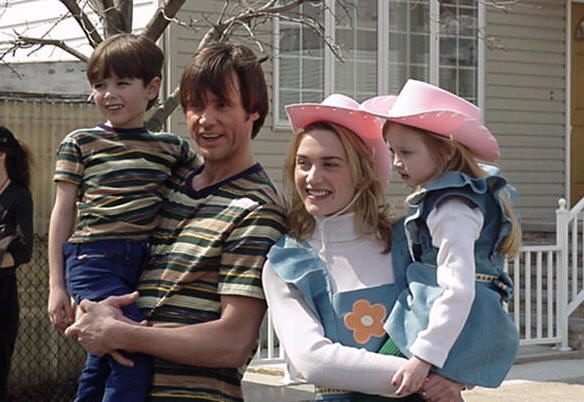
Charlie Kaufman was the celebrity screenwriter of the 00s. Films like Adaptation. and Synecdoche, New York showed that there are still new things to be done (and done very well) in mainstream cinema, but Eternal Sunshine represented the most balanced harmony yet realised from a Kaufman script. It was the perfect marriage between his crushing cynicism and Michel Gondry’s playful, childlike aesthetic, and with great acting across the board, including the best turn of Jim Carrey’s career, this love story of memories, disappointments and ultimately hope had a unique shine. It reminds me of how unusual it is to see recognisable characters up on the screen – people you can identify strongly with, and feel like you’ve met before. If the characters have a somewhat defeatist attitude, it’s because that’s what Kaufman sees all around him in an age of short attention spans and hurried divorces.
Classic moment: Joel wakes up – again – to the tune of Jon Brion’s wonderful score, and the narrative threads start to connect.

8. City of God (Fernando Meirelles, 2002)


When City of God burst onto the screen in front of a packed house at the Christchurch Film Festival in 2003, that now-iconic blade sharpening and running chicken made everyone shut up and pay attention. When we emerged a little over two hours later, the dynamic storytelling of Meirelles’ film had rendered the real world toothless and banal, as if everything was in slow motion – our own lives so much less interesting after witnessing those played out in the favekas of Rio de Janeiro. The kids, the gangs, the violence… it was so different, so brutal and alive. It was, as Empire magazine put it, ‘at once a laboratory for cinema technique and a victory for raw heart… a snot-nosed, blood-stained masterpiece’.
Classic moment: The motel murderer is revealed in truly chilling fashion.

7. Dogville (Lars von Trier, 2003)


von Trier was probably the decade’s most controversial director, serving up Dancer in the Dark, Manderlay, Antichrist and Dogville – all fascinating works that completely polarised critical opinion. Those that liked him couldn’t get enough of him; those that didn’t truly detested him, leading to press conferences of an almost threatening tone (3:50 in this clip). I’m firmly in the former camp: his films are the work of an artistic genius, bursting with ideas that go against the grain of popular thought, and Dogville is his most triumphant statement – both artistically and philosophically – yet. Shot on a barren soundstage, it tells the story of a woman on the run from gangsters who is sheltered in a tiny village; this being a von Trier film, things do not go well. Far from being the anti-American statement so many made it out to be, this is a story that speaks to the whole of humanity and to the close-minded nature we all have in some way or another. The final scenes are some of the most truthful, and gripping, of the decade.
Classic moment: The gangsters catch up with Grace, and the boss tells her she has a tough lesson to learn.

6. Irréversible (Gaspar Noé, 2002)


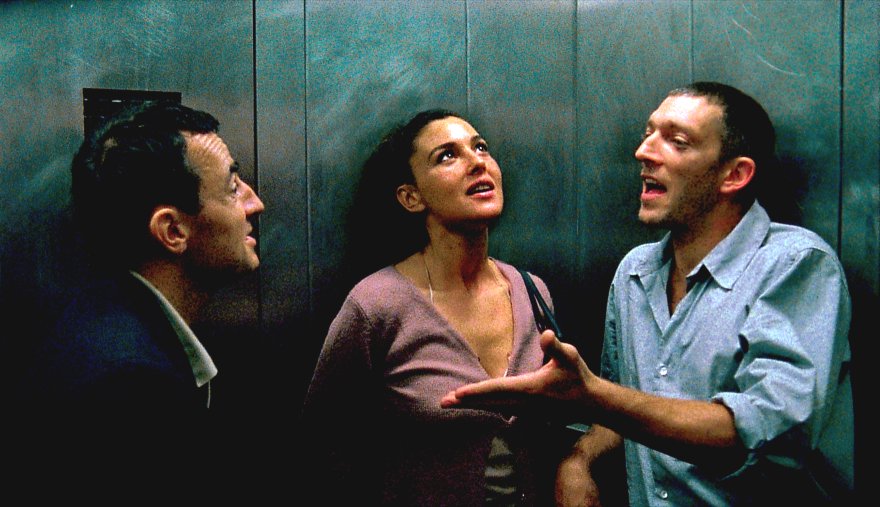
While I’m on the subject of controversial films, this… is about as controversial as the 00s got. Told in reverse, this is the story of a rape and a murder, and both scenes are protracted, graphically detailed and almost impossible to watch. Still, Noé’s aim isn’t merely to shock. The film works on a number of levels: the nature of the beast within, the dynamics of human relationships, our voyeurism as filmgoers, the capability of CGI and special effects to enhance a cinema experience, and of course the film’s central conceit: that ‘time destroys everything’. Were it structured solely around those two scenes, it would be more of an interesting if off-putting experiment; however, with a third act in which the previously dizzying camera slows down and shows real-life husband and wife Vincent Cassel (that man again) and Monica Bellucci canoodling during a lazy morning in bed – the opposite of those earlier scenes – Irréversible is elevated to an uncommonly high level. At the same time it’s a film I hesitate to recommend to anyone, as it’s the most realistically violent film I’ve seen save The Passion of the Christ, but those who come to it with an open mind and a good deal of mental preparedness will likely be rewarded. It made me feel physically sick, and haunted me for weeks, but I left the cinema in stunned admiration.
Classic moment: The two friends go on a horrible, disorienting odyssey through the gay nightclub ‘Rectum’, searching for Alex’s rapist.

<< #15-#11 || #5-#2 (coming soon) >>

The 00s: Film (Documentary) – 5-1

5. Dear Zachary: A Letter to a Son About His Father (Kurt Kuenne, 2008)

Nothing can really prepare you for Dear Zachary, short of reading and digesting the entire plot summary before diving in.  For those easily upset, I would recommend doing this, or perhaps steering clear completely.  It is director Kuenne’s version of the events surrounding the death of his close childhood friend Dr. Andrew Bagby at the hands of a woman named Dr. Shirley Turner, and his effort to record as much of Bagby’s life as possible for his yet-to-be-born son, Zachary.  As such, the film is a completely subjective account, following Kuenne’s race around North America and England trying to capture people’s memories on tape, following his own emotions and mood through a variety of notable editing choices.  This was the most impassioned film I saw in the 00s.  Again, be warned: you’ll never be the same afterwards, especially if you have kids of your own.

4. Dark Days (Marc Singer, 2000)

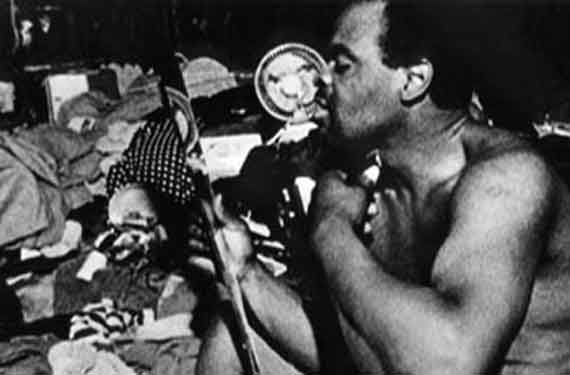
Singer, an untrained filmmaker who hasn’t directed since, was drawn by the plight of the homeless living in a New York City Amtrak subway tunnel, and decided to help them by making a film with them that would get them out.  What resulted was a fascinating ethnographic document, superbly shot on black and white and scored by DJ Shadow, depicting real lives as lived and proving that in a lot of ways, these guys are just like us.  While it’s surprising to see how well some of these guys can live, you’re aware that every single day is another struggle, wracked with uncertainty.  This is a film which helps the viewer to see an oft-maligned section of society with fresh eyes.  Watch the first 10 minutes here.

3. Spellbound (Jeffrey Blitz, 2002)

Spelling bees seem to me a very American institution, so it isn’t too surprising that a film following eight teenagers in their quest to win the National Spelling Bee would play like such a chronicle of the American Dream.  There are the immigrants – the Indians (so many) and Mexicans; there is the white bread girl from Connecticut; there is the loner from Missouri; there is the ADHD wunderkind from New Jersey; there is the inner-city black girl from DC.  All have their own, fascinating stories, with widely varying ideas of what the word ‘success’ means, and as we grow to know and love them, the tension of the finals becomes almost unbearable.  I remember feeling bathed in a sweet glow of hopes and dreams afterwards, and in a way, I hoped that these kids would never grow up.

2. Anything by Adam Curtis (Century of the Self, The Power of Nightmares, The Trap)

Some films are ‘important’; Adam Curtis’ films, on the other hand, are absolutely essential.  Cutting deep into the building blocks of society and finding patterns everywhere, Curtis tackles subjects as monumental as the transition of Western thought from community-based to individual-based, or the political shift from promoting positive freedom to promoting negative freedom.  Curtis’ approach is fact-based, backed up by archive footage found after months of trawling the BBC’s archives, and the results are surprisingly entertaining once you get used to the format.  More than that, though, his films are eye-openers in every sense of the word, and I would personally say that they have changed the way I see the world.  If I had to single one out for higher praise, the four-hour Century of the Self is probably the one that impressed me most.  All are available for free online here.  Do yourself a favour and check them out.

1. Grizzly Man (Werner Herzog, 2005)

With his majestic Grizzly Man, Herzog’s soothing Bavarian voice pretty much sums up life, the universe and everything.  Timothy Treadwell is his subject, a man who rejected society and turned to bears, and like many of the films on this list, the fascinations of Herzog’s work are largely psychological: what led Treadwell to this fate?  What does he truly believe?  How much of his reality is a delusion?  Herzog confronts the abyss as he so often does – with a grave but knowing outlook – and explains to us what we see.  You’ll laugh, and you may cry; you’ll surely be riveted by an incredible subject, and truly great filmmaking.  This is a film that would place at or near the top of any decade list.  Part 1 is here.

To go back to the previous part, the intro & #10-6, click here.

The 00s: Film (Documentary) – Intro and 10-6

When it comes to the line between fiction and documentary film, I agree with Werner Herzog: such a line is unnecessary, and essentially imaginary.  Separating them as fabrication and fact takes something away from both: the truth that can be captured in a story written and performed well, and the art exercised by a director presenting the beauty of real events.  A far more worthwhile approach is to consider both simply as films.  You can learn as much about yourself watching a film from a Charlie Kaufman script as you can be entertained by Michael Moore polemic, right?  And anyway, when you have people like Herzog mixing truth and untruth in all of his films – documentary or otherwise – to quite magical effect, it is sometimes impossible to choose which category the film you’re watching belongs in.

Nevertheless, bookstores need sections to separate one genre from another, and blogs do too.  So here we are.

The 00s brought much wider recognition and appreciation for documentary cinema, and I would suggest two chief factors in this.  The first is called Bowling for Columbine, and I’ll talk more about that further down the page.  The second is called the Internet, opening up a massive global audience for all kinds of films and an ideal platform for docs – the proliferation of other media and information online makes it quick and easy to obtain as much or as little information about something as you would care to.  Added to that, making a film is much simpler nowadays with digital video and cheap and powerful editing software, so legions of budding filmmakers are able to produce something for nothing and then put it online for the world to see.

I’m one of those budding filmmakers.  Here are ten documentary films produced in the 00s which eventually inspired me to get started on my own movie (coming soon, watch this space…)

10. Jackass Number Two (Jeff Tremaine, 2006)

Weren’t expecting that, were you?  The Wikipedia page states, “Jackass Number Two is a compilation of various stunts, pranks and skits, and essentially has no plot.”  A remarkable document of extreme behaviour, voyeurism and (arguably) Dadaism, it is also one of the most entertaining films of the 00s – but only if you have the stomach to watch Steve-O attach a leech to his eyeball, or Chris Pontius insert his penis into a snake’s cage.

9. Darwin’s Nightmare (Hubert Sauper, 2004)

Perhaps the 00s’ most depressing film; certainly the one which made me feel most sick and sad at the state of the world and the human race.  Lake Victoria used to be a typical African lake, basically as it would have been millennia ago, until Europeans introduced the Nile perch – a particularly large and tasty fish – into its waters.  Within years the ecological balance became completely unhinged, and as this film shows, the ripples reach out from the water and into the lives of every person living in the area.  While I sometimes pine for those innocent days of ignorance before I saw Darwin’s Nightmare, this is a desperately important film that everyone who professes to care about their fellow man owes it to themselves to see.

8. Waves (Li Tao, 2005)

Read my full review for a closer look, but where sweeping statements are concerned, it isn’t too much of a stretch to say that this effort from first-time director Li Tao was the most enlightening and inspiring film to come out of New Zealand in the 00s.  If nothing else, it was certainly the most moving, and offered a restrained yet deeply intimate portrait of the life of teenaged Chinese going to school abroad.  This is something that happens everywhere from Wellington to Washington, and Tao has made the film about the experience.  After seeing it, I prayed that it would reach as wide an audience as possible so the greatest number of eyes could be opened, and minds broadened.  The DVD can be ordered here.

7. Bowling for Columbine (Michael Moore, 2002)

Bowling for Columbine was the film that brought documentaries (back?) into the mainstream.  Grossing millions and garnering an Oscar, it cut a swathe through the film market and brought the masses to see that they could be entertained as they were being informed.  In many cases, it showed people such as myself that there are alternatives to mainstream media.  Its biggest impact, however, was probably to promote Moore’s personality to the point where his next film would gross over US$100 million – staggering for a ‘documentary’ – and his movements and polemic became worldwide current events.  In the wake of its cultural relevance, it might be easy to forget how good Columbine is; while Moore occasionally messes with the truth in order to keep the viewer hooked, he crafts a superb viewing experience that keeps you amused, shocked and riveted for the duration.  The best moment comes when Marilyn Manson has his turn to speak and, with no pomp whatsoever, quietly sums up the entire movie.

6. DiG! (Ondi Timoner, 2004)

Truly demonstrating the benefit of hard work and dedication, Timoner spent seven years following The Dandy Warhols and The Brian Jonestown Massacre and managed to edit weeks of footage into DiG!, one of the best films about music.  It has at its centre the towering talents and ego of Anton Newcombe, who would surely be a bigger star than the Dandies’ chiselled frontman, Courtney Taylor-Taylor, if he followed his rival’s music business motto: “if it’s good, it’s fun; if it’s bad, it’s funny”.  The film follows as the two bands start off as close friends, living and jamming together, then steadily drift apart under the gaze of Newcombe’s increasingly unhinged wild grin.  Tambourine player Joel Gion’s perpetually amused attitude is a joy for every moment that he’s on screen.

For the second half of the list, click here.

The 00s: Overlooked or Underrated Films – Part 2

I realised as I was writing up Part 1 that the films on this list may be overlooked or underrated, but none of them are obscure.  Indeed, they are all basically American movies.  I guess that reflects how many films are made in America, and particularly how many of them come to global attention; as a result, there are more American films that slip by without due notice.  Fortunately, I have a sieve.  Onward…

Miami Vice (Michael Mann, 2006)
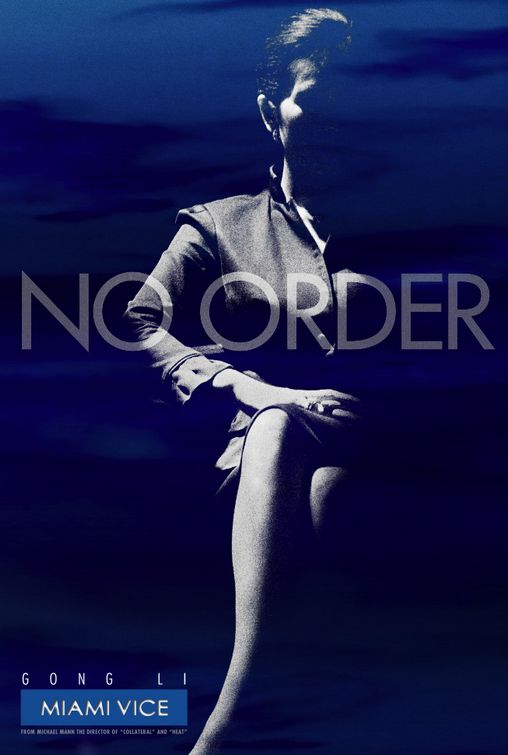
Collateral, as Mann’s first DV-at-night opus, won the plaudits, but while the foundation of Miami Vice – its script – is shakier and less balanced than the handheld camerawork, for me it is a much better film.  If you are a viewer who appreciates grand moments or, as Herzog puts it, ‘adequate images‘, this epic ode to mateship and violence satisfies for its entire running time.  Strangely for a big-budget buddy action movie, it has more in common with Le Cercle Rouge than Bad Boys 2… though there are elements of both styles at work here.  Watch it with an open mind and try to not to worry about the plot, which really is just a bare frame on which to hang thick mood and atmosphere.  And that DV camerawork by Dion Beebe?  Mesmerising.

Narc (Joe Carnahan, 2002)
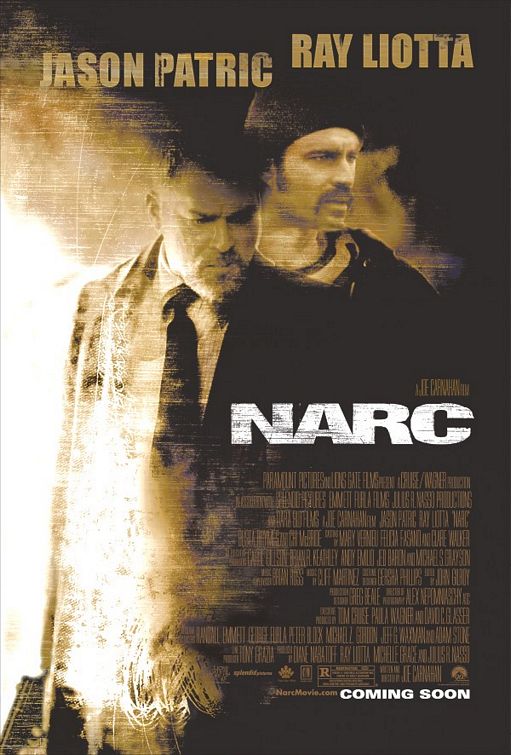
Carnahan’s chief reference point for his debut film was The French Connection, and it’s not hard to see the best of 70s crime flicks in Narc.  Carnahan has since expunged the credit on his CV with his offensively poor follow-up, Smokin’ Aces, but here the balance between script, character, acting and technique was just right.  Opening with perhaps the best chase scene of the 00s (definitely think twice about your tolerance for hyper-real violence before clicking that link) and then following Jason Patric’s weary cop through an investigation into the death of near-psychotic Ray Liotta’s detective partner, Narc pulls no punches and leaves a deeply satisfying imprint.

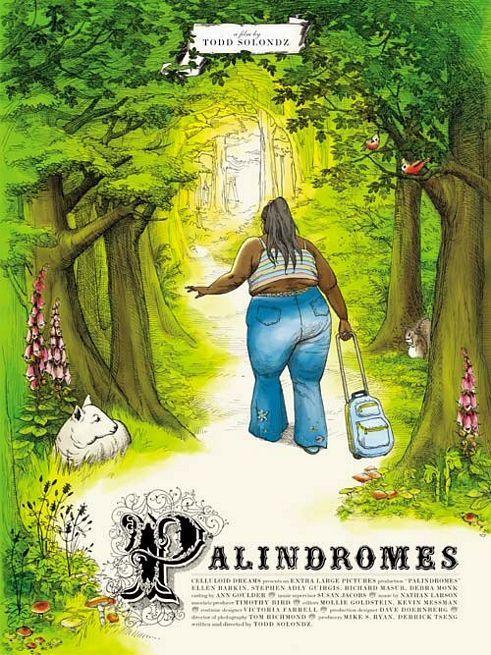
Palindromes (Todd Solondz, 2004)
Solondz is best-known for his study in audience discomfort Happiness, but admirers of that film will understand that its warmth lies in how seriously it takes its cast of misfits, and as such will find plenty to enjoy here.  Again, Solondz constantly skirts the ‘too-far’ line, but in this story of a teenage girl (played by 11 different actors) who wants nothing other than to have a baby, he hits the mark on a number of truths surrounding the Abortion Question and the notion of free will.  Like Kinsey, this is not a film for water cooler dissection, but an open-minded approach to watching it brings great rewards.

Ravenous (Antonia Bird, 1999)
(OK, not technically the right decade, but it didn’t gain a following until the 00s, and this is MY list.)  Ravenous is one of the most unusual and fascinating films I’ve seen, and one of my most adored.  A story of cannibalism during the Western expansion in 1800s America, it is funny, dark, graphically violent and strangely poignant.  It draws you into its off-kilter world from the get-go, and if I were a film academic, I could find much to extrapolate from its frequently hinted-at theme of opposing forces duking it out for good and evil.  The key to its success is its score by Michael Nyman & Damon Albarn, about which I have written before, which you will remember long after the credits end.

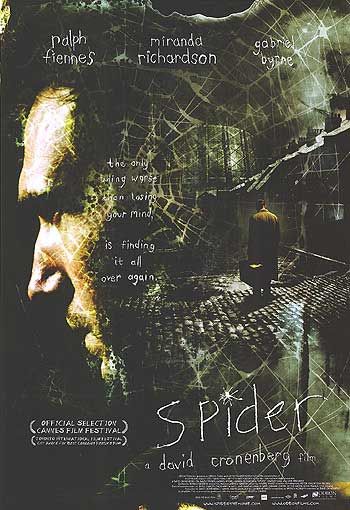
Spider (David Cronenberg, 2002)
Before he made the most wildly overpraised fail of the decade, Cronenberg produced this low-key stunner with Ralph Fiennes as a mumbling schizophrenic (what is it with me and schizophrenia?) and his battle with his memory.  Cronenberg displays an impeccably sure hand and Fiennes is excellent, but Miranda Richardson steals the show playing Fiennes’ mother, his father’s mistress, and his landlady.  A brooding, masterful study of an outcast’s reality.

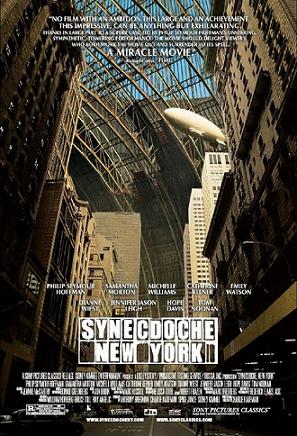
Synecdoche, New York (Charlie Kaufman, 2008)
I HATED this film the first time I watched it, finding it to be the most self-consciously gloomy offence to the medium in years; watching it again with my girlfriend, she gently coaxed me to see it with open eyes and by the end of that second time through, I knew I would never shake it from my mind.  Roger Ebert quipped that it’s a film you should only see if you’ve seen it already.  As such, it demands a degree of familiarity with its meta-referentiality and intensely dark subject matter – an existential nightmare, with loved ones becoming distant and bodily functions shutting down – so that its deep, resonant beauty can come to the surface.  I’ve since watched it twice more, and it grows in stature every time as it reveals more of itself.

Wet Hot American Summer (David Wain, 2001)
The funniest comedy of the decade – I never thought I would be so tickled by a summer camp movie.  Those with a taste for absurd humour are guaranteed huge laughs – the jokes come thick and fast, varying between subtle and completely over-the-top, and all are delivered to perfection by an ensemble cast led by Janeane Garofalo, David Hyde Pierce and Michael Showalter.  My favourite character, though, would have to be Paul Rudd’s Andy, the classic doesn’t-give-a-shit hunk with the best dumb grin in movie history.  Oh, and it has an awesome soundtrack.  Just watch it already.

The 00s: Overlooked or Underrated Films – Part 1

A number of films are released each decade that deserve a good deal more positive attention than they get.  These films are awarded that great consolation prize of the movies, entry to the hall of the underrated or overlooked, for many reasons.  A hopeless and misleading marketing campaign can doom the film’s intention.  It might simply not have enough money behind it to generate enough interest for a successful run. The elite at Cannes or Venice might choose to pass it by in favour of overpraising something less deserving.  In rare cases, such as in that of the first film listed below, a director’s runaway infamy might overshadow his masterpiece.

The following is my list of underrated works of the 00s, and they were made with widely varying intentions, perhaps more than my main list of the best of the 00s.  For one, comedy is much better represented here (good God, I’m becoming the Oscars).  I would be quite happy to put many of them in the ‘best ofs’, and dare say I would prefer to do a marathon of these than the generally drier, heavier set in the other list, but they are here because they each, as far as I can perceive, warranted closer inspection than they were allowed. So, in alphabetical order…

Apocalypto (Mel Gibson, 2006)
I went gleefully to the theatre when Apocalypto was released, eager to see what deliciously violent mishmash Mad Mel had thrown together.  In the build-up to its release, the trailer for this historical Mayan epic included a shot of Gibson himself hangin’ with the boys, and a shot had been leaked of a Holocaust-style pile of bodies with Wally, from the ‘Where’s Wally?’ books, obvious among them.  Added to that, Gibson was charged one of the more memorable DUIs of the decade, and his previous film was The Passion of the Christ.  Believing I would love every minute, but with a healthy ironic detachment, I suddenly found myself riveted and in awe: here was a film with extremely pure and genuine intentions of telling a simple universal story, telling it with considerable filmmaking skill, and never letting you leave the edge of your seat.  Its HD photography looks phenomenal and at nearly two and a half hours, it isn’t a moment too long.  One of the best action films of this, or any decade?  Absolutely.

Birth (Jonathan Glazer, 2004)
There were few positive voices among the scathing mass of critics as Birth started getting its first notices. I won’t go so far as to say that the naysayers missed the point, as they might simply place the highest emphasis in their film analysis on believability. For me, it is atmosphere: a sense of being involved with something, being drawn into a specifically composed world of sound and vision. From the simple, beautiful prologue – we follow a man running in snowy Central Park and watch as he has a heart attack, and is perhaps reborn, with the accompaniment of Alexandre Desplat’s extraordinary score – Birth is riveting and not a little disquieting, with Nicole Kidman’s best work at its centre.

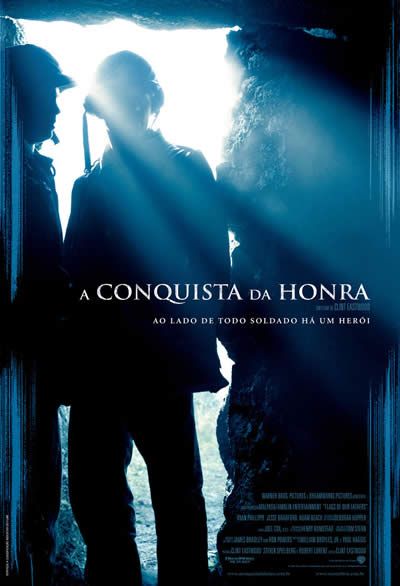
Flags of Our Fathers (Clint Eastwood, 2006)
Its companion Letters from Iwo Jima may be the better film, but the idea here is much more interesting: what is the reality of an iconic image of war (in this case, the American flag-raising on Iwo Jima), and how does the dichotomy between that reality and how it is presented back home affect the soldiers involved?  With such wide scope, a lesser director could have crashed and burned trying to keep all the plot strands in focus and avoiding jingoism.  Fortunately, Eastwood’s sure hand guides Flags of Our Fathers through a deeply satisfying and thought-provoking series of events with an appeal that welcomes the whole world to listen, not just Americans.

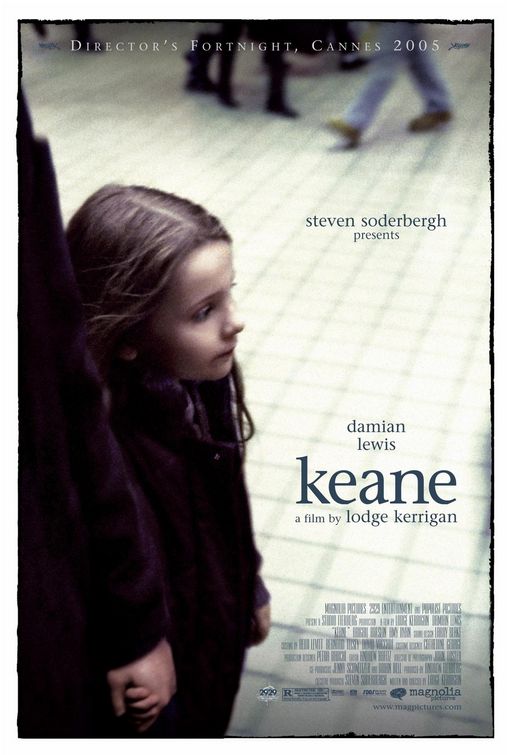
Keane (Lodge Kerrigan, 2004)
A brilliant meditation on mental illness and paranoia, handled with rare sensitivity.  Damian Lewis’ portrayal of the title character may go to the edge, but never over the top, and Abigail Breslin (of Little Miss Sunshine fame) shows her natural talent and ease in front of the camera.  Worth seeing, at the very least, for one of the cleverest cuts of the 00s, from one character to another (?) – something I had to rewind and watch again a couple of times so I could marvel at it.

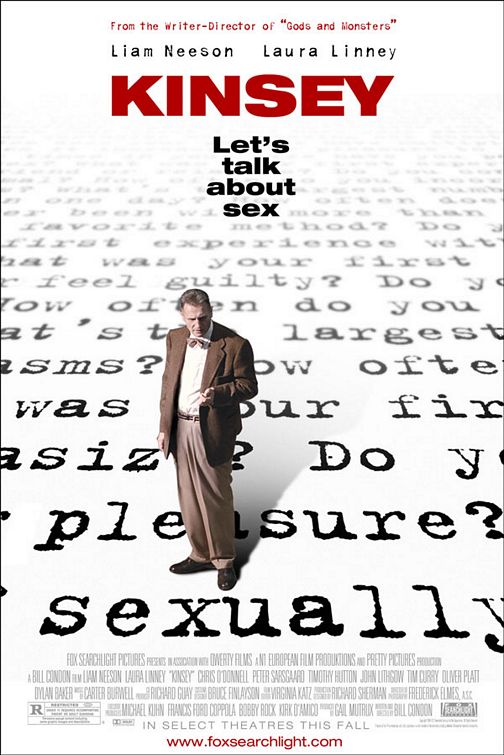
Kinsey (Bill Condon, 2004)
Biopics remain one of the chief stocks-in-trade for the Hollywood machine, alongside those blasted sequels and comic books, and it felt like the 00s were dealt with more of them than any previous decade.  While Ray, Walk the Line and Capote et al received the most attention and plaudits for their mostly clean-and-easy approach, this look at the life of the world’s most famous sex researcher delves deep into the taboo and somehow manages to stay focused and fascinating even while following the subject’s entire life.  A mature and highly provocative work for which the advisory “viewers discretion is advised” seems woefully inadequate.

Kiss Kiss Bang Bang (Shane Black, 2005)
One of the funniest and most entertaining films of the 00s, with Robert Downey Jr’s dumb petty thief and Val Kilmer’s gay private eye trading one-liners and an intricate plot filled with opportunities for hilarity.  Endlessly rewatchable to pick up all the lines you missed and marvel at the inspired, delectable writing and acting.

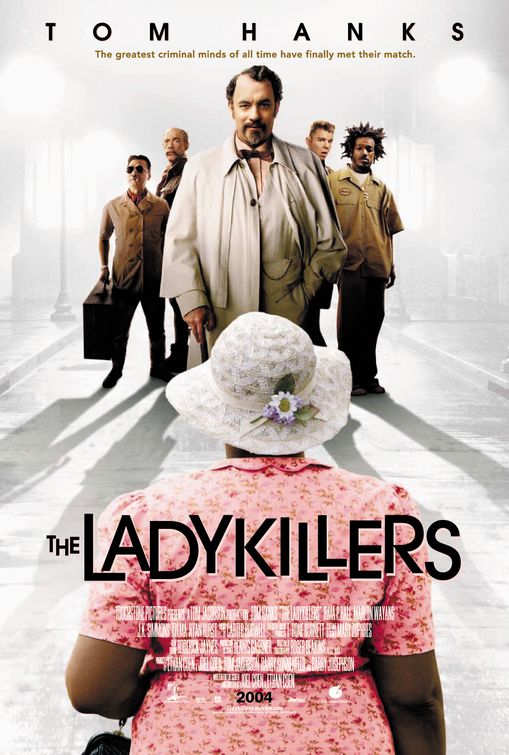
The Ladykillers (Joel & Ethan Coen, 2004)
I’m yet to find anyone to support me with this one, widely criticised as the weakest and most pointless film in the Coens’ canon.  Personally, I find their preciousness more irritating than interesting – with a few notable exceptions – but with this remake of a classic (which, to my embarrassment, I have not yet seen), the brothers’ whimsical approach fits perfectly with the material.  It must be said, however, that the film benefits greatly from one of the great comedic performances I’ve seen, by Tom Hanks of all people, and from a series of wonderful supporting turns led by Irma P. Hall.  Still, it’s a technical marvel with a great soundtrack and the product of two revered filmmakers clearly having fun.

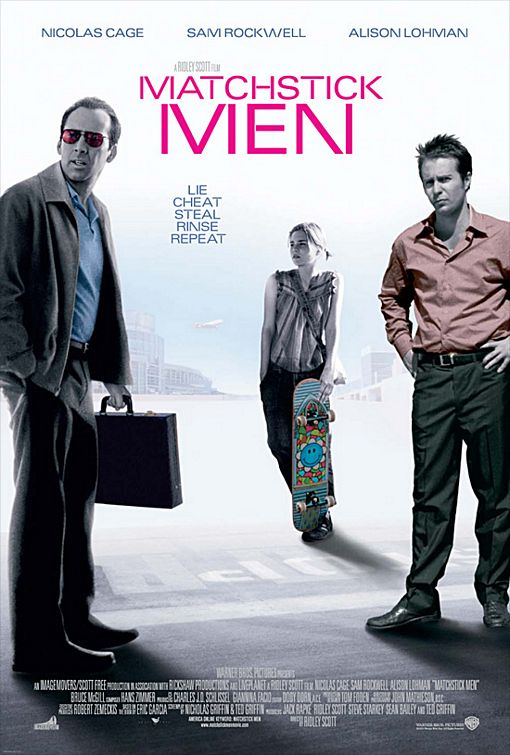
Matchstick Men (Ridley Scott, 2003)
This simple, clever film merits only a one-sentence mention on legendary Brit Scott’s (now a knight of the realm) Wikipedia page.  However, amongst all the big-budget dross he turned out in the 00s – another look at that Wikipedia entry reminds of just how much crap he dumped on the slate – Matchstick Men quietly came and went with little recognition.  It is in fact a tight, well-acted and amusing look at a con man with OCD who discovers he has a 14-year-old daughter.  Nicolas Cage (in his increasingly rare Taking it Seriously mode) and Alison Lohman are outstanding in the central roles.  As I left the theatre, I couldn’t shake the delighted grin from my face.

For part 2, click here.

The 00s: Film (Fiction) – 15-11

15. The Wrestler (Darren Aronofsky, 2008)

The Wrestler, another true American chronicle, flows on nicely from Jesse James at #16 (though they’d make for a pretty dispiriting double bill).  Mickey Rourke’s Randy the Ram, one of the finest characterisations of the 00s, knows that away from the bright lights of the ring he’s nothing.  When he’s forced to give it up and work the punters from behind a supermarket deli counter, he finds the moves in real life aren’t choreographed to guarantee the right response; same goes for his varyingly unsuccessful attempts with women, including his own daughter.  Aronofsky’s technique pulls us in close – much of the film is spent looking over Randy’s shoulder – and forces us to care about this sad, washed-up beast who ultimately becomes a truly tragic figure hung out to dry by an American society that no longer had a use for his fame.
Classic moment: With the sounds of the ring still echoing, Randy marches to his new work arena through cardboard boxes and crates rather than yelling fans and steam machines.

14. Adaptation. (Spike Jonze, 2002)

Charlie Kaufman’s meta-screenplays made him the closest thing to a celebrity screenwriter in the 00s.  He will appear twice on this list and once on the Underrated list; first with Adaptation., a satisfying and surprisingly funny inversion of the writing/filmmaking process.  I was among the few that found Being John Malkovich more self-indulgent than brilliant, but while Adaptation. is even more firmly focused on its maker, it actually tells a good story and never stops striving to entertain… and yes, I know those specific elements are supposed to be ironic references to the very horrors of Hollywood excess I banged on about in part 1, but when you have two Nicolas Cages at the top their game and a still-fresh director using all his talents to get the most out of an already remarkable script, how can you not be engaged?
Classic moment: Robert McKee, the world famous screenwriting guru, teaches Charlie Kaufman, the world’s most famous screenwriter, a lesson in his art.

13. Half Nelson (Ryan Fleck, 2006)

The most mature movie regarding drug abuse in the 00s was Half Nelson, the story of an inner-city schoolteacher who understands exactly how his addiction limits him but, in a world he knows is going to the dogs, lacks the motivation to kick it.  Fleck and his partner Anna Boden hoped to wake a few people up from the apathy of modern life and, with Gosling’s fine performance, fashioned a unique and powerful voice in Dan Dunne, a schoolteacher who is already jaded in his mid twenties.  As is so often the case it is the innocence of a young girl that gives him pause, but instead of getting lost in life lessons and forced interactions, the whole thing stays real from first to last.  It’s sad that you can’t say that about too many recent films.  I guess it just makes them even more precious when they come along.
Classic moment: Dan meets up with his ex-junkie girlfriend and, too strung out and nervous to focus, turns it into yet another display of obsessive self-awareness.

12. Downfall (Oliver Hirschbiegel, 2004)

Before it became one of the more famous internet memes in history, Downfall was the film about the fall of Nazi Germany and the last days of Hitler.  It serves no great purpose to talk about its individual aspects, because all of them are so exceptional as to be unsuitable for holding up to scrutiny.  While Downfall lacks the innovation of other films on this list, and thus places lower than my words might suggest, it gets inside its subject to a rare degree and appears to reflect absolutely the reality of what happened, why it happened, how it felt.  It’s like nobody needs to make any more  movies about Hitler’s bunker ever again because that movie, in all its sad and powerful glory, has already been made.
Classic moment: While saying goodbye to his staff, Hitler pauses poignantly at his terrified secretary Traudl Junge and gives her a smile which could almost be viewed as hopeful.

11. Memento (Christopher Nolan, 2000)

Hello, superstar director.  I remember when you made small-budget movies about the mind.  Now you make mega-budget movies about the mind, and your impressive track record keeps you firmly entrenched as one of the very few hopes for a smart Hollywood (even if The Dark Knight, um, wasn’t actually that good).  Still, I’d be very much surprised if you ever made anything that came close to this, a perfect triumph of ideas and thought through cheap sets, cheap locations and (then) cheap (though excellent) actors.  The lessons of Memento about wilfully distorting one’s own reality have remained with me since that first baffling, exhilirating viewing, and I imagine I will struggle with them for the rest of my days.  I’m sure that one of these days soon you’ll make a dud, a Christopher Nolan film that sucks, but it’s okay;  I expect that.  And all will be forgiven, as soon as I throw on the DVD and watch that Polaroid undevelop for the umpteenth time.
Classic moment: Leonard’s short-term memory loss causes him to forget why he’s running… at a particularly inopportune moment.

<< #20-16 || #10-#6 >>

The 00s: Film (Fiction) – Intro & 20-16

Let’s face it, movies are getting worse all the time.  Louder, dumber, more willing to dispense technology or other fakery in place of humanity – and I don’t only mean Hollywood.  Amid the neverending glut of big-budget sequels, unnecessary remakes and too-smart-for-you indies, adequate images and the valuation of ideas are more desperately needed than ever.  I’ve begun to feel like the film industry is on an inexorable slide into perfectly clean banality, in which every film fits a predefined set of requirements and caters to a specifically identified market.

The 00s were beset with numerous travesties, many that aspired to greatness, some that were still widely praised despite their ineptitude or hollowness.  I fear the 10s will be decidedly worse, though the surprisingly enjoyable Avatar heralds the potential of a new dawn.  Come on, who doesn’t love an enormous, outrageously expensive movie about our need to have love for one another?  I’m serious.  I wish more directors afforded astronomical budgets would have the stones to make something with true heart.

Still, good directors always seem to find a way to make good films, and sometimes great ones.  I saw hundreds of films in the 00s; a good number stood out.  Here are the ones that affected me most.  Like the music list, I’m going by the one director – one movie rule, and I could mention several that I wish could occupy a place on the list.  They would include: Good Night, and Good Luck., Spirited Away, Brokeback Mountain, Donnie Darko, Amores Perros, Traffic, Children of Men, Once, High Fidelity, Syriana, Mulholland Dr. and 4 Months, 3 Weeks & 2 Days.  The 20 that follow managed to somehow reach a level slightly above these just mentioned and, to my mind, anything else released in the 00s.
20. In My Father’s Den (Brad McGann, 2004)

Like the music list, my top 20 begins with a New Zealand success.  Lest you think I’m showing undue favour to my homeland, In My Father’s Den could have come out of Nicaragua and it would still figure here.  With Matthew Macfadyen’s 00s-defining performance as a base, McGann – making what sadly proved to be his only feature – crafts an intricate, smart and powerful story which implies plenty about small towns not just in Nu Zild, but everywhere.  Up there in the pantheon of NZ’s best contributions to cinema.
Classic moment: “Is that why you push people away?”  Celia’s innocent question provokes an alarming response from Paul, until he factors in her naïveté.

19. My Summer of Love (Pawel Pawlikowski, 2004)

For some reason, Pawlikowski has not directed again since this meditative stunner, and more’s the pity.  My Summer of Love represented a firm expression of his accumulated filmmaking ideals over a decade of documentary production and his previous Last Resort.  What starts out as a dreamy, intimate portrait of holiday romance – crossing the class divide, naturally, but with the twist of being between two teenage girls – grows ever more claustrophobic and questioning of its characters’ often murky motivations.  Nathalie Press and (now mega-famous) Emily Blunt made for one of the best couples of the 00s, and Paddy Considine – the Best Actor of his Generation – is his usual brilliant self.  Pawlikowski remains the star, though, marrying a freeform visual aesthetic and a great soundtrack to a deeper-than-you-might-think story whose power lies in its realistic telling.
Classic moment: Phil (Considine), having given all he has to try and stay on God’s path, finally ‘goes dark’.

18. Ratatouille (Brad Bird, 2007)

In the staggering – yet somehow deserved – hype that surrounded WALL-E and Up towards the end of the 00s, Pixar’s most satisfying creation yet seems to have been forgotten somewhat.  That’s the curse of quality, though, with Pixar churning out classic after classic to become the exceptional production house of modern cinema.  Where do they get their ideas?  And how did they charm me with a story that sounds so stupid on paper?  Quite simply, through a love of film and a scarcely believable attention to detail.  I remember, on my first viewing of Ratatouille, forgetting that it was an animation and paying more attention to the marvellous composition of each shot.  Nothing less than a miracle, the only thing keeping it from marching up the list is its lack of lasting impact, but I wouldn’t be at all surprised if I ranked it higher and higher as each year passes.
Classic moment: With one bite, Anton Ego hurtles back in time to his mother’s dinner table and the tastes and memories of his childhood.

17. 24 Hour Party People (Michael Winterbottom, 2002)

It all started with a sparsely attended Sex Pistols concert in ’76, heading on through a contract written in blood, on-stage faints, suicide to Stroszek, attempted murder, innumerable ego clashes and a £30,000 table… but how much of it is true?  The story of Tony Wilson and Factory Records as told in 24 Hour Party People is a postmodern treat and one of the funniest films I’ve seen, a monument at least to good storytelling, ensemble acting and taking measured directorial risks – if not a monument to transparent fact.  Still, as Coogan’s Wilson quotes in the film, “if it’s a choice between the truth and the legend, print the legend.”
Classic moment: The soon-to-be-important figures are introduced at the Sex Pistols gig, with a glorious slow-motion close-up of John the Postman, one of the lesser lights.

16. The Assassination of Jesse James by the Coward Robert Ford (Andrew Dominik, 2007)

If there’s one film of the 00s that I suspect will grow and grow in stature over the coming decades as it is reconsidered outside the context of its initial release, it’s this one.  Coming just in advance of two hotly anticipated, superficially similar films – the somewhat overrated No Country for Old Men and worthy There Will Be Blood – most folks weren’t prepared for a slow-burning, philosophical Western in which ideas took precedence over gunplay.  Jesse James never really stood a chance.  But what ideas!  It is a meditation on both celebrity and criminality, a sharp and serious criticism of American idol worship that shows it to be a far-from-modern phenomenon.  This dedication to thought and atmosphere will distinguish the film as a work of art and set it apart as time passes.  Indeed, had I myself seen it more than once, I wouldn’t have been all surprised to see it occupy a much higher place on this list.
Classic moment: Jesse James’ emotion gets the better of him as he attempts to confront his growing paranoia.

For #15-11, click here.

The 00s: Music – 1

Well, you knew it was coming.

1. RadioheadKid A (Parlophone/Capitol)

You can read reams upon reams elsewhere about the qualitative aspects of Kid A and what exactly makes it the best album of the 00s, not to mention one of the most widely acclaimed works of music history, so I’m going to cut all that out and just tell my own story about it.

When I was 15, I spent a week of my August school holidays staying with my brother Ed.  While he and girlfriend Rach were at work, I whiled away solitary hours on the couch watching the Sydney Olympics, playing Driver on PlayStation and listening to the former student, newly commercial radio station uFM.  (And, yes, getting up at 11 in the morning if I was lucky. If you can’t be a horrible layabout when you’re 15, when can you?)  uFM had gotten their hands on a promo copy of Kid A and played about five or six tracks from it each day of the week.   Now, I couldn’t say it was love at first listen, but I was intrigued.   I knew it was a new kind of music for me; there was something intrinsic about it that reached out to the listener, but through the limited scope of commercial radio, I couldn’t put my finger on what it was.

A few months later I put Kid A at the top of my birthday list, not really expecting it to change my life, but definitely wanting to experience it again.  Naturally, Ed bought it for me.  For the following month the disc shuttled back and forth between my home CD player and my Discman, the sounds living in my head whenever I wasn’t listening to it.  ‘Idioteque’ stuck out as an early favourite, but the more ambient tracks – ‘Everything In Its Right Place’, ‘Treefingers, ‘Motion Picture Soundtrack’ – moved me in a way I still couldn’t articulate.  In any case, I swiftly decided as only a teenager can that this was the Best Album Of All Time and I would never, ever get sick of it.

Over the following couple of years, particularly after a wonderful New Year with my brothers and their spouses at Lake Ohakuri, I took it everywhere with me.   I’m not just saying that.  I really did.   I even made a point to listen to it on every car or bus journey leaving or returning to Auckland, where I lived, and every time it offered up some grand realisation or small detail that I hadn’t understood or noticed before.  Those ambient tracks now emerged and revealed themselves fully along with the rest of the album, and over time I felt like I could see, feel and accept ideas about our world that had never even remotely occurred to me before.

I left home, to go to university and then to work.  Kid A came with me in its now tattered case.  I discovered and embraced other Great Albums but always held Kid A above them all, the album that really got me into music, the album that I loved the most.  Every phase of doubt about it – ‘maybe it isn’t actually that amazing after all’ – was struck down as soon as I listened to it again.  With each passing year it became ever more a part of my soul and my being on this Earth, and so it remains today.

Radiohead have released other albums, and I have doubted them and been schooled each time.  But my teenage self turned out to be right: nothing will ever beat Kid A.   It is to me what I understand The Piper at the Gates of Dawn is to my dad – though he will surely expand on that – and Ziggy Stardust is to my mum: a unique relationship with a musical work that impacts you so strongly during your formative years that it never leaves you, or more accurately, you never leave it.  What’s yours?
Most representative track: ‘Optimistic’
My favourite: ‘Everything In Its Right Place’