A new Brand of democracy, the unfocused revolution

In the last month or so, British comedian and writer Russell Brand has called for a revolution against a political establishment that, in his view, serves the wants of corporations and those who wield political power while casting aside the needs of a majority of the general public. Brand has been speaking and writing passionately and eloquently around this topic for some time, particularly in The Guardian, and he’s gained plenty of notice on social media for it, but his interview with the famously hard-hitting political journalist Jeremy Paxman on BBC Newsnight brought him into a new realm of Facebook and Twitter shares:

If you don’t see yourself as part of the powerful establishment in Westminster-based society – and very few do – then it’s easy to climb aboard Brand’s revolutionary bandwagon. We live in a world in which legislation is passed with a purported mandate from a slim majority of the population, whether or not they all understood what they were voting for; if you are part of the 40-something percent that didn’t vote for the mob in power, your opinion is discarded. Then there are cases such as the GCSB Bill in New Zealand, which allows the government to spy on its own citizens, and which was not part of any political agenda at the 2011 election but is now law by governmental decree, whether the electorate wants it or not. A lot of the political process appears to me, looking in from the outside, to be tied up with balancing the desires of powerful lobby groups that often represent large corporations. Meantime, poor folks in UK council estates or state housing in South Auckland struggle from paycheck to paycheck without anything approaching an equal voice in the democracy.

Brand followed up his rant on Paxman with an editorial in The New Statesman titled ‘We no longer have the luxury of tradition’. As far as I can tell, Brand’s revolution starts in the mind but veers off disconcertingly into whatever you care to make of it:

“To genuinely make a difference, we must become different; make the tiny, longitudinal shift. Meditate, direct our love indiscriminately and our condemnation exclusively at those with power. Revolt in whatever way we want, with the spontaneity of the London rioters, with the certainty and willingness to die of religious fundamentalists or with the twinkling mischief of the trickster. We should include everyone, judging no one, without harming anyone.”

Notice that he condones the London rioters – who destroyed hundreds of small businesses and made life hell for the people living in the streets they pillaged – on account of their spontaneity, then pleads vaguely for a lack of judgment or harm. The rest of the editorial is similarly rambling, unfocused, and inconsistent; certainly eloquent, brilliant in places, but amounting to what? Is Brand’s voice that of the disenfranchised, venting a scream of raw frustration? It can’t be: in the same piece, Brand relates a story about attending a Reclaim the Streets march while working for MTV and getting called out by someone clearly lower on the ladder of wealth and entitlement than he was. How can he speak for the disenfranchised when he is such a prominent citizen? And he is even helping?

Robert Webb, best known for his collaborations with David Mitchell on Peep Show and That Mitchell and Webb Look and a contemporary of Brand in British comedy, responded in The New Statesman with a rebuttal to Brand’s apparent cry from the heart. Webb reminded Brand that effective democracy demands engagement, with particular condemnation of Brand’s call to abstain from voting:

“I do think that when you end a piece about politics with the injunction “I will never vote and I don’t think you should either”, then you’re actively telling a lot of people that engagement with our democracy is a bad idea. That just gives politicians the green light to neglect the concerns of young people because they’ve been relieved of the responsibility of courting their vote.”

Webb went on to strongly criticise Brand’s call for revolution, reminding him of the death and destruction wrought by revolution in the past. Indeed, for a recent example, Brand need only look back as far as those ‘spontaneous’ London riots. Webb’s practical response was to rejoin the Labour Party and helping the UK’s main opposition party fight a Conservative government he believes “scapegoats and punishes unlucky people”; to actively engage with politics in an effort to further legitimise it by adding his voice as a paid-up member; to literally buy into democracy. In response to Webb’s response, Brand invited Webb to check his privilege: “If you went to Oxbridge, if you went to a private school, no one is coming for your kids. They’re not coming for you if you’re from Oxbridge. That’s my open letter to Robert.”

It was about this time that Russell Brand offered up, for me at least, the final straw:

Russell Brand | V for Vendetta | Protest | Smartphone

When it spills from the pages of The New Statesman and The Guardian into the town square, Brand’s revolution looks the same as every other impractical anti-establishment protest of the last few years: a V for Vendetta mask and a smartphone, both manufactured on production lines in East Asia by workers paid a pittance. Brand was presumably tweeting to his ~7.3m Twitter followers about the power and collective energy of the occasion, rather than scrolling idly through BuzzFeed listicles, but it hardly looks inspiring after all the promise of his language.

I posted the above photo on Facebook with the sarcastic and cynical caption ‘This is what revolution looks like’, which many seemed to take in earnest. It led to a debate with a friend, who wrote the following:

Brand’s response to Webb is better than Webb’s response to Brand. It’s about disillusionment with a system that repeatedly fails a group of people and repeatedly serves another, with some minor variation for those in a privileged position (such as Webb).

To which I replied:

I think Webb’s view is considerably more coherent and practical than Brand’s. The Westminster system of democracy, which seems to inevitably lead to two parties exchanging power, seems far from ideal but I can’t think of anything better; certainly not revolution, whether through violence or apathy. Brand may articulate the views of the disenfranchised eloquently and compellingly, but as this photo shows, his cries (so far at least) don’t add up to anything more than V masks and smartphones for all.

After some more back-and-forth, my friend later came back with this, with which I agree:

I think Brand’s disillusionment with the results of the current system is pretty much spot-on, but beyond that it’s hard to see what kind of system would produce better results while still being morally acceptable. It’s a dilemma. Disillusionment is easier than the search for a solution, but it doesn’t change the fact that disillusionment may well be justified. Some form of democracy obviously remains the ideal, but presumably Brand wishes rednecks didn’t vote (we’ve all been there). My dissatisfaction comes from how certain groups have power to distort the system (i.e. media influences voters, corporates have access to lobby politicians well beyond the influence of poorer people etc.), and I think it’s entirely reasonable to pursue reform in that direction. Just a thought.

For that reform to be pursued, Webb’s Labour partisanship still seems more effective and meaningful to me than Brand’s outright dismissal of the establishment. Brand’s great trick is to paint all politicians with the same grubby brush: a self-obsessed, money-hungry, cronyish lot with zero interest in the lives of those who struggle. This is true in some cases, but it is not the whole truth; many politicians enter public life with the express goal of making a positive difference and helping people to have their voices heard, and they work hard for decades to pursue those goals. And just so you know, I went to an expensive private school as well. Does this mean that like Paxman and Webb before me, Brand can cast my opinion aside in a single line?

Genuine democratic change, which remains the best option available to us, demands an electorate that is well-read and politically engaged enough to understand what is wrong, vigilant enough to call out those who do wrong, and optimistic enough to see a future that is more right. Then you have to keep reading, and stay politically engaged, and stay vigilant, and stay optimistic – in as much of your life as possible and for as long as possible – to promote what you consider a better society.

You also have to be realistic enough to acknowledge that not everyone will agree with you. Here’s what another friend said in the same Facebook thread about Brand:

But he has at least started a debate. And a smartphone gives him an audience. Can’t just stand in the town square and ring a bell anymore. And you can’t send pictures via Milo tins and a piece of string. I’m sure when they develop a vegan, biodegradable, solar powered, decaf phone made under good working conditions, he’ll be into it. Or not. Maybe he doesn’t give a shit about a bit of hypocrisy to get his point across.

If one thing’s for sure, we’re all hypocrites in some way or another. I’m no exception. Neither is Robert Webb, and neither is Russell Brand. And my friend is right: Brand has started a debate that has helped clarify some of my ideas about democracy, and mobilised me to engage more in effecting social and political change. I’ll just be moving in a different direction, away from the messiah.
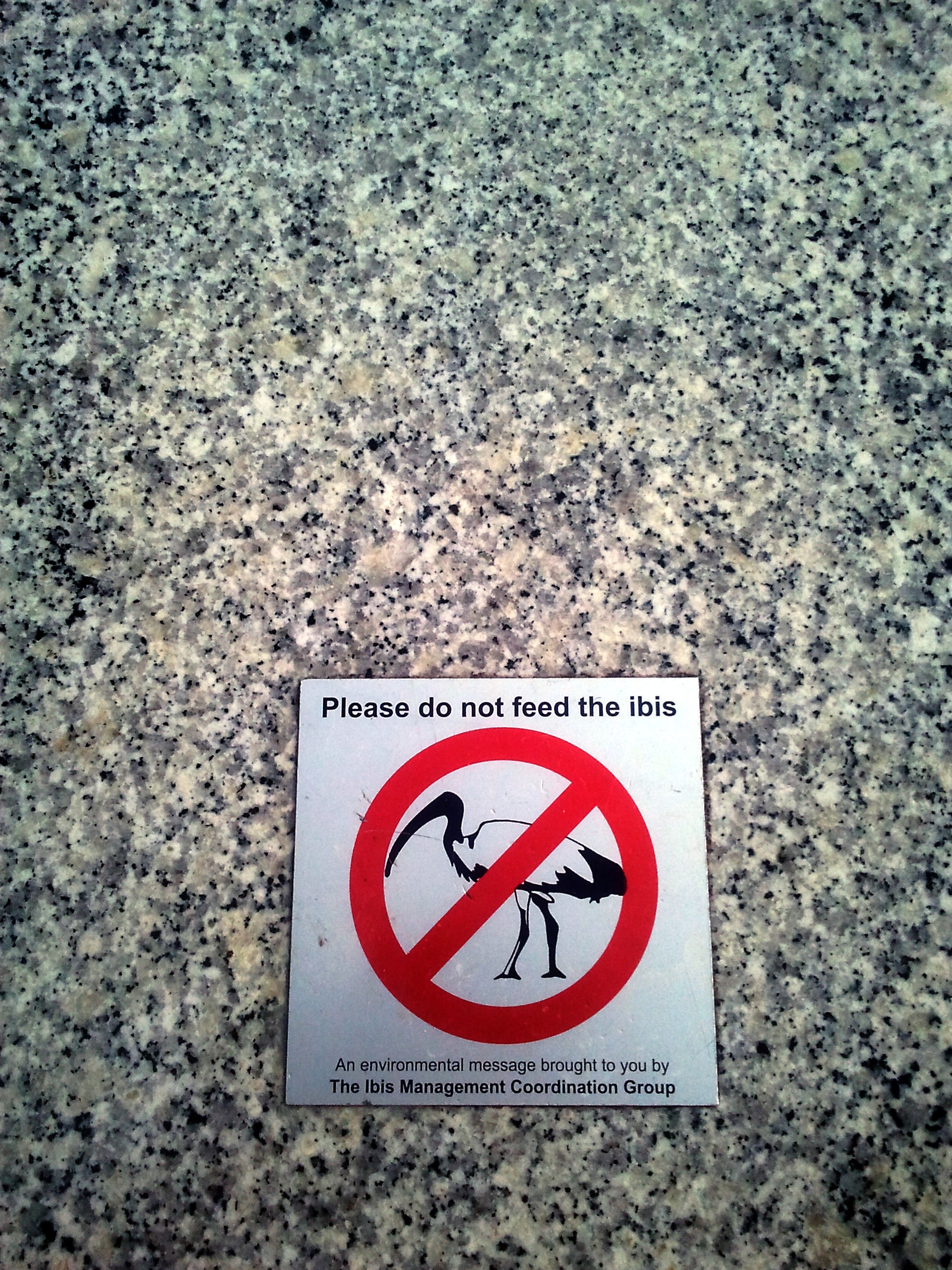
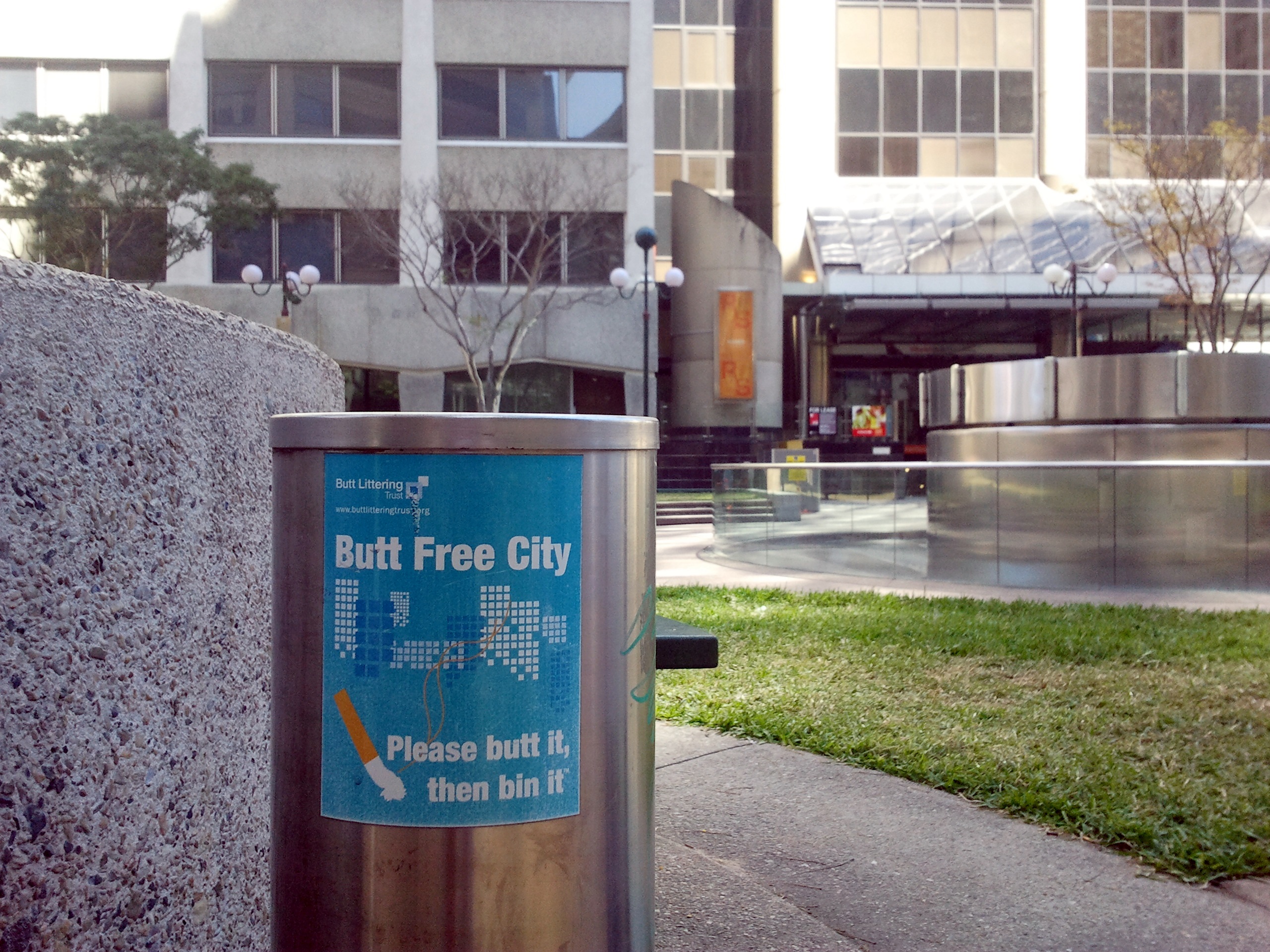
Filtering Brisbane

The sky seems bigger here in Brisbane. I’ve come from Wellington, where the hills surrounding each suburb have the effect of closing in your view of the space above. I can see why some people feel claustrophobic there. Brisbane, by contrast, is built on a river plain and opens out into the incomprehensible vastness of Australia beyond: that continental expanse, which serves to both magnify and diminish everything around — even the stars.

*

On the Airtrain, the airport-to-city train, jetlagged and slightly strung out. All I see or hear are keywords. A few graffiti tags sneak through the filter: ‘NWO’ on a silo, ‘EAT THE RICH!!’ above a spray tan salon, the sun baking everything into the dust.

*

The fellow tourist with the huge bag and the foreign accent isn’t sure whether he should get off here. After looking him up and down a couple of times, catching the confusion written all over his face, a woman in her sixties asks him where he wants to go and confirms that this is his stop. Then, after a pause: “If you’re ever unsure, never be afraid to ask.” She says it like she’s scolding him, pointing out his folly in not asking. “We love to help.”

*

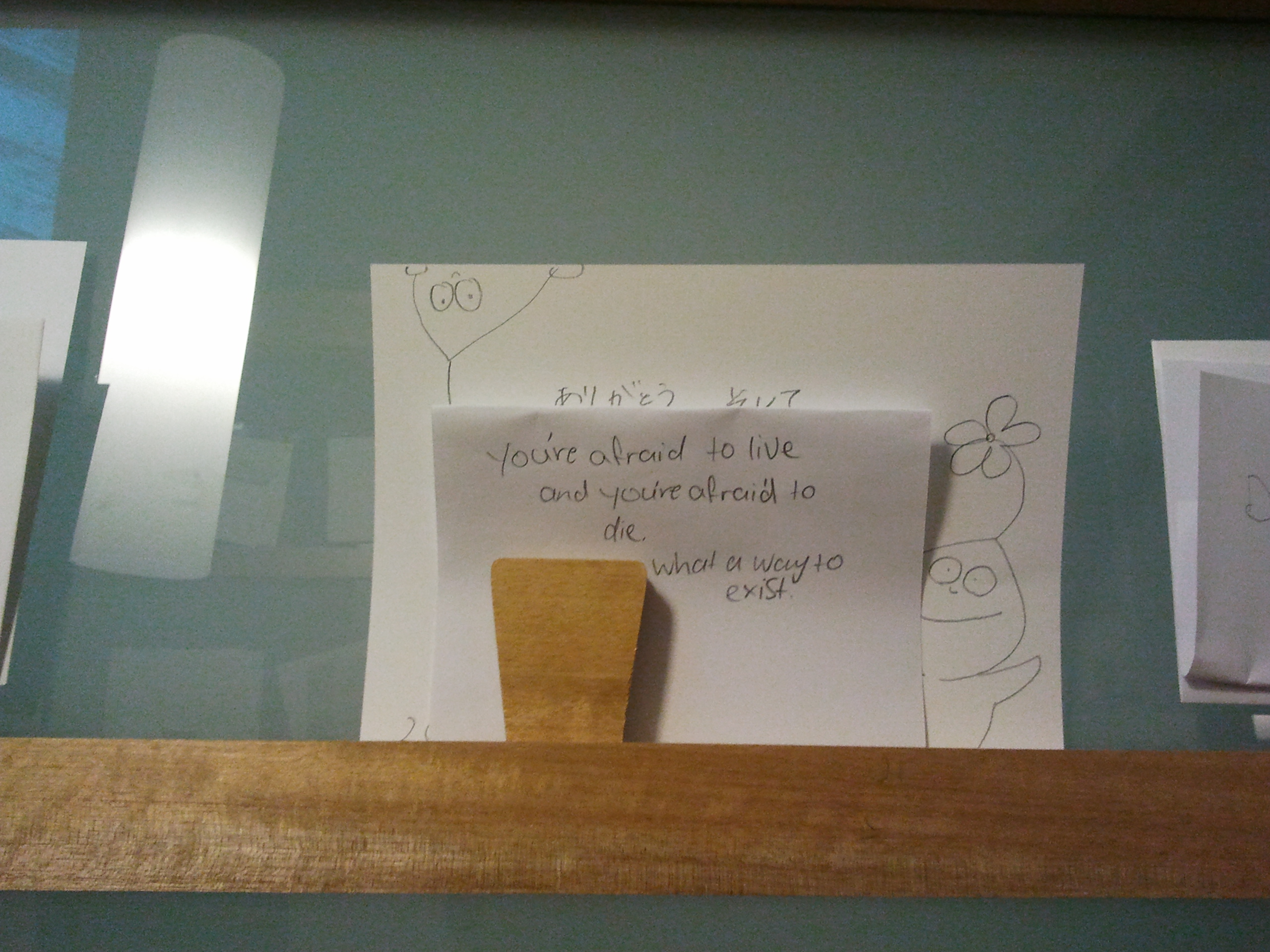
Public Notice, Brisbane

*

I listen to Australian radio for a living, and the ‘Straya’ of my working life is spoken in clear, lightly accented English. It leans one way politically, then the other, but is unquestionably politically engaged. It veers evenly between the arts, gossip, scandal, activism, bigotry, and sexism. It’s apparent after an hour in the country that this picture is a narrow, blinkered view, not necessarily representative of Straya as a whole.

A group of four young men aged roughly 19-25 walks past me and all I can catch from their conversation is “had about four loaves of garlic bread”.

*

My airbnb host is very upset that Tony Abbott is her new Prime Minister. “He’s going to fuck the Great Barrier Reef!”

*

Brisbane ashtray
Brisbane ashtray

*

The State Library of Queensland is a brilliant building, superbly designed and full of treasures. Along from the Talbot Family Wall, which is covered with pictures of women (and men) from Queensland’s history, groups of teenage girls congregate in study rooms and actually appear to be studying.

Being an outsider, I wasn’t sure if I could enter this wing. Of course I could! But is it okay to take photos? Please do!

*

At a panel discussion on literary magazines, former VoiceWorks editor Tom Doig notes over the last decade an exponential increase in MFA creative writing programs around Australia and the world, in which graduates go on to teach the next batch. “It’s a literary Ponzi scheme,” he jokes, and everyone in the room laughs, including the people who are currently studying towards an MFA in creative writing.

*

I hear bells along the South Bank promenade and move to one side as another cyclist glides gently past. This city seems quite well equipped for bikes with its many cycleways and plenty of signage directing cyclists along a certain path. Later, I hear the father of a family walking in the opposite direction warn his children to be careful because “there’s idiots on bikes”.

*

Just about everyone around South Bank, particularly the beach area, is wearing bugger all on this beautifully sunny, 25-degree day. The South and East Asian men — I presume mostly Indian and Chinese — generally wear collared shirts and pressed trousers. I’m somewhere in the fashion no man’s land between the two, which is exactly where I belong.

South Bank Beach, Brisbane

*

An unfamiliar city used to feel like a small, well-lit spot surrounded by an endless dark, invisible expanse. Now I can go into a tourist information centre and ask clearly for the information I need. The darkness is now an unmapped haze to be brought into focus, and I’m growing up. Can I get an aegrotat pass on my twenties?

*

Kathleen takes me to a show where an actor playing the Queen refuses to shake my outstretched hand, having accepted all others, and later a naked crotch is thrust at me. Good times. Before the show, we eat dumplings and talk fitness, travel, and the Queensland government.

She’s sunny and friendly, and when she posts a photo of us to Facebook, a mutual friend neither of us has met comments, ‘Well done, you two!’ Nice moment. I mean to catch up with Kathleen again later in the week but for one reason or another, I don’t get round to it.

*

The IGA supermarket in Kangaroo Point is playing ‘Computer Games’ by Mi-Sex. I thought they were a New Zealand band? And now a kid’s having a tantrum in the next aisle over, and another over by the beans. There’s a correlation between ‘Computer Games’ and tantrums.

*

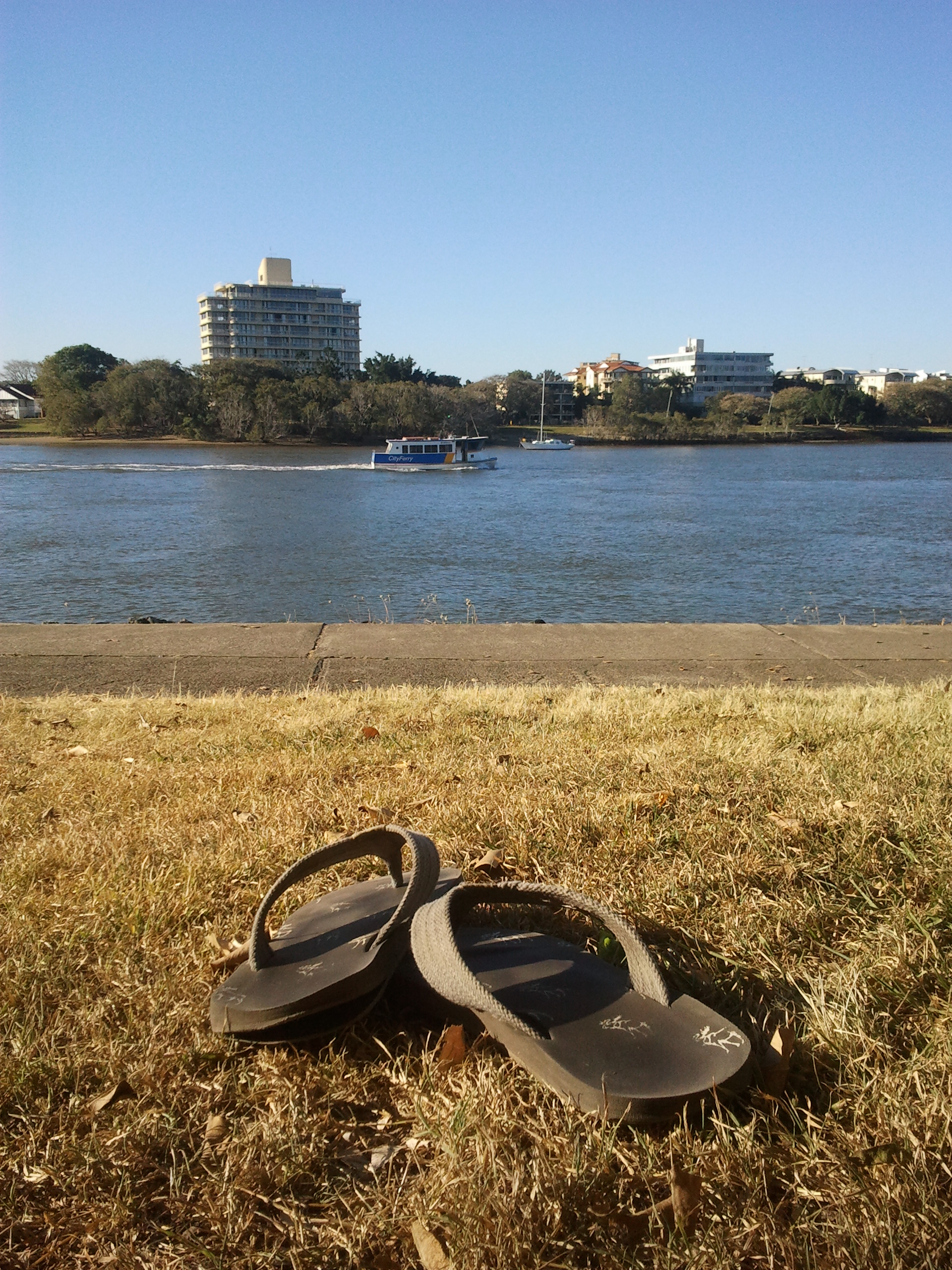
I’m sitting and reading in that relentless sun at Mowbray Park when a dog barrels up and licks my ear with force, then starts rooting around in my backpack. “Leave it!” cries the owner, and after a few uncomfortable seconds, the dog gambols off to the next hapless sunbather. We came here to relax, he came here for a laugh. “Leave it!” Again and again, person after person. Train your dog!

Mowbray Park, Brisbane

*

On the train to the Gold Coast, a bloke in a singlet sits down next to me with a pie and an energy drink. He scoffs the pie loudly and swigs the energy drink in gulps, and I avoid eye contact.

Later, I see several more people drinking energy drinks at Pacific Fair Shopping Mall in Broadbeach, including a woman in her 50s pushing a full-ish Kmart trolley.

New cast member on 'The GC'
New cast member on ‘The GC’

*

Peta is good company, talkative and insightful, not remotely as icy as her measured words on the page might suggest. We used to write for the same website, when I lived in India and she lived in the US, and are meeting for the first time. Our conversation focuses primarily on craziness.

At the restaurant in Broadbeach, I look over to another table and see a young Asian woman wearing a wide hat and blue shirt, talking to herself as she taps away at her phone. Peta’s phone rings and she answers it, absentmindedly holding an edamame pod in the same hand.

*

There’s a frozen yoghurt shop called YO-LO. You only live once, so why not come to the Gold Coast and eat frozen yoghurt?

*

Junk food is my life’s addiction. I used to smoke, but only for a couple of years; on the other hand, lollies, crisps, ice cream, and chocolate have been nearly impossible to resist for close to three decades now. In some ways, you never grow up.

*

Music distorts your perception. ‘Une Année Sans Lumière’ by Arcade Fire in the headphones twists Brisbane into fairytale.

The Wheel of Brisbane and the ABC Building

*

The haloumi platter at Three Monkeys Cafe in West End is spectacular. Thanks for the tip, Nik. I’m curious, though: what is this older couple next to me talking about?

She: “Nothing is boring. It’s just not.”
He: “[inaudible]”
She: “We don’t have deep conversations!”

Haloumi platter at Three Monkeys Cafe

*

Reena, eight months pregnant, can’t even look at TV ads for McDonald’s beef burgers. She couldn’t drink tea for most of her pregnancy, either, until her mother arrived from Maharashtra and made it the old way with lemongrass and other spices.

For me, her mother made utthappam: pancakes made from rice, white flour, and urad dal, with onions, tomatoes, and chillis mixed through. It was like being back in India, like a step back in time. I hadn’t had utthappam for years. Reena hadn’t been able to handle onions for months, having previously wolfed them down raw with her meals. In her mum’s utthappam? No problem.

*

Back at South Bank, again — God, I love it here — a teenager in a group of teenagers spies a turkey. “Oh fuck yeah!” And he’s off sprinting after the poor thing. It gets away, so he makes gobble noises himself as the group walks on down the promenade.

*

Poster in the Botanic Gardens

*

In Myer, a huge and essentially faceless department store, ‘Sweet Dreams’ by Eurythmics plays over the PA. It’s September and they’ve already got most of their Christmas displays out. Some of us want to be abused.

*

“I think every boss I’ve had over here has claimed to have bikie gang connections,” says Paul. He slips into a perfect working-class Aussie accent: “’You keep that up, cunt, and I’ll get me bikie mates onto ya, come round your house and fuck you up.’” Paul’s workday Australia, of tradesmen and sleeve tattoos and the mining boom, is one I will likely never touch.

Paul is literally my oldest friend. He still seems so much wiser and more experienced in life than I am, just as he did back when we were five years old.

Paul and I
Paul and I

*

Here’s an old-school bus driver. He announces every street and points out landmarks. “There’s the ‘Gabba!” He has shoulder-length grey hair. “Nicely done, on yellow, woo-hoo! The 235 has arrived!” He wears glasses. “Good morning, young man! Good morning, young lady!” He’d be somewhere between 50 and 65 years old. “10:36, we’re a minute and a half late!” All delivered in exactly the same faux-dramatic tone, almost like a defence shield. “Thank you, have a nice day!”

At my stop, two buses arrived at the same time, and I had to signal to the rear bus — his bus — that it was the one I wanted. The driver was impressed: “You should’ve been a traffic cop!” Well fancy that! Maybe I should’ve!

“Ah, the bus is leaking.”

*

At the Gallery of Modern Art (GOMA), Brisbane

*

Time to leave. My airbnb host drives me to Fortitude Valley railway station and we don’t hug goodbye, though we got on reasonably well.

In the station, there are posters advertising New Zealand. Despite the facetious sentiment of ‘100% Pure New Zealand’, and as enjoyable as Brisbane has been, I’m really looking forward to closing in the sky again.

#NZFF: Bleakfest

(‘Bleakfest’ is the name of a real thing that my friends Amy and James did last year — a night of the bleakest films, screened back to back in a dingy Hataitai flat — but I’m nicking it for this section of my NZ International Film Festival, during which I felt like the Earth was a crusted, burnt-out husk.)

A Touch of Sin | First story | Western-style

I did a strange thing. Instead of just rambling my thoughts about Jia Zhangke’s A Touch of Sin here on Jdanspsa Wyksui, I compressed them into a hopefully coherent form and submitted them to Stuff Nation, the often questionable user-generated content arm of Fairfax’s Stuff.co.nz news website. Here’s an excerpt:

In Jia Zhangke’s A Touch of Sin – one of the more bitter and cynical films I’ve seen in a while – China’s power is concentrated in the hands of an elite few, while the majority of the population is left to pick over the dust in their masters’ wake. […] What happened to the glorious idea of China for these people? Far from being marginalised, they are in the thick of the mainstream. Their aspirations for more money, more power, and more freedom lead them to fight against the current with whatever tools they have available to them – but the flow is always stronger. 

You can read my full review here, which I end by saying that the film is worth seeing. My bitterness and cynicism straight after the screening overrode any attempt to judge the film’s quality, but the more time elapses since I saw it, the better I think it is.

On the other hand, Amat Escalante’s Heli is the absolute bleakest of the bleak, and impossible for me to recommend. Imagine a family of three generations that lives a purely functional life in a shack in Mexico, their lives as parched of emotion as the barren landscape that surrounds them. Then, imagine those lives being wrenched and battered by a mostly accidental run-in with a drug cartel. One reviewer walked out during the central sequence of chilling gang violence: “Life’s too short for that amount of bleak”.

Notes on Heli, Mexican film | Walkout
My notes for ‘Heli’

Heli is the name of the main character, a young man in his early 20s who appears to be the main breadwinner of the household. There’s also his dad, his teen sister, his wife, and his baby daughter. Before the gang comes knocking, he moves from the breakfast table > to his job at a car manufacturing plant > to the dinner table > to bed, without ever cracking a smile. After the shooting and torture, his face remains as flat and emotionless as ever; the only question is what rage he will find in himself, and at whom he will direct it.

The following things are also presented in Heli, with the same passion-free realism as everything else:

  • A teen romance
  • A gynaecological exam
  • Two dog killings
  • A boot standing on a human face
  • 2.5L Coke bottles
  • A sex scene

Heli teenage girl

I’m guessing Escalante’s point was to simply show the plain reality of gang infiltration into Mexican society, and its effects on regular lower-class families. Okay, great: I feel the hopelessness, the flatness, the limit on aspiration. And I don’t plan to see this film ever again.

#NZFF: “The coward is here”

In A Field in England, there are four archetypes: the educated coward, the driven leader, the bitter cynic, and the wise, plain-speaking simpleton. Their violent, black-and-white Civil War world — gunfire, bayonets, and explosions amid the long grass of the meadow — becomes pure chaos upon the insertion of O’Neil, a charismatic Irishman who might be the personification of Satan. “Open up, and let the devil in!”

A Field in England silhouettes

The field of the title buzzes with life. Regular inserts show tiny larvae creeping among the grasses, which wave in gorgeous slow motion. The humans cut a swathe through it, digging and bleeding into it, picking it up and eating it, but the field lives on despite their presence. It’s also my belief, though, that A Field in England is an applicable name for director Ben Wheatley’s cinematic sandbox: a space in film history that he is cultivating completely on his own. His earlier Kill List was the most surprising horror-drama I’ve seen in years, with possible influences as disparate as Clive Barker and Ken Loach, and his latest bears similarities with Eraserhead and Irréversible. I have joined Wheatley’s ever-growing fan following because rather than erecting untouchable monuments to his own genius, he draws us deep into his space and shows us these fresh horrors up close. Even at his most surreal, as he is in A Field in England, I don’t think he ever forgets his audience.

Not that this is an easy watch. Faces are blown off, visual non sequiturs abound, and stroboscopic effects feature prominently. Much of the first half hour or so is a search for detail: who are these people? Where did they come from? And where are they going? Rich and varied aural effects offer few clues. Occasionally, Wheatley breaks the loose narrative for what I would call a ‘live photograph’: the actors posing dramatically, with shivering hands and chests rising and falling, for no obvious reason. But slowly they reveal themselves through sparse dialogue, arguably the film’s strongest element. “Perhaps we should all go back and suffer,” says the simpleton looking back in the direction of the battlefield. “Knowledge is its own payment,” says the educated coward when asked how well his master keeps him. “Shit and thistles,” says the cynic as a description of the field (and possibly as a summation of his life).

A Field in England is bizarre and fragmented enough to be open to many interpretations. Mine is that it’s about power: who has it, why they have it, how it corrupts and evolves and dissolves. The educated coward has lived for a long time under one man’s power; how will he respond to sudden dominance by another master? Can a cynic ever be truly powerful? And in the absence of other personal qualities, how useful is a good leader? O’Neil is the controlling figure of doom that throws everything out of alignment, emitting his own fantastic, unexplained power and bringing everyone over to his side whether they like it or not, but he too is fallible. Absolute power, if it even exists outside of theory, cannot be wielded for long due to its shifting nature.

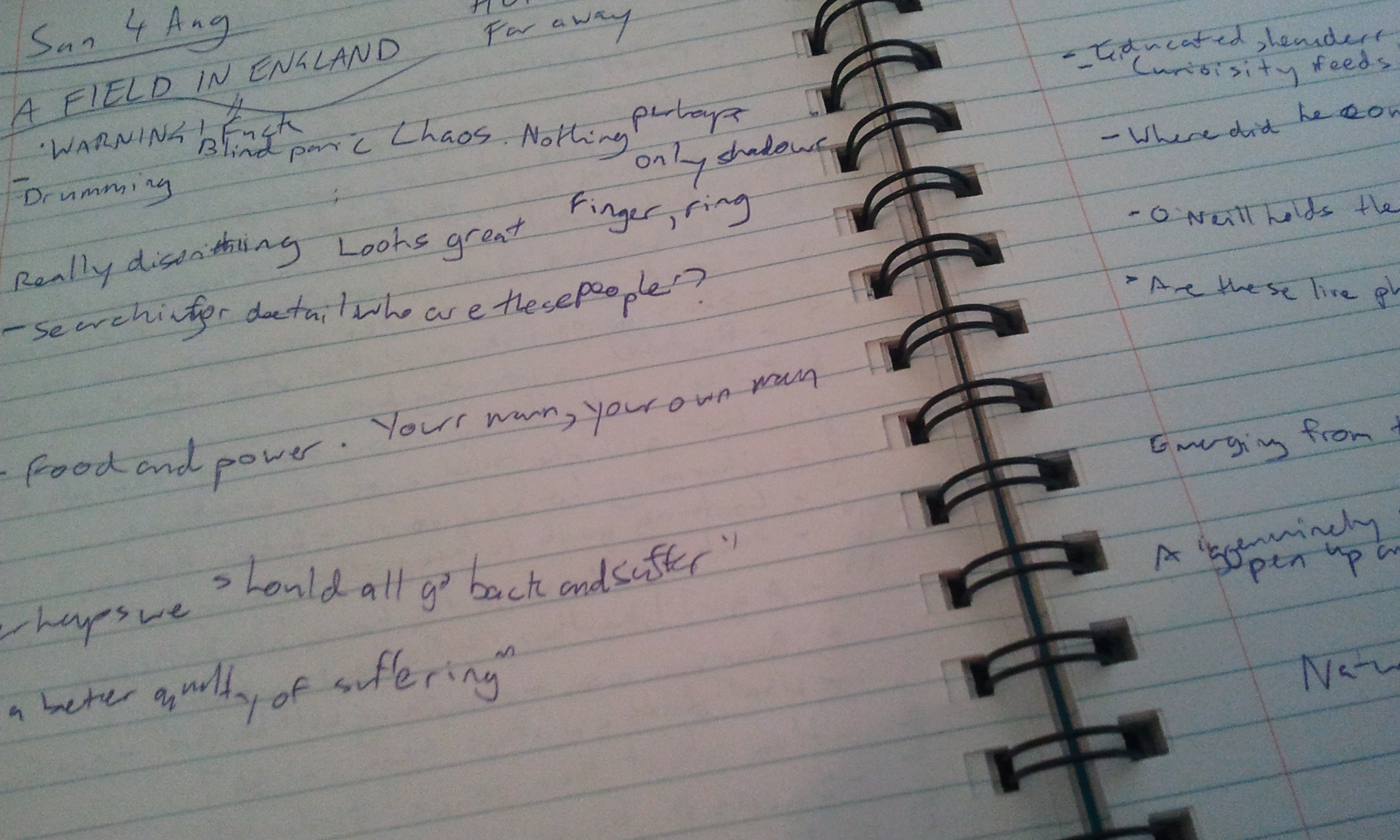
We sat way up the back of the Paramount for this one, and I joked at the start that it might be appropriate to look into the abyss from afar, rather than up close. We knew more or less what we were in for. It proved to be as nightmarish as expected, so perhaps we were saved from the savage head-trip we might have experienced up close. More pertinently, our distance from the screen meant that I took all my notes in the dark. They are a total mess, scrawled diagonally in fragments across lined pages:

A Field in England notes | NZFF

For a film as disorienting as A Field in England, that seems appropriate.

#nzff: Truth, Ruins, and Autonomy

In director Jeremy Saulnier’s Blue Ruin, Dwight lives an idyllic-sounding life: his home is in the sand dunes, he bathes in the sea, and he eats fresh fish for dinner. This isn’t how we meet him, though. The opening shots portray the plain interiors of a house with all the banal trappings of suburban life and eventually settle on bearded, bedraggled Dwight, soaking in the bathtub. A family arrives home and he leaps out the bathroom window in a towel, still dripping wet as he sprints awkwardly back into the margins of society. Not his banal life.

Dwight | Blue Ruin

Dwight, who lives in a rusty old car that he also drives, appears not to have been doing much with his life for some time. He has no friends, though he’s known to police; indeed, it’s the intervention of a sympathetic policewoman that gives Dwight his purpose and sets the plot in motion. Unfortunately, that purpose is bloody, clumsy revenge for an incident that happened long in the past. Whatever Dwight has been doing, he now has little on his mind except murder of the most functional and least glamorous kind.

There are a few laughs in Blue Ruin, and I was surprised at how much they made me laugh. Dwight’s general ineptitude is endearing in a sad kind of way, so when he hacksaws the end off an arrow embedded in his thigh before pouring alcohol all over the wound and ripping the head out, it’s as funny as it is cringeworthy. The film’s violent scenes also feel as banal as any of Dwight’s day-to-day life, illustrating how his world has been flattened out into a near-emotionless husk.

My problem was that once exposition took over about 40 minutes in, all the good work of the almost dialogue-free setup unravelled a little in the face of so much direct information. I would’ve been content not to know why any of this was happening if the rest of the film was as expertly crafted as that opening third, and there’s one character who has no real reason to trust Dwight but does so for the sake of the plot. As a result, the climax wasn’t the gut punch it maybe should’ve been, although there was some emotional resonance in the line, “Because my father loved your mother, we all die” — delivered as flatly and plainly as any other in the film.

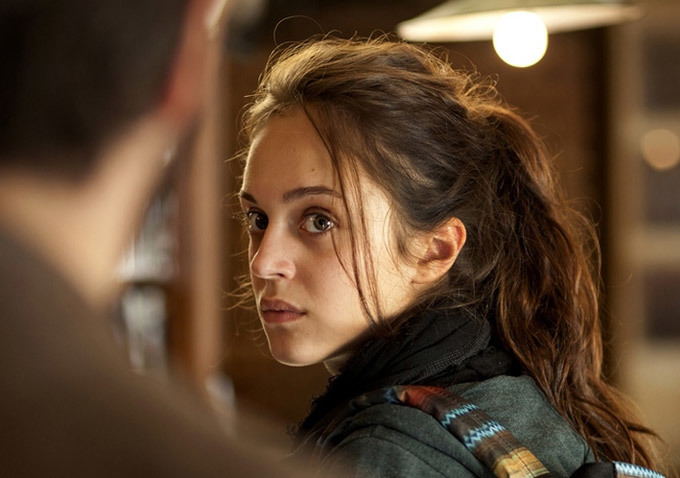
Onto something completely different. I saw A Separation a few months ago and thought it was a total masterpiece, expertly crafted but with a very natural feel, believable and thought-provoking. My bar for The Past was therefore pretty high. Thankfully, it could be described in much the same way, and we can now declare that Asghar Farhadi is a cinematic master of truth and its consequences. Even the title card at the start is a perfect encapsulation of the film’s subject. He must put a lot of time into developing his films: they feel so natural and yet are so tightly crafted.

Berenice Bejo | The Past

Farhadi sets up the principal characters one by one — Marie-Anne, her ex-husband Ahmad, her new partner Samir, her children Lucie and Lea, and Samir’s son Fouad, who was born to his now-comatose wife. From there, the details of why Ahmad left and why Samir’s wife are in a coma are slowly revealed, and there’s so much going on with character that it’s impossible not to be drawn in. Coming in from the outside, but with the understanding of someone who’s lived in this house for years, Ahmad is able to weigh up every situation and speak freely and honestly towards a positive resolution, free of the baggage that confines everyone else’s present. And he is very helpful, and clearly still loved by everyone (apart from Samir, who you’ve got to feel for), but even from his more straightforward perspective he cannot know everything; truth is not as simple as it seems, and in some cases, an assumption can stand in for the truth without anyone really noticing.

Much of the action takes place in a grand old French house that Marie-Anne and Samir are redecorating to within an inch of its life, perhaps in an effort to paint over Ahmad’s past presence. My expletive-laden notes taken during the film ask why they want to put so many chandeliers in, and why they left an open tin of paint sitting around when there are unhappy young children on the loose. If they have a plan for the redecoration, it’s either a half-page afterthought or a messy binder full of clashing ideas. I really wanted to tell everyone to just stop for a day to sit down and figure out what they’re doing with their lives, which is kind of what Ahmad tries to do, but an honest appraisal only gets you so far — and anyway, no time for that now, the doorway needs painting.

Lucie | The Past | Pauline Burlet

The people in this film have been through some shit. They’re not particularly responsible, although they do genuinely love one another and want everything to work out. You can see it in Ahmad’s eyes when he remembers the final months of the marriage, or in Marie-Anne’s rage when her daughter fails to return home one night. Fouad is a naughty child, rebellious and violent, but he’s dealing with the loss of his mother and her sudden replacement with a new one. You can choose not to look back, but the past still happened. The acting is uniformly exceptional, and The Past is another masterpiece; the future, for these characters at least, remains uncertain.

Farhadi is from Iran, where it’s hard for a director to get a film made without government intervention. Wadjda is directed by Haifaa Al-Mansour, a woman in Saudi Arabia, where it the list of things a woman can do seems shorter than the list of all they are barred from. Her film, about a sassy teenage girl who really wants to buy a bike in a land where “women don’t ride bikes”, is therefore a remarkable achievement, but it is worth your time for many other reasons besides.

Wadjda | Sneakers

Wadjda is the name of the teenage girl, and we quickly learn about the male-dominated world she inhabits — one that we in New Zealand, for all our faults and occasionally overt sexism, cannot even imagine. Turns out there are lewd construction site workers everywhere, and they’re not above shouting inappropriate comments at a young girl; the difference is that in Saudi Arabia, it’s officially the girl’s fault for being female. I wonder how the Bechdel test would apply to this film when its female characters’ entire function in society, drummed into them since the cradle, is to bear male children. Naturally, a lot of their conversation revolves around the men in their lives, but it isn’t just idle chatter: men are almost all they’ve been taught to care about, with Allah and the Devil watching on closely.

She really wants that bike, though. She’s even willing to devote herself to the Quran studies she hates in the hope of winning enough cash to buy one herself after her initial attempts at entrepreneurship move more slowly than she would like. But how sweet and winning those attempts are! Wadjda’s enterprising spirit even extends to her moments of sadness, when she readily accepts five riyals from a neighbourhood boy if she’ll just stop crying. She listens to Grouplove on her tinny cassette player and wears Converse sneakers to school. All this warrants regular cries of “khalas!” (‘Enough!’ orStop it!’) from her mother and teachers, but a girl like Wadjda needs autonomy. Otherwise, she’ll be stifled into misery.

Wadjda | Helmet | Bike

Wadjda is clearly a film by autonomous woman. It’s well made and well acted, and there’s a charming looseness about the plot that’s similar to Wadjda’s most appealing qualities. It’s inevitable that Wadjda will eventually be proposed marriage, but when it comes in one of the film’s later scenes, it isn’t the heel stamp on her freedom one might have expected; instead, it’s secondary to pursuing her bike dream, and all the more sweet for that. I left the cinema with a big smile on my face. If a woman can direct a film in Saudi Arabia,  a film ostensibly about women supporting one another through their oppression, maybe a girl can ride a bike?

#NZFF: The [x] of [y]

2013 NZFF LogoI have never gotten so prepared for a film festival as I have for the 2013 New Zealand International Film Festival in Wellington. Man, I don’t think I was this prepared before moving overseas for four years. I’ve booked leave from work, prepared a backpack of essentials (including water, fruit leather, and a range of medicaments to treat these bastard cold symptoms), and bought a hardcover notebook to jot down thoughts on a jittering knee.

That last point is a first for me. I’ve been attempting to write about film on here for years, but only after I get home and try to piece it all back together in my mind. Today’s initial trials indicate that I am less able to let go and be immersed in a film if I’m taking notes, but I remember a lot more and have a much more coherent understanding of it as I watch it. Seems like a reasonable trade-off: if I really like the film, as I did in both cases today, I can watch it again without the distraction of pen and paper in future.

My first two outings of NZFF 2013 both followed the same titling format: THE [x] OF [y]. Not a trend I’m particularly fond of, but here were two excellent, very different films that bore some surprising similarities. In the first instance, the title was entirely metaphorical and had nothing to do with the literal content of the film; in the second, it was an unvarnished description of the uniquely presented hell on earth it depicted.

The Weight of Elephants | Crystal Shrine

The Weight of Elephants was a perfect way to start my festival. It’s a serious film, but very beautiful and filled with room for interpretation. It’s also very much a New Zealand story, and in the Q&A afterwards, director Daniel Borgman stated his intentions to be true to small town NZ (Invercargill in this case). I think he succeeded admirably in telling a story set in a world I could easily link back to my own childhood in Tokoroa, as well as crafting another worthwhile feature in NZ’s small town canon: Whale Rider, In My Father’s Den, Out of the Blue (which also stars Matthew Sunderland) to name three. The toetoe I’d noticed in Aro Valley on my walk to the cinema showed up on screen, too, as a key symbol in a very beautiful opening sequence. “A Kiwi film,” I thought. Naturally, Tim Tams also made an appearance later on and were appropriately fussed over.

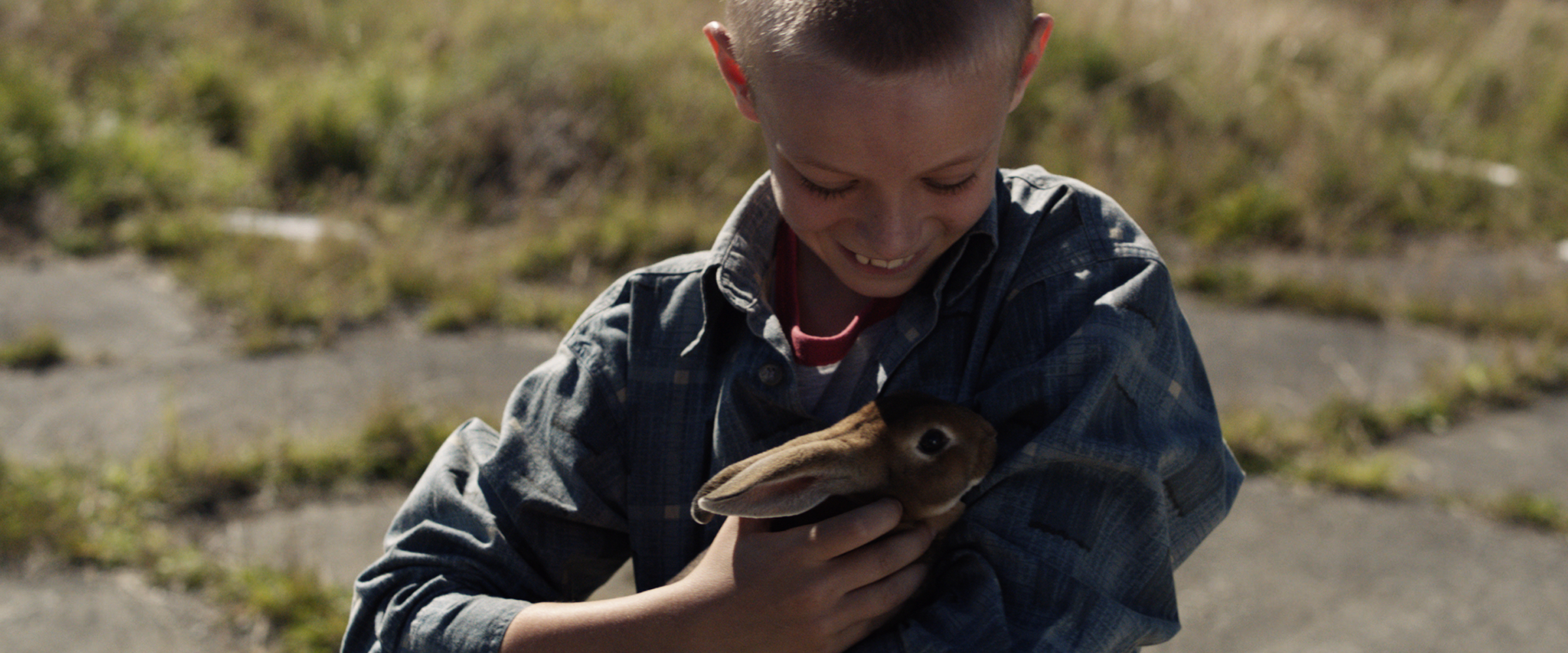
We meet 11-year-old Adrian as his lice-riddled hair is shorn off by a grandmother who really only expresses her (very genuine) love with a ‘get over it’ attitude. Adrian has no say in the matter, and this appears to be his life in a nutshell: a powerless young boy trying to figure out where he fits, virtually always dictated to unless he’s on his own. His friendships are more like ongoing negotiations as he tests others out and — more often — they test him. He’s willing to kick a rugby ball at someone he cares about if it gets him kudos with the playground bullies, but could he kill a rabbit for the same reason? We really see the world through his eyes, and as Adrian’s concept of loyalty is constantly recalibrated with each personal challenge, it all rings dauntingly true.

The Weight of Elephants | Rabbit

Borgman shows a strong hand throughout The Weight of Elephants, keeping a consistent tone of uncertainty through a mix of straightforward cinematography and glorious slow motion. His decision not to rely too much on music — indeed, much of the film carries only incidental sound — also bears fruit when the score quietly builds in the final scene, adding to its emotional payoff. He’s pleasingly comfortable with silence, rarely the hallmark of a commercially sought-after director, but skilled enough to hopefully bring his talents to mainstream success.

He would no doubt be quick to acknowledge that this film would be nothing without its child performers, who are both naturalistic and captivating. As Adrian, Demos Murphy has few memorable lines but says it all with his wide eyes and smile, and he does well to cry so much without ever seeming forced. Of his three aimless neighbours, who are his age or younger but whose worldliness makes them seem like adults, I was particularly taken with Hannah Jones as Joely. The character is only six, and Jones can’t be much older, but in her small amount of screen time she is totally captivating — a playful cherub with an unspoken darkness. If you see it (and you should), watch for the moment when she’s asked, “What’s your name?” The look on her face is perfectly enigmatic.

Just as the development and display of power is a key theme in The Weight of Elephants, it’s central to The Act of Killing, which offers regular reminders of who has it and who doesn’t. Joshua Oppenheimer’s documentary, which is unlike any other film I’ve ever seen, is as much an exploration of how power corrupts as of the long-term effects of mass murder.

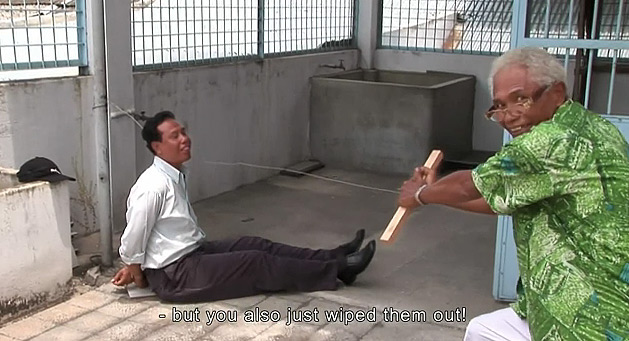
The Act of Killing | Herman Koto | Filming

Today, there are three million members in the Indonesian paramilitary organisation Pancasila Youth, which is headed by one of the most repellent people I’ve ever seen in a movie: a perpetually lewd, offensively charming bastard who doesn’t replace his divots at the golf course. Pancasila is as closely tied to governmental power now as it was in 1965-66, when it played a key role in Suharto’s military coup and helped kill somewhere between 500,000 and 3,000,000 alleged Communists and Chinese Indonesians. It’s an organisation synonymous with extortionist gangsters, who (according to this film) are seen as an integral element of Indonesian society and politics. They even find repeated justification for themselves in the original meaning for the Indonesian word for gangster, preman, which was ‘free man’; this seems a particular point of pride, with the unofficial theme song ‘Born Free’ providing one of the film’s most memorably off-putting scenes.

The main preman in The Act of Killing is Anwar Congo, who is estimated to have killed around 1000 people during the purge and appears to have been trying to justify it ever since. Either that, or he was getting drunk or high: “I’ve tried to forget all this,” he says as he details his preferred method of strangulation. This is the conceit of the film: Congo, and a few of his Pancasila contemporaries, are invited to re-enact their killings in a fictional film bearing the styles of the Hollywood favourites they used to exhibit in shady halls. He dresses as Pacino, Eastwood, and Gene Kelly; in his idle moments, he looks like a thinner, more drug-fucked Nelson Mandela. “There are many ghosts here,” he says as he gestures to a nondescript terrace floor, but it becomes ever more clear that the ghosts inhabit his mind. He certainly can’t escape them when he sleeps.

Act of Killing Ticket | A. O. K.
Act of Killing. Not really ok

I experienced a new kind of desensitisation to violence while watching The Act of Killing. Congo and the others described killing so often, and in such detail, even before any filmic re-enactments were shown, that I found myself nodding more and recoiling less. The killing seems mostly incidental to them in light of the far more important achievement of overthrowing Communism; indeed, most of the paramilitary guys, and ALL of the politicians, are obsessed with appearing powerful and successful. “For massacres, I usually wore jeans,” says Congo, focusing on how he ought to be attired for a particular shot. Herman, a big man who is both lovable and terrifying, blunders into politics as a means to gaining greater wealth and status. Congo’s compadre Adi sees a bigger picture — how Oppenheimer’s film could reflect badly on all of them — but even in full awareness of his own past atrocities, he’s happy to argue at length the negligible difference between cruelty and sadism.

“It’s not about fear. It’s about image,” says Adi. “The legacy.” He’s happy to go on trial for war crimes in The Hague if it brings him fame, and he says all this not as a naive pawn in a grander scheme but as a clear-eyed believer who has thought all of this through and justified his horrific actions as an absolute necessity.

It isn’t so easy for Congo, whose mind and body are slowly failing him. Confronted with what he has done, and invited to act out both parts, he sees how hollow his “relative morality” is. In a key scene, he invites his grandchildren to bear witness to his on-screen suffering, and in the same moment gains piercing insight into his victims’ plight. Here is a man who, upon reaching the twilight of his life, is literally given pause as he looks back over his deeds.

Act of Killing | Strangling technique

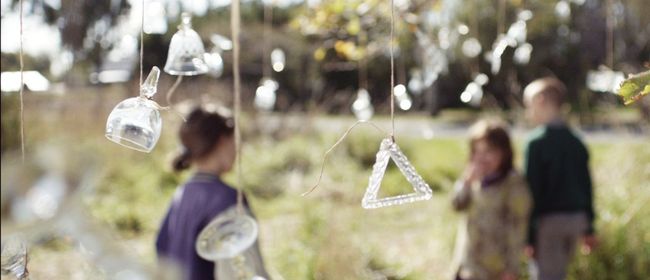
In The Act of Killing, expensive crystal sits behind locked glass as a grotesque monument to power and ego. In the more humble Invercargill homes of The Weight of Elephants, a wet finger run along the rim of a crystal glass sings — until it’s smashed. Here are two films that pick the crystal shards off the floor of human experience and place them before us as uncut diamonds.

Wore a Kanye West t-shirt to the ballet

I have no qualifications for writing about Swan Lake performed by The Royal New Zealand Ballet with the New Zealand Symphony Orchestra, other than that I saw it and was wearing this t-shirt:

SWAG t-shirt and lollies
(File Photo)

Like many others, perhaps including a majority of men about Natalie Portman’s age, I became interested in ballet — particularly Swan Lake — after seeing Black Swan. As much as I love that epically unhinged film, Tchaikovsky’s music is what has sustained my interest in the years since. I must’ve listened to the whole score a hundred times; in particular, it provided a surreal soundtrack to my daily train commute in South India, clarinet and strings waving in sync with the branches of coconut palms.

From our seats, we were lucky enough to be able to see into the orchestra pit.

St James | Wellington | NZSO | Swan Lake
St James Theatre, Wellington

And when the lights dimmed, and that familiar musical phrase opened the performance, I already had my money’s worth.

Up went the curtain, and the best dancers in the country moved their perfectly toned, muscular bodies with transcendent grace. Between the music and the movement, I wasn’t really sure where to look. My tendency in describing art to others, especially visual art, is to focus on a particularly memorable aspect or moment and let that speak for my overall impression. This is very hard to do with a consummate performance featuring the life’s work of two dozen dancers, world-class choreographers, designers of three-storey sets and 20kg costumes, and an entire orchestra. How can I omit the flautist’s precise notes, the ornate headdress at stage left, the way liquid nitrogen ripples beneath Qi Huan’s feet? If I don’t mention that heartbreaking key change in the final scene, or Odile’s 32 fouettes, can I even say I’ve seen Swan Lake?

One dancer stood out. My companion later told me that she’d earned 100% on a Royal Academy of Dance exam when they were in the same teenage class in Tauranga. Her name is Katherine Grange and she danced in such a way that I could imagine her succeeding in any chosen passion; she just happened to choose dance. As much as anyone else on stage, her performance showed me something I hadn’t previously realised: ballet is a genuine feat of acting, and facial expression is a key element. The feet and arms need to be technically exceptional, but it’s the emotion in the way they move that carries the audience along.

Some of my favourite films, like 2001: A Space Odyssey and Lost In Translation, make a point of telling the story (or long stretches of it, at least) with images and music rather than words. In ballet, I think I’ve found an art which is based entirely on this principle. “Would you like to go to the ballet again?” asked my friend as we debriefed over a beer. My eyes widened. “Absolutely.” If the human species had three hours to demonstrate our capabilities to visiting alien dignitaries, a full performance of Swan Lake would do the trick.

Fears of a man who has just started running

1. Having barely exercised in the past ten years, and certainly not exercised regularly, am I a phony for starting up again now?

2. How long am I going to keep this up, and how much would I hate myself if I stopped? Only four weeks so far. Maybe I shouldn’t even be telling anyone.

3. I’m sure I breathe very loudly after the first 500 metres. I wonder if the people I pass as I run notice this and remark on it to their housemates when they get home. “This guy just ran past me, he was the loudest breather EVER, my God, ridiculous.”

4. Days spent in front of the computer screen used to pass with little notice for my limbs. Now they sit uneasily about the chair, like they’re suddenly aware that they could be doing something else. I may never again feel completely comfortable with 40 hours a week of office work (or 40 hours a week of lazing around on the Internet at home).

5. There must be a chance that my heart, which I have stuffed with saturated fats and rarely pushed beyond resting rate for years, will fold in on itself — probably when I am as far from any other human as possible.

6. I should really eat better.

Running
Running happens so much

7. Being forced to go running by seniors in high school was horrible, and now I’m an adult who is doing it by choice. I have become both a prefect and a third form runt. (Mind you, lots of things that were horrible about high school — socialising, looking in the mirror, talking — are a lot more comfortable now.)

8. If this goes on, I might become a Running Guy who could be caricatured by his friends as someone who goes running and talks about running and recommends other people go running.

9. I am probably going to roll my ankle at some point.

10. TJ told me all those years ago about running technique – straight neck, relaxed limbs — and Ed gave me the tip of looking out in front of me rather than focusing on where my feet fall. I try to do these things right, but how many hundreds of other things am I doing wrong?

11. Is everyone else’s nose as blocked up and demanding as mine? It had better not be like this in summer.

12. What about my stretches? I could look up proper pre-exercise stretches. I’m going to do that now.

13. Wow, some people don’t even stretch at all. I have to figure out what works best for me. That means quite a lot more running, and paying attention to various aspects of my running. I hope my brain gets better at figuring out what’s going on around my body.

14. Everyone who reads this has come to the end and decided that I am indeed a phony, and the word ‘phony’ will be burned into my brain the next time I go running, rattling in my head with every stride.

Keep On Driving

We were in the car, golf clubs rattling around in the back, on our way north to the driving range at Silverstream. Bella was behind the wheel. I turned to her with a stupid grin and said, “So, when was the last time you went driving?” I then laughed for a while, and I seem to remember that she laughed too but memory has a funny way of serving ego before truth.

Her last time hitting golf balls was in February. My last time was in January with my brother Rua, and the time before that was the previous January, also with Rua. Both of those times were at Chisholm Park Golf Club in Dunedin, which has world-class views over the cliffs and down to the Pacific Ocean, and both times I was surprised to learn I could still swing that shaft of metal over my head and whack the ball far enough to lose it. Used to play golf when I was kid, you know. Procedural knowledge is an extraordinary thing, especially when the procedures are embedded at a young age: hitting a golf ball 200 yards, kicking a soccer ball with power and accuracy, riding a bike. Do it enough times and something clicks in your brain so that years down the line, the knowledge can be called back in an instant.

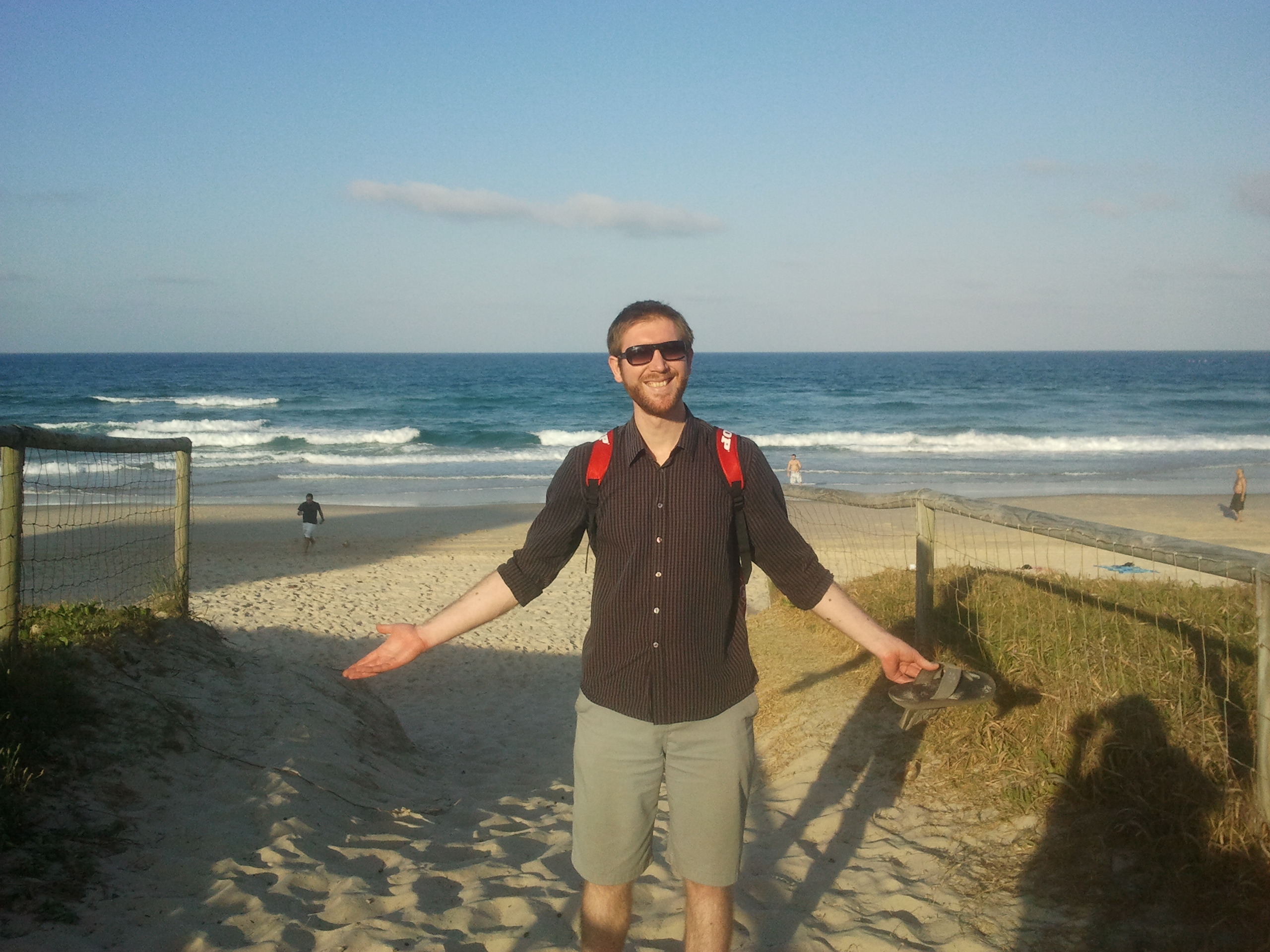
Chisholm Park Golf Club | Dunedin | Seaside Golf Course
‘Tomahawk’ at Chisholm Park Golf Club

I remember going to the driving range in Hamilton for my 11th birthday (or thereabouts) with brothers and mother. At one point, they stood behind me and watched as I played a few shots and said, “Barns is quite good, isn’t he?” I was the mocked ‘sporto’ of the family, forever bowling a tennis ball against the fence and shooting hoops while my brothers got quite good at the guitar and went off to university. Nothing ever really came of golf — I essentially stopped playing when I was about 14 — but that moment of approval is enough for it to have been a worthwhile part of my life.

The ping of the ball off the tee, though. For all the madness golf can bring, that ping makes it worthwhile, too. I stepped up at Silverstream with my bucket of 118 balls, a six-iron, and a driver with a clubhead the size of my fist. First ball, I swung without really thinking, just hoping to connect. Ping. It flew off into the distance, straight as an arrow. I was sure it had sailed past the 250-metre mark and away over the back fence into Tiger Woods territory. ‘Still got it,’ I thought to myself.

Of course I hadn’t hit the ball that far, as the next 117 shots proved. Still, I was amazed at how forgiving the driver was, how it didn’t seem to demand you make it go ping instead of clunk to allow the ball to fly straight for a fairly long way.

Silverstream Golf Park
The driving range at Silverstream

After a while, I started using the six-iron to try and hit the ball into a derelict car at the 50-metre mark, which appears to be an obligatory feature at many driving ranges. Got it on about ball 103, I believe. Bella missed the moment but I insist it really happened: one bounce and in through the smashed back left window. She was probably focusing on ironing out her own technique at the time, which I suppose is fair enough.

(By the way, her name isn’t Bella. It’s Isabel. Two things led to my foisting this nickname upon her: 1) her distaste for the Twilight series, of which Bella Swan (played by a dead-eyed Kristen Stewart in the films) is the main character; and 2) her admission that once, after learning her name was Isabel, a guy asked if he could call her Bella. “No you may not, sir.”

Presumably I have enough other qualities for her to tolerate my being ridiculous all the time.)

Silverstream Driving Range at Night
Isabel with an iron

“How’d you go?” asked David, the silver-haired, craggy-faced man at reception. His blue (it may have been red) pullover said ‘Manor Park Golf Club Centenary’, and I guessed he would’ve been around for about three-quarters of that. He gave a tentative smile as I handed him that absurd driver, commenting on my surprise at the powers it had afforded me. “Yes, you’ll find that the modern clubs are a lot more forgiving than the old ones.” He seemed like a man who knew a thing or two about a thing or two, so, having given him an opportunity to talk, we simply stood and listened.

David’s life story is easily structured around his golf handicap. He said he got down to scratch after a couple of weeks as a young fella, which seems impossible to me given how long it takes — and how many balls you have to hit perfectly — for the finer points of technique to be proceduralised. Maybe he was a superhuman, or still is one. Or maybe his memory had embellished things somewhat. He then took a long break to build a house, which he might well have designed and built himself. Then back into it for a few years, lowering the handicap once more, a notable figure on his club’s fairways. He didn’t say how he became a tetraplegic — though I think he alluded to some time in the military — but the long recovery process put him out “for a couple of decades”. It only showed in the odd halting movement.

Finally, a few years ago, David got back amongst it for presumably his last golfing stretch. “I struggle to hit the ball now, but playing with those young fellas, I’m still keeping up with them—” he raised his thick eyebrows and opened his eyes wide “—and even out-driving them sometimes.

“But anyway, you’re always playing against yourself, and trying to beat the course. There’s always something to overcome. You know? It’s all in your head.”

Bella drove us back to Wellington in the dark. We listened to a selection of 90s hits on Classic Hits FM, delighted to find we are finally old enough to hear formative childhood favourites on a radio station that always looks backwards. Accompanying them in my head were David’s simple but far-reaching words, and the lifetime of experience and imagination behind them. I wonder what else he has yet to overcome.

hallucinating hundreds of people into my flat

It occurs to me that for most people, being sick is not a totally solitary experience. Someone is there to bring you a hot water bottle, or a bowl of soup, or a face to look at and talk to. If you’re a kid, they’ll stay home with you, or they’ll leave you with someone familiar. If you’re old enough to be at home by yourself – fifteen, twenty-five, fifty – you might spend most of the daylight hours alone feeling sorry for yourself, but even if they do have to go to work during the day, they’ll be back again in the evening. Some noise in the house helps you feel a little less crazy and forces you to remember that as inwardly focused as you are right now, other people are continuing to live their lives.

happiness is so much fun
Photo by Genista on Flickr

For quite a long time — except for a two-and-a-half-year relationship in which I was more often carer than cared for — I have been sick on my own. I have lived alone, as I do now, for long stretches of my short adult life. Perhaps it’s a product of being the youngest child of three by some distance. However social an animal I have become, I seem to seek out solitude as a default setting.

I lived alone during the time I was the sickest I have ever been: a week in February 2007 when, after scoring an equaliser from halfway in the dying seconds of a game of futsal at Christchurch’s now non-existent QEII Indoor Sports Stadium, I promptly went home and collapsed on the couch. The next day I met a group of Japanese girls at the art gallery and took them across the road to show them the spare room of my flat, apologising constantly for my sniffles and dishevelled appearance. The day after that, I spent many feverish hours in a leather La-Z-Boy hallucinating hundreds of people into my flat, all of whom angrily admonished me for thinking about going to the doctor.

On the fourth day of the illness, I called Blue Star Taxis to take me to the after hours clinic on Bealey Ave. Alternating between shivers and hot sweats, I sat by the window and looked down at the street for an hour before calling them up again, at which point they laughed and said, “Sorry, there was a mistake.” A taxi arrived soon after, I went to the doctor and got medicine, and about a week later I was back at work.

The previous year, when visiting my mother during a semester break in my final year of university, I said I wasn’t going to get a flu vaccination. Didn’t think they helped. “If you get sick, there won’t be anyone to look after you,” she snapped. I can appreciate the love behind those words now, but at the time, the thought of having to lie around in bed with only a laptop and books for company didn’t exactly give me pause. I thought to myself: So what? That’d be kind of nice. I was younger, more selfish, and more socially awkward than I am now (believe it or not) and an opportunity to spend days on end without worrying about anyone else sounded all right.

I’ve been sick again this past week or so, alone in my perfect Brooklyn flat, and it has mostly sucked. The Internet, so often my redeemer during past illnesses, has provided distraction but little solace. Intermittent and occasionally severe pain has rendered meaningless the view of Wellington City and Harbour from my deck. Given that the sickness has been a new one, not previously experienced — a gingival infection spreading to wring out my throat and head — I have been able to confront the absurd possibility that my body is already failing me, à la Synecdoche, New York. Most of all, I have missed my friends and all the rituals of our weekly Wellington lives: the silly email banter at work, the walk home through Aro Valley, the Friday happy hour beers.

It’s funny, because I’d started to hate the sound of my own voice a bit lately. I’d come home after some event and say to myself, “you could always just shut up for a change.” (I am the type that remembers every conversation of the night, no matter how many standard drinks are consumed, and involuntarily picks back over every spoken sentence before falling asleep.) My body promptly gave me the opportunity to shut up for several days, and it wasn’t as immediately cleansing as I’d hoped; more deconstructive, as if a piece of my life had been removed.

'Lives Passing' by Helen Simpson
‘Lives Passing’ © Helen Simpson

Contrary to my perverse, self-centred hopes, the usual Friday and Saturday fun went ahead just fine without me. In my head, this particular Friday and Saturday fun was the most fun anyone has ever had. One friend graciously brought round a bag of groceries on Saturday and left it by the door, and I felt like I’d betrayed both of us by sleeping through his visit. Still, what would we have talked about? I was feeling very sorry for myself, and he had been uploading photos of fun to Facebook. This was a complex and very indulgent bitterness.

Later that day, I shaved off my beard, perhaps as a means of having a conversation with myself. Or to give myself a new face to look at. In any case, it got plenty of likes and comments.

Beard before/after

A few texts rolled in about events I was missing. “Don’t mean to FOMO you but [x] is dancing like a gazelle on the serengheti” read one message on Saturday night. To my surprise, pangs of envy were quickly replaced by smiles at a) the image described, and b) the kindness of my friend to let me know what was going on. I got a few other texts from people, mostly just checking to see how I was, and they helped cast off my acrimony blanket. People are enjoying themselves, or even just going about their day, and want to include me somehow. Why should I be such a curmudgeon? Coincidentally, this is also about when the swelling in my gums started to go down.

I suppose those texts, and some nice words from nice people on social media, were my noise in the house. All that bitterness seems rather silly now. Might get a flu vaccination next year, though, just in case.