COUSIN NORMAN HAD A REAL FINE TIME LAST YEAR

On the way into Shinjuku from the airport, I was given a quick and effective illustration of how many people live in this country: apartment buildings. Some up to thirty or forty stories high, the majority containing literally thousands of apartment dwellings, these massive, ugly structures dominated the landscape all the way in. In some parts, there were six or seven all in one neighbourhood. For a moment I wondered how people could live like that, before realising that I myself could be doing just the same…

Once at Shinjuku, in the busiest train station in the world (over 2 million people though it every day), I eventually met up with the housing agent after waiting in the wrong place for half an hour. Shinjuku station has something like six exits, and I had been told to wait at the Starbucks near the east exit, so that’s what I did; unfortunately, they really meant the central east exit, which has another, different Starbucks despite being just two minutes’ walk away.

Aki, who was in fact American-born and raised (yet spoke decent Japanese), led me down to buy a train ticket to Chigasaki and on to the platform to wait. When our train arrived, it thankfully wasn’t at all full, so I could enjoy the journey in relative comfort. At this point I was so exhausted I could hardly take anything in – I remember talking about football, about cellphones, and a few structures viewed out the window, but little else.

So, to Chigasaki, and my new home. The taxi driver didn’t know where my building was, but after a call to the depot we kind of stumbled upon it. To my relief, it wasn’t another enormous eyesore designed to cram in as many people as possible; rather, it was a modest two-storey building with only (I think) four apartments. I have to agree with my flatmates: my room kind of sucks, but it’s certainly no worse than what I had back in Christchurch.

Last night I decided to go down to the local conbini and buy dinner. The roads are so narrow, man – wide enough for a car and a bicycle side-by-side, but not two cars. And at a T-junction, there were some flashing lights embedded in the road that I couldn’t be bothered figuring out the meaning of. Then there’s the housing, virtually none of which is actual houses – it’s all small apartment buildings like the one I’m in. And with the streets so narrow, they can squeeze more of them into a neighbourhood.

I bought ready-made spaghetti bolognese, sushi and kare-pan for dinner. All of it was good, and cheap. This, and much more, is available at any convenience store in Japan – a colleague back in NZ told me to go along and check it out, because I might be pleasantly surprised. The array of ready-to-eat, cheap meals available is just unimaginable in NZ, even in a supermarket. I was very surprised, so thanks, Kuro-san.

Incidentally, the weather is nice, and not too hot or humid. Yet. And I’m just so happy to finally be here.
GIVE IT TO ME

Quick word from Singapore: I’m here, happy and far less stressed. I managed to get through immigration and go outside to have a look at the greenery and cars, and to feel the comparatively crushing heat (around 29 degrees C). I decided I didn’t have time to go into town, much as I would’ve liked to, so I came back inside and had Indonesian for dinner (not bad); now I’m writing this.

This emigration lark’s a cinch. Next post will be from JAPAN. At last.

STATIC CODES ON THE HOTEL RADIOS

Last Post from Christchurch. Barring any flight delays, forgotten passports or a sudden and massive panic attack, I’ll be on the plane tomorrow morning.

I have found myself involuntarily reflecting on my life so far these past few days. And I know I was talking the other day about points of definition, clear dividing lines in your life, that sort of thing, it isn’t the reason for my introspection. Like, I didn’t say to myself ‘okay, I’m leaving, so I have to think about what I’ve achieved up to now and how I’ve arrived at this point’ or anything like that. It just seems to have happened.

I do this often, what with my (progressively less angsty, I hope) diary scribbling, but this time it’s a bit different. Plenty is being looked at and recalled: traumatic events in childhood, times of extreme embarrassment, and of course missed opportunities, of which there are always too many. The view back on these events is more curiosity-based than anything, sort of a ‘why did I think that way?’ or ‘how come I remember that and not something far more exceptional?’

What’s really notable, I think, is that I’m barely looking forward at all. Of course I’m really excited to be going to Japan and all that, but the future has never been something I think about easily. I mean, what is there to pick over? It hasn’t happened yet, so apart from imagining a couple of material things you might want to do, I don’t see the use in it. Unlike the past, which is full of fascinating detail, including what those times really felt like. Plus if you think too much about the future, you develop expectations which just can’t all come to fruition.

I’m not saying don’t plan for whatever’s next. Those who do are invariably more successful than those, like myself, who don’t. I’m just saying I don’t find it all that interesting, because as someone who always wants for deeper understanding, things that have already happened hold so much treasure. However, I imagine my mind will go kind of blank once I get on the plane tomorrow – actually being in that next portion of life will facilitate my putting the previous one away, for now.

Hopefully I’m being sincere with this, and not just throwing more drivel out into the blogspot. Regardless, thanks for listening, and I’ll see you soon.

ONE KIND WORD MEANT MORE TO ME

Less than a week left now, and almost everything is in place. I know I will be living in Chigasaki, a city of about 220 000 people on the coast south of Yokohama. I know I will be training for the first two weeks in Shinjuku, and heading into the busiest train station in the world each of those days. I have a work visa and Certificate of Eligibility respectively stickered and stapled into my passport, ready to get me into the country without any problems (hopefully).

What I didn’t anticipate is that the last couple of weeks would be so difficult. In a good way, mind. Somewhere in amongst the haze of ongoing dinners, lunches, parties and drinking sessions I suddenly got a sense of what I’m doing, what I’m leaving behind. Warning: the following may not make sense, and reads more like a drunken leaning-on-the-shoulder , ‘I fuckin’ love you, man’ speech.

There’s my life here, with all its material comforts, which I’m cutting off to restart somewhere else. It’s another clear break in my life, like going to boarding school, or moving to Christchurch: a point of definition at which one section of my life ends and another begins. As such, it is very easy to wrap my head around. This will stop, and that will start. Simple. Short paragraph.

The same cannot be said of the many relationships I have built up with people. There’s everyone in my immediate family (who I am lucky enough to have all seen in recent weeks), then there are colleagues at my job of more than 2 years, then there are good friends – some from school, some from uni, and one from hometown. With each of these people, I have a unique relationship that has grown over the years, with particular idiosyncracies and patterns of conversation that don’t exist with anyone else. As a result, I struggle to even begin comprehending all the change that is happening on that front. In my brain, in their brains, in our lives.

I mean, there’s always email, and telephones, and webcam exchanges, but none of those afford the intimacy of actually talking to someone in the same room as you. I’m not trying to make myself seem more important than I am (despite the fact that I am the centre of the universe), but to me, it’s a bigger deal than anything else involved with this move. I wonder why I have these people around me – why not way shittier people, y’know? They’ve (you’ve) all taken the time to hang out with me and say goodbye and say other very nice things, and I just feel extremely fortunate… and sad to be going.

Enough of that. I need to go and watch Kubrick and Altman movies on a loop to purge all this sentimentality out of my system…

Tracks I never tire of: ‘Are We Here?’

Are We Here?’ by Orbital, from the album Snivilisation (1994)

Given my deep, almost obsessive love for Orbital’s entire oeuvre, it seems unfair to pick just one track to discuss out of the many they’ve released. The Hartnoll brothers have provided more of the soundtrack to my life than any other musicians – there’s no doubt I’ve listened to some of their tracks hundreds of times – and were at the forefront of electronic music for an entire decade. Nevertheless, if there’s one single track which I come back to more than any other, it’s ‘Are We Here?’, so… here we are.

The album it comes from, Snivilisation, was their third and marked something of a change in direction: less club-friendly, more experimental, and certainly more ambitious than their previous work. For a long time it was my least favourite of theirs purely because it was so different from everything else they’ve done, but as I listened to it more, I slowly realized it was their best. This seems to have been the opinion of many Orbital fans. You have that knee-jerk “Play your old shit! Your good shit!” reaction, then you actually give it a chance and see how good it is.

Now, if you listen to ‘Are We Here?’ by itself, it’s magnificent – 15 minutes plus of typically emotional and heartfelt loops cut together to almost feel like it’s telling a story. As the penultimate track of Snivilisation, listened to within that context, it becomes something like the greatest thing I’ve ever heard. If the album is, as I occasionally suspect, a concept birth-to-death thing, then ‘Are We Here?’ is its centrepiece – the last days of a being’s consciousness before slipping away into the dreamworld of ‘Attached’. That sounds awesomely pretentious, and maybe it is, but for me, it’s a religious experience when listened to in sequence.

The old criticism of ‘too repetitive’ would be an easy way to dismiss ‘Are We Here?’, and I imagine I probably did exactly that upon first listen. Now when it comes on, I can’t help but marvel at its complexity, how every element is perfectly timed to come in at just the right moment. It makes me feel very small and insignificant, but it also makes me totally okay with that.

POUR SOME SUGAR ON ME

I haven’t been asked by many people why I’m going to move to Japan. The vast majority have been interested in the how/when/what, without any trace of incredulousness, which is a good thing – in general, people’s reactions have been the opposite of “Why the fuck would you want to move there?”, i.e. supportive and interested. But I’ll tell you anyway.

My best friend through high school was a Japanese guy, and we remain very good friends. I never thought of him as being notably Japanese, like he was a representative of his culture or something, but the fact that he is Japanese and that I have gotten along well with him could only have positively affected my impression of the people. Here I’ll also briefly point out that for a year I was obsessed with Lost In Translation, which no doubt spurred on some Japanophilia. (It remains one of my favourites.)

After working as a gaspumper for BP for a couple of summers, I found a job working for a souvenir chain. When I applied for the job, the image I had in my head was of a small, sole-charge booth hocking cheap pens and magnets and flags and such, and the idea of it being Japanese-centred didn’t even occur to me. Not so. It was like a department store, with clearly defined sections from expensive jewellery to exclusive knitwear. Most importantly, the staff and clientele were about 60% Japanese. Somehow I got the job, and found myself working in an approximation of Japanese society – somewhat distorted, perhaps, but close enough to give me a better idea of the culture. And everyone seemed to respond well to me, and I to them, so that was all fine. In fact, I still work for this company, and will do for the remainder of my three weeks in New Zealand.

In the middle of all this, in about the middle of 2005, I decided I wanted to move over there. I was studying psychology (and am now a proud holder of a B.A. diploma in the subject), and the thing about psychology is that you can’t really get a decent job in the field without completing a Masters at least. Psychology really wasn’t all I’d hoped it would be, and where once I figured I’d do a Masters, I now was repulsed by the idea. What’s the point of spending another two or three years studying something you don’t believe in?

Still, I would finish my degree, then I would have to put it to use in some way. I didn’t want to have spent all that money only to get a job I could’ve got without the magic piece of paper. Fortunately, there are a great many companies in Japan that will hire you if you meet two requirements: 1) be a native English speaker; 2) hold a university degree. It made sense to go for it. Several experiences in my life seemed to me leading me down that path, so it was an easy decision to make. And lo, once I completed the university bollocks, I pursued opportunities to teach English in Japan until I found a company that would have me.

The final push, and the reason for the post title, came in about July of last year. Nic showed me a few of Ayaka’s Surprise English Lessons, and pretty soon I was hooked. Before you stop reading and write me off as another wota, the obsession isn’t really that strong. Honest, it isn’t. But I am fascinated by the way Japanese music and TV culture works, so I’ve studied it for rather more time than I should have. From the Surprise English Lessons I moved on to Morning Musume‘s TV appearances, such as the field trip special on Mechaike (tagline “What A Cool We Are!”) and various appearances on Hey!Hey!Hey!, the music show of comedy duo Downtown.

Finally, as if to push the interest from spirited to unhealthy, I started listening to Morning Musume’s music. It is the purest form of ridiculously sweet, catchy, overproduced pop music that I would probably hate if it was by an English-speaking group. The whole project is lorded over by a machine of a man known as Tsunku, who writes and produces a good 50 to 100 songs a year and collects massive amounts of cash as his stable of pretty young girls churns out the hits. Truly, you cannot beat the Japanese for taking a concept and pushing it to the absolute brink of its potential. (Japanese comedy shows (such as those mentioned above) are similar in the way they ruthlessly refine themselves until everything is pure hilarity.) Part of me is appalled by such an artificial, even cynical industry, but as much as anything I admire him for finding the gap in the market and filling it.

And, as chance would have it, I am (in some small measure) a part of that market. It doesn’t make any sense that Morning Musume should rub shoulders with The Alan Parsons Project, Peeping Tom and The Crystal Method in my music collection, yet there it is. I say again, this was not a crucial factor in my decision to move… but it certainly didn’t hurt.

Sunshine (2007) (W)

IMDb / French
Written by Alex Garland
Directed by Danny Boyle

Like most reviewers of Sunshine, I will start by going over Danny Boyle’s track record. It’s brilliant, but patchy: he made arguably the defining British film of the ’90s, Trainspotting, but followed it with an uninspired romance in A Life Less Ordinary; he also reinvented the zombie genre with 28 Days Later…, but that came after his and Garland’s horribly disappointing adaptation of The Beach. And don’t you dare get me started on Millions. Still, he’s clearly strong enough to give just about anything a decent go, which is why I was willing to see Sunshine on opening night. When he’s on, few are as good.

Cutting right to the chase, he isn’t really ‘on’ here either. In fact, I was frequently reminded of other films, some better, some worse. The plot has a much clearer narrative than 2001 (better), but aims for the same level of wonder and enlightenment. That it never quite reaches that level has a lot to do with how much the narrative owes to Event Horizon (far, far worse), what with monsters coming out of nowhere to conjure up ludicrous, yawn-inducing suspense. Like Paul W. S. Anderson & co, Boyle & Garland don’t heed 2001’s lesson that dialogue isn’t really necessary, especially if everything the characters say is purely expository. Explaining those plot elements two or even three times, however, is something every sci-fi filmmaker should know to avoid without having seen Kubrick’s legendary document, but these guys fall into it just like the studio execs were hoping they would. By the time they realise their mistake, the movie’s nearly over and we don’t really care about the characters enough to empathize with their plight.

Doesn’t mean it isn’t interesting, though. Boyle has an extremely well-honed sense of visual style, and doesn’t mind taking risks with it. He has no problem presenting extended shots of almost white brightness, the characters barely visible through the sun’s vicious rays. I mean, what kind of filmmaker happily masks the millions spent on actors and sets behind intense sprays of white light? One who knows how to create a world that looks real, that’s who. He also uses a few old tricks to very special effect – when the crew first enter the remnants of Icarus 1, the quick flashes of smiling faces on screen sent shivers down my spine.

Good though the visuals are, the film’s trump card is its sound design. A surprisingly worthwhile Underworld score provides an otherworldly, occasionally sinister undercurrent to the array of ship sounds (which contain few of the distracting bleeps and boops of space cinema). Brief sound cues like the Icarus 1’s distress signal are instantly memorable. When the film was over, I still had the music and aural atmosphere running through my head, much more profoundly than any of the remarkable images on show.

How can you go wrong with a cast that includes Murphy, Byrne, Yeoh, Sanada and Wong? By lumping them with that previously mentioned expository dialogue, which gives them very little to work with. They are reduced to a selection of (very) attractive people with practically no character. A quick look at the film’s marketing campaign shows comprehensive, fascinating back stories for every character. Why weren’t these mentioned in the film? If they had, then I would’ve given a shit whether these guys could complete their mission, and in turn I might’ve got on board with the movie’s chief aim as a psychological study. Pity the script didn’t see fit to make them as interesting as they are beautiful. And wow, are they beautiful – every last one of them

Just like the whole movie. Everything looks great, and sounds great, but somehow they lost their way and left at that. Some people might find deeper illumination here, but in defence of my position, I must restate my general mantra: get the audience to care about the characters, and you’ve got a good movie. Fail to do so, and no amount of superficial brilliance will stop most of the audience forgetting the movie in a couple of days. Sunshine is so incredibly good technically that I would be hypocritical in writing it off, given my penchant for Tarantino and Children of Men, but chalk it up as a miss. Will I go and see Boyle’s next one, though? Probably.

FAR BEYOND THE PALE HORIZON

When news of Lindsay Hawker’s murder broke into newspapers, colleagues and friends assumed I would have a greater-than-average interest in the story, what with my going to Japan soon. They were all eager to call it to my attention and see what I thought about it.

I was as appalled as anyone by such a horrific event, but still, it’s one life gone in a world full of thousands more deaths every day. I’m not trying to be insensitive – such a senseless murder as this does merit extra attention – but it’s important to retain perspective, and not feign shock when you simply don’t feel it. As a writer (Ha Ha!) and keen observer of journalistic standards, I was more interested in how the story was being reported. (Badly.) Example:

“Mr Hawker told a press conference his daughter had researched Japan thoroughly before taking up work as an English teacher, to make sure she knew the dangers.” – BBC News

According to the Mail on Sunday, Mr. Hawker actually said “Before coming to Japan she researched extensively on the net, and we all agreed that Japan was a safe place and a good society.” Why have the BBC inserted that extra clause about ‘the dangers’? Because, in searching for a good angle for the story, the writer hit upon the idea that Japan is littered with such behaviour. Which can’t be proved, but hey, we’ll run with it because it’ll tap into people’s fear of a cultural Other.

I find it so frustrating when, in 2007, the barriers between societies are still being rigidly maintained in ways such as this. The Japan that I am aware of is home to the same kinds of unusual and antisocial behaviour as anywhere in the Western world, though it may appear to be slightly different. This behaviour isn’t brought on by overdosing on anime, hentai or Morning Musume; it’s generally the result of a mental disorder, just like some of our own suffer (but then again, we have nice barriers to keep them out, too).

Of course I say all this without having actually been to Japan. It could very well be full of slavering young men fixated on violating young, attractive Western women. But this is a blog post, a brief and poorly thought out opinion piece, whereas people like the BBC are in the business of informing people. It isn’t good enough.

The entire point of this post was to draw attention to Richard Lloyd Parry’s piece in The Times, which excellently sets out the parameters involved in the murder, its setting, and our reactions to it, before going on to provide insight about an aspect of it that most hadn’t even considered. I spent most of my time bitching (as usual), but bugger it.

BOUND FOR MU-MU LAND

Right: I passed the interview to teach English in Japan with a major eikaiwa corporation on February 17. Since then, I’d been waiting for word as to where I would be working, and when I would start. Until yesterday.

As expected, they had been waiting for a notarized copy of my degree, which arrived there on Tuesday. A day later, I received an email with those two pieces of information I’d been waiting for.

1. I will attend a training session, and eventually work at schools, in the Kanto region (関東地方). That’s Tokyo and surrounding areas.

2. The training session will begin on June 4, 2007, but I should arrive in Japan a few days beforehand.

My reaction? Well, I had kind of been expecting to be placed in the Kinki region (Osaka, Kobe, Kyoto, Nara etc.), and much of my thoughts about my future in Japan had assumed that would be my base, so a re-ordering of those thoughts is required. I’ll come right out and say that Tokyo freaks me out: the biggest city I’ve ever been in was Sydney, and Tokyo has 3 times as many people in a similarly sized area. I mean, everyone says it’s really exciting, but I wonder how quickly I’ll be able to adjust to the pace of life there. I know I’ll be all right – I have confidence in my adaptability – but when you’ve lived in New Zealand all your life, moving to somewhere as insane as Tokyo is bound to bring about some apprehension. (So is any move, really, but… this one in particular.)

Of course, I might not even be based in Tokyo. It could be Chiba, or Saitama, or Ibaraki, etc.; who knows, it’s a big company. Regardless, the adjustment will be massive, and that’s exactly what I want. It’s the reason I’m going. I need to challenged on a grand scale to wake myself up, get my creativity working again, and feel like I’m doing something with myself.

As for the date, that’s about when I was expecting. But a few days is no time at all in which to acclimatize, so I imagine the two-week training period will be as much about getting to grips with life in Japan as learning how to do my job. As for the training itself, I have no idea how I will fare, having never taught kids or adults before; again, I have confidence in myself to get through it okay, but I expect not to feel comfortable until after a good month or two of classes.

Jesus, man. I’m going to Japan.

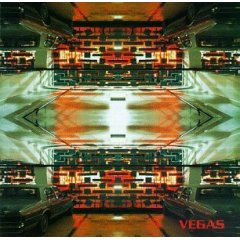
Tracks I never tire of: ‘High Roller’

High Roller’ by The Crystal Method, from the album Vegas (1997)

I was tempted to select ‘Vapor Trail’ from Vegas, The Crystal Method’s debut album, as the first track to write about in this continuing series. Both are excellent examples of meticulously orchestrated electronic music, but ‘High Roller’ gets the nod because it’s a little bit more innovative.

If you know the album but not the track names, this is the one which has “This transmission’s coming to you / We’ve got it” running all the way through. The track opens with straightforward pumping synth which slowly becomes more complex as the samples are laid over the top. After about a minute, the thumping bigbeat comes in, and more synth elements are gradually added.

Kirkland and Jordan understand, however, that simply adding elements can make a track work okay, but to make it really interesting, you’ve got to strip some of those elements away in turn. So, the track ends up as about four minutes of all these different keyboard, drum and other percussion elements, along with the distinctive samples, being cut in and out at various intervals in a way that flows beautifully and demands attention.

I was reading just now and this track came on, and I had to stop and listen (and write about it). I seem to read a lot of unimpressed reviews of electronic music which complain that ‘you couldn’t dance to it’. In this case, and most of the others, it isn’t supposed to be about dancing. Best appreciated through headphones, this is a challenging, professional bit of work. And the beat sure kicks arse.