THINK OF PEACE AND MEDITATE

Waking up around midday after a fitful sleep, I ordered in a terrifically bland Palak Paneer from the restaurant on the roof of the hotel. Nice place, with a view of the area and plants all about the place, but rubbish food and service. No matter.

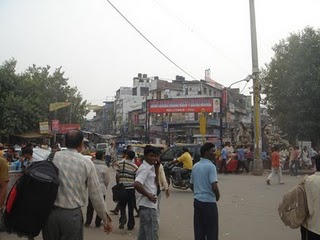
When I finally ventured out into the madness that is PaharGanj, I was greeted by not less than five drug pushers in a 20-minute time period of walking up and down. “Hey man, still in Delhi?” Yes, and you don’t know me. “Yo, you smoke hash?” No. “Hey man, where you from? I can get you anything man, hash, H, E, you name it.” I’m from New Zealand, now go away. Etc.

Admittedly I only spent a short time on those streets, but I felt like everyone, whether their business was legit or not, had nothing but rupees on their mind. I stopped and talked to a couple of shopkeepers, and in both cases I didn’t detect any flicker of genuine empathy in their eyes. It was all patter, all opening lines and techniques and always-be-closing, in a way that is hard not to admire because it’s so slick but puts you at such a distance from them as a person. I came to India because I’d been told it was a far more open culture than pretty much anywhere I’ve been but especially Japan; here in PaharGanj, with the dozens of sets of eyes that never smile, I felt like a true outsider, like I wasn’t really welcome.

After a few moments of embarrassing, Kit Moresby-esque mania in my hotel room (brought on by the prospect of having to stay a lot longer than 2 days here, which was looking likely but thankfully didn’t eventuate), I started to get the hang of social interactions and how to get things done. By the end of that second day, I felt like I could cope here for as long as I needed to, but it required a closing off of the more loving parts of my heart in order to remain on top of things. Several folks on the train and in Bangalore would go on to tell me that my instincts were pretty much right, that life in Delhi is quite different from most other Indian cities and that you do have to regard pretty much everything with a suspicious eye. Shame.
Onto the train, then, which I had been looking forward to so much. Nearly 40 hours, well over 2000km, all in a packed air-conditioned space! Ahh, this is real travel. I was lucky enough to sit with a group of men who, in various ways, were extremely friendly and open people. They asked me many questions about New Zealand, about Japan, about my purpose for being in India. I noticed in these men that they were able to be honest, genuine, completely open and friendly despite rarely offering a smile. It’s all in the eyes.

One was a Swami of the Sivananda Order, based in Ajjampura, and he very quickly saw through my happy veneer to the unease rumbling beneath. I had a lot on my mind about things I won’t detail in here, and it was written all over my face and body language, no matter how many times I extolled the virtues of being in India. “Too much feel,” he said. “I think you have too much feel. No feel, no worry.” And then, with a calming gesture of both hands lightly falling, “everything is clearing”. Again, this man rarely smiled, but he had an aura of positivity and simple calm that affected everyone around him. I asked him if he had any brothers or sisters; he replied, “No. Before I did, but now, no… you are brother. He (points to another man in the carriage) is brother. She is sister. Everyone.” He gave me his phone number and address and instructed me to come and see him. I think I will.

The hours – well, days – passed swiftly thanks to Swamiji and my other companions’ ideal attitudes. I got sick, a sickness in the bowel which has only just passed, but I didn’t care – I was experiencing India as I’d hoped I would, and that came as such a relief after that brief episode in Delhi. To Bangalore, then, and even more positive experiences to be detailed soon…

I GOT THE GREEN LIGHT, I GOT A LITTLE FIGHT

I got on that plane, still buzzing from all that had just happened, and the first leg of my journey to India began. To Beijing first, sitting next to a Japanese guy who studies there and was reasonably tolerant of my show-and-tell. Man, I showed those letters and photos to anyone fool enough to stop for a second, but I’ll shut up about that now.

Beijing had a new terminal built for the Olympics, terminal 3. It is quite ludicrously cavernous, like some evil dragon mastermind’s lair for plotting world domination OH WAIT… lucky I didn’t try and post that using the government’s free wireless in the terminal. Actually, Blogger is usually blocked in China, but for the duration of the Olympics they let the guard down to avoid awkward situations. But I digress.

From Beijing I continued on Air China to Delhi, sitting next to another Japanese guy, this time with a thirst for travelling. We talked a fair bit about the places we’ve been to (many for him, very few for me) and he gave me his card and said I should email him in case there’s a chance of us meeting up again in India or somewhere further down the line. It’s nice to meet such people on one’s travels.

Indira Gandhi Airport at Delhi is a little dustier than Beijing, Narita or Auckland, but all my luggage arrived so I didn’t care. That was kind of what I wanted, leaving those obsessively clean and mechanical aspects of Japan behind. Hilariously, I didn’t go through any customs of any kind; the channels were there, and they were staffed, but they were so bored and disinterested that you could probably get through pushing a hive of bees. I did have to change money, though, fighting off those attempting to push in ahead of me in the melee that is a queue in India. That’s one thing the British left alone.

I’d booked my hotel in advance and arranged for them to pick me up at the airport, and sure enough, there was a young guy waiting with an A4 printout saying my name. I went up to him and, without a word, he started walking and beckoned me to follow, barking instructions to someone on a cellphone. We got outside, where the sounds and particularly the smell of the city were quite different from anywhere I’ve been before – funny how those are the senses I link most to my memories of arriving – and made our way to a beaten-up blue van with a glow-in-the-dark display of the Hindu Holy Trinity illuminating the dashboard.

We weaved our way across city roads which were largely deserted but still required the driver to sit on the horn for much of the time. I’ve only this week understood that here, the horn is not reserved for emergencies or frustration; here, it’s as vital a road tool as indicator lights or clearly defined road markings are back home. You blast the horn to notify of your presence. If you don’t, you won’t be seen and are likely to cause an accident. It makes sense in the absence of those things I just mentioned, and now it’s as much a part of the aural wallpaper as the cicadas were in Kamakura.

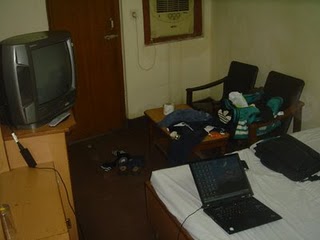
Eventually we made it to Hotel Vivek, my home for this night and the next. I didn’t realize it was going to be in basically the roughest part of Delhi (and possibly all India), with shopkeepers hurling insults at me as I ignored their invitations for a cup of tea or a light meal at 2 in the morning. I also didn’t expect to see an albino lizard scurrying across the wall behind reception, a reception staffed by three men who seemed quite put out by the fact that I wanted to stay in their hotel. (I saw the lizard again the next day, so I’m guessing it’s like most hotels have a cat, just this one has an albino lizard.)

At such an early hour and after a day’s worth of travel, I was a little overwhelmed by dealing with a place so different from anywhere I’d been before. Still, I breathed a sigh of relief that I’d made it with no hint of difficulty, and appreciated the fact that this kind of cultural atmosphere was going to help me grow in so many ways. To my non-descript, dusty room, and to sleep… much more to come.

NOW THAT YOU’RE GONE IT HIT US

I’m having to get this out slowly over a long period of time, as computers in India’s cyber cafes aren’t quite as cooperative as one might hope. Here’s what happened around the 24th of August.

On Friday (the 23rd) I said goodbye to my landlords Tetsuko and Kotaro, the sweetest folks one could hope for. The other housemate cooked an incredible Mexican dinner and T & K gave me a Japanese-style bandana, which was a wonderful gesture. A wise person said that once you’ve gotten past the surface of Japanese people and spent enough time with them, they will do anything for you, like they’re investing something emotional in you that they so rarely do.

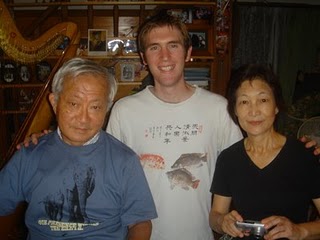
I was to see this on an even greater level the next day. Mika, fellow teacher mentioned a couple of posts earlier, had said she would come to the airport to see me off, so I thought we’d have lunch or something and then say our sad goodbyes… instead, the whole family turned up – Mika & her husband, Koji, her mother, sister and sister’s 4 kids (2 of which I taught). At this point I understood what people mean when they say ‘my Japanese family’, because really, I felt completely accepted as if I had the same blood.

As if that wasn’t enough, the kids handed me a stack of 6 envelopes and inside each was a letter from a student in the class with a special message for me. “Do your best in India and please come back to teach us again.” “Enjoy eating curry!” “Please write to me and tell me about India.” There were drawings, too, and some more photographs from the party, plus an incredible moving card from Mika. After I went off through security and out of sight, I thought about what had just happened and the cards that were now wedged in my bursting laptop bag, and shed a few tears in the immigration queue. I couldn’t have dreamed of a better send-off, a better final memory of a country I’d come to believe I no longer wanted to function in. I’ve still got my shit to say about Japan and I think it’s valid, but every moment of the experience was worth it just for those last minutes in the country.

One last remarkable thing was to happen. I had intended to call someone just before getting on the plane, and was literally striding towards a payphone and reaching for my wallet when my phone rang for the last time. It was her; she’d had no idea when my plane was leaving, nor obviously did she know that I was, at that moment, about to pick up the phone myself. An extraordinary coincidence. More than a coincidence. I stepped onto the plane confident that Japan had been good for me, I’d been good for Japan and that the universe was aligning especially for me.

I’m now in Bangalore, it’s been kind of an odyssey to get here, worth it for every moment. That’ll be the next post…

I AIN’T GOT TIME FOR THE GAME

I’ve been in Japan for 14 and a half months now, and the longer I stay here, the less settled I feel. The concept of being ‘uchi’ (inside) or ‘soto’ (outside) is felt every single day in some way or another, whether it’s through furtive glances on the train, having the menu flipped for you in McDonald’s or the extra polite, nervous service gaijin often receive in department stores.

I suspect that it is still impossible for a foreigner to become uchi, what with the population being about 98.5% homogenous and still apathetically embracing traditional methods of conducting business and polite conversation. You can come pretty close if you try hard enough, though, and take on as many characteristics of your hosts as possible. Thing is, you have to want to, and I really don’t want to. In this situation, living somewhere but not wanting to become part of the current culture, you have two options: 1) leave the country, or 2) retain as much respect as you can for the country you live in, its people and customs; keep everyday frustrations to a minimum and accept things that frustrate you as part of the culture and something to be at ease with; and above keep your own sense of identity strong in a way that you’re comfortable with yourself without being aggressive about it, and comfortable with the way you’re received by the culture even if it isn’t how you’d have it ideally.

So, I’m leaving. Weren’t expecting that, were you? I’ve tried option 2 for a good while now, and if I’m honest, I could quite easily go on here for months, even years longer, but I’ve reached a point where I realize that the longer I stay, the more I have to suppress my natural self, and I can’t see how that’s healthy. It either means I’ll become something I’m not, or more likely, wrestle with myself on a daily basis knowing what I have to do in a given situation is quite different from what I want to do. As well as that, it’s a lot easier to survive in Japan if you think less – just do your job as you’re expected to and hang out with a regular group of friends, and your worries inevitable diminish – and until recently, I could feel my brain slowly shutting off, my mind consciously less stimulated, just coasting through my days giving very few things a second thought.

It’s my time. I’ve loved living here for so many reasons – the wonderful friends I’ve made, the beautiful kids I’ve taught, the incredible things I’ve seen… I’ve also learned more about myself and the world around me in this past year than the previous four combined, partly because of living in this foreign country, and partly through having my first serious relationship with a woman. I just have to go, though, and I have to go now. I have to go to a place which is different from this one, where I can focus on becoming more open and direct and not worry so much about keeping this safe and comfortable, which is such a big part of existence here.

India is my next destination. I’m not sure what’s going to happen there, but I know it will challenge me in so many ways and will be very, very difficult to cope with at times. But that’s good for me. It’s all about me, in case you didn’t notice. For once, I’m not that bothered about concentrating completely on my own development, and I’m very pleased about that.

ALL YOUR MEMORIES ARE AS PRECIOUS AS GOLD

In February of this year, I was visiting my friends Mika & Koji in Chiba, which is about an hour and a half away east of Tokyo. The traditional Japanese way is for the family unit to remain very tight throughout the lifespan; it’s common for newly married couples to live with one set of parents for a good while, and for their respective families to spend a lot of time together as a unit. So, when I visit them, I also visit their parents, siblings, nieces, nephews and in-laws. It’s always a delight. They’re all such open, honest, loving people.

I was thinking to myself, why don’t I come here more often? Mika telepathically understood this, and suggested we start an informal English class for her two school-age nieces and their friends. Great idea, I said. The class would be held every Friday, but I would only teach every second week because it would be a bit expensive paying my costs all the time. And so it was, from March up until last Friday when we held our final class & party.

Now, the job I worked in until June was fine, but it was for a big corporation and that makes it harder to connect with students. I met a lot of really wonderful people there, and did forge some pretty good connections, but apart from rare cases I was always the ‘Teacher’ and they were always the ‘student’. These pre-defined roles were hard to get around for both them and I, so we didn’t put as much effort into actually genuinely caring as we could’ve. (Be warned, mashed , mushy bananas ahead.)

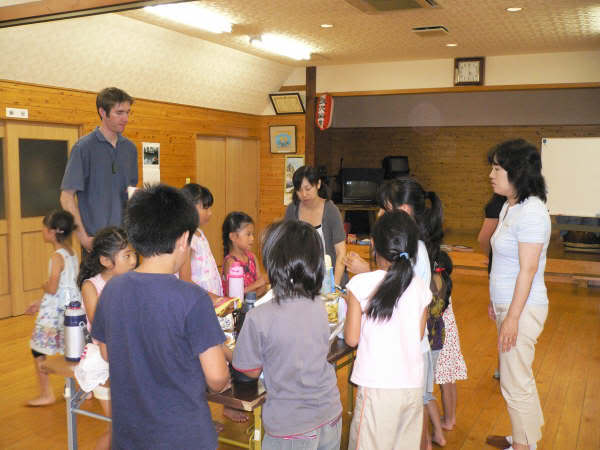
This Friday class (or classes, as we had two groups of six children), however, has been the highlight of my fortnight for just this reason. The kids were all brilliant (and impossibly cute), I was ‘Barnaby-sensei’ but as much their mate as their teacher, and Mika was a wonderful person to teach with and just generally be around. When it came to that farewell deal last week, I was really sad that it was ending. These kids, these people, really meant something to me and I would miss them. Still, it was rowdy fun like it always is – plenty of laughter and a good amount of craziness.

Most of their parents had turned up to see how I’d indoctrinated their precious little ones. Each one of the children stood up and did their little self-presentation, something they’d studied for pretty hard by the sounds, and they all nailed it as though it was second nature. Mika said they’d struggled the week before. Not this time. I couldn’t stop grinning, they did so well. Then we set up a table with food and drinks – typically unhealthy kids’ party fare, That’ll do would probably keel over at the sight of it – and Mika’s sister came over to us and gave us both a bag, saying ‘arigatou’.

We’d been doing it for our own pleasure (and, let’s be honest, a bit of money in my case), but gifts? Well, thank you, OK. Inside were the items I will treasure for my entire life: a t-shirt with all the kids’ hands stretched out into a circle, and a huge card with a photo of each class and a handwritten message from each child (in Japanese). “Thank you for teaching me English.” “It was a lot of fun.” “Please come to Japan and teach us again.” “You’re always cheerful.” I sat there for about five minutes looking at the pictures and their messages, and had a quiet moment of reflection: if this is where your life has led you, this point here, this feeling, then you are doing something right and everything has been worth it. This soon-to-end time in Japan (more on that soon) has been challenging in many ways, and I’ve done my fair share of bitching about the place to friends and family and basically anyone who’ll listen, but even if there was nothing else to be pleased about – which there is in spades – I’d have this, and it would all be worthwhile.

Then I realized I was being rude not talking to anyone, and played some games with the kids who had long since finished stuffing their faces with crisps and were tearing about like… well, like kids. One girl from the younger class came running up to me, hugged my legs tightly, looked up at me with a huge smile on her face and said, “Daisuki!” (“I love you.”) Usually I’d laugh such declarations of affection from children as either attention-seeking or just being playful, but at the age she was, I could see she was pure in the moment and genuinely meant it. There’s a wonderful lack of pretence about Japanese children up to the age of about 8 or 9, before they’re aware of themselves and how badly they need to be exactly the same as everybody else their age, immediately. They just do and say what they feel. Needless to say, I was touched.

When it was all over, I went and had sushi with the family, and played loads with M & K’s nephew who was too young to join the class. At the end of the day I made the long(ish) trip home, tired and very happy. Mika sent me a text saying she thought we’d had a good experience. I sent her back a slightly overdone essay about it being my best memory of Japan and a group of people I’ll never forget. Not unlike this, I suppose.

Thank you, everybody.

MY SKIN IS BARE, MY SKIN IS THEIRS

We love photos of people in natural, unposed situations because they capture a moment at which a person or people were simply living their lives, however active or inactive they were. Errol Morris notes that a posed picture can be just as real and fascinating, and he’s right, but there’s something immediately intriguing about a good picture of someone who’s unaware they’re being photographed. Almost all of us privileged enough to have had access to a camera have tried to take some of these good pictures, and certainly all of us have admired them on the walls of an art gallery or in somebody else’s photo album.

Today I went down to Yuigahama beach, alone, to sit and read a book. (Orson Scott Card’s Xenocide, if you must know.) It was reasonably busy – nothing like summer, of course, but it’s getting warmer now and there would’ve been a good couple of hundred people out walking, playing and sitting. After sitting on the sand for about half an hour, a man came up to me and cheerfully asked, “Shashin o totte mo ii desu ka?” Is it all right if I take a photo? I quickly replied with an affirmative “Hai, douzo!” and returned to my book to read.

Usually it’s me taking photos of somebody else, not the other way round. I’ve never really felt particularly comfortable in front of the camera, but I like to observe, to see things in others that most people wouldn’t notice, and to capture that moment. I’m usually too shy to actually ask someone if I can photograph them, though, so I just end up observing and feeling satisfied that I saw something special. When somebody does want to take photos of me, there’s almost always somebody else there in the frame too, so I never think of it as a photo of me – more a photo of us, and the other person or people probably look way more interesting than I do.

So, for somebody to want to photograph me and me alone was something unusual. I imagine people who get asked a lot are able to immediately return to what they were doing and continue being natural to some degree, but for me, the words on the page of my book were immediately replaced with stacks of self-conscious thought. I was completely aware that in front of me, just out of my lowered field of vision, this guy was snapping away. This wasn’t a bad feeling at all, nor did I feel inadequate or anything like that; I just wasn’t used to it and didn’t really know how to remain natural.

I’d be interested to see how the photos turn out, because I’ll bet that my intense self-awareness will show through in some way. Does that make it any less natural of a photo, though? That’s how I reacted at that point of my life to that situation, and there’s no other way it could’ve been. Nothing wrong with it. Not exactly how I’d like it to be, and it might not make for an immediately appealing photograph, but it’s still a reflection of reality. It’s interesting, though, that despite the fact that I am stared at blatantly on a daily basis – usually on the trains – someone with a camera felt so much more intense than just a pair of eyes. It should really be the other way round, I think: staring is often a product of shock or surprise, whereas someone with a camera, like this guy, is genuinely made curious by your appearance and would like to capture an image because he or she thinks it might be memorable. It’s more innocuous. I’ll spend more time on the beach and see if I get used to it.

NO MORE LESSONS, NO MORE CURES

This week, I seem to be fascinated by people and things in a way that I haven’t been for quite a while. It’s the sort of week that shows me how much I still have to learn. In a good way. Like, at nearly 23 I’m still very much a kid, and the prospect of gaining more insight into myself and others is an exciting one. There are a number of reasons why this week has been different from others, most of them above my head, but I think the fact that I have been so fascinated means that people have been more willing to tell me things. You can’t fake interest.

I’ve decided that some array of endorphins is released when I speak a lot. Tuesday was a very good day, largely because I was talking for much of it. I feel a similar way when I play goalkeeper in futsal, barking constant instructions to beleaguered teammates. For people who naturally talk loads it probably isn’t such a big deal, but for me – the archetypal strong and silent individual – it’s kind of a rush to have people paying attention and responding to my words. The deal on Tuesday was that I had to trek in to Shinjuku for training in the morning, then halfway back to Yokohama for regular work in the afternoon, and finally home. All up, I was out of the house for a 15 hour stretch, and much of that time was spent talking, so when I arrived home at 23:30 I was exhausted but utterly content.

During one of the many group conversations, I realised something about myself. I’m pretty good at working off what other people say, throwing in comments or adding to (or subtracting from) their words. When I have to produce, I’m not nearly as strong. It’s like being an art critic, I s’pose: you consume and you react, but you never create. Maybe it’s the fault of my hundreds of film reviews that my conversation relies so heavily on the words of others. Or maybe it’s the thousands of hours of self-imposed solitude undertaken during my teenage and university years. It’s not a problem, anyway. If I’m verbalizing and the people are responding positively, everything is fine – who cares whether the inspiration comes from within or without?

The only difference is in relaying a well-rehearsed story. But an organically well-rehearsed story, mind. Last Friday this American guy swore loudly at me, repeatedly, both across a crowded bar and in my face, so of course I used that story whenever people asked me what I did over the weekend. After about four or five tellings, I knew how to make it more interesting than it should be. What to dwell on, what to cull. By that point, it isn’t so much production as it is recitation. Thing is, though, I rehearsed it in actual situations, learning how to tell it by, well, telling it, rather than sitting and studying notes and getting all the words right in my head. That organic practice-without-thinking leads to a story that flows naturally and gets the reaction you want it to.

So I have two modes: /respond and /recite. Oh, and /listen, the default mode where I don’t speak at all. Cool, I can live with that. But you’d think that such an individual would find it difficult to make friends, right? If they have little of worth to say out of their own head, and they know it, how do they go about convincing other people that they’re an interesting person worthy of your time? (Clearly I can’t stop thinking about how others see me, though it’s less with concern and more with curiosity as each year passes.)

And yet somehow, it happens. How does that work? How is it that people are drawn to me and have a relationship with me that is unlike that with anybody else? Maybe it isn’t. Maybe that’s just how I feel at times. Maybe that’s what friendship is at its fundamental level, a deeper connection that means something only to the two of you and nothing to anybody else. You build up your own language, your own points of reference, and you become comfortable enough with each other to show things that you usually hide. At the beginning it’s all building, which is why it doesn’t quite feel natural for a little while. Of course this is just one theory, and probably only holds true in selected situations. Some people walk into your life like you’ve known them forever. I guess it depends on the person.

At one point in Dance Dance Dance, the last book I read, the narrator draws a diagram connecting all the people around him at that point of his life, and it was interesting to see it all laid out like that, sort of like one of those ‘six degrees of separation’ diagrams. Thing was, there were no more than two or three connections for each individual on that map, but if he’d put himself on there, he could’ve drawn connections from himself to every single other person. Weird, that. I’m not too different, yet I’m nobody special for knowing all these people. I’m just here. I s’pose Facebook does the same thing. I wonder, does that map get smaller as you age? Like everything else, it probably depends on the individual.

So yeah, it was just the sort of day I relish, with one positive hit after another. A steady stream of people I could talk to and not feel stupid about myself with. Those strong, euphoric or flattening experiences – having children, fearing for your life, meeting The One, watching 2 Fast 2 Furious – are what you remember and tell people about year after year. However, I can’t help feeling that days of pure contentment such as this are what really matter. Most of us only have 2 or 3 truly life-changing events happen to us, and they do have a profound impact, but the compound effect of all those happy days and their simple delights is an immeasurably greater influence.

Those days are what shape me as a person, more than anything else. Same goes for the bad days. Big things come and go, but day-to-day life is always there, so I reckon if you’re waking up in the morning and you feel like getting out of bed, you’re doing okay.

PUT THE SPEAKERS IN THE WINDOW

Personal living space matters differently to different people. I think its importance to an individual depends on how much time they spend in it – if you prefer to be out of the house, you tend not to mind coming home to a little box with a bed and a chest of drawers, while if you spend a lot of time in your home, you value having a space that you’re happy to occupy. I belong in the second camp, given as I am to reading on the interwebs, watching films and TV series, and playing the odd game. My legs are slowly turning to jelly through lack of exercise, but I’m enjoying myself, and I’m going to start running the day after tomorrow so screw you.

For the vast majority of my life, my living space has been perfectly acceptable. Except maybe that year without a door on my room, or the first two years at school in a dormitory with 14 other boys. Even my last flat in Christchurch, a particularly small place by NZ standards, was acceptable – while my room was tiny, it had a separate lounge and kitchen, so I could waste time in them without feeling hemmed in.

When it came to light that I was going to move to Japan, I had this picture in my head of me in a traditional Japanese room with tatami mats, sliding doors, and a futon that I pack away each morning. That wasn’t what I got. Instead, I was given a room that, subtracting the bed, desk, clothes rack and chest of drawers from the equation, only had about 1.5 square metres of floor space. Not only that, but there was no real lounge to speak of, just an austere kitchen/dining area. I was happy to be in Japan, of course, but it kind of sucked coming home each night to such an unwelcoming space. Students told me it was small even by Japanese standards. And as for bringing other people round, fuggedaboudit.

My relentlessly pragmatic brain didn’t get upset, though. It just said ‘right, we must find a new space where we can make rays of sunshine and pink unicorn’s tails’ – to wit, a new, better place. Rather than putting any sort of plan into action, however, I half-heartedly performed online searches and sent off a sum total of 0 inquiries. Then, a little over two weeks ago, a gentleman brought an advertisement for his small guest house to one of the schools I teach at. It told of a place in beautiful Kamakura with a big, traditional room in a decent location. I fired off an email and went to check it out.

Of course it was just like the picture I had in my head. Why wouldn’t it be? I was lucky in getting my job, lucky in meeting certain people here, now exceedingly lucky to have something like my dream living space fall into my lap. I took it, and moved in last Friday. Now I live in one of my favourite places I’ve visited, in a space I adore, with wonderful people for landlords and a month-to-month contract (should something else miraculously turn up). You never appreciate things until they’re gone, and now that I’ve gone a few months of preferring not to go home to my tiny cupboard of a room, by golly, I’m appreciative of this.

PEOPLE SAY I’M BIGGER FOR WALKING THIS TOWN

This week I ordered a pizza over the internet. Big whoop, you say. Anyone can do that. Yeah? Go to the Domino’s website and try. Seriously, try it: go through everything, right up to the final click to confirm the order, and see how far you can get. (If you can read and understand Japanese, well, don’t.)

This isn’t really a big deal in and of itself – I figured out a few online forms with the help of a character translator (called Rikaichan, an incredibly useful tool if you have to visit websites written in Japanese), and got a greasy dinner. However, it’s an important boon for my confidence. I’ve been here nearly five months now, and I still haven’t been to a post office, or bought clothes, always doubting that I could communicate to the extent required. But here, I managed to communicate with a machine that only understood Japanese input. Surely, then, communication with a shop assistant would be less of a challenge?

My point is that I haven’t tried things in Japan purely because of a lack of confidence. Life here is very easy if you stick to the basics: supermarkets, convenience stores, the train system. You really could live here a long time without actually learning how to speak Japanese. That’s not good enough for me, though – I mean, the whole point of coming here was to be challenged in my everyday life, and it’s like I’ve erected a barrier around me to stop that from happening. Not anymore, though! The pizza may be just as greasy, stodgy, and regret-it-afterwards as back home, but with it at my side I shall conquer all!

***

Let’s keep talking about food – I went to a shabu-shabu restaurant for the first time on Friday. It’s something that I’ve wanted to try for a while, one of those cook-your-own type deals with boiling water on the table and an array of raw ingredients you dump into it. The place was Imahan in Asakusa, an apparently quite famous restaurant with appropriately famous prices (thank Christ for lunch menu deals). It was, to quote Henry Rollins, really fucking good. Fresh, delicious beef and veg, tasty sauces, good noodles… worth the $40, absolutely.

We then went to Kamiya, an incredible and widely-known bar, which was more like the dining hall at school than any other bar I’ve been to. As we walked in, an older gentleman called to us across the busy room and motioned for us to join him. My companion said we shouldn’t, citing some rubbish excuse about him being drunk and this area being a Yakuza stronghold. Bah. We had enormous beers that were a struggle to finish, then staggered home.

It was a day full of ‘here I am’ moments – like, this is Japan, and I am in it, I made it here. Standing before the massive gate at Asakusa shrine, shabu-shabuing at Imahan, looking across the Sumida River to the bizarre Asahi building… I’m in the foreign country, and things are all foreign, and I’m really enjoying it.

In Radiohead We Trust: ‘In Rainbows’

You probably know the deal by now, but I’ll recount the brief history anyway: last week I got an email from the Radiohead mailing list saying that their new album In Rainbows was now available for pre-order via their website radiohead.com via two forms: 1) a download available from 10 Oct; 2) a ‘discbox’ containing the album and extra material on 2 CDs and 2 vinyl records shipped on or before 3 Dec, plus the download.

The discbox costs £40.00, the download costs £?.??. ‘It’s up to you’, comes the reply when you click the ?. Click again: ‘No really, it’s up to you’. You can download the new Radiohead album for any price you choose. Like they’re saying to the record companies, “Whatever! I do what I want!” I paid £0.00, planning to buy the CD when it’s released as I have for past Radiohead albums.

Anyway, I listened to it for the first time walking to the train station yesterday, and through the thumps, blips, cut-up guitar loops and Thom Yorke’s wailing, I couldn’t help but have the same reaction I always have when listening to new Radiohead material: have they completely betrayed me at last?

You see, I have a particularly strong love/hate relationship with them. Around the age of 15/16, Kid A took its place as the first album I ever loved. I didn’t just love it; I listened to it all the time, thought about it whenever I wasn’t listening to it, read every interview with the band I could find, and analyzed the lyrics to within an inch of their life, amazed that somehow they were all pertinent to what I was going through as teenager. I told none of my schoolmates of my obsession, instead preferring to revel in the perceived solitude of liking something so unusual so deeply. It was music that made me want to feel alone, and I gave myself over to those feelings.

Later I found out that many of my schoolmates were listening to it too, and I wasn’t all alone, and I could have been out yarning and having a laugh. I’m not going to be so melodramatic as to say that ‘those bastards and their music made my teenage years miserable’, because while there are elements of truth there – it did push me to become more introspective and seek less the company of others – those elements probably would’ve come to light whether it was their music or the Vengaboys’. For one, the act of listening to the album was an experience I always delighted in, always far more a positive, happy time than a negative, upsetting time. And it made me think about things on a deeper level, like human relationships, and death.

Yeah, it was a really big deal. It was further enhanced by the subsequent and ongoing discovery of their work (6 albums and hundreds of B-sides and unreleased tracks), to the point where I had something like an encyclopaedic knowledge of the band’s music and ideology. Because a lot of it is either upset by or pissed off with the people in the world, it kind of built in my head to a point where I just couldn’t be arsed getting behind something that seemed so demoralizing. Look at what I listen to most now: Girl Talk, The Go! Team, M.I.A… music that suits a short attention span and encourages appreciation of the moment, rather than concern for the future. (M.I.A. is stretching that a bit, but what the hell, I’ll go with it.)

SOOOO as I listened to the first robotic drumbeats of ’15 Step’, the first track on In Rainbows, I asked myself ‘can I be bothered with this’? And when Yorke’s patented wail started up with ‘How come I end up where I started?’ I asked myself ‘honestly… can I?’ Of course I stayed with it, listened to it right the way through, and inevitably put it straight back on for another run. What at first seems kind of tuneless and preachy becomes layered and thought-provoking. Shock, horror, it’s good stuff – just like everything else they’ve done – and I’ll listen to it again many more times in the coming weeks and months. Thus far, the track ‘House of Cards’ stands out as a particularly good example of Radioheady production, lyrics, guitar and structure.

I still love the band and the music, and I imagine I always will, no matter what they do, but that initial reaction to new material will likewise always be the same: ‘do I want to hear this?’ They’re always so different from whatever else I’m listening to at the time, but I guess that makes them a constant I can always rely on to provide me with something unique that’ll challenge me musically and lyrically. A comfort zone that makes me step outside my comfort zone, or something. All I can say is keep it up: you’ll never again be flavour of the month with me, but I’ll keep returning to your music as long as you keep making it, whether I like to or not.