Sofia Coppola’s ‘Somewhere’, a place worth visiting

IMDB / Ebert / Hornaday
Starring Stephen Dorff and Elle Fanning
Written and Directed by Sofia Coppola


Rating: H (Highly Recommended)

Sofia Coppola’s Somewhere is like Jackass without the stunts, or maybe Jackass when the camera isn’t rolling. I’m not just saying that because of the presence of Chris Pontius, that laconic joker famous for his ‘Party Boy’ antics. Somewhere is almost Dadaist as Coppola lingers on bizarre showbiz images such as its star covered in putty for a face mould, or a ludicrously bombastic Italian awards ceremony, and gently pulls down the façade of Hollywood nicety with a subtle, non-judgmental eye. Johnny Marco, the nearly mute anti-hero, bounces from one corner of his irrational movie star life to another – rich, unsatisfied, stagnant.

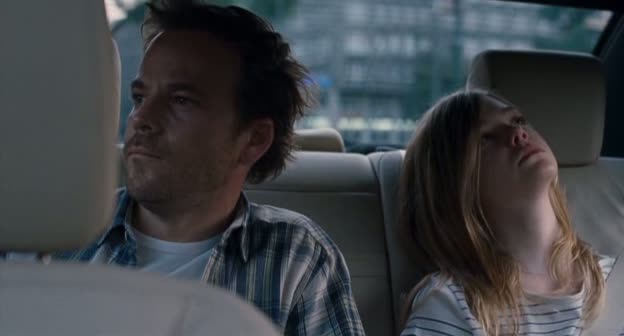
Enter his daughter Cleo, the Figure of Redemption, but don’t worry. It isn’t that kind of movie. We can only assume that prior to the events in the film, Johnny saw Cleo on a semi-regular basis but was too wrapped up in endless parties and women to truly notice her. Now, as a result of certain circumstances, she’s going to be more present in his life – for a while, at least, maybe just long enough to make a difference.

Really, it’s okay, it genuinely isn’t that kind of movie. I mean, it is: a classical story, lost and/or deluded and/or miserable soul has his life thrown into perspective by the arrival of someone with simple, innocent meaning and purpose, both in her own intentions and in her relevance to our anti-hero’s life. What’s different is that Coppola takes this story, so often overdone and blandly unsubtle in films, and strips it back to the point of elusiveness. We witness a series of disconnected moments, often played out with a near-total absence of dialogue, and rather than there being an obvious narrative thread, it’s more our own expectation that creates one.

As a result, Somewhere will be infuriating and – even worse – incredibly boring to some viewers. For those who are willing to go along with Coppola’s sound- and image-focused style and put the idea of a Good Story to one side, however, Somewhere is a meditative treat, a joy. It even approaches the divine as she pulls the whole thing together in a glorious, grand (yet still understated) finale, stretching out the back end of Phoenix’s ‘Love Like A Sunset’ – with its eerie Wendy Carlos synthesizer and subsequent glorious release – in a moment of true movie magic that I could not resist.

Stephen Dorff is very watchable in the central role; I particularly liked the fact that despite being a big movie star with an endless parade of half-naked women fawning around him, he never comes across as a total dick. He’s polite to people whether he knows them or not; perhaps the stream of ‘you are such a fucking asshole’ SMSes he receives are the result of a prior attitude we don’t get to see. Then there’s Elle Fanning, who is an utter delight as his daughter. She’s just the kind of daddy’s little girl that fathers would want to do absolutely anything for: cute, sweet, talented. The key phrase there is that Johnny does indeed want to do anything for Cleo, but it’s evident that in the past, he simply hasn’t.


Neither of these two is the star of the film. That would be Richard Beggs, sound designer extraordinaire, who would also have been the star of Lost In Translation as well if it hadn’t been for the incomparable Bill Murray. Somewhere needs to be watched with the best sound possible so that you can appreciate the space of each scene – the grumble of Johnny’s Ferrari, the crackle of his cigarette as he smokes it down to the filter. Combined with another well-employed score of popular and atmospheric music, Beggs has crafted an aural wonderland yet again.

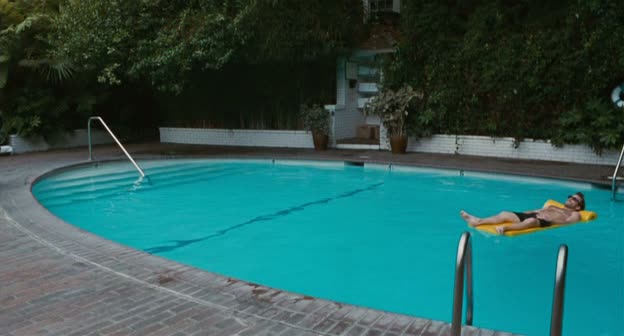
And then there’s Sofia Coppola, who by now has leapt well and truly out of her father’s shadow artistically. She stays within her limitations as a filmmaker, but what fascinating limitations. Her productions feel a little like really expensive student films in their scope, spare and mood-focused, and she is fortunate to have all the backing and support she could ever need (just check out those names in the ‘Thanks’ section of the credits). We’re fortunate that she uses that support to give us images of unexpected beauty in emptiness, like Johnny drifting lazily out of frame on a yellow Lilo inflatable sunlounger in the hotel pool, or his near-catatonic plucking of a pear from the fruit bowl on his coffee table, only to return it seconds later.

You may not learn anything from Sofia Coppola’s Somewhere, save for a few insights into the private lives of Hollywood stars. If you’re willing to submit to her freeform approach to filmmaking, though, you’ll be rewarded with another immensely satisfying tone poem of real lives and subtle movie magic. It’s not as good as Lost In Translation, of course, which she is unlikely to better even if she makes movies for another 50 years, but Somewhere is fit to be mentioned in the same breath, and it stands firmly on its own as a showcase for the gifts of sound and vision.

Film Review: ‘Never Let Me Go’ (2010)

IMDb / Ebert / Hoberman
Starring Andrew Garfield, Keira Knightley and Carey Mulligan
Written by Alex Garland
Based on the novel by Kazuo Ishiguro
Directed by Mark Romanek


Rating: C (Careful)

Book-to-film adaptations are always a challenge. They’re a challenge for filmmakers trying to translate the feel of the written word for the screen, and they’re a challenge for audiences already enraptured with the book to accept with open minds.

Here’s a case in point. I love Kazuo Ishiguro’s Never Let Me Go. I read it in 2007, a couple of months into my stay in Japan, and it completely blew me away. It was a brilliant idea, crafted into a grand and brilliant story, and written in an endearing matter-of-fact style through the voice of a devastatingly sweet and immature narrator. For all its superficial coldness, the depth of feeling and heart contained in its simple language gave rise to such massive potential for an emotional response, and that response would take you down as many rabbit holes as you let it. I felt like I understood people, and our potential as humans, better after reading this novel.

Of course it was always going to be made into a film. How could it not? All of the elements were there: a high-concept idea, a love triangle, Oscar-baiting pathos and (most importantly) a recognisable and well-established brand name. Surely the film would write itself?

Well, it didn’t. In Alex Garland, he of novels The Beach and Tesseract as well as the script for Danny Boyle’s beautifully misguided Sunshine, the production pulled in a very savvy and thoughtful writer – and I’m sorry to say that he went the wrong route. That matter-of-fact prose I mentioned earlier could never directly manifest on the screen, but Garland, bless him, tries his damnedest. What came across as innocence in the book translates to coldness and a kind of dull, grey superficiality on the screen.

As a result, some very well-intentioned and capable performers flounder before our eyes. Save Mulligan’s near-constant sad, tilted smirk and Knightley’s frequently insane toothy grin, all three are surprisingly affecting. Or at least they would be if they weren’t lumbered with overly direct dialogue, a pace that never flows, and some of the most ridiculous wigs and outfits this side of Mamma Mia! Mulligan in particular is becoming one of the most enigmatic presences on cinema screens, with her pixie face concealing a gravelly, Shakespearean voice. But her Kathy isn’t the limited childlike wonder of the book.

To be fair, any sort of comparison with Ishiguro’s prose is unreasonable. I can only think of a few films which have affected me so deeply. Still, I’m a firm believer that the best book-to-film adaptations leave the feeling of the book behind and concentrate on telling a story on screen well – even if it’s a story that differs considerably from that of the book, if only in the telling. Examples: Jeunet’s A Very Long Engagement; Anderson’s There Will Be Blood; Pawlikowski’s My Summer Of Love. Romanek’s proved himself to be quite a talent with his earlier One Hour Photo, but he and Garland would’ve done themselves a favour by watching those three films as a kind of Adaptations 101.

I am, of course, biased, and would love to hear from anyone who hasn’t read the book. A follower on Twitter, @PapushiSun, hasn’t: “I haven’t watched another film that made me so angry in a long time. People don’t behave like that, I kept thinking.” It didn’t stir the same frustration in me, but I have to agree that the motivation for much of the characters’ behaviour was unclear, or – worse – when it was revealed, I just didn’t really care.

Imprints: Yi Yi (A One And A Two) / Robyn / Kylesa

Yi Yi (A One And A Two) (1999, dir. Edward Yang): Brilliant, meditative work about a modern Taiwanese family, their lives and loves, their work and their (almost total lack of) play. Each member of the family signifies a different time of life, from the 8-year-old boy to the 80-something grandmother. The boy’s speech at the end is extraordinary, perhaps worth watching again and again. (H) Highly recommended.

Robyn – Body Talk: this is the collected, 15-track final album released a couple of months ago, not any of the 8-track mini-albums released earlier. And it’s pretty good. Quite reminiscent of Madonna’s Confessions On A Dance Floor, but with plenty more sass and attitude. It isn’t as memorable as Madge’s effort was, which is one of my favourite dancepop albums, but Body Talk is solid and has enough catchy hooks to keep you coming back a few times. None Of Dem is probably the highlight – thanks Rua for showing it to me first on ye Beates Reality. (W) Worth a look.

Kylesa – Spiral Shadow: I first listened to this while ‘playing’ the hilarious ‘game’ Progress Quest, and it fit the mood perfectly. It’s sludgy and a little doomy at times, but a perfect foray for a non-metaller like me into the genre as the prettier and more hopeful aspects help me to stick with it. It isn’t a sticky mass of distorted guitar, either; it has distinct and memorable tracks. Still haven’t figured out exactly what they’re saying, but I like it. (R) Recommended.

Your Moment of Horror is Waiting

It begins with a gold-tinged scene of a waterway at dawn. Burnt-out husks of dead trees rise from the water like the Devil’s fingers – and after more than ten seconds, one of them moves! The landscape is alive! Run for your lives! It is in fact a humanoid figure, long-legged and brandishing a spear. There are no signs that it will be aggressive, but one senses that it might become so at any moment.
WHAT THIS MEANS: Welcome to Kerala.

…read more at The NRI…

“your senses become overwhelmed with the sheer brilliance of what you are watching”

'Forty Guns', directed by Samuel Fuller

Bill Georgaris is the webmaster of They Shoot Pictures, Don’t They?, a regularly updated film site that aggregates film criticism and opinion for the benefit of curious cineastes – a ‘cinematic traffic cop’ to sort the wheat from the chaff – with a focus on directors.

TSPDT comprises sections such as comprehensive  director listings, the best films of the 21st Century, appreciation for unsung classics and a resource on film noir; there are lists, links and essays to provide a wide base of knowledge if you’re eager to learn which films, directors and actors are important and why they are revered. By far the most popular part of the site is the 1,000 Greatest Films, an annually updated resource that collates the ‘best of’ ballots of over 2000 filmmakers and respected critics into one mammoth list.

It would have been about 2004 that I first discovered TSPDT, though it had already been around for a couple of years. In those days the site was much smaller, but its director database and Recommended Reading links became the starting point for every time I wanted to feed my burgeoning film obsession. The first 1,000 Greatest Films list came out in 2006, and the site has grown a great deal since then but, thankfully, has kept the same straightforward and easy-to-use interface.

As always with these interviews, it was a wonderful surprise to get a response to my initial inquiry, and then another when I received Bill’s answers. There is a relatively comprehensive About page on the site, but I tried to ask questions that would offer a little extra insight into who he is. I would also like to take this opportunity to thank Bill & Vicki, his partner-in-crime, for the letter grades which I have co-opted from TSPDT’s rating system.

***

Why did you start They Shoot Pictures, Don’t They?

Looking back, I’m not sure if there was any one reason in particular. I think it was a combination of probably three factors. Firstly, I had time on my hands (not so much these days). Secondly, I thought building a website would be a good outlet for my okay PC skills. And thirdly, and most importantly, my deep affection for cinema. It must be said that two books in particular hugely influenced the way I approached the initial version of TSPDT. They were Geoff Andrew’s The Film Handbook and Andrew Sarris’ The American Cinema.

Have you always kept records of the films you watch and how you feel about them? If so, what form(s) have those records taken?

Absolutely. I’ve maintained a database since 1992 (currently in Microsoft Access format) of the films I have seen, and of the films I wish to see, and all else in between. I think it contains approximately 29,000 titles at the moment. I rate each film I see in the same manner we do on TSPDT (Highly Recommended/Recommended/Worth a Look/Approach with Caution/Dud).

What is your first memory of enjoying watching a film?

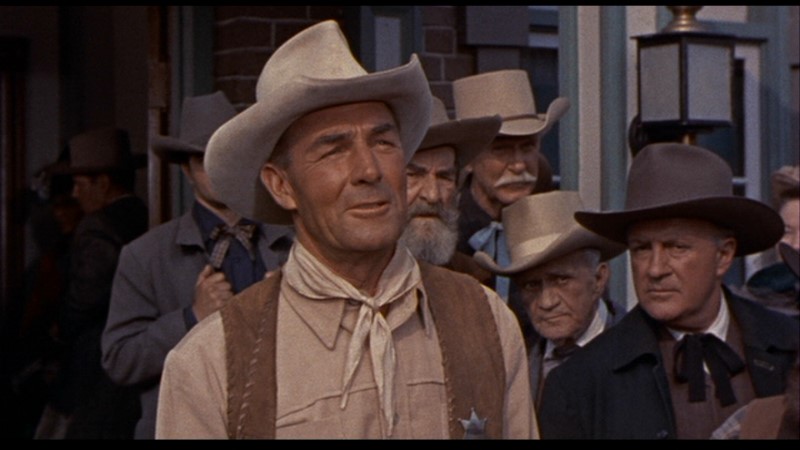
There isn’t one particular moment in time I could nominate, but I can say that my first fond film viewing moments were on Saturday and Sunday afternoons when I was aged probably between 6-10. These afternoons were spent watching matinee sessions on the local television channels. The films that left a mark on me were the Lewis/Martin films, the shockingly dubbed Italian sword-and-sandal films (who didn’t want to be Steve Reeves?) and – most memorably – the 1950s Westerns (particularly those with Randolph Scott). I only realised later that the Scott films I loved as a kid were in fact the very sparse and terse (and very adult, I might add) films he made with Budd Boetticher.

Randolph Scott in Shoot-out at Medicine Bend

Describe something that is beautiful to you.

In cinematic terms, that very moment in a film where your senses become overwhelmed with the sheer brilliance of what you are watching (tingling sensations normally ensue). An extraordinary film like Black Narcissus, for example, contains more than a handful of these moments. In non-cinematic terms, my partner Vicki, and my youngest cat Syd. Jean Seberg’s screen presence and Syd Barrett’s singing voice also come rapidly to mind. Stanley Baker in Hell Drivers is also a thing of beauty, as is Carrie Snodgress’s performance in Diary of a Mad Housewife.

What is your chief purpose in compiling ‘greatest’ film lists?

Mainly to keep a record of what films have received, and continue to receive, the most critical acclaim. I don’t know why exactly, but this is of constant fascination to me. These list compiling shenanigans assist me to plan my own film viewing experiences, and I hope that they also prove useful for those that visit TSPDT. As snore-inducing as it may seem for many, I genuinely enjoy playing around with formulas and collating data.

Jean Seberg in A bout de souffle

In the TSPDT 1,000 Greatest Films list, which film do you think should place much lower in the list (or be absent altogether), and which film do you think should place much higher?

There are countless films amongst the 1,000 that I feel should either rate higher or lower, so picking two is difficult. For me, Battleship Potemkin is perhaps the most over-acclaimed film on the TSPDT list. I can think of a hundred silent films that deserve to place higher. It’s an important film, that applied some groundbreaking techniques, but its 10th placing does irk me a little. Somewhere in the 500s would suit it better. In terms of deserving a higher placing, Sam Fuller’s Forty Guns, which is currently placed 985th, should be in the top 200 at least.

Have you ever made a film yourself?

No, absolutely not. I don’t consider myself to be a creative person. I try to keep within my limitations. I wouldn’t subject my lack of creative talent to anyone. That hasn’t stopped Michael Bay or Baz Luhrmann though, has it?

'Battleship Potemkin', directed by Sergei Eisenstein


Is there a section or page on your site that you are most proud of?

It’s hard to feel pride for the provision of an assortment of letters, numbers, images and hyperlinks. I don’t consider it that big a deal. I’m prouder of the fact that I’m still breathing after all these years! ‘Pleased to be of some use’ is perhaps a more accurate summation of the way I feel with regard to my TSPDT endeavours. In answer to your original question though, I’m pretty happy with the Film Noir pages at TSPDT. I think they are a decent resource. Additionally, I’m also pleased with the (mainly positive) reaction towards the 1,000 Greatest Films listing.

Name two countries: one you’d like to visit, and one you’d like to visit again.

I am not the best person to ask this, because I am not much of a traveller. I’m a homebody at heart, but I am heading to the UK and France next May.

Do you believe in God?

I do not believe in imaginary beings. Watching films is my preferred mode of escaping reality.

***

This interview is part of Inside the Bloggers Studio, an ongoing project of short interviews with bloggers I read and admire.  (Apologies to James Lipton.)  To view the archive, click here.

Imprints: ‘Paprika’; Amy Winehouse, ‘Back to Black’

Paprika (2006, dir. Satoshi Kon): This fine director’s last film as usual demonstrates his metaphysical insights, this time on the nature of dreams and reality, and uses the potential of animation to create art that really wouldn’t be possible in any other medium. Vastly superior to that other dreams-within-dreams movie that came out earlier this year, give this a chance and be prepared to just go along with the ride… understanding everything isn’t absolutely crucial. Recommended.

Amy Winehouse – Back to Black: I don’t know exactly why I never gave this a go before; probably my distrust of anything too popular. Well, it’s tragic, artful, beguiling and flat-out incredible. Her songwriting is raw but very poetic, and she has this incredibly captivating swagger and charisma. There are a couple of more filler-ish tracks, but they’re still good, and the highlights – like ‘Rehab’, ‘You Know I’m No Good’ and ‘Love Is A Losing Game’ – just have me sitting and shaking my head in astonishment. Jools Holland said she has one of the best voices of anyone of all time, and he knows what he’s talking about. Essential.

The 00s: Film (Fiction) – 10-6

10. Sur mes lèvres (Read My Lips) (Jacques Audiard, 2001)


From one of the most consistently fascinating directors around came this riveting, subtle yarn of two individuals who could never have expected to fit together. Carla (Emmanuelle Devos) is a put-upon secretary whose near-deafness is viewed as a crutch, both by her associates and by herself; Paul (Vincent Cassel) is a greasy ex-con trying to get a start in the legal economy. If the tagline – “She teaches him good manners; he teaches her bad ones” – isn’t tantalising enough, there is a charged passion and emotion that builds through the film to a heart-in-mouth, near-silent climax and a perfect postscript. This is one of those films that it’s just so hard to find any fault with; it’s also a damned fine thriller in its own right.
Classic moment: An extraordinary, protracted scene of lip-reading that is almost too tense to bear.

9. Eternal Sunshine of the Spotless Mind (Michel Gondry, 2004)


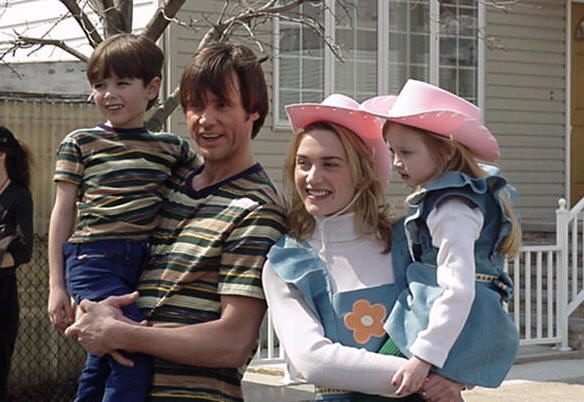
Charlie Kaufman was the celebrity screenwriter of the 00s. Films like Adaptation. and Synecdoche, New York showed that there are still new things to be done (and done very well) in mainstream cinema, but Eternal Sunshine represented the most balanced harmony yet realised from a Kaufman script. It was the perfect marriage between his crushing cynicism and Michel Gondry’s playful, childlike aesthetic, and with great acting across the board, including the best turn of Jim Carrey’s career, this love story of memories, disappointments and ultimately hope had a unique shine. It reminds me of how unusual it is to see recognisable characters up on the screen – people you can identify strongly with, and feel like you’ve met before. If the characters have a somewhat defeatist attitude, it’s because that’s what Kaufman sees all around him in an age of short attention spans and hurried divorces.
Classic moment: Joel wakes up – again – to the tune of Jon Brion’s wonderful score, and the narrative threads start to connect.

8. City of God (Fernando Meirelles, 2002)


When City of God burst onto the screen in front of a packed house at the Christchurch Film Festival in 2003, that now-iconic blade sharpening and running chicken made everyone shut up and pay attention. When we emerged a little over two hours later, the dynamic storytelling of Meirelles’ film had rendered the real world toothless and banal, as if everything was in slow motion – our own lives so much less interesting after witnessing those played out in the favekas of Rio de Janeiro. The kids, the gangs, the violence… it was so different, so brutal and alive. It was, as Empire magazine put it, ‘at once a laboratory for cinema technique and a victory for raw heart… a snot-nosed, blood-stained masterpiece’.
Classic moment: The motel murderer is revealed in truly chilling fashion.

7. Dogville (Lars von Trier, 2003)


von Trier was probably the decade’s most controversial director, serving up Dancer in the Dark, Manderlay, Antichrist and Dogville – all fascinating works that completely polarised critical opinion. Those that liked him couldn’t get enough of him; those that didn’t truly detested him, leading to press conferences of an almost threatening tone (3:50 in this clip). I’m firmly in the former camp: his films are the work of an artistic genius, bursting with ideas that go against the grain of popular thought, and Dogville is his most triumphant statement – both artistically and philosophically – yet. Shot on a barren soundstage, it tells the story of a woman on the run from gangsters who is sheltered in a tiny village; this being a von Trier film, things do not go well. Far from being the anti-American statement so many made it out to be, this is a story that speaks to the whole of humanity and to the close-minded nature we all have in some way or another. The final scenes are some of the most truthful, and gripping, of the decade.
Classic moment: The gangsters catch up with Grace, and the boss tells her she has a tough lesson to learn.

6. Irréversible (Gaspar Noé, 2002)


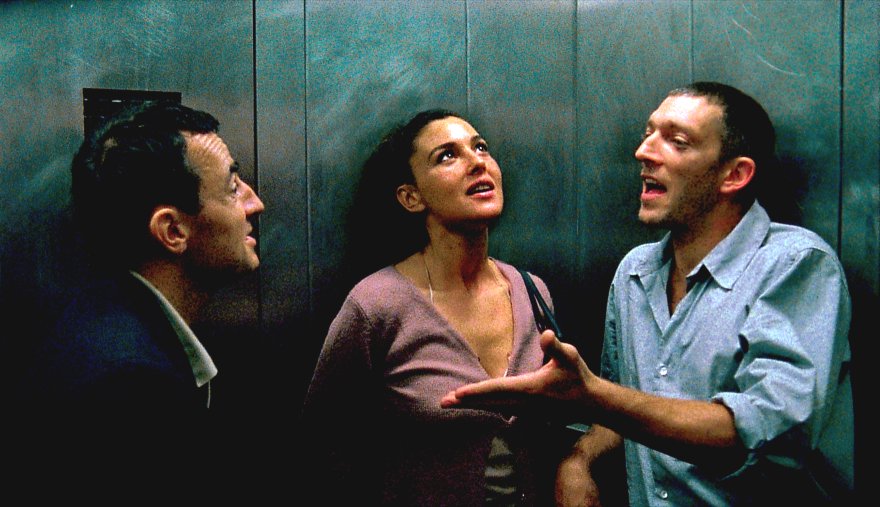
While I’m on the subject of controversial films, this… is about as controversial as the 00s got. Told in reverse, this is the story of a rape and a murder, and both scenes are protracted, graphically detailed and almost impossible to watch. Still, Noé’s aim isn’t merely to shock. The film works on a number of levels: the nature of the beast within, the dynamics of human relationships, our voyeurism as filmgoers, the capability of CGI and special effects to enhance a cinema experience, and of course the film’s central conceit: that ‘time destroys everything’. Were it structured solely around those two scenes, it would be more of an interesting if off-putting experiment; however, with a third act in which the previously dizzying camera slows down and shows real-life husband and wife Vincent Cassel (that man again) and Monica Bellucci canoodling during a lazy morning in bed – the opposite of those earlier scenes – Irréversible is elevated to an uncommonly high level. At the same time it’s a film I hesitate to recommend to anyone, as it’s the most realistically violent film I’ve seen save The Passion of the Christ, but those who come to it with an open mind and a good deal of mental preparedness will likely be rewarded. It made me feel physically sick, and haunted me for weeks, but I left the cinema in stunned admiration.
Classic moment: The two friends go on a horrible, disorienting odyssey through the gay nightclub ‘Rectum’, searching for Alex’s rapist.

<< #15-#11 || #5-#2 (coming soon) >>

Film Review: ‘Four Lions’ (2010)

IMDb / Ben Walters (Sight & Sound) / Kim Newman (Empire)
Written by Jesse Armstrong, Sam Bain, Simon Blackwell & Chris Morris
Directed by Chris Morris

Rating: E

Four Lions, from the mind of Brass Eye/The Day Today genius Chris Morris, is that rarest of cinema commodities: something different. Earlier this year a film about a man sewing people’s mouths to other people’s anuses was released, and among seasoned viewers barely a bored eyebrow was raised; another, whose content contains purportedly the most controversial rape scene in film history, is upcoming and anticipated largely with detached groans and eye-rolls. But here is Four Lions, here is a film that is genuinely fresh. Rather than aiming solely for the gutter – which it hits in esteemed fashion with some of the most erudite dick and fart jokes in years – it also reaches for the stars, skewering almost everyone in its satirical sights and eliciting tears of laughter and pathos in the process.

Omar (Riz Ahmed, in a hopefully star-making performance) is the leader of a tiny stand-alone cell of British-born-and-based mujahideen, planning their entry into heaven by way of martyrdom as they blow themselves up at… a Boots chemist’s, perhaps? Well, they haven’t quite decided where yet. His brethren are Waj (Kayvan Novak), an imbecile whose idea of Firdaus is a ride at Alton Towers theme park; Barry (Nigel Lindsay), an Englishman convert to Islam in desperate need of a sense of humour; Faisal (Adeel Akhtar), a camera-shy, softly spoken guy unsure of the mission, and also a very poor impressionist; and Hassan (Arsher Ali), a wannabe rapper convinced of the worthiness of suicide bombing by Barry’s unusual methods of indoctrination. While this sorry lot look on paper like a typical motley crew in another stupid buddy comedy, they are elevated by a combination of sharp writing and excellent, naturalistic performances.

Indeed, one of the major elements that sets Four Lions apart is that emphasis on keeping it real. A clash of so many varied ideas could all so easily spiral out of control, but while the overall premise and events of the plot are almost all completely absurd, an insistence on a documentary feel grounds the film throughout. Omar and his band are shot in a mixture of sharp zooms, medium close-ups and detached long shots, and their performances overall seem improvised (although given how neatly each scene fits together, they probably weren’t). Most of the music – with the notable exception of Hassan and Waj’s hilarious rhymes, and the repeated use of a terrible pop classic – is simple Arabic-sounding tones and used only in rare cases during scene transitions, allowing the characterisations and dialogue of these lovable idiots to shine.

The key to the film, however, is in the scenes with Omar’s family, and one imagines this is where many viewers will lose interest and/or respect. His disapproving older brother, sweet and supportive wife and doting son could all come out of a season of EastEnders (and the actress who plays his wife is presently, as it happens, acting in EastEnders)… but this is precisely the point. The spectre of terrorism and terrorists, so puffed-up and sensationalised in the news media, is brought crashing to earth in a comparison with the preposterous unreality of a soap opera. At the same time, folks who watch soap operas on a regular basis probably swallow most of what popular news media throws at them, from nukes in Iraq to the inherent perversion of Britain’s footballers; Morris grasps the opportunity to bring that greatest fear of the day as close to home as possible, and show that, you know, these guys maybe aren’t all that different from us. There is an outstanding scene between Omar and his wife at the hospital where she works, a showcase for both the superb script and note-perfect performers that sums up the entire film before you can even realise it.

As for the jokes, there are often several classics in a given scene, and they cover the gamut – encompassing ridiculously rabid anti-Semitism, making fun of English and Asian accents, brutal slapstick, and of course the above-mentioned toilet humour (which, in a clever twist, is often in Urdu). Alongside all this are the innumerable perceptive lines that are at once amusing and disheartening, or in some cases deeply moving. One can only imagine that the process of writing was arduous: first to think of something funny, then to put it into a character’s voice, then to make it work within the framework of a scene, and finally to fit all this into the fabric of the film as a whole. Rather than trying to select some of the finer gems, it’s probably better to simply allow you to experience them fresh as you watch the film – much of their greatness is in their delivery, particularly by the fantastically poker-faced Barry. Anyway, if I tried we’d be here all night. It’s the kind of film where if you see it with friends, you start quoting it to each other immediately upon exiting the cinema and continue for days, months and quite likely years afterwards.

At bottom, it’s simply extraordinary that a comedy film about a group of suicide bombers was made at all, let alone one so expertly crafted. When it ended, I felt a rare sense of exhiliration – at having been completely enveloped in the film’s world, at having laughed myself silly, and at having witnessed something so brilliantly subversive it might even one day deserve comparison with that great master of absurdist cinema, Buñuel. I can only hope that Morris, a renowned near-recluse and non-participant in the modern media circus, suddenly starts to take pleasure in being highly productive, and we don’t have to wait another ten years for his next slice of Zeitgeist-distilling greatness.

Imprints: Four Lions; Erykah Badu & dan le sac vs Scroobius Pip

Four Lions (dir. Chris Morris, 2010): I have never seen a film like this before. It feels like an entirely new kind of satire – very smart, provocative, and extremely funny. Hard to see me finding any better new films than this before the year’s out. Somewhere between highly recommended and essential.

Erykah Badu – Worldwide Underground: Saw the Badu light when I watched Dave Chappelle’s Block Party, and this is a fantastic (if somewhat poorly sequenced) album. She’s like a superhuman, so otherworldly. ‘I Want You’ is a phenomenal track, and Lenny Kravitz’s guitar at the end is RAD. Recommended.

dan le sac vs Scroobius Pip – Logic of Chance: Another solid offering from this beats merchant/spoken word duo. It’s not as good overall as their previous Angles, but it has I think their best track so far in ‘Five Minutes’, and definitely their most catchy – and probably the most enjoyable three minutes of pop all year – in ‘Cauliflower’.

The 00s: Film (Documentary) – 5-1

5. Dear Zachary: A Letter to a Son About His Father (Kurt Kuenne, 2008)

Nothing can really prepare you for Dear Zachary, short of reading and digesting the entire plot summary before diving in.  For those easily upset, I would recommend doing this, or perhaps steering clear completely.  It is director Kuenne’s version of the events surrounding the death of his close childhood friend Dr. Andrew Bagby at the hands of a woman named Dr. Shirley Turner, and his effort to record as much of Bagby’s life as possible for his yet-to-be-born son, Zachary.  As such, the film is a completely subjective account, following Kuenne’s race around North America and England trying to capture people’s memories on tape, following his own emotions and mood through a variety of notable editing choices.  This was the most impassioned film I saw in the 00s.  Again, be warned: you’ll never be the same afterwards, especially if you have kids of your own.

4. Dark Days (Marc Singer, 2000)

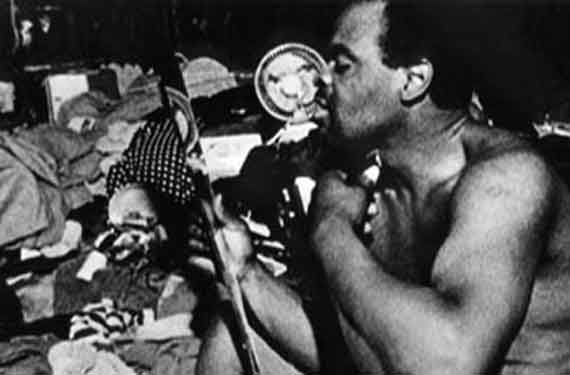
Singer, an untrained filmmaker who hasn’t directed since, was drawn by the plight of the homeless living in a New York City Amtrak subway tunnel, and decided to help them by making a film with them that would get them out.  What resulted was a fascinating ethnographic document, superbly shot on black and white and scored by DJ Shadow, depicting real lives as lived and proving that in a lot of ways, these guys are just like us.  While it’s surprising to see how well some of these guys can live, you’re aware that every single day is another struggle, wracked with uncertainty.  This is a film which helps the viewer to see an oft-maligned section of society with fresh eyes.  Watch the first 10 minutes here.

3. Spellbound (Jeffrey Blitz, 2002)

Spelling bees seem to me a very American institution, so it isn’t too surprising that a film following eight teenagers in their quest to win the National Spelling Bee would play like such a chronicle of the American Dream.  There are the immigrants – the Indians (so many) and Mexicans; there is the white bread girl from Connecticut; there is the loner from Missouri; there is the ADHD wunderkind from New Jersey; there is the inner-city black girl from DC.  All have their own, fascinating stories, with widely varying ideas of what the word ‘success’ means, and as we grow to know and love them, the tension of the finals becomes almost unbearable.  I remember feeling bathed in a sweet glow of hopes and dreams afterwards, and in a way, I hoped that these kids would never grow up.

2. Anything by Adam Curtis (Century of the Self, The Power of Nightmares, The Trap)

Some films are ‘important’; Adam Curtis’ films, on the other hand, are absolutely essential.  Cutting deep into the building blocks of society and finding patterns everywhere, Curtis tackles subjects as monumental as the transition of Western thought from community-based to individual-based, or the political shift from promoting positive freedom to promoting negative freedom.  Curtis’ approach is fact-based, backed up by archive footage found after months of trawling the BBC’s archives, and the results are surprisingly entertaining once you get used to the format.  More than that, though, his films are eye-openers in every sense of the word, and I would personally say that they have changed the way I see the world.  If I had to single one out for higher praise, the four-hour Century of the Self is probably the one that impressed me most.  All are available for free online here.  Do yourself a favour and check them out.

1. Grizzly Man (Werner Herzog, 2005)

With his majestic Grizzly Man, Herzog’s soothing Bavarian voice pretty much sums up life, the universe and everything.  Timothy Treadwell is his subject, a man who rejected society and turned to bears, and like many of the films on this list, the fascinations of Herzog’s work are largely psychological: what led Treadwell to this fate?  What does he truly believe?  How much of his reality is a delusion?  Herzog confronts the abyss as he so often does – with a grave but knowing outlook – and explains to us what we see.  You’ll laugh, and you may cry; you’ll surely be riveted by an incredible subject, and truly great filmmaking.  This is a film that would place at or near the top of any decade list.  Part 1 is here.

To go back to the previous part, the intro & #10-6, click here.