New job and sleep regressions — first the kids, now also me — have pushed these little arts appreciation notes into the background. So here’s an omni-update to cover the last three and a half months.
First, really quickly, I made a couple of YouTube homages as a birthday present for Tara. The first apes Japan Eat, who uploads one-minute shorts every day about eating food in Japan at restaurants, convenience stores and food alleys. His speedy, mostly monotonous delivery masks a genuine desire to like the food that’s put in front of him and the knowledge to place it in some kind of context. He particularly focuses on smaller, out-of-the-way places, as evidenced by his constant references to ‘mom and pop restaurants’, and he’s way harder on the bigger or more popular establishments. Anyway, I pretended he came to Paraparaumu and ate a piece of cheesecake at Hudson’s in Coastlands Mall:
The second pays tribute to Fairbairn Films, two Aussie brothers offering commentary on 21st Century life by shouting at each other. Jeff and I didn’t get the sight lines anywhere near right for this, and I’m obviously reading, but still, I’m pleased with the writing and it was great fun to make.
Have you made anything lately? Now to the books and movies.
*
BOOKS
Faves
Alice’s Adventures in Wonderland by Lewis Carroll, 1865
Finally got to the source. I don’t think it’s hyperbole to say this book goes beyond centrality to the Western literary canon; it’s fundamental to the Western idea of childhood as a place of fancies and nonsense and constant threat. I suppose Carroll follows the Brothers Grimm in that tradition, though his fey landscape is less grim and more absurd. His writing is very readable considering it’s 160 years old, and I suppose it’s that accessibility, along with the many fascinating images and characters conjured, that helps the myth persist. I found it interesting that I couldn’t get a read on Alice, who blunders from one peril to the next, munches almost constantly on snacks, and stroppily refuses to accept this strange world on its terms, all while characterised by Carroll as gentle and courteous to all and rendered in Tenniel’s illustrations as soft and long-lashed, but severe, a kind of porcelain doll with oddly adult features. I wonder what the real Alice made of her.
Gentlemen Prefer Blondes by Anita Loos, 1925
It’s not often you read a hundred-year-old book and feel like it could have been written yesterday. I guess Lorelei Lee would’ve been on her phone an awful lot if so. I mean on the page she seems fully formed and recognisable as a contemporary figure. Contemptible, untrustworthy, still somehow innocent, perhaps because of the quirks of prose and misspellings, and because a parade of probably even worse men keep dropping everything to pursue her. I was darkly fascinated and will have to reread Gatsby to see if this was the actual great American novel of that year.
The Great Gatsby by F. Scott Fitzgerald, 1925
For me, ‘The Great Gatsby’ invokes stuffiness and school classrooms, even though I’ve read it before, not at school, and know exactly how incisive and cynical it is about high society and America itself. It’s the title, which sounds lofty enough in itself and isn’t helped by its association in the hundred years since with essay structure: introduction, point 1, point 2, point 3, conclusion. Reading it again, there could be no other title. We all know Gatsby isn’t great, though in his polite and straightforward pursuit of an honourable but misguided goal, he is greater than pretty much everyone else in the book. And of course, he isn’t even Gatsby either. I’m pretty well fed up with the idea of the great American novel written by a white man that skewers the American Dream and leaves you disenchanted — but, truly, here is that great American novel.
Of Walking in Ice: Munich – Paris: 23 November – 14 December, 1974 by Werner Herzog, 1978
This review pretty much nails it for me, especially the last line:
“This is Herzog in the maelstrom of transformation into myth while remaining a man with hungers and pains and compassion.”
The man is so closely attuned and devoted to his own legend that the reason for his long walk — mentor Lotte Eisner’s ill health — becomes secondary to the walk and the man walking it, most of all the liminal spaces expanding inside his head in the pouring rain and snow. (He is thoroughly soaked throughout.) To be fair, it’s a journal scrawled out in real time, not intended for publication, but he still went ahead and published it anyway. A flight of fancy somehow still recognisable and rooted to the real world, much like his films.
New releases
Theft by Abdulrazak Gurnah, 2025
Loved Gurnah’s talent for drawing you into a story here. This is a sharp focus novel of rooms and subtle looks, and I smashed through it. I’m not sure where that ending came from, though. That one guy’s ambition was always there, true, but it went unexpectedly off the charts in the final third. And I’m not sure I buy the other two, seems a bit contrived romance to me. But so what? Solid, a pleasure to read. My first novel by a Tanzanian.
Dream Count by Chimamanda Ngozi Adichie, 2025
This book took me some time to plod through, I think because only one or two story threads really captivated me enough to draw me back whenever I had free time. Overall it’s a frustrated and sometimes frustrating collection of moments and lives, sitting comfortably in financial privilege most of the time but most compelling when the focus is on a less comfortable character, whose wants and hopes and dreams are so much clearer than the rich women into whose orbit she fortuitously spins, and, in her plain-thinking way, spins them properly off course. Adichie has such a talent for spinning a yarn in rich prose, and I feel enriched by her literary gifts, but also sometimes irritated by her predisposition to write characters fortunate enough to be so self-obsessed.
Universality by Natasha Brown, 2025
Not sure what I’m supposed to think. Anti-diversity shills are taking over the world, column inch by column inch? The ‘marketplace of ideas’ (man I hate that phrase) is still in the pocket of the usual pale males? Either Brown is a satirical galaxy brain beyond my simple reckoning or I’m just not buying what she’s selling. The scene-setting magazine article that opens the novel is the longest section and the best; once we’re flitting around in people’s heads, the prose and story fall over. The working class make the barest intrusion into the world of these characters and the mastermind kingpin around whom the plot turns feels very low stakes to me. Competing for fleeting and quickly forgotten scrolls. Is all that the point? Is the climax supposed to feel so anti-climactic? Is it a commentary on all the time we waste debating identity politics while the world burns?
Children’s
Whetū Toa and the Hunt for Ramses by Steph Matuku, 2021
More chaotic and episodic than the first one as Whetū and Tori the cat ride starbeams to all sorts of weird, wonderful, and properly frightening worlds. The climax takes place in a land of machine overlords and mammal enslavement. Grim. But there’s a point to it all, some great messages for kids (and adults), and they’re subtly driven home. Not sure my character voices are on point but the children were well into it and laughed a lot.
The Secret Wreck by Linda Chapman, illustrated by Mirelle Ortega, 2022
Is this the end of Mermaids Rock?! (The series, I mean, not the characters’ home, which remains very much intact.) It sure seems like it. These kids are getting too big and adventurous and complex for brief sallies away from their wee patch of sea floor. Soon they’ll be going to university, and falling in love, and circumnavigating the globe powered by nothing but snack powder packets and perpetual phosphorescent tubes concocted by Naya in her lab — assuming she uses her powers for good, not evil. Exciting for the kids, with the usual positive messages about working together and to your strengths.
The rest
Sabine’s Notebook by Nick Bantock, 1992
Exquisitely designed exercise in frustration, not the good kind. Fragile man seeks liberation from self, but world is self.
The Dark Forest by Cixin Liu (translated by Joel Martinsen), 2015
I had the same feeling as with Iain M. Banks novels: that working on the grandest scales and following the boldest flights of fancy inevitably gets a bit silly, like lining up the entirety of your unfathomably expensive space war fleet to be dispatched by a single alien probe in one clean fell swoop. The ideas are so compelling that it doesn’t really matter and I flew through 550-odd pages. It’s the middle-of-trilogy novel so I don’t think I can properly consider it until I’ve read the last one, which I will, next year.
*
MOVIES
TANGLED directed by Byron Howard & Nathan Greno, 2010
Wife absolutely adores it. I found it quite forgettable on first viewing many years ago, but I’m starting to see the positives, particularly a somewhat realistic portrayal of parental abuse in an animated children’s film — calculated but seemingly offhand negging, persistent gaslighting, plus of course the textbook incarceration in inescapable tower… Is that a positive? Well, my kids are going to come across people like this in life, and seemingly already are, so it’s helpful to see that on screen and see how they can be liberated from that, although it shouldn’t have to take a man riding in on a horse. Or pursued by a horse. There are also some truly spectacular visuals, and with a trip to DisneySea planned for November, I’m genuinely excited to be surrounded by those lanterns too (if I’m lucky).
PENGUINS directed by Jeff Wilson & Alastair Fothergill, 2019
We’d had kind of a rough run with movie night choices, and for this turn, I wanted something: -short -funny -physically comedic -not animated -without dead parents Because there’s only so many times my daughter can come out of bed at 9:08pm with an anguished look on her face and say, “I don’t want to die” or “I don’t want you to die” before you think hey, we’ve got a sensitive one here, maybe we aim really low for a year or two and steer clear of all those classic family movie shortcuts to drama involving absent parents or orphanhood or visceral on-screen murder of the noblest lion ever to lead the animal kingdom. So, in a panic, I chose PENGUINS, a cutesy documentary with Ed Helms narrating and voicing a heavily anthropomorphised story about the world’s clumsiest penguin. And the kids laughed, and it held their attention, and learned a thing or two from the unreal 4K cinematography of brutal, desolate Antarctica. I never thought I’d say this, but thank you, Disney.
HOW TO TRAIN YOUR DRAGON directed by Dean DeBlois & Chris Sanders, 2010
Same as the first time — I don’t really get it because I don’t lose my mind every time Toothless appears, as my wife did and as my kids now also do. Like, these deranged, high-pitched sounds whenever Toothless moved sideways, or looked up and then down again. It’s not that the film overall has nothing else — it is charming enough and occasionally surprising — but what would be its reason for existence, and most of the creative choices, without the need to sell stuffed Toothless toys?
RATATOUILLE directed by Brad Bird, 2007
King stay the king. Yeah, it’s about fine dining and criticism, to which you might say, who gives a shit? Well, RATATOUILLE and Peter O’Toole made me give a shit.
Devoted father and husband. Committed contrarian. Impostor, loner, optimist, troll. Pushing 40. No, hang on. I am 40.
I am a contrarian because in any conversation, my instinct is to first pander and validate, then to get to the substance of it, the opposing argument, the counterfactual. Yeah, they shouldn’t have said that, absolutely – but maybe they’re still carrying some trauma from what happened before. It has indeed been a difficult year – incredibly difficult – but let’s not lose sight of everything we’ve achieved, personally and professionally, which is considerable.
Amid the hand-wringing and despair, which is admittedly tempting, I insist — mostly to myself — there is hope everywhere if you look for it. Marches for peace, iwi-led green restoration projects, the local vege co-op offering a bagful for $15 a week, even if they do often weigh it down with brassica. Then I read ‘The Three-Body Problem’ with its doomsday cult actively seeking the end of humanity and I wonder whether I’m deluding myself. On one hand this, on the other hand that. Most of all, my views are contrary to my other views.
For me, the best thing about getting older is steadily realising how little I know or understand, and consequently how much more there is to learn. Here’s a snapshot of what I noticed in 2024.
Books
I read 52 books in 2024. Earliest published: 1974. It’s a while since I last had a year of reading so skewed to the last half-century.
These books offered a rare combination of audacity, craft, and ideas that made them impossible to forget:
‘We Are Here: An Atlas of Aotearoa’ by Chris McDowall and Tim Denee
‘Gifts’ by Ursula Le Guin
‘The Books of Jacob’ by Olga Tokarczuk
‘In the Skin of a Lion’ by Michael Ondaatje
‘The Unbearable Lightness of Being’ by Milan Kundera (re-read)
Hard to recommend a favourite but if pressed, I would go for ‘In the Skin of a Lion’. It’s a short read, for a start; no-one who reads this post is going to pick up ‘The Books of Jacob’ when they realise it’s 912 pages long. (Those who do may also be sufficiently moved to write their own short story aping it.) Ondaatje’s book has breathtaking scenes to hook any reader and a profound respect for labour, especially the dirty kind. Like one of its central characters, you won’t be able to shake the smell of the leather tanning pits afterwards, and you’ll think differently about the power and value of the collective.
These books left an impression, not as deeply but enough to still linger as another year begins:
‘Dartmouth Park’ aka ‘How to Make a Bomb’ by Rupert Thomson
‘Werner Herzog: A Guide for the Perplexed’ by Paul Cronin
‘Seven Brief Lessons on Physics’ by Carlo Rovelli
‘The Hundred Years’ War on Palestine’ by Rashid Khalidi
‘Small Island’ by Andrea Levy
‘You Are Here’ by David Nicholls
‘Amma’ by Saraid de Silva
‘Being Mortal’ by Atul Gawande
‘Feijoa’ by Kate Evans
‘The Gosden Years’ by Bill Gosden
‘Cloudspotting for Beginners’ by Gavin Pretor-Pinney
‘Outline’ by Rachel Cusk
‘The Three-Body Problem’ by Liu Cixin
‘The Dispossessed’ by Ursula Le Guin
The kids are at a hybrid stage in their reading. They’re capable enough to read by themselves in bed before turning off the light themselves, and they want to do that most nights. But they want us to read them a couple of chapters or picture books first, all cuddled up in a pile on the sofa.
This means I’ve become quite familiar with Yvette Poshoglian’s Ella and Olivia series of early readers — slight, comfortable narratives in which something goes a little bit wrong but everything works out okay in the end. And we all need to be reminded of that sometimes.
The biggest breakthrough, though, was with Cece Bell’s ‘El Deafo’, a full-length comic about how Bell came to terms with sudden onset deafness as a young child. There’s an increasingly popular genre of autobiographical children’s comics dealing with serious issues like these. Raina Telgemeier, author of ‘Smile’ (corrective dentistry) and ‘Guts’ (psychogenic vomiting and therapy) is the champion, and Bell’s contribution is a worthy — and funny — addition.
At heart, these books are about learning to deal with other people knowing what’s different about you. I’m on the fence as to the value of sharing all these awful bits of other people’s childhoods with my sensitive kids because they’re as likely to keep them awake at night as to reassure them. Are they better off not knowing? Would they handle the shunts of the peer group better without a bunch of thought-provoking texts to refer to? I don’t know, but I do think books that reflect the reality of childhood and plot a relatable path through it are a public service, and I often wish there’d been more of them when I was little.
Music
My favourite ten seconds of a song in 2024 were the lead-in and drop for the first chorus of ‘Things You Didn’t Know’ by Clara La San, from fave album of the year Made Mistakes. It’s aloof to that point, a spark in the gloom: four repeated ascending notes, La San’s lead vocal and the “ooh boy” backing it up, and some simple bass and percussion loops. But then a rich bass synth kicks in, and the elements from before shine more brightly. It’s like the floodlights have come on, revealing that what you thought was a small bedroom is in fact an enormous, reverberating cavern.
Clara La San had worked and reworked this half-hour of echoing R&B, her first album, over a few years. The tracks feel lived-in for it, spacious, with an elusiveness that I would say is her signature if it weren’t for her post-breakup lyrics playing it absolutely straight. But I’ve never cared that much about the words. It’s the feeling a song evokes, more than the content. And you can swim in the feelings here. To me she inhabits a space that’s always dark and a bit mysterious, as if she’s addressing you from the other end of a long, unlit tunnel. She released a second album in December, too late in the year for me to properly absorb, and my first impressions were of some sparks of light emerging. But I still want it dark.
A close second was the second part of the chorus in Nilüfer Yanya’s ‘Made Out Of Memory’, the bit that starts with Yanya crying “people wanna blame someone” as if it’s an epiphany, like – finally I understand, it wasn’t personal.
BRAT, the biggest album of the year, didn’t pass me by either. The record about which my increasingly dismissive kids would say, “You ALWAYS listen to this!” Several standouts (and for me, quite some filler too) but the one I’ve come back to most is ‘Sympathy is a knife’ and another bone-rattling bass drop to kick off the chorus.
Other albums that held my attention in 2024:
Mon Amour Mon Chéri by Amadou & Mariam
Magda by Donato Dozzy
Chapultepec by Lao
Bright Space by Mikey Enwright
Silence Is Loud by Nia Archives
No More Water: The Gospel of James Baldwin by Meshell Ndegeocello
Everything Squared by Seefeel
PRUDE by Drug Church
Fragments of Us by Midland
Nobody Loves You More by Kim Deal
I’m talking albums still, yep. Spotify continues to push Smart Shuffle at me, switching it back on with every update as if I’d turned it off by accident. Apparently, it’s normal nowadays to open Spotify and browse for something to listen to, which I find gobsmacking when a) the interface expressly discourages exploration, and b) there are still so many other sources from which to discover new music.
There may not be any money in it but I am here to tell you the album is not dead. Go to the new releases on any media outlet that reviews music and test-drive anything you like the sound of. For me, it’s Metacritic and Resident Advisor, with the occasional dip into the ocean of noise that is Album of the Year dot org. From these, I piled up a decent set of absorbing repeat listens — here’s a playlist of samples assembled, naturally, on Spotify.
Movies
A ranking of new films I saw in 2024. This won’t take long.
THE ZONE OF INTEREST
ENO
FLOW
THE BOY AND THE HERON
INSIDE OUT 2
ORIGIN
POOR THINGS
KUNG FU PANDA 4
I saw ENO and FLOW on the same day, making it two years in a row I’ve done the ‘dialogue-free animation about animals / music industry titan whose name starts with EN and ends in O’ double-feature at the New Zealand International Film Festival (in 2023, it was ROBOT DREAMS and ENNIO). Both films attempt to do something different and new, and although the artificial intelligence conceit at the heart of ENO felt like more of a gimmick than an artistic success, the man’s charisma and intelligence shone brightly. FLOW felt unfinished technically, especially the lighting of the animals, but its sense of the cinematic couldn’t be dimmed. Now that it’s getting all this awards attention, I wonder if there’ll be a director’s cut with retouched shading.
Jonathan Glazer’s THE ZONE OF INTEREST towered above both. It’s a film of operational delivery and domestic routines with an extraordinary soundtrack: genuinely, there are two films here, the one you see and the one you hear. I wasn’t convinced by all the choices made, and I think it’s right to expect perfection of a film about Höss family values and dynamics. I am however happy to follow Glazer into the abyss again and again, because he has that gift of both putting on a show and making you think, often uncomfortably. There’s no-one else like him working today.
A few highlights from the few other films I caught up with in 2024:
SHOWING UP
ALL OF US STRANGERS
AFTERSUN
PAST LIVES
All enjoyed in a two-week period in the middle of the year. That was just before I got my Switch.
Tech and Gaming
I’ve kept the most profitable entertainment industry of this era mostly at bay for years, content to wallow in Doom mods and Championship Manager 01/02. But then I was gifted a Nintendo Switch in July 2024, and since then, the numbers speak for themselves. In the second half of the year, 100+ hours on FC 24 and Dragon Quest XI respectively, plus another 40-50 hours on a range of other games. An average of two hours a day for six months.
Hence so few movies, and hence zero activity on this blog since June. Nothing stimulates the brain like gaming: flashing lights, bright colours, and a sense of control, even mastery, you’ll rarely experience in daily life. Some games upend these norms, but not many. So, high on this new device, I played some games.
FC 24 — it’s a football game, so it was always going to consume my life to some extent. I took Cambridge United from League One obscurity to Premier League glory. More time-pass than obsession, but I cannot be interrupted while playing.
Dragon Quest XI: Echoes of an Elusive Age — 100+ hours over six months seems like a lot to be sure. But then Bex said she completed it much faster than your average player would, as in a matter of days, and I felt a bit different about the way I’d gone through it. This JRPG is heavily burdened with cutscenes and dialogue, like an epic TV series you can run around in, so the kids have come to enjoy watching me play it. Indeed, we may have spent more time together with Dragon Quest XI than with anything else in 2024.
Golf Story — a 2D golf role-playing game and the first game to sink its claws into me. Good writing and fun gameplay made this a satisfying experience.
Lonely Mountains Downhill — mountain biking simulator with fun, exploration friendly tracks and an asymptotic mastery curve. Surprisingly, of all games, this is the one Tara and I have bonded over the most.
Also, have you noticed the explosion of ‘AI’ as a byword for ‘current’? Most major tech companies put it front and centre on their websites, and anyone who wants to keep up with current events now needs to educate themselves, ongoing, like a university professor, so they aren’t duped by deepfakes. I took a friend to task for featuring AI-generated images on his website and he was more bemused than affronted. It’s not that big a deal to most, perhaps because the technology is still relatively nascent. The scary thing is how thoroughly the world’s richest have thrown all their eggs into it. With their commitment, AI — however intelligent — will define our lives for years to come.
Politics
I feel a profound need to just chill, a political imperative to do so, before industrialised society is everything but chill. Otherwise I feel some paralysing mixture of angry, contemptuous, distressed, and amused at the rolling coverage of metaphorical and literal atrocities swamping my socials and my news feeds. Next up from your favoured news outlet, a feature story on the First Lady’s hat. Surely it’s best to sit out the next four years of news.
We’ve come through the waves of COVID-19 and turned the boat backwards. Ka mua, ka muri, goes the whakataukī: walking backwards into the future. This too shall pass. In 2024, I became a school board member, finally fulfilling a long-held promise to myself to get involved in the community somehow. Local is where you can make the biggest impact. Basically anywhere you can kōrero kanohi ki te kanohi (talk face to face). But don’t forget to check in on those friends abroad who can’t absent themselves from the news cycle playing out all around them.
As a colleague once said, storming off to the kitchen to make another coffee: “everyone needs to just fucking chill”. Most of all the planet.
Travel
The snow and ice far beneath us scrolled by. The frames of the Sky Waka pylons were encrusted with stalactites. The weather was good, a photogenic mixture of clouds and sun — a sun that in the vanishing distance illuminated Ngāuruhoe’s striking cone, with Tongariro broad and massive behind it, both dwarfed by the mountain we were ascending. I’ve never seen it like this, I thought.
It — the Sky Waka trip up Ruapehu — was the literal high point of one of our most successful family holidays yet. We used to squabble constantly on our family holidays, worn thin from lack of sleep and unmanaged expectations. Now the kids are older, we’re all better rested and better able to follow through on our grand plans, or deal with it when the plans go out the window. We embrace imperfection, like the boil-water notice in our Alfriston AirBNB — “why are we on a farm?? This is not ‘staying in Auckland’!” — but still cram in the activities, big and small.
It pissed down on us at Rainbow’s End, a proper soaking while on the log flume of all things, and my kids (six years old at the time) said they were cold one time only and then ran to the next thing. Hot pools, whānau meetups, zoo animals, botanic gardens, museums, and the mountains of the central plateau on full and glorious display once again on the way back down. A remarkable week.
Sport
Two things. First, cricket. The most incredible 24 hours of New Zealand cricket of my lifetime, and probably of all time. One Sunday evening in October, the White Ferns won the Twenty20 World Cup against all expectations.
No team has my heart like the White Ferns. I can ride any up or down with the Black Caps, having plumbed many depths with them over the past three decades. But my hope and expectations and belief in the White Ferns is fresh, and vulnerable. I’m overjoyed when they win and bitterly disappointed when they lose. And they lost a lot in the lead-up to that tournament — ten matches in a row — making the march to victory even sweeter, like tumbling off a precipice on a hunt for a mountain spring and finding the water is best at ground level.
In the clip linked above, the players stand barefooted (or sockfooted) on the Dubai turf, grounded at the scene and in the moment of their greatest triumph, acknowledging their captain who’s been through it all in 18 years of international cricket. There’s another, more raucous video of Georgia Plimmer tearing around the changing room and air-guitaring ‘Don’t Stop Believin” with the trophy. But it’s those feet on the ground, swaying in time to the waiata, that stay with me.
Not that the Black Caps aren’t dear to me. I have, after all, plumbed many depths with them over the past three decades. That same day, the Black Caps beat India in a Test match in India, which we’d managed twice in 36 previous Test matches and not since the 1980s, against an India side that had only lost four times in 50 matches during the 2010s. It was completely unexpected; even more surprising, the Black Caps went on to win the second and third Tests as well. No visiting team had ever done that before.
As far as I’m concerned, this is the New Zealand men’s cricket team’s greatest ever achievement. A bigger deal than the World Test Championship win of 2021 or the Champions Trophy win of 2000.
Second, Olympics. Hours and hours on the in-laws’ sofa next door, where their 75-inch TV broadcast the Olympics day and night. The kids having that moment of fascinated inspiration I had as a kid — knowing the Olympics would mean something to me for the rest of my life — and making posters at school saying they want to be in the Olympics doing artistic gymnastics when they grow up. “They’re good gymnasts,” said one of the coaches at the gym they go to for an hour every Wednesday. However long they carry on with it, the spark of sports and athleticism is alive in them.
People
We, our family of four, all sleep in the same room. It’s been like this since the kids were three. For at least two years we’d battled to keep them in their own beds, every night another capitulation, with me folded onto a too-short sofa and Tara being kicked in the stomach by at least one child. Then we went on holiday in early 2021 and bunked in all together in various configurations, and all slept sounder than we had since they were born. It seemed foolhardy to return to those nightly battles after that — though we did, for a brief and insane trial period when the kids were five, and gave up quickly.
I’m coming to think of our sleeping arrangement as a metaphor for our shared existence. Biology and circumstance threw these four people together in a giggling, screaming pile; a tight-yet-expanding bubble of all our best and worst selves. We love each other so much and drive each other properly spare. And we do all this in the middle of the night, too.
It is a temporary arrangement. My children are meeting more of the world on their own terms every day, forming their own relationships with school, books, the high bar at the gymnasium, and the rivers and trees and rocks of the great outdoors. But they still want us to watch and tell them how well they’ve done, and they still want us in the room with them when it’s dark. They’ve said a few times that they’re going to kick us out soon, but they haven’t yet summoned the necessary boldness. Our co-dependence is part of who we are.
The same is true of Tara and I. In the four years after we met, we moved in together, moved overseas, came back home, got married, and became parents to twins. We knew pretty early on that we wanted to make a life together, but as with all relationships, you don’t know how that’s going to work day to day until you’re in the thick of it. Now we are eleven years in and more or less incapable of making decisions independently.
Part of how we manage our co-dependence is to needle each other almost constantly. For example, if I say “that’s annoying” about something — a malfunctioning TV remote, a buzzing fly, some new horror on the news app — and I’m within Tara’s earshot, she’ll say, “Did you see your face in the mirror?” And it’s old, and tired, and often much more annoying than the thing I was initially annoyed by. But if she didn’t say it… well, what would be the point of being married? I have no stats on this but I’ll wager a substantial proportion of relationships in the Western world rely on cheap gags about a partner’s face.
I don’t know whether this constant giving of shit (and attendant low-key swearing) offers a good example to our kids. I do know they get that from Tara’s conscientiousness in all aspects of parenting, especially the banal. Keeping the pile together and looking ahead to the next thing.
What’s next? The kids will want their own rooms soon. We’ll stop picking up after them quite so much. We’ll have a big family holiday overseas, one we’ve planned and saved for since 2018. And we’ll stay close to our parents, as much as we can. Trying to keep our feet on the ground and be where we are, just like the White Ferns.
I’ve been spending most of my time so far this year planning a trip to Japan, tamping down impostor syndrome as I begin a new job, and getting to the end of Dragon Quest XI on the Nintendo Switch. Somehow, a few books and movies have crept under the shutters. May I share them with you?
*
BOOKS
The Lord of the Rings: The Fellowship of the Ring by J. R. R. Tolkien, 1954
Back for another crack at LOTR more than twenty years after the first, when film fever was at its height and my attention span absolutely did not stand up to all the songs and poems. Now, I am the right side of 40 and ready to meet Tolkien in his vast and carefully tended garden — because it is a garden, if you pay close attention to the extended descriptions of plant matter. And you should! It’s a quest, it’s an epic war between good and evil, but for me it’s most of all a showcase for the art of description, a ramble through many varied environments all rendered in rich detail: forests, concert halls, craggy peaks, forbidding caves, and enchanted lands of mysterious sprites. Why wouldn’t the world’s forces band together to protect such an array of extraordinary settings from the forces of evil? There are petty squabbles and narrow minds, and we have to make sure that’s as big as our problems ever get. I now plod into book two in full knowledge of all that lies ahead and find myself surprisingly willing to make the journey, just to see it all through the poet’s eyes.
The Lord of the Rings: The Two Towers by J. R. R. Tolkien, 1955
If the first part was gathering a party and exploring the garden, this part is understanding the scale of the threat, the stakes, and seeing exactly how dark and hard-edged things can get. It strikes me that Frodo of the books is much wiser and clearer-headed than Elijah Wood’s wide-eyed interpretation, but it’s been a while since I saw the films; twenty years, in fact. I struggled to push through this one, to be honest. I think the encroaching endless night makes the reader’s journey mirror that of our heroes. Still, Tolkien’s powers of description and world building leave me in awe.
Backyard Campout / Dance Divas (Ella & Olivia #26 and #33) by Yvette Poshoglian, illustrated by Danielle McDonald, 2020 / 2023
Old mate Yvette has published several dozen books at this point, mostly these single-sitting tales of siblings learning some basic lesson and having fun along the way, so I thought maybe it was a full-time gig… nope. She still holds down a job with the NSW Department of Education. This leads me to consider whether writers should be out in the world by day, honing their observational senses and keeping up with the hopes, cares, and dreams of real people, then going home to reflect that in their writing. More than that, it reminds me (again) that there is nothing keeping me from ‘making the blank page blink’, as Ashleigh Young put it. Anyway: the kids don’t need me to read them stories this basic anymore.
Whetū Toa and the Magician by Steph Matuku, 2018
Awesome to read my super-Pākeha kids a fun, silly, ambitious yarn with a te ao Māori perspective. I had my doubts but they were hooked from the first chapter and laughed often. It’s pretty anarchic stuff but I sense a broader theme emerging that will no doubt be developed in subsequent books as Whetū explores her powers further.
The Calvin and Hobbes Tenth Anniversary Book by Bill Watterson, 1995
I’ve hung out with Calvin and Hobbes many times but never their creator, who has much to say here about the comics industry of the late 80s and early 90s and about his dedication to a particular set of principles. It’s hard to disagree, especially on the point that merchandising can only ever cheapen the original art.
Katherine Carlyle by Rupert Thomson, 2015
A propulsive and compelling read, though it meanders aimlessly, exists mainly to indulge Thomson’s fantasies of walking away, and ends abruptly and weakly. All this is also true of last year’s ‘How to Make a Bomb’ aka ‘Dartmouth Park’, which is almost the same narrative but from an older man’s perspective rather than a young woman’s. It’s almost impossible to feel sympathy for either protagonist, and the more recent novel at least bears the authenticity of Thomson himself being an older man; but Kit… there’s something fundamental about Kit, namely her existence as an IVF baby and her over-identification with the eight years she spent literally on ice, that I find intriguing. It’s a pity Thomson does little more with it than follow a solipsistic thread when the material could’ve had real thematic weight. Still the master of metaphor and simile, though.
*
MOVIES
PADDINGTON IN PERU directed by Dougal Wilson, 2024
Forgettable. I appreciated the many nods to Herzog, but I think the magic is gone.
LILO & STITCH directed by Chris Sanders & Dean DeBlois, 2002
This looks and feels absolutely fantastic from the off. Unbelievable that it was made by Disney, the corporate behemoth whose core business is meticulously curated, once-in-a-lifetime tourist experiences based on ruthlessly acquired intellectual property, because this movie has almost total contempt for the gormless tourists wandering around Lilo’s Hawaiian village. There’s the big, sunburnt guy who keeps dropping his ice cream, but pay particular attention to the lobotomised patrons at David’s fire juggling show, especially the guy in sunglasses and a blue singlet, whose open-mouthed grin shows his engagement with local culture and traditions will never go deeper than these two minutes. In time, the most grittily impressive story elements will be swallowed up as too many characters carry out too many chase scenes that go on too long, and another flat turn from Daveigh Chase, who ruined the English dub of Spirited Away, doesn’t help. But here is a family film that renders poverty in surprisingly close detail, even if ‘found family’ is a bit of a lazy solution. Charming, chaotic and deeper than expected.
THE SECRET LIFE OF PETS 2 directed by Chris Renaud, 2019
Kids’ choice for movie night. Cross-cuts across three different storylines featuring all your favourites from the first film (what were they, Mitch? Dave? Scratcher? I didn’t see it tbh) and a few exciting new guys (here comes Cogmonster!). Mostly harmless and bloodless, albeit with some lazily one-note and vindictive villains, adding up to ‘be brave’ and ‘look at the animals do things animals don’t usually do’.
BEAUTY AND THE BEAST directed by Gary Trousdale & Kirk Wise, 1991
Better every time I see it, and the gold standard for anything Disney has produced in my lifetime. These were the days when Disney just tried their hardest to make an animated Broadway musical, with all the creative departments filled by proven stage legends. As a kid I would never have given this the time of day, and while my kids sat through the whole thing, they didn’t especially enjoy it. Maybe lines like “I’m incredibly good at expec-tor-at-ing” and the irredeemably parochial cast of villagers don’t strike you as remarkable until you’re grown up.
DECISION TO LEAVE directed by Park Chanwook, 2022
Mostly style over substance. I think this about most Korean films and I’m not sure where my prejudice comes from, but look, I tried to describe the plot of this film to my wife and we both started laughing halfway through. The thing about it I can’t shake, and which I think I owe to living in a country where indigeneity and land rights are such a prominent part of our public discourse, is Seo-rae’s (Tang Wei, excellent) identification with the mountain her grandfather left her and the intergenerational scars hinted at by the extreme decisions she makes in this story. In my thinking, Seo-rae’s deepest love is for that mountain, and it’s when her head is turned from it that she truly loses her way.
Seoul, 1988: Carl Lewis, Ben Johnson and Flo-Jo all writing their names into history, but I don’t remember a thing.
Barcelona, 1992: Barbara Kendall wins gold, so at school the next day, we all colour in a gold medal.
Atlanta, 1996: “When the sun is setting in the sky, everybody knows it’s party time,” sings Gloria Estefan at the closing ceremony, and the moment — the party, after a disastrous but fascinating Olympics — resonates in my preteen mind with Alexei Nemov and Donovan Bailey and Michael Johnson with his distinctive lean, and I solemnly swear I will be there next time, somehow.
Sydney, 2000: “Best Olympics ever,” says Juan Antonio Samaranch, and I am not there; I am on my brother’s sofa, and because it’s school holidays and the time zones are so similar I watch nearly everything, most memorably Eric Moussambani swim the 100m freestyle in 1:52.72.
Athens, 2004: I spend two weeks on the sofa in the living room of our Riccarton flat, huddling under blankets with a laptop and Tony Hawk’s Pro Skater 3, while Sarah Ulmer gives it absolutely everything on the other side of the world.
Beijing, 2008: “Great Britain’s doing brilliantly, aren’t we?” says my English friend, and I say, “Are they?” because I haven’t been watching, I’ve been pining for a lost love on sultry Yuigahama beach.
London, 2012: Apart from Mr Bean’s Chariots of Fire fever dream, this one almost completely passes me by.
Tokyo, 2021: My three-year-old daughter, watching the trampolining final: “That is not safe — that is not a single drop of safe.”
Paris, 2024: The Black Ferns Sevens haka at 6.50am NZ time to honour their victory, their opponents and the people who got them there, and I’m on my feet in my living room in Paraparaumu, face swollen with pride.
*
More? Here’s a look at my books and movies of July-August 2024, plus a couple of records.
*
BOOKS
Brown Bird by Jane Arthur, 2024
Rebecca’s profound anxiety makes the pages vibrate, like all the worst moments and feelings of my childhood stretched out to cover weeks and months and years, the skin of a balloon that could pop at any moment. She has to learn that others have it rough, too, and that if she can understand she’s not the only one in pain — as acute and crippling as it is — she may find it easier to relate to others, and in turn sense her pain dulling a little. A charming, challenging, good-natured book, intent on progressive ideals and reducing the distance between us all.
You Are Here by David Nicholls, 2024
This book is all about the little character details, descriptions and similes that ring true immediately, as if their damp, windswept clothes are truly lived in. The spell breaks a little in some exchanges of dialogue, and some hasty progress from one weigh station to the next. But it’s not a guide book, it’s a sweet, relatable tale of finding companionship in middle age. I’d forgotten I’d reserved this at the library, and had no idea what it was when I picked it up, but thought oh well, might as well read it now we’re here — and now I want to read more David Nicholls.
Sisters’ Day Out Stories and Holiday Adventures (Ella and Olivia Treasuries) by Yvette Poshoglian; illustrated by Danielle McDonald
Simple stories for five-to-seven-year-olds. I gave them all Australian accents for some reason, then realised halfway through Holiday Adventures that they are indeed Australian. I can spot ’em a mile off.
AMMA by Saraid de Silva, 2024
A remarkable first novel for its swift and deft rendering of family, immigrant, and sexual dynamics, in vivid settings as diverse as a frozen Invercargill street at night and a sunny Colombo campus, with characters you quickly feel like you know. For me, the final act rushes the catharsis, but it’s almost like these long-suffering people deserved things to be a bit neater in the end. Certain scenes are indelible: Josephina’s early act of sharp and lasting trauma, Annie’s ultimate confrontation with evil. I can’t stress enough how smoothly rich and readable de Silva’s prose is, especially considering how deep she cuts.
In the Skin of a Lion by Michael Ondaatje, 1987
A book that was always on my mother’s bookshelf, its name spoken like a body part she couldn’t imagine being without, but I didn’t read it until she spotted a copy on a recommendations shelf at the library and pressed it into my hands. First, this is a novel of work, of grease and explosives and pits, of a stench you can’t get off, and the pittance earned for such dangerous and exhausting labour. Second, it’s a novel of unions, specifically the early ones who had to fight in all senses of the word (and die) for the collective good. Third, it’s a poet’s novel — which could be faint praise in a lot of cases but I mean it in the best sense here, Ondaatje building up his stunning, indelible images with the most carefully chosen words, structuring the thing in pauses and leaps. Anne Enright says this novel is dangerous for young writers because it’ll make you think you can do things you can’t, and I see exactly what she means.
*
MOVIES
ALL OF US STRANGERS directed by Andrew Haigh, 2023
A ghost story the same way as A GHOST STORY. Haigh is a genius with dialogue and his cast are perfect here, zeroing in on the most banal and human implications of meeting your dead folks as an adult — and just as importantly, your folks getting to see who you’ll grow up to be. That’s the most interesting thing about this ambitious, formally exceptional, not-quite-convincing film, because what child and what parent haven’t had these fantasies? It turns out to involve quite a loss of control on both sides, and a lot of crying.
AFTERSUN directed by Charlotte Wells, 2022
Weeks later, I’m still thinking about that climax. If you’re looking for catharsis — I mean proper, dam bursting — look no further. Those two minutes work so well because of the carefully observed script and performances throughout, all calibrated around a simple proposition: a daughter wants to connect with her father, but he remains distant. Wells does it with technique, too: notice how the first shot of the film, superficially banal and messy and only a minute or so, establishes their personalities and the distance between them AND lays much of the ground work for the big payoff. I’m trying to write more but coming up short because the film speaks so eloquently for itself.
TWISTER directed by Jan de Bont, 1996
I told my wife I never saw this so we RENTED it through Apple, which felt just astonishingly frivolous, but needs must when you’ve just got to see a classic 90s blockbuster. It’s great how in the 90s, they threw a bunch of strong actors into the supporting cast and just let them build a character, whereas nowadays, every line and look has to be in service to the story. But then there’s the terrible CGI, even for 1996; the unbelievable love triangle with a massively self-centred arsehole at its heart; the silly machine; that cow. Tremendous fun in mostly bad ways. When the credits rolled, my wife looked at me, thrilled, and said, “Wasn’t that just so amazing?!” I replied, “It was not good, but I enjoyed it.”
PAST LIVES directed by Celine Song, 2023
They fall in love over Skype at almost the same time (2012) as I did. I remember the excitement of getting up early (or staying up late) to call across time zones; the filtered, guarded feelings, somehow concentrated by distance; the constant what-ifs, even when the person so dear is right in front of you. Song nails it all, but that’s incidental to the film’s point, which is to examine one of those few intimate relationships you wish you could have had. What makes this one so good — apart from an exceptional score by Grizzly Bear alumni — is the third wheel, John Magaro’s Arthur, is superbly written and acted, an imperfect and decent guy who isn’t a roadblock in the way of fate but a full and active party to it in the most moving way.
THE ROCKETEER directed by Joe Johnston, 1991
Nostalgia for the 90s AND the 30s all at once. After TWISTER, I insisted upon showing my wife a 90s classic she missed, and I think this was an excellent choice. It’s funny: when I saw this as a kid, I found it really dark and mysterious and genuinely frightening. It felt like a more serious offering than the usual Disney fare of the day. Maybe it’s the extraordinary, COMMANDO-level body count, because it’s certainly not the script, or the hilariously broad music, or the editing, or by God the acting, which is either as hammy or as wooden as it comes. Incredible to think Jennifer Connelly honed her craft so much over the years, and Timothy Dalton somehow chews more scenery here than he does in HOT FUZZ. The climax involves a Nazi zeppelin appearing in shot behind the Griffith Observatory like it’s a bloody star destroyer. There’s a giant wearing a fantastic prosthetic face that can’t actually move when he speaks. But I suppose all of this is the point, isn’t it? It’s the 30s, it’s a serial, it’s Errol Flynn and hordes of baddies and a thrill a minute. It’s an escape.
*
MUSIC
BRAT by Charli XCX
COWBOY CARTER didn’t get through to me; nor did The Tortured Poets Department. BRAT did. No reason why any of them should: this is music for a newer generation heavy with the latest memes, TikToks, celeb gossip and proudly autotuned vocals, birthing petabytes of discourse that seem largely to circle back to what tribe you belong to (are you a BRAT?) and whether you get the reference. I’m everywhere, I’m so Julia; don’t wanna see her backstage at my boyfriend’s show. IYKYK. For me, BRAT hits with great tunes from the off, hook after punchy synth hook that sounds like a greatest hits, even while lyrically it reads to me as jarringly narcissistic club posturing. Then the brief and striking penultimate track, ‘I think about it all the time’, an ode to the biological clock, has her looking in wonder at a friend with a new baby — “She’s a radiant mother and he’s a beautiful father, and now they both know these things that I don’t” — before dashing back to the 365 party girl we know and love on the closer. Makes you think. None of this came up in the RNZ review of the record, which had plenty of tea about the apparent Taylor Swift connection on ‘Sympathy is a knife’ but no mention of the awesome, thudding bass drops that punctuate each chorus. It feels like the discourse around this record is more about the moment than the music, and indeed, it may be that the moment has outgrown the music. But there’s room for all kinds of BRATs.
Made Mistakes by Clara La San
“To our ears she feels like one of Burial’s imaginary vocaloids from ‘Untrue’ made flesh: a back-of-the-bus singer manifest as the real thing,” says Boomkat’s reviewer, and I’m tempted to just copy and paste the full piece here. My favourite records of recent years have been brief-but-epic, done inside half an hour but wearing years of craft proudly, and here’s another. She’s apparently a perfectionist, and it shows: these are ten tightly constructed songs, varied and comforting but also deep and rewarding of repeat listens, particularly how she layers her laptop instruments with care, leaving space for the listener. Relationships, or the ways they fail to spark or drift or fall apart, are the appropriately R&B focus here, and I find it interesting how many songs are directed at a ‘you’. Not the usual poetic and floaty lines I usually gravitate towards. Actions, and inaction, have consequences.
Known as Pup-Pup, or Pupsicle. Came as Sisu but we didn’t like that name, and we’re only fostering her, so we don’t feel right giving her a more permanent name.
She’s lovely, especially now she’s mostly stopped pissing and shitting on the carpet. Being part whippet, she wants to chase and possibly maim our fluffy white cat, so our idle thoughts of adopting her ourselves fell away pretty quickly. There’s a strong bond already, though, because that’s how it is with dogs: they plead and plead with those soulful eyes for you to love them and think well of them until, finally, you do. Even the kids, who I thought would recoil instinctively from this boisterous five-month-old handful. And she is so good with them.
Are you sold yet? Do you have a fully fenced yard?? The cat will thank you:
*
Two months’ worth of books and movies this time. One book took me an entire month to read and spawned a half-formed short story. I’ve been making up for it since.
Still can’t get my head around much new music of 2024. Send recommendation?
BOOKS
The Books of Jacob by Olga Tokarczuk, 2014 (translated by Jennifer Croft, 2021)
When Simon gives me our Lord’s request, a familiar vertigo settles upon me, like the illusion we all see when we close our eyes and rub them, a glittering aerial pan over the thick lines and circles of a monumental crystal labyrinth. It is sickening and altogether terrifying, but dazzling too, as if it contained untold riches, as if anything is possible, as our Lord insists it is.
“The Lord has heard the amassed pilgrims,” says Simon, “and demanded we raise funds to feed and clothe them.”
“How?”
“It doesn’t matter how. It’s His will, so it’s ours.”
I read this when I was about eight and on re-reading was quite taken aback at how strongly these tales influenced my construct of the world. The boy riding his bicycle with no hands; the crash and the detached nose; the chocolate parcels, the tuck box, the canings; the questioning of God; the bog seat warming; most of all, the list of favoured sweets in the sweet shop, which I ticked off from the recesses of my memory as I read the words back for the first time in thirty years. That shop is run by one of the book’s many awful women, demonstrating how Dahl’s blind spots were as noticeable in his prose as his eye for the right details, simply and memorably expressed.
Mophead by Selina Tusitala Marsh, 2019
Cool. Love the sequence where she keeps getting told she should straighten her hair through an increasingly notable series of events. Nah bro.
The Wasp Factory by Iain Banks, 1984
That’s one way to make your name. Probably the worst Banksie I’ve read, puerile in its fascination with torture and murder and genitalia. His talent for description is as strong here as anywhere, but thank God trans awareness has advanced far enough that even I can see the problems here, plain as day.
Nuclear War: A Scenario by Annie Jacobsen, 2024
This book describes a terrifying end of the America-centric world as we know it, with passing acknowledgement of a band of hospitable Earth around the southern hemisphere (hello from down here!) and not a single mention of Africa. I question some of Jacobsen’s assumptions, particularly regarding the wild, ego-driven decision-making of certain world leaders. It hasn’t happened yet. But it’s hard to argue with the terrible consequences of nuclear weapons as she writes them here, or with the impossibility of designing well-functioning military and political systems around them. Anyway, nuclear disarmament now please.
When I open the shop by romesh dissanayake, 2024
That thing where you’re allowed to experiment more in your first book. I really liked how dissanayake’s narrative never sits comfortably in any particular place or time or even form, instead building up a complex sense of immigrant existence in which achievement can’t completely banish unease — gotta just do the next thing, and the next, and the next. Great descriptions of food and cooking. Very detailed nods to Te Whanganui-a-Tara landmarks that will date the work in a hurry, including Le Moulin, the best bakery in the city.
Happy Campers (Ella & Olivia #8) by Yvette Poshoglian (illustrated by Danielle McDonald), 2017
An early reader so neat, relatable and appealing that my bloody kids kept sounding out words even as I tried to read them the story. How long until they reject my increasingly desperate offers to read to them? They grow up so fast.
Slow Productivity: The Lost Art of Accomplishment Without Burnout by Cal Newport, 2024
Sweet junk food to this burned-out contributor to the knowledge economy. Newport picks and chooses historical anecdotes to fit his narrative, which is untrustworthy enough even if they weren’t often half baked, but his practical advice on inbox and calendar management alone was worth it for me. And it’s hard to argue with the first two parts of his three-part formula: do fewer things, work at a natural pace, obsess over quality. Yes, he caveats the ‘obsess’ part.
Small Island by Andrea Levy, 2004
Vivid and complex, clearly the work of someone who’d been working their way up to something this rich, and one of the best books I’ve read about race. There are four narrators, a chronological 1948 narrative and a series of flashbacks that break up and recontextualise where you’re up to in the ‘present day’ story. And it’s quite a story, or stories, because by the end you’ve walked alongside the four of them so far and wide and been through so much, because war is hell for everyone in some way or if another. The ending feels a little neat for such an ambitious book but maybe they all deserved it in the end. My first Andrea Levy and not my last.
MOVIES
FREE GUY directed by Shawn Levy, 2021
The best video game world in a movie that I’ve seen, in that it is almost convincing as a video game AND riddled with exploits that in this case become central to the plot. It’s a sleight-of-hand that makes this movie seem dumber than the rest of the pack on the surface while actually engaging with the imperfections of programming and the industry’s morals (or lack thereof) in a meaningful way. I never really tire of Ryan Reynolds, who has mostly spent his career polishing the reputation of the shit-eating grin; how often have we rooted against him? (Some of you reading will say, “all the bloody time” — I know he’s not for everyone.) It’s a pity it all gets a bit Poochie near the end, and the romantic twist was not welcome.
NIMONA directed by Troy Quane & Nick Bruno, 2023
Representation is reason enough for this film to exist, and I really enjoyed both the animation style and the voice acting of the two leads. It never feels like a feature, though, with a mostly telegraphed plot and a remarkable lack of balance in scene length. The production was a drawn-out nightmare so I should probably cut them some slack.
KUNG FU PANDA $ (er, I mean, 4) directed by Mike Mitchell, 2024
My first movie in cinemas (that I remember, anyway) was HONEY, I SHRUNK THE KIDS. My children’s first movie in cinemas was KUNG FU PANDA 4. I would be happy to pass on some wisdom of my years on this Earth and say it’s all uphill from here, but a) I also saw DOOM (2005) in a cinema, and b) today they said they want to go and see KUNG FU PANDA 4 again. Is this the beginning of another Arceus Chronicles situation?
SHOWING UP directed by Kelly Reichardt, 2022
Reichardt on the act of creation, warts and all. Anyone who has tried seriously to be creative, let alone produce art for public consumption, knows how dramatic, brutal and confusing the process often is, even in plain mid-shots of Michelle Williams frowning at clay. I read the entire film as a satire of penniless artists — their procrastination and their dumb dancing around in search of a purpose — until the final show, when we see exactly how good the main character’s art actually is. And she’s barely present with it because of her family, her job, her landlord (and rival), and her neuroses. Ultimately, what does it all matter? Well. The first thing is always to show up, then something might happen.
*
Final Thought: I watch a lot of video game playthroughs on YouTube (mostly DOOM, which has a very open-hearted open-source community still creating for it) and the algorithm suggests increasingly misogynistic and right-wing content for me. Sad!
When Simon gives me our Lord’s request, a familiar vertigo settles upon me, like the illusion we all see when we close our eyes and rub them, a glittering aerial pan over the thick lines and circles of a monumental crystal labyrinth. It is sickening and altogether terrifying, but dazzling too, as if it contained untold riches, as if anything is possible, as our Lord insists it is.
“The Lord has heard the amassed pilgrims,” says Simon, “and demanded we raise funds to feed and clothe them.”
“How?”
“It doesn’t matter how. It’s His will, so it’s ours.”
In the coming days, at His insistence, we will not only feed and clothe the pilgrims but provide each of them with enough ducats to eat for a month, or buy a cow, or open a shop. And when the episode is over, that steepling sensation will return, and I will feel closer to God than ever.
But not here, now, in the seconds after Simon’s deputation, with my mind running towards many solutions. Simon sees I have no more to say – he knows this look – so he turns and walks back through the open door in the side of the fortress, which one of the old soldiers slams shut after him.
I used to wonder why Simon was in there with the Lord when I have known him longer and can write, until I realised Simon’s rougher talents, forged on battlefronts, make him better suited to the politics and personalities of prison. So it is with choices like this that the Lord helps me see the true path for myself.
In Częstochowa, Pietyr says he would threaten the life of anyone who brought him such a request, as he won’t be made a fool of by anyone. But, he says, he knows this is the Lord’s will because I am the messenger and – he smirks at this – he knows I would never deceive anyone. The others are silent and glower at me as they leave.
I ask Natalia if she still has any of her father’s gold. Bitter fury pours quietly out of her, how I have ruined her life, how I have taken everything she has, how the last strands linking her to life before me are about to be severed. Then Ada interrupts, screaming for her breast. Once she has her latched, Natalia sighs and says what she’s supposed to say. “It’s His will, so it’s ours.”
We all agree we cannot feed half the pilgrims and clothe the other half. It would be wiser to arrive with enough for everyone. But these people are cold and starving and may perish without a miracle, so we’ll provide one in three days. Somehow, it doesn’t occur to anyone to feed everyone one day, then clothe them the next.
Pietyr gathers thugs and stops carriages on the road to Warsaw. Tybald’s wife goes to whoring. Mateusz and others pawn yet more items, as I do, netting a minor sum with Natalia’s father’s gold. Rich families in town have no use for my services as a stenographer, so I settle for promissory notes, which I solicit well into the night on both days. The rich are openly disgusted by me and my tan robe, and I have to submit to an inquisition behind every door I enter. But they seem amused by the pilgrims, and more so by the true believers, so I gather enough to ensure our family’s contribution.
When we regroup at the end of the second day, we find we have brought in far more than we expected. That same dizziness takes hold of me. To my surprise, it is Pietyr who breaks the silence and suggests we give it all to the pilgrims and keep none for ourselves. I see the labyrinth flying up at me in magnificent detail, and then it disappears as talk turns to the contents of the gruel.
The clothes are easy enough; we simply give what we no longer need. Mateusz wheels them to the grounds in front of the fortress in a large barrow, where the pilgrims watch him like a housecat stalking a mouse until he begins his speech, at which point they set upon him and the clothes. He crawls to safety covered in wounds and bruises. Pietyr and Tybald set up their cauldrons nearby and look at me. I fear the pilgrims will tear each other apart before they eat.
At this, Simon appears from within the fortress and moves through the crowd, tossing remarks judiciously and resolving any disagreements with a sharp word here, a gesture there. He leads the pilgrims to Pietyr and Tybald and tells everyone how the next part will go, and they listen. I take my place next to the pots.
The pilgrims glare at me as they pass supping their ration. I give each a note worth hundreds and tell them it is the Lord’s will and their true path to the light. It occurs to me that the stronger among them may take others’ notes by force. But then, as the Lord would say, unfortunates simply lack the necessary will.
Just as the crowd’s mood is settling, a murmur goes up, then a shout, then a cheer. It seems one of the pilgrims has glimpsed a shadow move across the high window where the Lord is said to have his rooms. Soon they are all cheering and advancing on the fortress, their faces open and smiling, their bellies digesting.
Pietyr and Tybald clear away the empty pots, and I am left alone. The crowd screams as one, pilgrims slapping each other’s backs and dancing. A haze settles over my vision, and then it seems the pilgrims are arranged like that giant illusory labyrinth, and I feel as if I might collapse into the mud. I think: this is the power of the Lord.
I’m recovering from my second SARS‑CoV‑2 infection. New symptoms every day. Today it’s an ice-pick headache lurking behind my right eyebrow, ready to make my eyes water every time I stand up. Still I worry about work.
The kids have been brilliant the whole time. They got it first, a day on the living room floor watching Bluey from a horizontal position. Then they recovered and have turned that living room into a playground while Tara and I convalesce in the bedroom next door. A playground, which they tidy up before bed every night. Amazing.
I mean we used rapid antigen tests, and they came back positive. But every single one of them had expired. I’ve been trying for a while to get fresh RATs through the free scheme but I don’t think they’re a priority for this government. Apparently they remain funded until the end of June.
*
Richard Serra died. In 2015, I walked between the leaning steel plates of The Matter of Time at the Guggenheim museum in Bilbao, the massive terracotta-hued forms reducing the pale ceiling above to a snaking river.
Tripped out by the way Serra’s art recontextualised and complemented the gallery, I did what anyone is urged to do in a small, enclosed void: I clapped. Its echo rattled down the length of the art and was quickly followed by footsteps, severe ones, approaching from the opposite direction. “No clapping,” said a uniformed attendant, before disappearing just as quickly.
I don’t know. Serra was a hard arse, but I think he would have liked that I clapped.
*
Two months of reading and watching here — quite some reading, mind you — so we’ll give the music a miss this time.
BOOKS
The Hundred Years’ War on Palestine: A History of Settler-Colonial Conquest and Resistance, 1917-2017 by Rashid Khalidi, 2020 Very informative and insightful in its placement of Israel and Palestine in the 20th-21st Century politics of hegemonic superpowers (first Britain, then the USA) effectively picking a side, initially to deal with a domestic problem and then to serve regional interests. I would like to know more about the deeper historical and religious basis of the current debacle, particularly how faith places these groups at such violent odds. But this book isn’t about that; it’s about modern borders and wars and summit meetings, and all the while an oppressed and almost voiceless people struggling to articulate themselves.
Not the End of the World: How We Can Be the First Generation to Build a Sustainable Planet by Hannah Ritchie, 2024 Here’s to humanity: the source of, and solution to, all of life’s problems. If all of Ritchie’s hopes and dreams for continued progress and collective capitalist action (i.e. declaring your values with your wallet) come true, you can bump this review up to five stars. Her persistent faith in people is suspect, but infectious, especially when it’s backed by data that seems on the surface to add up. If it all goes to hell, we can at least burn copies of this book for warmth.
The Sixth Extinction: An Unnatural History by Elizabeth Kolbert, 2014 Kolbert’s New Yorker-inflected style intrudes, and I was occasionally frustrated by having to remain on the surface of so many extraordinary tales of natural history. But over the course of the book, she does build a strong sense of what extinction is and how it happens, at species level and ecosystem level, through the scientific literature and first-hand reportage. Where Hannah Ritchie questions the value of sinking so many years into preserving the giant panda, and wonders whether those involved should be aiming for a surer return on investment, Kolbert observes the incredible things such people do and amplifies their hope. I think both points of view have their place, but with her passages about a committed zoologist’s attempts to give the Hawaiian crow a high quality handjob, Kolbert seems to me to get closer to the reality of preserving life on Earth — including that of homo sapiens.
Hope in the Dark: The Untold History of People Power by Rebecca Solnit, 2004 Dense, didactic, a brief slog through scattered tales of successful collective action and eager calls to the streets. Solnit repeatedly refers to a Virginia Woolf quote — “The future is dark, which is on the whole, the best thing the future can be, I think” — to reframe the unknown future many of us fear into simply its potential, which any of us can influence to be better. I am frustrated by my own cynicism and lack of action in the face of it, so this book was confronting. As she writes, hope can be confronting.
The Ice Giant (Mermaids Rock #3) by Linda Chapman and Mirelle Ortega, 2020 A strong climate action message and hey presto, Linda Chapman just radicalised my kids. We were watching Derry Girls when I started reading this to them so half the merpeople have terrible Norn Iron accents.Conundrum
The Art of Excavation by Leilani Tamu, 2014 I love the sense of scale in Tamu’s poetry, and in this region’s indigenous cultures more generally — which she makes even clearer in her endnotes: “for Pacific peoples the past is ever-present and is not about looking back but looking forward”. Tamu jokes that The Alcazar, a drinking den of yore, is so forgotten it’s invisible even to ‘the great god Google’. It isn’t; I just checked and found a few mentions, first among them a publication of Tamu’s poem of the same name. So in fact, the collective Samoan memory drawn on by Tamu is strong enough to live on not just through this collection but on the Internet as well. I keep thinking we of European descent could benefit a great deal from the collapsed view of time common to Pacific peoples, te ao Māori, and many other indigenous world views, in which ancestors and descendants are always watching and not shy of a word.
The Life-Changing Manga of Tidying Up by Marie Kondo and Yuko Uramoto, 2017 One statement I take issue with in this book: “The true purpose of your home and your things is to bring you happiness.” Although I get the principle that objects are easier to love and/or discard if you frame the decision this way, and something here may be lost in translation from Japanese by using the word ‘happiness’, I don’t think it’s helpful to strive for something very few people can define for themselves. For me, happiness arises from a combination of choices and circumstances that often have little to do with objects. I would substitute ‘pleasure’, ‘satisfaction’ or even the ubiquitous ‘joy’ there. Apart from that, KonMari’s method offers just the right amount of common sense and inspiration to help layabouts like me see and arrange their spaces differently. (NB: she will teach you how to fold socks, shirts, and skirts, but not pants.)
The Book of Love by Kelly Link, 2024 As ever, Link explores some fascinating ideas here, building a familiar but increasingly bizarre world in which magic and its consequences are painfully real. Most interestingly, this magic can undo just about anything, but the doers and undoers — mostly teenagers in thrall to their new gifts — are affected by what they know has happened, and un-happened. Being teenagers, almost everyone is a trial to spend time with, and this skilled short story writer is unfortunately expansive here, particularly with dialogue. But the town and its secrets have stayed with me. After I closed the book, I felt like these characters, in possession of the most powerful knowledge and abilities, would just keep on living their fascinating and terrible lives.
Conundrum by Jan Morris, 1974 Some wish chivalry were still alive and well; others are glad to see the back of it. This memoir of transition was written fully fifty years ago now, superbly written in her inimitably personal fashion and as critical a contribution to the literature of gender as anything since. But I couldn’t shake the feeling, in the post-transition chapters especially, that Morris’s ideas of femininity and sex differences are as narrow and patriarchal as the world she grew up in; lacking more visibly varied models, she happily slotted into the limits of the female role in society, relinquishing memberships with grace and delighting in having doors held open for her by gentlemen. You could take the view that Morris was always a soft, tractable, malleable kind of woman, and she’d just toughened a little while she waited to fully exist as herself. A fascinating read, very much of its time but never likely to lose relevance.
New York Drawings by Adrian Tomine, 2012 Tomine is one of my fave comics artists for a few reasons. He’s fearless in depicting moments of unbearable awkwardness, usually involving himself. His drawing style is clean and easy on the eye, with an ethnographer’s eye for detail. Most of all, his subjects are nearly always doing something mundane and instantly recognisable, like smoking, or talking, or reading — so often they’re reading. In one single-panel strip, he illustrates an airport lounge full of delayed passengers, and every single one of them is looking down at a book. Nearly twenty years after it was first published, that piece feels both nostalgic and fantastical, like — imagine seeing that many people reading in one place! You wouldn’t even see that in a library!
Personal by Lee Child, 2014 I started reading the book; the bad guys got what was coming to them; the end. A few hours of my life, successfully passed.
Gifts by Ursula K. Le Guin, 2004 The Uplands are rugged and rustically captivating, sparsely populated by sorcerers with varying ‘gifts’ used almost exclusively to maintain or extend power. The stronger the gift, the more terrible the power, the greater that lord’s lands. Here we meet Orrec and Gry, coming of age in this benighted country, which means figuring out how strong their gifts, and hence their power, are going to be. And who they’re going to marry. You know it’s not going to end how they hope it will, but the steep, overgrown path Le Guin takes to get there fascinates and horrifies with every step, leading to a quietly remarkable conclusion. This book is about power first and foremost, but it’s also about making a virtue of its inverse — and, in my reading, about urbanisation. Because who wouldn’t want to live in the Lowlands, with their bureaucracies and taverns and honest livings? My favourite books tend to feature people in an unjust or dysfunctioning society finding another way. Add ‘Gifts’ to the list.
MOVIES
THE ZONE OF INTEREST directed by Jonathan Glazer, 2024 A film about Höss family values and dynamics had to be perfect to justify its existence, and it very nearly is. My sense of horror at the Holocaust, numbed by the explicit film recreations of the past thirty years, is thoroughly recharged by Glazer’s sharp focus on the perpetrators. Their businesslike approach to operational delivery, their domestic routines and squabbles, their weird kids. It all cuts deeper because it’s familiar, and the ‘other film’ taking place in a truly appalling soundscape beyond the wall feels paradoxically nearer at this narrow remove. That aural film, including Mica Levi’s intermittent score, is as essential as anything you see, if not more so.
It’s a stunning realisation, performed with absolute precision and humanity by its two leads, shot, edited, and mixed impeccably. It’s the writing choices that give me pause. Was it necessary to go with Rudolf Höss to Berlin and spend so much time with him there, rather than hearing his reports over the phone from the family home next to Auschwitz? Did the mother’s guilt not feel a little contrived amid such chilly realism? Same goes for the (breathtaking) night sequences, shot in infrared: do they not distract us from what seems to me the central purpose of the film, which is that we are only a step or two removed from these devils? And in cutting to the present day, in a sequence comparable with the best of Steve McQueen’s HUNGER, is Glazer not finally submitting to impossibility of the task he set himself?
I write all this at a time when members of the Likud, their military funded by a hegemonic power, deny the existence of a Palestinian people. This film really could not be better timed. And that’s why my quibbles feel insignificant, because right now, we need art to reflect the cold reality that any group of people can be convinced to commit genocide against another. But I think its critical lifetime will be long, and will ebb and flow with the circumstances. Hopefully, one day, it won’t seem as necessary as it does today.
POOR THINGS directed by Yorgos Lanthimos, 2023 I’ve avoided Lanthimos since THE LOBSTER and find his style, in tone and craft, just as questionable here. Every exterior looks like Midjourney, the near-ubiquitous fish-eye lens blurs the edges of the frame, the oppressive score screams, “Oooohhh, isn’t this all so WEIRDDDDDD!” It’s a particular vision, consistently executed, that I happen to find thoroughly off-putting — as I did an almost entirely American cast putting on British accents (or, in Ruffalo’s case, a poor man’s Tyrion Lannister). Stone’s impressively physical performance carries the day, supported by snappy dialogue that deliciously illustrates how an assertive woman, dedicated to herself and others, can set the most outwardly strong men spinning. A long, occasionally fun and rewarding exercise, overtly feminist despite its surface perviness, yet inferior to dozens of other films that anchor themselves not just in the real world but in accepted cinematographic wisdom.
MISSION: IMPOSSIBLE — DEAD RECKONING PART ONE directed by Christopher McQuarrie, 2023 Punishing. Stupid, cynical, boring, desperately long. Blame me for spoiling any of its charms by watching on a laptop.
10 THINGS I HATE ABOUT YOU directed by Gil Junger, 1999 COVID comfort watch. Still got it. The secondary romance makes no sense, but who cares when the dialogue is this good? Ledger and Stiles are perfect.
SHE’S THE MAN directed by Andy Fickman, 2006 This teen romance adaptation of Twelfth Night lacks 10 THINGS’ balance of sweet and acidic but it does have a delightfully broad Amanda Bynes performance and Channing Tatum mumbling “I don’t know” a lot, so it’s a winner.
OPPENHEIMER directed by Christopher Nolan, 2023 A friend of mine told me they think Nolan increasingly directs long portions of his films as if they are trailers. I see what he means here. Over three hours, you’re lucky if he (and Oscar-winning editor Jennifer Lame) holds a shot for longer than a second, and if he does, the oppressive score will be on hand to drag you forcibly towards the next scene. It seems to me that Lame’s editing owes a lot to Angus Wall and Kirk Baxter’s for THE SOCIAL NETWORK, which is in retrospect an enormously influential film and towers over most copycats cut to resemble a web browser session, including this one. OPPENHEIMER takes us continuously between at least three events at a time, Cillian Murphy’s bright eyes and oddly (for him) earnest smile knitting together a theory of everything most influential about the 20th Century, never settling on anything more ambitious than the obvious: with nuclear weapons, we finally have the means to destroy ourselves. Some of these sequences are surreally effective, but the film’s strongest notes consider the axis between science and power, with one memorable scene in the Oval Office making it clear under whose auspices all that time and money was spent, and who decides how its products will be used. So there’s an interesting, thoughtful movie in here — but so much more movie besides, too much.
The end of TinyLetter means more Jdanspsa Wyksui. I’ve been sending out a monthly roundup of my reading, watching and listening for a few years now, and while I liked TinyLetter’s naked simplicity, the JWletter probably always belonged here. So: welcome to the fold, you strange monster.
You can subscribe to all new posts using the little email form on the sidebar at the right of this page – or the one right underneath this paragraph. Type in your email address, click Subscribe, then confirm by clicking the link in your email. We’ve all done this before.
For those who have come across from TinyLetter: thanks!
For those wondering why they should subscribe to film and literature criticism from yet another a cishet white dude whose knowledge of most fields, including film and literature, rarely rises above that of the dilettante: fair enough. You might prefer to check out a few more varied and/or experienced voices who deserve a larger audience: Deepanjana Pal, Jazial Crossley, Dan Slevin.
In case it helps you decide whether to stick around, my reviewing style is to look for what’s different about a book, or film, or song, and be honest about how I personally respond to it. I read widely across time, genre, and author demographics, and I skew positive because I tend to look for the best in people and their work. Sometimes I phone it in. Very occasionally, I put the boot in (see: Tuesdays with Morrie, How High We Go In The Dark).
Okay, on with the books, movies, and music of January 2024.
BOOKS
Dartmouth Park by Rupert Thomson, 2023
Thomson’s premise here is one that would have me walking straight on by, were it any other author: white man in mid-fifties, existential crisis, leaves wife, searches for meaning overseas, delusions of grandeur. (A clue: this novel will be released in the UK this year under the title ‘How To Make A Bomb’.) It isn’t that Philip is wrong — the design choices that created our modern societies are almost uniformly flawed, and something needs to change — but he is not the truth-teller he thinks he is. Thomson is such a good writer that you almost empathise with him, even as his actions from the get go reveal him to be untrustworthy; meanwhile, the world he wanders through, often aimlessly, is vivid in its characters and details, from the weathered setts and high balconies of Cádiz to the stark landscape around Theo’s house in rural Crete, not to mention the starkness of Theo’s existence. Thomson adds another layer of difficulty by formatting the story in verse, like what Bernardine Evaristo calls ‘fusion fiction’, which actually makes it easier to read than if it were in full paragraphs and sentences. I found it compelling, shot through with one memorable scene after another, though the ending was a little frustrating and relegates the character Philip treats worst to stock status.
We Are Here: An Atlas of Aotearoa by Chris McDowall and Tim Denee, 2019
Magnificent. A point in time in the history of this land, seen from most imaginable angles. Perfectly titled and carefully curated.
Tell You What: Great New Zealand Nonfiction, 2015 edited by Jolisa Gracewood and Susanna Andrew, 2014
We have some bloody good writers in this country. There were only a handful of pieces I didn’t really connect with. Favourites were by Simon Wilson, Gregory Kan, Lara Strongman, Megan Clayton, Leilani Tamu, Tina Makereti, David Herkt.
Werner Herzog – A Guide for the Perplexed by Paul Cronin and Werner Herzog, 2014
This is longer and more comprehensive than Herzog’s superb biography but covers much of the same ground. I questioned the need to read it at all but quickly understood that if Herzog is speaking (or writing), I’ll be fascinated, even if I’ve heard the story before. There is a risk with Herzog that everything mundane about your life, all your foibles and failures and everything you’ve signed up to in modern society, is rendered petty and pointless and you might as well quit your job and pick up a camera and make something ecstatic happen through sheer will. I know, but mate, I have a mortgage.
Seven Brief Lessons on Physics by Carlo Rovelli, 2014
The book I’ve been seeking for a while. Simple and elegant and very eye-opening for someone as ignorant of the basics as me. More accessible than A Brief History of Time. Probably still won’t seek out more detailed physics texts.
MOVIES
THE BOY AND THE HERON directed by Hayao Miyazaki, 2023
I think THE BOY AND THE HERON owes many of its very positive reviews to critics’ love and affinity for Hayao Miyazaki — a true giant not just of the last four decades of cinema but of its entire history — and the worlds and wonders he’s gifted across a dozen or so meticulously crafted feature films. I wonder how a younger viewer unfamiliar with Miyazaki or his influence would respond to this one.
My guess is they’d at least be somewhat dazzled by the incredibly detailed animation; beyond that, they’d notice horror movie tropes throughout, particularly in the first half hour, and the video game logic that dominates the film once Mahito steps into the shadow world. He is a fundamentally blank protagonist, for a start, inexpressive even as he sprints through tunnels crumbling into the void. And that shadow world isn’t really a world at all; it’s a series of set pieces, generally populated by a different sidekick and a different set of villains, which Mahito must outwit so he can continue his quest. You can almost imagine a tutorial at the start of each episode explaining how to use the controller to achieve the movements and actions required to progress, or a series of hints to nudge you towards the correct solution. I don’t mean to invoke video games as an epithet, but there’s a limit to what you can do with character and theme when you’re bouncing from one grand edifice to another, especially without the rendering of open spaces between each, such as you’d find in the most recent Zelda games.
Miyazaki seems to have created this world to finally sign off. He is 83, and his films, which take years to produce, are like feats of endurance for everyone involved. There’s a grand-uncle character, also at the end of his life, who seeks a successor. But in the film’s denouement, Miyazaki seems to understand that no one else can keep up with his imagination and work ethic, no one’s going to carry it on in the same way after he’s gone. You could read Mahito as a cypher for Miyazaki’s son Goro, whose work as a director has consistently fallen well short of his father’s unfair benchmark. But I’m not sure THE BOY AND THE HERON is as simple as a rehashing of their (quite difficult) real-life relationship. It probably requires multiple viewings to see it from the necessary angles. Notice how I haven’t mentioned the heron, or the two mothers, or the mostly absent father, or Miyazaki’s seeming hatred of all birds.
I was a bit tired so I spent much of the film on the verge of nodding off. But like the critics, I’m a longtime Miyazaki fan, too, so at this film’s destructive climax, I really felt that this was the ultimate end (for real this time) of this great director’s artistry and imagination — and I couldn’t stop myself from weeping. My wife turned to me as the credits rolled and announced, “Well, that was incoherent!” Then: “Oh God! Are you all right?” I will be, love, because at the very least, we’ll always have MY NEIGHBOUR TOTORO.
Sometimes Spotify’s algorithms really get me. God knows why they dropped the careful intonements of Poet Laureate of the United Kingdom Simon Armitage, backed by musicians Richard Walters and Patrick J Pearson, into my ‘Popular new releases’. LYR (Land Yacht Regatta) aren’t popular, and they’re certainly divisive in this household, with my wife and children grimacing every time I put them on. Those of a weirder, weightier bent will be drawn initially to Armitage’s spoken word — which repeatedly references the fauna of Barnsley and its former Natural History Museum, which “disappeared under somewhat mysterious circumstances” — then to Walters and Pearson’s alternately mournful and rocking tunes that more than back him up. The effect is to amplify the power of written word and of song when brought together, but also to emphasise the permeability of time, connecting what once was with what now is — and even with what can be imagined. I’ve never been to Barnsley but this record makes me feel like I’m standing on Eldon Street, watching the Tesco bags and the fox cubs go by.
Jonny Greenwood’s unsettling strings and discordant guitars and piano; Thom Yorke wandering, again the unglimpsed seer (see also), one of the “grains of sand slipping through our hands”. Doors opening, doors closing, selves multiplying and vanishing. The aim here seems similar to their work with Radiohead: to twist the human world so its excesses, its muddles and its strangest expressions of love are in floodlights; to be cynical and earnest at the same time. I, too, am both cynical and earnest about this record, and about most of what Radiohead and its members have put out over the last ten years. For example, I see Yorke is back on his car crash stuff again in ‘Bending Hectic’, which starts quiet and builds to a crescendo over eight surprisingly short minutes. “We’re just riding on those things – we’re not really in control of them“: we’ve heard it before, mate, in ‘Airbag’, ‘Killer Cars’, etc. But those are great songs, too, and the perspective’s different here, and Tom Jenkins’ jazz-trained drums fit perfectly in a way Phil Selway’s more precise style might not. So I keep listening.
As I write this on the first morning of the new year, it is pissing down outside — droplets visibly multiplying and scattering as they smash into the neighbour’s roof — but from my vantage point, looking west towards Kāpiti, the sky is all blue except a single rising tuft of white cumulus floating steadily north. Like the sky’s thinking two things at the same time. In the time it’s taken to write this paragraph, the rain has stopped.
I turned 39 in 2023, dad, husband, writer of emails, and I tried to change my mind to be more like that sky. To be comfortable holding all the competing narratives of contemporary society in my head, at least for a minute, and find a few clean toeholds on this precipice of climate change, recurring conflict, populism, and artificial intelligence, which I could use to write this entire post for me right here in the WordPress web app.
I have this one sometime friend who has a way of finding exactly the right words for your weak points so they ring in your head for years. When I messaged him for the first time in a while, he replied, ‘When did you get so sober?’ Mate, I’ve always been this sober.
As always, this wrap-up is mainly a record for me, but I think there’s something in it for everyone.
Books
Getting my father-in-law into Jhumpa Lahiri was a top achievement of 2023. So was reading three books by her, including Roman Stories, newly translated from the Italian she now customarily writes in, dark and disenchanting in a way her older stories only hinted at.
Those Lahiri reads pushed my 2023 reads by women of colour up to ten. I read 40 books by women and 22 books by people of colour. This is out of 65 books read in 2023. Ratios are improving. Smug righteousness expanding.
These books I loved:
Changing Planes by Ursula K. Le Guin (2003) (re-read)
The Luminaries by Eleanor Catton (2013) (re-read)
Slow Days, Fast Company by Eve Babitz (1977)
Pride and Prejudice by Jane Austen (1813)
Parable of the Sower by Octavia E. Butler (1993)
Every Man For Himself and God Against All by Werner Herzog (2023)
Those re-reads early in the year were a treat, especially The Luminaries, which I felt more able to meet at its level than when I was first under its spell in 2013. I read it straight after racing through Birnam Wood, which I also really enjoyed. In The Luminaries, things start in a mess and steadily get sorted; in Birnam Wood, there’s hope at the start and absolutely none at the end.
A big thank you to Auntie Cheryl for introducing me to Eve Babitz, who writes the most interesting stories about the most vacuous people and situations. I’ve never spent time in Los Angeles or California but her ear for dialogue and talent for description almost convince me that I have.
Finally reading Austen was perfect for our anniversary weekend away. Pride and Prejudice is one of Tara’s favourite books; I knew the story but I didn’t know about Austen’s mastery of character, language, and tone on every page, her wit, her tenderness.
By contrast, finally reading Butler’s totally unsentimental near-future hellscape was every bit as much of a gut punch as I’d been led to expect, and more. There’s fire everywhere, most of all in the protagonist Lauren, whose drive towards change is as intense and ruthless as the scorched landscape around her.
But if there’s one book I’ll look back on most, it’s Herzog’s incredible autobiography, which is packed with incredible yarns and told with the narrative spark of a practised raconteur. No one could ever agree with Herzog about everything but I think most readers will find the perfect final pages hard to resist. Thank you Mummyji for putting it on my shelf.
These books I liked:
I’m Working On A Building by Pip Adam (2013)
Audition by Pip Adam (2023)
Birnam Wood by Eleanor Catton (2023)
Masters of Doom by David Kushner (2003)
The House on Mango Street by Sandra Cisneros (1983)
The Namesake by Jhumpa Lahiri (2003)
The Lowland by Jhumpa Lahiri (2013)
Roman Stories by Jhumpa Lahiri (2023)
Dear Mr. Henshaw by Beverly Cleary (1983) (re-read)
L. A. Woman by Eve Babitz (1982)
Tales of the Tikongs by Epeli Hau’ofa (1983)
The Fire Next Time by James Baldwin (1963)
Black Vodka by Deborah Levy (2013)
Things I Don’t Want To Know by Deborah Levy (2013)
Crook Manifesto by Colson Whitehead (2023)
Beyond a Boundary by C. L. R. James (1963)
White Cat, Black Dog by Kelly Link (2023)
A decent list implying a pretty good hit rate from those 65 books, especially considering I didn’t actively hate any of them. You may however notice how my reading skews to this century, which I aim to improve upon in 2024. For the bored or curious, here’s my reading list.
A quick postscript for Sherryl Jordan, a favourite of my childhood and whose The King’s Nightingale challenged and fascinated me in 2021. She died on 15 December. The Juniper Game, with its telepathy and nascent sexuality, was one of the most memorable and influential reads of my childhood, putting some of my burgeoning feelings into florid language. Re-reading it as an adult, I was struck by how inappropriate and objectifying some of that language was, but that doesn’t make its impact on my young mind any less true.
Sport
The FIFA Women’s World Cup football tournament was held in Aotearoa New Zealand and Australia in 2023. My kids became aware of it thanks to a McDonald’s Happy Meal promotion featuring Panini cards with players on them; score one for corporate sponsorship. They were particularly interested in ‘the red girl’, aka Spain captain Olga Carmona. Why? “Because daddy’s favourite colour is red.”
After New Zealand opened the tournament with a shock win over Norway, I was determined to ride the wave of public interest and get the kids along to the first match in Te-Whanganui-a-Tara Wellington, between Costa Rica and Spain. A shout-out here to Anne, who scored us two free tickets, and to the official FIFA ticketing app, which had me shitting bricks with all its terms and conditions and restrictions.
Not content with ferrying the kids an hour south in mid-winter at night to sit on uncomfortable bucket seats for a couple of hours, I decided to up the difficulty by driving to Porirua and taking the train the rest of the way to the stadium.
“Are you sure about this?” said Tara, who had an assignment due, meaning I was solely responsible for the success or failure of the endeavour. “It’ll be fine, they’ll be fine, we’ll be fine, I’ll be fine,” I said, over and over.
We parked up and staggered over to the train platform in several layers of warm clothing, which we promptly shed in the stuffed and overheated confines of the train carriage. I found the kids a seat and crouched awkwardly next to them as they looked blankly at the sea of colour and noise all around them. Spanish fans, mostly.
We finally found pockets of space on the long, wide, concrete concourse leading up to the gates of Sky Stadium, or ‘Stadium’, as it was known for the duration of the tournament. I took the kids’ hands and we ran towards the floodlit temple before us, full of night time energy and the buzz of an international sports crowd. This was dampened somewhat by the confiscation, in an otherwise smooth entry process, of the off-brand water bottles I’d packed for the kids. The FIFA terms and conditions were always going to get me somehow. We stood with shouting people in the beer and wine queue for ten minutes to get two bottles of spring water for ten bucks.
Then we found Anne and Kazu and made our way into the stadium and up to our seats, way up the back under cover and with a little space on either side. I handed the kids their lunchboxes but they just held them on their laps as they took it all in, the flags and face paint and clothing in the stands around them, the brightly lit green rectangle a hundred metres distant from our elevated position. Kazu gave them little hand warmers to put in their pockets. Anne shared her lollies. Then the game kicked off.
It was terrifically one-sided. Spain put on a clinic and peppered Costa Rica’s goal from the outset, to the extent that the neutral crowd took to roaring every time the ball went into Spain’s half — so, about three roars in the first 45 minutes, by which time it was 3-0 to Spain. The Costa Rica goalkeeper suffered leg cramps later in the match.
During those long spells of Spanish possession and attack, the crowd satisfied its need to make noise through stadium waves. I would like to say the kids were interested in the football, but this was what they really remembered: watching the wave ripple around the opposite side of the stadium, as if thousands of hands became a single conscious entity, and then being part of the wave themselves.
I decided to drag us off to an early train rather than see out the full match and risk missing an even later and certainly far more congested train. High on the energy and wisdom of the crowd, they were disappointed to leave. As we disembarked from the train in Porirua, they spotted a huge poster for the World Cup. They talked about it excitedly, pretending it had been put up especially for them.
A few weeks later, after years of turmoil and controversy, Spain won the final against England with a goal from — who else? — the red girl, Olga Carmona. (Then the president of the Spanish football federation kissed Jennifer Hermoso on the lips during the presentation — Jennifer Hermoso, who literally ran further than any other player in the entire tournament, at the tail end of a glittering career in the game. #SeAcabo.)
Travel
Tara and I celebrated ten years together with a quiet August weekend in Te Rohe Potāe, the King Country. Our car playlist was so good I missed the turn-off at Bulls, so we ended up having our early afternoon tea stop at Parikino Lookout halfway between Whanganui and Raetihi on the winding, storm-battered State Highway 4. There was an exceptional view of rugged, pointy farmland clawed back from the ripples of ancient tectonic shifts, a landscape I particularly identify with Aotearoa. There was also the most extreme and bigoted graffiti I’ve ever seen, Nazi swastikas and all, carved with prejudice into the picnic table.
Our Airbnb hosts at Ōwhango showed us our digs, a rustic studio converted from a 19th Century jailhouse (how’s that for a metaphor?), then left us alone completely. We loaded more wood into the firebox and headed off to Taumarunui for dinner at the local Thai place and BARBIE at the Regent Cinema. The big table in the middle of the restaurant seated a group of women dressed in whatever pink clothing they could find, mostly pyjamas. “I wonder where they’re going after dinner,” Tara said.
The cinema was everything I’d hoped for. Family-run, thinning wall curtains and sagging sofas in the lobby, cracked leather seats in the auditorium, Nibble Nook. The only heat source was a vent above some underfloor radiators down the front, so Tara put on her woolly hat and warm gloves for the show. The women from the restaurant came in soon after us, waving and calling out to various folks who were already seated. I expected the image to be flat and the sound tinny, but they’d clearly put money into bringing the tech up to date.
The following day, we ate lunch at the outstanding Blue Hill Cafe in Ōwhango — it’s worth a detour — and went for a walk by the Whakapapa River. Apparently there are blue mushrooms in that bush. I saw one once when I was a child in the Kaimai Range over Te Aroha way and couldn’t believe this toy section thing sticking up in all that green. We didn’t see any this time.
A two-night stay, so for us, the above is a pretty relaxed itinerary. I read a book of New Zealand sports quotes compiled by Joseph Romanos. We sat in the spa a lot and lay next to each other by the fire, chatting.
I’ve said this before but Tara changed my life. As we reflected on our ten years together, I couldn’t believe how much we’ve packed in, considering how often I feel like I’m lazy and coasting. Tara drives this. She’s like Lin Manuel-Miranda’s Alexander Hamilton, never satisfied, always looking to the next new thing. The other day, we were at the beach and I remembered going to the same beach twelve years prior and just sitting on the sand, unsure of what to do. It’s because of Tara that I now see beaches — and forests and mountains and trails — as places of boundless possibility.
On that first night, when we returned from Taumarunui, the skies cleared to reveal a fuller expanse of stars than we’re accustomed to down our way. We stood arm-in-arm on the driveway for a few minutes as our eyes adjusted and pinpricks of light bled out into clusters and nebulae, alternately marvelling in wonder and bullshitting each other with made-up constellations. Our relationship in a nutshell.
Movies
IN CINEMAS
I saw eight films in a cinema in 2023. Here they are in chronological order, with five-word reviews and rankings in brackets. Same follows for everything else I saw this year.
BROKER: Kore-eda, you let me down (8)
SUZUME: Lush anime, fine wordless climax (6)
ROBOT DREAMS: Mechanised whistling, do you remember? (3)
ENNIO: Talking heads, three diverting hours (5)
HOW TO HAVE SEX: Consent need not be blurred (2)
BARBIE: Accidental Wes Anderson speechifying nothing (7)
GODZILLA MINUS ONE: Budget of only $15m, how? (4)
STOP MAKING SENSE: Talking Heads, 90 perfect minutes (1)
NEW, BUT WATCHED ON A LAPTOP OR TV
GLASS ONION: A KNIVES OUT MYSTERY: Looks expensive, no real value (meh)
RED, WHITE & ROYAL BLUE: Snappy dialogue in twee romance (eh)
NOT SO NEW
THE HUNT FOR RED OCTOBER (rewatch): It’s never let me down
EVERYTHING EVERYWHERE ALL AT ONCE (rewatch): Simple story a new way
THE MUMMY (rewatch): Hottest cast of all time?
PETITE MAMAN: Inner child work, concise, masterful
PU-239: Passion project never gets going
DREDD: Comically violent diving in slomo
BLINDSPOTTING: Verbal rhythms and racial undercurrents
THE NAMESAKE: Penn’s better as stoner Kumar
RIO GRANDE: It’s about vibes, not facts
BEVERLY HILLS CHIHUAHUA: Not as shit as expected
BILL BAILEY’S REMARKABLE GUIDE TO THE ORCHESTRA: I liked early Bill best
WHAT’S LOVE GOT TO DO WITH IT: Well-intentioned, progressively minded failure
JOUR DE FETE: A film that’s just silly
LES OLYMPIADES (aka PARIS, 13th DISTRICT): Audiard’s cheat codes dazzle again
Health
“You need to start taking better care of yourself,” said the counsellor. I knew this well enough already, but hearing a professional say it within five minutes of our first consultation made it the bright flashing light of my inner life. I have a tendency to put others’ needs above my own, and to self-sabotage in occasionally alarming ways during moments of crisis. I say moments because I’m fortunate never to have suffered any chronic mental ill health. But the acute nature of some of the moments leading up to those counselling sessions meant something had to change.
Start taking better care of yourself. Start, with the unspoken implication to continue. I successfully introduced regular breathing exercises and regular free writing into my routine. I continued to drink plenty of water and eat a relatively balanced diet. I made a few abortive attempts to introduce regular exercise and regular friend time; my health goals for 2024 are right there. Consistently restorative sleep is something for the longer term, when the kids are older and my wife’s sleep schedule aligns better with mine. It would also help if the cat didn’t leap onto the bed about 6am every morning to let me know her food plate remained mostly full.
The counsellor also recommended a solid chunk of time with no responsibility to anyone but myself. With Tara’s support, I booked a night in a holiday home out by the beach, filled a backpack and walked out there one hot April afternoon. I shut the curtains and let time stretch out more than it has in years. I watched two movies from start to finish and read an entire novel in one sitting.
This came in the middle of a week off work, and by the Friday, I felt like my long-elevated baseline stress level was coming down. Then Haku, the larger and fluffier of our two beautiful, stupid cats, got run over. I finished my week of stress leave forking over all our savings in an attempt to save his life, then signing the euthanasia forms and stroking his ruff while the needle went in.
*
Tara says Haku’s death was unquestionably the most difficult time of the year. For me, it was finally contracting COVID-19 at the start of February. Considering the tendency to discuss ‘the pandemic’ in the past tense nowadays, this note is appropriately buried well down the page. But it was the most difficult thing I faced all year and arguably its defining feature, unquestionably a contributor to my seeking counselling a couple of months later, though I was lucky not to develop anything like long COVID.
What I didn’t realise was that when I got COVID-19, Tara would have COVID-19 too. I always imagined simply a week off, shut away in some room of the house with books, a laptop and meals and snacks brought to the door. Instead, we had to tag team through the routine of caring for two young children and ourselves, both bitterly resentful every time we had to haul ourselves out of bed, denying cuddles to the dearest people in our lives. Other things I remember: sprawling for hours in a bean bag on the deck during the hottest week of summer; punching a door in anger when my kids were hurting each other again; the persistent scent of sea water deep in my nose.
Music
As the year ran out I found myself turning back to the first 2023 album that really got into my bones: CACTI by Billy Nomates. How’s that for an artist name that gives no fucks? Her working class pop pans back to pandemic lockdowns and spits in the face of anyone who dares question, most of all herself, but it’s also addictive and full of vivid imagery. She got a pasting after her Glastonbury set, which featured her singing and vibing in her inimitable fashion (“I feel like you don’t get to see a lot of un-delicate female movement,” she told The Guardian) and nothing but a backing track to accompany her. I think it kicks arse.
Someone else who came back stronger in 2023 was yeule with softscars. Another arty type who doesn’t like capital letters or punctuation, which usually puts me off, but their music, though still occasionally abrasive, is richer and smoother than 2022’s striking Glitch Princess. They operate even closer to the edge than Billy Nomates; that title is a reference to the remnants of self-harm, and in the bridge of standout ‘sulky baby‘, they sing: ‘I’m staring at you from the cliff / I’m looking down, I feel the bliss / I wanna jump, but I see your eyes’. The growing confidence and range in their sound suggests they’ll get even better if they stay this side of the brink.
L’Rain blessed us with a new album, I Killed Your Dog (if that puts you off, be aware she sings “I am your dog” on the title track). It’s hard to top the stop-you-in-your-tracks opening of 2021’s Fatigue, which made my world turn for months; eventually I warmed to I Killed Your Dog‘s gentler, jazzier rhythms, L’Rain’s groove still echoing with the 21st Century malaise I crave but more eager this time to leave the world behind and just hang.
There was also interesting new music from:
Clementine Valentine, The Coin That Broke The Fountain Floor, divinely inspired if patchier than their glorious last record as Purple Pilgrims;
H. Hawkline, Milk For Flowers, six full years since the brilliant I Romanticize and studded with a few fresh classics like the sprawling pleasures of ‘Denver‘;
Buck Meek, Haunted Mountain, whose solo work is way better than anything he’s done with Big Thief IMO;
and The New Pornographers, Continue as a Guest, who I clicked with in a big way this time. Track after hook-driven track I just couldn’t get enough of. I like that title, too, calling to mind half-hearted web browser sessions and general dipping of toes.
But what I really want to tell you about is the music I listened to while I was at work. Which means it was the music I listened to more than anything else this year. Because I’m invariably working with words and trying to shut out office noise, my work choices tend more towards instrumentals and electronica, which is what I’ve always jived with best.
It starts with Rắn Cạp Đuôi Collective and *1, heavy, pulsing, sweaty, and screaming, these guys throw a kitchen sink’s worth of sonic experiments at nine tracks and push the whole thing out the door at less than a half hour’s listening time. One moment it’s like a cloud, the next an electric shock. Perfect for dispelling distractions and knocking out that draft.
I was put off by the controlled feedback on track one of Imagine This Is A High Dimensional Space Of All Possibilities by James Holden and removed it from my Spotify downloads without completing a full listen. Fortunately, a friend insisted I give it another go. It’s so well named and always puts me in a better frame of mind.
Montreal-based Maara took me back to the early 00s of house with The Ancient Truth. That bassline on ‘Just Give Me Time‘ is trance-inducing all by itself; add a propulsive beat, swirling vocal samples, and what sounds to me like iterations on calm surf rolling into shore.
Slightly more challenging — it got funny looks from my wife when I chose it during dinner prep, but she’d be grateful if she knew I could’ve chosen Rắn Cạp Đuôi — was Beta Librae with DAYSTAR. Beta Librae really conjures the thumping bass melodies and flashing lights of the club at 3am here, and I tell you what, I got some work done. (Not that it can’t be pretty.)
And Leon Vynehall released a couple of singles this year. One of them, ‘Duofade‘, came out on my birthday and is the best kind of Vynehall: surprising, innovative, but still a tune, calling to mind the best of Four Tet and Burial.
Finally, something I listened to more than most other music this year can’t be found online. Someday soon, Ashish Seth will rework the hour of unreleased material he knocked into a tentative LP and shared with me at the very start of the year, and I’ll be able to share the wealth. It’s as moodily evocative as ever and has some spellbinding, transcendent moments. Meantime, go and check out Firstborn.
Tech and Gaming
The internet was slow again, the mobile browser page wouldn’t load, so I smacked my Google Pixel 2 with the heel of my right hand. Childish, really, and far from the first time I’ve destroyed an innocent electronic device in a fit of rage.
Not to worry. I had my old Moto G 5 ready to pick up the SIM card and chug along with me. Then I tried to open a car door while holding it in the same hand and it slipped and landed face down on the concrete. Smash, but this one hurt a lot less. I mean it was a pure accident this time.
Time for a new phone, and you know what? The Pixel 2 was so perfect — small, affordable, great camera, powerful enough to do all the things I wanted it to — I decided to get another. So that’s what I have now.
Now, at the very end of the year, the speaker and microphone on Tara’s phone suddenly stopped functioning. It’s a damned shame but she does have a long-serving Google Pixel, and another Pixel 2 could be ours today for only $139. Watch this space.
Is it even a good phone, though? I guess it depends what you want from these things, which in our case isn’t much. Calls and texts; decent photos; YouTube; Spotify; podcasts; some quickly jotted notes. A bit of social media (ancient social media like Facebook and Instagram, not TikTok, although I think I’ve finally kicked X (formerly Twitter)).
The bigger question is coming fast: when should the kids get their own phone or screen-based device? There’s a movement to keep smartphones out of kids’ hands as long as possible, and Tara and I both like the sound of that, because how much have they added to our lives? And what would they have taken away from us if we’d had them when we were growing up?
The reality is always more complicated. The evidence suggests smartphones contribute to mental ill health in young people, but they’re also growing up in a world that expects them to be attached to screens at work and play. Right now, I can be comfortable knowing both of these statements are true, but there’ll come a time when we’ll have to set our stall out on one side or the other.
Politics
The year in news began with yet more images of Jacinda Ardern. Then competing images of Christophers Hipkins and Luxon. Now, images of Luxon, Winston Peters, and David Seymour. Day to day, I’m not sure who’s actually in charge, but their faces will saturate our front pages if they have anything to do with it.
The new government’s effort to reduce the amount of visible te reo Māori is a dogwhistle and a distraction from the deeper impacts when landlords and employers have restored powers of unilateral termination, not to mention the kettle of climate change being boiled harder and harder by more grunty cars, more farting cows, and more primary resource extraction. BUT — it is gratifying to see how te reo Māori persists undaunted, as if a happy majority didn’t even notice the government change.
Most recently, I noticed te reo front and centre in TV coverage of the Super Smash, New Zealand’s domestic Twenty20 cricket tournament. Finn Allen smoked another slog over the mid-wicket boundary and ONO flashed up on the screen, followed by SIX. This is just what we do now.
People
Nora and Juney are now six. They go to school and forget all about us, then come home and demand afternoon tea. They finally fall asleep without one or both of us in the room. They read a bit, and count to a hundred, and ask whether this moment is actually a dream and whether you can still think after you die. As their conscious exponentially expands, I know less and less about them — and that’s how it’s supposed to be with kids. They slough away their dependence on you in fits and starts. If you’re doing it right.
Tara and I remain extremely fortunate to have her parents’ 24/7 support as we attempt to grow these small people into functional humans. Jeff has taken them to and from school all year, and he almost always agrees to another boing on the trampoline, even when he’s interrupted in the middle of cooking dinner. Cathy has been stuck in bed or on the sofa with long COVID all year, but still she puts her hand up to look after the kids if Tara and I need to go out for a bit. I can’t even remember what it was like before we all moved in together.
As for Tara, she has acquitted herself so spectacularly well in two years of part-time creative writing study that she’s about to embark on a Master’s degree and write a real-life book. She does need me to put the punctuation in the right place — commas almost always go inside the quotes, dear — but apart from that, the hard work and the talent are entirely hers. When she wasn’t upstairs all evening with the study door shut, we marked the close of each day with an hour or two next to each other on the sofa, distilling the day’s events, chewing over our existential crises, looking to the future, and watching Taskmaster. So much Taskmaster (thank you Ed).
In the final weeks of December, I was delighted to spend some time with almost every member of my close family. Thanks to Tara’s incredible skill at birthday present selection, I even flew Sounds Air to Nelson to spend a weekend with my dad. What a superb town Nelson is! Especially on my stepmother’s e-bike: a return trip to Saxton Oval on the Saturday, a ride along the green paint to the River Kitchen and the Suter Art Gallery on Sunday. I don’t get much time with my dad and hadn’t visited him in Nelson in the two and a half years he’d lived there, so this weekend was one of the highlights of the year.
And then one more year becomes one more year, as the song goes. I fear the future and try to suppress it with plans. I stack them up and watch them fall. But there’s always a few that slip through to fruition, imposing some shape on my memory. Past, present, future, all polygons and rhomboids in my mind, a teetering structure always on the brink. Kia whakatōmuri te haere whakamua. I walk backwards into the future with my eyes fixed on my past.
We Some of us tend to uncertainty. The first draft of this post had multiple questions in each section, and as I age, it seems I have more questions than answers, even about my own experience of the world. I know I am a husband, father, public servant, in roughly that order. Nearing forty and a little greyer still. I celebrated my fifth wedding anniversary, and my children’s fifth birthdays — yes.
I ate mostly vegetables. I got a sweat up about twice a month on average. I got accustomed to multigenerational living in a million-dollar house in an area of quintile 5 social deprivation, i.e. ‘most deprived’. (It’s probably more like an $850k house now.)
I’ve tried to strip those questions out to give my writing a more concrete foundation. The truth is I live, like all of us, on shifting sands, increasingly unsure I can trust my own senses, let alone the ground beneath my feet.
Travel
I think we’re finally getting family holidays right. Sojourns of years past have been marked by squabbling and exhaustion and long days in the car are giving way to pleasant jaunts with shorter squabbles, generally cheerful weathering of inconvenience… and, yes, long days in the car. Hard to get away from those in Aotearoa New Zealand.
Certainly the kids’ (and consequently our) improved sleep is a big part of it, which is true of all aspects of life. But it’s all so much purer and more acute on holiday, where you’re cut loose from the cradle of habit and routine. Clothes in bags and a sandy piles on the floor rather than the usual drifts flowing out of baskets in the living room, bedroom, hallway. Washing cutlery as you use it, not piling it up in the sink.
In February, Lake Rotoiti in the Bay of Plenty. Omicron was surging but we went anyway. We walked out of our caravan, crossed the narrow road to the playground, and crossed that to stride into such inviting water, which seemed to offer not just its own cool shallows but also the reflected contents of the skies above. It rained and drizzled half the time but we kept going back in anyway, cavorting and laughing and floating like a perfect sitcom family, tracking sand back into the caravan afterwards.
We came in from one such swim after the Rotorua Redwoods tree walk, settled in for afternoon rest (them: laptop, me: ebook), then ate some dinner and got ready to drive back for the much-anticipated Redwoods Nightwalk, which promised colourfully lit trees and “34 exquisite lanterns” to brighten the final night of our holiday.
The kids leapt into their car seats and waited while I hunted for the car keys. I hunted, and I hunted, and I hunted; the keys were nowhere. I thought back to the way we’d bounded straight from car to lake when we’d gotten back to the caravan that afternoon. Surely the keys hadn’t stayed in my pocket? Surely they weren’t at the bottom of that huge lake, concealed in the surface reflections by day and in the dark by night?
After an hour of searching, and swearing, including with my phone torch in the water, we gave up and took the kids back in for bed. They were upset but handled it pretty well. Weathering inconvenience, or parental failure.
I set an early alarm and slept fitfully, knowing failure to locate the keys meant a substantial bill to cut a new one, and at the very least, a late departure for home. When the alarm went off at dawn, I crept out to comb that lake. But first, another quick check of the ca-
Ah. There they were in Juney’s seat. Right where her bum had been for the duration of the previous night’s frantic search.
We didn’t get to the Redwoods Nightwalk this time, but we did get to drive home.
*
In November, a week in Tāmaki Makaurau/Auckland. COVID very much around once more, but we didn’t get it this time either, although Tara picked something up early and had to miss our ferry ride across to Devonport. The kids loved the dry sand at the playground and, a few metres away, the wet sand and wavelets of the beach, studded with many brilliant shells and objects that they collected for close to an hour until it was time for possible the worst fish and chips I’ve ever had. Then back to the ferry with heavier legs and darkening circles under eyes via a last toilet stop.
They were just about to haul the gangway back on board when I realised I didn’t have the tog bag, which also held their drink bottles and other small items that would be missed. “We can’t wait,” said the captain. So off we went to get the bag, and back to the playground for ten minutes, and back to the ferry once more, kids “actually happy to play some more”. Eventually we made it back to the central city and trudged ten minutes to our absurdly central accommodation, fuelled by lollies.
I know I only talk about the times things go wrong but as a parent, I am rarely prouder of myself or my children than when there’s a balls-up far from home and we find a way to get through it.
Books
These books I loved:
The Books of Earthsea by Ursula K. Le Guin
On Warne by Gideon Haigh
We Have Always Lived in the Castle by Shirley Jackson
Trust by Hernan Diaz
Very occasionally, a book comes into your life that’s not only addictive and a formal marvel but also changes how you see the world. Trust is one such book. Diaz’s meticulous research into early 20th Century capital and finance shows, but more than that, so does his deep reading of novels and autobiographies of the time, all of which are reflected in Trust’s nested four-part structure. I read it twice in 2022; I also listened to a two-and-a-half-hour interview with Diaz about how he pulled it all off. For a book that’s so much about the artificial creation of value, it was worth every second.
These books I liked:
My Brilliant Friend by Elena Ferrante
To Paradise by Hanya Yanagihara
In the Margins by Elena Ferrante
How to Loiter in a Turf War by Coco Solid
Stories of Your Life and Others by Ted Chiang
Foreverland: On the Divine Tedium of Marriage by Heather Havrilesky
How to Stay Sane by Philippa Perry
Small Deaths by Rijula Das
A Line Above the Sky by Helen Mort
The Seven Moons of Maali Almeida by Shehan Karunatilaka
The Last Policeman by Ben H. Winters
Of these, To Paradise is the one I find myself thinking back to most often. Yanagihara’s clean, methodical prose masks some pretty half-baked thinking — but it does get you thinking, and it’s propulsive in moving the narrative forward. Side note: I read To Paradise on the back of a famously negative (and in my opinion quite unfair) review by Becca Rothfeld in the Times Literary Supplement: “so unusually terrible that it is a sort of anti-accomplishment, the rare book that manages to combine the fey simplicity of a children’s tale with near unreadable feats of convolution […] There is nothing to recommend it to anyone.” Well! Sign me up!
I would also like to recommend Foreverland to anyone in a long-term relationship. It’s frank, funny, and takes away all that societal pressure to be the perfect spouse.
These books I found disappointing:
The Secret History by Donna Tartt
The Word for World is Forest by Ursula K. Le Guin
The Hydrogen Sonata by Iain M. Banks
Railsea by China Miéville
Three giants of my reading life above. I’ll return to them all, but probably not to Tartt, whose rich plonkers irritated me from page one.
This book I actively hated:
How High We Go in the Dark by Sequoia Nagamatsu
A thoroughly exploitative catalogue of grief in which children are subjected to particular suffering as shortcuts to provoking an emotional response, never realistically rendered, their suffering a footnote to the lessons we must all take from the nobility of their often grotesque deaths. It’s the Tuesdays with Morrie of speculative fiction.
But here’s the real story of my reading in 2022:
Whoa yeah. And I owe it all to my children, who one day wandered away from the picture books at the library and into the junior fiction section, and suddenly we were onto chapter books — particularly:
Andy Griffiths & Terry Denton’s Treehouse series
Kiwi author Stacy Gregg’s Spellbound Ponies series
and most of all, the Secret Kingdom, churned out at a rate by a pseudonymous collective of hired guns known as ‘Rosie Banks’.
It’s incredible to watch my kids’ faces grin and grimace with the action as I read each book to them. And the way Juney will stare off at some version of events in her mind’s eye while Nora fixes her gaze on my face, watching the characters speak through me. They live for stories.
Don’t ask me why, but when I read them their first Secret Kingdom book (Wildflower Wood if you must know), I accidentally gave Summer the voice of Moss as played by Richard Ayoade in The IT Crowd and now I can never change it. You can probably guess which of Ellie, Summer, and Jasmine is the kids’ favourite.
Music
Best Hardcore Album AND Best Album Under 30 Minutes AND My Favourite Record of the Year:
It’s so solid all the way through, and so manageable at a tick over 26 minutes, I might just listen to it again right now.
Best Prog-Rock Album AND Best Album Title:
I had to listen to this because of the title, which so succinctly describes how my biggest weakness defines me. The music is relaxed and jazzy and has room to breathe, with lyrics that revel in ambivalence, simultaneously railing against our collective inertia and allowing us the joy of relaxing into it.
Best Glitchpop Album AND Most Uncomfortable Listen:
Glitch Princess by yeule
Much of yeule’s lyrics are about a disconnect between self and body, how they hate that their emotional scars are printed all over it. Their keenness for you to join them in their discomfort will put as many people off as the autotuned vocal snippets and chopped-up machine noise, I’m sure. I was quite happy to sit with it.
Best Synthpop Album AND Most Assured Album By Someone Who Kind of Hates Making Music:
Laurel Hell by Mitski
She almost swore off music altogether a couple of years ago, eaten up by being “a product that’s being bought and sold and consumed”, and yet here she is with music that seems to know exactly what it’s doing, summing up the world in the space of a song, leaving you wanting more.
Best R&B Album:
Three Dimensions Deep by Amber Mark
Everyone else will be picking Beyoncé here but I once again failed to get into her music. And anyway, I have Amber Mark to take me beyond the stars, shaking her head and breathing the obligatory “damn, I fuckin’ made it”.
Movies
IN CINEMAS
Three weeks apart in April-May, I had my only cinemagoing experiences of 2022 — and what excellent choices they were.
EVERYTHING EVERYWHERE ALL AT ONCE tries so much — visually, tonally, thematically — and pulls off almost the lot. I laughed, I cried, I cringed. I shook my head in disbelief. The high-concept plot, asinine gags, and fight scenes are all fine, but the first 20 minutes of the film are among the most thrilling I’ve seen in years, featuring the always excellent Michelle Yeoh sucking you right into the whirlwind of Evelyn’s daily war: taxes, customers, gay daughter, ailing dad, sweet but ineffectual husband. Fundamentally, it’s a film about parents and children — about how you just want your kid to fucking LISTEN, or how you just want your mum to actually SEE who you are and take you seriously for once. But it piles so much more on top of that, which would choke and flatten most films but somehow elevates this one. Loved it.
AFTER YANG also sets up a narrative crackling with possibility. What a fulfilling sensation it is to get to the end and find out it’s basically about people being nice to each other, and trying really hard to understand each other, and keeping what’s good about humanity alive in an increasingly tech-driven world, rather than any drama based on withheld or concealed information. I thought about it for weeks afterwards.
NEW, BUT WATCHED ON A LAPTOP OR TV
Putting the above in the top two slots, here’s a quick ranking of other new-to-NZ films of 2022:
3) THE LOST DAUGHTER
4) THE WORST PERSON IN THE WORLD
5) THE RESCUE
6) SUMMER OF SOUL (…OR, WHEN THE REVOLUTION COULD NOT BE TELEVISED)
7) THE BOB’S BURGERS MOVIE
8) TURNING RED
9) TITANE
10) LICORICE PIZZA
11) SHANG-CHI AND THE LEGEND OF THE TEN RINGS
Liked the top four a lot, didn’t particularly care for the others, which is the first time I’ve said that about a Paul Thomas Anderson film. Men may be shit but is that reason enough to run off with a boy, who is unfortunately becoming a man, at the end?
NOT SO NEW
And some highlights from my other viewing of 2022:
DEREK DELGAUDIO’S IN & OF ITSELF
FREE SOLO
EMMA.
SOUND OF METAL
THE PEANUTS MOVIE
COLUMBUS (rewatch #3)
MASTER AND COMMANDER: THE FAR SIDE OF THE WORLD (rewatch #2)
BATTLESHIP POTEMKIN
I recommend watching any of these, but I had the most fun watching EMMA. That’s how you do a period comedy-drama.
If for some reason you want the full record of my 2022 viewing, here’s the Letterboxd link, where you can also follow my reviews in 2023.
Health
2022 was the year of dodging COVID. I think. Our house saw everything but a positive test: high temperatures, snotty noses, deepening fatigue, gastroenteritis on repeat. And my mother-in-law in the annex had no sense of smell for six months and still can’t walk fifty metres without feeling wiped out for the rest of the day, her well-worn impression in the sofa nearly always occupied, her neurologist convinced she has in fact had COVID. But still: no positive test.
In 2023, we will surely get COVID, whether or not we continue to mask in indoor public spaces. As someone in my orbit said: “Everyone should just chill. Just get over it, accept it. It’s here, it’s not going away.” (Update: I’m posting this in mid-February because we’ve had COVID, already.)
*
One Sunday night in approximately September, I struggled to sleep. And it’s been the same every Sunday night since.
Many people over the years have told me of their nightly battle with consciousness and their increasingly desperate attempts to flee it. Every time, I would think: I am so lucky. With rare exceptions, I’m out within ten minutes of my head hitting the pillow. I may be up in the night with unsettled kids; I may be awake too soon when the alarm goes off. But getting off to sleep has never been a problem, until now.
Sleep is so fundamental, it affects everything else in your life. We know this. So, suddenly, I’m analysing the impact of anything I do that isn’t sleep. Sunday night is the main offender, so is it work stress, or perhaps weekend sleep-ins throwing off my routine? Am I eating or looking at my phone too close to bedtime? Are my exercise habits insufficient? Do I need my spouse there in the bed with me? Do I have the right pillow, the right blanket, the right mattress? If I could just get the variables perfect, I could sleep fine.
I mentioned this to some older colleagues. Oh, yeah, they said. Sunday nights are trouble. I was more horrified than relieved to hear this was a common affliction because it made me think I was destined to fall into this pit and never get out, just like everyone else. They advised me not to look at the clock at all once the sun goes down and to try melatonin, or ibuprofen. I haven’t — yet.
Sports
Something about small amounts of indoor football.
Something about volunteering at the Women’s Cricket World Cup, the joy and hope of Amelia and Jess Kerr’s embrace after icing a big warm-up chase against India, the despair of the White Ferns’ tame and fearful exit on home soil.
Something about Lionel Messi completing football at the 2022 FIFA Men’s World Cup. That no-look 30-yard pass through his marker’s legs for Montiel to run onto and score, the sort of genius that makes two goals in the final seem insignificant. As ‘McNizar 24’ put it in a YouTube comment that has garnered over 2,700 likes: Did you realize that in every moment of football, there’s always have Ronaldo and Messi.
Tech and Gaming
My stupidest ever life event happened in 2022. On an otherwise unmemorable afternoon in late October, I completed my 1000th match in New Star Soccer, a football game for mobile phones, thereby achieving the game’s final award.
I first played New Star Soccer as a browser game in 2011 — and I played it a lot. But a succession of low-end laptops failed to render its very limited graphics without microsecond pauses, and as gameplay is based around fast clicking, I became too frustrated to continue various long careers in the game.
Then, in 2021, I downloaded the mobile version, which suffers no such glitching. And so: 1000 games, completed at a rate of about three a day. I told Tara of this monument to wasted time and she was shocked: “You play a mobile game? And you’ve played one thousand matches in it?!”
The longitudinal nature of this achievement, combined with the lack of challenge in the gameplay beyond about year three in the game world, meant there wasn’t much of a dopamine hit when the awards screen ticked over to 100%. And as soon as I finished that final season, I retired and stopped playing the game completely. It gave me a final score:
You, like me, might be wondering where this ranks me globally. Well, I’ve googled a few times but am yet to find the New Star Soccer community online, so am unable to tell whether this is an okay score, a good score, or a great score. Which means there’s a remote possibility I’m the world’s greatest ever New Star Soccer player.
*
Through the YouTubers Zero Master and decino, I rekindled my childhood fascination with DOOM and discovered a world of untold riches in its still-strong modding community, coming up to 30 years since the first game’s release.
Through playing many cooperative games with Tara, I deepened my love of the Nintendo Switch console and actually almost want my own Switch.
People
I was confined to barracks for much of 2022. As I say: high temperatures, snotty noses, deepening fatigue, gastroenteritis on repeat. You don’t want to be taking that shit out into the world. And for a few months there, when Omicron was first on the lash, we stayed home to protect ourselves and particularly my vulnerable mother-in-law. Even the kids, who would come to love their kindy days once we arbitrarily decided it was safe to send them. It wasn’t good for any of us mentally, spending all that time at home. But it kept us apparently free of COVID.
Now the kids are off to school and really becoming themselves, full of more questions and ideas than ever.
I didn’t get around to tying this post off neatly. Didn’t actually complete it, if you look at the rushed placeholder content above, the paucity of images, and this anticlimactic conclusion. Still: time passes, we carry on.
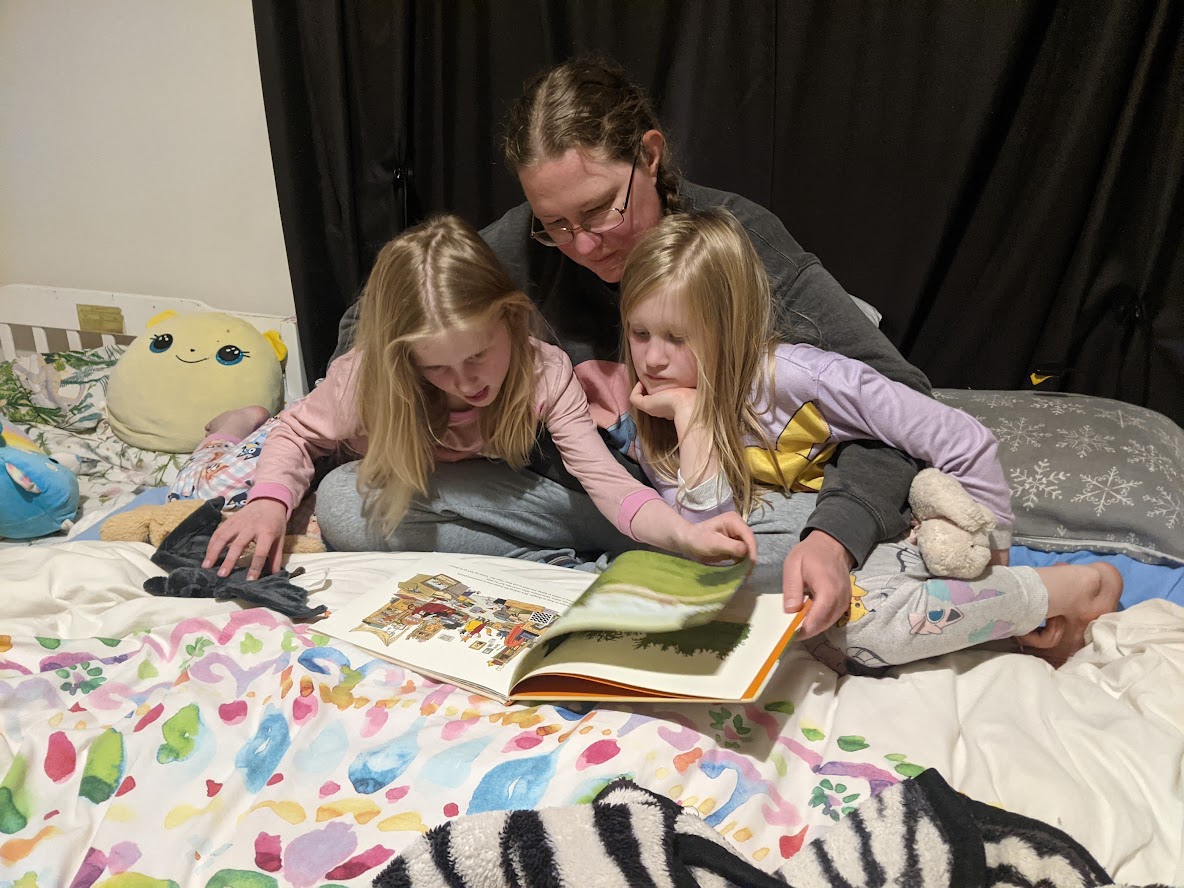


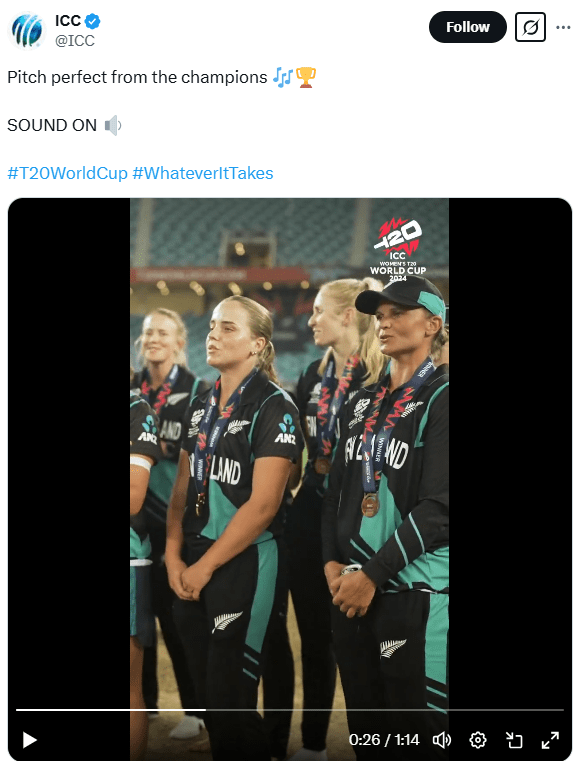

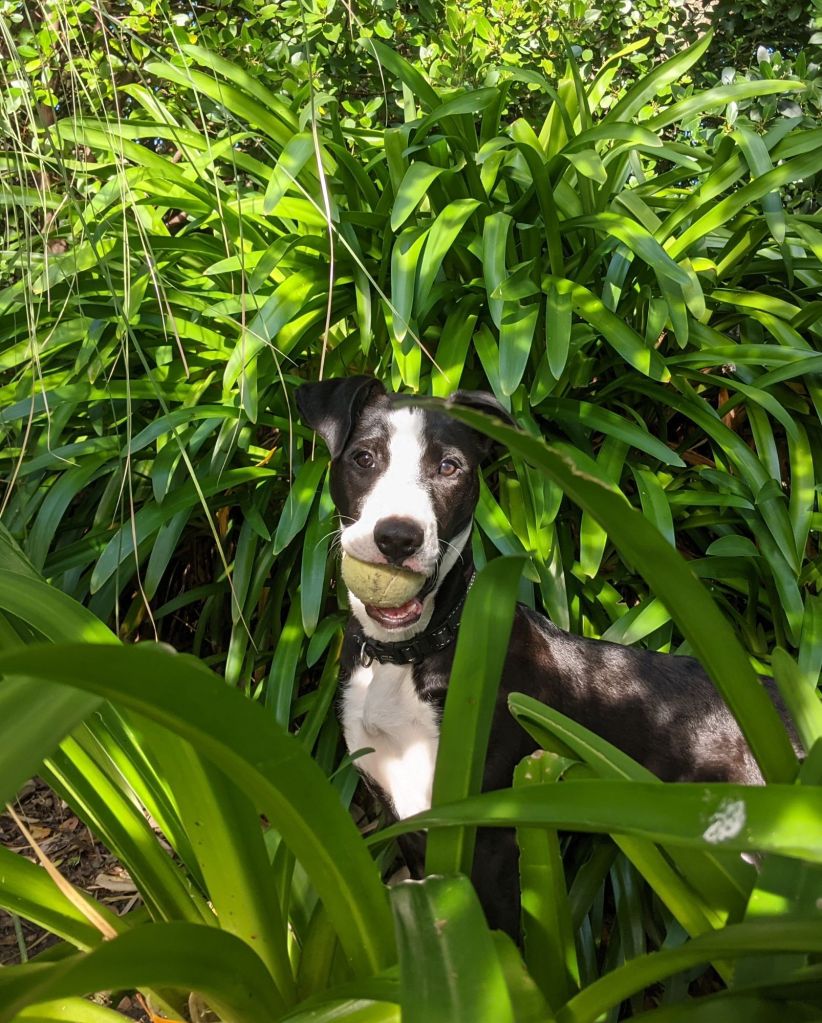
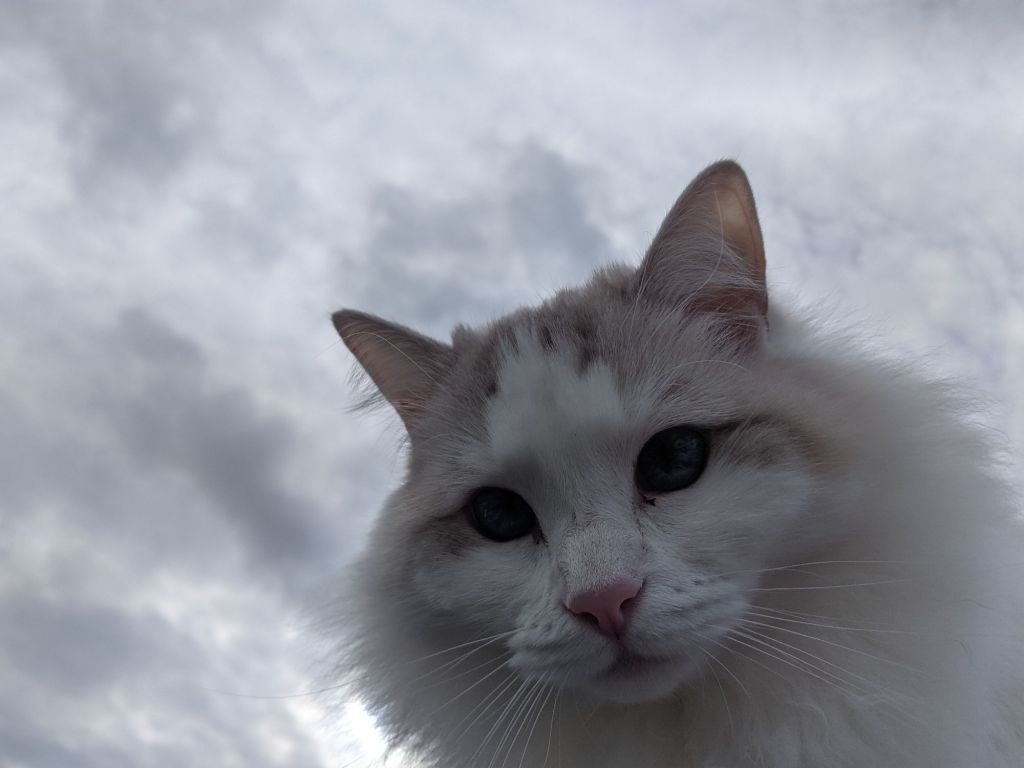



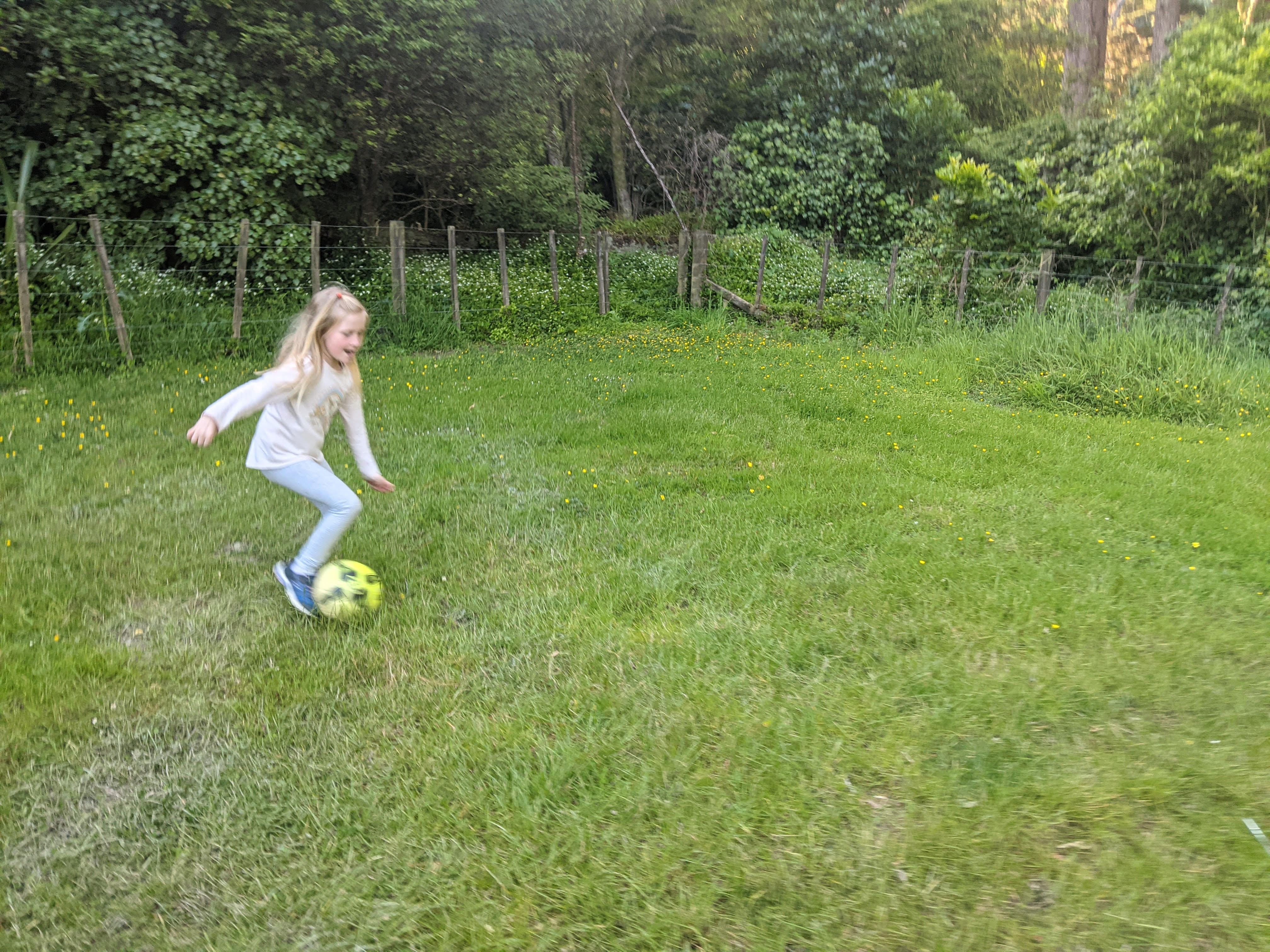

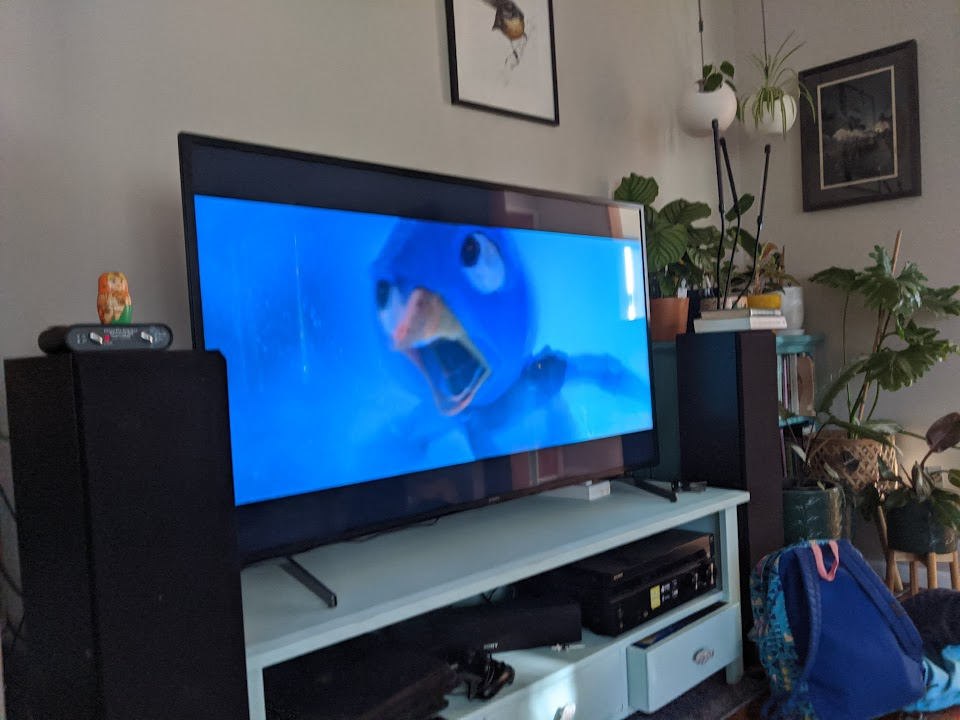
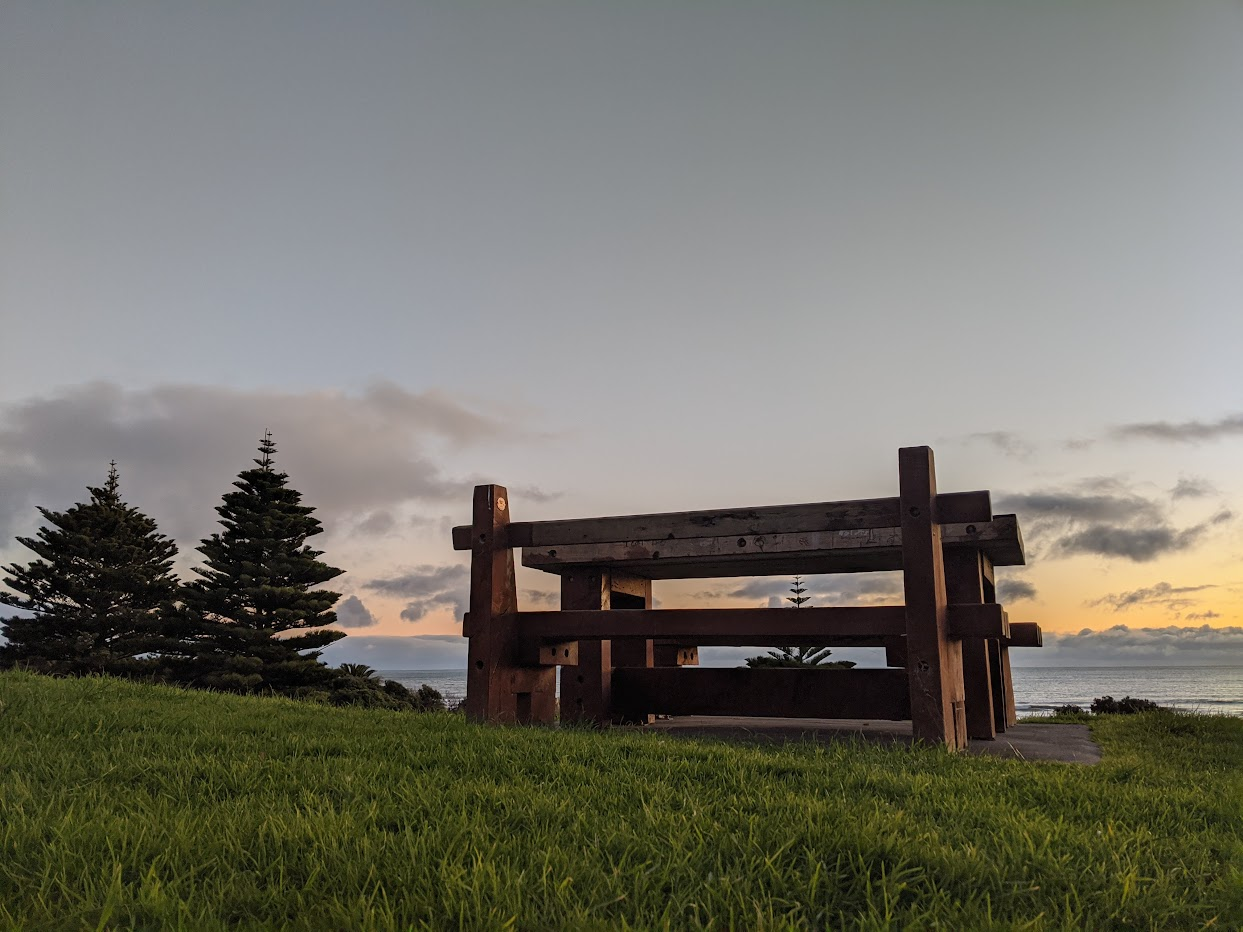





 Jdanspsa Wyksui