Front Page

As I write this on the first morning of the new year, it is pissing down outside — droplets visibly multiplying and scattering as they smash into the neighbour’s roof — but from my vantage point, looking west towards Kāpiti, the sky is all blue except a single rising tuft of white cumulus floating steadily north. Like the sky’s thinking two things at the same time. In the time it’s taken to write this paragraph, the rain has stopped.
I turned 39 in 2023, dad, husband, writer of emails, and I tried to change my mind to be more like that sky. To be comfortable holding all the competing narratives of contemporary society in my head, at least for a minute, and find a few clean toeholds on this precipice of climate change, recurring conflict, populism, and artificial intelligence, which I could use to write this entire post for me right here in the WordPress web app.
I have this one sometime friend who has a way of finding exactly the right words for your weak points so they ring in your head for years. When I messaged him for the first time in a while, he replied, ‘When did you get so sober?’ Mate, I’ve always been this sober.
As always, this wrap-up is mainly a record for me, but I think there’s something in it for everyone.
Books

Getting my father-in-law into Jhumpa Lahiri was a top achievement of 2023. So was reading three books by her, including Roman Stories, newly translated from the Italian she now customarily writes in, dark and disenchanting in a way her older stories only hinted at.
Those Lahiri reads pushed my 2023 reads by women of colour up to ten. I read 40 books by women and 22 books by people of colour. This is out of 65 books read in 2023. Ratios are improving. Smug righteousness expanding.
These books I loved:
- Changing Planes by Ursula K. Le Guin (2003) (re-read)
- The Luminaries by Eleanor Catton (2013) (re-read)
- Slow Days, Fast Company by Eve Babitz (1977)
- Pride and Prejudice by Jane Austen (1813)
- Parable of the Sower by Octavia E. Butler (1993)
- Every Man For Himself and God Against All by Werner Herzog (2023)
Those re-reads early in the year were a treat, especially The Luminaries, which I felt more able to meet at its level than when I was first under its spell in 2013. I read it straight after racing through Birnam Wood, which I also really enjoyed. In The Luminaries, things start in a mess and steadily get sorted; in Birnam Wood, there’s hope at the start and absolutely none at the end.
A big thank you to Auntie Cheryl for introducing me to Eve Babitz, who writes the most interesting stories about the most vacuous people and situations. I’ve never spent time in Los Angeles or California but her ear for dialogue and talent for description almost convince me that I have.
Finally reading Austen was perfect for our anniversary weekend away. Pride and Prejudice is one of Tara’s favourite books; I knew the story but I didn’t know about Austen’s mastery of character, language, and tone on every page, her wit, her tenderness.
By contrast, finally reading Butler’s totally unsentimental near-future hellscape was every bit as much of a gut punch as I’d been led to expect, and more. There’s fire everywhere, most of all in the protagonist Lauren, whose drive towards change is as intense and ruthless as the scorched landscape around her.
But if there’s one book I’ll look back on most, it’s Herzog’s incredible autobiography, which is packed with incredible yarns and told with the narrative spark of a practised raconteur. No one could ever agree with Herzog about everything but I think most readers will find the perfect final pages hard to resist. Thank you Mummyji for putting it on my shelf.
These books I liked:
- I’m Working On A Building by Pip Adam (2013)
- Audition by Pip Adam (2023)
- Birnam Wood by Eleanor Catton (2023)
- Masters of Doom by David Kushner (2003)
- The House on Mango Street by Sandra Cisneros (1983)
- The Namesake by Jhumpa Lahiri (2003)
- The Lowland by Jhumpa Lahiri (2013)
- Roman Stories by Jhumpa Lahiri (2023)
- Dear Mr. Henshaw by Beverly Cleary (1983) (re-read)
- L. A. Woman by Eve Babitz (1982)
- Tales of the Tikongs by Epeli Hau’ofa (1983)
- The Fire Next Time by James Baldwin (1963)
- Black Vodka by Deborah Levy (2013)
- Things I Don’t Want To Know by Deborah Levy (2013)
- Crook Manifesto by Colson Whitehead (2023)
- Beyond a Boundary by C. L. R. James (1963)
- White Cat, Black Dog by Kelly Link (2023)
A decent list implying a pretty good hit rate from those 65 books, especially considering I didn’t actively hate any of them. You may however notice how my reading skews to this century, which I aim to improve upon in 2024. For the bored or curious, here’s my reading list.
A quick postscript for Sherryl Jordan, a favourite of my childhood and whose The King’s Nightingale challenged and fascinated me in 2021. She died on 15 December. The Juniper Game, with its telepathy and nascent sexuality, was one of the most memorable and influential reads of my childhood, putting some of my burgeoning feelings into florid language. Re-reading it as an adult, I was struck by how inappropriate and objectifying some of that language was, but that doesn’t make its impact on my young mind any less true.
Sport
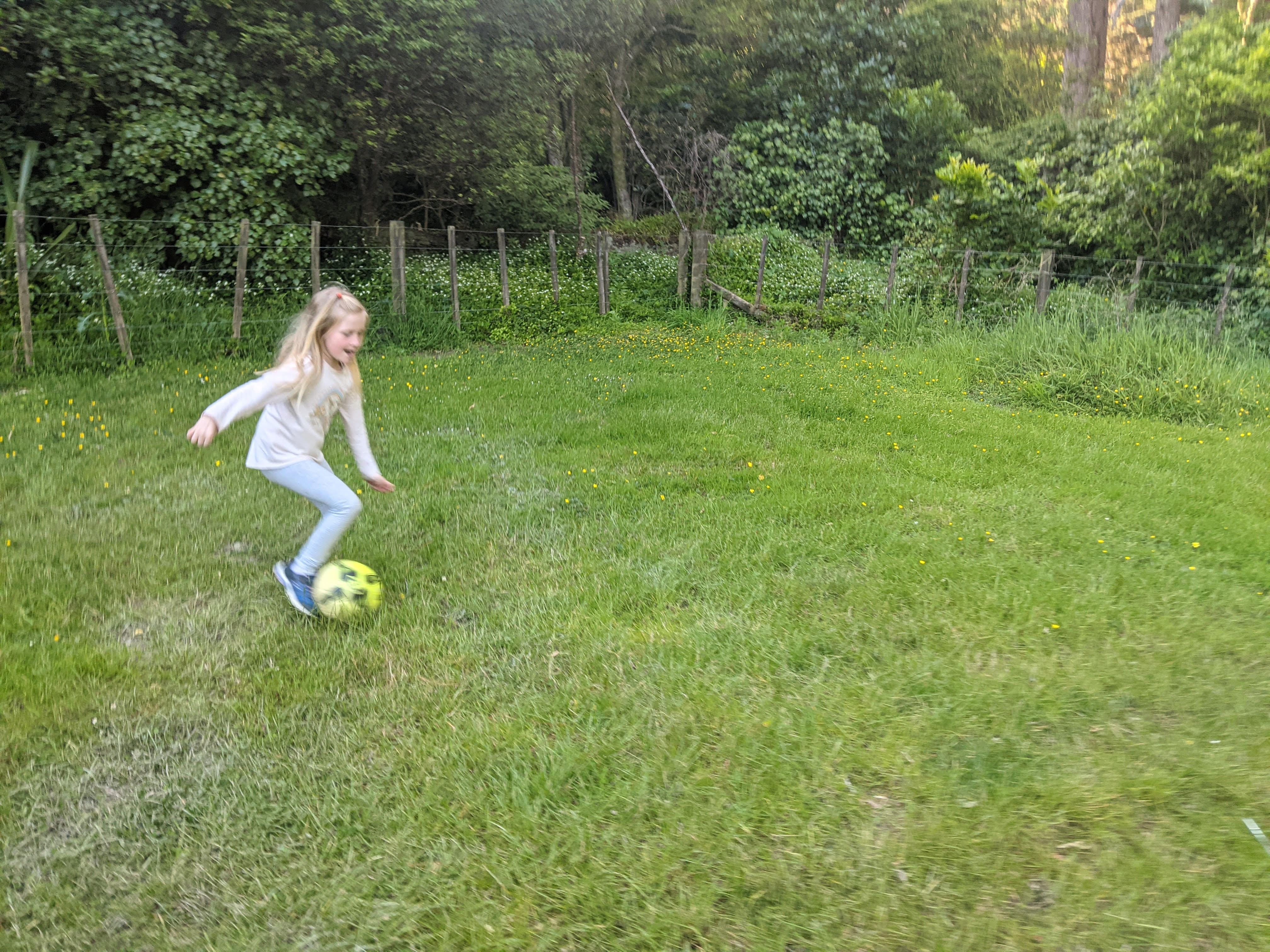
The FIFA Women’s World Cup football tournament was held in Aotearoa New Zealand and Australia in 2023. My kids became aware of it thanks to a McDonald’s Happy Meal promotion featuring Panini cards with players on them; score one for corporate sponsorship. They were particularly interested in ‘the red girl’, aka Spain captain Olga Carmona. Why? “Because daddy’s favourite colour is red.”
After New Zealand opened the tournament with a shock win over Norway, I was determined to ride the wave of public interest and get the kids along to the first match in Te-Whanganui-a-Tara Wellington, between Costa Rica and Spain. A shout-out here to Anne, who scored us two free tickets, and to the official FIFA ticketing app, which had me shitting bricks with all its terms and conditions and restrictions.
Not content with ferrying the kids an hour south in mid-winter at night to sit on uncomfortable bucket seats for a couple of hours, I decided to up the difficulty by driving to Porirua and taking the train the rest of the way to the stadium.
“Are you sure about this?” said Tara, who had an assignment due, meaning I was solely responsible for the success or failure of the endeavour. “It’ll be fine, they’ll be fine, we’ll be fine, I’ll be fine,” I said, over and over.
We parked up and staggered over to the train platform in several layers of warm clothing, which we promptly shed in the stuffed and overheated confines of the train carriage. I found the kids a seat and crouched awkwardly next to them as they looked blankly at the sea of colour and noise all around them. Spanish fans, mostly.
We finally found pockets of space on the long, wide, concrete concourse leading up to the gates of Sky Stadium, or ‘Stadium’, as it was known for the duration of the tournament. I took the kids’ hands and we ran towards the floodlit temple before us, full of night time energy and the buzz of an international sports crowd. This was dampened somewhat by the confiscation, in an otherwise smooth entry process, of the off-brand water bottles I’d packed for the kids. The FIFA terms and conditions were always going to get me somehow. We stood with shouting people in the beer and wine queue for ten minutes to get two bottles of spring water for ten bucks.
Then we found Anne and Kazu and made our way into the stadium and up to our seats, way up the back under cover and with a little space on either side. I handed the kids their lunchboxes but they just held them on their laps as they took it all in, the flags and face paint and clothing in the stands around them, the brightly lit green rectangle a hundred metres distant from our elevated position. Kazu gave them little hand warmers to put in their pockets. Anne shared her lollies. Then the game kicked off.
It was terrifically one-sided. Spain put on a clinic and peppered Costa Rica’s goal from the outset, to the extent that the neutral crowd took to roaring every time the ball went into Spain’s half — so, about three roars in the first 45 minutes, by which time it was 3-0 to Spain. The Costa Rica goalkeeper suffered leg cramps later in the match.
During those long spells of Spanish possession and attack, the crowd satisfied its need to make noise through stadium waves. I would like to say the kids were interested in the football, but this was what they really remembered: watching the wave ripple around the opposite side of the stadium, as if thousands of hands became a single conscious entity, and then being part of the wave themselves.
I decided to drag us off to an early train rather than see out the full match and risk missing an even later and certainly far more congested train. High on the energy and wisdom of the crowd, they were disappointed to leave. As we disembarked from the train in Porirua, they spotted a huge poster for the World Cup. They talked about it excitedly, pretending it had been put up especially for them.
A few weeks later, after years of turmoil and controversy, Spain won the final against England with a goal from — who else? — the red girl, Olga Carmona. (Then the president of the Spanish football federation kissed Jennifer Hermoso on the lips during the presentation — Jennifer Hermoso, who literally ran further than any other player in the entire tournament, at the tail end of a glittering career in the game. #SeAcabo.)
Travel

Tara and I celebrated ten years together with a quiet August weekend in Te Rohe Potāe, the King Country. Our car playlist was so good I missed the turn-off at Bulls, so we ended up having our early afternoon tea stop at Parikino Lookout halfway between Whanganui and Raetihi on the winding, storm-battered State Highway 4. There was an exceptional view of rugged, pointy farmland clawed back from the ripples of ancient tectonic shifts, a landscape I particularly identify with Aotearoa. There was also the most extreme and bigoted graffiti I’ve ever seen, Nazi swastikas and all, carved with prejudice into the picnic table.
Our Airbnb hosts at Ōwhango showed us our digs, a rustic studio converted from a 19th Century jailhouse (how’s that for a metaphor?), then left us alone completely. We loaded more wood into the firebox and headed off to Taumarunui for dinner at the local Thai place and BARBIE at the Regent Cinema. The big table in the middle of the restaurant seated a group of women dressed in whatever pink clothing they could find, mostly pyjamas. “I wonder where they’re going after dinner,” Tara said.
The cinema was everything I’d hoped for. Family-run, thinning wall curtains and sagging sofas in the lobby, cracked leather seats in the auditorium, Nibble Nook. The only heat source was a vent above some underfloor radiators down the front, so Tara put on her woolly hat and warm gloves for the show. The women from the restaurant came in soon after us, waving and calling out to various folks who were already seated. I expected the image to be flat and the sound tinny, but they’d clearly put money into bringing the tech up to date.
The following day, we ate lunch at the outstanding Blue Hill Cafe in Ōwhango — it’s worth a detour — and went for a walk by the Whakapapa River. Apparently there are blue mushrooms in that bush. I saw one once when I was a child in the Kaimai Range over Te Aroha way and couldn’t believe this toy section thing sticking up in all that green. We didn’t see any this time.
A two-night stay, so for us, the above is a pretty relaxed itinerary. I read a book of New Zealand sports quotes compiled by Joseph Romanos. We sat in the spa a lot and lay next to each other by the fire, chatting.
I’ve said this before but Tara changed my life. As we reflected on our ten years together, I couldn’t believe how much we’ve packed in, considering how often I feel like I’m lazy and coasting. Tara drives this. She’s like Lin Manuel-Miranda’s Alexander Hamilton, never satisfied, always looking to the next new thing. The other day, we were at the beach and I remembered going to the same beach twelve years prior and just sitting on the sand, unsure of what to do. It’s because of Tara that I now see beaches — and forests and mountains and trails — as places of boundless possibility.
On that first night, when we returned from Taumarunui, the skies cleared to reveal a fuller expanse of stars than we’re accustomed to down our way. We stood arm-in-arm on the driveway for a few minutes as our eyes adjusted and pinpricks of light bled out into clusters and nebulae, alternately marvelling in wonder and bullshitting each other with made-up constellations. Our relationship in a nutshell.
Movies
IN CINEMAS
I saw eight films in a cinema in 2023. Here they are in chronological order, with five-word reviews and rankings in brackets. Same follows for everything else I saw this year.
- BROKER: Kore-eda, you let me down (8)
- SUZUME: Lush anime, fine wordless climax (6)
- ROBOT DREAMS: Mechanised whistling, do you remember? (3)
- ENNIO: Talking heads, three diverting hours (5)
- HOW TO HAVE SEX: Consent need not be blurred (2)
- BARBIE: Accidental Wes Anderson speechifying nothing (7)
- GODZILLA MINUS ONE: Budget of only $15m, how? (4)
- STOP MAKING SENSE: Talking Heads, 90 perfect minutes (1)
NEW, BUT WATCHED ON A LAPTOP OR TV
- GLASS ONION: A KNIVES OUT MYSTERY: Looks expensive, no real value (meh)
- RED, WHITE & ROYAL BLUE: Snappy dialogue in twee romance (eh)
NOT SO NEW
- THE HUNT FOR RED OCTOBER (rewatch): It’s never let me down
- EVERYTHING EVERYWHERE ALL AT ONCE (rewatch): Simple story a new way
- THE MUMMY (rewatch): Hottest cast of all time?
- PETITE MAMAN: Inner child work, concise, masterful
- PU-239: Passion project never gets going
- DREDD: Comically violent diving in slomo
- BLINDSPOTTING: Verbal rhythms and racial undercurrents
- THE NAMESAKE: Penn’s better as stoner Kumar
- RIO GRANDE: It’s about vibes, not facts
- BEVERLY HILLS CHIHUAHUA: Not as shit as expected
- BILL BAILEY’S REMARKABLE GUIDE TO THE ORCHESTRA: I liked early Bill best
- 21 JUMP STREET: Wacky, fundamentally conservative buddy comedy
- 22 JUMP STREET: More gags, more Tatum mumbling
- POKEMON: THE ARCEUS CHRONICLES: Kids’ choice every movie night
- POKEMON: SECRETS OF THE JUNGLE: They didn’t like this one
- LEGALLY BLONDE: “You’ve NEVER SEEN LEGALLY BLONDE????”
- PONYO (rewatch): Strange, inventive, woolly, distinctive Miyazaki
- WHAT’S LOVE GOT TO DO WITH IT: Well-intentioned, progressively minded failure
- JOUR DE FETE: A film that’s just silly
- LES OLYMPIADES (aka PARIS, 13th DISTRICT): Audiard’s cheat codes dazzle again
Health
“You need to start taking better care of yourself,” said the counsellor. I knew this well enough already, but hearing a professional say it within five minutes of our first consultation made it the bright flashing light of my inner life. I have a tendency to put others’ needs above my own, and to self-sabotage in occasionally alarming ways during moments of crisis. I say moments because I’m fortunate never to have suffered any chronic mental ill health. But the acute nature of some of the moments leading up to those counselling sessions meant something had to change.
Start taking better care of yourself. Start, with the unspoken implication to continue. I successfully introduced regular breathing exercises and regular free writing into my routine. I continued to drink plenty of water and eat a relatively balanced diet. I made a few abortive attempts to introduce regular exercise and regular friend time; my health goals for 2024 are right there. Consistently restorative sleep is something for the longer term, when the kids are older and my wife’s sleep schedule aligns better with mine. It would also help if the cat didn’t leap onto the bed about 6am every morning to let me know her food plate remained mostly full.
The counsellor also recommended a solid chunk of time with no responsibility to anyone but myself. With Tara’s support, I booked a night in a holiday home out by the beach, filled a backpack and walked out there one hot April afternoon. I shut the curtains and let time stretch out more than it has in years. I watched two movies from start to finish and read an entire novel in one sitting.
This came in the middle of a week off work, and by the Friday, I felt like my long-elevated baseline stress level was coming down. Then Haku, the larger and fluffier of our two beautiful, stupid cats, got run over. I finished my week of stress leave forking over all our savings in an attempt to save his life, then signing the euthanasia forms and stroking his ruff while the needle went in.
*
Tara says Haku’s death was unquestionably the most difficult time of the year. For me, it was finally contracting COVID-19 at the start of February. Considering the tendency to discuss ‘the pandemic’ in the past tense nowadays, this note is appropriately buried well down the page. But it was the most difficult thing I faced all year and arguably its defining feature, unquestionably a contributor to my seeking counselling a couple of months later, though I was lucky not to develop anything like long COVID.
What I didn’t realise was that when I got COVID-19, Tara would have COVID-19 too. I always imagined simply a week off, shut away in some room of the house with books, a laptop and meals and snacks brought to the door. Instead, we had to tag team through the routine of caring for two young children and ourselves, both bitterly resentful every time we had to haul ourselves out of bed, denying cuddles to the dearest people in our lives. Other things I remember: sprawling for hours in a bean bag on the deck during the hottest week of summer; punching a door in anger when my kids were hurting each other again; the persistent scent of sea water deep in my nose.
Music

As the year ran out I found myself turning back to the first 2023 album that really got into my bones: CACTI by Billy Nomates. How’s that for an artist name that gives no fucks? Her working class pop pans back to pandemic lockdowns and spits in the face of anyone who dares question, most of all herself, but it’s also addictive and full of vivid imagery. She got a pasting after her Glastonbury set, which featured her singing and vibing in her inimitable fashion (“I feel like you don’t get to see a lot of un-delicate female movement,” she told The Guardian) and nothing but a backing track to accompany her. I think it kicks arse.
Someone else who came back stronger in 2023 was yeule with softscars. Another arty type who doesn’t like capital letters or punctuation, which usually puts me off, but their music, though still occasionally abrasive, is richer and smoother than 2022’s striking Glitch Princess. They operate even closer to the edge than Billy Nomates; that title is a reference to the remnants of self-harm, and in the bridge of standout ‘sulky baby‘, they sing: ‘I’m staring at you from the cliff / I’m looking down, I feel the bliss / I wanna jump, but I see your eyes’. The growing confidence and range in their sound suggests they’ll get even better if they stay this side of the brink.
L’Rain blessed us with a new album, I Killed Your Dog (if that puts you off, be aware she sings “I am your dog” on the title track). It’s hard to top the stop-you-in-your-tracks opening of 2021’s Fatigue, which made my world turn for months; eventually I warmed to I Killed Your Dog‘s gentler, jazzier rhythms, L’Rain’s groove still echoing with the 21st Century malaise I crave but more eager this time to leave the world behind and just hang.
There was also interesting new music from:
Clementine Valentine, The Coin That Broke The Fountain Floor, divinely inspired if patchier than their glorious last record as Purple Pilgrims;
H. Hawkline, Milk For Flowers, six full years since the brilliant I Romanticize and studded with a few fresh classics like the sprawling pleasures of ‘Denver‘;
Buck Meek, Haunted Mountain, whose solo work is way better than anything he’s done with Big Thief IMO;
and The New Pornographers, Continue as a Guest, who I clicked with in a big way this time. Track after hook-driven track I just couldn’t get enough of. I like that title, too, calling to mind half-hearted web browser sessions and general dipping of toes.
But what I really want to tell you about is the music I listened to while I was at work. Which means it was the music I listened to more than anything else this year. Because I’m invariably working with words and trying to shut out office noise, my work choices tend more towards instrumentals and electronica, which is what I’ve always jived with best.
It starts with Rắn Cạp Đuôi Collective and *1, heavy, pulsing, sweaty, and screaming, these guys throw a kitchen sink’s worth of sonic experiments at nine tracks and push the whole thing out the door at less than a half hour’s listening time. One moment it’s like a cloud, the next an electric shock. Perfect for dispelling distractions and knocking out that draft.
I was put off by the controlled feedback on track one of Imagine This Is A High Dimensional Space Of All Possibilities by James Holden and removed it from my Spotify downloads without completing a full listen. Fortunately, a friend insisted I give it another go. It’s so well named and always puts me in a better frame of mind.
Montreal-based Maara took me back to the early 00s of house with The Ancient Truth. That bassline on ‘Just Give Me Time‘ is trance-inducing all by itself; add a propulsive beat, swirling vocal samples, and what sounds to me like iterations on calm surf rolling into shore.
Slightly more challenging — it got funny looks from my wife when I chose it during dinner prep, but she’d be grateful if she knew I could’ve chosen Rắn Cạp Đuôi — was Beta Librae with DAYSTAR. Beta Librae really conjures the thumping bass melodies and flashing lights of the club at 3am here, and I tell you what, I got some work done. (Not that it can’t be pretty.)
And Leon Vynehall released a couple of singles this year. One of them, ‘Duofade‘, came out on my birthday and is the best kind of Vynehall: surprising, innovative, but still a tune, calling to mind the best of Four Tet and Burial.
Finally, something I listened to more than most other music this year can’t be found online. Someday soon, Ashish Seth will rework the hour of unreleased material he knocked into a tentative LP and shared with me at the very start of the year, and I’ll be able to share the wealth. It’s as moodily evocative as ever and has some spellbinding, transcendent moments. Meantime, go and check out Firstborn.
Tech and Gaming

The internet was slow again, the mobile browser page wouldn’t load, so I smacked my Google Pixel 2 with the heel of my right hand. Childish, really, and far from the first time I’ve destroyed an innocent electronic device in a fit of rage.
Not to worry. I had my old Moto G 5 ready to pick up the SIM card and chug along with me. Then I tried to open a car door while holding it in the same hand and it slipped and landed face down on the concrete. Smash, but this one hurt a lot less. I mean it was a pure accident this time.
Time for a new phone, and you know what? The Pixel 2 was so perfect — small, affordable, great camera, powerful enough to do all the things I wanted it to — I decided to get another. So that’s what I have now.
Now, at the very end of the year, the speaker and microphone on Tara’s phone suddenly stopped functioning. It’s a damned shame but she does have a long-serving Google Pixel, and another Pixel 2 could be ours today for only $139. Watch this space.
Is it even a good phone, though? I guess it depends what you want from these things, which in our case isn’t much. Calls and texts; decent photos; YouTube; Spotify; podcasts; some quickly jotted notes. A bit of social media (ancient social media like Facebook and Instagram, not TikTok, although I think I’ve finally kicked X (formerly Twitter)).
The bigger question is coming fast: when should the kids get their own phone or screen-based device? There’s a movement to keep smartphones out of kids’ hands as long as possible, and Tara and I both like the sound of that, because how much have they added to our lives? And what would they have taken away from us if we’d had them when we were growing up?
The reality is always more complicated. The evidence suggests smartphones contribute to mental ill health in young people, but they’re also growing up in a world that expects them to be attached to screens at work and play. Right now, I can be comfortable knowing both of these statements are true, but there’ll come a time when we’ll have to set our stall out on one side or the other.
Politics
The year in news began with yet more images of Jacinda Ardern. Then competing images of Christophers Hipkins and Luxon. Now, images of Luxon, Winston Peters, and David Seymour. Day to day, I’m not sure who’s actually in charge, but their faces will saturate our front pages if they have anything to do with it.
The new government’s effort to reduce the amount of visible te reo Māori is a dogwhistle and a distraction from the deeper impacts when landlords and employers have restored powers of unilateral termination, not to mention the kettle of climate change being boiled harder and harder by more grunty cars, more farting cows, and more primary resource extraction. BUT — it is gratifying to see how te reo Māori persists undaunted, as if a happy majority didn’t even notice the government change.
Most recently, I noticed te reo front and centre in TV coverage of the Super Smash, New Zealand’s domestic Twenty20 cricket tournament. Finn Allen smoked another slog over the mid-wicket boundary and ONO flashed up on the screen, followed by SIX. This is just what we do now.
People

Nora and Juney are now six. They go to school and forget all about us, then come home and demand afternoon tea. They finally fall asleep without one or both of us in the room. They read a bit, and count to a hundred, and ask whether this moment is actually a dream and whether you can still think after you die. As their conscious exponentially expands, I know less and less about them — and that’s how it’s supposed to be with kids. They slough away their dependence on you in fits and starts. If you’re doing it right.
Tara and I remain extremely fortunate to have her parents’ 24/7 support as we attempt to grow these small people into functional humans. Jeff has taken them to and from school all year, and he almost always agrees to another boing on the trampoline, even when he’s interrupted in the middle of cooking dinner. Cathy has been stuck in bed or on the sofa with long COVID all year, but still she puts her hand up to look after the kids if Tara and I need to go out for a bit. I can’t even remember what it was like before we all moved in together.
As for Tara, she has acquitted herself so spectacularly well in two years of part-time creative writing study that she’s about to embark on a Master’s degree and write a real-life book. She does need me to put the punctuation in the right place — commas almost always go inside the quotes, dear — but apart from that, the hard work and the talent are entirely hers. When she wasn’t upstairs all evening with the study door shut, we marked the close of each day with an hour or two next to each other on the sofa, distilling the day’s events, chewing over our existential crises, looking to the future, and watching Taskmaster. So much Taskmaster (thank you Ed).
In the final weeks of December, I was delighted to spend some time with almost every member of my close family. Thanks to Tara’s incredible skill at birthday present selection, I even flew Sounds Air to Nelson to spend a weekend with my dad. What a superb town Nelson is! Especially on my stepmother’s e-bike: a return trip to Saxton Oval on the Saturday, a ride along the green paint to the River Kitchen and the Suter Art Gallery on Sunday. I don’t get much time with my dad and hadn’t visited him in Nelson in the two and a half years he’d lived there, so this weekend was one of the highlights of the year.
And then one more year becomes one more year, as the song goes. I fear the future and try to suppress it with plans. I stack them up and watch them fall. But there’s always a few that slip through to fruition, imposing some shape on my memory. Past, present, future, all polygons and rhomboids in my mind, a teetering structure always on the brink. Kia whakatōmuri te haere whakamua. I walk backwards into the future with my eyes fixed on my past.
 I am ticking all the expected boxes of my thirties: marriage, house, kids, minor existential crisis. I earn more money than ever before, more than I ever imagined I could be earning, and through a time of increasingly precarious employment at that, and I can confirm that shooting past the median wage does not in itself bring happiness. But I am content most of the time, rarely low for longer than a few days.
 SARS-CoV-2 spiked its proteins into all of us in some way or another this year. I am one of the lucky billions not to come into contact with it and develop COVID-19, largely because I live in an island nation that took an elimination strategy in fighting the pandemic. Meanwhile, millions died around the world, and as I write this in the days between Christmas and New Year, much of the world’s humans are still not safe to go out.
 It seemed you couldn’t move in this fragmented year without hitting another message about breathing, grounding, centering, practising mindfulness. You’ve got to look after yourself. It’s okay to look after yourself. Everyone was saying it, from the Prime Minister to my favourite podcast hosts. I was saying it myself, writing comms after comms reminding fellow staff this is not normal and we understand how you feel and here are some tips to help you through these unprecedented times. It began to feel hollow after a while. But the alternative, ignoring the struggle, would be worse. In the meantime, I continued to ignore all the advice, doomscrolling first thing and jamming headphones into my ears at every opportunity.
 A book is a beautiful thing. It’s full of promise before reading, and also pleasant to hold, which it will always be. After reading — if it was any good — simply looking at it brings words, characters, and ideas flooding back. In your mind’s eye, it now represents all it contains. And it retains the promise of hours of possible reading, or re-reading. It doesn’t matter if it’s your book or someone else’s, or if it was borrowed from a library. The book has all the same potential.
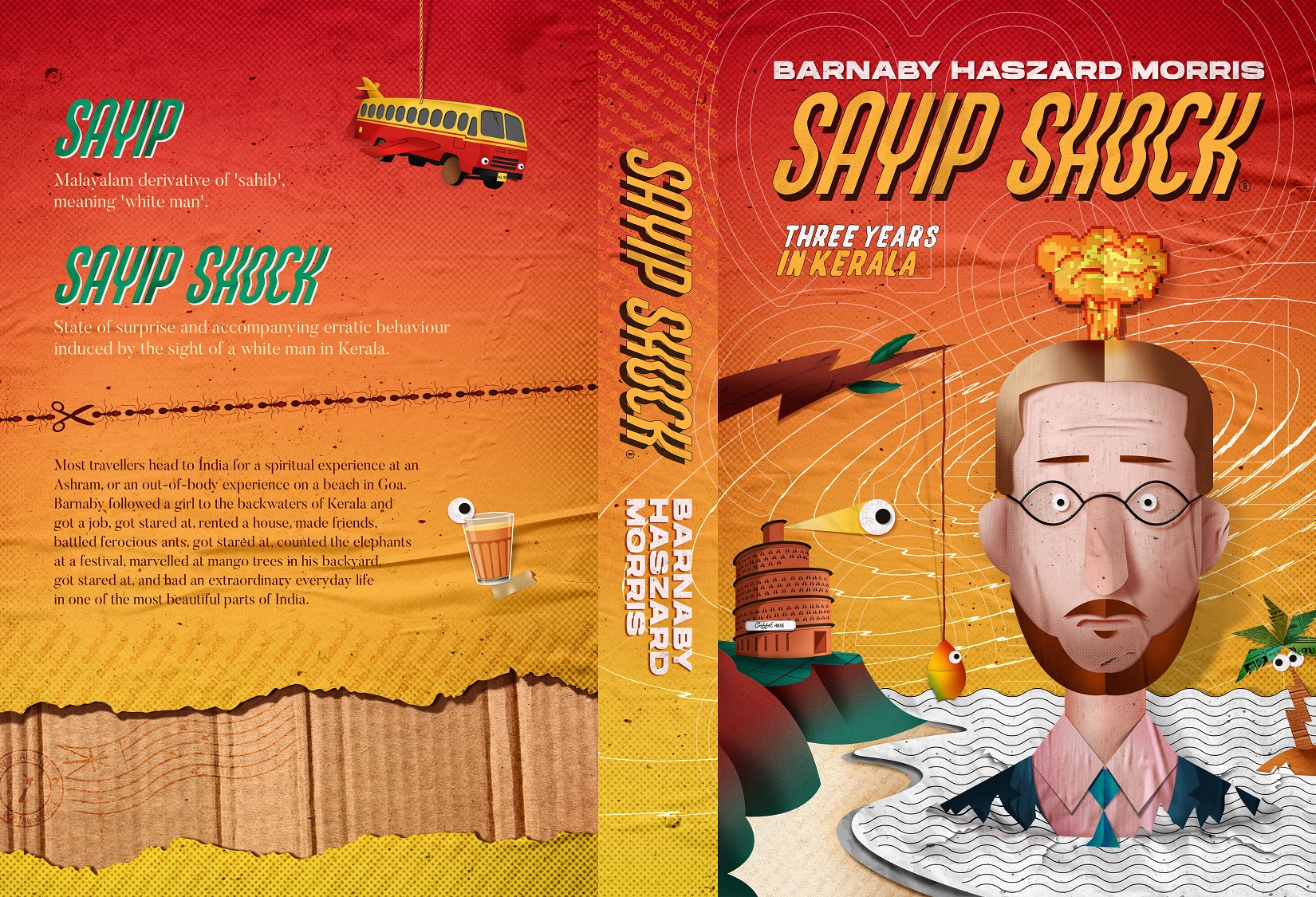 I also published a book in 2020. It’s called ‘Sayip Shock: Three Years in Kerala’.
  It’s all online now. I went to the cinema once in 2020 (PARASITE). Our household subscribes to five different film and TV streaming services:
 Ha ha ha. Well. We managed our usual summer holiday in February, to Hawke’s Bay, during which I got sick and we argued a lot. There were some great moments too: descending the grand staircase in an old convent/school we stayed at for a night in Featherston, days on the beach in Waimārama, and particularly our visit to Splash Planet, which begat a
 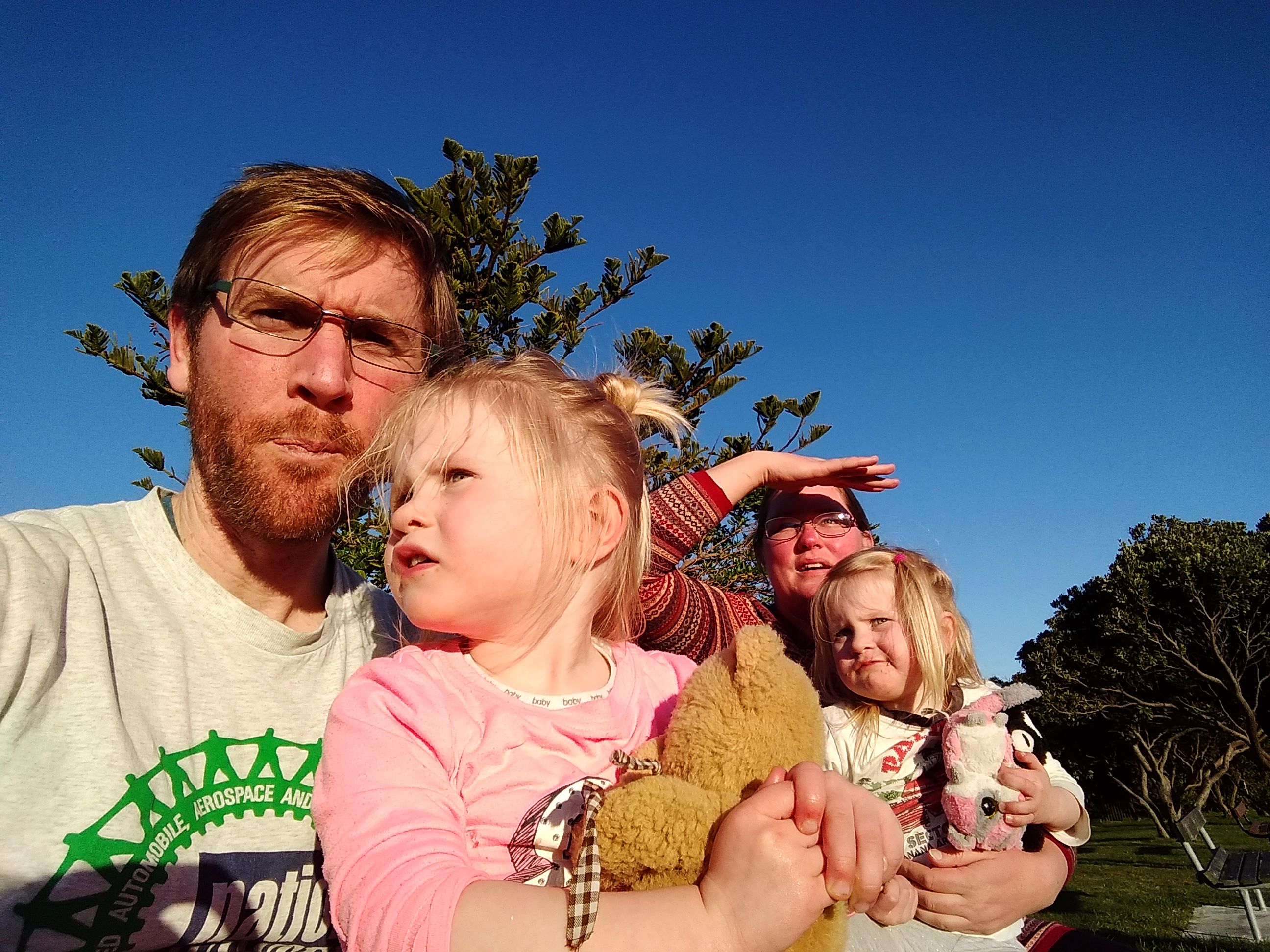 Tara is everything to me. She’s my love, my rock, my inspiration; a source of frustration; my comfort at the wordless end of an exhausting day; my partner in the biggest work of our lives; my favourite cook; my cheerleader; the one who will stare daggers at me or look away in disgust, the one who will look at me with pure openness the way anyone would long to be looked at. I will ignore her sometimes in favour of my phone; other times I follow her around the house like a silly little dog. Long-term intimacy has brought almost everything out of us and I would say we love each other more than ever, even with all the worst parts of ourselves left in. We may never sand those rough edges off. Life is probably more interesting with them.
 Jdanspsa Wyksui