After a note about the high volume of seat ushers and a small bitch about the seat allocation (I was stuck somewhere up the rear right of the Embassy Cinema despite booking my seats quite early), the first of my scribbles about THE LUNCHBOX was one word: ‘hungry’.
It’s not a film about food, exactly, although food is an important part of its subtly expressed message about the fundamental connections between people. But you see food early, and often, and you want to eat it, regardless of whether you’ve just eaten an enormous yum char lunch (as I had). With its combination of tastes and textures and unpretentious presentation, Is there any cuisine more visually appealing than home-cooked Indian?
Similarly appealing are Nimrat Kaur and Irrfan Khan, the housewife (‘Ila’) and salaryman (‘Saajan’) at the centre of THE LUNCHBOX’s straightforward plot of a dabba that repeatedly gets sent to the wrong man. The mistake could be corrected easily, but both Ila and Saajan settle into a note-passing routine that seasons their unfulfilling lives: she with her distracted, near-absent husband, he with his widowed malaise involving little more than cigarettes and government files. Kaur is just fine, and Nawazudin Siddiqui is perfectly pitched between irritating and charming in a supporting role, but you must see this for Khan, one of the great actors of our time. He does so much with so little.
The teeming metropolis that surrounds these characters seems to function more as a delivery device for boosted GDP rather than as a social structure. The man alone in a Himalayan cave for years could never be as lonely as the man in the city who lives alone, works alone, and travels on the packed commuter trains alone. But connections are possible. One of the most striking ways Batra illustrates this is by regularly overlapping sound between scenes — as if the previous scene continues to echo in a character’s head, even if they weren’t in it. They’re all in it together, for better or worse.
By the way, THE LUNCHBOX is set in Mumbai, a city I have visited and loved twice. The opening shot was of a mass of drab suburban railway tracks and the plain apartment blocks that overlook them. It gave me the chills. My impression of the film might therefore have been coloured somewhat favourably, but it is really good.
(‘Bleakfest’ is the name of a real thing that my friends Amy and James did last year — a night of the bleakest films, screened back to back in a dingy Hataitai flat — but I’m nicking it for this section of my NZ International Film Festival, during which I felt like the Earth was a crusted, burnt-out husk.)
I did a strange thing. Instead of just rambling my thoughts about Jia Zhangke’s A Touch of Sin here on Jdanspsa Wyksui, I compressed them into a hopefully coherent form and submitted them to Stuff Nation, the often questionable user-generated content arm of Fairfax’s Stuff.co.nz news website. Here’s an excerpt:
In Jia Zhangke’s A Touch of Sin – one of the more bitter and cynical films I’ve seen in a while – China’s power is concentrated in the hands of an elite few, while the majority of the population is left to pick over the dust in their masters’ wake. […] What happened to the glorious idea of China for these people? Far from being marginalised, they are in the thick of the mainstream. Their aspirations for more money, more power, and more freedom lead them to fight against the current with whatever tools they have available to them – but the flow is always stronger.
You can read my full review here, which I end by saying that the film is worth seeing. My bitterness and cynicism straight after the screening overrode any attempt to judge the film’s quality, but the more time elapses since I saw it, the better I think it is.
On the other hand, Amat Escalante’s Heli is the absolute bleakest of the bleak, and impossible for me to recommend. Imagine a family of three generations that lives a purely functional life in a shack in Mexico, their lives as parched of emotion as the barren landscape that surrounds them. Then, imagine those lives being wrenched and battered by a mostly accidental run-in with a drug cartel. One reviewer walked out during the central sequence of chilling gang violence: “Life’s too short for that amount of bleak”.
My notes for ‘Heli’
Heli is the name of the main character, a young man in his early 20s who appears to be the main breadwinner of the household. There’s also his dad, his teen sister, his wife, and his baby daughter. Before the gang comes knocking, he moves from the breakfast table > to his job at a car manufacturing plant > to the dinner table > to bed, without ever cracking a smile. After the shooting and torture, his face remains as flat and emotionless as ever; the only question is what rage he will find in himself, and at whom he will direct it.
The following things are also presented in Heli, with the same passion-free realism as everything else:
A teen romance
A gynaecological exam
Two dog killings
A boot standing on a human face
2.5L Coke bottles
A sex scene
I’m guessing Escalante’s point was to simply show the plain reality of gang infiltration into Mexican society, and its effects on regular lower-class families. Okay, great: I feel the hopelessness, the flatness, the limit on aspiration. And I don’t plan to see this film ever again.
In A Field in England, there are four archetypes: the educated coward, the driven leader, the bitter cynic, and the wise, plain-speaking simpleton. Their violent, black-and-white Civil War world — gunfire, bayonets, and explosions amid the long grass of the meadow — becomes pure chaos upon the insertion of O’Neil, a charismatic Irishman who might be the personification of Satan. “Open up, and let the devil in!”
The field of the title buzzes with life. Regular inserts show tiny larvae creeping among the grasses, which wave in gorgeous slow motion. The humans cut a swathe through it, digging and bleeding into it, picking it up and eating it, but the field lives on despite their presence. It’s also my belief, though, that A Field in England is an applicable name for director Ben Wheatley’s cinematic sandbox: a space in film history that he is cultivating completely on his own. His earlier Kill List was the most surprising horror-drama I’ve seen in years, with possible influences as disparate as Clive Barker and Ken Loach, and his latest bears similarities with Eraserhead and Irréversible. I have joined Wheatley’s ever-growing fan following because rather than erecting untouchable monuments to his own genius, he draws us deep into his space and shows us these fresh horrors up close. Even at his most surreal, as he is in A Field in England, I don’t think he ever forgets his audience.
Not that this is an easy watch. Faces are blown off, visual non sequiturs abound, and stroboscopic effects feature prominently. Much of the first half hour or so is a search for detail: who are these people? Where did they come from? And where are they going? Rich and varied aural effects offer few clues. Occasionally, Wheatley breaks the loose narrative for what I would call a ‘live photograph’: the actors posing dramatically, with shivering hands and chests rising and falling, for no obvious reason. But slowly they reveal themselves through sparse dialogue, arguably the film’s strongest element. “Perhaps we should all go back and suffer,” says the simpleton looking back in the direction of the battlefield. “Knowledge is its own payment,” says the educated coward when asked how well his master keeps him. “Shit and thistles,” says the cynic as a description of the field (and possibly as a summation of his life).
A Field in England is bizarre and fragmented enough to be open to many interpretations. Mine is that it’s about power: who has it, why they have it, how it corrupts and evolves and dissolves. The educated coward has lived for a long time under one man’s power; how will he respond to sudden dominance by another master? Can a cynic ever be truly powerful? And in the absence of other personal qualities, how useful is a good leader? O’Neil is the controlling figure of doom that throws everything out of alignment, emitting his own fantastic, unexplained power and bringing everyone over to his side whether they like it or not, but he too is fallible. Absolute power, if it even exists outside of theory, cannot be wielded for long due to its shifting nature.
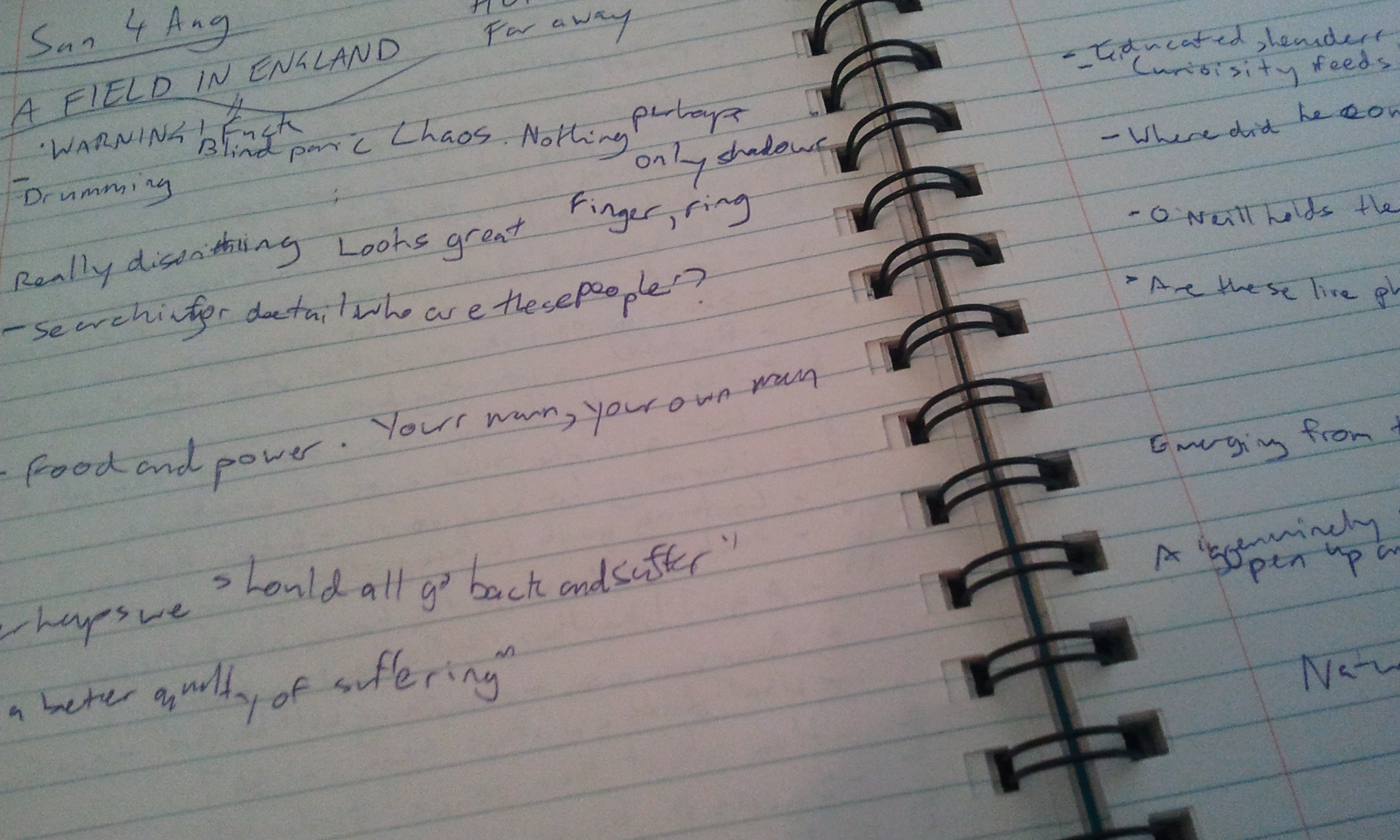
We sat way up the back of the Paramount for this one, and I joked at the start that it might be appropriate to look into the abyss from afar, rather than up close. We knew more or less what we were in for. It proved to be as nightmarish as expected, so perhaps we were saved from the savage head-trip we might have experienced up close. More pertinently, our distance from the screen meant that I took all my notes in the dark. They are a total mess, scrawled diagonally in fragments across lined pages:
For a film as disorienting as A Field in England, that seems appropriate.
In director Jeremy Saulnier’s Blue Ruin, Dwight lives an idyllic-sounding life: his home is in the sand dunes, he bathes in the sea, and he eats fresh fish for dinner. This isn’t how we meet him, though. The opening shots portray the plain interiors of a house with all the banal trappings of suburban life and eventually settle on bearded, bedraggled Dwight, soaking in the bathtub. A family arrives home and he leaps out the bathroom window in a towel, still dripping wet as he sprints awkwardly back into the margins of society. Not his banal life.
Dwight, who lives in a rusty old car that he also drives, appears not to have been doing much with his life for some time. He has no friends, though he’s known to police; indeed, it’s the intervention of a sympathetic policewoman that gives Dwight his purpose and sets the plot in motion. Unfortunately, that purpose is bloody, clumsy revenge for an incident that happened long in the past. Whatever Dwight has been doing, he now has little on his mind except murder of the most functional and least glamorous kind.
There are a few laughs in Blue Ruin, and I was surprised at how much they made me laugh. Dwight’s general ineptitude is endearing in a sad kind of way, so when he hacksaws the end off an arrow embedded in his thigh before pouring alcohol all over the wound and ripping the head out, it’s as funny as it is cringeworthy. The film’s violent scenes also feel as banal as any of Dwight’s day-to-day life, illustrating how his world has been flattened out into a near-emotionless husk.
My problem was that once exposition took over about 40 minutes in, all the good work of the almost dialogue-free setup unravelled a little in the face of so much direct information. I would’ve been content not to know why any of this was happening if the rest of the film was as expertly crafted as that opening third, and there’s one character who has no real reason to trust Dwight but does so for the sake of the plot. As a result, the climax wasn’t the gut punch it maybe should’ve been, although there was some emotional resonance in the line, “Because my father loved your mother, we all die” — delivered as flatly and plainly as any other in the film.
Onto something completely different. I saw A Separation a few months ago and thought it was a total masterpiece, expertly crafted but with a very natural feel, believable and thought-provoking. My bar for The Pastwas therefore pretty high. Thankfully, it could be described in much the same way, and we can now declare that Asghar Farhadi is a cinematic master of truth and its consequences. Even the title card at the start is a perfect encapsulation of the film’s subject. He must put a lot of time into developing his films: they feel so natural and yet are so tightly crafted.
Farhadi sets up the principal characters one by one — Marie-Anne, her ex-husband Ahmad, her new partner Samir, her children Lucie and Lea, and Samir’s son Fouad, who was born to his now-comatose wife. From there, the details of why Ahmad left and why Samir’s wife are in a coma are slowly revealed, and there’s so much going on with character that it’s impossible not to be drawn in. Coming in from the outside, but with the understanding of someone who’s lived in this house for years, Ahmad is able to weigh up every situation and speak freely and honestly towards a positive resolution, free of the baggage that confines everyone else’s present. And he is very helpful, and clearly still loved by everyone (apart from Samir, who you’ve got to feel for), but even from his more straightforward perspective he cannot know everything; truth is not as simple as it seems, and in some cases, an assumption can stand in for the truth without anyone really noticing.
Much of the action takes place in a grand old French house that Marie-Anne and Samir are redecorating to within an inch of its life, perhaps in an effort to paint over Ahmad’s past presence. My expletive-laden notes taken during the film ask why they want to put so many chandeliers in, and why they left an open tin of paint sitting around when there are unhappy young children on the loose. If they have a plan for the redecoration, it’s either a half-page afterthought or a messy binder full of clashing ideas. I really wanted to tell everyone to just stop for a day to sit down and figure out what they’re doing with their lives, which is kind of what Ahmad tries to do, but an honest appraisal only gets you so far — and anyway, no time for that now, the doorway needs painting.
The people in this film have been through some shit. They’re not particularly responsible, although they do genuinely love one another and want everything to work out. You can see it in Ahmad’s eyes when he remembers the final months of the marriage, or in Marie-Anne’s rage when her daughter fails to return home one night. Fouad is a naughty child, rebellious and violent, but he’s dealing with the loss of his mother and her sudden replacement with a new one. You can choose not to look back, but the past still happened. The acting is uniformly exceptional, and The Past is another masterpiece; the future, for these characters at least, remains uncertain.
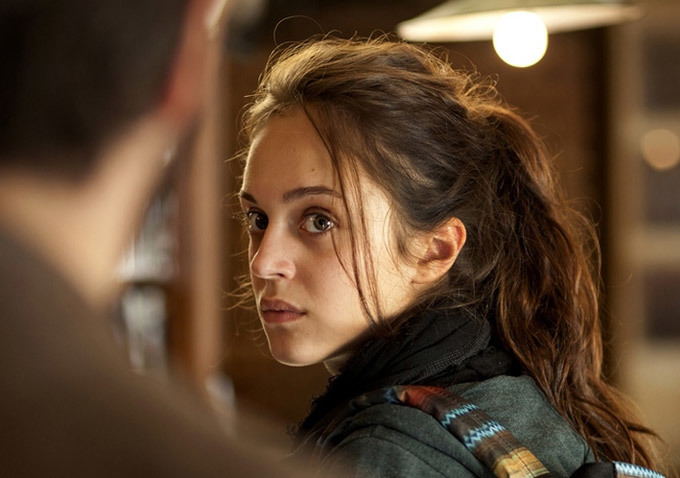
Farhadi is from Iran, where it’s hard for a director to get a film made without government intervention. Wadjda is directed by Haifaa Al-Mansour, a woman in Saudi Arabia, where it the list of things a woman can do seems shorter than the list of all they are barred from. Her film, about a sassy teenage girl who really wants to buy a bike in a land where “women don’t ride bikes”, is therefore a remarkable achievement, but it is worth your time for many other reasons besides.
Wadjda is the name of the teenage girl, and we quickly learn about the male-dominated world she inhabits — one that we in New Zealand, for all our faults and occasionally overt sexism, cannot even imagine. Turns out there are lewd construction site workers everywhere, and they’re not above shouting inappropriate comments at a young girl; the difference is that in Saudi Arabia, it’s officially the girl’s fault for being female. I wonder how the Bechdel test would apply to this film when its female characters’ entire function in society, drummed into them since the cradle, is to bear male children. Naturally, a lot of their conversation revolves around the men in their lives, but it isn’t just idle chatter: men are almost all they’ve been taught to care about, with Allah and the Devil watching on closely.
She really wants that bike, though. She’s even willing to devote herself to the Quran studies she hates in the hope of winning enough cash to buy one herself after her initial attempts at entrepreneurship move more slowly than she would like. But how sweet and winning those attempts are! Wadjda’s enterprising spirit even extends to her moments of sadness, when she readily accepts five riyals from a neighbourhood boy if she’ll just stop crying. She listens to Grouplove on her tinny cassette player and wears Converse sneakers to school. All this warrants regular cries of “khalas!” (‘Enough!’ or ‘Stop it!’) from her mother and teachers, but a girl like Wadjda needs autonomy. Otherwise, she’ll be stifled into misery.
Wadjda is clearly a film by autonomous woman. It’s well made and well acted, and there’s a charming looseness about the plot that’s similar to Wadjda’s most appealing qualities. It’s inevitable that Wadjda will eventually be proposed marriage, but when it comes in one of the film’s later scenes, it isn’t the heel stamp on her freedom one might have expected; instead, it’s secondary to pursuing her bike dream, and all the more sweet for that. I left the cinema with a big smile on my face. If a woman can direct a film in Saudi Arabia, a film ostensibly about women supporting one another through their oppression, maybe a girl can ride a bike?
Cloud Atlas cannot really be described as subtle, but there’s one very subtle effect that wavers gently in and out of the film. Like another repeated metaphor, a shooting star, it’s transient and easily doubted: did that just happen? Did anyone else notice that?
The effect is aural, and something I haven’t heard in a film before. During certain lines of dialogue – perhaps only lines of significance, though I’ll have to see it again to confirm that – a second, ghostly voice is layered underneath. It isn’t loud enough to comprehend, but it’s just loud enough to hear. Cloud Atlas is told across multiple timelines, with the same actors portraying characters in each, and it seemed to me like the layered voices might have been those of characters from other timelines in the film. They could have been words in another language, or they may not have been words at all.
On top of this, the characters read about each other – about their past and future selves – in books, or watch each other portrayed on film. A diagram of the timelines in Cloud Atlas, and particularly the interactions between those timelines, would make little sense but would certainly be interesting.
We keep making the same mistakes over and over, says one character at one point. We also keep doing the same things over and over through time, whether it’s through the words we speak, the desires we hold, the truths we believe, or the music we make. Cloud Atlas itself is a nobly large-scale attempt to talk about something that has been talked about many times before: what does it mean to be human? There’s love, there’s hate, and there’s a lot in-between – including a lot of violence. As the bloodletting reached a crescendo in the third act, and as I jolted in my seat at each destroyed skull, I realised that I had rather grown to care about this world of archetypes and broad gestures. It was a pity about the bar-room brawl, and the mujer ex machina, but you can forgive something so magnificently ambitious for the odd misstep. Our world has flaws, too.
Perhaps if you see it, you’ll get what I’m talking about. Or maybe this is just my own little shooting star in the cosmos. (Did anyone else notice that?)
Michael Fassbender is a good-looking man but as ‘Shame’ continued on to its bitter, brutal climax, I noticed I was hardly seeing the person any more. Even the character, Brandon, who is mostly silent and empty but completely believable, was gradually stripped away. All that was left was a skull.
It was particularly obvious in one very depressing threesome scene. (The sex in this film is not at all titillating.) A skull with a body attached, gruesomely contorting the skin and flesh that encased it as it drove itself to temporary gratification. When it wasn’t having sex, or jerking off, or seeking sexual gratification in other ways – any way, really – it moved smoothly and almost invisibly in the world of men. Its work and shelter were secondary to its pursuit of every kind of orgasm.
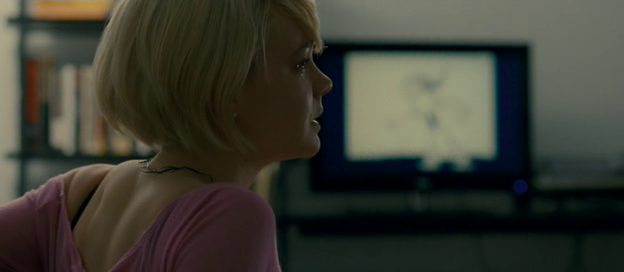
Brandon’s sister Sissy, played by Carey Mulligan, is the opposite: always on show, always giving everything she has, but almost always into holes which give her nothing back. Given their opposing personalities, Sissy and Brandon are only able to connect for brief moments, usually in mutual anger or disgust. Finally, through extreme means, they manage to feel and express affection for one another, but that too is only brief.
I really hope Brandon and Sissy help each other sort themselves out. The cycle of addiction and gratification is strong, though. It’s going to take a lot of work.
Justine (Kirsten Dunst), a hollow spectator on her own wedding night, searching for sensation, peers through her brother-in-law’s telescope at a hot air balloon. It is white, decorated with messages of good will from the wedding guests. They watch and cheer around her and her husband, a man who loves her but cannot make her happy, despite his desperation to do so.
But through the lens, Justine cannot make out the messages on the balloon. As it drifts away into the night, high above immaculate grounds, all she can see is the fire burning at its base. The fact that the fire sustains the wellwishers’ intentions for a long and happy marriage is irrelevant; to Justine, the fire has a clear purpose and meaning, where the fabric and ink do not. However, even the fire drifts further and further from her with each passing moment.
She turns away from the telescope and dutifully smiles to her husband. The night goes on without respite for her emptiness.
Later, she will welcome and embrace the fire and help others to do the same. The scene will play out with the same inevitability she has felt for so long, possibly years. In that moment, she will find – not happiness, not even contentedness. She will find acceptance.
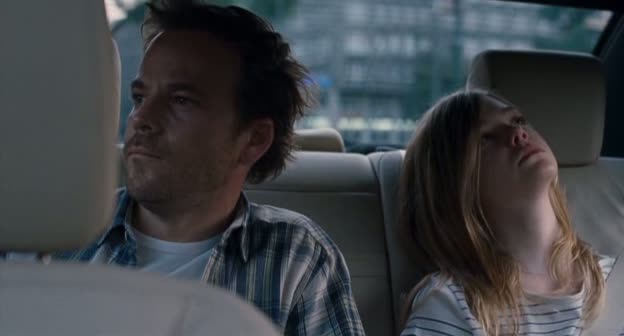
IMDB / Ebert / Hornaday Starring Stephen Dorff and Elle Fanning Written and Directed by Sofia Coppola
Rating: H (Highly Recommended)
Sofia Coppola’s Somewhere is like Jackass without the stunts, or maybe Jackass when the camera isn’t rolling. I’m not just saying that because of the presence of Chris Pontius, that laconic joker famous for his ‘Party Boy’ antics. Somewhere is almost Dadaist as Coppola lingers on bizarre showbiz images such as its star covered in putty for a face mould, or a ludicrously bombastic Italian awards ceremony, and gently pulls down the façade of Hollywood nicety with a subtle, non-judgmental eye. Johnny Marco, the nearly mute anti-hero, bounces from one corner of his irrational movie star life to another – rich, unsatisfied, stagnant.
Enter his daughter Cleo, the Figure of Redemption, but don’t worry. It isn’t that kind of movie. We can only assume that prior to the events in the film, Johnny saw Cleo on a semi-regular basis but was too wrapped up in endless parties and women to truly notice her. Now, as a result of certain circumstances, she’s going to be more present in his life – for a while, at least, maybe just long enough to make a difference.
Really, it’s okay, it genuinely isn’t that kind of movie. I mean, it is: a classical story, lost and/or deluded and/or miserable soul has his life thrown into perspective by the arrival of someone with simple, innocent meaning and purpose, both in her own intentions and in her relevance to our anti-hero’s life. What’s different is that Coppola takes this story, so often overdone and blandly unsubtle in films, and strips it back to the point of elusiveness. We witness a series of disconnected moments, often played out with a near-total absence of dialogue, and rather than there being an obvious narrative thread, it’s more our own expectation that creates one.
As a result, Somewhere will be infuriating and – even worse – incredibly boring to some viewers. For those who are willing to go along with Coppola’s sound- and image-focused style and put the idea of a Good Story to one side, however, Somewhere is a meditative treat, a joy. It even approaches the divine as she pulls the whole thing together in a glorious, grand (yet still understated) finale, stretching out the back end of Phoenix’s ‘Love Like A Sunset’ – with its eerie Wendy Carlos synthesizer and subsequent glorious release – in a moment of true movie magic that I could not resist.
Stephen Dorff is very watchable in the central role; I particularly liked the fact that despite being a big movie star with an endless parade of half-naked women fawning around him, he never comes across as a total dick. He’s polite to people whether he knows them or not; perhaps the stream of ‘you are such a fucking asshole’ SMSes he receives are the result of a prior attitude we don’t get to see. Then there’s Elle Fanning, who is an utter delight as his daughter. She’s just the kind of daddy’s little girl that fathers would want to do absolutely anything for: cute, sweet, talented. The key phrase there is that Johnny does indeed want to do anything for Cleo, but it’s evident that in the past, he simply hasn’t.
Neither of these two is the star of the film. That would be Richard Beggs, sound designer extraordinaire, who would also have been the star of Lost In Translation as well if it hadn’t been for the incomparable Bill Murray. Somewhere needs to be watched with the best sound possible so that you can appreciate the space of each scene – the grumble of Johnny’s Ferrari, the crackle of his cigarette as he smokes it down to the filter. Combined with another well-employed score of popular and atmospheric music, Beggs has crafted an aural wonderland yet again.
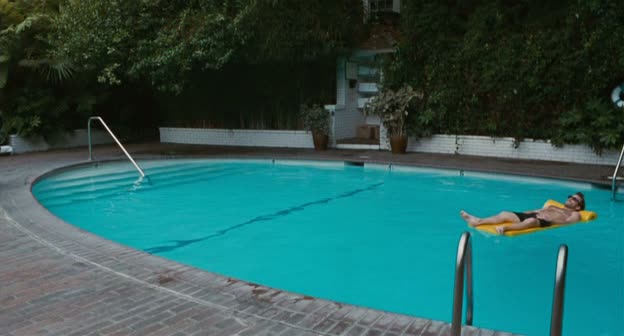
And then there’s Sofia Coppola, who by now has leapt well and truly out of her father’s shadow artistically. She stays within her limitations as a filmmaker, but what fascinating limitations. Her productions feel a little like really expensive student films in their scope, spare and mood-focused, and she is fortunate to have all the backing and support she could ever need (just check out those names in the ‘Thanks’ section of the credits). We’re fortunate that she uses that support to give us images of unexpected beauty in emptiness, like Johnny drifting lazily out of frame on a yellow Lilo inflatable sunlounger in the hotel pool, or his near-catatonic plucking of a pear from the fruit bowl on his coffee table, only to return it seconds later.
You may not learn anything from Sofia Coppola’s Somewhere, save for a few insights into the private lives of Hollywood stars. If you’re willing to submit to her freeform approach to filmmaking, though, you’ll be rewarded with another immensely satisfying tone poem of real lives and subtle movie magic. It’s not as good as Lost In Translation, of course, which she is unlikely to better even if she makes movies for another 50 years, but Somewhere is fit to be mentioned in the same breath, and it stands firmly on its own as a showcase for the gifts of sound and vision.
IMDb / Ebert / Hoberman Starring Andrew Garfield, Keira Knightley and Carey Mulligan Written by Alex Garland Based on the novel by Kazuo Ishiguro Directed by Mark Romanek
Rating: C (Careful)
Book-to-film adaptations are always a challenge. They’re a challenge for filmmakers trying to translate the feel of the written word for the screen, and they’re a challenge for audiences already enraptured with the book to accept with open minds.
Here’s a case in point. I love Kazuo Ishiguro’s Never Let Me Go. I read it in 2007, a couple of months into my stay in Japan, and it completely blew me away. It was a brilliant idea, crafted into a grand and brilliant story, and written in an endearing matter-of-fact style through the voice of a devastatingly sweet and immature narrator. For all its superficial coldness, the depth of feeling and heart contained in its simple language gave rise to such massive potential for an emotional response, and that response would take you down as many rabbit holes as you let it. I felt like I understood people, and our potential as humans, better after reading this novel.
Of course it was always going to be made into a film. How could it not? All of the elements were there: a high-concept idea, a love triangle, Oscar-baiting pathos and (most importantly) a recognisable and well-established brand name. Surely the film would write itself?
Well, it didn’t. In Alex Garland, he of novels The Beach and Tesseract as well as the script for Danny Boyle’s beautifully misguided Sunshine, the production pulled in a very savvy and thoughtful writer – and I’m sorry to say that he went the wrong route. That matter-of-fact prose I mentioned earlier could never directly manifest on the screen, but Garland, bless him, tries his damnedest. What came across as innocence in the book translates to coldness and a kind of dull, grey superficiality on the screen.
As a result, some very well-intentioned and capable performers flounder before our eyes. Save Mulligan’s near-constant sad, tilted smirk and Knightley’s frequently insane toothy grin, all three are surprisingly affecting. Or at least they would be if they weren’t lumbered with overly direct dialogue, a pace that never flows, and some of the most ridiculous wigs and outfits this side of Mamma Mia! Mulligan in particular is becoming one of the most enigmatic presences on cinema screens, with her pixie face concealing a gravelly, Shakespearean voice. But her Kathy isn’t the limited childlike wonder of the book.
To be fair, any sort of comparison with Ishiguro’s prose is unreasonable. I can only think of a few films which have affected me so deeply. Still, I’m a firm believer that the best book-to-film adaptations leave the feeling of the book behind and concentrate on telling a story on screen well – even if it’s a story that differs considerably from that of the book, if only in the telling. Examples: Jeunet’s A Very Long Engagement; Anderson’s There Will Be Blood; Pawlikowski’s My Summer Of Love. Romanek’s proved himself to be quite a talent with his earlier One Hour Photo, but he and Garland would’ve done themselves a favour by watching those three films as a kind of Adaptations 101.
I am, of course, biased, and would love to hear from anyone who hasn’t read the book. A follower on Twitter, @PapushiSun, hasn’t: “I haven’t watched another film that made me so angry in a long time. People don’t behave like that, I kept thinking.” It didn’t stir the same frustration in me, but I have to agree that the motivation for much of the characters’ behaviour was unclear, or – worse – when it was revealed, I just didn’t really care.
From one of the most consistently fascinating directors around came this riveting, subtle yarn of two individuals who could never have expected to fit together. Carla (Emmanuelle Devos) is a put-upon secretary whose near-deafness is viewed as a crutch, both by her associates and by herself; Paul (Vincent Cassel) is a greasy ex-con trying to get a start in the legal economy. If the tagline – “She teaches him good manners; he teaches her bad ones” – isn’t tantalising enough, there is a charged passion and emotion that builds through the film to a heart-in-mouth, near-silent climax and a perfect postscript. This is one of those films that it’s just so hard to find any fault with; it’s also a damned fine thriller in its own right.
Classic moment: An extraordinary, protracted scene of lip-reading that is almost too tense to bear.
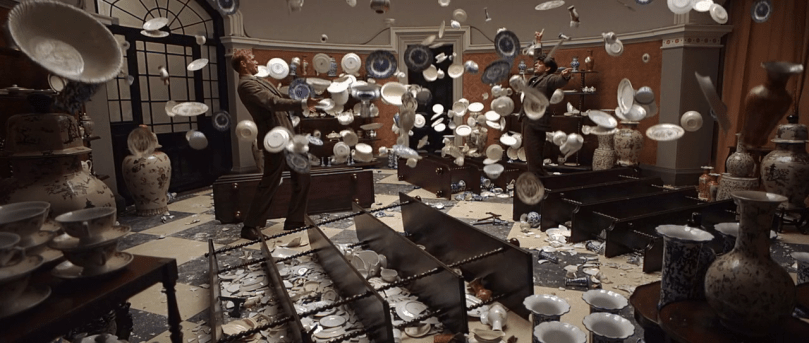
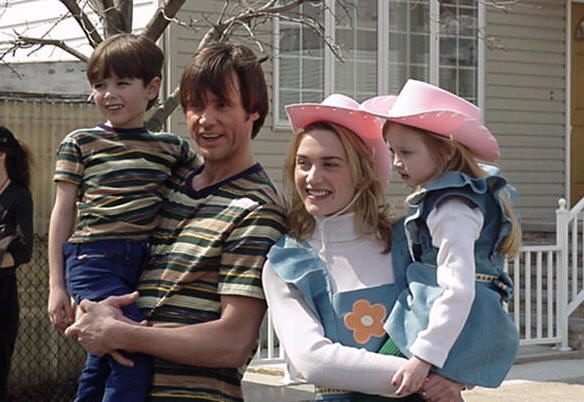
Charlie Kaufman was the celebrity screenwriter of the 00s. Films like Adaptation. and Synecdoche, New York showed that there are still new things to be done (and done very well) in mainstream cinema, but Eternal Sunshine represented the most balanced harmony yet realised from a Kaufman script. It was the perfect marriage between his crushing cynicism and Michel Gondry’s playful, childlike aesthetic, and with great acting across the board, including the best turn of Jim Carrey’s career, this love story of memories, disappointments and ultimately hope had a unique shine. It reminds me of how unusual it is to see recognisable characters up on the screen – people you can identify strongly with, and feel like you’ve met before. If the characters have a somewhat defeatist attitude, it’s because that’s what Kaufman sees all around him in an age of short attention spans and hurried divorces.
Classic moment: Joel wakes up – again – to the tune of Jon Brion’s wonderful score, and the narrative threads start to connect.
When City of God burst onto the screen in front of a packed house at the Christchurch Film Festival in 2003, that now-iconic blade sharpening and running chicken made everyone shut up and pay attention. When we emerged a little over two hours later, the dynamic storytelling of Meirelles’ film had rendered the real world toothless and banal, as if everything was in slow motion – our own lives so much less interesting after witnessing those played out in the favekas of Rio de Janeiro. The kids, the gangs, the violence… it was so different, so brutal and alive. It was, as Empire magazine put it, ‘at once a laboratory for cinema technique and a victory for raw heart… a snot-nosed, blood-stained masterpiece’.
Classic moment: The motel murderer is revealed in truly chilling fashion.
von Trier was probably the decade’s most controversial director, serving up Dancer in the Dark, Manderlay, Antichrist and Dogville – all fascinating works that completely polarised critical opinion. Those that liked him couldn’t get enough of him; those that didn’t truly detested him, leading to press conferences of an almost threatening tone (3:50 in this clip). I’m firmly in the former camp: his films are the work of an artistic genius, bursting with ideas that go against the grain of popular thought, and Dogville is his most triumphant statement – both artistically and philosophically – yet. Shot on a barren soundstage, it tells the story of a woman on the run from gangsters who is sheltered in a tiny village; this being a von Trier film, things do not go well. Far from being the anti-American statement so many made it out to be, this is a story that speaks to the whole of humanity and to the close-minded nature we all have in some way or another. The final scenes are some of the most truthful, and gripping, of the decade.
Classic moment: The gangsters catch up with Grace, and the boss tells her she has a tough lesson to learn.
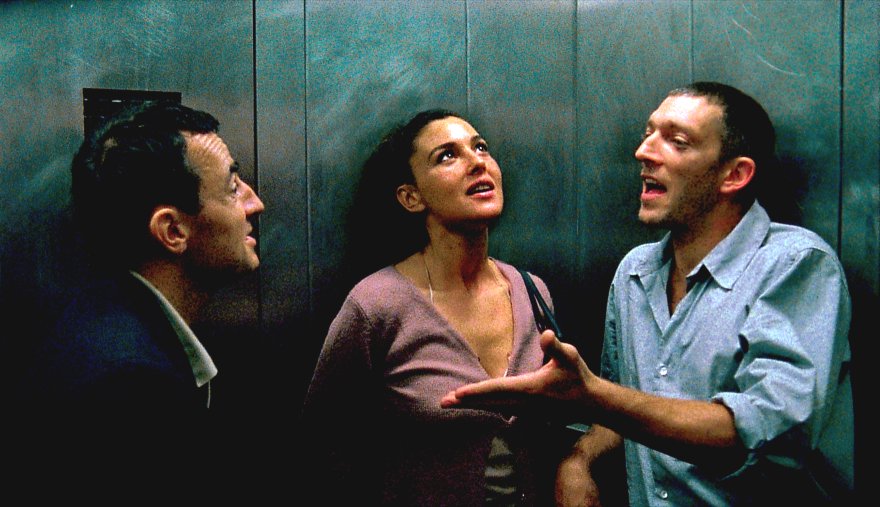
While I’m on the subject of controversial films, this… is about as controversial as the 00s got. Told in reverse, this is the story of a rape and a murder, and both scenes are protracted, graphically detailed and almost impossible to watch. Still, Noé’s aim isn’t merely to shock. The film works on a number of levels: the nature of the beast within, the dynamics of human relationships, our voyeurism as filmgoers, the capability of CGI and special effects to enhance a cinema experience, and of course the film’s central conceit: that ‘time destroys everything’. Were it structured solely around those two scenes, it would be more of an interesting if off-putting experiment; however, with a third act in which the previously dizzying camera slows down and shows real-life husband and wife Vincent Cassel (that man again) and Monica Bellucci canoodling during a lazy morning in bed – the opposite of those earlier scenes – Irréversible is elevated to an uncommonly high level. At the same time it’s a film I hesitate to recommend to anyone, as it’s the most realistically violent film I’ve seen save The Passion of the Christ, but those who come to it with an open mind and a good deal of mental preparedness will likely be rewarded. It made me feel physically sick, and haunted me for weeks, but I left the cinema in stunned admiration.
Classic moment: The two friends go on a horrible, disorienting odyssey through the gay nightclub ‘Rectum’, searching for Alex’s rapist.














 Jdanspsa Wyksui