Christchurch Earthquake: “realising there is only one way out”

Danielle is another former colleague of mine, and another person I always think of as being calm and collected. She has found a clear positive as a result of the earthquake – a new career – but that takes nothing away from the fear of Feb 22 and subsequent aftershocks.

*

What was a negative emotion you felt on Feb 22?

Fear is what I felt when it happened. Being at the back of a high storey building I was worried about it collapsing, the ceiling panel falling beside me, and realising there is only one way out through the shop because the emergency exit out of Adventure Centre was blocked.

Then fear for my partner, who works on the 2nd level of a building on Hereford St. He was not in NZ for the Sept quake, so was worried for him as this was his first experience.

I remember seeing the Cathedral coming down with each shake and watching as injured people were pulled from the rubble. I didnt know this at the time, but I was told some those people were dead.

What about a positive emotion on that day, or over the course of the following week?

Relief when my partner found me in the Square, having him there to hold me through each aftershock.

We then walked from the City centre to Harewood through Liquefaction, listening to the Radio updates thinking how lucky we were to have survived such an ordeal. It wasn’t until a few hours / days later that everyone realised how damaging and fatal the quake was.

For me, I lost my job, but a good thing came from that – I found a better job. I am lucky my house is not majorly damaged.

Christchurch Earthquake: “the relief as people start checking in”

Dave Jackson is a university student from Hamilton whom I discovered on Twitter, somewhere in the lifetime of the #eqnz hashtag (which has become Twitter shorthand for everything Christchurch has been through over the past year and a half). He was in Christchurch until before Christmas 2011, studying at Canterbury University (where I also studied). He thus experienced both the first September 2010 quake and the big one a year ago today.

Dave was kind enough to let me cross-post a few words from his blog. The full entry is here; his words below are about getting home at the end of the day.

*

I sat down at the computer and the full extent of what had happened hit me, the checking in of people being OK and telling friends that you were fine. Then bed, snatched grasps of sleep between aftershocks. The booze and the sleeping pills looking tempting as hell, but you want to make sure you’ve got all your faculties about you if you need them.

Emotionally it was a frantic day. The initial panic of the quake, followed up by a sense of relief. Then the unease as you hear what happened, about the destruction and deaths. Then there’s the panic as you haven’t heard from people, the relief as people start checking in, and then as you get home to find power is back on you take a break, because you know that tomorrow is going to throw some challenges at you you never thought you’d face.

What’s your favourite part of your day?

Straightforward question: what’s your favourite part of your day? As in, which moment or segment of your daily routine do you enjoy and look forward to the most?

I ask because I’m just getting used to having a regular workday routine again after two months of unemployment. It occurred to me that I have a favourite part of each weekday: the last five minutes of my walk to work.

You might think this is strange. Shouldn’t the impending eight and a half hours stuck typing at a desk fill me with a growing dread?

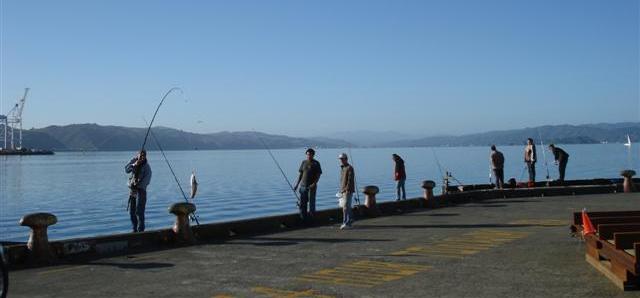
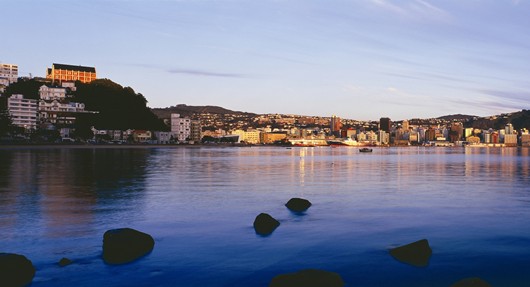
The reason why it doesn’t is because for those five minutes, I am walking along Wellington waterfront. The waterfront is one of the best things about living in Wellington: it’s clean, attractive, full of interesting developments (like Te Papa or The Boatshed) and it looks out over a stunningly beautiful body of water, Wellington Harbour. The suburbs of Mt Victoria and Hataitai rise in staggered chunks past one end of the waterfront parade, and you can see the Rimutaka Hills in the distance, often shrouded in cloud. Beyond the Rimutakas, to the east, the sun rises higher and higher.

I love this part of my day because for these five minutes, I am more in the moment than at any other time. It’s easy to feel clear-headed when confronted with a view that is spellbinding in a different way every single morning. Those clouds over the Rimutakas, for example, might be wispy cirrus streaked by the Wellington wind or a cumulonimbus threatening storms later in the day. They might be absent altogether, casting surrounding buildings in the fresh yellowish light of the morning sun and filling the harbour with the deep blue of the skies.

The harbour is the main attraction, of course. I struggle to take my eyes off it, noting the patches of water which are calm, for whatever reason, while the rest chops and undulates. I like it best on overcast days when the morning sun illuminates the water through the clouds, transforming it into a silvery, shimmering sheen.

I walk close to the edge. A test of my ever-palpable appel du vide. That’s another good way of staying anchored in the present moment. Sometimes I stop for a couple of minutes and observe as many aspects of the scene as possible, then try to draw them together in a single frame in my head in an effort to take onelasting mental photograph.

My five minutes are up when I reach The Boatshed. I reluctantly turn inland towards my office, leaving the waterfront (and water) behind me. I go with an increased appreciation for the gifts I have in life. My eyesight, for example, is terrible – I’ve needed glasses for years – but I’m still visually capable enough to take in the wonder of the morning scene.

I’d always wanted to live in Wellington. Now that I do, those five minutes each morning are enough to make whatever time I spend here completely worthwhile.

So, how about you? What’s your favourite part of your day? Is it watching people on the train? Or maybe the moment your head hits the pillow at the end of the day? Comment/blog away…

You’re Very Not Welcome

Those who know me or follow me on Twitter have heard all about my bizarre and extended difficulty at leaving India. For those who don’t, or who want to get ‘reacquainted with the facts’ as Gandhiji would say, here’s a quick summary (feel free to skim over, this isn’t the important bit):

1) I was asked to leave India because my salary is too low. The Foreigners Regional Registration Office (FRRO) in Thiruvananthapuram told me that I had to get out before July 5, which was when my final visa extension would expire.

2) However, in two and a half years here I’ve never received an actual physical stamp of extension from Delhi, so Immigration rejected me at Mumbai airport and scolded me for not having an exit permit. (The FRRO had told me that I didn’t need anything to leave.)

3) I returned to Kerala to get the exit permit, which I was assured would be ready by Friday 8th July (yesterday); it wasn’t, of course. This meant rebooking my flight a second time. The FRRO insists to me the exit permit will be ready on Monday 11th; I’ll take a train to Mumbai on Tuesday 12th and fly on Wednesday 13th, hopefully to be in NZ Thursday 14th.

4) [I’ll leave this space blank for whatever goes wrong in the coming days. There will surely be something.]

(I acknowledge that it is ultimately my fault that I’m in this mess, because if I’d done more research back at step (1) I’d have known of the need for an exit permit. I’ve lost upwards of Rs 30,000 as a result, which was all the money I’d saved for my intended one-month holiday in New Zealand (most of which would go towards a tour of the country to visit family), so when I get back to NZ it will be for an indefinite period of time and I will be looking for work straight away.)

Okay. Those are the facts. What I want to talk about now are the implications I derive from this saga about where I am or am not welcome.

In India, a key philosophy is that ‘the guest is God’ – or, in other words, a visitor is a blessing and should be treated as such. Whenever I visit somebody’s home, all the family members present will be called to come and welcome me. I’ll be seated in the most comfortable chair in the living room and someone will bring tea and a selection of snacks (or, if it’s around lunch or dinner, a small meal). The TV will be switched on so that I have something to watch, if I so wish, and to make me feel at home (I don’t own a TV but okay, the gesture is sweet). Until the time I leave, the house’s entire focus will be on me. If a child sleeping in another room wakes up and starts crying, someone will quickly go and return with them, missing only a few seconds of doting on me, the guest.

This literal sequence of events has happened many times over during my three years in India. Apart from that, I am very fortunate in that I know many wonderful people in India (again, both in person and on Twitter) who have made me feel extremely welcome here. I’ve even felt at times like I belong – which is ideally how it should be. We’re all human, after all.

The past month or so, however, has been a constant struggle against a system which simply does not care, and certainly makes no effort to make me feel welcome. I’m by no means saying that I deserve special treatment – and my experience is not even close to the worst it can get for a foreigner, let alone a poor farmer in Bihar – but between traditional Indian hospitality, which I so keenly feel among regular people, and the impenetrable bureaucracy of the government and its processes, there’s an enormous disconnect.

When one government worker rebukes me loudly and openly for following the instructions of another government worker – which is what happened at the airport – I certainly don’t feel welcome, even as I was being told I couldn’t leave. When one government worker rebukes me for following his own instructions – which is what happened the moment I got back to the Trivandrum FRRO – I feel absolutely insane, like an insignificant insect who keeps knocking on the door of the system, thinking ‘this time they’ll listen’. The FRRO then went on to lie to me about what he would do to help me, just to get me out of his office; once my planned exit permit fell through yesterday, he finally adopted a remorseful and guilty tone, though of course he didn’t apologise.

I still take responsibility for not getting things done the right way at the start, but all this just made me think that there’s only one place where I am truly welcome, and that’s New Zealand. Why? Because I hold a New Zealand passport. Most of my family is there, and they do accept and support me wonderfully, but the passport is the key here. After all, there are kind and genuine people everywhere, and thus potential for feeling a sense of belonging wherever you go, but the only order of law that will serve my interests is that of New Zealand.

Naturally, every single one of my calls to the New Zealand Consulate in Mumbai was answered respectfully and with great care, including several times by the Consul General himself. Concurrently, I spent three days calling the Trivandrum FRRO while I was in Mumbai but he rejected the call or let it ring every single time; I had to travel 2000 kilometres over land just to speak with him. This now does not surprise me. He is part of a system which is neither set up to look after nor care for me, let alone make me feel welcome.

So, back to New Zealand I go, unsure of my next move. I had intended to come back to India at the end of July – I even booked a return ticket – but that is now impossible for a number of reasons both financial and temporal. New Zealand is my legal home and I can live there largely free of the hassles of bureaucracy, so it makes sense to be there while I get back on my feet.

The most distressing implication, for me, is that in today’s world one simply cannot expect to feel automatically welcome with one’s fellow men and women around the world. In fact, the opposite is true. In India, since the 26/11 Mumbai attacks and the David Headley scandal, the majority of people – especially government officers – are extremely suspicious of foreigners. By the sounds of things, it’s the same everywhere. Foreigners have plenty of trouble trying to enter or remain in the United States, in Europe, and in New Zealand. The fallacy that outsiders pose the greatest threat to a nation’s security has become rule of law.

I’ve made a number of deep and strong human connections in India, connections that I hope will last for a very long time, and I have in many ways felt at home here. Those connections, those people, are a home of sorts. (I’ve been thinking a lot about what ‘home’ is lately, especially since I was asked to leave India; am working on a long-form post about it.)

Those connections will have to wait, though, or at least remain strong across continents until I’m in a position to wade through the bureaucracy once again. I can’t help feeling that there must be some way that we could all move freely, as if each of us were a citizen of the world rather than a particular nation. But it would require everyone to behave with the collective good, the best interests of our species, at heart. That is hugely idealistic and unrealistic to begin with; now that the system is set up to engender suspicion of foreigners and promote the idea of ‘us versus them’, such a genuine global community is unforeseeable.

It’s a bitter pill to swallow, especially when I know that in a place like in India, the prevailing traditional ideology was to be welcoming. I suppose I’m lucky that I’ve been able to experience its influence with so many great people. More than anything, those people and experiences drive me to overcome the system, to jump through its hoops and fight it if necessary, just so I can spend an extra minute in their company.

Music, An Anchor for Memory

Right now I’m listening to ‘Province’ by TV on the Radio and it’s hot and humid, but the feeling inside and around my body is bitterly cold. The sounds of music and exploding crackers are pretty much constant outside from the three separate temple festivals going on near my house in this little tourist town in rural India, but through these headphones, the song takes me back to an inner silence deeper than most I’ve known.

Return to Cookie Mountain, TV on the Radio’s second album, came out in 2006 and I bought it the same weekend it was released. It was the middle of winter and I was living in Christchurch – yeah, that place that got hit by a big earthquake a month ago, but not as big as the one in Japan, but still pretty big.

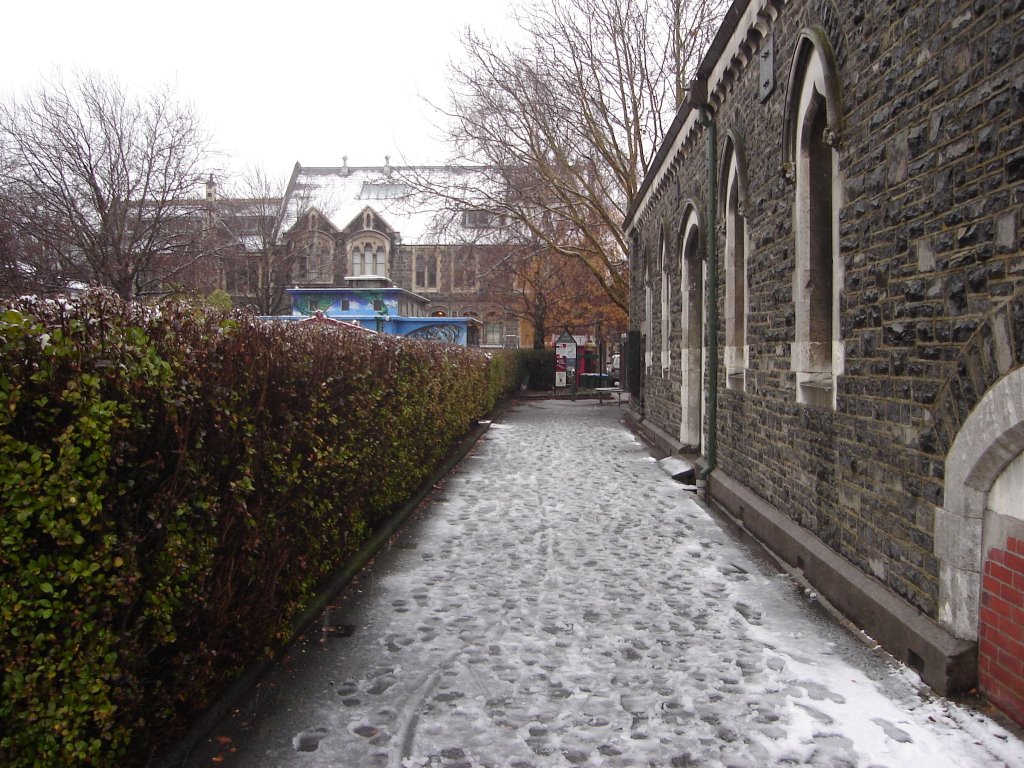
I was living in the centre of town, in a building which apparently no longer exists, and working just a few minutes away next to the city’s main landmark: Christchurch Cathedral, and its Cathedral Square. I walked that 750 metres to work and back hundreds of times over a year and a half living in that flat, and while the brilliant blue skies and pleasant, dry and warm summers were wonderful, I’ll always remember Christchurch for its winter.

Christchurch winters aren’t desperately cold by global standards, hitting probably -5°C most nights in the July that Return to Cookie Mountain came out. This was cold enough for me, though, having grown up in the warmer North island, but luckily there was a trade-off: of the hundred bone-chilling nights of each year, one (or maybe two if we were very lucky) would be covered with real snow.

To warm that chill in my bones in the evenings, I’d take my CD player and listen to something as I walked. The walk to work was only a song’s worth, or half a song if I was listening to Orbital, and while I sometimes had my earphones in as I walked in the door of the souvenir shop I worked at, I usually felt like I was being a bit gratuitous. I mean, how hard could it be to walk five minutes without a personal soundtrack to occupy me, to handle the world outside my home without cutting out its sounds and replacing them with something which seemed more like part of me?

The walk to the video shop, however, was different. I would go to Alice in Videoland every Thursday evening to drop off last week’s rentals and pick up new ones. Wednesday and Thursday were my days off back then, my weekend, and I could hardly think of a better way to spend an hour than browsing the shelves at Alice’s. And being a full fifteen minutes away, I could fit in three songs, making the CD player a much more reasonable option – and for a good month or so, those three songs were the first three tracks of Return to Cookie Mountain.

I’d throw on my long black jacket, shove the CD player in the inside pocket, lock the flat behind me and press play as I got out into the street. Shuffling my gangly, poorly conditioned limbs along those gold-tinged, immaculately paved streets with TV on the Radio in my ears was pretty much perfect. I’d go into and through a near-empty Cathedral Square and as I came out the other side to cross Colombo St; a gust of icy wind from the Port Hills would throw my hair up and cool my face, and I’d wrap the front of my coat closed to ward off the cold.

Right about then, Province would start up. And I’d listen to it, Adebimpe, Malone and Bowie wailing about love in harmony as I walked on down High St Mall and then High St, past that cafe (whose name I’ve forgotten) I ate at with Ed and Rach, past Helen’s design studio, the song closing out just as I stepped off the street and into Alice’s – ah, heaters – the new releases there, as always, to greet me.

And I never forgot that feeling, somehow, without ever thinking about it. The music gave me an anchor on which to hang the cold, the coat, the flat and the paving stones, the cathedral and Alice’s, all those feelings enveloped by the sounds in my ears. On those 15-minute walks, ‘Province’ took on its own private meaning for me, one which I didn’t realise at the time: it would be the song that took me back to a certain time in my life, a particular feeling, the subtly indescribable emotion and physicality of it.

It’s simple, really. The memory is stronger than the song, but as an element of my life which remains constant however far I get from the memory, the song is what brings it all back. That’s to say, I can listen to ‘Province’ today in my hot house in India and it will still be the same ‘Province’ as it was four and a half years ago on the cold, dry, clean streets of Christchurch. The memories, dormant in this magnificent organ called a brain, come flooding back as clear as ever when I hear those simple chord progressions struck firmly on the piano.

It isn’t classical conditioning, but I’m sure there was something I concurrently studied in psychology classes that matches up. I see songs like ‘Province’ as an anchor on which I hang my memories, and it may have only been a flash of a millisecond back in 2006 where I felt the music, the cold, the city and everything else that stayed with me, but sometimes that’s enough to bring it all together and cohere into a memory that stays with you for the rest of your life.

Now, tell me your musical anchors.

(My brother wrote about this ages ago, so check out his post too. I give him the credit for getting the idea out first and for being an inspirational older brother who inadvertently plants ideas in my head.)

A Mall Away From Home

Way back in 07, a few months into Japan, I wrote a bit about missing the familiarity of a New Zealand supermarket while getting used to the ones in Japan, which obviously contained completely different products. Something somewhat similar happened when I visited Mumbai at Palladium Mall, a ather opulent (at least by Indian standards) edifice in the CBD. I had expected something quite different, and found myself comparing the experience both to my (glorious?) past experience of malls in NZ and my preconceptions of an ‘Indian Mall’.

Upon arrival, my charming host needed to do some toy shopping for a children’s birthday party, so she suggested I go for a wander in the main mall while she waded into the crush of Hamley’s opposite. Off I went, into“Mumbai’s most luxurious retail destination centre”, and what greeted me was a cavernous space rising up three floors, ringed with exclusive outlets on each level. Everything sparkled and looked very expensive, all brand names and price tags, and the biggest impression of all came from the fact that it was nearly empty at lunchtime on a weekday.

I instinctively whipped out my cameraphone and started taking a few pictures. A security guard came hurrying over. “Sir. No photography.” I apologised and put my phone back in my pocket, then started to meander up the escalators and into the abyss. I wasn’t allowed to capture the moment, for whatever reason, but in a way there was nothing to capture – it was this bizarre, static world of exclusivity and nobody actually buying anything.

Read more at The NRI…

Mrs Ransley’s Fish ‘n’ Chip Emporium

One of the things that I miss about New Zealand is fish and chips, or fush un chups in our delightful accent. I do presently live in a tourist town by the sea and can eat very fresh and delicious fish and chips if I take a short walk out to the cliff, but to my mind, that is not real, pukka fish and chips – not that of my memories, at least.

I don’t know if every Kiwi has a fish and chips memory that romantically sticks in the mind, but I certainly do. It was one of those great, hope-filled Friday evenings of childhood – with a whole weekend of sun and bikes and whatever you wanted ahead – and I was about six or seven. The whole family was still living at home in Tokoroa. My oldest brother Ed told me that somehow I had more pocket money saved than anyone else in the family had disposable income, so the bill for this week’s jaunt to the local takeaway was on me. This was a cause for great excitement. I could provide for the whole family! (How the mighty have fallen.)

I went down with Ed and maybe my mum or my dad, I can’t quite remember. Mrs Ransley greeted us as we entered. She taught at the school I had went to but owned our local fish and chip shop and worked it – overalls, apron and all – in the evenings. After we placed the order, I watched my brother play spacies (coin-operated video games) until it was ready. I paid, full of pride, and we took it home.

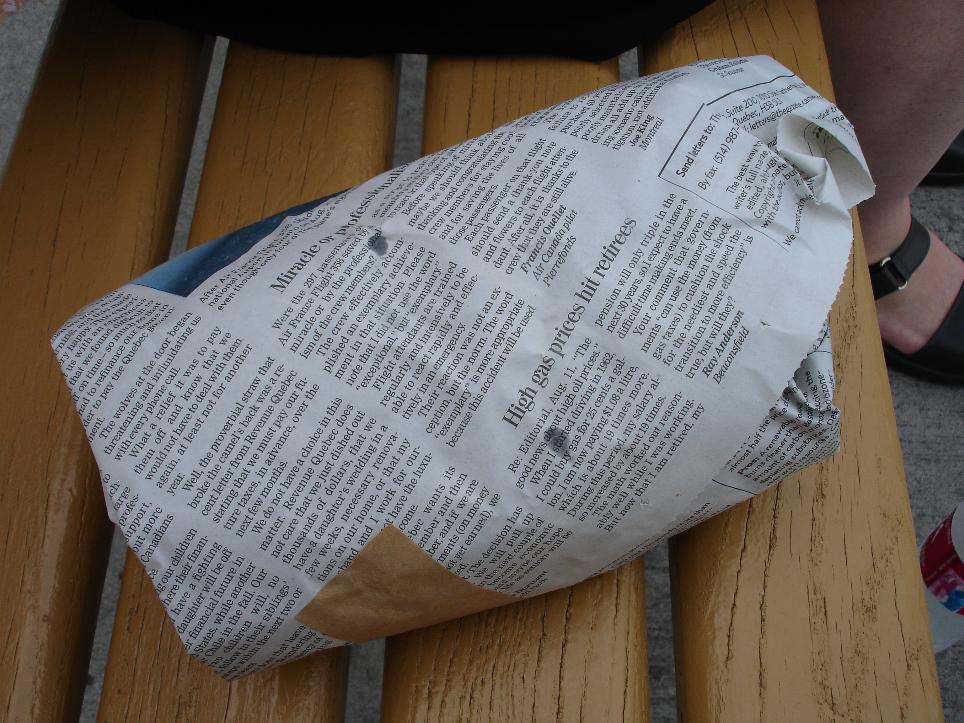
Unwrapping the newspaper, we met with an unfamiliar sight. Fish and chips are usually jumbled together – a bed of chips with pieces of fish, hot dogs, donuts etc arranged around/on top of it – but Mrs Ransley knew us all personally and had added a personal touch: she’d organized the whole meal into five little parcels, one for each of us, all labelled by first name. I eagerly grabbed mine and took it to the living room to watch TV, ripping a corner off the parcel through which to extract steaming pieces of potato, soggy and delicious.

Much to my embarrassment, I didn’t actually enjoy fish in really any form until I left NZ just three and a half years ago – first Japan opened my mind to sushi, then Kerala to meen curry and meen fry – so my little parcel probably contained a hot dog and chips. Never mind.

As I say, these were not great chips. They were not crispy, golden, perfect jacket wedges like you would get at some expensive boutique fish and chip shop nowadays. They came from a frozen packet, as did the fish fillets, and were deep fried to hell and back. They constituted the kind of grease-heavy meal that, upon finishing, you would think, “I’m never eating that again”. But it was so exciting – that Friday night reward at the end of a week of school, or a special treat whenever we went to the beach. The fish, if I had it, was generally pretty tasteless and improved vastly by a vat of tomato sauce.

It’s not the taste of the food that I remember, though – it’s the feeling of unwrapping that parcel in the living room or by the sand, tapping into the thrill of opening a gift at the same time as being allowed to eat food that is bad for you. Maybe that’s what I miss – that nostalgia-tinted memory of a simple childhood joy – and not the fish and chips themselves. That feeling never quite dies away completely, though. As those boutique shops replace the Mrs Ransleys of this world, it’s harder to recapture, but if I get to return to NZ this summer, I’m hopeful that I’ll be able to find it.