New job and sleep regressions — first the kids, now also me — have pushed these little arts appreciation notes into the background. So here’s an omni-update to cover the last three and a half months.
First, really quickly, I made a couple of YouTube homages as a birthday present for Tara. The first apes Japan Eat, who uploads one-minute shorts every day about eating food in Japan at restaurants, convenience stores and food alleys. His speedy, mostly monotonous delivery masks a genuine desire to like the food that’s put in front of him and the knowledge to place it in some kind of context. He particularly focuses on smaller, out-of-the-way places, as evidenced by his constant references to ‘mom and pop restaurants’, and he’s way harder on the bigger or more popular establishments. Anyway, I pretended he came to Paraparaumu and ate a piece of cheesecake at Hudson’s in Coastlands Mall:
The second pays tribute to Fairbairn Films, two Aussie brothers offering commentary on 21st Century life by shouting at each other. Jeff and I didn’t get the sight lines anywhere near right for this, and I’m obviously reading, but still, I’m pleased with the writing and it was great fun to make.
Have you made anything lately? Now to the books and movies.
*
BOOKS
Faves
Alice’s Adventures in Wonderland by Lewis Carroll, 1865
Finally got to the source. I don’t think it’s hyperbole to say this book goes beyond centrality to the Western literary canon; it’s fundamental to the Western idea of childhood as a place of fancies and nonsense and constant threat. I suppose Carroll follows the Brothers Grimm in that tradition, though his fey landscape is less grim and more absurd. His writing is very readable considering it’s 160 years old, and I suppose it’s that accessibility, along with the many fascinating images and characters conjured, that helps the myth persist. I found it interesting that I couldn’t get a read on Alice, who blunders from one peril to the next, munches almost constantly on snacks, and stroppily refuses to accept this strange world on its terms, all while characterised by Carroll as gentle and courteous to all and rendered in Tenniel’s illustrations as soft and long-lashed, but severe, a kind of porcelain doll with oddly adult features. I wonder what the real Alice made of her.
Gentlemen Prefer Blondes by Anita Loos, 1925
It’s not often you read a hundred-year-old book and feel like it could have been written yesterday. I guess Lorelei Lee would’ve been on her phone an awful lot if so. I mean on the page she seems fully formed and recognisable as a contemporary figure. Contemptible, untrustworthy, still somehow innocent, perhaps because of the quirks of prose and misspellings, and because a parade of probably even worse men keep dropping everything to pursue her. I was darkly fascinated and will have to reread Gatsby to see if this was the actual great American novel of that year.
The Great Gatsby by F. Scott Fitzgerald, 1925
For me, ‘The Great Gatsby’ invokes stuffiness and school classrooms, even though I’ve read it before, not at school, and know exactly how incisive and cynical it is about high society and America itself. It’s the title, which sounds lofty enough in itself and isn’t helped by its association in the hundred years since with essay structure: introduction, point 1, point 2, point 3, conclusion. Reading it again, there could be no other title. We all know Gatsby isn’t great, though in his polite and straightforward pursuit of an honourable but misguided goal, he is greater than pretty much everyone else in the book. And of course, he isn’t even Gatsby either. I’m pretty well fed up with the idea of the great American novel written by a white man that skewers the American Dream and leaves you disenchanted — but, truly, here is that great American novel.
Of Walking in Ice: Munich – Paris: 23 November – 14 December, 1974 by Werner Herzog, 1978
This review pretty much nails it for me, especially the last line:
“This is Herzog in the maelstrom of transformation into myth while remaining a man with hungers and pains and compassion.”
The man is so closely attuned and devoted to his own legend that the reason for his long walk — mentor Lotte Eisner’s ill health — becomes secondary to the walk and the man walking it, most of all the liminal spaces expanding inside his head in the pouring rain and snow. (He is thoroughly soaked throughout.) To be fair, it’s a journal scrawled out in real time, not intended for publication, but he still went ahead and published it anyway. A flight of fancy somehow still recognisable and rooted to the real world, much like his films.
New releases
Theft by Abdulrazak Gurnah, 2025
Loved Gurnah’s talent for drawing you into a story here. This is a sharp focus novel of rooms and subtle looks, and I smashed through it. I’m not sure where that ending came from, though. That one guy’s ambition was always there, true, but it went unexpectedly off the charts in the final third. And I’m not sure I buy the other two, seems a bit contrived romance to me. But so what? Solid, a pleasure to read. My first novel by a Tanzanian.
Dream Count by Chimamanda Ngozi Adichie, 2025
This book took me some time to plod through, I think because only one or two story threads really captivated me enough to draw me back whenever I had free time. Overall it’s a frustrated and sometimes frustrating collection of moments and lives, sitting comfortably in financial privilege most of the time but most compelling when the focus is on a less comfortable character, whose wants and hopes and dreams are so much clearer than the rich women into whose orbit she fortuitously spins, and, in her plain-thinking way, spins them properly off course. Adichie has such a talent for spinning a yarn in rich prose, and I feel enriched by her literary gifts, but also sometimes irritated by her predisposition to write characters fortunate enough to be so self-obsessed.
Universality by Natasha Brown, 2025
Not sure what I’m supposed to think. Anti-diversity shills are taking over the world, column inch by column inch? The ‘marketplace of ideas’ (man I hate that phrase) is still in the pocket of the usual pale males? Either Brown is a satirical galaxy brain beyond my simple reckoning or I’m just not buying what she’s selling. The scene-setting magazine article that opens the novel is the longest section and the best; once we’re flitting around in people’s heads, the prose and story fall over. The working class make the barest intrusion into the world of these characters and the mastermind kingpin around whom the plot turns feels very low stakes to me. Competing for fleeting and quickly forgotten scrolls. Is all that the point? Is the climax supposed to feel so anti-climactic? Is it a commentary on all the time we waste debating identity politics while the world burns?
Children’s
Whetū Toa and the Hunt for Ramses by Steph Matuku, 2021
More chaotic and episodic than the first one as Whetū and Tori the cat ride starbeams to all sorts of weird, wonderful, and properly frightening worlds. The climax takes place in a land of machine overlords and mammal enslavement. Grim. But there’s a point to it all, some great messages for kids (and adults), and they’re subtly driven home. Not sure my character voices are on point but the children were well into it and laughed a lot.
The Secret Wreck by Linda Chapman, illustrated by Mirelle Ortega, 2022
Is this the end of Mermaids Rock?! (The series, I mean, not the characters’ home, which remains very much intact.) It sure seems like it. These kids are getting too big and adventurous and complex for brief sallies away from their wee patch of sea floor. Soon they’ll be going to university, and falling in love, and circumnavigating the globe powered by nothing but snack powder packets and perpetual phosphorescent tubes concocted by Naya in her lab — assuming she uses her powers for good, not evil. Exciting for the kids, with the usual positive messages about working together and to your strengths.
The rest
Sabine’s Notebook by Nick Bantock, 1992
Exquisitely designed exercise in frustration, not the good kind. Fragile man seeks liberation from self, but world is self.
The Dark Forest by Cixin Liu (translated by Joel Martinsen), 2015
I had the same feeling as with Iain M. Banks novels: that working on the grandest scales and following the boldest flights of fancy inevitably gets a bit silly, like lining up the entirety of your unfathomably expensive space war fleet to be dispatched by a single alien probe in one clean fell swoop. The ideas are so compelling that it doesn’t really matter and I flew through 550-odd pages. It’s the middle-of-trilogy novel so I don’t think I can properly consider it until I’ve read the last one, which I will, next year.
*
MOVIES
TANGLED directed by Byron Howard & Nathan Greno, 2010
Wife absolutely adores it. I found it quite forgettable on first viewing many years ago, but I’m starting to see the positives, particularly a somewhat realistic portrayal of parental abuse in an animated children’s film — calculated but seemingly offhand negging, persistent gaslighting, plus of course the textbook incarceration in inescapable tower… Is that a positive? Well, my kids are going to come across people like this in life, and seemingly already are, so it’s helpful to see that on screen and see how they can be liberated from that, although it shouldn’t have to take a man riding in on a horse. Or pursued by a horse. There are also some truly spectacular visuals, and with a trip to DisneySea planned for November, I’m genuinely excited to be surrounded by those lanterns too (if I’m lucky).
PENGUINS directed by Jeff Wilson & Alastair Fothergill, 2019
We’d had kind of a rough run with movie night choices, and for this turn, I wanted something: -short -funny -physically comedic -not animated -without dead parents Because there’s only so many times my daughter can come out of bed at 9:08pm with an anguished look on her face and say, “I don’t want to die” or “I don’t want you to die” before you think hey, we’ve got a sensitive one here, maybe we aim really low for a year or two and steer clear of all those classic family movie shortcuts to drama involving absent parents or orphanhood or visceral on-screen murder of the noblest lion ever to lead the animal kingdom. So, in a panic, I chose PENGUINS, a cutesy documentary with Ed Helms narrating and voicing a heavily anthropomorphised story about the world’s clumsiest penguin. And the kids laughed, and it held their attention, and learned a thing or two from the unreal 4K cinematography of brutal, desolate Antarctica. I never thought I’d say this, but thank you, Disney.
HOW TO TRAIN YOUR DRAGON directed by Dean DeBlois & Chris Sanders, 2010
Same as the first time — I don’t really get it because I don’t lose my mind every time Toothless appears, as my wife did and as my kids now also do. Like, these deranged, high-pitched sounds whenever Toothless moved sideways, or looked up and then down again. It’s not that the film overall has nothing else — it is charming enough and occasionally surprising — but what would be its reason for existence, and most of the creative choices, without the need to sell stuffed Toothless toys?
RATATOUILLE directed by Brad Bird, 2007
King stay the king. Yeah, it’s about fine dining and criticism, to which you might say, who gives a shit? Well, RATATOUILLE and Peter O’Toole made me give a shit.
Devoted father and husband. Committed contrarian. Impostor, loner, optimist, troll. Pushing 40. No, hang on. I am 40.
I am a contrarian because in any conversation, my instinct is to first pander and validate, then to get to the substance of it, the opposing argument, the counterfactual. Yeah, they shouldn’t have said that, absolutely – but maybe they’re still carrying some trauma from what happened before. It has indeed been a difficult year – incredibly difficult – but let’s not lose sight of everything we’ve achieved, personally and professionally, which is considerable.
Amid the hand-wringing and despair, which is admittedly tempting, I insist — mostly to myself — there is hope everywhere if you look for it. Marches for peace, iwi-led green restoration projects, the local vege co-op offering a bagful for $15 a week, even if they do often weigh it down with brassica. Then I read ‘The Three-Body Problem’ with its doomsday cult actively seeking the end of humanity and I wonder whether I’m deluding myself. On one hand this, on the other hand that. Most of all, my views are contrary to my other views.
For me, the best thing about getting older is steadily realising how little I know or understand, and consequently how much more there is to learn. Here’s a snapshot of what I noticed in 2024.
Books
I read 52 books in 2024. Earliest published: 1974. It’s a while since I last had a year of reading so skewed to the last half-century.
These books offered a rare combination of audacity, craft, and ideas that made them impossible to forget:
‘We Are Here: An Atlas of Aotearoa’ by Chris McDowall and Tim Denee
‘Gifts’ by Ursula Le Guin
‘The Books of Jacob’ by Olga Tokarczuk
‘In the Skin of a Lion’ by Michael Ondaatje
‘The Unbearable Lightness of Being’ by Milan Kundera (re-read)
Hard to recommend a favourite but if pressed, I would go for ‘In the Skin of a Lion’. It’s a short read, for a start; no-one who reads this post is going to pick up ‘The Books of Jacob’ when they realise it’s 912 pages long. (Those who do may also be sufficiently moved to write their own short story aping it.) Ondaatje’s book has breathtaking scenes to hook any reader and a profound respect for labour, especially the dirty kind. Like one of its central characters, you won’t be able to shake the smell of the leather tanning pits afterwards, and you’ll think differently about the power and value of the collective.
These books left an impression, not as deeply but enough to still linger as another year begins:
‘Dartmouth Park’ aka ‘How to Make a Bomb’ by Rupert Thomson
‘Werner Herzog: A Guide for the Perplexed’ by Paul Cronin
‘Seven Brief Lessons on Physics’ by Carlo Rovelli
‘The Hundred Years’ War on Palestine’ by Rashid Khalidi
‘Small Island’ by Andrea Levy
‘You Are Here’ by David Nicholls
‘Amma’ by Saraid de Silva
‘Being Mortal’ by Atul Gawande
‘Feijoa’ by Kate Evans
‘The Gosden Years’ by Bill Gosden
‘Cloudspotting for Beginners’ by Gavin Pretor-Pinney
‘Outline’ by Rachel Cusk
‘The Three-Body Problem’ by Liu Cixin
‘The Dispossessed’ by Ursula Le Guin
The kids are at a hybrid stage in their reading. They’re capable enough to read by themselves in bed before turning off the light themselves, and they want to do that most nights. But they want us to read them a couple of chapters or picture books first, all cuddled up in a pile on the sofa.
This means I’ve become quite familiar with Yvette Poshoglian’s Ella and Olivia series of early readers — slight, comfortable narratives in which something goes a little bit wrong but everything works out okay in the end. And we all need to be reminded of that sometimes.
The biggest breakthrough, though, was with Cece Bell’s ‘El Deafo’, a full-length comic about how Bell came to terms with sudden onset deafness as a young child. There’s an increasingly popular genre of autobiographical children’s comics dealing with serious issues like these. Raina Telgemeier, author of ‘Smile’ (corrective dentistry) and ‘Guts’ (psychogenic vomiting and therapy) is the champion, and Bell’s contribution is a worthy — and funny — addition.
At heart, these books are about learning to deal with other people knowing what’s different about you. I’m on the fence as to the value of sharing all these awful bits of other people’s childhoods with my sensitive kids because they’re as likely to keep them awake at night as to reassure them. Are they better off not knowing? Would they handle the shunts of the peer group better without a bunch of thought-provoking texts to refer to? I don’t know, but I do think books that reflect the reality of childhood and plot a relatable path through it are a public service, and I often wish there’d been more of them when I was little.
Music
My favourite ten seconds of a song in 2024 were the lead-in and drop for the first chorus of ‘Things You Didn’t Know’ by Clara La San, from fave album of the year Made Mistakes. It’s aloof to that point, a spark in the gloom: four repeated ascending notes, La San’s lead vocal and the “ooh boy” backing it up, and some simple bass and percussion loops. But then a rich bass synth kicks in, and the elements from before shine more brightly. It’s like the floodlights have come on, revealing that what you thought was a small bedroom is in fact an enormous, reverberating cavern.
Clara La San had worked and reworked this half-hour of echoing R&B, her first album, over a few years. The tracks feel lived-in for it, spacious, with an elusiveness that I would say is her signature if it weren’t for her post-breakup lyrics playing it absolutely straight. But I’ve never cared that much about the words. It’s the feeling a song evokes, more than the content. And you can swim in the feelings here. To me she inhabits a space that’s always dark and a bit mysterious, as if she’s addressing you from the other end of a long, unlit tunnel. She released a second album in December, too late in the year for me to properly absorb, and my first impressions were of some sparks of light emerging. But I still want it dark.
A close second was the second part of the chorus in Nilüfer Yanya’s ‘Made Out Of Memory’, the bit that starts with Yanya crying “people wanna blame someone” as if it’s an epiphany, like – finally I understand, it wasn’t personal.
BRAT, the biggest album of the year, didn’t pass me by either. The record about which my increasingly dismissive kids would say, “You ALWAYS listen to this!” Several standouts (and for me, quite some filler too) but the one I’ve come back to most is ‘Sympathy is a knife’ and another bone-rattling bass drop to kick off the chorus.
Other albums that held my attention in 2024:
Mon Amour Mon Chéri by Amadou & Mariam
Magda by Donato Dozzy
Chapultepec by Lao
Bright Space by Mikey Enwright
Silence Is Loud by Nia Archives
No More Water: The Gospel of James Baldwin by Meshell Ndegeocello
Everything Squared by Seefeel
PRUDE by Drug Church
Fragments of Us by Midland
Nobody Loves You More by Kim Deal
I’m talking albums still, yep. Spotify continues to push Smart Shuffle at me, switching it back on with every update as if I’d turned it off by accident. Apparently, it’s normal nowadays to open Spotify and browse for something to listen to, which I find gobsmacking when a) the interface expressly discourages exploration, and b) there are still so many other sources from which to discover new music.
There may not be any money in it but I am here to tell you the album is not dead. Go to the new releases on any media outlet that reviews music and test-drive anything you like the sound of. For me, it’s Metacritic and Resident Advisor, with the occasional dip into the ocean of noise that is Album of the Year dot org. From these, I piled up a decent set of absorbing repeat listens — here’s a playlist of samples assembled, naturally, on Spotify.
Movies
A ranking of new films I saw in 2024. This won’t take long.
THE ZONE OF INTEREST
ENO
FLOW
THE BOY AND THE HERON
INSIDE OUT 2
ORIGIN
POOR THINGS
KUNG FU PANDA 4
I saw ENO and FLOW on the same day, making it two years in a row I’ve done the ‘dialogue-free animation about animals / music industry titan whose name starts with EN and ends in O’ double-feature at the New Zealand International Film Festival (in 2023, it was ROBOT DREAMS and ENNIO). Both films attempt to do something different and new, and although the artificial intelligence conceit at the heart of ENO felt like more of a gimmick than an artistic success, the man’s charisma and intelligence shone brightly. FLOW felt unfinished technically, especially the lighting of the animals, but its sense of the cinematic couldn’t be dimmed. Now that it’s getting all this awards attention, I wonder if there’ll be a director’s cut with retouched shading.
Jonathan Glazer’s THE ZONE OF INTEREST towered above both. It’s a film of operational delivery and domestic routines with an extraordinary soundtrack: genuinely, there are two films here, the one you see and the one you hear. I wasn’t convinced by all the choices made, and I think it’s right to expect perfection of a film about Höss family values and dynamics. I am however happy to follow Glazer into the abyss again and again, because he has that gift of both putting on a show and making you think, often uncomfortably. There’s no-one else like him working today.
A few highlights from the few other films I caught up with in 2024:
SHOWING UP
ALL OF US STRANGERS
AFTERSUN
PAST LIVES
All enjoyed in a two-week period in the middle of the year. That was just before I got my Switch.
Tech and Gaming
I’ve kept the most profitable entertainment industry of this era mostly at bay for years, content to wallow in Doom mods and Championship Manager 01/02. But then I was gifted a Nintendo Switch in July 2024, and since then, the numbers speak for themselves. In the second half of the year, 100+ hours on FC 24 and Dragon Quest XI respectively, plus another 40-50 hours on a range of other games. An average of two hours a day for six months.
Hence so few movies, and hence zero activity on this blog since June. Nothing stimulates the brain like gaming: flashing lights, bright colours, and a sense of control, even mastery, you’ll rarely experience in daily life. Some games upend these norms, but not many. So, high on this new device, I played some games.
FC 24 — it’s a football game, so it was always going to consume my life to some extent. I took Cambridge United from League One obscurity to Premier League glory. More time-pass than obsession, but I cannot be interrupted while playing.
Dragon Quest XI: Echoes of an Elusive Age — 100+ hours over six months seems like a lot to be sure. But then Bex said she completed it much faster than your average player would, as in a matter of days, and I felt a bit different about the way I’d gone through it. This JRPG is heavily burdened with cutscenes and dialogue, like an epic TV series you can run around in, so the kids have come to enjoy watching me play it. Indeed, we may have spent more time together with Dragon Quest XI than with anything else in 2024.
Golf Story — a 2D golf role-playing game and the first game to sink its claws into me. Good writing and fun gameplay made this a satisfying experience.
Lonely Mountains Downhill — mountain biking simulator with fun, exploration friendly tracks and an asymptotic mastery curve. Surprisingly, of all games, this is the one Tara and I have bonded over the most.
Also, have you noticed the explosion of ‘AI’ as a byword for ‘current’? Most major tech companies put it front and centre on their websites, and anyone who wants to keep up with current events now needs to educate themselves, ongoing, like a university professor, so they aren’t duped by deepfakes. I took a friend to task for featuring AI-generated images on his website and he was more bemused than affronted. It’s not that big a deal to most, perhaps because the technology is still relatively nascent. The scary thing is how thoroughly the world’s richest have thrown all their eggs into it. With their commitment, AI — however intelligent — will define our lives for years to come.
Politics
I feel a profound need to just chill, a political imperative to do so, before industrialised society is everything but chill. Otherwise I feel some paralysing mixture of angry, contemptuous, distressed, and amused at the rolling coverage of metaphorical and literal atrocities swamping my socials and my news feeds. Next up from your favoured news outlet, a feature story on the First Lady’s hat. Surely it’s best to sit out the next four years of news.
We’ve come through the waves of COVID-19 and turned the boat backwards. Ka mua, ka muri, goes the whakataukī: walking backwards into the future. This too shall pass. In 2024, I became a school board member, finally fulfilling a long-held promise to myself to get involved in the community somehow. Local is where you can make the biggest impact. Basically anywhere you can kōrero kanohi ki te kanohi (talk face to face). But don’t forget to check in on those friends abroad who can’t absent themselves from the news cycle playing out all around them.
As a colleague once said, storming off to the kitchen to make another coffee: “everyone needs to just fucking chill”. Most of all the planet.
Travel
The snow and ice far beneath us scrolled by. The frames of the Sky Waka pylons were encrusted with stalactites. The weather was good, a photogenic mixture of clouds and sun — a sun that in the vanishing distance illuminated Ngāuruhoe’s striking cone, with Tongariro broad and massive behind it, both dwarfed by the mountain we were ascending. I’ve never seen it like this, I thought.
It — the Sky Waka trip up Ruapehu — was the literal high point of one of our most successful family holidays yet. We used to squabble constantly on our family holidays, worn thin from lack of sleep and unmanaged expectations. Now the kids are older, we’re all better rested and better able to follow through on our grand plans, or deal with it when the plans go out the window. We embrace imperfection, like the boil-water notice in our Alfriston AirBNB — “why are we on a farm?? This is not ‘staying in Auckland’!” — but still cram in the activities, big and small.
It pissed down on us at Rainbow’s End, a proper soaking while on the log flume of all things, and my kids (six years old at the time) said they were cold one time only and then ran to the next thing. Hot pools, whānau meetups, zoo animals, botanic gardens, museums, and the mountains of the central plateau on full and glorious display once again on the way back down. A remarkable week.
Sport
Two things. First, cricket. The most incredible 24 hours of New Zealand cricket of my lifetime, and probably of all time. One Sunday evening in October, the White Ferns won the Twenty20 World Cup against all expectations.
No team has my heart like the White Ferns. I can ride any up or down with the Black Caps, having plumbed many depths with them over the past three decades. But my hope and expectations and belief in the White Ferns is fresh, and vulnerable. I’m overjoyed when they win and bitterly disappointed when they lose. And they lost a lot in the lead-up to that tournament — ten matches in a row — making the march to victory even sweeter, like tumbling off a precipice on a hunt for a mountain spring and finding the water is best at ground level.
In the clip linked above, the players stand barefooted (or sockfooted) on the Dubai turf, grounded at the scene and in the moment of their greatest triumph, acknowledging their captain who’s been through it all in 18 years of international cricket. There’s another, more raucous video of Georgia Plimmer tearing around the changing room and air-guitaring ‘Don’t Stop Believin” with the trophy. But it’s those feet on the ground, swaying in time to the waiata, that stay with me.
Not that the Black Caps aren’t dear to me. I have, after all, plumbed many depths with them over the past three decades. That same day, the Black Caps beat India in a Test match in India, which we’d managed twice in 36 previous Test matches and not since the 1980s, against an India side that had only lost four times in 50 matches during the 2010s. It was completely unexpected; even more surprising, the Black Caps went on to win the second and third Tests as well. No visiting team had ever done that before.
As far as I’m concerned, this is the New Zealand men’s cricket team’s greatest ever achievement. A bigger deal than the World Test Championship win of 2021 or the Champions Trophy win of 2000.
Second, Olympics. Hours and hours on the in-laws’ sofa next door, where their 75-inch TV broadcast the Olympics day and night. The kids having that moment of fascinated inspiration I had as a kid — knowing the Olympics would mean something to me for the rest of my life — and making posters at school saying they want to be in the Olympics doing artistic gymnastics when they grow up. “They’re good gymnasts,” said one of the coaches at the gym they go to for an hour every Wednesday. However long they carry on with it, the spark of sports and athleticism is alive in them.
People
We, our family of four, all sleep in the same room. It’s been like this since the kids were three. For at least two years we’d battled to keep them in their own beds, every night another capitulation, with me folded onto a too-short sofa and Tara being kicked in the stomach by at least one child. Then we went on holiday in early 2021 and bunked in all together in various configurations, and all slept sounder than we had since they were born. It seemed foolhardy to return to those nightly battles after that — though we did, for a brief and insane trial period when the kids were five, and gave up quickly.
I’m coming to think of our sleeping arrangement as a metaphor for our shared existence. Biology and circumstance threw these four people together in a giggling, screaming pile; a tight-yet-expanding bubble of all our best and worst selves. We love each other so much and drive each other properly spare. And we do all this in the middle of the night, too.
It is a temporary arrangement. My children are meeting more of the world on their own terms every day, forming their own relationships with school, books, the high bar at the gymnasium, and the rivers and trees and rocks of the great outdoors. But they still want us to watch and tell them how well they’ve done, and they still want us in the room with them when it’s dark. They’ve said a few times that they’re going to kick us out soon, but they haven’t yet summoned the necessary boldness. Our co-dependence is part of who we are.
The same is true of Tara and I. In the four years after we met, we moved in together, moved overseas, came back home, got married, and became parents to twins. We knew pretty early on that we wanted to make a life together, but as with all relationships, you don’t know how that’s going to work day to day until you’re in the thick of it. Now we are eleven years in and more or less incapable of making decisions independently.
Part of how we manage our co-dependence is to needle each other almost constantly. For example, if I say “that’s annoying” about something — a malfunctioning TV remote, a buzzing fly, some new horror on the news app — and I’m within Tara’s earshot, she’ll say, “Did you see your face in the mirror?” And it’s old, and tired, and often much more annoying than the thing I was initially annoyed by. But if she didn’t say it… well, what would be the point of being married? I have no stats on this but I’ll wager a substantial proportion of relationships in the Western world rely on cheap gags about a partner’s face.
I don’t know whether this constant giving of shit (and attendant low-key swearing) offers a good example to our kids. I do know they get that from Tara’s conscientiousness in all aspects of parenting, especially the banal. Keeping the pile together and looking ahead to the next thing.
What’s next? The kids will want their own rooms soon. We’ll stop picking up after them quite so much. We’ll have a big family holiday overseas, one we’ve planned and saved for since 2018. And we’ll stay close to our parents, as much as we can. Trying to keep our feet on the ground and be where we are, just like the White Ferns.
I’ve been spending most of my time so far this year planning a trip to Japan, tamping down impostor syndrome as I begin a new job, and getting to the end of Dragon Quest XI on the Nintendo Switch. Somehow, a few books and movies have crept under the shutters. May I share them with you?
*
BOOKS
The Lord of the Rings: The Fellowship of the Ring by J. R. R. Tolkien, 1954
Back for another crack at LOTR more than twenty years after the first, when film fever was at its height and my attention span absolutely did not stand up to all the songs and poems. Now, I am the right side of 40 and ready to meet Tolkien in his vast and carefully tended garden — because it is a garden, if you pay close attention to the extended descriptions of plant matter. And you should! It’s a quest, it’s an epic war between good and evil, but for me it’s most of all a showcase for the art of description, a ramble through many varied environments all rendered in rich detail: forests, concert halls, craggy peaks, forbidding caves, and enchanted lands of mysterious sprites. Why wouldn’t the world’s forces band together to protect such an array of extraordinary settings from the forces of evil? There are petty squabbles and narrow minds, and we have to make sure that’s as big as our problems ever get. I now plod into book two in full knowledge of all that lies ahead and find myself surprisingly willing to make the journey, just to see it all through the poet’s eyes.
The Lord of the Rings: The Two Towers by J. R. R. Tolkien, 1955
If the first part was gathering a party and exploring the garden, this part is understanding the scale of the threat, the stakes, and seeing exactly how dark and hard-edged things can get. It strikes me that Frodo of the books is much wiser and clearer-headed than Elijah Wood’s wide-eyed interpretation, but it’s been a while since I saw the films; twenty years, in fact. I struggled to push through this one, to be honest. I think the encroaching endless night makes the reader’s journey mirror that of our heroes. Still, Tolkien’s powers of description and world building leave me in awe.
Backyard Campout / Dance Divas (Ella & Olivia #26 and #33) by Yvette Poshoglian, illustrated by Danielle McDonald, 2020 / 2023
Old mate Yvette has published several dozen books at this point, mostly these single-sitting tales of siblings learning some basic lesson and having fun along the way, so I thought maybe it was a full-time gig… nope. She still holds down a job with the NSW Department of Education. This leads me to consider whether writers should be out in the world by day, honing their observational senses and keeping up with the hopes, cares, and dreams of real people, then going home to reflect that in their writing. More than that, it reminds me (again) that there is nothing keeping me from ‘making the blank page blink’, as Ashleigh Young put it. Anyway: the kids don’t need me to read them stories this basic anymore.
Whetū Toa and the Magician by Steph Matuku, 2018
Awesome to read my super-Pākeha kids a fun, silly, ambitious yarn with a te ao Māori perspective. I had my doubts but they were hooked from the first chapter and laughed often. It’s pretty anarchic stuff but I sense a broader theme emerging that will no doubt be developed in subsequent books as Whetū explores her powers further.
The Calvin and Hobbes Tenth Anniversary Book by Bill Watterson, 1995
I’ve hung out with Calvin and Hobbes many times but never their creator, who has much to say here about the comics industry of the late 80s and early 90s and about his dedication to a particular set of principles. It’s hard to disagree, especially on the point that merchandising can only ever cheapen the original art.
Katherine Carlyle by Rupert Thomson, 2015
A propulsive and compelling read, though it meanders aimlessly, exists mainly to indulge Thomson’s fantasies of walking away, and ends abruptly and weakly. All this is also true of last year’s ‘How to Make a Bomb’ aka ‘Dartmouth Park’, which is almost the same narrative but from an older man’s perspective rather than a young woman’s. It’s almost impossible to feel sympathy for either protagonist, and the more recent novel at least bears the authenticity of Thomson himself being an older man; but Kit… there’s something fundamental about Kit, namely her existence as an IVF baby and her over-identification with the eight years she spent literally on ice, that I find intriguing. It’s a pity Thomson does little more with it than follow a solipsistic thread when the material could’ve had real thematic weight. Still the master of metaphor and simile, though.
*
MOVIES
PADDINGTON IN PERU directed by Dougal Wilson, 2024
Forgettable. I appreciated the many nods to Herzog, but I think the magic is gone.
LILO & STITCH directed by Chris Sanders & Dean DeBlois, 2002
This looks and feels absolutely fantastic from the off. Unbelievable that it was made by Disney, the corporate behemoth whose core business is meticulously curated, once-in-a-lifetime tourist experiences based on ruthlessly acquired intellectual property, because this movie has almost total contempt for the gormless tourists wandering around Lilo’s Hawaiian village. There’s the big, sunburnt guy who keeps dropping his ice cream, but pay particular attention to the lobotomised patrons at David’s fire juggling show, especially the guy in sunglasses and a blue singlet, whose open-mouthed grin shows his engagement with local culture and traditions will never go deeper than these two minutes. In time, the most grittily impressive story elements will be swallowed up as too many characters carry out too many chase scenes that go on too long, and another flat turn from Daveigh Chase, who ruined the English dub of Spirited Away, doesn’t help. But here is a family film that renders poverty in surprisingly close detail, even if ‘found family’ is a bit of a lazy solution. Charming, chaotic and deeper than expected.
THE SECRET LIFE OF PETS 2 directed by Chris Renaud, 2019
Kids’ choice for movie night. Cross-cuts across three different storylines featuring all your favourites from the first film (what were they, Mitch? Dave? Scratcher? I didn’t see it tbh) and a few exciting new guys (here comes Cogmonster!). Mostly harmless and bloodless, albeit with some lazily one-note and vindictive villains, adding up to ‘be brave’ and ‘look at the animals do things animals don’t usually do’.
BEAUTY AND THE BEAST directed by Gary Trousdale & Kirk Wise, 1991
Better every time I see it, and the gold standard for anything Disney has produced in my lifetime. These were the days when Disney just tried their hardest to make an animated Broadway musical, with all the creative departments filled by proven stage legends. As a kid I would never have given this the time of day, and while my kids sat through the whole thing, they didn’t especially enjoy it. Maybe lines like “I’m incredibly good at expec-tor-at-ing” and the irredeemably parochial cast of villagers don’t strike you as remarkable until you’re grown up.
DECISION TO LEAVE directed by Park Chanwook, 2022
Mostly style over substance. I think this about most Korean films and I’m not sure where my prejudice comes from, but look, I tried to describe the plot of this film to my wife and we both started laughing halfway through. The thing about it I can’t shake, and which I think I owe to living in a country where indigeneity and land rights are such a prominent part of our public discourse, is Seo-rae’s (Tang Wei, excellent) identification with the mountain her grandfather left her and the intergenerational scars hinted at by the extreme decisions she makes in this story. In my thinking, Seo-rae’s deepest love is for that mountain, and it’s when her head is turned from it that she truly loses her way.
Seoul, 1988: Carl Lewis, Ben Johnson and Flo-Jo all writing their names into history, but I don’t remember a thing.
Barcelona, 1992: Barbara Kendall wins gold, so at school the next day, we all colour in a gold medal.
Atlanta, 1996: “When the sun is setting in the sky, everybody knows it’s party time,” sings Gloria Estefan at the closing ceremony, and the moment — the party, after a disastrous but fascinating Olympics — resonates in my preteen mind with Alexei Nemov and Donovan Bailey and Michael Johnson with his distinctive lean, and I solemnly swear I will be there next time, somehow.
Sydney, 2000: “Best Olympics ever,” says Juan Antonio Samaranch, and I am not there; I am on my brother’s sofa, and because it’s school holidays and the time zones are so similar I watch nearly everything, most memorably Eric Moussambani swim the 100m freestyle in 1:52.72.
Athens, 2004: I spend two weeks on the sofa in the living room of our Riccarton flat, huddling under blankets with a laptop and Tony Hawk’s Pro Skater 3, while Sarah Ulmer gives it absolutely everything on the other side of the world.
Beijing, 2008: “Great Britain’s doing brilliantly, aren’t we?” says my English friend, and I say, “Are they?” because I haven’t been watching, I’ve been pining for a lost love on sultry Yuigahama beach.
London, 2012: Apart from Mr Bean’s Chariots of Fire fever dream, this one almost completely passes me by.
Tokyo, 2021: My three-year-old daughter, watching the trampolining final: “That is not safe — that is not a single drop of safe.”
Paris, 2024: The Black Ferns Sevens haka at 6.50am NZ time to honour their victory, their opponents and the people who got them there, and I’m on my feet in my living room in Paraparaumu, face swollen with pride.
*
More? Here’s a look at my books and movies of July-August 2024, plus a couple of records.
*
BOOKS
Brown Bird by Jane Arthur, 2024
Rebecca’s profound anxiety makes the pages vibrate, like all the worst moments and feelings of my childhood stretched out to cover weeks and months and years, the skin of a balloon that could pop at any moment. She has to learn that others have it rough, too, and that if she can understand she’s not the only one in pain — as acute and crippling as it is — she may find it easier to relate to others, and in turn sense her pain dulling a little. A charming, challenging, good-natured book, intent on progressive ideals and reducing the distance between us all.
You Are Here by David Nicholls, 2024
This book is all about the little character details, descriptions and similes that ring true immediately, as if their damp, windswept clothes are truly lived in. The spell breaks a little in some exchanges of dialogue, and some hasty progress from one weigh station to the next. But it’s not a guide book, it’s a sweet, relatable tale of finding companionship in middle age. I’d forgotten I’d reserved this at the library, and had no idea what it was when I picked it up, but thought oh well, might as well read it now we’re here — and now I want to read more David Nicholls.
Sisters’ Day Out Stories and Holiday Adventures (Ella and Olivia Treasuries) by Yvette Poshoglian; illustrated by Danielle McDonald
Simple stories for five-to-seven-year-olds. I gave them all Australian accents for some reason, then realised halfway through Holiday Adventures that they are indeed Australian. I can spot ’em a mile off.
AMMA by Saraid de Silva, 2024
A remarkable first novel for its swift and deft rendering of family, immigrant, and sexual dynamics, in vivid settings as diverse as a frozen Invercargill street at night and a sunny Colombo campus, with characters you quickly feel like you know. For me, the final act rushes the catharsis, but it’s almost like these long-suffering people deserved things to be a bit neater in the end. Certain scenes are indelible: Josephina’s early act of sharp and lasting trauma, Annie’s ultimate confrontation with evil. I can’t stress enough how smoothly rich and readable de Silva’s prose is, especially considering how deep she cuts.
In the Skin of a Lion by Michael Ondaatje, 1987
A book that was always on my mother’s bookshelf, its name spoken like a body part she couldn’t imagine being without, but I didn’t read it until she spotted a copy on a recommendations shelf at the library and pressed it into my hands. First, this is a novel of work, of grease and explosives and pits, of a stench you can’t get off, and the pittance earned for such dangerous and exhausting labour. Second, it’s a novel of unions, specifically the early ones who had to fight in all senses of the word (and die) for the collective good. Third, it’s a poet’s novel — which could be faint praise in a lot of cases but I mean it in the best sense here, Ondaatje building up his stunning, indelible images with the most carefully chosen words, structuring the thing in pauses and leaps. Anne Enright says this novel is dangerous for young writers because it’ll make you think you can do things you can’t, and I see exactly what she means.
*
MOVIES
ALL OF US STRANGERS directed by Andrew Haigh, 2023
A ghost story the same way as A GHOST STORY. Haigh is a genius with dialogue and his cast are perfect here, zeroing in on the most banal and human implications of meeting your dead folks as an adult — and just as importantly, your folks getting to see who you’ll grow up to be. That’s the most interesting thing about this ambitious, formally exceptional, not-quite-convincing film, because what child and what parent haven’t had these fantasies? It turns out to involve quite a loss of control on both sides, and a lot of crying.
AFTERSUN directed by Charlotte Wells, 2022
Weeks later, I’m still thinking about that climax. If you’re looking for catharsis — I mean proper, dam bursting — look no further. Those two minutes work so well because of the carefully observed script and performances throughout, all calibrated around a simple proposition: a daughter wants to connect with her father, but he remains distant. Wells does it with technique, too: notice how the first shot of the film, superficially banal and messy and only a minute or so, establishes their personalities and the distance between them AND lays much of the ground work for the big payoff. I’m trying to write more but coming up short because the film speaks so eloquently for itself.
TWISTER directed by Jan de Bont, 1996
I told my wife I never saw this so we RENTED it through Apple, which felt just astonishingly frivolous, but needs must when you’ve just got to see a classic 90s blockbuster. It’s great how in the 90s, they threw a bunch of strong actors into the supporting cast and just let them build a character, whereas nowadays, every line and look has to be in service to the story. But then there’s the terrible CGI, even for 1996; the unbelievable love triangle with a massively self-centred arsehole at its heart; the silly machine; that cow. Tremendous fun in mostly bad ways. When the credits rolled, my wife looked at me, thrilled, and said, “Wasn’t that just so amazing?!” I replied, “It was not good, but I enjoyed it.”
PAST LIVES directed by Celine Song, 2023
They fall in love over Skype at almost the same time (2012) as I did. I remember the excitement of getting up early (or staying up late) to call across time zones; the filtered, guarded feelings, somehow concentrated by distance; the constant what-ifs, even when the person so dear is right in front of you. Song nails it all, but that’s incidental to the film’s point, which is to examine one of those few intimate relationships you wish you could have had. What makes this one so good — apart from an exceptional score by Grizzly Bear alumni — is the third wheel, John Magaro’s Arthur, is superbly written and acted, an imperfect and decent guy who isn’t a roadblock in the way of fate but a full and active party to it in the most moving way.
THE ROCKETEER directed by Joe Johnston, 1991
Nostalgia for the 90s AND the 30s all at once. After TWISTER, I insisted upon showing my wife a 90s classic she missed, and I think this was an excellent choice. It’s funny: when I saw this as a kid, I found it really dark and mysterious and genuinely frightening. It felt like a more serious offering than the usual Disney fare of the day. Maybe it’s the extraordinary, COMMANDO-level body count, because it’s certainly not the script, or the hilariously broad music, or the editing, or by God the acting, which is either as hammy or as wooden as it comes. Incredible to think Jennifer Connelly honed her craft so much over the years, and Timothy Dalton somehow chews more scenery here than he does in HOT FUZZ. The climax involves a Nazi zeppelin appearing in shot behind the Griffith Observatory like it’s a bloody star destroyer. There’s a giant wearing a fantastic prosthetic face that can’t actually move when he speaks. But I suppose all of this is the point, isn’t it? It’s the 30s, it’s a serial, it’s Errol Flynn and hordes of baddies and a thrill a minute. It’s an escape.
*
MUSIC
BRAT by Charli XCX
COWBOY CARTER didn’t get through to me; nor did The Tortured Poets Department. BRAT did. No reason why any of them should: this is music for a newer generation heavy with the latest memes, TikToks, celeb gossip and proudly autotuned vocals, birthing petabytes of discourse that seem largely to circle back to what tribe you belong to (are you a BRAT?) and whether you get the reference. I’m everywhere, I’m so Julia; don’t wanna see her backstage at my boyfriend’s show. IYKYK. For me, BRAT hits with great tunes from the off, hook after punchy synth hook that sounds like a greatest hits, even while lyrically it reads to me as jarringly narcissistic club posturing. Then the brief and striking penultimate track, ‘I think about it all the time’, an ode to the biological clock, has her looking in wonder at a friend with a new baby — “She’s a radiant mother and he’s a beautiful father, and now they both know these things that I don’t” — before dashing back to the 365 party girl we know and love on the closer. Makes you think. None of this came up in the RNZ review of the record, which had plenty of tea about the apparent Taylor Swift connection on ‘Sympathy is a knife’ but no mention of the awesome, thudding bass drops that punctuate each chorus. It feels like the discourse around this record is more about the moment than the music, and indeed, it may be that the moment has outgrown the music. But there’s room for all kinds of BRATs.
Made Mistakes by Clara La San
“To our ears she feels like one of Burial’s imaginary vocaloids from ‘Untrue’ made flesh: a back-of-the-bus singer manifest as the real thing,” says Boomkat’s reviewer, and I’m tempted to just copy and paste the full piece here. My favourite records of recent years have been brief-but-epic, done inside half an hour but wearing years of craft proudly, and here’s another. She’s apparently a perfectionist, and it shows: these are ten tightly constructed songs, varied and comforting but also deep and rewarding of repeat listens, particularly how she layers her laptop instruments with care, leaving space for the listener. Relationships, or the ways they fail to spark or drift or fall apart, are the appropriately R&B focus here, and I find it interesting how many songs are directed at a ‘you’. Not the usual poetic and floaty lines I usually gravitate towards. Actions, and inaction, have consequences.
Known as Pup-Pup, or Pupsicle. Came as Sisu but we didn’t like that name, and we’re only fostering her, so we don’t feel right giving her a more permanent name.
She’s lovely, especially now she’s mostly stopped pissing and shitting on the carpet. Being part whippet, she wants to chase and possibly maim our fluffy white cat, so our idle thoughts of adopting her ourselves fell away pretty quickly. There’s a strong bond already, though, because that’s how it is with dogs: they plead and plead with those soulful eyes for you to love them and think well of them until, finally, you do. Even the kids, who I thought would recoil instinctively from this boisterous five-month-old handful. And she is so good with them.
Are you sold yet? Do you have a fully fenced yard?? The cat will thank you:
*
Two months’ worth of books and movies this time. One book took me an entire month to read and spawned a half-formed short story. I’ve been making up for it since.
Still can’t get my head around much new music of 2024. Send recommendation?
BOOKS
The Books of Jacob by Olga Tokarczuk, 2014 (translated by Jennifer Croft, 2021)
When Simon gives me our Lord’s request, a familiar vertigo settles upon me, like the illusion we all see when we close our eyes and rub them, a glittering aerial pan over the thick lines and circles of a monumental crystal labyrinth. It is sickening and altogether terrifying, but dazzling too, as if it contained untold riches, as if anything is possible, as our Lord insists it is.
“The Lord has heard the amassed pilgrims,” says Simon, “and demanded we raise funds to feed and clothe them.”
“How?”
“It doesn’t matter how. It’s His will, so it’s ours.”
I read this when I was about eight and on re-reading was quite taken aback at how strongly these tales influenced my construct of the world. The boy riding his bicycle with no hands; the crash and the detached nose; the chocolate parcels, the tuck box, the canings; the questioning of God; the bog seat warming; most of all, the list of favoured sweets in the sweet shop, which I ticked off from the recesses of my memory as I read the words back for the first time in thirty years. That shop is run by one of the book’s many awful women, demonstrating how Dahl’s blind spots were as noticeable in his prose as his eye for the right details, simply and memorably expressed.
Mophead by Selina Tusitala Marsh, 2019
Cool. Love the sequence where she keeps getting told she should straighten her hair through an increasingly notable series of events. Nah bro.
The Wasp Factory by Iain Banks, 1984
That’s one way to make your name. Probably the worst Banksie I’ve read, puerile in its fascination with torture and murder and genitalia. His talent for description is as strong here as anywhere, but thank God trans awareness has advanced far enough that even I can see the problems here, plain as day.
Nuclear War: A Scenario by Annie Jacobsen, 2024
This book describes a terrifying end of the America-centric world as we know it, with passing acknowledgement of a band of hospitable Earth around the southern hemisphere (hello from down here!) and not a single mention of Africa. I question some of Jacobsen’s assumptions, particularly regarding the wild, ego-driven decision-making of certain world leaders. It hasn’t happened yet. But it’s hard to argue with the terrible consequences of nuclear weapons as she writes them here, or with the impossibility of designing well-functioning military and political systems around them. Anyway, nuclear disarmament now please.
When I open the shop by romesh dissanayake, 2024
That thing where you’re allowed to experiment more in your first book. I really liked how dissanayake’s narrative never sits comfortably in any particular place or time or even form, instead building up a complex sense of immigrant existence in which achievement can’t completely banish unease — gotta just do the next thing, and the next, and the next. Great descriptions of food and cooking. Very detailed nods to Te Whanganui-a-Tara landmarks that will date the work in a hurry, including Le Moulin, the best bakery in the city.
Happy Campers (Ella & Olivia #8) by Yvette Poshoglian (illustrated by Danielle McDonald), 2017
An early reader so neat, relatable and appealing that my bloody kids kept sounding out words even as I tried to read them the story. How long until they reject my increasingly desperate offers to read to them? They grow up so fast.
Slow Productivity: The Lost Art of Accomplishment Without Burnout by Cal Newport, 2024
Sweet junk food to this burned-out contributor to the knowledge economy. Newport picks and chooses historical anecdotes to fit his narrative, which is untrustworthy enough even if they weren’t often half baked, but his practical advice on inbox and calendar management alone was worth it for me. And it’s hard to argue with the first two parts of his three-part formula: do fewer things, work at a natural pace, obsess over quality. Yes, he caveats the ‘obsess’ part.
Small Island by Andrea Levy, 2004
Vivid and complex, clearly the work of someone who’d been working their way up to something this rich, and one of the best books I’ve read about race. There are four narrators, a chronological 1948 narrative and a series of flashbacks that break up and recontextualise where you’re up to in the ‘present day’ story. And it’s quite a story, or stories, because by the end you’ve walked alongside the four of them so far and wide and been through so much, because war is hell for everyone in some way or if another. The ending feels a little neat for such an ambitious book but maybe they all deserved it in the end. My first Andrea Levy and not my last.
MOVIES
FREE GUY directed by Shawn Levy, 2021
The best video game world in a movie that I’ve seen, in that it is almost convincing as a video game AND riddled with exploits that in this case become central to the plot. It’s a sleight-of-hand that makes this movie seem dumber than the rest of the pack on the surface while actually engaging with the imperfections of programming and the industry’s morals (or lack thereof) in a meaningful way. I never really tire of Ryan Reynolds, who has mostly spent his career polishing the reputation of the shit-eating grin; how often have we rooted against him? (Some of you reading will say, “all the bloody time” — I know he’s not for everyone.) It’s a pity it all gets a bit Poochie near the end, and the romantic twist was not welcome.
NIMONA directed by Troy Quane & Nick Bruno, 2023
Representation is reason enough for this film to exist, and I really enjoyed both the animation style and the voice acting of the two leads. It never feels like a feature, though, with a mostly telegraphed plot and a remarkable lack of balance in scene length. The production was a drawn-out nightmare so I should probably cut them some slack.
KUNG FU PANDA $ (er, I mean, 4) directed by Mike Mitchell, 2024
My first movie in cinemas (that I remember, anyway) was HONEY, I SHRUNK THE KIDS. My children’s first movie in cinemas was KUNG FU PANDA 4. I would be happy to pass on some wisdom of my years on this Earth and say it’s all uphill from here, but a) I also saw DOOM (2005) in a cinema, and b) today they said they want to go and see KUNG FU PANDA 4 again. Is this the beginning of another Arceus Chronicles situation?
SHOWING UP directed by Kelly Reichardt, 2022
Reichardt on the act of creation, warts and all. Anyone who has tried seriously to be creative, let alone produce art for public consumption, knows how dramatic, brutal and confusing the process often is, even in plain mid-shots of Michelle Williams frowning at clay. I read the entire film as a satire of penniless artists — their procrastination and their dumb dancing around in search of a purpose — until the final show, when we see exactly how good the main character’s art actually is. And she’s barely present with it because of her family, her job, her landlord (and rival), and her neuroses. Ultimately, what does it all matter? Well. The first thing is always to show up, then something might happen.
*
Final Thought: I watch a lot of video game playthroughs on YouTube (mostly DOOM, which has a very open-hearted open-source community still creating for it) and the algorithm suggests increasingly misogynistic and right-wing content for me. Sad!
The end of TinyLetter means more Jdanspsa Wyksui. I’ve been sending out a monthly roundup of my reading, watching and listening for a few years now, and while I liked TinyLetter’s naked simplicity, the JWletter probably always belonged here. So: welcome to the fold, you strange monster.
You can subscribe to all new posts using the little email form on the sidebar at the right of this page – or the one right underneath this paragraph. Type in your email address, click Subscribe, then confirm by clicking the link in your email. We’ve all done this before.
For those who have come across from TinyLetter: thanks!
For those wondering why they should subscribe to film and literature criticism from yet another a cishet white dude whose knowledge of most fields, including film and literature, rarely rises above that of the dilettante: fair enough. You might prefer to check out a few more varied and/or experienced voices who deserve a larger audience: Deepanjana Pal, Jazial Crossley, Dan Slevin.
In case it helps you decide whether to stick around, my reviewing style is to look for what’s different about a book, or film, or song, and be honest about how I personally respond to it. I read widely across time, genre, and author demographics, and I skew positive because I tend to look for the best in people and their work. Sometimes I phone it in. Very occasionally, I put the boot in (see: Tuesdays with Morrie, How High We Go In The Dark).
Okay, on with the books, movies, and music of January 2024.
BOOKS
Dartmouth Park by Rupert Thomson, 2023
Thomson’s premise here is one that would have me walking straight on by, were it any other author: white man in mid-fifties, existential crisis, leaves wife, searches for meaning overseas, delusions of grandeur. (A clue: this novel will be released in the UK this year under the title ‘How To Make A Bomb’.) It isn’t that Philip is wrong — the design choices that created our modern societies are almost uniformly flawed, and something needs to change — but he is not the truth-teller he thinks he is. Thomson is such a good writer that you almost empathise with him, even as his actions from the get go reveal him to be untrustworthy; meanwhile, the world he wanders through, often aimlessly, is vivid in its characters and details, from the weathered setts and high balconies of Cádiz to the stark landscape around Theo’s house in rural Crete, not to mention the starkness of Theo’s existence. Thomson adds another layer of difficulty by formatting the story in verse, like what Bernardine Evaristo calls ‘fusion fiction’, which actually makes it easier to read than if it were in full paragraphs and sentences. I found it compelling, shot through with one memorable scene after another, though the ending was a little frustrating and relegates the character Philip treats worst to stock status.
We Are Here: An Atlas of Aotearoa by Chris McDowall and Tim Denee, 2019
Magnificent. A point in time in the history of this land, seen from most imaginable angles. Perfectly titled and carefully curated.
Tell You What: Great New Zealand Nonfiction, 2015 edited by Jolisa Gracewood and Susanna Andrew, 2014
We have some bloody good writers in this country. There were only a handful of pieces I didn’t really connect with. Favourites were by Simon Wilson, Gregory Kan, Lara Strongman, Megan Clayton, Leilani Tamu, Tina Makereti, David Herkt.
Werner Herzog – A Guide for the Perplexed by Paul Cronin and Werner Herzog, 2014
This is longer and more comprehensive than Herzog’s superb biography but covers much of the same ground. I questioned the need to read it at all but quickly understood that if Herzog is speaking (or writing), I’ll be fascinated, even if I’ve heard the story before. There is a risk with Herzog that everything mundane about your life, all your foibles and failures and everything you’ve signed up to in modern society, is rendered petty and pointless and you might as well quit your job and pick up a camera and make something ecstatic happen through sheer will. I know, but mate, I have a mortgage.
Seven Brief Lessons on Physics by Carlo Rovelli, 2014
The book I’ve been seeking for a while. Simple and elegant and very eye-opening for someone as ignorant of the basics as me. More accessible than A Brief History of Time. Probably still won’t seek out more detailed physics texts.
MOVIES
THE BOY AND THE HERON directed by Hayao Miyazaki, 2023
I think THE BOY AND THE HERON owes many of its very positive reviews to critics’ love and affinity for Hayao Miyazaki — a true giant not just of the last four decades of cinema but of its entire history — and the worlds and wonders he’s gifted across a dozen or so meticulously crafted feature films. I wonder how a younger viewer unfamiliar with Miyazaki or his influence would respond to this one.
My guess is they’d at least be somewhat dazzled by the incredibly detailed animation; beyond that, they’d notice horror movie tropes throughout, particularly in the first half hour, and the video game logic that dominates the film once Mahito steps into the shadow world. He is a fundamentally blank protagonist, for a start, inexpressive even as he sprints through tunnels crumbling into the void. And that shadow world isn’t really a world at all; it’s a series of set pieces, generally populated by a different sidekick and a different set of villains, which Mahito must outwit so he can continue his quest. You can almost imagine a tutorial at the start of each episode explaining how to use the controller to achieve the movements and actions required to progress, or a series of hints to nudge you towards the correct solution. I don’t mean to invoke video games as an epithet, but there’s a limit to what you can do with character and theme when you’re bouncing from one grand edifice to another, especially without the rendering of open spaces between each, such as you’d find in the most recent Zelda games.
Miyazaki seems to have created this world to finally sign off. He is 83, and his films, which take years to produce, are like feats of endurance for everyone involved. There’s a grand-uncle character, also at the end of his life, who seeks a successor. But in the film’s denouement, Miyazaki seems to understand that no one else can keep up with his imagination and work ethic, no one’s going to carry it on in the same way after he’s gone. You could read Mahito as a cypher for Miyazaki’s son Goro, whose work as a director has consistently fallen well short of his father’s unfair benchmark. But I’m not sure THE BOY AND THE HERON is as simple as a rehashing of their (quite difficult) real-life relationship. It probably requires multiple viewings to see it from the necessary angles. Notice how I haven’t mentioned the heron, or the two mothers, or the mostly absent father, or Miyazaki’s seeming hatred of all birds.
I was a bit tired so I spent much of the film on the verge of nodding off. But like the critics, I’m a longtime Miyazaki fan, too, so at this film’s destructive climax, I really felt that this was the ultimate end (for real this time) of this great director’s artistry and imagination — and I couldn’t stop myself from weeping. My wife turned to me as the credits rolled and announced, “Well, that was incoherent!” Then: “Oh God! Are you all right?” I will be, love, because at the very least, we’ll always have MY NEIGHBOUR TOTORO.
Sometimes Spotify’s algorithms really get me. God knows why they dropped the careful intonements of Poet Laureate of the United Kingdom Simon Armitage, backed by musicians Richard Walters and Patrick J Pearson, into my ‘Popular new releases’. LYR (Land Yacht Regatta) aren’t popular, and they’re certainly divisive in this household, with my wife and children grimacing every time I put them on. Those of a weirder, weightier bent will be drawn initially to Armitage’s spoken word — which repeatedly references the fauna of Barnsley and its former Natural History Museum, which “disappeared under somewhat mysterious circumstances” — then to Walters and Pearson’s alternately mournful and rocking tunes that more than back him up. The effect is to amplify the power of written word and of song when brought together, but also to emphasise the permeability of time, connecting what once was with what now is — and even with what can be imagined. I’ve never been to Barnsley but this record makes me feel like I’m standing on Eldon Street, watching the Tesco bags and the fox cubs go by.
Jonny Greenwood’s unsettling strings and discordant guitars and piano; Thom Yorke wandering, again the unglimpsed seer (see also), one of the “grains of sand slipping through our hands”. Doors opening, doors closing, selves multiplying and vanishing. The aim here seems similar to their work with Radiohead: to twist the human world so its excesses, its muddles and its strangest expressions of love are in floodlights; to be cynical and earnest at the same time. I, too, am both cynical and earnest about this record, and about most of what Radiohead and its members have put out over the last ten years. For example, I see Yorke is back on his car crash stuff again in ‘Bending Hectic’, which starts quiet and builds to a crescendo over eight surprisingly short minutes. “We’re just riding on those things – we’re not really in control of them“: we’ve heard it before, mate, in ‘Airbag’, ‘Killer Cars’, etc. But those are great songs, too, and the perspective’s different here, and Tom Jenkins’ jazz-trained drums fit perfectly in a way Phil Selway’s more precise style might not. So I keep listening.
As I write this on the first morning of the new year, it is pissing down outside — droplets visibly multiplying and scattering as they smash into the neighbour’s roof — but from my vantage point, looking west towards Kāpiti, the sky is all blue except a single rising tuft of white cumulus floating steadily north. Like the sky’s thinking two things at the same time. In the time it’s taken to write this paragraph, the rain has stopped.
I turned 39 in 2023, dad, husband, writer of emails, and I tried to change my mind to be more like that sky. To be comfortable holding all the competing narratives of contemporary society in my head, at least for a minute, and find a few clean toeholds on this precipice of climate change, recurring conflict, populism, and artificial intelligence, which I could use to write this entire post for me right here in the WordPress web app.
I have this one sometime friend who has a way of finding exactly the right words for your weak points so they ring in your head for years. When I messaged him for the first time in a while, he replied, ‘When did you get so sober?’ Mate, I’ve always been this sober.
As always, this wrap-up is mainly a record for me, but I think there’s something in it for everyone.
Books
Getting my father-in-law into Jhumpa Lahiri was a top achievement of 2023. So was reading three books by her, including Roman Stories, newly translated from the Italian she now customarily writes in, dark and disenchanting in a way her older stories only hinted at.
Those Lahiri reads pushed my 2023 reads by women of colour up to ten. I read 40 books by women and 22 books by people of colour. This is out of 65 books read in 2023. Ratios are improving. Smug righteousness expanding.
These books I loved:
Changing Planes by Ursula K. Le Guin (2003) (re-read)
The Luminaries by Eleanor Catton (2013) (re-read)
Slow Days, Fast Company by Eve Babitz (1977)
Pride and Prejudice by Jane Austen (1813)
Parable of the Sower by Octavia E. Butler (1993)
Every Man For Himself and God Against All by Werner Herzog (2023)
Those re-reads early in the year were a treat, especially The Luminaries, which I felt more able to meet at its level than when I was first under its spell in 2013. I read it straight after racing through Birnam Wood, which I also really enjoyed. In The Luminaries, things start in a mess and steadily get sorted; in Birnam Wood, there’s hope at the start and absolutely none at the end.
A big thank you to Auntie Cheryl for introducing me to Eve Babitz, who writes the most interesting stories about the most vacuous people and situations. I’ve never spent time in Los Angeles or California but her ear for dialogue and talent for description almost convince me that I have.
Finally reading Austen was perfect for our anniversary weekend away. Pride and Prejudice is one of Tara’s favourite books; I knew the story but I didn’t know about Austen’s mastery of character, language, and tone on every page, her wit, her tenderness.
By contrast, finally reading Butler’s totally unsentimental near-future hellscape was every bit as much of a gut punch as I’d been led to expect, and more. There’s fire everywhere, most of all in the protagonist Lauren, whose drive towards change is as intense and ruthless as the scorched landscape around her.
But if there’s one book I’ll look back on most, it’s Herzog’s incredible autobiography, which is packed with incredible yarns and told with the narrative spark of a practised raconteur. No one could ever agree with Herzog about everything but I think most readers will find the perfect final pages hard to resist. Thank you Mummyji for putting it on my shelf.
These books I liked:
I’m Working On A Building by Pip Adam (2013)
Audition by Pip Adam (2023)
Birnam Wood by Eleanor Catton (2023)
Masters of Doom by David Kushner (2003)
The House on Mango Street by Sandra Cisneros (1983)
The Namesake by Jhumpa Lahiri (2003)
The Lowland by Jhumpa Lahiri (2013)
Roman Stories by Jhumpa Lahiri (2023)
Dear Mr. Henshaw by Beverly Cleary (1983) (re-read)
L. A. Woman by Eve Babitz (1982)
Tales of the Tikongs by Epeli Hau’ofa (1983)
The Fire Next Time by James Baldwin (1963)
Black Vodka by Deborah Levy (2013)
Things I Don’t Want To Know by Deborah Levy (2013)
Crook Manifesto by Colson Whitehead (2023)
Beyond a Boundary by C. L. R. James (1963)
White Cat, Black Dog by Kelly Link (2023)
A decent list implying a pretty good hit rate from those 65 books, especially considering I didn’t actively hate any of them. You may however notice how my reading skews to this century, which I aim to improve upon in 2024. For the bored or curious, here’s my reading list.
A quick postscript for Sherryl Jordan, a favourite of my childhood and whose The King’s Nightingale challenged and fascinated me in 2021. She died on 15 December. The Juniper Game, with its telepathy and nascent sexuality, was one of the most memorable and influential reads of my childhood, putting some of my burgeoning feelings into florid language. Re-reading it as an adult, I was struck by how inappropriate and objectifying some of that language was, but that doesn’t make its impact on my young mind any less true.
Sport
The FIFA Women’s World Cup football tournament was held in Aotearoa New Zealand and Australia in 2023. My kids became aware of it thanks to a McDonald’s Happy Meal promotion featuring Panini cards with players on them; score one for corporate sponsorship. They were particularly interested in ‘the red girl’, aka Spain captain Olga Carmona. Why? “Because daddy’s favourite colour is red.”
After New Zealand opened the tournament with a shock win over Norway, I was determined to ride the wave of public interest and get the kids along to the first match in Te-Whanganui-a-Tara Wellington, between Costa Rica and Spain. A shout-out here to Anne, who scored us two free tickets, and to the official FIFA ticketing app, which had me shitting bricks with all its terms and conditions and restrictions.
Not content with ferrying the kids an hour south in mid-winter at night to sit on uncomfortable bucket seats for a couple of hours, I decided to up the difficulty by driving to Porirua and taking the train the rest of the way to the stadium.
“Are you sure about this?” said Tara, who had an assignment due, meaning I was solely responsible for the success or failure of the endeavour. “It’ll be fine, they’ll be fine, we’ll be fine, I’ll be fine,” I said, over and over.
We parked up and staggered over to the train platform in several layers of warm clothing, which we promptly shed in the stuffed and overheated confines of the train carriage. I found the kids a seat and crouched awkwardly next to them as they looked blankly at the sea of colour and noise all around them. Spanish fans, mostly.
We finally found pockets of space on the long, wide, concrete concourse leading up to the gates of Sky Stadium, or ‘Stadium’, as it was known for the duration of the tournament. I took the kids’ hands and we ran towards the floodlit temple before us, full of night time energy and the buzz of an international sports crowd. This was dampened somewhat by the confiscation, in an otherwise smooth entry process, of the off-brand water bottles I’d packed for the kids. The FIFA terms and conditions were always going to get me somehow. We stood with shouting people in the beer and wine queue for ten minutes to get two bottles of spring water for ten bucks.
Then we found Anne and Kazu and made our way into the stadium and up to our seats, way up the back under cover and with a little space on either side. I handed the kids their lunchboxes but they just held them on their laps as they took it all in, the flags and face paint and clothing in the stands around them, the brightly lit green rectangle a hundred metres distant from our elevated position. Kazu gave them little hand warmers to put in their pockets. Anne shared her lollies. Then the game kicked off.
It was terrifically one-sided. Spain put on a clinic and peppered Costa Rica’s goal from the outset, to the extent that the neutral crowd took to roaring every time the ball went into Spain’s half — so, about three roars in the first 45 minutes, by which time it was 3-0 to Spain. The Costa Rica goalkeeper suffered leg cramps later in the match.
During those long spells of Spanish possession and attack, the crowd satisfied its need to make noise through stadium waves. I would like to say the kids were interested in the football, but this was what they really remembered: watching the wave ripple around the opposite side of the stadium, as if thousands of hands became a single conscious entity, and then being part of the wave themselves.
I decided to drag us off to an early train rather than see out the full match and risk missing an even later and certainly far more congested train. High on the energy and wisdom of the crowd, they were disappointed to leave. As we disembarked from the train in Porirua, they spotted a huge poster for the World Cup. They talked about it excitedly, pretending it had been put up especially for them.
A few weeks later, after years of turmoil and controversy, Spain won the final against England with a goal from — who else? — the red girl, Olga Carmona. (Then the president of the Spanish football federation kissed Jennifer Hermoso on the lips during the presentation — Jennifer Hermoso, who literally ran further than any other player in the entire tournament, at the tail end of a glittering career in the game. #SeAcabo.)
Travel
Tara and I celebrated ten years together with a quiet August weekend in Te Rohe Potāe, the King Country. Our car playlist was so good I missed the turn-off at Bulls, so we ended up having our early afternoon tea stop at Parikino Lookout halfway between Whanganui and Raetihi on the winding, storm-battered State Highway 4. There was an exceptional view of rugged, pointy farmland clawed back from the ripples of ancient tectonic shifts, a landscape I particularly identify with Aotearoa. There was also the most extreme and bigoted graffiti I’ve ever seen, Nazi swastikas and all, carved with prejudice into the picnic table.
Our Airbnb hosts at Ōwhango showed us our digs, a rustic studio converted from a 19th Century jailhouse (how’s that for a metaphor?), then left us alone completely. We loaded more wood into the firebox and headed off to Taumarunui for dinner at the local Thai place and BARBIE at the Regent Cinema. The big table in the middle of the restaurant seated a group of women dressed in whatever pink clothing they could find, mostly pyjamas. “I wonder where they’re going after dinner,” Tara said.
The cinema was everything I’d hoped for. Family-run, thinning wall curtains and sagging sofas in the lobby, cracked leather seats in the auditorium, Nibble Nook. The only heat source was a vent above some underfloor radiators down the front, so Tara put on her woolly hat and warm gloves for the show. The women from the restaurant came in soon after us, waving and calling out to various folks who were already seated. I expected the image to be flat and the sound tinny, but they’d clearly put money into bringing the tech up to date.
The following day, we ate lunch at the outstanding Blue Hill Cafe in Ōwhango — it’s worth a detour — and went for a walk by the Whakapapa River. Apparently there are blue mushrooms in that bush. I saw one once when I was a child in the Kaimai Range over Te Aroha way and couldn’t believe this toy section thing sticking up in all that green. We didn’t see any this time.
A two-night stay, so for us, the above is a pretty relaxed itinerary. I read a book of New Zealand sports quotes compiled by Joseph Romanos. We sat in the spa a lot and lay next to each other by the fire, chatting.
I’ve said this before but Tara changed my life. As we reflected on our ten years together, I couldn’t believe how much we’ve packed in, considering how often I feel like I’m lazy and coasting. Tara drives this. She’s like Lin Manuel-Miranda’s Alexander Hamilton, never satisfied, always looking to the next new thing. The other day, we were at the beach and I remembered going to the same beach twelve years prior and just sitting on the sand, unsure of what to do. It’s because of Tara that I now see beaches — and forests and mountains and trails — as places of boundless possibility.
On that first night, when we returned from Taumarunui, the skies cleared to reveal a fuller expanse of stars than we’re accustomed to down our way. We stood arm-in-arm on the driveway for a few minutes as our eyes adjusted and pinpricks of light bled out into clusters and nebulae, alternately marvelling in wonder and bullshitting each other with made-up constellations. Our relationship in a nutshell.
Movies
IN CINEMAS
I saw eight films in a cinema in 2023. Here they are in chronological order, with five-word reviews and rankings in brackets. Same follows for everything else I saw this year.
BROKER: Kore-eda, you let me down (8)
SUZUME: Lush anime, fine wordless climax (6)
ROBOT DREAMS: Mechanised whistling, do you remember? (3)
ENNIO: Talking heads, three diverting hours (5)
HOW TO HAVE SEX: Consent need not be blurred (2)
BARBIE: Accidental Wes Anderson speechifying nothing (7)
GODZILLA MINUS ONE: Budget of only $15m, how? (4)
STOP MAKING SENSE: Talking Heads, 90 perfect minutes (1)
NEW, BUT WATCHED ON A LAPTOP OR TV
GLASS ONION: A KNIVES OUT MYSTERY: Looks expensive, no real value (meh)
RED, WHITE & ROYAL BLUE: Snappy dialogue in twee romance (eh)
NOT SO NEW
THE HUNT FOR RED OCTOBER (rewatch): It’s never let me down
EVERYTHING EVERYWHERE ALL AT ONCE (rewatch): Simple story a new way
THE MUMMY (rewatch): Hottest cast of all time?
PETITE MAMAN: Inner child work, concise, masterful
PU-239: Passion project never gets going
DREDD: Comically violent diving in slomo
BLINDSPOTTING: Verbal rhythms and racial undercurrents
THE NAMESAKE: Penn’s better as stoner Kumar
RIO GRANDE: It’s about vibes, not facts
BEVERLY HILLS CHIHUAHUA: Not as shit as expected
BILL BAILEY’S REMARKABLE GUIDE TO THE ORCHESTRA: I liked early Bill best
WHAT’S LOVE GOT TO DO WITH IT: Well-intentioned, progressively minded failure
JOUR DE FETE: A film that’s just silly
LES OLYMPIADES (aka PARIS, 13th DISTRICT): Audiard’s cheat codes dazzle again
Health
“You need to start taking better care of yourself,” said the counsellor. I knew this well enough already, but hearing a professional say it within five minutes of our first consultation made it the bright flashing light of my inner life. I have a tendency to put others’ needs above my own, and to self-sabotage in occasionally alarming ways during moments of crisis. I say moments because I’m fortunate never to have suffered any chronic mental ill health. But the acute nature of some of the moments leading up to those counselling sessions meant something had to change.
Start taking better care of yourself. Start, with the unspoken implication to continue. I successfully introduced regular breathing exercises and regular free writing into my routine. I continued to drink plenty of water and eat a relatively balanced diet. I made a few abortive attempts to introduce regular exercise and regular friend time; my health goals for 2024 are right there. Consistently restorative sleep is something for the longer term, when the kids are older and my wife’s sleep schedule aligns better with mine. It would also help if the cat didn’t leap onto the bed about 6am every morning to let me know her food plate remained mostly full.
The counsellor also recommended a solid chunk of time with no responsibility to anyone but myself. With Tara’s support, I booked a night in a holiday home out by the beach, filled a backpack and walked out there one hot April afternoon. I shut the curtains and let time stretch out more than it has in years. I watched two movies from start to finish and read an entire novel in one sitting.
This came in the middle of a week off work, and by the Friday, I felt like my long-elevated baseline stress level was coming down. Then Haku, the larger and fluffier of our two beautiful, stupid cats, got run over. I finished my week of stress leave forking over all our savings in an attempt to save his life, then signing the euthanasia forms and stroking his ruff while the needle went in.
*
Tara says Haku’s death was unquestionably the most difficult time of the year. For me, it was finally contracting COVID-19 at the start of February. Considering the tendency to discuss ‘the pandemic’ in the past tense nowadays, this note is appropriately buried well down the page. But it was the most difficult thing I faced all year and arguably its defining feature, unquestionably a contributor to my seeking counselling a couple of months later, though I was lucky not to develop anything like long COVID.
What I didn’t realise was that when I got COVID-19, Tara would have COVID-19 too. I always imagined simply a week off, shut away in some room of the house with books, a laptop and meals and snacks brought to the door. Instead, we had to tag team through the routine of caring for two young children and ourselves, both bitterly resentful every time we had to haul ourselves out of bed, denying cuddles to the dearest people in our lives. Other things I remember: sprawling for hours in a bean bag on the deck during the hottest week of summer; punching a door in anger when my kids were hurting each other again; the persistent scent of sea water deep in my nose.
Music
As the year ran out I found myself turning back to the first 2023 album that really got into my bones: CACTI by Billy Nomates. How’s that for an artist name that gives no fucks? Her working class pop pans back to pandemic lockdowns and spits in the face of anyone who dares question, most of all herself, but it’s also addictive and full of vivid imagery. She got a pasting after her Glastonbury set, which featured her singing and vibing in her inimitable fashion (“I feel like you don’t get to see a lot of un-delicate female movement,” she told The Guardian) and nothing but a backing track to accompany her. I think it kicks arse.
Someone else who came back stronger in 2023 was yeule with softscars. Another arty type who doesn’t like capital letters or punctuation, which usually puts me off, but their music, though still occasionally abrasive, is richer and smoother than 2022’s striking Glitch Princess. They operate even closer to the edge than Billy Nomates; that title is a reference to the remnants of self-harm, and in the bridge of standout ‘sulky baby‘, they sing: ‘I’m staring at you from the cliff / I’m looking down, I feel the bliss / I wanna jump, but I see your eyes’. The growing confidence and range in their sound suggests they’ll get even better if they stay this side of the brink.
L’Rain blessed us with a new album, I Killed Your Dog (if that puts you off, be aware she sings “I am your dog” on the title track). It’s hard to top the stop-you-in-your-tracks opening of 2021’s Fatigue, which made my world turn for months; eventually I warmed to I Killed Your Dog‘s gentler, jazzier rhythms, L’Rain’s groove still echoing with the 21st Century malaise I crave but more eager this time to leave the world behind and just hang.
There was also interesting new music from:
Clementine Valentine, The Coin That Broke The Fountain Floor, divinely inspired if patchier than their glorious last record as Purple Pilgrims;
H. Hawkline, Milk For Flowers, six full years since the brilliant I Romanticize and studded with a few fresh classics like the sprawling pleasures of ‘Denver‘;
Buck Meek, Haunted Mountain, whose solo work is way better than anything he’s done with Big Thief IMO;
and The New Pornographers, Continue as a Guest, who I clicked with in a big way this time. Track after hook-driven track I just couldn’t get enough of. I like that title, too, calling to mind half-hearted web browser sessions and general dipping of toes.
But what I really want to tell you about is the music I listened to while I was at work. Which means it was the music I listened to more than anything else this year. Because I’m invariably working with words and trying to shut out office noise, my work choices tend more towards instrumentals and electronica, which is what I’ve always jived with best.
It starts with Rắn Cạp Đuôi Collective and *1, heavy, pulsing, sweaty, and screaming, these guys throw a kitchen sink’s worth of sonic experiments at nine tracks and push the whole thing out the door at less than a half hour’s listening time. One moment it’s like a cloud, the next an electric shock. Perfect for dispelling distractions and knocking out that draft.
I was put off by the controlled feedback on track one of Imagine This Is A High Dimensional Space Of All Possibilities by James Holden and removed it from my Spotify downloads without completing a full listen. Fortunately, a friend insisted I give it another go. It’s so well named and always puts me in a better frame of mind.
Montreal-based Maara took me back to the early 00s of house with The Ancient Truth. That bassline on ‘Just Give Me Time‘ is trance-inducing all by itself; add a propulsive beat, swirling vocal samples, and what sounds to me like iterations on calm surf rolling into shore.
Slightly more challenging — it got funny looks from my wife when I chose it during dinner prep, but she’d be grateful if she knew I could’ve chosen Rắn Cạp Đuôi — was Beta Librae with DAYSTAR. Beta Librae really conjures the thumping bass melodies and flashing lights of the club at 3am here, and I tell you what, I got some work done. (Not that it can’t be pretty.)
And Leon Vynehall released a couple of singles this year. One of them, ‘Duofade‘, came out on my birthday and is the best kind of Vynehall: surprising, innovative, but still a tune, calling to mind the best of Four Tet and Burial.
Finally, something I listened to more than most other music this year can’t be found online. Someday soon, Ashish Seth will rework the hour of unreleased material he knocked into a tentative LP and shared with me at the very start of the year, and I’ll be able to share the wealth. It’s as moodily evocative as ever and has some spellbinding, transcendent moments. Meantime, go and check out Firstborn.
Tech and Gaming
The internet was slow again, the mobile browser page wouldn’t load, so I smacked my Google Pixel 2 with the heel of my right hand. Childish, really, and far from the first time I’ve destroyed an innocent electronic device in a fit of rage.
Not to worry. I had my old Moto G 5 ready to pick up the SIM card and chug along with me. Then I tried to open a car door while holding it in the same hand and it slipped and landed face down on the concrete. Smash, but this one hurt a lot less. I mean it was a pure accident this time.
Time for a new phone, and you know what? The Pixel 2 was so perfect — small, affordable, great camera, powerful enough to do all the things I wanted it to — I decided to get another. So that’s what I have now.
Now, at the very end of the year, the speaker and microphone on Tara’s phone suddenly stopped functioning. It’s a damned shame but she does have a long-serving Google Pixel, and another Pixel 2 could be ours today for only $139. Watch this space.
Is it even a good phone, though? I guess it depends what you want from these things, which in our case isn’t much. Calls and texts; decent photos; YouTube; Spotify; podcasts; some quickly jotted notes. A bit of social media (ancient social media like Facebook and Instagram, not TikTok, although I think I’ve finally kicked X (formerly Twitter)).
The bigger question is coming fast: when should the kids get their own phone or screen-based device? There’s a movement to keep smartphones out of kids’ hands as long as possible, and Tara and I both like the sound of that, because how much have they added to our lives? And what would they have taken away from us if we’d had them when we were growing up?
The reality is always more complicated. The evidence suggests smartphones contribute to mental ill health in young people, but they’re also growing up in a world that expects them to be attached to screens at work and play. Right now, I can be comfortable knowing both of these statements are true, but there’ll come a time when we’ll have to set our stall out on one side or the other.
Politics
The year in news began with yet more images of Jacinda Ardern. Then competing images of Christophers Hipkins and Luxon. Now, images of Luxon, Winston Peters, and David Seymour. Day to day, I’m not sure who’s actually in charge, but their faces will saturate our front pages if they have anything to do with it.
The new government’s effort to reduce the amount of visible te reo Māori is a dogwhistle and a distraction from the deeper impacts when landlords and employers have restored powers of unilateral termination, not to mention the kettle of climate change being boiled harder and harder by more grunty cars, more farting cows, and more primary resource extraction. BUT — it is gratifying to see how te reo Māori persists undaunted, as if a happy majority didn’t even notice the government change.
Most recently, I noticed te reo front and centre in TV coverage of the Super Smash, New Zealand’s domestic Twenty20 cricket tournament. Finn Allen smoked another slog over the mid-wicket boundary and ONO flashed up on the screen, followed by SIX. This is just what we do now.
People
Nora and Juney are now six. They go to school and forget all about us, then come home and demand afternoon tea. They finally fall asleep without one or both of us in the room. They read a bit, and count to a hundred, and ask whether this moment is actually a dream and whether you can still think after you die. As their conscious exponentially expands, I know less and less about them — and that’s how it’s supposed to be with kids. They slough away their dependence on you in fits and starts. If you’re doing it right.
Tara and I remain extremely fortunate to have her parents’ 24/7 support as we attempt to grow these small people into functional humans. Jeff has taken them to and from school all year, and he almost always agrees to another boing on the trampoline, even when he’s interrupted in the middle of cooking dinner. Cathy has been stuck in bed or on the sofa with long COVID all year, but still she puts her hand up to look after the kids if Tara and I need to go out for a bit. I can’t even remember what it was like before we all moved in together.
As for Tara, she has acquitted herself so spectacularly well in two years of part-time creative writing study that she’s about to embark on a Master’s degree and write a real-life book. She does need me to put the punctuation in the right place — commas almost always go inside the quotes, dear — but apart from that, the hard work and the talent are entirely hers. When she wasn’t upstairs all evening with the study door shut, we marked the close of each day with an hour or two next to each other on the sofa, distilling the day’s events, chewing over our existential crises, looking to the future, and watching Taskmaster. So much Taskmaster (thank you Ed).
In the final weeks of December, I was delighted to spend some time with almost every member of my close family. Thanks to Tara’s incredible skill at birthday present selection, I even flew Sounds Air to Nelson to spend a weekend with my dad. What a superb town Nelson is! Especially on my stepmother’s e-bike: a return trip to Saxton Oval on the Saturday, a ride along the green paint to the River Kitchen and the Suter Art Gallery on Sunday. I don’t get much time with my dad and hadn’t visited him in Nelson in the two and a half years he’d lived there, so this weekend was one of the highlights of the year.
And then one more year becomes one more year, as the song goes. I fear the future and try to suppress it with plans. I stack them up and watch them fall. But there’s always a few that slip through to fruition, imposing some shape on my memory. Past, present, future, all polygons and rhomboids in my mind, a teetering structure always on the brink. Kia whakatōmuri te haere whakamua. I walk backwards into the future with my eyes fixed on my past.
Time stretches and collapses. Some things fade as soon as they happen. Others burn themselves into our vision until we look at them again. Our post-pandemic future seems too far off to imagine, 2025 at least before we can say we’re through it. Three whole years! But our future of climate catastrophe is here, now, and threatening to make our lives unrecognisable by as soon as 2030, certainly by 2050. Then: someone clicks their fingers and it’s already been three months since the last phase of that work project, the one that was going to kick into gear again next quarter, so it’s time to review the plans for implementation. But then, I’ve felt every second of the six months since I last published a podcast episode, always aware that I wasn’t working on it, or on any of the dozen or so other projects I have on the go, including this post.
I’m cramming it in as I inch towards 40. But it all falls away in dutiful bliss whenever my family need me, which is most of the time. My salary goes up and we still struggle to save, but also in 2021, I came into a life-changing amount of money and spent it all immediately. As Aotearoa prepares to join the rest of the pandemic-ravaged world, every aspect of life seems less certain, less sacred, than ever, at the same time as needing to hang on to all of it as long as possible.
The hard part is not knowing what to do next. It was all so simple: they told us what to do, and it worked. Now we have to figure most of it out for ourselves. I suppose we always did, but not like this. Never so new and strange and unsettling, for so many millions.
Property
It was the year of selling and buying houses in New Zealand, and we too sold our house and bought a new one. Nine incredibly stressful months throughout which we didn’t know if we’d made the right decision, or if we would ever find the right place. In the end, we found the best place we’d seen in three years of open homes, and somehow we got it. Even better (for us), we seem to have sold at the height of a rising market and bought just after its peak.
You don’t need to hear about my crocodile tears for all those people struggling to pay the rent while I bank a ludicrous capital gain. Our experience fits almost perfectly with Bernard Hickey’s analysis indicating the New Zealand Government’s response to the COVID-19 pandemic to date has seen one of the biggest transfers of wealth from workers to landowners in the history of New Zealand. Very little about it is fair.
What does this mean for us, day to day? There’s a budget and it’s fairly tight. We now live with my parents-in-law, wonderful people with whom we now have to share space, and that is never easy, no matter how wonderful anyone is. Most of all, we all have a home for the foreseeable future, as everyone should, and we have the luxury of thinking five, ten, twenty years ahead, with this roof over our heads at the heart of it.
Health
While trying to teach the kids how to pause and breathe deeply to come back from the brink of fury, Tara realised she was only coaching them at bad moments, immediately after the altercation. And I realised I was doing the same thing to myself — and barely doing it, once in ten lows if that — when I needed to be doing it a few times a day, regardless of mood, because every time I do, it helps. Like drinking water.
No, I’m still not doing it a few times a day. Nor am I meditating, of which I’ve known the extraordinary benefits and potential for otherworldly experiences for a full decade now. Or writing in a journal and getting all those thoughts out of my head, which I used to be really good at. As for going for a run… come on. At least I still drink loads of water.
*
Tara doesn’t want me to die, so she got quite exercised about getting me in for another skin check this year, which I knew I needed. A bunch of my moles were itchy for a couple of months before I finally agreed and booked in with retiring dermatologist Dr Jennifer Pilgrim. What a name! And my mother swears by her.
I disrobed and she looked carefully over my skin. “I see you’ve had a few removed already,” she said, looking at the enormous scars on my back from when I was 16, a memorably unpleasant experience of 160 injections and an hour on a half on a table while benign (though large) moles were removed. “I hope whoever did it has improved since they did these.”
Back at her desk, Dr Pilgrim said, “I don’t see anything I’m worried about. But you need to keep getting checked regularly, and I won’t be doing it.” She gave me the names of a couple of big skin clinics first and told me absolutely not to go to them. “The amount of moles of unusual appearance you have, they’d take one look at you and see the dollar signs and start hacking bits out of you.” Which is more or less what happened to me in my teens, though it was free butchering by the public health system in that case. She sent me away with a couple of names and wished me all the best.
On the way out, as a special treat, my mother was coincidentally in the waiting room, waiting for her skin check. We had a good yarn and I drove home. A few days later, histology confirmed she had a melanoma. So go and get your skin checked.
*
As for COVID-19, we are still only a little way into this thing. The “it’s just a bad flu” crowd seem to be winning and you can all get back to work. I still don’t know exactly how bad it might get in the long term and I don’t think anyone does, even if it’s likely industrialised countries have passed the peak. So let’s socialise outdoors where and when possible, keep wearing masks after we’re told we don’t have to, and normalise sharing vaccination status.
Politics
The absolute audacity of me, a well-meaning liberal with an asset in my name and a solid family network nearby, to think for a second that climate change is the only political issue that matters now. If your rent’s just gone up another hundred dollars a week, or your boss insists you come to work despite being immunocompromised, why should you be thinking about anything beyond survival, today?
Politicians have to constantly examine risk models and make decisions based on what would happen if they made a different one. It must be really hard, especially when anything mildly deviant from the status quo is likely to see them relegated to the opposition benches at the end of their three-year term. While I would like them to make sweeping changes to reframe the way our society works and where value is placed, I understand why they don’t.
All of which doesn’t change the fact that nature and science are indifferent to policies that “build permission”. Sorry to be writing so vaguely and gravely this year! It’s just the times. I’m too burnt out to have a laugh.
Books
Some classics at Pop and Nana Ange’s house
I read 55 books in 2021. 25 were written by women. 8 were written by people of colour. So I still don’t think I’m reading widely enough. Luckily, the remedy is simple.
But here’s what I find interesting: I thought those numbers were way higher, as if each book by a woman was worth 1.5 in my mind, or each book by a person of colour worth 2. I read ‘One of Them’ by Musa Okwonga AND ‘Raceless’ by Georgina Lawton, so I thought I was doing okay. It goes to show the extent to which white men are the default, invisible in their firm grip on the lectern. And it goes to show you can always try harder.
I also stuck almost exclusively to the last fifty years, reading only three books published pre-1971. A pity, because time travel is one of the main reasons I have a reading list. I did however read a lot of new books, despite being a curmudgeon, so it was nice to be up with the zeitgeist for a change.
Some lists and selected reviews from the books I read in 2021.
Loved
The Tombs of Atuan by Ursula K. Le Guin (1971)
The Five Gates of Hell by Rupert Thomson (1991)
Embassytown by China Mieville (2011)
From my review of ‘Embassytown’ on Goodreads:
Ursula K. Le Guin gave this a glowing review in the Guardian, and even a few pages in, it’s easy to see this as a successor to THE LEFT HAND OF DARKNESS and Miéville foremost among her inheritors. And here I am, wondering why I’ve resisted him for so long. A novel about language, and ideas about language, and anthropology, and wrestling with change, and genuinely alien aliens, and thrilling and packed with ‘holy shit’ moments to boot? Like, you’re lucky if you get one such moment in a novel, but EMBASSYTOWN has at least five reveals that blew me away. The sentences are purposefully dense, such that I had to slow down and occasionally re-read to make sense of them, but in a manner that absolutely fits the material. And as I got closer to the end, I slowed down even more — because I didn’t want to find out what happens. I wanted to keep finding out what happens. For as long as possible.
At the most basic level, this is a novel about changing your mind — how that’s possible, though scary, and can be very much to your advantage. How information can bring the possibility of freedom, and how language is the conduit between your mind and that freedom. But it’s about so much more than that as well. I loved it.
One of many ‘holy shit’ moments in ‘Embassytown’
Liked
Thief of Time by Terry Pratchett (2001)
Guts by Raina Telgemeier (2019)
The Illustrated History of Football: Hall of Fame by David Squires (2016)
Footnotes: A Journey Round Britain in the Company of Great Writers by Peter Fiennes (2019)
Solutions and Other Problems by Allie Brosh (2020)
Friends: Understanding the Power of our Most Important Relationships by Robin Dunbar (2021)
Times Like These by Michelle Langstone (2021)
The Good Girls: An Ordinary Killing by Sonia Faleiro (2021)
Revenge of the Lawn by Richard Brautigan (1971)
Meg by Maurice Gee (1981)
The Lathe of Heaven by Ursula K. Le Guin (1971)
Everybody: A Book About Freedom by Olivia Laing (2021)
Barcelona Dreaming by Rupert Thomson (2021)
From my review of ‘The Good Girls’:
I was stunned by this book’s central revelation — one of those reading moments where images and ideas flash so quickly through your brain as they coalesce into a briefly coherent picture. I could see Katra, UP, India. I could see journalism and politics. I could see feminism and patriarchy, rich and poor. I could see abject hopelessness, even pitch darkness (if it weren’t for the light Faleiro shines). I could feel my distance from everything that happens in the book, things that could never have happened to me, and yet also feel a sense of connection to the girls and men at its centre. I saw everything and saw that I knew nothing. All of which comes on the shoulders of Faleiro’s astonishing feat of reporting, her clear and insightful prose, and the dots she joins to make some sense of it all. It’s her picture I’m seeing, and I’m glad of that, because as always, she has something compelling to say. But the picture fades; I play Nintendo with my wife and read other books and stop thinking about India, patriarchy, poverty. Until I read another exceptional book that excavates it all once more and makes me see, just for that brief moment. It goes without saying that you should read the blurb for this one and think twice before pressing ahead with it.
Hated
Ready Player One by Ernest Cline (2011)
From my review of ‘Ready Player One’:
The masturbatory fantasy of the dominant species in the gamer subculture-turned-overculture — i.e. the white male, fan of Kubrick and Tarantino and Kevin Smith and several other white male directors whose names you could easily guess, fearlessly definitive in his defence of the narrow Pantheon of arts and artists that define not just his personal taste but Taste itself, entirely uncomprehending of women, blind to all but the broadest strokes of identity, concerned in passing with notions of equality but lacking the complexity of thought to see any bumps in the road to utopia once the obstacles to his own wants are removed, ultimately just fine with the capitalist doctrine because money can and will solve everything.
I love how Cline sees the beloved genius at the centre of his story — a dead programmer who fashioned a globally significant game (and eventually a reality-defining quest) after his very favourite films, music, and games — as a benevolent Tastemaker rather than a fascist intent on narrowing all minds down to his level. […] because people like Cline take their taste so insufferably seriously, I also find it very funny. But then I think of Gamergate and the abuse of Kelly Marie Tran and remember that a belief system centred around pop culture worship is actually dangerous.
Dancing to Orchestra Wellington and the Signature Choir playing ‘Don’t Stop Me Now’ by Queen
My biggest habit change in 2021 was to listen to more new music, following the list of new releases on Metacritic and keeping an open mind. Perhaps I should focus habit formation on health and mindfulness! But I could argue the mental stimulation and sanity brought by wide listening, reading and watching promotes good health. (Couldn’t I?)
I managed to mostly keep up until about September, at which point the house hunt and attendant mental strain had me reaching for the gold I’d already discovered, or The Field’s back catalogue. Because that’s how all but the most carefully trained brains work with art, but especially music: to seek out that which is familiar and comfortable, maybe very slightly surprising, but not so much that you have to work to get into it. The catch-22 being, if you can’t get into something if it isn’t familiar, how do you get into anything? So, I’m proud of the effort I made for three-quarters of the year — and look at the gifts I received in return:
Album I listened to most
Fatigue by L’Rain
Top ten favourite albums, in order of release
Introducing… by Aaron Frazer
Yol by Altin Gün
Fir Wave by Hannah Peel
For Those I Love by For Those I Love
Frontera by Fly Pan Am
Fatigue by L’Rain
Animal by LUMP
If I Can’t Have Love, I Want Power by Halsey
Screen Violence by CHVRCHES
HEY WHAT by Low
Top fifteen favourite songs
Ride With Me by Aaron Frazer
Yüce Dağ Başında by Altin Gün
Fir Wave by Hannah Peel
The Shape of Things by For Those I Love
Leafy by Dry Cleaning
Avalon by Rhiannon Giddens & Francesco Turrisi
Orion From the Street by Field Music
Pop Star by Tom Jones
Church Girl by Laura Mvula
Two Face by L’Rain
Gamma Ray by LUMP
Big Appetite by Liars
I am not a woman, I’m a god by Halsey
Lullabies by CHVRCHES
Battle by Andrew Hung
All Night by Low
Biggest discrepancy between Metacritic rating and my level of enjoyment
Dead Hand Control by Baio. Loved it.
Or Carnage Nick Cave and Warren Ellis. I think Skeleton Tree was enough Cave to last me a few years.
You may notice the lack of rap or other historically Black genres on there, and lack of metal or classical (or psytrance. Metacritic is limited, and I would love your suggestions for how to spread the net wider, but I think the biggest limitation with my habit change isn’t access to music (or lists of music) but in when I have time to listen to it — and that is when I’m at work, or when I’m in the kitchen. I want something to drive me on if I’m working or cooking, or something to luxuriate in, not something with quick wordplay or intricate drum fills. Mid-tempo, ideally, with indistinct lyrics (if any). That narrows the range down.
I try to take it easy on myself, though. You’re never going to listen to everything, or read everything. But if you make an effort to listen more widely than you usually do, you will be rewarded.
Follow along with my music discoveries in 2022:
Movies
Still from BO BURNHAM: INSIDE, which I watched in four? five? instalments
You all seem to have so much time to watch stuff. My brother visited the other day and went through his Plex account, rattling off dozens of titles he’d watched lately, including several multi-season series. Everyone else is bingeing Squid Game or Succession or whatever. Almost always, my response is the same: haven’t seen it. I am lost to books (and my children) now.
These are the new-to-NZ films and TV series I watched in 2021:
NOMADLAND (good)
WANDAVISION (sigh)
LUCA (wet)
BO BURNHAM: INSIDE (inauthentic)
VIVO (yawn)
IN THE HEIGHTS (long)
THE POWER OF THE DOG (mannered)
ENCANTO (trying)
None of them were very good, NOMADLAND aside. Sorry to Power of the Dog fans (the rest of my family + festival juries) and Lin Manuel-Miranda fans (my wife) in particular.
These are the new-to-me highlights I watched in 2021.
BABETTE’S FEAST (1987)
COLUMBUS (2017)
LITTLE WOMEN (2019)
VAI (2019)
I had plenty to say about COLUMBUS, a masterpiece of precisely drawn and observed connections between people and places, in my Letterboxd review. It’s right there on Kanopy for many library card holders to stream for free, but I am now a proud owner of it on Blu-Ray as I continue my campaign to raise awareness of a terrifying possibility: the streaming services may remove access to your favourite films and shows at any time, for any reason. So buy the disc or the file, store it safely, and enjoy it at your leisure with the smug superiority of one who knows they have directly supported the artists.
Sport
Cricket
Cricket
Travel
The Picturesque Garden at Hamilton Gardens
Early in our relationship, I told Tara of the wonders of Hamilton Gardens. She gave a sly, sideways grin, obviously disbelieving that anything with ‘Hamilton’ in front could never be wonderful, and said, “Sure.”
I mentioned it a few more times. Better than the Wellington Botanical Gardens. Better than any municipal gardens I’ve seen. Quite possibly the best free (for now) attraction in New Zealand. Tara would smile and nod, seeing a sweet country boy loyal to his origins, failing to hear the gospel in his faith.
Every summer since the kids were born, we go on a road trip holiday. A couple of times, we’ve skirted Hamilton, and I’ve tried to build in time to visit Hamilton Gardens. But we never managed it. “Next time eh, dear?” Tara would say, genuinely disappointed for me, but with a hint of that sly grin.
Finally, in 2021, we had a whole day to get between our shitty glamping tent in Raglan (it was next to a noisy carpark, a noisy water pump, and another tent full of three noisy drunkards) and my dad’s place in Auckland. Could it finally happen?
“I’ve deliberately avoided looking up photos,” said Tara.
“Good,” I said.
“I don’t want to spoil it for myself.”
“Good!”
We were cooking in the car as we drove up, fresh from another of the many miscommunications you have travelling with young kids. Hot, tired, frayed around the edges. I slathered everyone in sunscreen and in we went. Under the tension, I couldn’t wait to see the joy on their faces.
We started with my mum’s old favourite, the Japanese Garden of Contemplation, where one of the kids wet themselves. A good start. We moved slowly through the English Rose Garden and the Chinese Scholar’s Garden, separated at first, all trying in fits and starts to connect with the stunning flowers and ponds and sculptures, and to reconnect with each other. Nora and June cuddled the dragons at the entrance to the Chinese garden while Tara and I looked on with forced smiles.
The American Modernist Garden changed the mood. Tara and I stretched out on the sun-loungers while the kids took their shoes off and romped around in the pool their cousins used to splash in a decade and a half earlier. Everyone’s smile came back.
And then into the ones that are still new to me but almost twenty years old now: the Italian Renaissance Garden, the Indian Char Bagh Garden. The kids were gushing over the colour, the columns, the cherubs. And into the actually quite new Fantasy Collection, every one a winner. Delight at the enormous wheelbarrow in the Surrealist Garden. Freestyle singing on the stage at the Chinoiserie Garden. Thoughtful chin-stroking at the Concept Garden. Identifying all the items on the long afternoon tea tables in the Mansfield Garden. The Waikato River snaked along beside at all, every glimpse pointed out by the kids: “River! There’s the river again!”
I turned to Tara as we dragged ourselves back to the car three hours later with weary legs and full hearts.
“Well?”
An exhausted smile. “Amazing! Yes. Best gardens in New Zealand. Hands down.”
People
I posted a picture of one of my children on Instagram in late December. My brother in Dunedin commented, ‘Looks like you have a big kid on your hands!’
They are getting bigger, that’s for sure. Unique, increasingly independent, but strongest together. Full of words and always coming up with koans that make them seem a lot older and wiser than they are. Confidently tackling climbing frames at the playground that would have freaked the shit out of me at their age (and still do). Helping us assemble flat-pack furniture. Still keen for a cuddle most days, and sometimes all day.
I have been with Tara for eight years now, and we’re just past the point when more than half of that has been with kids. They are our life’s work — but so are we, also strongest together, and always trying to be a little bit better together. She is about to push herself outside her comfort zone in a new way, going back to school to study what she has always wanted to study, and I am very excited for her — and a bit proud of her for taking the leap.
Four years of the “four family”, as the kids put it. Now, with my parents-in-law on the other side of an internal wall, we’re six. It’s a new stage of life for all of us, with losses and gains that will in time be forgotten. We will endure and make the most of it together.
Together. Perhaps the biggest change we made this year — at least as big as moving house for the impact it’s had on our lives — was moving the kids back into our bedroom. It had been three years of trying to get them to sleep happily in a separate room, then their own rooms. Seemingly endless nights of sitting with them for an hour or more at bedtime while they slowly worked themselves into sleep. Letting them into our bed in the night when they inevitably cried out for us. We listened to the received wisdom that they have to learn to self-soothe, and as parents, we had to have our own space. Then we went on our summer holiday, and found ourselves all sleeping in the same room a lot, and it was so much easier. And we were like, why aren’t we doing this all the time?
Time — stretching, collapsing, intangible. Bringing the new, the strange, the unsettling. The worst of times, like the best, are always passing away.
I am ticking all the expected boxes of my thirties: marriage, house, kids, minor existential crisis. I earn more money than ever before, more than I ever imagined I could be earning, and through a time of increasingly precarious employment at that, and I can confirm that shooting past the median wage does not in itself bring happiness. But I am content most of the time, rarely low for longer than a few days.
Our amazing house needs work. A lot of work. So many people come to help us but still it overwhelms. Meanwhile, my brain fills up with writing ideas waiting for the time to be put down. The kids are growing up so fast. My wife and I do our best to make time to look at one another. In lieu of close friendship, I read books. And I try to stop sometimes to take notice of the world around me. Check out all my privilege, for God’s sake.
Like no other year I can remember, 2020 defies easy summary. It was all so new. I got so accustomed to it being 2020, with all the twisty connotations that number came to represent, that I couldn’t believe it would ever be 2021. And yet, here we are, spinning along the same unfamiliar trajectory. Anyhow, here are 5000 words trying to make sense of what I saw, felt, heard, did.
Health
SARS-CoV-2 spiked its proteins into all of us in some way or another this year. I am one of the lucky billions not to come into contact with it and develop COVID-19, largely because I live in an island nation that took an elimination strategy in fighting the pandemic. Meanwhile, millions died around the world, and as I write this in the days between Christmas and New Year, much of the world’s humans are still not safe to go out.
My most repeated phrase about COVID-19 has been ‘we’re only five minutes into this thing’. With the vaccine rollout commencing in other countries — mostly for rich and important people — I might now admit we are a couple of hours in, albeit with a concerned finger pointed at the new, more infectious mutations and steepling case number rises in certain countries. Say we are all vaccinated or otherwise immune, though, and the spectre of COVID-19 recedes into the past. Do we carry on just like we used to? Arguably the real triumph of New Zealand’s COVID-19 response was the resultant flattening of influenza infections by 99.8%, meaning 500-odd people didn’t die who in any other year would have. So why are sick people still coming to work, sniffling and sneezing and unmasked?
The answer, usually, is they feel like they have to. Their workplace doesn’t have extensive sick leave, or doesn’t allow them to work from home. More broadly, paid work is what our society is oriented around, and the inability to carry it out is a personal failing, not a social failing. So people keep showing up when the obvious choice should be to stay at home. You’d need a lot of resilience and financial backing to fight and change this.
*
In the middle of the year, I went to the dentist and had a wisdom tooth removed. For a month afterwards, I kept remembering the dull feeling of the machine grinding through numbed tissue and bone to cut it out – especially the sounds, a sharp, whirring ‘screee’ and the gurgle of my blood and saliva being suctioned away. I’d never undergone a procedure like this and was surprised at how it could simultaneously be less taxing than expected and also indelibly violent. That ‘screee’ is my sound of 2020.
*
It seemed you couldn’t move in this fragmented year without hitting another message about breathing, grounding, centering, practising mindfulness. You’ve got to look after yourself. It’s okay to look after yourself. Everyone was saying it, from the Prime Minister to my favourite podcast hosts. I was saying it myself, writing comms after comms reminding fellow staff this is not normal and we understand how you feel and here are some tips to help you through these unprecedented times. It began to feel hollow after a while. But the alternative, ignoring the struggle, would be worse. In the meantime, I continued to ignore all the advice, doomscrolling first thing and jamming headphones into my ears at every opportunity.
In June or so, I saw a helpful infographic about the places we hold tension in our bodies. My unconscious mind turned it into a how-to guide: in addition to neck, shoulders, and jaw (got those sorted already, thanks) I tensed my abdomen and held air in my lungs, forcing it back out with my eyes darting and unfocused, taking in anything except what was in front of me. I downloaded an app that had a little animation to help you breathe deeply, and halfway through the first minute, I was surprised to feel my eyes welling up, as though this app had unlocked some complex emotion that had been trapped all year.
It seemed to be a year of struggling to breathe for most people I know. And no one I know got COVID. Looking back, it may have been a year of seeing exactly how poorly we were taking care of ourselves, so that we can learn and try new ways. A year of genuine mental health awareness. More likely, that’s just me having my own epiphany, and you all have been there or have it to come.
About two months ago, having spent the entire year and probably the ten before that responding to ‘how are you?’ with ‘I’m all right’ or ‘I’m okay’ or ‘Not bad’, I started saying ‘Good’, regardless of the mess of home and work tasks clouding my head. Because it is true on many levels. I am here, and my body is able, and my mind is bursting with ideas, and I go home each to day to people I love. By saying ‘Good’, I am making a conscious effort to iron out the petty doubts and worries of the day or week. I am reminding myself that my life can be summed up with the most basic positive. ‘Good’ is an affirmation.
Politics
We have been coasting in the era of capital for long enough. Or struggling, more likely. Day to day, week to week, month to month, trying to make it all add up, trying to stay above water. The ruthless few get all the cream and most of the milk, too. The investor class gets their imaginary money in carefully structured bank accounts to work for it while they retreat to the beach in sunglasses. A privileged few scramble their way onto the property ladder and watch their asset grow in imaginary value (hi!), finally safe from the churning wheel of rent and inspections. The Earth slowly burns in an ash cloud of rainforests and boiling seas.
This awful moment brings it all home. We’ve known where the inequity rests, and the various pandemic responses show the value of collective effort and inclusivity in opportunity. We might just have the social and political capital to finally do something about it at the highest level.
So what did we do? What blueprint did our leaders offer, what vision did our democracy of three-year terms lap up with gusto?
Books
A book is a beautiful thing. It’s full of promise before reading, and also pleasant to hold, which it will always be. After reading — if it was any good — simply looking at it brings words, characters, and ideas flooding back. In your mind’s eye, it now represents all it contains. And it retains the promise of hours of possible reading, or re-reading. It doesn’t matter if it’s your book or someone else’s, or if it was borrowed from a library. The book has all the same potential.
I spent quite a few spare moments in early 2020 flitting from one charity shop to another buying piles of secondhand books, especially those on my 2020 reading list. Five-years-ago me would’ve been confused: why gather so many of these objects when you could get almost all of them from the library or the internet? Even current me is a bit confused, for the same reason. But I live in a big house now, with a set of bookshelves just for me, and I want to fill them. I want to look at the spines and sense that potential. I do however resolve in 2021 to focus my buying in books I know and love, lest I end another year with another pile of books I’m never going to read. I have enough of those in my annual reading lists (here’s 2021, if you’re interested).
Here, in reading order, are some books I particularly admired in 2020.
HUNGER by Knut Hamsun (1890) DEAD PEOPLE I HAVE KNOWN by Shayne Carter (2019) NVK by Temple Drake (pseudonym for Rupert Thomson) (2020) FIERCE BAD RABBITS by Clare Pollard (2019) HOWARDS END by E. M. Forster (1910) THE LION, THE WITCH AND THE WARDROBE by C. S. Lewis (1950) ON WRITING by Stephen King (2000) NOTHING TO SEE by Pip Adam (2020) THE HUNDRED THOUSAND KINGDOMS by N. K. Jemisin (2010) RUFUS MARIGOLD by Ross Murray (2019) HELLO MUM by Bernadine Evaristo (2010) USE OF WEAPONS by Iain M. Banks (1990) MOSHI MOSHI by Banana Yoshimoto (2010) BEN, IN THE WORLD by Doris Lessing (2000) UNDER THE SKIN by Michel Faber (2000) PRODIGAL SUMMER by Barbara Kingsolver (2000) SURFACE DETAIL by Iain M. Banks (2010) THE MINISTRY FOR THE FUTURE by Kim Stanley Robinson (2020) OWLY: THE WAY HOME by Andy Runton (2004) FIRST CONTACT by Soni Somarajan (2020) CHINAMAN by Shehan Karunatilaka (2010) (re-read) AKISSI: TALES OF MISCHIEF by Marguerite Abouet & Mathieu Sapin (2014)
My favourite of these was THE MINISTRY FOR THE FUTURE. I’m still so taken with it, and I’ve noticed a cult of fellow readers spreading the word on Twitter and Facebook. Those that love it REALLY love it. So here’s my review, initially posted on Goodreads and shared in my monthly email newsletter. I hope one or two of you track it down and read it.
THE MINISTRY FOR THE FUTURE by Kim Stanley Robinson, 2020 Let’s see if I can do this. The effects of escalating carbon emissions will lead to human catastrophes of extraordinary scale – heat waves, inundations – and when the representatives of affected countries turn up angry to international symposiums and throw their numbers of dead on the table, the world will take notice – but it won’t take action until there is mass financial disobedience, the simple refusal to pay trillions of imaginary dollars owed, at which time the entire financial system will collapse and be reborn under the auspices of central banks trading in currency backed by carbon sequestration. They will only be following the money, true, and money will still rule everything, but the money will now have a sound moral and ethical underpinning. In the meantime, those who hang on to the old ways and power structures — the shipping and airline industries, for example — will be hit by violent acts of highly organised eco-terrorism on a mass scale, some carried out by dark wings of international organisations, whose commitment to a lasting greater good will accept a few million dead if it gets the point across; this in addition to targeted assassinations of the most obscene polluters and pursuers of inequality. Socialism will finally overthrow capitalism in this way, ushering in public ownership of all the basics — home, food, water, job, energy — and a comfortable minimum standard of living mandated through democracy across much of the world. All this but all that carbon has still been burnt, the glaciers are still melting, so some very expensive geological interventions will be necessary: drones to recover the Arctic with sea ice, pumps to draw water up from underneath glaciers and spray it on top so it freezes again, dye sprayed in oceans and over land to reflect more solar rays back into orbit so the sea doesn’t boil so soon. Then there’s the ever-multiplying eco interest groups reforesting and creating larger habitat corridors and generally giving more of the planet back to non-anthropocentric ecosystems, leading to government-backed schemes to buy whole towns out and move their populations to the suburbs and let fauna wander their deserted streets unbothered. A more equitable society is the result, and a more equitable planet, in which humans might endure for longer than they otherwise would have.
So. I found this book utterly compelling, to the point that I need to find some sceptical reviews (edit: found one here) to pick holes in Robinson’s science, which is explained in frequent short chapters and seems sound. These crash courses are so frequent as to comprise about half the book; reading it is like going on a curated Wikipedia tour on climate change economics. There is plot dropped in, often revolving around the titular Ministry and its head but also darting in and out of dozens of other communities across the planet — refugee camps especially — and it is propulsive enough. But it’s the way Robinson constructs his utopia in asides that drew me in so thoroughly. I’ve never read anything like it.
As in 2019, I fixated on one album early on and hardly listened to anything else. And as in 2019, it was an album from 2019: ‘Perfumed Earth’ by Purple Pilgrims. They were the third-billed act of three at a big Arts Festival concert I attended the weekend before lockdown, where Weyes Blood (fav artist of the year before) had second billing (you what!) and Aldous Harding was the main act (I left early).
I’d never heard of Purple Pilgrims before. The levels were wrong, the bass drowned them out, they veered occasionally into ethereal floaty pop cliché (billowing tunics and yogic movements), but I’d heard enough to try them in the headphones — and then in the car, and while I was cooking, and while I was washing the dishes. It’s one of those albums with no dud track; I’m Not Saying doesn’t fit with the others so well, but it’s still a really good pop song. Big synths, beautiful and slightly off-kilter guitar and vocal harmonies, killer lyrics that hint at true love and darkness. Ancestors Watching was my most-played track of 2020 (ignoring all the hits from the musicals mentioned in the Movies section below).
*
Aaron Tokona died in June. I spent two weeks listening to Let It Go and Calling On on repeat. Like thousands of other Kiwis, I imagine, screaming “like I’m suffocating” at the climax as they finished off the dishes.
*
It was a great year for new music, according to Vulture and Wisconsin Public Radio. I surfaced from under my Purple Pilgrims-shaped rock in about November and blasted through a number of acclaimed releases. Dua Lipa, Perfume Genius, Phoebe Bridgers, BC Camplight, Ariana Grande, Moses Sumney, Rina Sawayama, Fiona Apple, Four Tet, Ital Tek, Laura Marling, Yves Tumor, Beatrice Dillon. Each album tried a couple of times, then left alone. I liked most of these, could’ve loved some of these, but not now.
A few new albums somehow got through to me. EOB’s Earth was catchier and deeper than I initially realised. TENGGER’s Nomad gave me the sense of a pleasant bush walk, with harmonious synths over trickling streams. HAIM’s Women In Music Pt. III brought my favourite new chart pop in years, although it is very much a summer sound, despite the often cynical and self-flagellating lyrics, so it took me until December to actually get into it.
Then there was The Soft Pink Truth’s ‘Shall We Go On Sinning So That Grace May Increase?’, named for a Bible verse in which Paul the Apostle is fed up with everyone carrying on as they always have in comfort that their Lord will forgive them. Drew Daniel wanted “to make something that felt socially extended and affirming”, and there are several ecstatic moments that make me feel warm inside. But I hear a rough, hard edge through it all; the shimmering bells of ‘Go’, the horn blasts of ‘Sinning’, the major chord call and minor chord response of ‘That’. Not that any of this matters in isolation. It’s the cumulative effect of the album that gives these moments their power, especially in the context of #2020, where some other power is behind the wheel and you’re not sure where you’re headed. Thankfully, ‘Shall We Go On Sinning So That Grace May Increase?’ has a happy ending. I go straight back to the start and go through it all again.
Finally, Ashish Seth’s Firstborn saw the light. It was finished in 2015 and shelved due to the artist’s lack of confidence in the material, then released in 2020 for free, with little fanfare. It gave me many hours of listening pleasure and is layered enough that I’m still noticing new things months later. It’s particularly good to write to. I’ll post my interview with Ashish soon.
A playlist of songs by the artists discussed:
I’m trying something different with music in 2021, following the release calendar more closely and updating a playlist with my favourites each week. Here’s that playlist. Follow along with me?
Movies
It’s all online now. I went to the cinema once in 2020 (PARASITE). Our household subscribes to five different film and TV streaming services:
Netflix
DisneyPlus
SKY Go
Kanopy
Beamafilm
I have never before had immediate access to so many films I want to watch. I try to make sense of them by dutifully adding preferred titles to my watch list, rather than letting the algorithm decide for me, and I pile up 50-odd titles on each service. Of them, I’ve only comprehensively combed SKY Go for content that interests me; each of the others could have dozens or hundreds more films I might enjoy.
Maybe I should give in and follow the algorithm. I’ve spent far more time researching and adding to my watch lists than I have watching the titles on them. I don’t have a lot of time to myself, true, but when I go, and I open up one of the lists, I’m immediately paralysed by indecision. Invariably, I close the tab and go back to my book.
The nadir of this behaviour was SHOPLIFTERS. Kore-eda Hirokazu is one of my favourite directors, one whose films I make a point of seeing. SHOPLIFTERS appeared on the SKY Go one day in 2020 and I thought, yes! Finally!! I get to see this modern classic, Palme d’Or winner, the film that finally brought Kore-eda to wider recognition! I’ll put it on the watch list.
It disappeared off the platform three weeks later. I had not watched it.
*
Not that I didn’t watch a lot of movies in 2020. I just watched the same ones, over and over. In March, my wife instituted Movie Night on Tuesdays, which quickly expanded to Saturdays as well during lockdown. The four of us took turns choosing what to watch, and because my children were two years old, we watched the following films several times:
HIGH SCHOOL MUSICAL
THE CAT RETURNS
COOL RUNNINGS
HAMILTON
FROZEN
MOANA
THE MANY ADVENTURES OF WINNIE-THE-POOH
Any of the Julia Donaldson shorts
And I am not complaining. I am in fact incredibly proud of my children for taking to THE CAT RETURNS and COOL RUNNINGS, which are slower-paced than most modern fare (in fact, they seem to respond better to more sedate viewing than flashy, heavily edited films). I’m not even complaining about HIGH SCHOOL MUSICAL, whose catchy and knowing songs have become central to our household’s shared set of references (see above). Varsity-age me would’ve been appalled I’d gotten into HIGH SCHOOL MUSICAL. To be honest, so would last-year me. But here we are. Never been a better time to let the sunshine in.
And then there’s HAMILTON, which we all took to so quickly. The kids know the words to most of the first act. It’s still our default car music. HAMILTON is an imperfect masterwork, harmed by its absences but gloriously elevated by pretty much everything that’s there. It works on a number of levels for every second of two and a half hours, with great tunes delivered by incredible vocal performers. I didn’t see how a musical about the founding fathers could be anything but cringeworthy — then I watched it, these people of colour claiming the problematic past for themselves, and I got it.
*
These are the new-to-NZ films and TV series I saw:
PARASITE (good, but enormously overrated) UNCUT GEMS (Safdies with another bleak, high-tension gift) DEVS (formally superb, some interesting ideas wasted on a dumb plot) THE GOOD PLACE: Season 4 (blasted through the entire show in a couple of months, a great initial gimmick built on and sustained to make the defining sitcom of the era) ONWARD (lesser Pixar but still very enjoyable, and another difficult landing superbly stuck) HAMILTON (still an obsession several months later) PORTRAIT OF A LADY ON FIRE (stunning, with two moments of spine-tingling movie magic)
There’s one other film I saw for the first time in 2020 I’d like to mention specifically, and that’s FIRST REFORMED. It’s as bold and brilliant as all the reviews at the time suggested, and dovetails nicely with my favourite book of the year above. Whether or not he gives up in the end, the economy with which director Schrader and star Hawke drag so many of our current social and economic demons to the surface is — as Rev Toller says at the moment of his awakening — exhilarating. In case you’re not getting it, we absolutely must do something about the many ways in which we are destroying our planet. FIRST REFORMED asks: what would you do? How far would you go? And could it ever be enough?
Sport
My favourite sporting moment of the year was when Jürgen Klopp, manager of my beloved Liverpool, who won the league at a canter for the first time in decades, conversed with some fans as he entered the stadium.
Traditionally, sports fans have mythical power, especially in football. They’re the reason for it all, the ever-loyal brotherhood (because they are mostly men). Their deification has graduated from sporting custom to the strategic plan — because to alienate them would surely be economic suicide (although the board at Manchester United have made a fine fist of running a football club with only the shareholders in mind). It’s normal, therefore, for coaches and players to show willingness to engage with fans as they enter the stadium; to give them a quick high five as they run down the tunnel, for example.
In mid-March, a week or two before the Premier League was suspended indefinitely, and a couple of weeks before New Zealand’s level 4 lockdown commenced, Klopp was having none of it. As he strode out with his players, he looked up at the faces of the fans stretching their arms out, hoping for brief physical contact with their heroes — including the wunderbar German manager who had delivered the team’s greatest success since the 80s. He did not indulge them. Instead, he bellowed, “Put your hands away, you fucking idiots!”
And that’s why Liverpool won the league. Klopp wasn’t there to muck around. Every detail would be analysed, every drop of effort expended to the most efficient purpose. And when tradition stood in the way, Klopp shoved it aside. None of his players contracted COVID-19 until after the season was over.
*
During lockdown, I completed 100 keepy-uppies for the first time in my life. I’d break off from the relentless stream of work a few times a day and do two or three attempts, usually getting to about 40, before bounding back inside to the juggling of Word documents. Eventually I got to 80 keepy-uppies, then 90 keepy-uppies, then 100 keepy-uppies. No one was around to see me do it.
I reflected on the wonder of practice; how you can improve a skill simply by repeating it. And I reflected on talent, and ambition; also during lockdown, a friend who plays proper football at club level achieved the ‘around-the-world’ trick, clockwise and anticlockwise. I had as much interest in following suit as I did in perfecting ball tricks when I was in high school, which is zero. My natural talents are to pick the right pass and shoot accurately from distance, not to showboat, and I am content to ply my trade in lunchtime indoor five-a-side every few weeks.
That’s a far cry from the lofty sporting ambitions of my childhood, when I imagined myself a dual international in rugby and cricket. But I’m satisfied I’ve found my level.
Travel
Ha ha ha. Well. We managed our usual summer holiday in February, to Hawke’s Bay, during which I got sick and we argued a lot. There were some great moments too: descending the grand staircase in an old convent/school we stayed at for a night in Featherston, days on the beach in Waimārama, and particularly our visit to Splash Planet, which begat a long and pretentious blog post.
You move around the world and colour in the parts you see. You flood your senses and your mind and try, sometimes desperately, to commit them to your memory. But you can never hold onto them as they were, because your memory is fallible and the world’s constant physical change is undeniable.
There were also two joyous weekends at holiday houses in Foxton Beach. And an expensive night in Auckland during which I ate one of the best (certainly the most expensive) meals of my life. We in New Zealand were lucky to be able to do all this without fear. I wonder when we’ll be able to rock up to Tokyo or Paris again.
People
Tara is everything to me. She’s my love, my rock, my inspiration; a source of frustration; my comfort at the wordless end of an exhausting day; my partner in the biggest work of our lives; my favourite cook; my cheerleader; the one who will stare daggers at me or look away in disgust, the one who will look at me with pure openness the way anyone would long to be looked at. I will ignore her sometimes in favour of my phone; other times I follow her around the house like a silly little dog. Long-term intimacy has brought almost everything out of us and I would say we love each other more than ever, even with all the worst parts of ourselves left in. We may never sand those rough edges off. Life is probably more interesting with them.
Whenever anyone asks me how the kids are, I try to talk about the things they are doing, rather than ascribe personality traits that may change next week. But they are getting to the point where the things they do are their personalities, in a way. June builds towers out of anything, but especially blocks, and is quite happy to spend two hours in her room each afternoon stacking Duplo on her desk until she can’t reach any higher. Nora wants to be around people as much of the time as possible, and if she can’t be around people, she’ll hold birthday parties for her toys. Both are generally quite shy but increasingly surprise us by introducing themselves to a shopkeeper with confidence. Both want a lolly, right now. They started kindergarten in 2020 and can now use a potty and a toilet; guess which was the bigger milestone in our view. I ignore them sometimes in favour of my phone, too — sometimes you have to if you want them to get to sleep, or to discover the world in their own way — but as much as possible, I try to be with who they are today.
If and when Tara’s parents move in with us, and if we have another child, the times of our little unit of four will come to an end. I’d miss it, of course, but changes like these would bring at least as many gains. Ask me again a year after it happens.
We had the usual visits from far-flung family generous enough to make it to us because we can’t afford to make it to them right now. My dad and stepmother from Auckland, my brother/sister-in-law/niblings from Dunedin. We spent time occasionally with family who live locally, and I always came away thinking ‘we should do that more often’; same goes for the few friends we saw sporadically. But it was a year of focusing on the family unit, especially during those two months or so between March and May. In the worst times, we felt horribly isolated. In the best times, our days seemed crammed full of joy and wonder. I can’t do any of it justice.
During lockdown, I would stop work through the middle hours of the day — approx 1130-1400 — to play with the kids, have family lunch, and put one of my children down for an early afternoon nap. She’d stretch out in my lap, on her back looking up at me, and smile as I rocked her from side to side with my legs, humming songs from MOANA and HIGH SCHOOL MUSICAL and FROZEN. The smile would fade, the long blinks would eventually begin, then she would fall asleep. I can easily imagine looking back at the end of my life and thinking, that was as good as it got.
Husband. Father. And now homeowner. There is an account with a hilarious negative balance in my internet banking, an unimaginable amount of money until you break it down into x-hundred a week. This will be a key driver of so many decisions about how to spend my time and money over the next couple of decades. At this very early stage, with the first planks of borer-riddled wood uncovered and the first tree toppled by the wind, I am excited to get stuck in and learn how to do things yourself. I’ll let you know in a year whether I still feel that way.
As the kids get older, sleep gradually becomes a priority once more. I’ve done two years of thinking five hours was enough to get by – two before the night feed, three after. Now they are sleeping through more regularly, which means I am too. It’s too early to say whether this means my memory will be restored to full function. In its place, I have written a brief note in a physical diary every day to mark what happened that day. I look back over it sometimes and read what appear to be words written in someone else’s hand, about someone else’s experiences… then I remember, in vivid flashes, and think how much has changed since then.
I have a new job, one that challenges me in new ways every day. I have put out an email newsletter stuffed with book and movie reviews every month of the year. I have written bits and pieces of other things (but never enough to be satisfied). Overall, I am content, if a little unsure of what exactly I’m meant to be doing here, apart from continuing to be a husband and father, neither of which is a bad purpose in itself. I guess this is normal for a lot of people in their mid-thirties.
Film
Watching MOANA
Looking back over my viewing log on Letterboxd, I saw more new (or newly released to NZ, at least) films in 2019 than I thought I did. The answer is the increasingly up-to-date nature of movie streaming. Which is also the defining story of the decade in movies, but if you are anywhere close to the average viewer, who now most likely watches everything down a 100% legal cable from servers on the other side of the world, you’ll know this already.
Going to the cinema is a different story, which is actually the same story. Six NZ International Film Festival screenings aside, I went to the movies four times in 2019. Gone are the fantastical days of my early 20s when I would go to something every week, usually at the now-demolished Regent on Worcester in Christchurch. I could be indiscriminate in my viewing as there was so little riding on each $8.50 ticket: if this week’s film was rubbish, I’d be back the following week anyway. Now, with marriage and parenting and a house to make over, it’s likely to be months between screenings. I have to choose carefully.
I can’t judge. The streaming revolution has come at exactly the right time for me, syncing perfectly with my need to kill time cradling a small child in a darkened room most nights. I am worried about the future, though. My parents are now able to go to the cinema more or less whenever they like, and they are taking full advantage, which is great. They are now invariably the ones filling me in on the latest releases. Will there be enough picture houses around to serve me when I reach that stage of life, though? How much longer can ‘going to the movies’ hang onto relevance, and how detached can it ever be from the octopoid Disney corporation, who will surely decide the answer to the question?
I wait in hope. But in the event it all crashes down, and those who want to watch anything on the big screen have to go cap in hand to the guardians of the galaxy, I am steadily rebuilding a collection of physical media to keep me – and my family – going. A title can disappear off Netflix or Disney+ at the click of a button. No one can take away my PAPRIKA Blu-Ray.
*
Enough of that. Taking screen size out of the equation, I saw 24 new-to-NZ films in 2019. In the order I saw them, with hasty ranking in brackets:
THE SISTERS BROTHERS (7)
RALPH BREAKS THE INTERNET (21)
SPIDER-MAN: INTO THE SPIDER-VERSE (6)
WHERE HANDS TOUCH (19)
HOMECOMING: A FILM BY BEYONCE (16)
DEADWOOD: THE MOVIE (4)
WIDOWS (14)
UP THE MOUNTAIN (2)
MILES DAVIS: BIRTH OF THE COOL (22)
HALE COUNTY THIS MORNING, THIS EVENING (15)
PONOC SHORT FILMS THEATRE, VOLUME 1 – MODEST HEROES (11)
CHILDREN OF THE SEA (23)
AQUAMAN (24)
THE HATE U GIVE (10)
WEATHERING WITH YOU (20)
EIGHTH GRADE (3)
LEAVE NO TRACE (5)
WHEN THEY SEE US (1)
YARDIE (17)
US (12)
THE IRISHMAN (9)
MADELINE’S MADELINE (13)
MARRIAGE STORY (8)
STAR WARS: THE RISE OF SKYWALKER (18)
*
One more quick word for an unfinished project of 2019, which was to watch 52 films by black directors. I reached 28. I wouldn’t call it a failure, though, because it opened my eyes to many new ways of seeing and thinking, and it showed me how rare it has been throughout film history for a dark-skinned person to be handed the reins. Thankfully, that rarity is becoming less of an issue, both in the multiplexes and the arthouses, not to mention the big streaming platforms.
This one will carry over into 2020, and you can track my progress here. In the meantime, some highlights so far:
TRAINING DAY
I AM NOT A WITCH
BELLE
I AM NOT YOUR NEGRO
SPIDER-MAN: INTO THE SPIDER-VERSE
THE HATE U GIVE
WHEN THEY SEE US
GET ON THE BUS
Books
Stages. Reading with Auntie Rach
Look, I read and I read and I read, often outside my privilege, black women as often as possible, and I give five stars on Goodreads and waffle about how my mind was broadened and everyone should read this, but I couldn’t actually have a conversation anything like the ones in the books I’m reading. I can tell you yes, I have read that book and it’s brilliant; I can’t explain to you exactly why.
They say it so much better than I could! And anyway, why listen to me? Another beardy white bloke with his reckons. Get some Maya Angelou or some Bernadine Evaristo into you. They are the ones who merit your attention.
I’ve sought purpose in being a promoter of underprivileged voices, but I’m increasingly finding that ground shaky, a cop-out – especially when you look at my corporatist lifestyle and weasel words about giving up meat and fast fashion and Facebook and hopefully volunteering some of my time at some point in the not-too-distant future. I feel that if I’m out here saying anything, it should be something worth hearing. I also feel like my thinking is not refined enough to adequately parse and summarise what I learn from these books.
What I really want is to let their words sit, drift off into my own meandering thoughts, and produce art of my own that can stand up to critique from people who understand identity and privilege better than I do. Tara always says I am one of the dreamers; that is what I do here, read and dream, which does nothing for oppressed people beyond the tiniest signal boost here and there.
The defence might be that putting so many other voices in my head one after the other – especially with books like NEW DAUGHTERS OF AFRICA and GIRL, WOMAN, OTHER, which themselves contain many points of view – makes them hard to assimilate. That no person can become woke in a hurry, and to pretend you are is to perform it. But I never want to let myself off that easily.
So I continue to read, and listen, and kick the can of action another year down the road, expecting myself to one day be useful to people less privileged than myself.
*
For all that pessimistic navel-gazing, I had a great year of reading. Books I loved:
THE 10PM QUESTION by Kate De Goldi (2009)
MAN ALONE by John Mulgan (1939)
INTERPRETER OF MALADIES by Jhumpa Lahiri (1999)
THE BOOK YOU WISH YOUR PARENTS HAD READ by Philippa Perry (2019)
THE REMAINS OF THE DAY by Kazuo Ishiguro (1989)
THE RIGHT STUFF by Tom Wolfe (1979)
TRICK MIRROR by Jia Tolentino (2019)
MORIORI: A PEOPLE REDISCOVERED by Michael King (1989)
KID GLOVES by Lucy Knisley (2019)
NEW DAUGHTERS OF AFRICA edited by Margaret Busby (2019) (if I was going to pick one to recommend, this would be it)
THE LEFT HAND OF DARKNESS by Ursula K. Le Guin (1969)
I KNOW WHY THE CAGED BIRD SINGS by Maya Angelou (1969)
TO BE TAUGHT, IF FORTUNATE by Becky Chambers (2019)
GIRL, WOMAN, OTHER by Bernadine Evaristo (2019)
KINDRED by Octavia E. Butler (1979)
Books I disliked:
HEART OF DARKNESS by Joseph Conrad (1899)
A MESSAGE TO GARCIA by Elbert Hubbard (1899)
AND THEN THERE WERE NONE by Agatha Christie (1939)
FLOWERS IN THE ATTIC by VC Andrews (1979) ← absolute trash
People just want the mob who will get things done. It doesn’t matter what things.
The most hated section of society is the group(s) perceived to be sitting on their backsides – for the purposes of my argument, beneficiaries and civil servants – while the rest of us struggle in the real world. Votes therefore follow the politicians who present themselves, however facetiously, as not only just like you but actually capable of changing things. Because things are so bad, right? Surely any change has to be better than this!
That’s why the Conservative Party is going to Get Brexit Done. That’s why Trump is there doing whatever it is he actually does. That’s why, in 2020, the National Party is likely to replace NZ’s “part-time Prime Minister” – a classic slur against working mothers – and “part-time Government”. Whether or not things are actually changing, it’s the image of executive capability that brings votes in.
As for who can actually bring about lasting positive change in society, I wish I knew. But I’m sure there are some great books written by other people on the subject.
As I write this, my beloved Liverpool are the best football team on Earth. Not just the Champions League holders and Premier League leaders, but probably capable of winning the World Cup if they were dropped into it. It’s an amazing and unfamiliar feeling, almost unsatisfying after so many years of not quite being up at that level, but then I watch another inch-perfect cross-field pass by Trent Alexander-Arnold and just revel in the moment.
The rugby, I barely noticed. Watched NZ lose the World Cup semi-final to a much better team. About time we went through that as a nation again.
The cricket. Oh, God, the cricket. I apologise if you thought I was done with hyperbole, but the World Cup final was the greatest game of sport I’ve ever seen: tense all the way, with several genuinely jaw-dropping moments of skill and luck. I say all this even though my team lost – except they didn’t! I won’t try and explain any of this, but this video may give you an idea of what I’m talking about.
Late in 2019, Shed 1 started recording videos of our lunchtime five-a-side indoor football matches and uploading them to the Glory League website. Privacy implications aside, I’ve found it fascinating to review my own performances back and assess what I am doing well or not well. It’s a relief to learn the kind of footballer I actually am – basically, a lumbering giant with decent technique and passing range and absolutely no hope of outpacing anyone – isn’t that different from the kind of footballer I thought I was.
Travel
On the road again
We pulled into a large bay at the side of the road on a blazing hot February day in the Bay of Plenty, I think to make sure Nora was buckled in properly. When we set off again, I drove to the left of a large pile of gravel, thinking our Nissan Teana would pass just as easily over the stones on either side. I was wrong.
With the gravel mountain immediately to my right, I heard the undercarriage crunch angrily into stones that were much deeper than I’d anticipated. To my left, Tara knotted her brow in worry. I thought we’d get through if I pressed a little harder on the accelerator. I was wrong.
A louder crunch, a lurch up and to the left, and spinning wheels when I put my foot down. We were stuck. I had marooned my wife, my one-year-old kids, and myself in a hot car miles from anywhere. Panicking and swearing, I leapt out and examined the extent of our submergence. The right rear wheel was slightly off the ground, while the right front wheel was concealed to about a quarter of the way up the tyre. I began scrabbling desperately at the hot, dusty stones, giving myself blisters that would remain red with blood for days and making no discernible impact on the heap in which the car was entombed.
You won’t be surprised to learn my further attempts to drive us out of our predicament only lodged us deeper into it.
As I walked around and around the car, head in hands, still swearing, a van-load of leather-skinned East Coast types pulled over and bounded to our aid. “You guys need a push?” “Bloody hell, it isn’t coming out of there.” “Come on, here we go.” And they just heaved the Teana backwards out of its prison, back to solid(ish) ground. Then they buggered off, waving away my almost tearful thanks. “Drive to the right, eh? This way. To the right. Yep, that’s it. See ya later.”
I choose this story to tell from our Big Family Holiday in Taupō, Ohiwa, and Rotorua, which contained many highs and lows, because it illustrates the precariousness and blind luck of successful travel with young kids. Will they nap when they’re supposed to? (Sometimes.) Will road works bugger the whole schedule? (Always.) Will we get any sleep? (Rarely.) Will we, their hopeful parents, make good decisions that benefit the whole family? (In this case, no.) On the road, you are always ten seconds from disaster or glory. There were some calm hours reading under a tree in the sun, thank goodness, but the bits I remember most are the moments of triumph and chaos, moments that cut through all the noise in your head. I guess that’s parenting in general, too.
Music / Podcasts
It was tempting to choose Blanck Mass’s ‘Wings of Hate’ as my track of 2019, which brings to mind a fiery phoenix soaring high, turning everything we love to ash in its wake. Like the evil guy winning at the end of a horror film. Instead, I give you the mysterious and magical ‘Movies’ by Weyes Blood:
I love movies, too, and the way this song gives language and melody to the way I love them was impossible to resist. I felt seen. I’m going to see her perform it live in 2020 and the anticipation is such that disappointment is assured.
Other new music I enjoyed in 2019:
Edwyn Collins – Badbea
Jenny Lewis – On the Line
Sturgill Simpson – Sound & Fury
That’s not including a dozen or so new releases I listened to once or twice, might have enjoyed or barely noticed, then never listened to again. There were new ones from Angel Olsen and Bedouine, for example, and Charly Bliss, who so captivated me a couple of years ago, and Nick Cave and The Bad Seeds, back with the pretty spoken word sadness, and Solange, breaking more new ground. I didn’t let these records sit with me.
I don’t know why, but it probably has something to do with my most played songs of 2019 including Teddy Bears’ Picnic by Anne Murray and Baby Shark by Pinkfong. “One more Baby Shark! One more Baby Shark!”
It might also have something to do with my obsessive listening to podcasts. These are the ones I kept up with, religiously, until I got a job that doesn’t really allow for five hours of headphones in each day:
Against the Rules with Michael Lewis
Chat 10 Looks 3
David Tennant Does a Podcast With…
Football Weekly
Fresh Air
Papercuts
RNZ: Fair Play
RNZ: Mediawatch
RNZ: Morning Report
RNZ: Saturday Morning
Still Processing
THE ADAM BUXTON PODCAST
The Bugle
The Empire Film Podcast
The Guardian Books Podcast
The Trap Door
Two Pros in a Pod
*
In lieu of a 2019 Spotify playlist, I’ve made a 2010s Spotify playlist. Each track on it has, at the very least, a moment that makes me stop whatever conversation I’m in so I can listen to it properly. As always, I’d like to think there’s something on there for everyone, but especially for people who like long and repetitive electronica.
Tech
If I’m at a loose end, I open Facebook or Twitter and scroll for a while. Both of these sites continue to tweak their designs in ways I find less and less appealing, and to remove features I like and replace them with ones I hate. They contain glorious nuggets: a heartwarming video of a friend rolling on the floor with their new child, a dog playing Jenga. As media, they chip away at their own worth in favour of an algorithm-centric model aimed at keeping your fucking eyeballs on their page. All the good stuff, all the actual content, is contributed by users for free.
I have to stop this. Tara catches up on popular culture and popular tweets by reading Buzzfeed lists, and I’m finding it increasingly hard to argue for sticking with social networks that not only refresh away the thing I was looking at but also promote anger and division. So I’m going to spend more time reading ebooks, reading articles in Pocket, and writing my own rubbish. Not cold turkey; no, that never works. A new suite of phone-based habits to balance the scales a bit. A lifestyle change.
Also, I got an electric drill for Christmas. I’m going to drill some holes in my new house. There’s some tech with real-world implications.
People
The family unit in 2019
I can almost understand why that tech guru on the Fresh Air podcast decided to set up 24/7 surveillance inside his home to ensure no moment of his child’s life would go unrecorded. This is excessive, obviously, and bordering on sociopathic, but I look at my own kids each day and think how much I want to remember about who they are and what they do at this moment in time. Right now as I write this, Tara just said, “I wish we could go back, just for one day,” as she puts together a 2020 calendar from our thousands of photographs from the past twelve months. “Now they’re gone, and they became something new, and we’ll never see them again, except in these pictures.”
The truth is fuzzier than that. Nora and June are developing at an incredible rate, especially their language, but they retain recognisable flashes of their former selves: an eyebrow twitch first seen at a month old, for example, or the tiny bruises that have always just appeared on their shins without any indication of how they got there. If you ask me how they are, I usually explain how well they’re sleeping at the moment because that’s the only aspect of their lives I track with any accuracy. The rest is lost in a haze of unique moments and those several thousand photos, so many as to almost render them useless — almost. But then I go back and trawl through a few to find suitable images to include in this post and a thousand of those moments drift back into focus, filling my brain with sense memories and an emotional high that eventually overwhelms me once more. And back I go to my books and movies to wind down.
Tara remains my partner in the ceaselessly taxing and rewarding endeavour of raising these children. “Nothing confronts you with who you really are more than parenting,” she once said, or something along those lines. This year, I have often been reminded of how close to the surface my anger sits, just waiting for a loose thread to catch on an open drawer so it can explode and dominate everything. Together, we try to support each other through the bad moments and amplify the good ones. Our bleary-eyed, late-night show-and-tell sessions of recent photos on our phones is a joy whenever we remember to do it.
We are also still learning how to communicate with each other in a way that makes both of our lives easier and richer, as I feel good communication in a long-term relationship should. Yes, we still have ridiculous arguments about who should do the night wakeup (“me!” “no, me!”). But I believe we are always getting better at being married, and I think we share a deep satisfaction in each other’s successes, however small.
And around this unit, a small community swirls. We remain lucky to have weekly visits from the kids’ grandmothers and the constant knowledge that a dozen or so family members in the region are there to help us when we need them. But we also had visits from family in Auckland and Dunedin, people we can’t get to easily. And there are the friends who made a point of keeping in contact as we go down the parenting rabbit hole. This time often feels lonely but actually, we and our children are surrounded by people who care.
In 2020, we will extend our household to include Tara’s parents, a huge change in all of our lives. We will drive each other mad with our foibles, and our love. The world is on fire and we gain nothing by marking off our own patches, damn the rest. We must all pull together now.
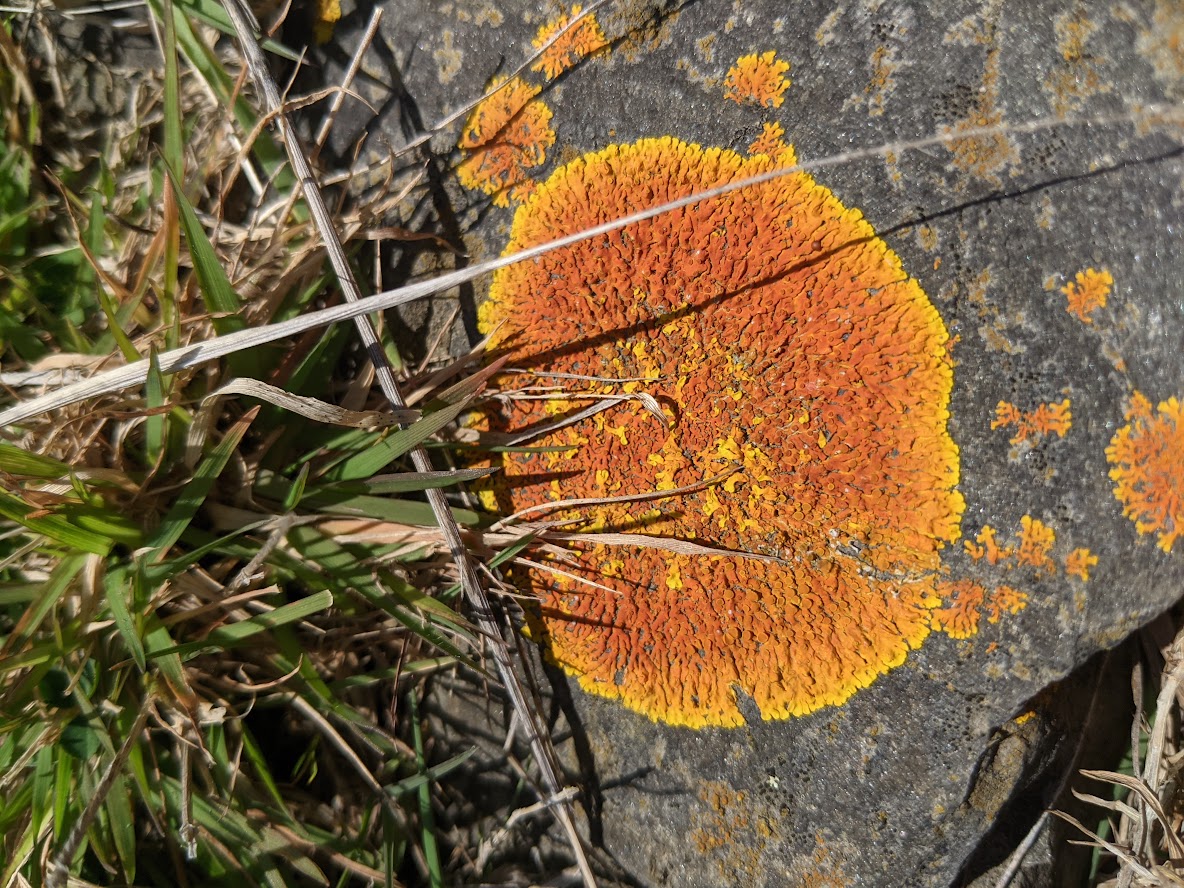
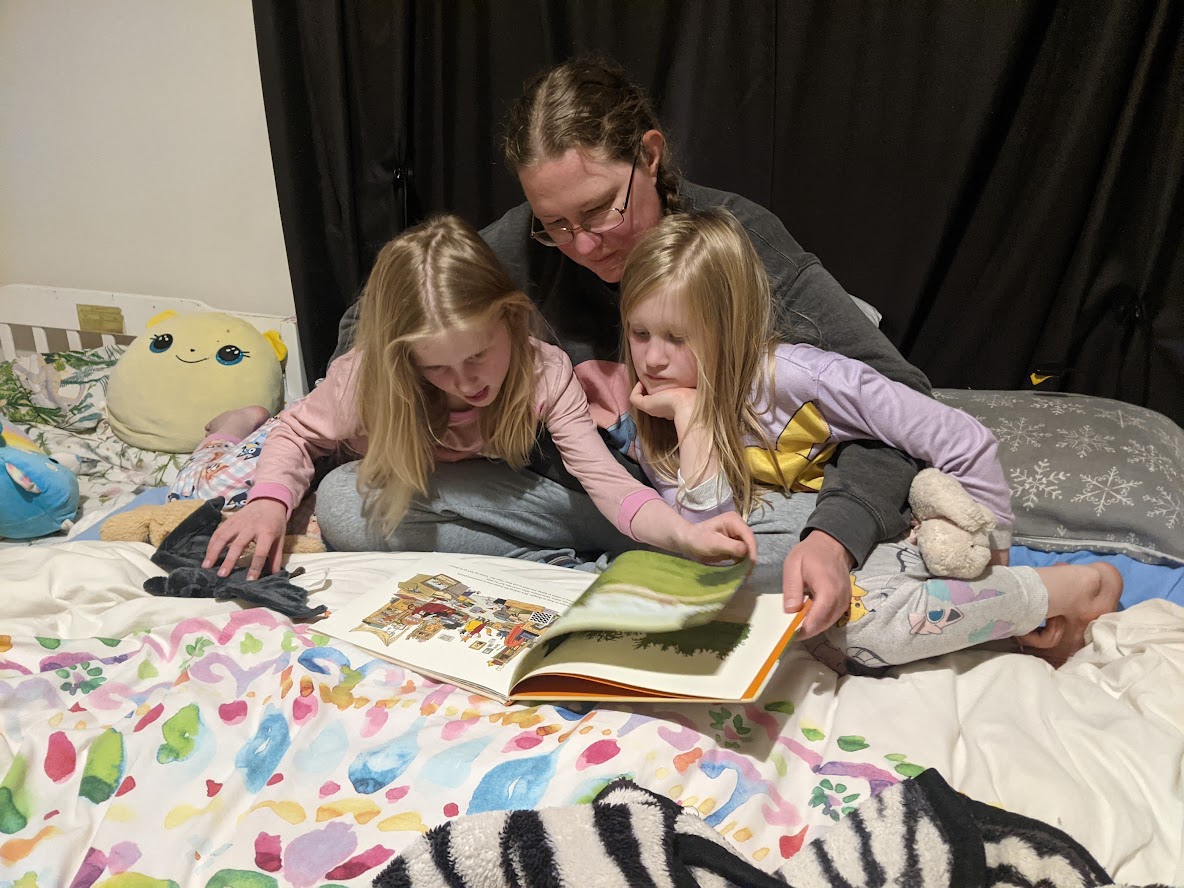


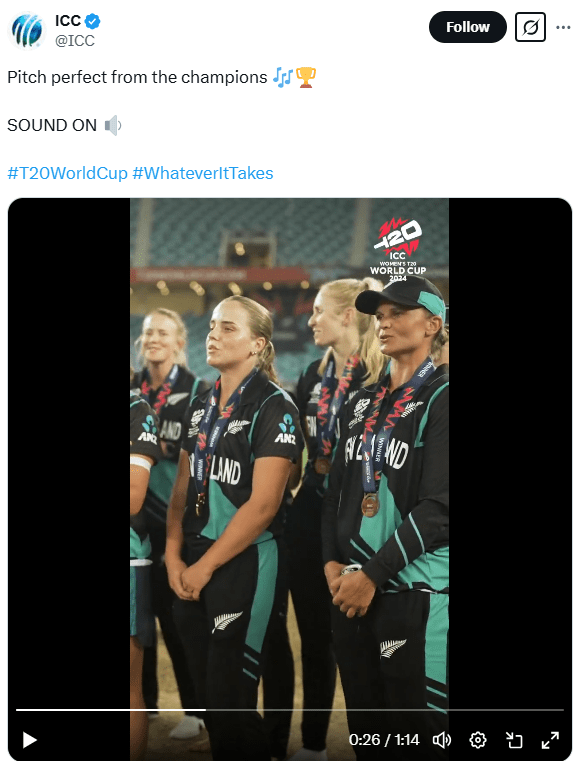

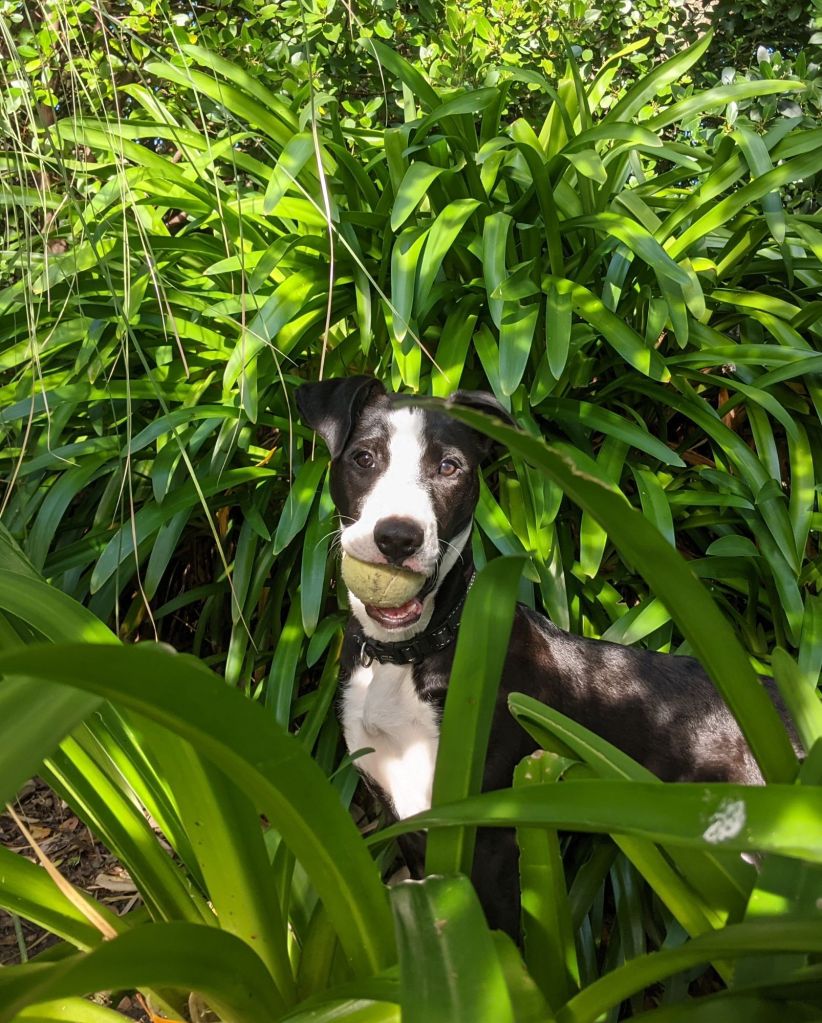
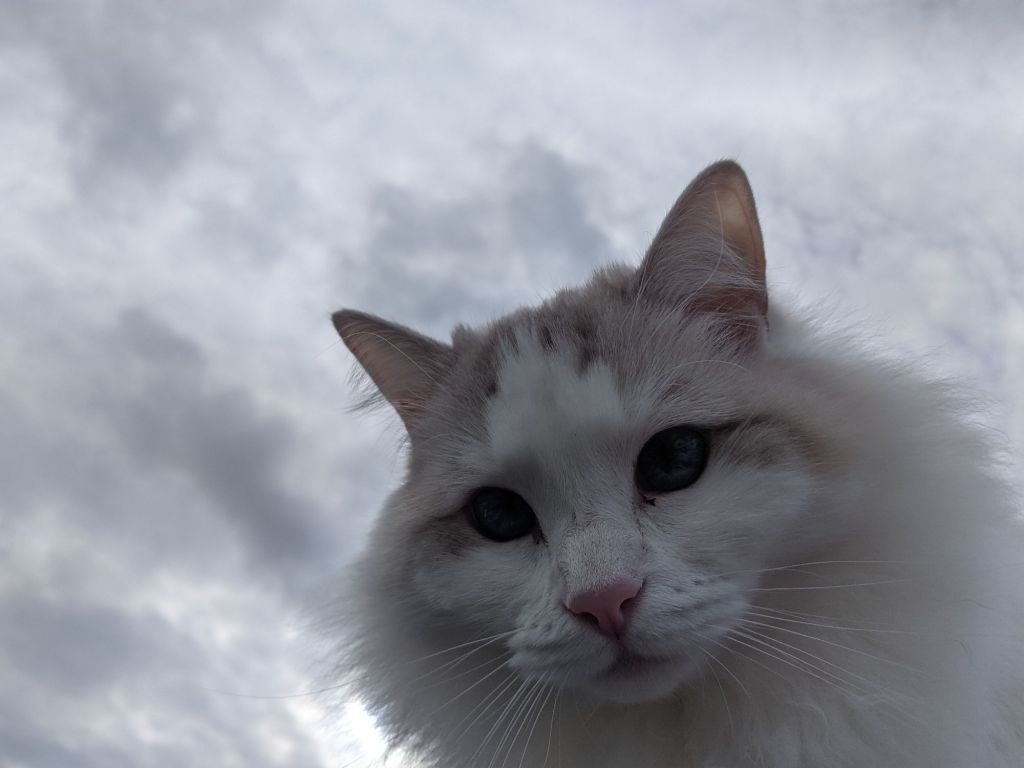

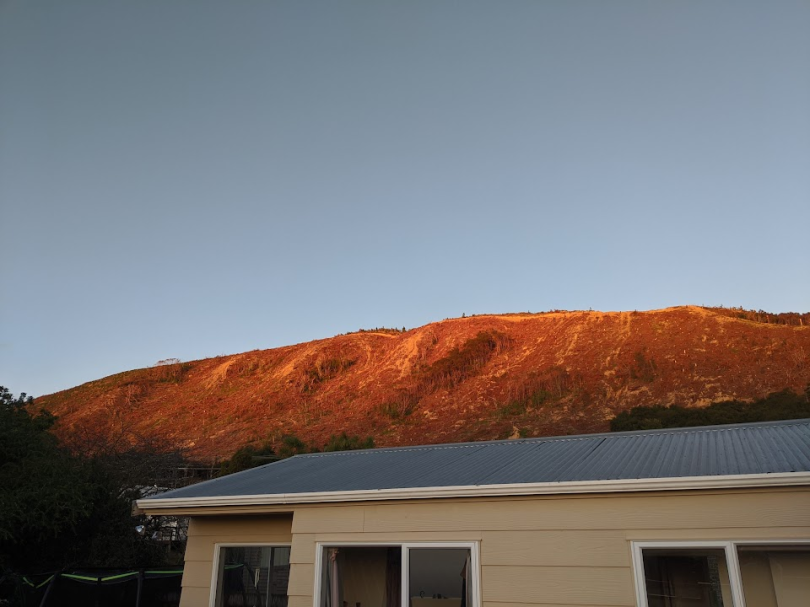


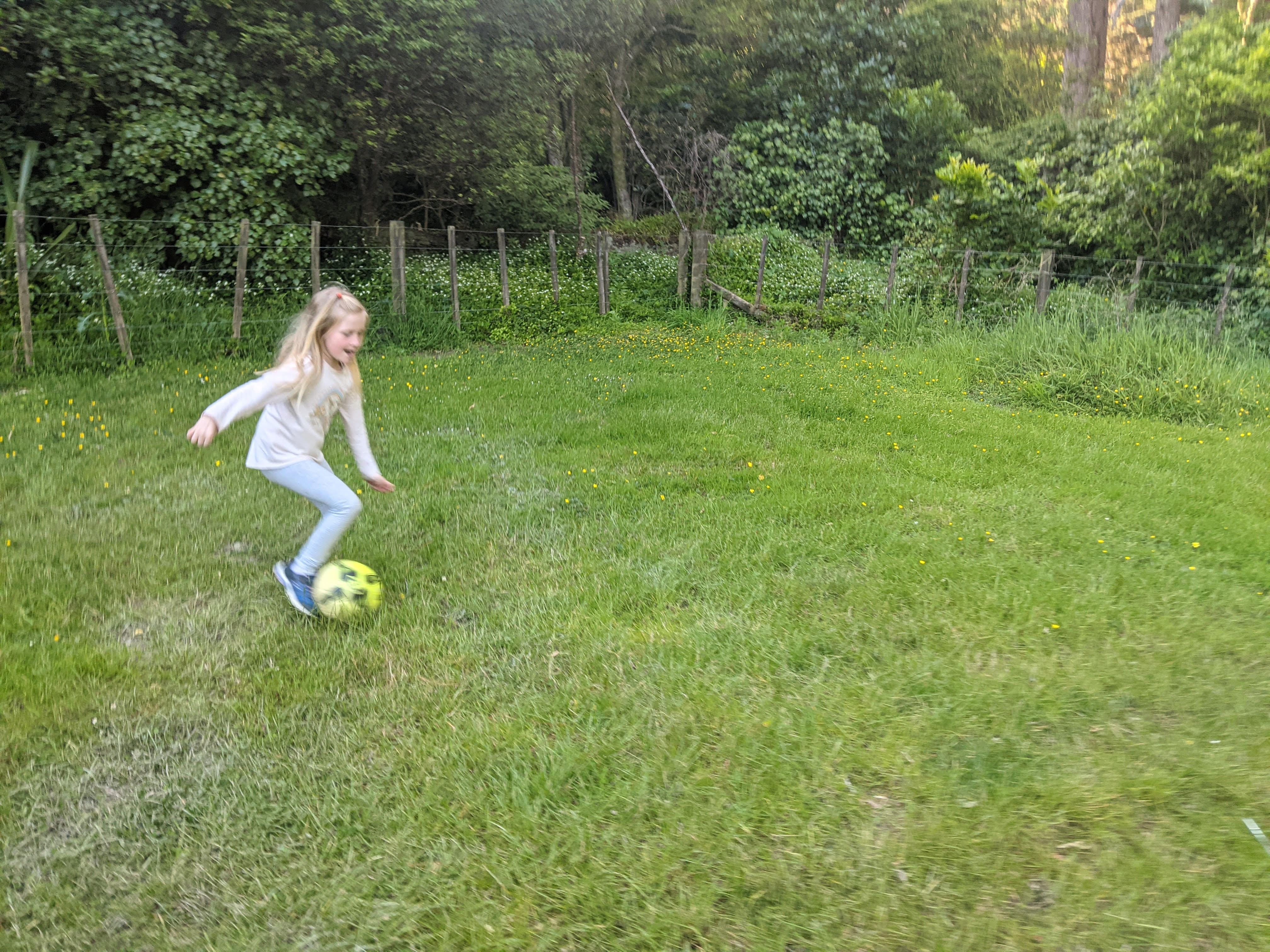

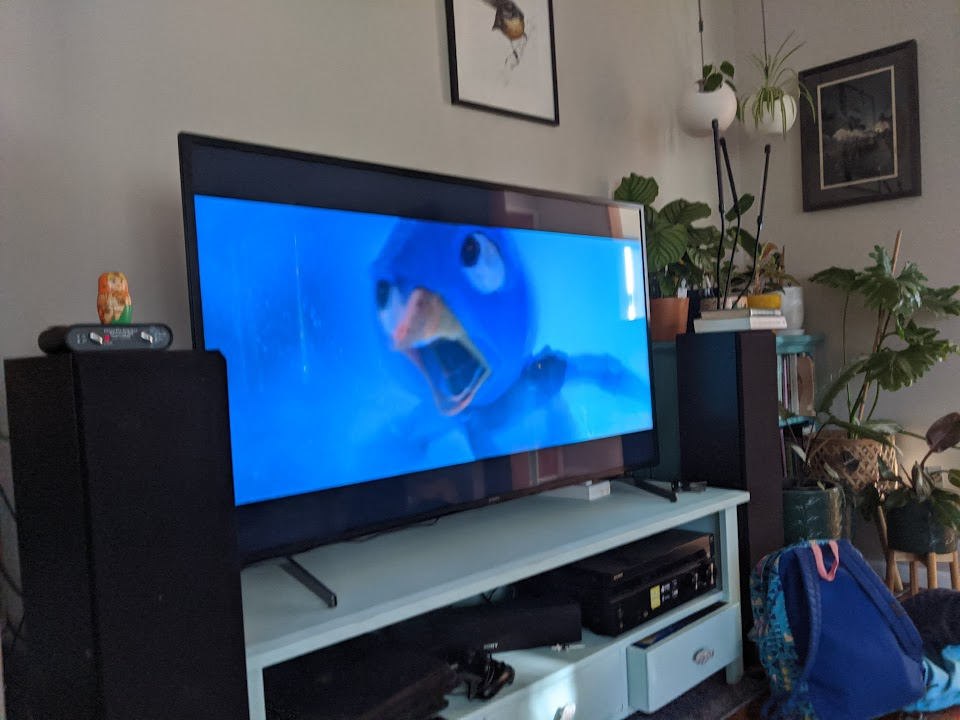





 I am ticking all the expected boxes of my thirties: marriage, house, kids, minor existential crisis. I earn more money than ever before, more than I ever imagined I could be earning, and through a time of increasingly precarious employment at that, and I can confirm that shooting past the median wage does not in itself bring happiness. But I am content most of the time, rarely low for longer than a few days.
 SARS-CoV-2 spiked its proteins into all of us in some way or another this year. I am one of the lucky billions not to come into contact with it and develop COVID-19, largely because I live in an island nation that took an elimination strategy in fighting the pandemic. Meanwhile, millions died around the world, and as I write this in the days between Christmas and New Year, much of the world’s humans are still not safe to go out.
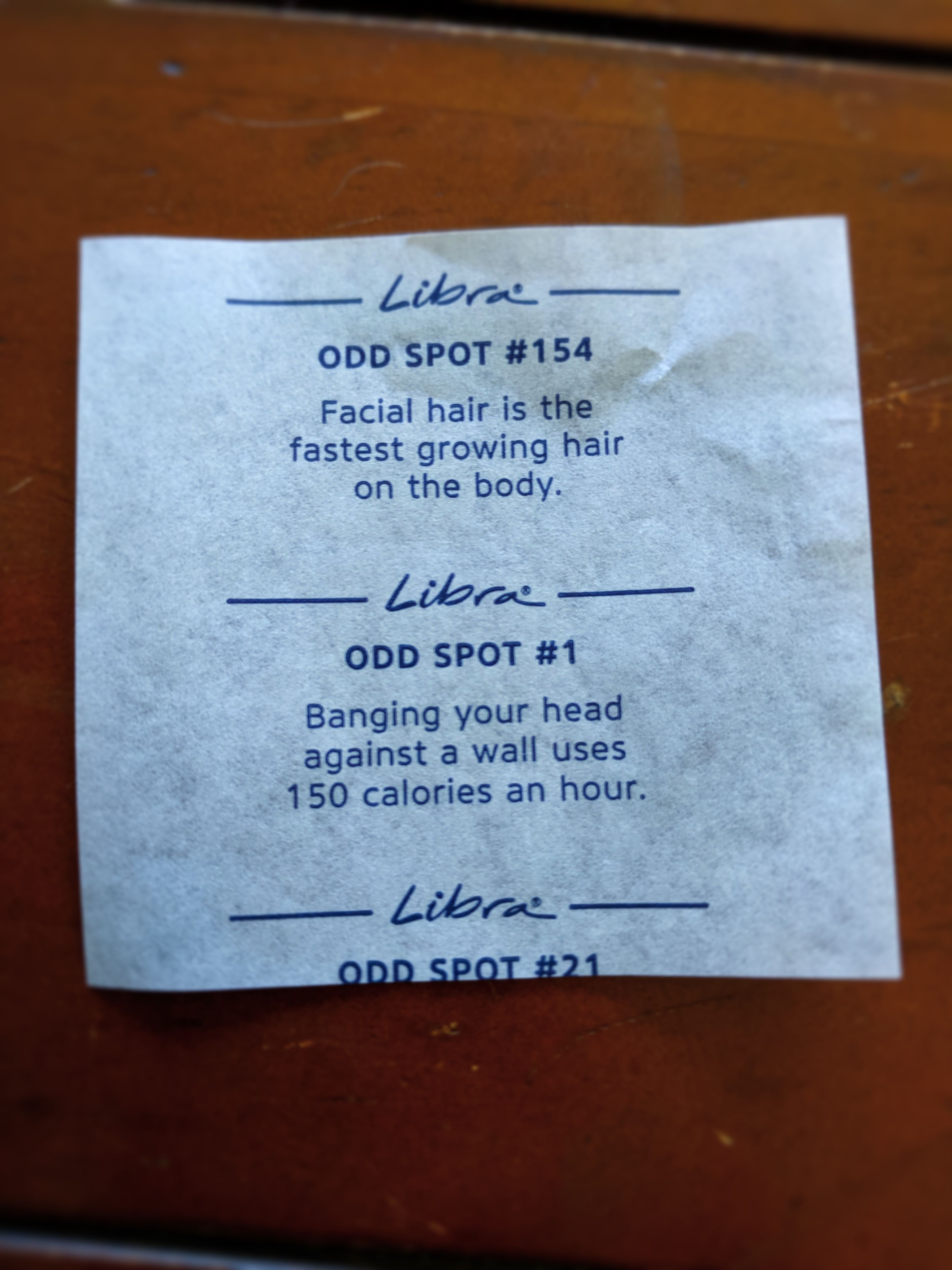 It seemed you couldn’t move in this fragmented year without hitting another message about breathing, grounding, centering, practising mindfulness. You’ve got to look after yourself. It’s okay to look after yourself. Everyone was saying it, from the Prime Minister to my favourite podcast hosts. I was saying it myself, writing comms after comms reminding fellow staff this is not normal and we understand how you feel and here are some tips to help you through these unprecedented times. It began to feel hollow after a while. But the alternative, ignoring the struggle, would be worse. In the meantime, I continued to ignore all the advice, doomscrolling first thing and jamming headphones into my ears at every opportunity.
 A book is a beautiful thing. It’s full of promise before reading, and also pleasant to hold, which it will always be. After reading — if it was any good — simply looking at it brings words, characters, and ideas flooding back. In your mind’s eye, it now represents all it contains. And it retains the promise of hours of possible reading, or re-reading. It doesn’t matter if it’s your book or someone else’s, or if it was borrowed from a library. The book has all the same potential.
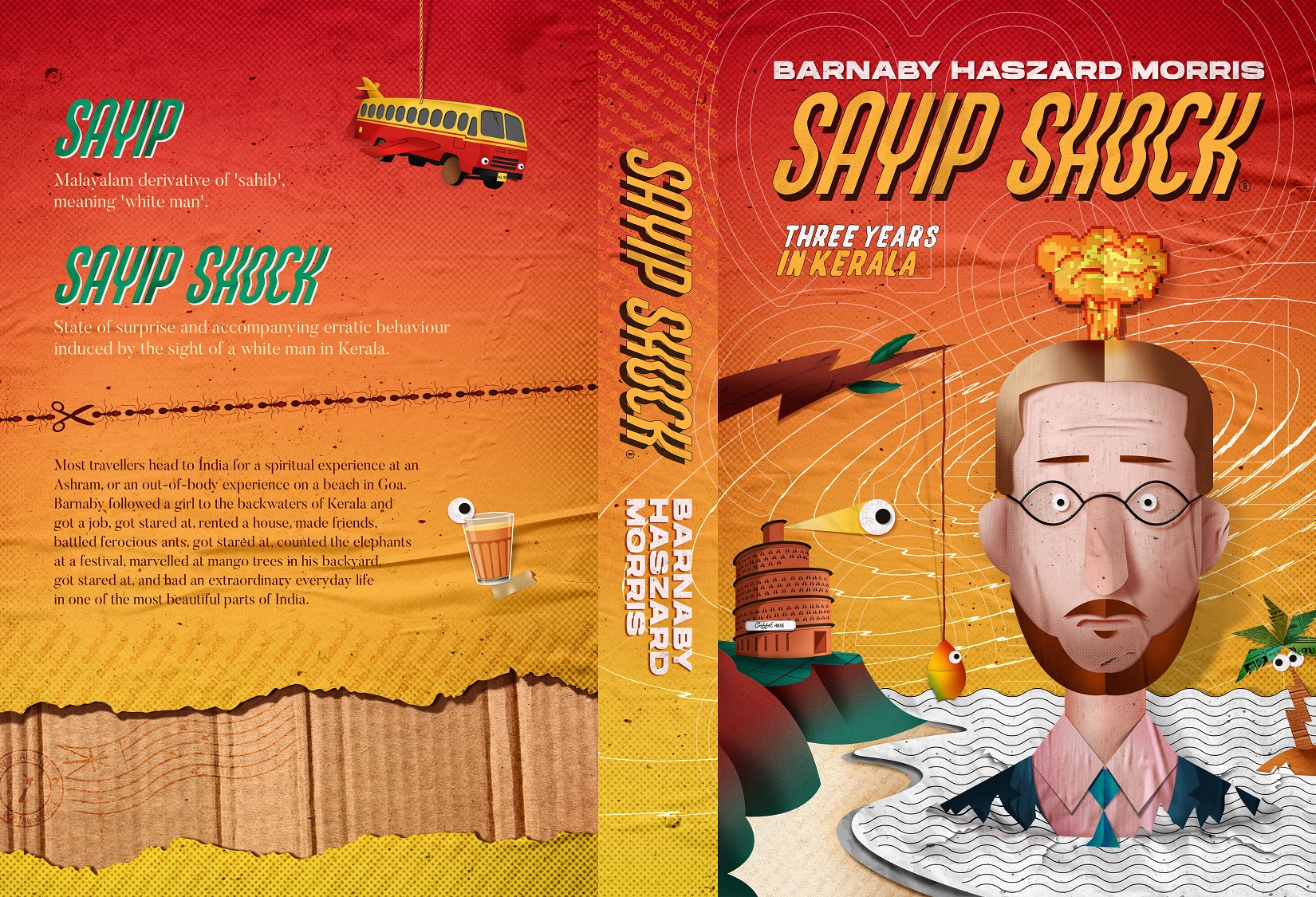 I also published a book in 2020. It’s called ‘Sayip Shock: Three Years in Kerala’.
  It’s all online now. I went to the cinema once in 2020 (PARASITE). Our household subscribes to five different film and TV streaming services:
 Ha ha ha. Well. We managed our usual summer holiday in February, to Hawke’s Bay, during which I got sick and we argued a lot. There were some great moments too: descending the grand staircase in an old convent/school we stayed at for a night in Featherston, days on the beach in Waimārama, and particularly our visit to Splash Planet, which begat a
 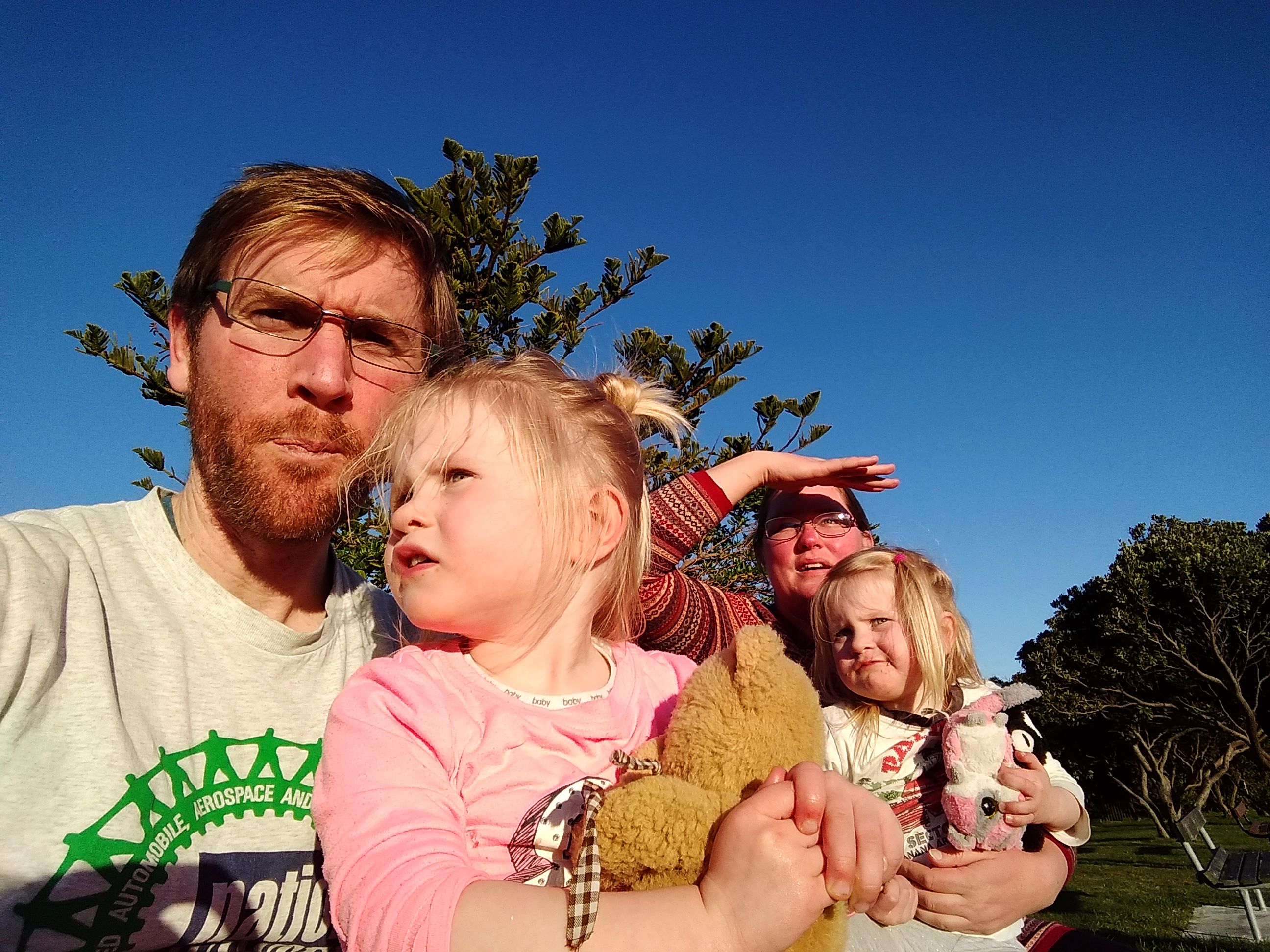 Tara is everything to me. She’s my love, my rock, my inspiration; a source of frustration; my comfort at the wordless end of an exhausting day; my partner in the biggest work of our lives; my favourite cook; my cheerleader; the one who will stare daggers at me or look away in disgust, the one who will look at me with pure openness the way anyone would long to be looked at. I will ignore her sometimes in favour of my phone; other times I follow her around the house like a silly little dog. Long-term intimacy has brought almost everything out of us and I would say we love each other more than ever, even with all the worst parts of ourselves left in. We may never sand those rough edges off. Life is probably more interesting with them.
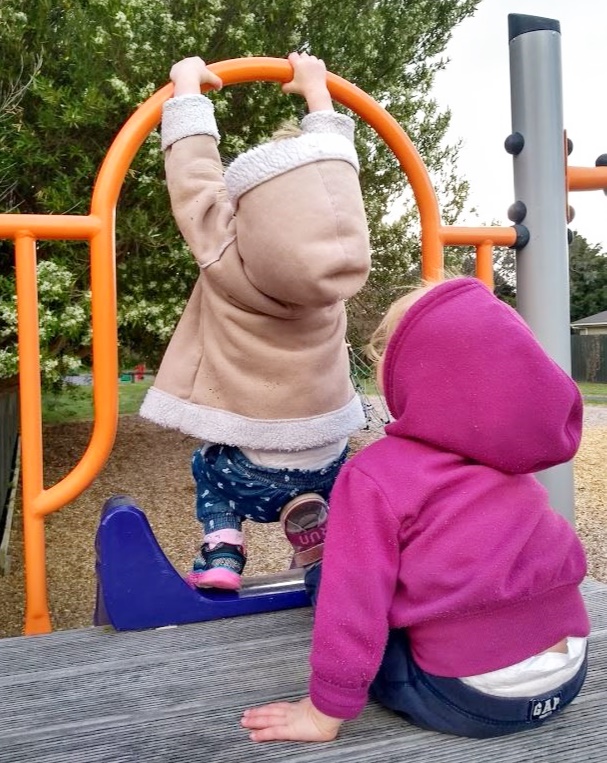

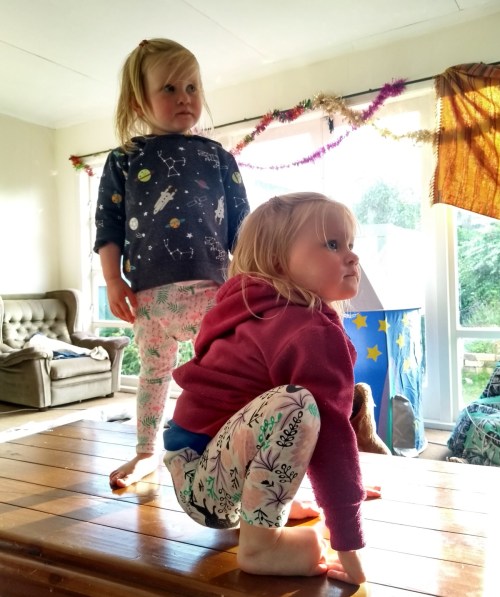


 Jdanspsa Wyksui