Last week, I dissed NBC’s new sitcom ‘Outsourced’ for being inaccurate, unfunny and offensive, but said I’d give it one last chance with the third episode. And you know what? Everything turned out better than expected!
It was true to life. Virtually all the characters behaved in recognisable – and interesting – ways. The cross-cultural interactions make sense, as do the intra-cultural ones, even if the show’s basis in American culture and humour means that the dialogue rushes by a bit faster than is natural and some outlandish scenarios are thrown up. Still, those less believable moments are made funny and interesting by good writing and performances. The rest of it seems pretty much right on the mark. All the characters are really growing into themselves now that they each have some space in which to do so, and they are all great to watch.
It was funny. Jokes! Funny jokes! After the cringe-filled disaster of the first two episodes, I was delighted to find myself chuckling throughout. There are several memorable lines – “I just wanted to inform you that Gurpreet is making a personal call”; “There’s no unsubscribing”; “Again… you are not my equals” – and they are crafted into some excellent, laugh-out-loud scenes. The moment in which Todd and Charlie decide to step out onto the dancefloor was classic, and the whole dinner date was hilarious. This was my biggest problem with the first two episodes: the lack of decent humour made the show a chore to sit through. This time around, it was genuinely entertaining.
It was completely respectful and inoffensive (almost). At last, America was removed from the pedestal. Todd was shown to be sometimes a bit of an asshole and Charlie bumbled his way awkwardly through all of his interactions with Tanya, and on the Indian side, the show gave simple, knowing insights into (among other things) the idea of arranged marriage in India and didn’t try to tear any of them down. One problem: Tanya, the token white girl (who also happens to be Australian), is a total nymphomaniac. She’s not above shoving foot into crotch under the table or dropping ludicrously broad innuendos in the street. While this is a stereotype that is occasionally true, it really didn’t need perpetuating.
That makes for one bum note in an otherwise very enjoyable 20 minutes of television. I will definitely be tuning in for the next episode. Things are looking up!
In 1955, on a public bus in Alabama, a black woman named Rosa Parks refused to stand up when asked to make room for white passengers. Her action was seized upon by a young clergyman named Martin Luther King who organised the Montgomery Bus Boycott, which catalysed the civil rights movement and brought it into nationwide focus; segregation on public transport became illegal the following year. Further laws continued to be passed to make all American citizens more equal, racial tolerance came forward in leaps and bounds and black Americans began to get voted into public office – culminating in the election of America’s first black president, Barack Obama, in 2008.
In 2010, on a public bus in Dubai, an Indian family of four sitting in the front row of seats (marked ‘LADIES & FAMILIES’) was asked to move themselves – along with several large bags from Dubai Mall – to the back of the bus. They did so without hesitation, and none of the other passengers on the bus were moved to speak up, many of whom were also Indian. The event went unreported and the family got on with their lives.
‘These Words’, by Natasha Bedingfield, 2004, from the album Unwritten
I was 19 when ‘These Words’ came out and dominated C4 and commercial radio for a few weeks. It had a catchy up-tempo beat, great lyrics (about struggling with writer’s block in the studio), Bedingfield’s strong and passionate voice and a classic video. All these helped me to love it, but what makes me never tire of it is the memory of one of the funniest, and most embarrassing, episodes in my life.
My good mate Tommy and I were on our way out to Taylors Mistake, a beach/peninsula just outside of Christchurch, to go fishing. He had picked me up around midday in his car and, with the summer sun high in a cloudless sky, we wound the windows all the way down and turned the radio up to full volume. The Rasmus – ‘In The Shadows’. Usher – ‘Yeah’. OutKast – ‘Roses’. It was going to be a great day.
Then ‘These Words’ came on. Perhaps it was the heat, but we went a little crazy – not merely singing along, but singing along to each other, gesticulating and grinning widely as we pulled up to an intersection on Moorhouse Drive. With the car idling, we put everything we had into our performance, our voices striving to reach Natasha’s high pitch. The world around us dissolved as we lost ourselves in it.
Halfway through the chorus, as our voices reached a crescendo, I noticed that a car had pulled up next to us. I froze. Then Tommy looked, and he froze. It was FILLED with hot girls – five of them, all staring at us in disbelief… and laughing uproariously.
For those that don’t know the lyrics to ‘These Words’, the chorus – which we were singing at full volume, as we looked into each other’s eyes, when the girls pulled up – goes like this:
These words are my own, from my heart flow I love you I love you I love you I love you There’s no other way to better say I love you I love you
Of course we stopped singing. Then, after a few seconds of begging the lights to change, now, please now, we started laughing too. And every time I’ve heard the song since, I’ve remembered that moment of sheer panic, followed by the realisation of how hilarious and absurd we must have looked.
Tommy and I never saw those girls again, but we’ll always have ‘These Words’.
It starts as soon as I open the door: that bizarre, enigmatic sensation of being somewhere utterly contradictory. The Subway restaurant on the edge of Trivandrum’s Technopark campus is the only American chain restaurant for literally hundreds of miles around, and this makes it both thestarkest example of Western influence on life in Kerala and the most jarring collision between that influence and thesteadfast conservatism of this corner of India. The restaurant is right next to the building in which I work, so today I’ve decided to spend my lunch break there.
The music always hits me first. No Bollywood vocoders or Malayali whistles here: the dial is always tuned to an American radio station, generally near full volume. As I walk in, a track by one of my favourite groups, Arcade Fire, blasts out of the PA – a group I don’t think I’ve even heard in restaurants back in NZ, let alone in India. “I woke up with the power out! Not really something to shout about!” shrieks singer Win Butler as I walk to the vegetarian counter. Living as I do in rural Kerala, this line is peculiarly apt.
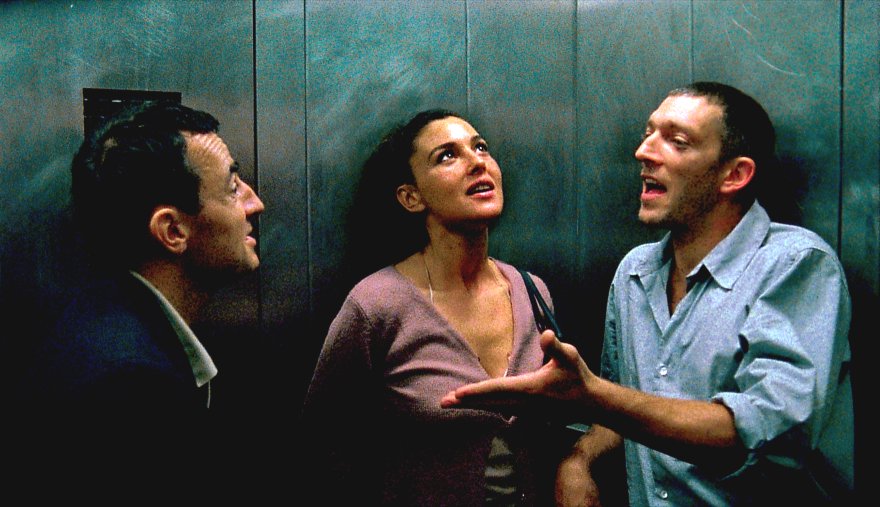
From one of the most consistently fascinating directors around came this riveting, subtle yarn of two individuals who could never have expected to fit together. Carla (Emmanuelle Devos) is a put-upon secretary whose near-deafness is viewed as a crutch, both by her associates and by herself; Paul (Vincent Cassel) is a greasy ex-con trying to get a start in the legal economy. If the tagline – “She teaches him good manners; he teaches her bad ones” – isn’t tantalising enough, there is a charged passion and emotion that builds through the film to a heart-in-mouth, near-silent climax and a perfect postscript. This is one of those films that it’s just so hard to find any fault with; it’s also a damned fine thriller in its own right.
Classic moment: An extraordinary, protracted scene of lip-reading that is almost too tense to bear.
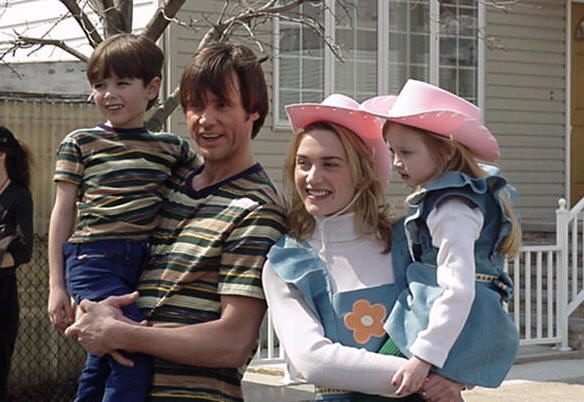
Charlie Kaufman was the celebrity screenwriter of the 00s. Films like Adaptation. and Synecdoche, New York showed that there are still new things to be done (and done very well) in mainstream cinema, but Eternal Sunshine represented the most balanced harmony yet realised from a Kaufman script. It was the perfect marriage between his crushing cynicism and Michel Gondry’s playful, childlike aesthetic, and with great acting across the board, including the best turn of Jim Carrey’s career, this love story of memories, disappointments and ultimately hope had a unique shine. It reminds me of how unusual it is to see recognisable characters up on the screen – people you can identify strongly with, and feel like you’ve met before. If the characters have a somewhat defeatist attitude, it’s because that’s what Kaufman sees all around him in an age of short attention spans and hurried divorces.
Classic moment: Joel wakes up – again – to the tune of Jon Brion’s wonderful score, and the narrative threads start to connect.
When City of God burst onto the screen in front of a packed house at the Christchurch Film Festival in 2003, that now-iconic blade sharpening and running chicken made everyone shut up and pay attention. When we emerged a little over two hours later, the dynamic storytelling of Meirelles’ film had rendered the real world toothless and banal, as if everything was in slow motion – our own lives so much less interesting after witnessing those played out in the favekas of Rio de Janeiro. The kids, the gangs, the violence… it was so different, so brutal and alive. It was, as Empire magazine put it, ‘at once a laboratory for cinema technique and a victory for raw heart… a snot-nosed, blood-stained masterpiece’.
Classic moment: The motel murderer is revealed in truly chilling fashion.
von Trier was probably the decade’s most controversial director, serving up Dancer in the Dark, Manderlay, Antichrist and Dogville – all fascinating works that completely polarised critical opinion. Those that liked him couldn’t get enough of him; those that didn’t truly detested him, leading to press conferences of an almost threatening tone (3:50 in this clip). I’m firmly in the former camp: his films are the work of an artistic genius, bursting with ideas that go against the grain of popular thought, and Dogville is his most triumphant statement – both artistically and philosophically – yet. Shot on a barren soundstage, it tells the story of a woman on the run from gangsters who is sheltered in a tiny village; this being a von Trier film, things do not go well. Far from being the anti-American statement so many made it out to be, this is a story that speaks to the whole of humanity and to the close-minded nature we all have in some way or another. The final scenes are some of the most truthful, and gripping, of the decade.
Classic moment: The gangsters catch up with Grace, and the boss tells her she has a tough lesson to learn.
While I’m on the subject of controversial films, this… is about as controversial as the 00s got. Told in reverse, this is the story of a rape and a murder, and both scenes are protracted, graphically detailed and almost impossible to watch. Still, Noé’s aim isn’t merely to shock. The film works on a number of levels: the nature of the beast within, the dynamics of human relationships, our voyeurism as filmgoers, the capability of CGI and special effects to enhance a cinema experience, and of course the film’s central conceit: that ‘time destroys everything’. Were it structured solely around those two scenes, it would be more of an interesting if off-putting experiment; however, with a third act in which the previously dizzying camera slows down and shows real-life husband and wife Vincent Cassel (that man again) and Monica Bellucci canoodling during a lazy morning in bed – the opposite of those earlier scenes – Irréversible is elevated to an uncommonly high level. At the same time it’s a film I hesitate to recommend to anyone, as it’s the most realistically violent film I’ve seen save The Passion of the Christ, but those who come to it with an open mind and a good deal of mental preparedness will likely be rewarded. It made me feel physically sick, and haunted me for weeks, but I left the cinema in stunned admiration.
Classic moment: The two friends go on a horrible, disorienting odyssey through the gay nightclub ‘Rectum’, searching for Alex’s rapist.
Sharell Cook is the author of Diary of a White Indian Housewife, a blog about her life as a white (Australian) woman married to an Indian man in Mumbai. Her subjects can spring from anywhere in the maelstrom of activity that surrounds her – visits with her new family, learning Indian recipes, the ongoing frustrations one inevitably feels as an outsider in India, and many moments of introspection at the path she has followed in life, to name just a few regular sources of inspiration.
Though a good number of her posts are illustrated with photographs, particularly the often amusing Snapshots of India, the biggest draw is her focused, straightforward storytelling. She seems to understand (or perhaps not even consider) the strength of the tales she has to tell and just gets out of the way, letting the various characters, locations and feelings in her life shine. Not surprisingly, she has a book in the works, with release slated for mid-to-late 2011.
If you glance at the comments on Sharell’s blog you will notice that she has legions of adoring fans – including myself – with whom she cheerily interacts. As such, she was willing to answer a few questions. All photos used with permission.
***
Why did you start blogging?
I started blogging for a number of reasons. One of them was because I felt that my life was going down an unusual path, and I wanted to share it with people so that they could benefit. I’d been trawling the blogs of people who were in a similar situation as me, but they didn’t always contain the information and detail I was looking for. So, I thought I’d write from the heart about my life and the kinds of things I would be interested in reading. Plus, I did have a notion in my head that I wanted to write a book some day. I thought having a blog would be a good platform with which to establish a presence and market myself to publishers. But still, I got a surprise when a publisher actually got in touch with me after reading my blog.
You mention a journal in your writing. Do you see ‘Diary of a White Indian Housewife’ as an extension of that journal?
I do, because primarily I write for myself, and my blog is where I record my experiences and thoughts. I’ve actually given up writing in my journal now. My blog is it!
Arabic mehendi
What is your first memory of writing creatively?
I think my first memory defines why I was always supposed to be a writer! It was in my first year of school. The teacher told the class to narrate (obviously we couldn’t write properly at that young age, so the teacher had to write down what we were saying for us) and illustrate a story about something of our choice. Apparently, I was the only child who actually came up with a proper story. The rest of them just described situations and things.
Describe something that is beautiful to you.
Oh, there are so many things — but they’re always the small things. Usually, something to do with nature. A butterfly, a sunset or sunrise, the ocean, the smell of the mountains. An unexpected smile is always beautiful too.
With sunflowers in Mumbai
Are you equal parts white, Indian, and a housewife, or does one of these labels apply to you more than the others?
This is such an interesting question. Funnily enough, being constantly surrounded by lovely brown skinned people, these days I often forget I’m white until someone treats me as such. I don’t feel like I’m a foreigner living in India anymore, and I find that I have trouble relating to many foreigners living in India. Often, I actually feel like I’m Indian, but sometimes I get reminded that I’ll “never be Indian” so I have a bit of an identity crisis. I do feel like I’m a housewife though, despite the fact that I work. I don’t keep staff (only a maid who comes every second day to wash the floors) and I’m always at home since I work from home.
You live in Mumbai, one of the world’s most populated and varied cities. What is the first piece of advice you would give to another outsider coming to live there?
Just let go of any expectations about how you think things should be, and be prepared to adjust. You can live as grandly or as simply as you want in Mumbai, but you can never escape the day to day frustrations that come from living in India. In Mumbai, we have world class bars and shopping malls, but a severe traffic problem, water shortage, and lack of space. The problems are different to the ones you might find elsewhere in India, but they’re still there. You just have to accept it for what it is. And don’t try and replicate the life you had elsewhere.
Homemade fish curry
The phrase ‘the real India’ is one that foreigners tend to use, usually to make a distinction between how they used to perceive India and how they perceive it, or something about it, after going and spending time there. Of all the experiences you’ve had in India, which one, by your estimation, felt most like that so-called ‘real India’?
I actually see the “real India” more as the “dual India”. Everything about India is real, from a luxury hotel to a vendor selling vegetables from his wooden cart. However, an experience that I had that felt most like the so called “real India” was having to deal with corrupt customs officials at the customs office, when trying to retrieve 2 boxes of personal items that I had sent over. I don’t want to focus on something obviously so negative, but I’ve chosen this example from the point that corruption is everywhere in India, at all levels, and it affects the rich as well as the poor. There’s no escaping from it.
Is there a post on your blog that you are most proud of?
Name two countries: one you’d like to visit, and one you’d like to visit again.
A country I’d like to visit: Brazil. A country I’d like to visit again: Spain.
Guests dancing at wedding
Do you believe in God?
I believe that God is a name for the universal energy and consciousness that is present everywhere. All religions have the same aim, that is bringing people closer to the one entity labeled as “God”.
***
This interview is part of Inside the Bloggers Studio, an ongoing project of short interviews with bloggers I read and admire. (Apologies to James Lipton.) To view the archive, click the category tag in the ‘By Category’ section at the top right of this page.
I’m not sure if I’ve mentioned it explicitly before, but I am part of the Indian outsourcing world. My job at Trivandrum’s Technopark involves proofreading medical letters, and I am the only foreigner in my company. While Kerala is a world away from Mumbai, I feel qualified to pass judgment on two aspects 0f NBC’s new situation comedy ‘Outsourced’:
(1) whether or not it is true to life (because I am essentially the show’s main character)
(2) whether or not it is funny (because of my ability to notice what makes me laugh)
To answer (1), let me compare a few situations in the show to how they might play out in my life.
In the first episode, Todd meets his staff by going around the office introducing himself to each of them. The assistant manager tags along quietly beside him. In my office the manager would do all the talking, describing both me and my new colleague for each other’s benefit without either of us really having to say anything. Inaccurate.
The staff are immediately revealed to be a collection of stereotypes: the petite and quiet girl, the ambitious and business-obsessed assistant manager, the attractive and assertive girl, the cool and flirtatious young guy and the overweight dude who won’t shut up. In my office, it takes literally years for some colleagues to reveal their character to you, and generally interactions are kept to business – to wit, they bring as little character to work as possible, saving it for after hours. If you’re lucky, you get to spend time with them after hours and get to know them better. Inaccurate.
Todd’s fellow foreigners in his Outsourcing Building are a dinki di Aussie chick and Diedrich Bader. I have never seen a dinki di Aussie chick anywhere near my Outsourcing Building, and I most definitely haven’t seen Diedrich Bader. Inaccurate.
In the second episode, the office break room is shown to be colourful and filled with a number of snacks and tea-and-coffee-making facilities, with laughter emanating from the mingling men and women on the staff. My break room has some chairs and tables, a big sink, one BRU tea/coffee machine, and a water cooler. The walls are white and bare. The staff generally sit segregated according to gender, and those that mingle with the opposite sex do so very quietly so as not to attract too much attention. They are also usually married couples. Inaccurate.
Todd cannot comprehend the famous Indian head-wobble, so Asha – the attractive and assertive girl – demonstrates it for him by taking his head in her hands and moving it slowly from side to side, all the while looking into his eyes and giggling. If any single one of my female colleagues did this to me, my head would explode right there in their hands – we have barely exchanged a single handshake in two whole years. Inaccurate.
Finally, Gupta unleashes a tirade against all of his fellow staff, pointing out everything that he hates about each of them. In my office, where dancing carefully – and with a smile – around the people you dislike is elevated to an art form, this would only be within the realms of possibility if someone were drunk. It might even become likely in such a case. Gupta, however, is not drunk. Inaccurate.
Verdict: Even allowing for the fact that I work in far-more-conservative Kerala, on point (1), Outsourced gets a FAIL.
Answering (2) is much simpler: did I laugh? Well, a majority of the jokes were infantile, such as the parade of ridiculous items sold by All American Novelties, Todd’s company. Stupid does not equal funny.
Others COULD have been funny, but were lazily thrown in rather than stretched to their capacity, like when Manmeet is saying goodbye to one of his phone girlfriends and manages to sell her a teddy bear that plays recordings. He asks her what he should record into it for her to listen to when she goes to sleep at night. I would have laughed hard if he’d sat there in silence for ten seconds, getting progressively more disgusted as he listened to her obviously filthy request; as it was, he quickly told her “I can’t make a cute little teddy bear say that”. This is spoonfeeding where it really wasn’t necessary – a lot of the best humour allows room for the audience to read something into it, and I wish the writers had realised this.
Most importantly, in each episode several jokes were downright offensive, and they WERE often stretched to their limits, making for even more excruciating cringes. For example, when Todd spots a COW outside the office WINDOW and then, after listening to a long SPEECH about HINDU BELIEFS, asks “So, what time is lunch?”. NOT COOL. Also, when Gupta goes on that afore-mentioned ‘I hate you all’ rant he comes to “Mr All-American”… and has absolutely nothing to say! What?! He’s perfect, while all of the Indians have negative characteristics? Between this and the constant stereotyping, I detect a hidden agenda!
Verdict: I understand that people have different beliefs on what is and isn’t funny, but in the eyes of this viewer, Outsourced is DOUBLY NOT FUNNY – once for failing to make me laugh, and once for pissing me off at the same time.
I guess all this indicates that the show is on the fast track to cancellation. However, as Peta Jinnath Andersen notes in her article at The NRI, the pilot pulled in an impressive number of viewers, so who knows? She and Amitha Knight, who are both Indians in the USA, have written well about it, so check out their pieces (both of which are of course much more insightful than mine).
As it stands, I will be tuning in for the third episode to see if it can elevate itself in any way. Even with the bar set so low, I’m not holding my breath.
I usually skim over and delete forwarded emails within seconds of receiving them, but when Sean-Paul Kelley’s scathing assessment of India popped up in my inbox, I carefully read and re-read each word with rising irritation and, ultimately, anger. Kelley is an American travel writer whose bio on several sites, including The Huffington Post, states that he has had several very good jobs, he maintains a highly regarded blog called The Agonist and he has travelled in more than 47 countries. While this last fact makes his voice a little more deserving of deliberation, it does not transform his words into gospel, even if the majority of what he writes is true; the accountants’ truth matters little if couched in words that are roundly negative, Westernist and irresponsible.
A brief summary of Kelley’s piece:
India (except Kerala) is polluted, infrastructurally backward, bureaucratically inefficient and riven with corruption. And things aren’t going to get better, because no Indians (except in Kerala) “give a shit”.
Four Lions, from the mind of Brass Eye/The Day Today genius Chris Morris, is that rarest of cinema commodities: something different. Earlier this year a film about a man sewing people’s mouths to other people’s anuses was released, and among seasoned viewers barely a bored eyebrow was raised; another, whose content contains purportedly the most controversial rape scene in film history, is upcoming and anticipated largely with detached groans and eye-rolls. But here is Four Lions, here is a film that is genuinely fresh. Rather than aiming solely for the gutter – which it hits in esteemed fashion with some of the most erudite dick and fart jokes in years – it also reaches for the stars, skewering almost everyone in its satirical sights and eliciting tears of laughter and pathos in the process.
Omar (Riz Ahmed, in a hopefully star-making performance) is the leader of a tiny stand-alone cell of British-born-and-based mujahideen, planning their entry into heaven by way of martyrdom as they blow themselves up at… a Boots chemist’s, perhaps? Well, they haven’t quite decided where yet. His brethren are Waj (Kayvan Novak), an imbecile whose idea of Firdaus is a ride at Alton Towers theme park; Barry (Nigel Lindsay), an Englishman convert to Islam in desperate need of a sense of humour; Faisal (Adeel Akhtar), a camera-shy, softly spoken guy unsure of the mission, and also a very poor impressionist; and Hassan (Arsher Ali), a wannabe rapper convinced of the worthiness of suicide bombing by Barry’s unusual methods of indoctrination. While this sorry lot look on paper like a typical motley crew in another stupid buddy comedy, they are elevated by a combination of sharp writing and excellent, naturalistic performances.
Indeed, one of the major elements that sets Four Lions apart is that emphasis on keeping it real. A clash of so many varied ideas could all so easily spiral out of control, but while the overall premise and events of the plot are almost all completely absurd, an insistence on a documentary feel grounds the film throughout. Omar and his band are shot in a mixture of sharp zooms, medium close-ups and detached long shots, and their performances overall seem improvised (although given how neatly each scene fits together, they probably weren’t). Most of the music – with the notable exception of Hassan and Waj’s hilarious rhymes, and the repeated use of a terrible pop classic – is simple Arabic-sounding tones and used only in rare cases during scene transitions, allowing the characterisations and dialogue of these lovable idiots to shine.
The key to the film, however, is in the scenes with Omar’s family, and one imagines this is where many viewers will lose interest and/or respect. His disapproving older brother, sweet and supportive wife and doting son could all come out of a season of EastEnders (and the actress who plays his wife is presently, as it happens, acting in EastEnders)… but this is precisely the point. The spectre of terrorism and terrorists, so puffed-up and sensationalised in the news media, is brought crashing to earth in a comparison with the preposterous unreality of a soap opera. At the same time, folks who watch soap operas on a regular basis probably swallow most of what popular news media throws at them, from nukes in Iraq to the inherent perversion of Britain’s footballers; Morris grasps the opportunity to bring that greatest fear of the day as close to home as possible, and show that, you know, these guys maybe aren’t all that different from us. There is an outstanding scene between Omar and his wife at the hospital where she works, a showcase for both the superb script and note-perfect performers that sums up the entire film before you can even realise it.
As for the jokes, there are often several classics in a given scene, and they cover the gamut – encompassing ridiculously rabid anti-Semitism, making fun of English and Asian accents, brutal slapstick, and of course the above-mentioned toilet humour (which, in a clever twist, is often in Urdu). Alongside all this are the innumerable perceptive lines that are at once amusing and disheartening, or in some cases deeply moving. One can only imagine that the process of writing was arduous: first to think of something funny, then to put it into a character’s voice, then to make it work within the framework of a scene, and finally to fit all this into the fabric of the film as a whole. Rather than trying to select some of the finer gems, it’s probably better to simply allow you to experience them fresh as you watch the film – much of their greatness is in their delivery, particularly by the fantastically poker-faced Barry. Anyway, if I tried we’d be here all night. It’s the kind of film where if you see it with friends, you start quoting it to each other immediately upon exiting the cinema and continue for days, months and quite likely years afterwards.
At bottom, it’s simply extraordinary that a comedy film about a group of suicide bombers was made at all, let alone one so expertly crafted. When it ended, I felt a rare sense of exhiliration – at having been completely enveloped in the film’s world, at having laughed myself silly, and at having witnessed something so brilliantly subversive it might even one day deserve comparison with that great master of absurdist cinema, Buñuel. I can only hope that Morris, a renowned near-recluse and non-participant in the modern media circus, suddenly starts to take pleasure in being highly productive, and we don’t have to wait another ten years for his next slice of Zeitgeist-distilling greatness.
David Cain is the author of Raptitude.com, a blog about ‘getting better at being human’. His posts are a combination of truths he feels he has discovered about the nature of humanity, and/or the world, and experiments he undertakes – and their outcomes – in trying to improve his skillset for life.
He also wrote a travel diary about his experiences travelling in New Zealand which is here. The photos in the post were taken by David in NZ.
I discovered Raptitude.com at a particularly low point in my life and while I wouldn’t give David all the credit for turning it around, his well-composed, clear and unpretentious words provided me with plenty of inspiration. He himself has experienced darkness and appears to write from a deep yet continually developing understanding gained through those dark times, and is dedicating his greatest efforts to something as simple and meaningful as sharing what he knows.
David’s following grows daily into the high tens of thousands, but he was kind enough to answer a few questions.
***
Why did you start blogging, and why do you keep blogging?
I was a fan of Steve Pavlina’s blog for a long time, and one day I read a post in his archives about his favorite blogs. One of them was Problogger.net, which I hadn’t heard of at the time. I visited, read a few of the posts and a few of the comments, and realized there was a whole culture of blogging out there, with its own history and social structure. It wasn’t unlike the music scene; there were up-and-comers, has-beens, wannabes, hacks, big shots and legends. Everyone was doing their own thing, and talking about what others were doing. I wanted to be part of that. So I got started.
I keep blogging because I love doing it, and I feel like I have something to say that can help people create more ease in their lives. Another side-effect of writing is that it helps me clarify my thoughts and beliefs, because I have to finally put them into words. I am now too accustomed to this to stop.
Do you keep a personal journal/diary as well as your blog? If so, how much is one an extension of the other?
No I don’t keep a journal. I have tried, but every time I do I think, “Who’s going to read this? Not me.”
What is your first memory of writing creatively?
Every year we had to write short stories in grade school. It was one of the few parts of school I loved.
Tree and ocean at Napier
Describe something that is beautiful to you.
The surf at sunrise. I really need to move closer to the ocean.
What were the circumstances in which you first came to read Ralph Waldo Emerson?
Good question… I came across a quote of his, in the Crypto-Quote puzzle in the newspaper I think. I forgot about him but remember being amused that his middle name was “Waldo.” I pictured Waldo from “Where’s Waldo.” Later on I was reading a book by Jon Kabat-Zinn, who mentioned Henry David Thoreau. I read a bit of Thoreau and soon learned that Emerson had been his mentor. I finally looked up Emerson, found his essay, “Self-Reliance” online, and loved it.
How much of an effect has travelling had on your belief system(s)?
I think it has left me with fewer beliefs… fewer foregone conclusions about people. It’s left me more curious, more open, more forgiving and more grateful. It has also rearranged my priorities in life. I now feel it is very important for me to travel a lot, which means I can’t settle for a typical 9-5 lifestyle for long. I can’t be happy with two weeks’ vacation a year. Or even four or eight. I need to see the world in a big way, and I’m not waiting for another lifetime to do it in.
Sandstorm on Farewell Spit
You frequently discuss the effect of habit (and addiction) on today’s society. How large a role does habit-forming play in your life now?
Well I’m currently doing an experiment where I’m trying to install five little habits at once, and it’s going well so far. Habit change is hard and I’m not particularly good at it. I have never had terrible habits that I was desperate to change, which means I have never developed a lot of strong habit-changing skills. But I am always working on something, and when I look back I see I have made a lot of progress.
Habits and addictions are by far the greatest determinants of a person’s quality of life, so I will never stop working on them.
Is there a post on your blog that you are most proud of?
Name two countries: one you’d like to visit, and one you’d like to visit again.
I would like to visit France, and I’d like to visit Thailand again.
Sunset at Napier
Do you believe in God?
Tricky question. My answer is no, but that doesn’t mean I think God doesn’t exist. I just think the conventional concept of God — the God as characterized by churches — is way out to lunch, like not even close to meaningful, and I don’t think there’s any merit to it. The idea that God has emotions or desires, or resembles a person or a thinking mind in any way strikes me as completely asinine.
So when people ask me that question I say no. What the word God means to me is not something I can explain fully here, but let’s say it has something to do with a higher intelligence that human beings can have access to, yet are habitually oblivious to. Beliefs, more than anything, are what get in the way. So believing in God doesn’t make sense to me. Once it’s a belief — a mental image or a mental position — it’s not God.
Clearly there is some order behind the universe that we don’t yet fully understand. Even hard-minded empiricists must agree with that. God, to me, is that order, or is an aspect of that order. It seems to be intelligent. Einstein would agree.
***
This interview is part of Inside the Bloggers Studio, an ongoing project of short interviews with bloggers I read and admire. (Apologies to James Lipton.) To view the archive, click the category tag in the ‘By Category’ section at the top right of this page.









 Jdanspsa Wyksui