Of a feast and a shadow

When Simon gives me our Lord’s request, a familiar vertigo settles upon me, like the illusion we all see when we close our eyes and rub them, a glittering aerial pan over the thick lines and circles of a monumental crystal labyrinth. It is sickening and altogether terrifying, but dazzling too, as if it contained untold riches, as if anything is possible, as our Lord insists it is.

“The Lord has heard the amassed pilgrims,” says Simon, “and demanded we raise funds to feed and clothe them.”

“How?”

“It doesn’t matter how. It’s His will, so it’s ours.”

In the coming days, at His insistence, we will not only feed and clothe the pilgrims but provide each of them with enough ducats to eat for a month, or buy a cow, or open a shop. And when the episode is over, that steepling sensation will return, and I will feel closer to God than ever.

But not here, now, in the seconds after Simon’s deputation, with my mind running towards many solutions. Simon sees I have no more to say – he knows this look – so he turns and walks back through the open door in the side of the fortress, which one of the old soldiers slams shut after him.

I used to wonder why Simon was in there with the Lord when I have known him longer and can write, until I realised Simon’s rougher talents, forged on battlefronts, make him better suited to the politics and personalities of prison. So it is with choices like this that the Lord helps me see the true path for myself.

In Częstochowa, Pietyr says he would threaten the life of anyone who brought him such a request, as he won’t be made a fool of by anyone. But, he says, he knows this is the Lord’s will because I am the messenger and – he smirks at this – he knows I would never deceive anyone. The others are silent and glower at me as they leave.

I ask Natalia if she still has any of her father’s gold. Bitter fury pours quietly out of her, how I have ruined her life, how I have taken everything she has, how the last strands linking her to life before me are about to be severed. Then Ada interrupts, screaming for her breast. Once she has her latched, Natalia sighs and says what she’s supposed to say. “It’s His will, so it’s ours.”

We all agree we cannot feed half the pilgrims and clothe the other half. It would be wiser to arrive with enough for everyone. But these people are cold and starving and may perish without a miracle, so we’ll provide one in three days. Somehow, it doesn’t occur to anyone to feed everyone one day, then clothe them the next.

Pietyr gathers thugs and stops carriages on the road to Warsaw. Tybald’s wife goes to whoring. Mateusz and others pawn yet more items, as I do, netting a minor sum with Natalia’s father’s gold. Rich families in town have no use for my services as a stenographer, so I settle for promissory notes, which I solicit well into the night on both days. The rich are openly disgusted by me and my tan robe, and I have to submit to an inquisition behind every door I enter. But they seem amused by the pilgrims, and more so by the true believers, so I gather enough to ensure our family’s contribution.

When we regroup at the end of the second day, we find we have brought in far more than we expected. That same dizziness takes hold of me. To my surprise, it is Pietyr who breaks the silence and suggests we give it all to the pilgrims and keep none for ourselves. I see the labyrinth flying up at me in magnificent detail, and then it disappears as talk turns to the contents of the gruel.

The clothes are easy enough; we simply give what we no longer need. Mateusz wheels them to the grounds in front of the fortress in a large barrow, where the pilgrims watch him like a housecat stalking a mouse until he begins his speech, at which point they set upon him and the clothes. He crawls to safety covered in wounds and bruises. Pietyr and Tybald set up their cauldrons nearby and look at me. I fear the pilgrims will tear each other apart before they eat.

At this, Simon appears from within the fortress and moves through the crowd, tossing remarks judiciously and resolving any disagreements with a sharp word here, a gesture there. He leads the pilgrims to Pietyr and Tybald and tells everyone how the next part will go, and they listen. I take my place next to the pots.

The pilgrims glare at me as they pass supping their ration. I give each a note worth hundreds and tell them it is the Lord’s will and their true path to the light. It occurs to me that the stronger among them may take others’ notes by force. But then, as the Lord would say, unfortunates simply lack the necessary will.

Just as the crowd’s mood is settling, a murmur goes up, then a shout, then a cheer. It seems one of the pilgrims has glimpsed a shadow move across the high window where the Lord is said to have his rooms. Soon they are all cheering and advancing on the fortress, their faces open and smiling, their bellies digesting.

Pietyr and Tybald clear away the empty pots, and I am left alone. The crowd screams as one, pilgrims slapping each other’s backs and dancing. A haze settles over my vision, and then it seems the pilgrims are arranged like that giant illusory labyrinth, and I feel as if I might collapse into the mud. I think: this is the power of the Lord.

Short story: A Warmer Future

A cloudy sunset with a bright streak of yellow and two narrow streaks of red merging with black on either side

A WARMER FUTURE

The four lilting chords of Pachelbel’s Canon in D Major drifted upwards from Gary’s pocket. It was the legislated time – seven p.m. – but to Gary, it felt court-appointed, a sentence. His heart beat a little faster as he reached into his shorts, pulled out his phone, and hit ‘Dismiss’ on the display. Pachelbel stopped mid-bar.

I am Oppenheimer, thought Gary. I am Nietzsche, Galston, and Kalashnikov. When they all realise what they’ve done, will they, too, feel their will to live crackle and evaporate, like water in an untended pan? Will they also carry my weight?

*

Gary’s particular flash of Earth-shattering inspiration came during a morning meditation. Keep breathing, said the voice in his head whenever his mind wandered. But when it wandered to the subject of work, he would often let it run for a while. A lot of his best policy ideas came when he was seated in lotus pose.

Get a woman out there – a nice woman – mother of the nation type – loves nice weather – loves climate change – longer summers – kids running around outside – drives a great brute of a thing – happy to tell her story – imagine the outcry – they’d have to do something then – if they didn’t we’d cruise the next election – put climate change on the front page for good – I’d get on the List –maybe even front bench – Jesus, keep breathing –

As Gary brushed his teeth and dressed for work, he imagined how it would go with the Leader of the Opposition. He would ask him to just hear him out for a minute, to at least listen to the whole idea before dismissing it, to think about how this idea could reverse the appalling slide in the polls. Then he’d explain how Jane Harvey would capture the imagination, and the ire, of the nation.

My car makes summer longer, says Jane Harvey, pictured in front of her four-wheel drive gas guzzler. I do the school run twice a day and leave it running in the garage at home, says Jane. I’m doing my bit to speed up climate change, because if it’s going to happen anyway, let’s get on with it.

She’d go out in the Timaru Herald, carefully selected as the paper most likely to send a story viral. And she would go viral, and the social networks would tear her to pieces, and the commentariat – not to mention the Opposition Leader – would demand action from the government to do something about climate change. Enough is enough, Mr Prime Minister! We can’t have the Jane Harveys of the world spoiling our magnificent country and ruining this planet for her children, and everyone else’s children.

And just like that, for the first time in years, the Opposition Leader would take control of the political narrative, leading to a prolonged spike in the polls and, ultimately, glory on election night.

Never mind that Jane Harvey doesn’t exist, thought Gary as he climbed into his beloved red Audi. No one needs to know that. Maybe one day they will, when Gary releases a tell-all memoir of his long and storied political career. And he’d be lauded, both for coming clean and for an end that justified his slightly underhanded means. Yes, I did manufacture Jane Harvey to stop climate change. And, looking at the results, you’re damn right I’d do it again.

Gary turned the key. The Audi spluttered into life before settling into a clean rhythm. He noticed the gas light was on, and made a mental note to stop off at the service station on the way to work. High octane, of course – 91 put too much carbon on the inner workings.

*

With the revs up in the 6000s, the track shot away behind the Audi. Lotus pose was best for settling the mind, true, but sometimes circumstances called for a more aggressive form of meditation.

That bastard, he thought. That stupid bastard. Doing the government’s dirty work. He’ll write whatever’s politically expedient to keep his mates on the right side of the House. And people think he speaks truth to power! What a laugh. They’re just as stupid as he is.

– Pedal to the floor – hundred metres straight to hard left –

At first the people had hated Jane Harvey, just as Gary intended. She’s a mother, for God’s sake! Doesn’t she understand how she’s sabotaging her children’s future?

The backlash ensured she hit every front page across the country, and in the vacuum of climate change leadership offered by the Government, the Opposition Leader took centre stage. He began to look positively Prime Ministerial. He wouldn’t admit it out loud, but it was all thanks to Gary.

– Revs down – hard left into easy right –

Then, just as suddenly, the people loved Jane Harvey. That bastard columnist, the millionaire businessman and noted advisor to the Prime Minister, went in to bat for her. She’s onto something, he reckoned. After all, who doesn’t love long summers? Isn’t running the car for another half hour a bit like putting the clocks forward in September?

A couple of TV and radio appearances later, the columnist had started a movement. It’s common sense, they all said, all repeating the refrain until it became an ideology: Who doesn’t love long summers? And there was all this money behind it, full page ads in the paper calling for a new perspective on climate change.

– Quick boost on the revs – then hairpin left –

And that was when the Government finally responded. The Prime Minister did his usual shtick. My job is to listen to the people, and they can rest assured that when it comes to climate change, I’m listening. It made Gary sick. It also made the Opposition Leader sick, and with his bilious green tinge, he managed to get thrown out of Parliament three days in a row. His last action before being shunted to the back bench was to fire Gary.

It looked as though the two of them would be the only casualties of Jane Harvey’s legacy. But then the Government changed the narrative for good. The Emissions Trading Scheme was scrapped entirely, and with the money saved, a new, planet-busting incentive was announced: run your vehicle at home for 30 minutes a day and your petrol bills are free. It’s spending more time outside with the kids. It’s saving on heating bills in the winter. It’s a Warmer Future.

– Keep breathing – keep breathing – keep breathing –

The take-up was like nothing ever before seen for a government scheme. People were given special EFTPOS cards to use at the petrol station: Swipe for a Warmer Future. God knows where Treasury got the money. There were rumours of un-calendared meetings at oil company headquarters. But it was hard to argue with free petrol.

– Long straight now – floor the bastard –

Gary always felt like the Audi took over at this point in the circuit. His role involved extending his right ankle and gripping on tight to the steering wheel, while the complex array of pistons and pipes under the hood worked its magic. He could be anyone, or no one; the Audi and its incredible mechanics were all that mattered.

No, there was one other human contribution: the gas in the tank. This was the final irony. My savings are dwindling so fast, thought Gary, and I’ll never work in politics again. I don’t really have a choice. So, when the Warmer Future sign-up form arrived in his mailbox, he suppressed a gag and filled it out.

*

Gary shoved the phone back in his pocket, forced himself up out of his armchair, and walked out the front door, grabbing his car keys on the way. The sunset was extraordinary: fat stripes of apricot and amber, like a desert oil well ablaze, lighting up the sky to the west. When he opened the garage door, revealing his prized red Audi, the sunset turned it orange.

He picked a long rubber hose up off the ground and walked around to the back of the Audi, where he massaged one end of the hose over the exhaust pipe. He then took the other end of the pipe around to the right-hand side of the car, opened the driver’s door, and sat down in front of the steering wheel.

Just keep breathing in and out, he told himself. Stay in the moment. In the end, the moment is all there is.

Gary inserted the keys into the ignition and turned them. It always amazed him, the cough and grind in that first second before the Audi settled into a hum of whirring white noise. He tried to think of the last time it had failed to start, but couldn’t remember it ever happening. Apart from the brief convulsions upon ignition, the Audi was perfect.

He looked at the end of the hose and saw the air around it shimmer with fumes, then grow dark with smoke.

Keep breathing. As ever, the mantra soothed him. Keep breathing.

Then he stood, walked over to the high windows along the side of the garage, and pushed the hose out. He walked back out the door he’d come in and around the garage so he could admire the sunset from the front of his yard.

His neighbours on either side — Karen, a truck driver, and a banker whose name he’d never caught –were doing the same. Gary nodded hello and glanced at Karen’s enormous truck. It spewed out thick, dark smoke, even when idling. The machines are bigger than us, he thought, as he turned back to the brilliant flashes across the sky. And they’re breathing into life a bright, beautiful, barren world where we don’t belong. And we’ll willingly help them do it.

The exhaust trail from Gary’s Audi snaked off into the atmosphere. He followed it up as far as he could with his eyes until it became indistinct, inseparable from the yellows and oranges above.

On The Right Track

http://www.facebook.com/janjgphotography

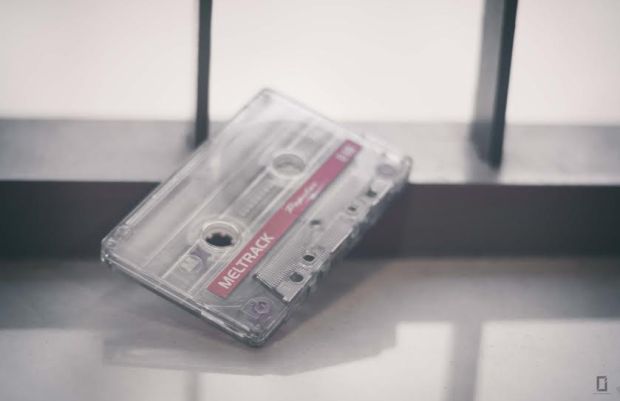
Abhay and I fell in love at the cinema: a relationship studded with sprocket holes. First date was Herzog, first kiss Godard; our first ‘I love you’ followed a screening of Cocteau’s timeless Beauty and the Beast. Our romance burned like an old projector lamp: fiercely, and for a short time. We lasted six months.

But Thomas – now, Thomas is different. His mixtape won me over: Shaa’ir and Func, Sulk Station. Cool, but not self-consciously so. We unspool slowly, comfortably, easily into each other. I think I’m on the right track with this one.

*

This story was written for Bench Media’s One Frame Stories, which calls for stories of under 99 words based on an image prompt. My submission to Frame Two got lost in the system somewhere, so I’m publishing it here.

You can submit to the latest OFS round here. Only 99 words! It doesn’t take long.

(Photo by Jan Photography)