Things of 2024

Listen to this post as a podcast:

Front Page
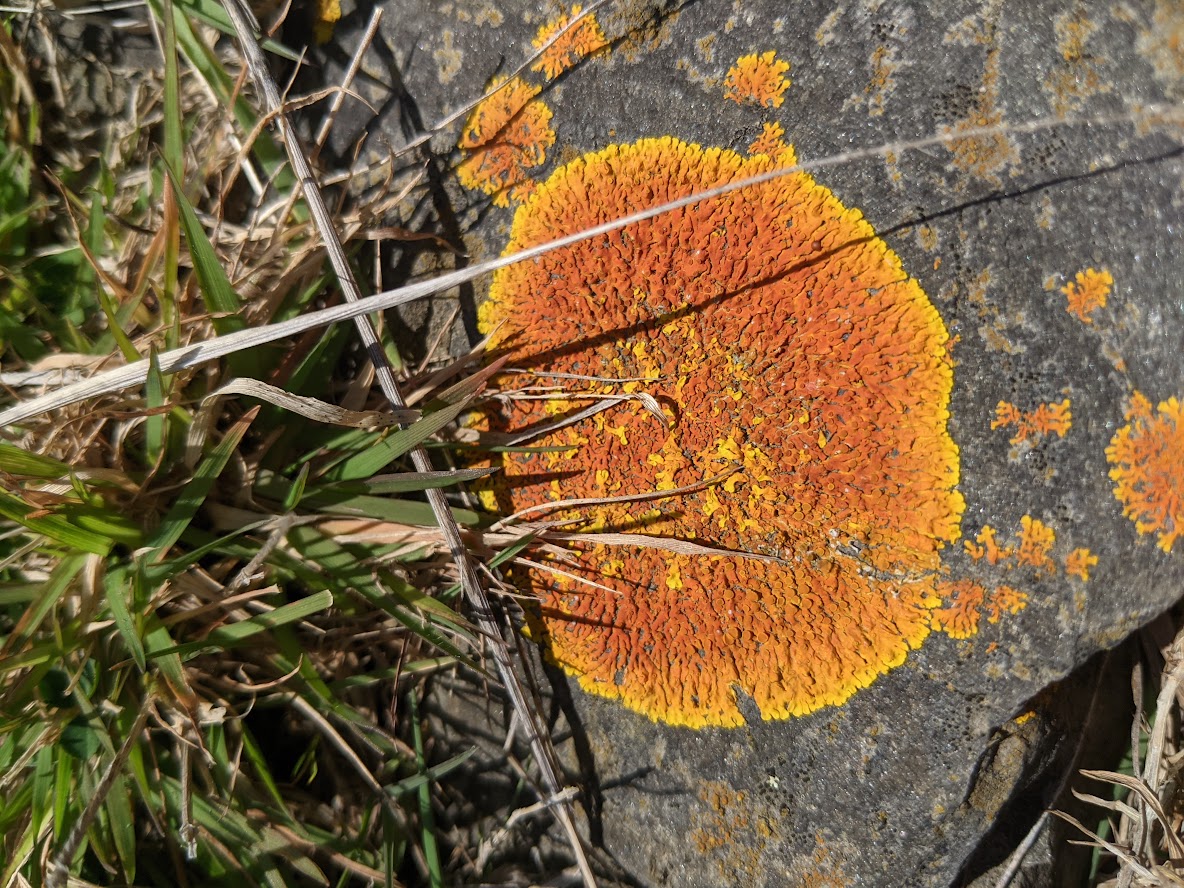
Close-up of bright orange and yellow lichen growing on a rock, surrounded by green grass.

Devoted father and husband. Committed contrarian. Impostor, loner, optimist, troll. Pushing 40. No, hang on. I am 40.

I am a contrarian because in any conversation, my instinct is to first pander and validate, then to get to the substance of it, the opposing argument, the counterfactual. Yeah, they shouldn’t have said that, absolutely – but maybe they’re still carrying some trauma from what happened before. It has indeed been a difficult year – incredibly difficult – but let’s not lose sight of everything we’ve achieved, personally and professionally, which is considerable.

Amid the hand-wringing and despair, which is admittedly tempting, I insist — mostly to myself — there is hope everywhere if you look for it. Marches for peace, iwi-led green restoration projects, the local vege co-op offering a bagful for $15 a week, even if they do often weigh it down with brassica. Then I read ‘The Three-Body Problem’ with its doomsday cult actively seeking the end of humanity and I wonder whether I’m deluding myself. On one hand this, on the other hand that. Most of all, my views are contrary to my other views.

For me, the best thing about getting older is steadily realising how little I know or understand, and consequently how much more there is to learn. Here’s a snapshot of what I noticed in 2024.

Books
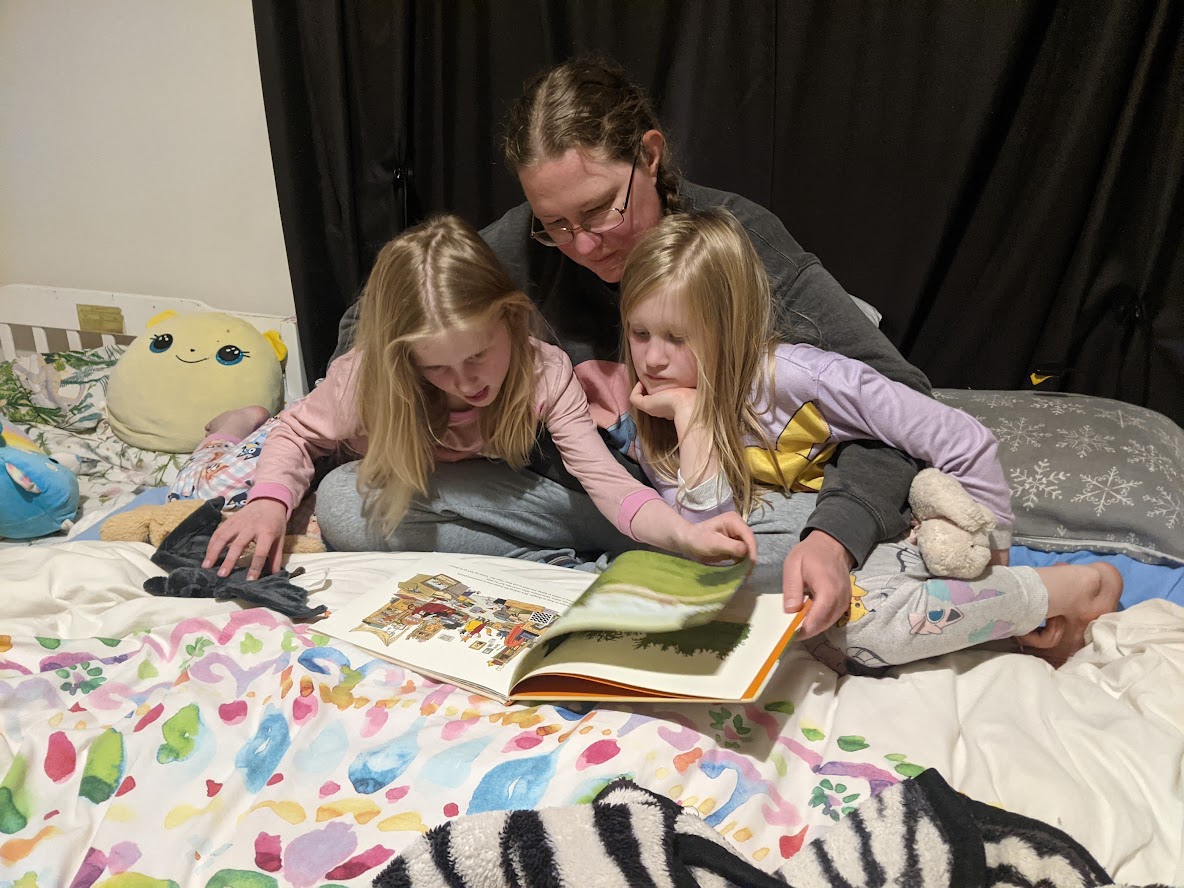
A mother reading a storybook to her two daughters while sitting on a bed, surrounded by colorful bedding and plush toys.

I read 52 books in 2024. Earliest published: 1974. It’s a while since I last had a year of reading so skewed to the last half-century.

These books offered a rare combination of audacity, craft, and ideas that made them impossible to forget:

  • ‘We Are Here: An Atlas of Aotearoa’ by Chris McDowall and Tim Denee
  • ‘Gifts’ by Ursula Le Guin
  • ‘The Books of Jacob’ by Olga Tokarczuk
  • ‘In the Skin of a Lion’ by Michael Ondaatje
  • ‘The Unbearable Lightness of Being’ by Milan Kundera (re-read)

Hard to recommend a favourite but if pressed, I would go for ‘In the Skin of a Lion’. It’s a short read, for a start; no-one who reads this post is going to pick up ‘The Books of Jacob’ when they realise it’s 912 pages long. (Those who do may also be sufficiently moved to write their own short story aping it.) Ondaatje’s book has breathtaking scenes to hook any reader and a profound respect for labour, especially the dirty kind. Like one of its central characters, you won’t be able to shake the smell of the leather tanning pits afterwards, and you’ll think differently about the power and value of the collective.

These books left an impression, not as deeply but enough to still linger as another year begins:

  • ‘Dartmouth Park’ aka ‘How to Make a Bomb’ by Rupert Thomson
  • ‘Werner Herzog: A Guide for the Perplexed’ by Paul Cronin
  • ‘Seven Brief Lessons on Physics’ by Carlo Rovelli
  • ‘The Hundred Years’ War on Palestine’ by Rashid Khalidi
  • ‘Small Island’ by Andrea Levy
  • ‘You Are Here’ by David Nicholls
  • ‘Amma’ by Saraid de Silva
  • ‘Being Mortal’ by Atul Gawande
  • ‘Feijoa’ by Kate Evans
  • ‘The Gosden Years’ by Bill Gosden
  • ‘Cloudspotting for Beginners’ by Gavin Pretor-Pinney
  • ‘Outline’ by Rachel Cusk
  • ‘The Three-Body Problem’ by Liu Cixin
  • ‘The Dispossessed’ by Ursula Le Guin

The kids are at a hybrid stage in their reading. They’re capable enough to read by themselves in bed before turning off the light themselves, and they want to do that most nights. But they want us to read them a couple of chapters or picture books first, all cuddled up in a pile on the sofa.

This means I’ve become quite familiar with Yvette Poshoglian’s Ella and Olivia series of early readers — slight, comfortable narratives in which something goes a little bit wrong but everything works out okay in the end. And we all need to be reminded of that sometimes.

The biggest breakthrough, though, was with Cece Bell’s ‘El Deafo’, a full-length comic about how Bell came to terms with sudden onset deafness as a young child. There’s an increasingly popular genre of autobiographical children’s comics dealing with serious issues like these. Raina Telgemeier, author of ‘Smile’ (corrective dentistry) and ‘Guts’ (psychogenic vomiting and therapy) is the champion, and Bell’s contribution is a worthy — and funny — addition.

At heart, these books are about learning to deal with other people knowing what’s different about you. I’m on the fence as to the value of sharing all these awful bits of other people’s childhoods with my sensitive kids because they’re as likely to keep them awake at night as to reassure them. Are they better off not knowing? Would they handle the shunts of the peer group better without a bunch of thought-provoking texts to refer to? I don’t know, but I do think books that reflect the reality of childhood and plot a relatable path through it are a public service, and I often wish there’d been more of them when I was little.

Music

My favourite ten seconds of a song in 2024 were the lead-in and drop for the first chorus of ‘Things You Didn’t Know’ by Clara La San, from fave album of the year Made Mistakes. It’s aloof to that point, a spark in the gloom: four repeated ascending notes, La San’s lead vocal and the “ooh boy” backing it up, and some simple bass and percussion loops. But then a rich bass synth kicks in, and the elements from before shine more brightly. It’s like the floodlights have come on, revealing that what you thought was a small bedroom is in fact an enormous, reverberating cavern.

Clara La San had worked and reworked this half-hour of echoing R&B, her first album, over a few years. The tracks feel lived-in for it, spacious, with an elusiveness that I would say is her signature if it weren’t for her post-breakup lyrics playing it absolutely straight. But I’ve never cared that much about the words. It’s the feeling a song evokes, more than the content. And you can swim in the feelings here. To me she inhabits a space that’s always dark and a bit mysterious, as if she’s addressing you from the other end of a long, unlit tunnel. She released a second album in December, too late in the year for me to properly absorb, and my first impressions were of some sparks of light emerging. But I still want it dark.

A close second was the second part of the chorus in Nilüfer Yanya’s ‘Made Out Of Memory’, the bit that starts with Yanya crying “people wanna blame someone” as if it’s an epiphany, like – finally I understand, it wasn’t personal.

BRAT, the biggest album of the year, didn’t pass me by either. The record about which my increasingly dismissive kids would say, “You ALWAYS listen to this!” Several standouts (and for me, quite some filler too) but the one I’ve come back to most is ‘Sympathy is a knife’ and another bone-rattling bass drop to kick off the chorus.

Other albums that held my attention in 2024:

  • Mon Amour Mon Chéri by Amadou & Mariam
  • Magda by Donato Dozzy
  • Chapultepec by Lao
  • Bright Space by Mikey Enwright
  • Silence Is Loud by Nia Archives
  • No More Water: The Gospel of James Baldwin by Meshell Ndegeocello
  • Everything Squared by Seefeel
  • PRUDE by Drug Church
  • Fragments of Us by Midland
  • Nobody Loves You More by Kim Deal

I’m talking albums still, yep. Spotify continues to push Smart Shuffle at me, switching it back on with every update as if I’d turned it off by accident. Apparently, it’s normal nowadays to open Spotify and browse for something to listen to, which I find gobsmacking when a) the interface expressly discourages exploration, and b) there are still so many other sources from which to discover new music.

There may not be any money in it but I am here to tell you the album is not dead. Go to the new releases on any media outlet that reviews music and test-drive anything you like the sound of. For me, it’s Metacritic and Resident Advisor, with the occasional dip into the ocean of noise that is Album of the Year dot org. From these, I piled up a decent set of absorbing repeat listens — here’s a playlist of samples assembled, naturally, on Spotify.

Movies

Close-up of a blue cartoon character with an open mouth, appearing surprised or excited, displayed on a television screen in a cosy room with houseplants and furniture.

A ranking of new films I saw in 2024. This won’t take long.

  1. THE ZONE OF INTEREST
  2. ENO
  3. FLOW
  4. THE BOY AND THE HERON
  5. INSIDE OUT 2
  6. ORIGIN
  7. POOR THINGS
  8. KUNG FU PANDA 4

I saw ENO and FLOW on the same day, making it two years in a row I’ve done the ‘dialogue-free animation about animals / music industry titan whose name starts with EN and ends in O’ double-feature at the New Zealand International Film Festival (in 2023, it was ROBOT DREAMS and ENNIO). Both films attempt to do something different and new, and although the artificial intelligence conceit at the heart of ENO felt like more of a gimmick than an artistic success, the man’s charisma and intelligence shone brightly. FLOW felt unfinished technically, especially the lighting of the animals, but its sense of the cinematic couldn’t be dimmed. Now that it’s getting all this awards attention, I wonder if there’ll be a director’s cut with retouched shading.

Jonathan Glazer’s THE ZONE OF INTEREST towered above both. It’s a film of operational delivery and domestic routines with an extraordinary soundtrack: genuinely, there are two films here, the one you see and the one you hear. I wasn’t convinced by all the choices made, and I think it’s right to expect perfection of a film about Höss family values and dynamics. I am however happy to follow Glazer into the abyss again and again, because he has that gift of both putting on a show and making you think, often uncomfortably. There’s no-one else like him working today.

A few highlights from the few other films I caught up with in 2024:

  • SHOWING UP
  • ALL OF US STRANGERS
  • AFTERSUN
  • PAST LIVES

All enjoyed in a two-week period in the middle of the year. That was just before I got my Switch.

Tech and Gaming

Screenshot from a video game showing characters receiving experience points and gold coins.

I’ve kept the most profitable entertainment industry of this era mostly at bay for years, content to wallow in Doom mods and Championship Manager 01/02. But then I was gifted a Nintendo Switch in July 2024, and since then, the numbers speak for themselves. In the second half of the year, 100+ hours on FC 24 and Dragon Quest XI respectively, plus another 40-50 hours on a range of other games. An average of two hours a day for six months.

Hence so few movies, and hence zero activity on this blog since June. Nothing stimulates the brain like gaming: flashing lights, bright colours, and a sense of control, even mastery, you’ll rarely experience in daily life. Some games upend these norms, but not many. So, high on this new device, I played some games.

  • FC 24 — it’s a football game, so it was always going to consume my life to some extent. I took Cambridge United from League One obscurity to Premier League glory. More time-pass than obsession, but I cannot be interrupted while playing.
  • Dragon Quest XI: Echoes of an Elusive Age — 100+ hours over six months seems like a lot to be sure. But then Bex said she completed it much faster than your average player would, as in a matter of days, and I felt a bit different about the way I’d gone through it. This JRPG is heavily burdened with cutscenes and dialogue, like an epic TV series you can run around in, so the kids have come to enjoy watching me play it. Indeed, we may have spent more time together with Dragon Quest XI than with anything else in 2024.
  • Golf Story — a 2D golf role-playing game and the first game to sink its claws into me. Good writing and fun gameplay made this a satisfying experience.
  • Lonely Mountains Downhill — mountain biking simulator with fun, exploration friendly tracks and an asymptotic mastery curve. Surprisingly, of all games, this is the one Tara and I have bonded over the most.

Also, have you noticed the explosion of ‘AI’ as a byword for ‘current’? Most major tech companies put it front and centre on their websites, and anyone who wants to keep up with current events now needs to educate themselves, ongoing, like a university professor, so they aren’t duped by deepfakes. I took a friend to task for featuring AI-generated images on his website and he was more bemused than affronted. It’s not that big a deal to most, perhaps because the technology is still relatively nascent. The scary thing is how thoroughly the world’s richest have thrown all their eggs into it. With their commitment, AI — however intelligent — will define our lives for years to come.

Politics

I feel a profound need to just chill, a political imperative to do so, before industrialised society is everything but chill. Otherwise I feel some paralysing mixture of angry, contemptuous, distressed, and amused at the rolling coverage of metaphorical and literal atrocities swamping my socials and my news feeds. Next up from your favoured news outlet, a feature story on the First Lady’s hat. Surely it’s best to sit out the next four years of news.

We’ve come through the waves of COVID-19 and turned the boat backwards. Ka mua, ka muri, goes the whakataukī: walking backwards into the future. This too shall pass. In 2024, I became a school board member, finally fulfilling a long-held promise to myself to get involved in the community somehow. Local is where you can make the biggest impact. Basically anywhere you can kōrero kanohi ki te kanohi (talk face to face). But don’t forget to check in on those friends abroad who can’t absent themselves from the news cycle playing out all around them.

As a colleague once said, storming off to the kitchen to make another coffee: “everyone needs to just fucking chill”. Most of all the planet.

Travel

The snow and ice far beneath us scrolled by. The frames of the Sky Waka pylons were encrusted with stalactites. The weather was good, a photogenic mixture of clouds and sun — a sun that in the vanishing distance illuminated Ngāuruhoe’s striking cone, with Tongariro broad and massive behind it, both dwarfed by the mountain we were ascending. I’ve never seen it like this, I thought.

It — the Sky Waka trip up Ruapehu — was the literal high point of one of our most successful family holidays yet. We used to squabble constantly on our family holidays, worn thin from lack of sleep and unmanaged expectations. Now the kids are older, we’re all better rested and better able to follow through on our grand plans, or deal with it when the plans go out the window. We embrace imperfection, like the boil-water notice in our Alfriston AirBNB — “why are we on a farm?? This is not ‘staying in Auckland’!” — but still cram in the activities, big and small.

It pissed down on us at Rainbow’s End, a proper soaking while on the log flume of all things, and my kids (six years old at the time) said they were cold one time only and then ran to the next thing. Hot pools, whānau meetups, zoo animals, botanic gardens, museums, and the mountains of the central plateau on full and glorious display once again on the way back down. A remarkable week.

Sport

Two things. First, cricket. The most incredible 24 hours of New Zealand cricket of my lifetime, and probably of all time. One Sunday evening in October, the White Ferns won the Twenty20 World Cup against all expectations.
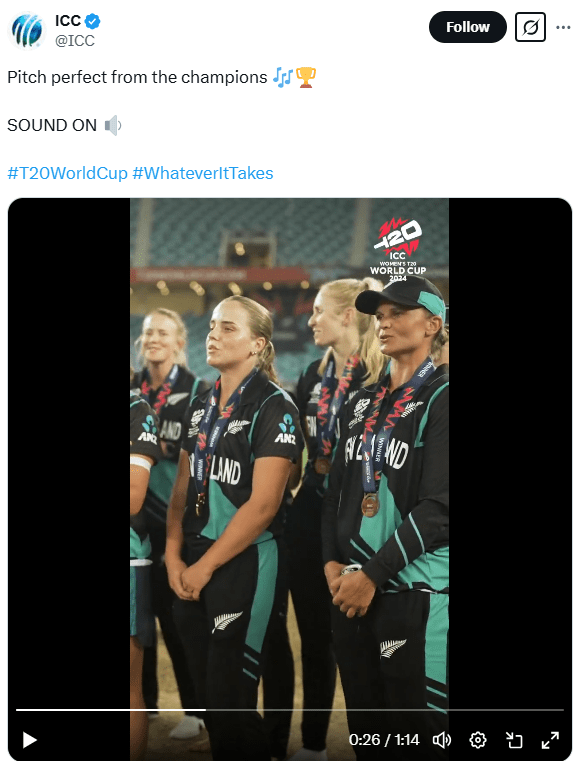
No team has my heart like the White Ferns. I can ride any up or down with the Black Caps, having plumbed many depths with them over the past three decades. But my hope and expectations and belief in the White Ferns is fresh, and vulnerable. I’m overjoyed when they win and bitterly disappointed when they lose. And they lost a lot in the lead-up to that tournament — ten matches in a row — making the march to victory even sweeter, like tumbling off a precipice on a hunt for a mountain spring and finding the water is best at ground level.

In the clip linked above, the players stand barefooted (or sockfooted) on the Dubai turf, grounded at the scene and in the moment of their greatest triumph, acknowledging their captain who’s been through it all in 18 years of international cricket. There’s another, more raucous video of Georgia Plimmer tearing around the changing room and air-guitaring ‘Don’t Stop Believin” with the trophy. But it’s those feet on the ground, swaying in time to the waiata, that stay with me.

Not that the Black Caps aren’t dear to me. I have, after all, plumbed many depths with them over the past three decades. That same day, the Black Caps beat India in a Test match in India, which we’d managed twice in 36 previous Test matches and not since the 1980s, against an India side that had only lost four times in 50 matches during the 2010s. It was completely unexpected; even more surprising, the Black Caps went on to win the second and third Tests as well. No visiting team had ever done that before.

As far as I’m concerned, this is the New Zealand men’s cricket team’s greatest ever achievement. A bigger deal than the World Test Championship win of 2021 or the Champions Trophy win of 2000.

Second, Olympics. Hours and hours on the in-laws’ sofa next door, where their 75-inch TV broadcast the Olympics day and night. The kids having that moment of fascinated inspiration I had as a kid — knowing the Olympics would mean something to me for the rest of my life — and making posters at school saying they want to be in the Olympics doing artistic gymnastics when they grow up. “They’re good gymnasts,” said one of the coaches at the gym they go to for an hour every Wednesday. However long they carry on with it, the spark of sports and athleticism is alive in them.

People

Family selfie with two children and two adults smiling outdoors, wearing hats, in front of a modern building.

We, our family of four, all sleep in the same room. It’s been like this since the kids were three. For at least two years we’d battled to keep them in their own beds, every night another capitulation, with me folded onto a too-short sofa and Tara being kicked in the stomach by at least one child. Then we went on holiday in early 2021 and bunked in all together in various configurations, and all slept sounder than we had since they were born. It seemed foolhardy to return to those nightly battles after that — though we did, for a brief and insane trial period when the kids were five, and gave up quickly.

I’m coming to think of our sleeping arrangement as a metaphor for our shared existence. Biology and circumstance threw these four people together in a giggling, screaming pile; a tight-yet-expanding bubble of all our best and worst selves. We love each other so much and drive each other properly spare. And we do all this in the middle of the night, too.

It is a temporary arrangement. My children are meeting more of the world on their own terms every day, forming their own relationships with school, books, the high bar at the gymnasium, and the rivers and trees and rocks of the great outdoors. But they still want us to watch and tell them how well they’ve done, and they still want us in the room with them when it’s dark. They’ve said a few times that they’re going to kick us out soon, but they haven’t yet summoned the necessary boldness. Our co-dependence is part of who we are.

The same is true of Tara and I. In the four years after we met, we moved in together, moved overseas, came back home, got married, and became parents to twins. We knew pretty early on that we wanted to make a life together, but as with all relationships, you don’t know how that’s going to work day to day until you’re in the thick of it. Now we are eleven years in and more or less incapable of making decisions independently.

Part of how we manage our co-dependence is to needle each other almost constantly. For example, if I say “that’s annoying” about something — a malfunctioning TV remote, a buzzing fly, some new horror on the news app — and I’m within Tara’s earshot, she’ll say, “Did you see your face in the mirror?” And it’s old, and tired, and often much more annoying than the thing I was initially annoyed by. But if she didn’t say it… well, what would be the point of being married? I have no stats on this but I’ll wager a substantial proportion of relationships in the Western world rely on cheap gags about a partner’s face.

I don’t know whether this constant giving of shit (and attendant low-key swearing) offers a good example to our kids. I do know they get that from Tara’s conscientiousness in all aspects of parenting, especially the banal. Keeping the pile together and looking ahead to the next thing.

What’s next? The kids will want their own rooms soon. We’ll stop picking up after them quite so much. We’ll have a big family holiday overseas, one we’ve planned and saved for since 2018. And we’ll stay close to our parents, as much as we can. Trying to keep our feet on the ground and be where we are, just like the White Ferns.
Things of 2023

Front Page

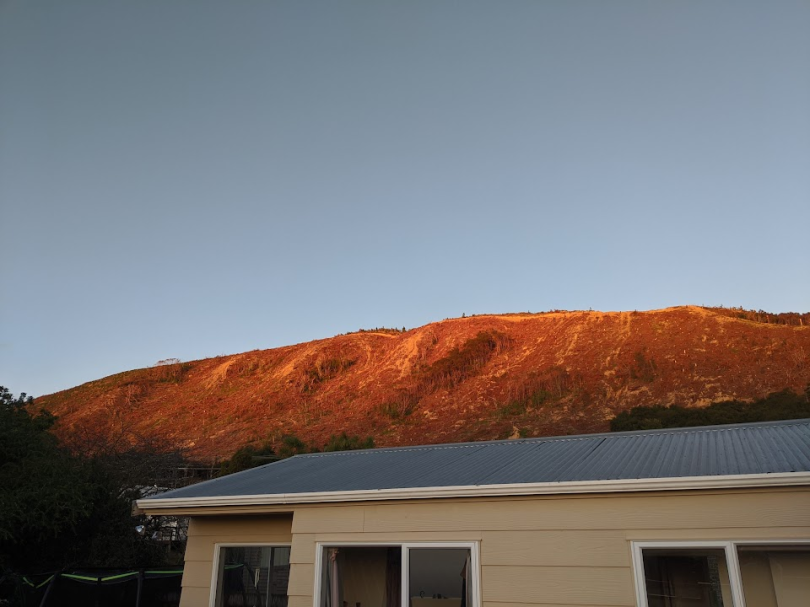
An earth-coloured hill glows orange in the sunset light above a house with a grey steel roof, like a wave of dirt about to swamp the house.

As I write this on the first morning of the new year, it is pissing down outside — droplets visibly multiplying and scattering as they smash into the neighbour’s roof — but from my vantage point, looking west towards Kāpiti, the sky is all blue except a single rising tuft of white cumulus floating steadily north. Like the sky’s thinking two things at the same time. In the time it’s taken to write this paragraph, the rain has stopped.

I turned 39 in 2023, dad, husband, writer of emails, and I tried to change my mind to be more like that sky. To be comfortable holding all the competing narratives of contemporary society in my head, at least for a minute, and find a few clean toeholds on this precipice of climate change, recurring conflict, populism, and artificial intelligence, which I could use to write this entire post for me right here in the WordPress web app.

I have this one sometime friend who has a way of finding exactly the right words for your weak points so they ring in your head for years. When I messaged him for the first time in a while, he replied, ‘When did you get so sober?’ Mate, I’ve always been this sober.

As always, this wrap-up is mainly a record for me, but I think there’s something in it for everyone.

Books

A child sits in a green folding chair and reads next to a fairy garden.

Getting my father-in-law into Jhumpa Lahiri was a top achievement of 2023. So was reading three books by her, including Roman Stories, newly translated from the Italian she now customarily writes in, dark and disenchanting in a way her older stories only hinted at.

Those Lahiri reads pushed my 2023 reads by women of colour up to ten. I read 40 books by women and 22 books by people of colour. This is out of 65 books read in 2023. Ratios are improving. Smug righteousness expanding.

These books I loved:

  • Changing Planes by Ursula K. Le Guin (2003) (re-read)
  • The Luminaries by Eleanor Catton (2013) (re-read)
  • Slow Days, Fast Company by Eve Babitz (1977)
  • Pride and Prejudice by Jane Austen (1813)
  • Parable of the Sower by Octavia E. Butler (1993)
  • Every Man For Himself and God Against All by Werner Herzog (2023)

Those re-reads early in the year were a treat, especially The Luminaries, which I felt more able to meet at its level than when I was first under its spell in 2013. I read it straight after racing through Birnam Wood, which I also really enjoyed. In The Luminaries, things start in a mess and steadily get sorted; in Birnam Wood, there’s hope at the start and absolutely none at the end.

A big thank you to Auntie Cheryl for introducing me to Eve Babitz, who writes the most interesting stories about the most vacuous people and situations. I’ve never spent time in Los Angeles or California but her ear for dialogue and talent for description almost convince me that I have.

Finally reading Austen was perfect for our anniversary weekend away. Pride and Prejudice is one of Tara’s favourite books; I knew the story but I didn’t know about Austen’s mastery of character, language, and tone on every page, her wit, her tenderness.

By contrast, finally reading Butler’s totally unsentimental near-future hellscape was every bit as much of a gut punch as I’d been led to expect, and more. There’s fire everywhere, most of all in the protagonist Lauren, whose drive towards change is as intense and ruthless as the scorched landscape around her.

But if there’s one book I’ll look back on most, it’s Herzog’s incredible autobiography, which is packed with incredible yarns and told with the narrative spark of a practised raconteur. No one could ever agree with Herzog about everything but I think most readers will find the perfect final pages hard to resist. Thank you Mummyji for putting it on my shelf.

These books I liked:

  • I’m Working On A Building by Pip Adam (2013)
  • Audition by Pip Adam (2023)
  • Birnam Wood by Eleanor Catton (2023)
  • Masters of Doom by David Kushner (2003)
  • The House on Mango Street by Sandra Cisneros (1983)
  • The Namesake by Jhumpa Lahiri (2003)
  • The Lowland by Jhumpa Lahiri (2013)
  • Roman Stories by Jhumpa Lahiri (2023)
  • Dear Mr. Henshaw by Beverly Cleary (1983) (re-read)
  • L. A. Woman by Eve Babitz (1982)
  • Tales of the Tikongs by Epeli Hau’ofa (1983)
  • The Fire Next Time by James Baldwin (1963)
  • Black Vodka by Deborah Levy (2013)
  • Things I Don’t Want To Know by Deborah Levy (2013)
  • Crook Manifesto by Colson Whitehead (2023)
  • Beyond a Boundary by C. L. R. James (1963)
  • White Cat, Black Dog by Kelly Link (2023)

A decent list implying a pretty good hit rate from those 65 books, especially considering I didn’t actively hate any of them. You may however notice how my reading skews to this century, which I aim to improve upon in 2024. For the bored or curious, here’s my reading list.

A quick postscript for Sherryl Jordan, a favourite of my childhood and whose The King’s Nightingale challenged and fascinated me in 2021. She died on 15 December. The Juniper Game, with its telepathy and nascent sexuality, was one of the most memorable and influential reads of my childhood, putting some of my burgeoning feelings into florid language. Re-reading it as an adult, I was struck by how inappropriate and objectifying some of that language was, but that doesn’t make its impact on my young mind any less true.

Sport

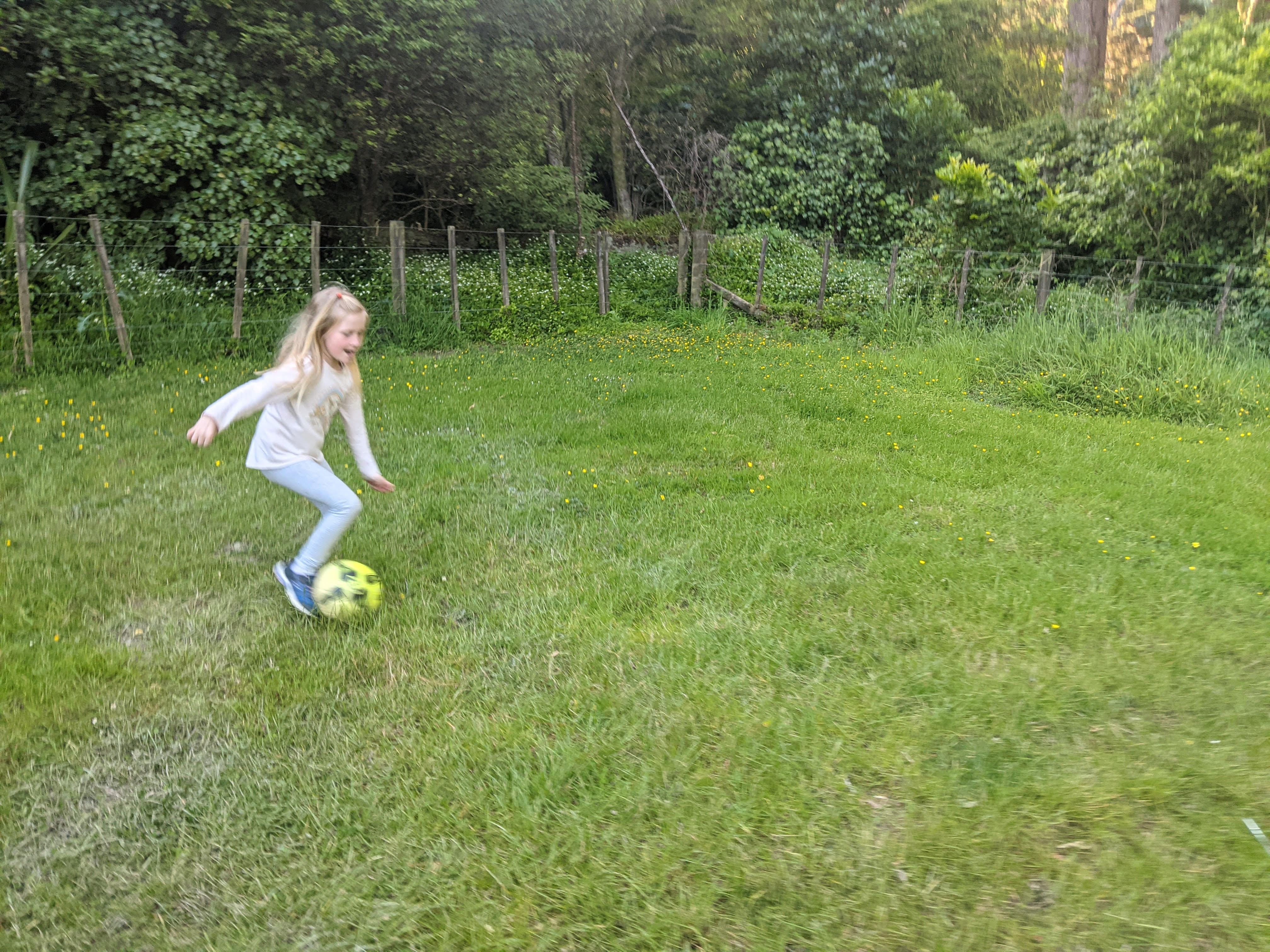
A child kicks a yellow football in motion blur in the corner of a well-grassed country field.

The FIFA Women’s World Cup football tournament was held in Aotearoa New Zealand and Australia in 2023. My kids became aware of it thanks to a McDonald’s Happy Meal promotion featuring Panini cards with players on them; score one for corporate sponsorship. They were particularly interested in ‘the red girl’, aka Spain captain Olga Carmona. Why? “Because daddy’s favourite colour is red.”

After New Zealand opened the tournament with a shock win over Norway, I was determined to ride the wave of public interest and get the kids along to the first match in Te-Whanganui-a-Tara Wellington, between Costa Rica and Spain. A shout-out here to Anne, who scored us two free tickets, and to the official FIFA ticketing app, which had me shitting bricks with all its terms and conditions and restrictions.

Not content with ferrying the kids an hour south in mid-winter at night to sit on uncomfortable bucket seats for a couple of hours, I decided to up the difficulty by driving to Porirua and taking the train the rest of the way to the stadium.

“Are you sure about this?” said Tara, who had an assignment due, meaning I was solely responsible for the success or failure of the endeavour. “It’ll be fine, they’ll be fine, we’ll be fine, I’ll be fine,” I said, over and over.

We parked up and staggered over to the train platform in several layers of warm clothing, which we promptly shed in the stuffed and overheated confines of the train carriage. I found the kids a seat and crouched awkwardly next to them as they looked blankly at the sea of colour and noise all around them. Spanish fans, mostly.

We finally found pockets of space on the long, wide, concrete concourse leading up to the gates of Sky Stadium, or ‘Stadium’, as it was known for the duration of the tournament. I took the kids’ hands and we ran towards the floodlit temple before us, full of night time energy and the buzz of an international sports crowd. This was dampened somewhat by the confiscation, in an otherwise smooth entry process, of the off-brand water bottles I’d packed for the kids. The FIFA terms and conditions were always going to get me somehow. We stood with shouting people in the beer and wine queue for ten minutes to get two bottles of spring water for ten bucks.

Then we found Anne and Kazu and made our way into the stadium and up to our seats, way up the back under cover and with a little space on either side. I handed the kids their lunchboxes but they just held them on their laps as they took it all in, the flags and face paint and clothing in the stands around them, the brightly lit green rectangle a hundred metres distant from our elevated position. Kazu gave them little hand warmers to put in their pockets. Anne shared her lollies. Then the game kicked off.

It was terrifically one-sided. Spain put on a clinic and peppered Costa Rica’s goal from the outset, to the extent that the neutral crowd took to roaring every time the ball went into Spain’s half — so, about three roars in the first 45 minutes, by which time it was 3-0 to Spain. The Costa Rica goalkeeper suffered leg cramps later in the match.

During those long spells of Spanish possession and attack, the crowd satisfied its need to make noise through stadium waves. I would like to say the kids were interested in the football, but this was what they really remembered: watching the wave ripple around the opposite side of the stadium, as if thousands of hands became a single conscious entity, and then being part of the wave themselves.

I decided to drag us off to an early train rather than see out the full match and risk missing an even later and certainly far more congested train. High on the energy and wisdom of the crowd, they were disappointed to leave. As we disembarked from the train in Porirua, they spotted a huge poster for the World Cup. They talked about it excitedly, pretending it had been put up especially for them.

A few weeks later, after years of turmoil and controversy, Spain won the final against England with a goal from — who else? — the red girl, Olga Carmona. (Then the president of the Spanish football federation kissed Jennifer Hermoso on the lips during the presentation — Jennifer Hermoso, who literally ran further than any other player in the entire tournament, at the tail end of a glittering career in the game. #SeAcabo.)

Travel

A woman and a man smile in the foreground, with a view of pointed green hills of farmland behind.

Tara and I celebrated ten years together with a quiet August weekend in Te Rohe Potāe, the King Country. Our car playlist was so good I missed the turn-off at Bulls, so we ended up having our early afternoon tea stop at Parikino Lookout halfway between Whanganui and Raetihi on the winding, storm-battered State Highway 4. There was an exceptional view of rugged, pointy farmland clawed back from the ripples of ancient tectonic shifts, a landscape I particularly identify with Aotearoa. There was also the most extreme and bigoted graffiti I’ve ever seen, Nazi swastikas and all, carved with prejudice into the picnic table.

Our Airbnb hosts at Ōwhango showed us our digs, a rustic studio converted from a 19th Century jailhouse (how’s that for a metaphor?), then left us alone completely. We loaded more wood into the firebox and headed off to Taumarunui for dinner at the local Thai place and BARBIE at the Regent Cinema. The big table in the middle of the restaurant seated a group of women dressed in whatever pink clothing they could find, mostly pyjamas. “I wonder where they’re going after dinner,” Tara said.

The cinema was everything I’d hoped for. Family-run, thinning wall curtains and sagging sofas in the lobby, cracked leather seats in the auditorium, Nibble Nook. The only heat source was a vent above some underfloor radiators down the front, so Tara put on her woolly hat and warm gloves for the show. The women from the restaurant came in soon after us, waving and calling out to various folks who were already seated. I expected the image to be flat and the sound tinny, but they’d clearly put money into bringing the tech up to date.

The following day, we ate lunch at the outstanding Blue Hill Cafe in Ōwhango — it’s worth a detour — and went for a walk by the Whakapapa River. Apparently there are blue mushrooms in that bush. I saw one once when I was a child in the Kaimai Range over Te Aroha way and couldn’t believe this toy section thing sticking up in all that green. We didn’t see any this time.

A two-night stay, so for us, the above is a pretty relaxed itinerary. I read a book of New Zealand sports quotes compiled by Joseph Romanos. We sat in the spa a lot and lay next to each other by the fire, chatting.

I’ve said this before but Tara changed my life. As we reflected on our ten years together, I couldn’t believe how much we’ve packed in, considering how often I feel like I’m lazy and coasting. Tara drives this. She’s like Lin Manuel-Miranda’s Alexander Hamilton, never satisfied, always looking to the next new thing. The other day, we were at the beach and I remembered going to the same beach twelve years prior and just sitting on the sand, unsure of what to do. It’s because of Tara that I now see beaches — and forests and mountains and trails — as places of boundless possibility.

On that first night, when we returned from Taumarunui, the skies cleared to reveal a fuller expanse of stars than we’re accustomed to down our way. We stood arm-in-arm on the driveway for a few minutes as our eyes adjusted and pinpricks of light bled out into clusters and nebulae, alternately marvelling in wonder and bullshitting each other with made-up constellations. Our relationship in a nutshell.

Movies

A living room television showing a still from the film Super Mario Brothers.

IN CINEMAS

I saw eight films in a cinema in 2023. Here they are in chronological order, with five-word reviews and rankings in brackets. Same follows for everything else I saw this year.

  • BROKER: Kore-eda, you let me down (8)
  • SUZUME: Lush anime, fine wordless climax (6)
  • ROBOT DREAMS: Mechanised whistling, do you remember? (3)
  • ENNIO: Talking heads, three diverting hours (5)
  • HOW TO HAVE SEX: Consent need not be blurred (2)
  • BARBIE: Accidental Wes Anderson speechifying nothing (7)
  • GODZILLA MINUS ONE: Budget of only $15m, how? (4)
  • STOP MAKING SENSE: Talking Heads, 90 perfect minutes (1)

NEW, BUT WATCHED ON A LAPTOP OR TV

  • GLASS ONION: A KNIVES OUT MYSTERY: Looks expensive, no real value (meh)
  • RED, WHITE & ROYAL BLUE: Snappy dialogue in twee romance (eh)

NOT SO NEW

  • THE HUNT FOR RED OCTOBER (rewatch): It’s never let me down
  • EVERYTHING EVERYWHERE ALL AT ONCE (rewatch): Simple story a new way
  • THE MUMMY (rewatch): Hottest cast of all time?
  • PETITE MAMAN: Inner child work, concise, masterful
  • PU-239: Passion project never gets going
  • DREDD: Comically violent diving in slomo
  • BLINDSPOTTING: Verbal rhythms and racial undercurrents
  • THE NAMESAKE: Penn’s better as stoner Kumar
  • RIO GRANDE: It’s about vibes, not facts
  • BEVERLY HILLS CHIHUAHUA: Not as shit as expected
  • BILL BAILEY’S REMARKABLE GUIDE TO THE ORCHESTRA: I liked early Bill best
  • 21 JUMP STREET: Wacky, fundamentally conservative buddy comedy
  • 22 JUMP STREET: More gags, more Tatum mumbling
  • POKEMON: THE ARCEUS CHRONICLES: Kids’ choice every movie night
  • POKEMON: SECRETS OF THE JUNGLE: They didn’t like this one
  • LEGALLY BLONDE: “You’ve NEVER SEEN LEGALLY BLONDE????”
  • PONYO (rewatch): Strange, inventive, woolly, distinctive Miyazaki
  • WHAT’S LOVE GOT TO DO WITH IT: Well-intentioned, progressively minded failure
  • JOUR DE FETE: A film that’s just silly
  • LES OLYMPIADES (aka PARIS, 13th DISTRICT): Audiard’s cheat codes dazzle again

Health

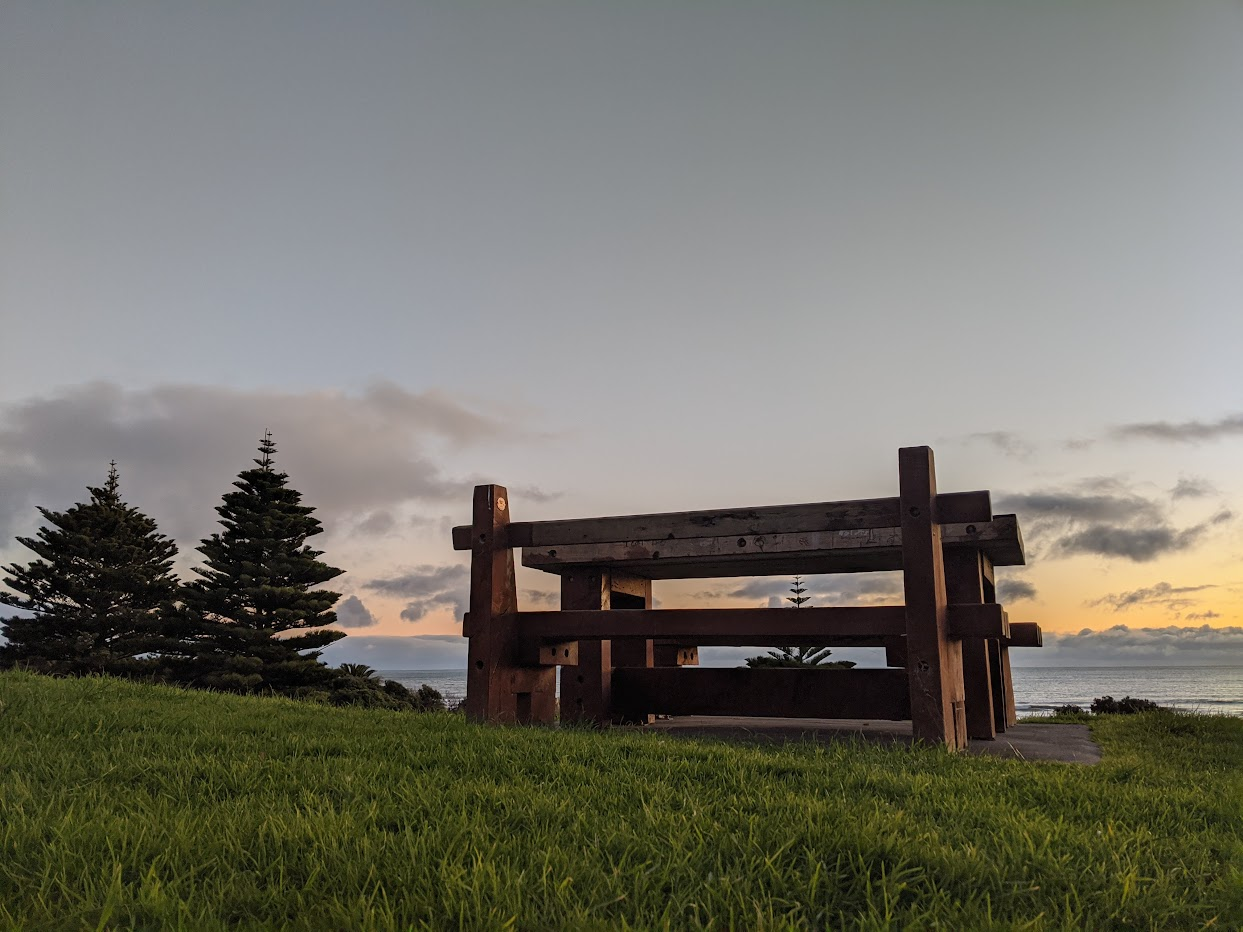
A wooden picnic table on grass in the foreground is shot to resemble a piece of modern art. The sun sets over the sea in the background. Two large trees are at the left of the image.

“You need to start taking better care of yourself,” said the counsellor. I knew this well enough already, but hearing a professional say it within five minutes of our first consultation made it the bright flashing light of my inner life. I have a tendency to put others’ needs above my own, and to self-sabotage in occasionally alarming ways during moments of crisis. I say moments because I’m fortunate never to have suffered any chronic mental ill health. But the acute nature of some of the moments leading up to those counselling sessions meant something had to change.

Start taking better care of yourself. Start, with the unspoken implication to continue. I successfully introduced regular breathing exercises and regular free writing into my routine. I continued to drink plenty of water and eat a relatively balanced diet. I made a few abortive attempts to introduce regular exercise and regular friend time; my health goals for 2024 are right there. Consistently restorative sleep is something for the longer term, when the kids are older and my wife’s sleep schedule aligns better with mine. It would also help if the cat didn’t leap onto the bed about 6am every morning to let me know her food plate remained mostly full.

The counsellor also recommended a solid chunk of time with no responsibility to anyone but myself. With Tara’s support, I booked a night in a holiday home out by the beach, filled a backpack and walked out there one hot April afternoon. I shut the curtains and let time stretch out more than it has in years. I watched two movies from start to finish and read an entire novel in one sitting.

This came in the middle of a week off work, and by the Friday, I felt like my long-elevated baseline stress level was coming down. Then Haku, the larger and fluffier of our two beautiful, stupid cats, got run over. I finished my week of stress leave forking over all our savings in an attempt to save his life, then signing the euthanasia forms and stroking his ruff while the needle went in.

*

Tara says Haku’s death was unquestionably the most difficult time of the year. For me, it was finally contracting COVID-19 at the start of February. Considering the tendency to discuss ‘the pandemic’ in the past tense nowadays, this note is appropriately buried well down the page. But it was the most difficult thing I faced all year and arguably its defining feature, unquestionably a contributor to my seeking counselling a couple of months later, though I was lucky not to develop anything like long COVID.

What I didn’t realise was that when I got COVID-19, Tara would have COVID-19 too. I always imagined simply a week off, shut away in some room of the house with books, a laptop and meals and snacks brought to the door. Instead, we had to tag team through the routine of caring for two young children and ourselves, both bitterly resentful every time we had to haul ourselves out of bed, denying cuddles to the dearest people in our lives. Other things I remember: sprawling for hours in a bean bag on the deck during the hottest week of summer; punching a door in anger when my kids were hurting each other again; the persistent scent of sea water deep in my nose.

Music

Collage of album covers mentioned in the text.

As the year ran out I found myself turning back to the first 2023 album that really got into my bones: CACTI by Billy Nomates. How’s that for an artist name that gives no fucks? Her working class pop pans back to pandemic lockdowns and spits in the face of anyone who dares question, most of all herself, but it’s also addictive and full of vivid imagery. She got a pasting after her Glastonbury set, which featured her singing and vibing in her inimitable fashion (“I feel like you don’t get to see a lot of un-delicate female movement,” she told The Guardian) and nothing but a backing track to accompany her. I think it kicks arse.

Someone else who came back stronger in 2023 was yeule with softscars. Another arty type who doesn’t like capital letters or punctuation, which usually puts me off, but their music, though still occasionally abrasive, is richer and smoother than 2022’s striking Glitch Princess. They operate even closer to the edge than Billy Nomates; that title is a reference to the remnants of self-harm, and in the bridge of standout ‘sulky baby‘, they sing: ‘I’m staring at you from the cliff / I’m looking down, I feel the bliss / I wanna jump, but I see your eyes’. The growing confidence and range in their sound suggests they’ll get even better if they stay this side of the brink.

L’Rain blessed us with a new album, I Killed Your Dog (if that puts you off, be aware she sings “I am your dog” on the title track). It’s hard to top the stop-you-in-your-tracks opening of 2021’s Fatigue, which made my world turn for months; eventually I warmed to I Killed Your Dog‘s gentler, jazzier rhythms, L’Rain’s groove still echoing with the 21st Century malaise I crave but more eager this time to leave the world behind and just hang.

There was also interesting new music from:

Clementine Valentine, The Coin That Broke The Fountain Floor, divinely inspired if patchier than their glorious last record as Purple Pilgrims;

H. Hawkline, Milk For Flowers, six full years since the brilliant I Romanticize and studded with a few fresh classics like the sprawling pleasures of ‘Denver‘;

Buck Meek, Haunted Mountain, whose solo work is way better than anything he’s done with Big Thief IMO;

and The New Pornographers, Continue as a Guest, who I clicked with in a big way this time. Track after hook-driven track I just couldn’t get enough of. I like that title, too, calling to mind half-hearted web browser sessions and general dipping of toes.

But what I really want to tell you about is the music I listened to while I was at work. Which means it was the music I listened to more than anything else this year. Because I’m invariably working with words and trying to shut out office noise, my work choices tend more towards instrumentals and electronica, which is what I’ve always jived with best.

It starts with Rắn Cạp Đuôi Collective and *1, heavy, pulsing, sweaty, and screaming, these guys throw a kitchen sink’s worth of sonic experiments at nine tracks and push the whole thing out the door at less than a half hour’s listening time. One moment it’s like a cloud, the next an electric shock. Perfect for dispelling distractions and knocking out that draft.

I was put off by the controlled feedback on track one of Imagine This Is A High Dimensional Space Of All Possibilities by James Holden and removed it from my Spotify downloads without completing a full listen. Fortunately, a friend insisted I give it another go. It’s so well named and always puts me in a better frame of mind.

Montreal-based Maara took me back to the early 00s of house with The Ancient Truth. That bassline on ‘Just Give Me Time‘ is trance-inducing all by itself; add a propulsive beat, swirling vocal samples, and what sounds to me like iterations on calm surf rolling into shore.

Slightly more challenging — it got funny looks from my wife when I chose it during dinner prep, but she’d be grateful if she knew I could’ve chosen Rắn Cạp Đuôi — was Beta Librae with DAYSTAR. Beta Librae really conjures the thumping bass melodies and flashing lights of the club at 3am here, and I tell you what, I got some work done. (Not that it can’t be pretty.)

And Leon Vynehall released a couple of singles this year. One of them, ‘Duofade‘, came out on my birthday and is the best kind of Vynehall: surprising, innovative, but still a tune, calling to mind the best of Four Tet and Burial.

Finally, something I listened to more than most other music this year can’t be found online. Someday soon, Ashish Seth will rework the hour of unreleased material he knocked into a tentative LP and shared with me at the very start of the year, and I’ll be able to share the wealth. It’s as moodily evocative as ever and has some spellbinding, transcendent moments. Meantime, go and check out Firstborn.

Tech and Gaming

Two children play an arcade version of Mario Kart.

The internet was slow again, the mobile browser page wouldn’t load, so I smacked my Google Pixel 2 with the heel of my right hand. Childish, really, and far from the first time I’ve destroyed an innocent electronic device in a fit of rage.

Not to worry. I had my old Moto G 5 ready to pick up the SIM card and chug along with me. Then I tried to open a car door while holding it in the same hand and it slipped and landed face down on the concrete. Smash, but this one hurt a lot less. I mean it was a pure accident this time.

Time for a new phone, and you know what? The Pixel 2 was so perfect — small, affordable, great camera, powerful enough to do all the things I wanted it to — I decided to get another. So that’s what I have now.

Now, at the very end of the year, the speaker and microphone on Tara’s phone suddenly stopped functioning. It’s a damned shame but she does have a long-serving Google Pixel, and another Pixel 2 could be ours today for only $139. Watch this space.

Is it even a good phone, though? I guess it depends what you want from these things, which in our case isn’t much. Calls and texts; decent photos; YouTube; Spotify; podcasts; some quickly jotted notes. A bit of social media (ancient social media like Facebook and Instagram, not TikTok, although I think I’ve finally kicked X (formerly Twitter)).

The bigger question is coming fast: when should the kids get their own phone or screen-based device? There’s a movement to keep smartphones out of kids’ hands as long as possible, and Tara and I both like the sound of that, because how much have they added to our lives? And what would they have taken away from us if we’d had them when we were growing up?

The reality is always more complicated. The evidence suggests smartphones contribute to mental ill health in young people, but they’re also growing up in a world that expects them to be attached to screens at work and play. Right now, I can be comfortable knowing both of these statements are true, but there’ll come a time when we’ll have to set our stall out on one side or the other.

Politics

The year in news began with yet more images of Jacinda Ardern. Then competing images of Christophers Hipkins and Luxon. Now, images of Luxon, Winston Peters, and David Seymour. Day to day, I’m not sure who’s actually in charge, but their faces will saturate our front pages if they have anything to do with it.

The new government’s effort to reduce the amount of visible te reo Māori is a dogwhistle and a distraction from the deeper impacts when landlords and employers have restored powers of unilateral termination, not to mention the kettle of climate change being boiled harder and harder by more grunty cars, more farting cows, and more primary resource extraction. BUT — it is gratifying to see how te reo Māori persists undaunted, as if a happy majority didn’t even notice the government change.

Most recently, I noticed te reo front and centre in TV coverage of the Super Smash, New Zealand’s domestic Twenty20 cricket tournament. Finn Allen smoked another slog over the mid-wicket boundary and ONO flashed up on the screen, followed by SIX. This is just what we do now.

People

A family poses for a photograph in front of a railway crossing sign. One of the children is coughing.

Nora and Juney are now six. They go to school and forget all about us, then come home and demand afternoon tea. They finally fall asleep without one or both of us in the room. They read a bit, and count to a hundred, and ask whether this moment is actually a dream and whether you can still think after you die. As their conscious exponentially expands, I know less and less about them — and that’s how it’s supposed to be with kids. They slough away their dependence on you in fits and starts. If you’re doing it right.

Tara and I remain extremely fortunate to have her parents’ 24/7 support as we attempt to grow these small people into functional humans. Jeff has taken them to and from school all year, and he almost always agrees to another boing on the trampoline, even when he’s interrupted in the middle of cooking dinner. Cathy has been stuck in bed or on the sofa with long COVID all year, but still she puts her hand up to look after the kids if Tara and I need to go out for a bit. I can’t even remember what it was like before we all moved in together.

As for Tara, she has acquitted herself so spectacularly well in two years of part-time creative writing study that she’s about to embark on a Master’s degree and write a real-life book. She does need me to put the punctuation in the right place — commas almost always go inside the quotes, dear — but apart from that, the hard work and the talent are entirely hers. When she wasn’t upstairs all evening with the study door shut, we marked the close of each day with an hour or two next to each other on the sofa, distilling the day’s events, chewing over our existential crises, looking to the future, and watching Taskmaster. So much Taskmaster (thank you Ed).

In the final weeks of December, I was delighted to spend some time with almost every member of my close family. Thanks to Tara’s incredible skill at birthday present selection, I even flew Sounds Air to Nelson to spend a weekend with my dad. What a superb town Nelson is! Especially on my stepmother’s e-bike: a return trip to Saxton Oval on the Saturday, a ride along the green paint to the River Kitchen and the Suter Art Gallery on Sunday. I don’t get much time with my dad and hadn’t visited him in Nelson in the two and a half years he’d lived there, so this weekend was one of the highlights of the year.

And then one more year becomes one more year, as the song goes. I fear the future and try to suppress it with plans. I stack them up and watch them fall. But there’s always a few that slip through to fruition, imposing some shape on my memory. Past, present, future, all polygons and rhomboids in my mind, a teetering structure always on the brink. Kia whakatōmuri te haere whakamua. I walk backwards into the future with my eyes fixed on my past.

Things of 2022

Front Page

We Some of us tend to uncertainty. The first draft of this post had multiple questions in each section, and as I age, it seems I have more questions than answers, even about my own experience of the world. I know I am a husband, father, public servant, in roughly that order. Nearing forty and a little greyer still. I celebrated my fifth wedding anniversary, and my children’s fifth birthdays — yes.

I ate mostly vegetables. I got a sweat up about twice a month on average. I got accustomed to multigenerational living in a million-dollar house in an area of quintile 5 social deprivation, i.e. ‘most deprived’. (It’s probably more like an $850k house now.)

I’ve tried to strip those questions out to give my writing a more concrete foundation. The truth is I live, like all of us, on shifting sands, increasingly unsure I can trust my own senses, let alone the ground beneath my feet.

Travel

I think we’re finally getting family holidays right. Sojourns of years past have been marked by squabbling and exhaustion and long days in the car are giving way to pleasant jaunts with shorter squabbles, generally cheerful weathering of inconvenience… and, yes, long days in the car. Hard to get away from those in Aotearoa New Zealand.

Certainly the kids’ (and consequently our) improved sleep is a big part of it, which is true of all aspects of life. But it’s all so much purer and more acute on holiday, where you’re cut loose from the cradle of habit and routine. Clothes in bags and a sandy piles on the floor rather than the usual drifts flowing out of baskets in the living room, bedroom, hallway. Washing cutlery as you use it, not piling it up in the sink.

In February, Lake Rotoiti in the Bay of Plenty. Omicron was surging but we went anyway. We walked out of our caravan, crossed the narrow road to the playground, and crossed that to stride into such inviting water, which seemed to offer not just its own cool shallows but also the reflected contents of the skies above. It rained and drizzled half the time but we kept going back in anyway, cavorting and laughing and floating like a perfect sitcom family, tracking sand back into the caravan afterwards.

We came in from one such swim after the Rotorua Redwoods tree walk, settled in for afternoon rest (them: laptop, me: ebook), then ate some dinner and got ready to drive back for the much-anticipated Redwoods Nightwalk, which promised colourfully lit trees and “34 exquisite lanterns” to brighten the final night of our holiday.

The kids leapt into their car seats and waited while I hunted for the car keys. I hunted, and I hunted, and I hunted; the keys were nowhere. I thought back to the way we’d bounded straight from car to lake when we’d gotten back to the caravan that afternoon. Surely the keys hadn’t stayed in my pocket? Surely they weren’t at the bottom of that huge lake, concealed in the surface reflections by day and in the dark by night?

After an hour of searching, and swearing, including with my phone torch in the water, we gave up and took the kids back in for bed. They were upset but handled it pretty well. Weathering inconvenience, or parental failure.

I set an early alarm and slept fitfully, knowing failure to locate the keys meant a substantial bill to cut a new one, and at the very least, a late departure for home. When the alarm went off at dawn, I crept out to comb that lake. But first, another quick check of the ca-

Ah. There they were in Juney’s seat. Right where her bum had been for the duration of the previous night’s frantic search.

We didn’t get to the Redwoods Nightwalk this time, but we did get to drive home.

*

In November, a week in Tāmaki Makaurau/Auckland. COVID very much around once more, but we didn’t get it this time either, although Tara picked something up early and had to miss our ferry ride across to Devonport. The kids loved the dry sand at the playground and, a few metres away, the wet sand and wavelets of the beach, studded with many brilliant shells and objects that they collected for close to an hour until it was time for possible the worst fish and chips I’ve ever had. Then back to the ferry with heavier legs and darkening circles under eyes via a last toilet stop.

They were just about to haul the gangway back on board when I realised I didn’t have the tog bag, which also held their drink bottles and other small items that would be missed. “We can’t wait,” said the captain. So off we went to get the bag, and back to the playground for ten minutes, and back to the ferry once more, kids “actually happy to play some more”. Eventually we made it back to the central city and trudged ten minutes to our absurdly central accommodation, fuelled by lollies.

I know I only talk about the times things go wrong but as a parent, I am rarely prouder of myself or my children than when there’s a balls-up far from home and we find a way to get through it.

Books

These books I loved:

  • The Books of Earthsea by Ursula K. Le Guin
  • On Warne by Gideon Haigh
  • We Have Always Lived in the Castle by Shirley Jackson
  • Trust by Hernan Diaz

Very occasionally, a book comes into your life that’s not only addictive and a formal marvel but also changes how you see the world. Trust is one such book. Diaz’s meticulous research into early 20th Century capital and finance shows, but more than that, so does his deep reading of novels and autobiographies of the time, all of which are reflected in Trust’s nested four-part structure. I read it twice in 2022; I also listened to a two-and-a-half-hour interview with Diaz about how he pulled it all off. For a book that’s so much about the artificial creation of value, it was worth every second.

These books I liked:

  • My Brilliant Friend by Elena Ferrante
  • To Paradise by Hanya Yanagihara
  • In the Margins by Elena Ferrante
  • How to Loiter in a Turf War by Coco Solid
  • Stories of Your Life and Others by Ted Chiang
  • Foreverland: On the Divine Tedium of Marriage by Heather Havrilesky
  • How to Stay Sane by Philippa Perry
  • Small Deaths by Rijula Das
  • A Line Above the Sky by Helen Mort
  • The Seven Moons of Maali Almeida by Shehan Karunatilaka
  • The Last Policeman by Ben H. Winters

Of these, To Paradise is the one I find myself thinking back to most often. Yanagihara’s clean, methodical prose masks some pretty half-baked thinking — but it does get you thinking, and it’s propulsive in moving the narrative forward. Side note: I read To Paradise on the back of a famously negative (and in my opinion quite unfair) review by Becca Rothfeld in the Times Literary Supplement: “so unusually terrible that it is a sort of anti-accomplishment, the rare book that manages to combine the fey simplicity of a children’s tale with near unreadable feats of convolution […] There is nothing to recommend it to anyone.” Well! Sign me up!

I would also like to recommend Foreverland to anyone in a long-term relationship. It’s frank, funny, and takes away all that societal pressure to be the perfect spouse.

These books I found disappointing:

  • The Secret History by Donna Tartt
  • The Word for World is Forest by Ursula K. Le Guin
  • The Hydrogen Sonata by Iain M. Banks
  • Railsea by China Miéville

Three giants of my reading life above. I’ll return to them all, but probably not to Tartt, whose rich plonkers irritated me from page one.

This book I actively hated:

  • How High We Go in the Dark by Sequoia Nagamatsu

A thoroughly exploitative catalogue of grief in which children are subjected to particular suffering as shortcuts to provoking an emotional response, never realistically rendered, their suffering a footnote to the lessons we must all take from the nobility of their often grotesque deaths. It’s the Tuesdays with Morrie of speculative fiction.

But here’s the real story of my reading in 2022:

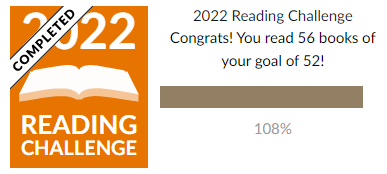
Screenshot of successful Goodreads 2022 Reading Challenge showing 56 books read, with goal of 52 (108%)

Whoa yeah. And I owe it all to my children, who one day wandered away from the picture books at the library and into the junior fiction section, and suddenly we were onto chapter books — particularly:

  • Andy Griffiths & Terry Denton’s Treehouse series
  • Kiwi author Stacy Gregg’s Spellbound Ponies series
  • and most of all, the Secret Kingdom, churned out at a rate by a pseudonymous collective of hired guns known as ‘Rosie Banks’.

It’s incredible to watch my kids’ faces grin and grimace with the action as I read each book to them. And the way Juney will stare off at some version of events in her mind’s eye while Nora fixes her gaze on my face, watching the characters speak through me. They live for stories.

Don’t ask me why, but when I read them their first Secret Kingdom book (Wildflower Wood if you must know), I accidentally gave Summer the voice of Moss as played by Richard Ayoade in The IT Crowd and now I can never change it. You can probably guess which of Ellie, Summer, and Jasmine is the kids’ favourite.

Music

Best Hardcore Album AND Best Album Under 30 Minutes AND My Favourite Record of the Year:

It’s so solid all the way through, and so manageable at a tick over 26 minutes, I might just listen to it again right now.

Best Prog-Rock Album AND Best Album Title:

I had to listen to this because of the title, which so succinctly describes how my biggest weakness defines me. The music is relaxed and jazzy and has room to breathe, with lyrics that revel in ambivalence, simultaneously railing against our collective inertia and allowing us the joy of relaxing into it.

Best Glitchpop Album AND Most Uncomfortable Listen:

Glitch Princess by yeule

Much of yeule’s lyrics are about a disconnect between self and body, how they hate that their emotional scars are printed all over it. Their keenness for you to join them in their discomfort will put as many people off as the autotuned vocal snippets and chopped-up machine noise, I’m sure. I was quite happy to sit with it.

Best Synthpop Album AND Most Assured Album By Someone Who Kind of Hates Making Music:

Laurel Hell by Mitski

She almost swore off music altogether a couple of years ago, eaten up by being “a product that’s being bought and sold and consumed”, and yet here she is with music that seems to know exactly what it’s doing, summing up the world in the space of a song, leaving you wanting more.

Best R&B Album:

Three Dimensions Deep by Amber Mark

Everyone else will be picking Beyoncé here but I once again failed to get into her music. And anyway, I have Amber Mark to take me beyond the stars, shaking her head and breathing the obligatory “damn, I fuckin’ made it”.

Movies

IN CINEMAS

Three weeks apart in April-May, I had my only cinemagoing experiences of 2022 — and what excellent choices they were.

EVERYTHING EVERYWHERE ALL AT ONCE tries so much — visually, tonally, thematically — and pulls off almost the lot. I laughed, I cried, I cringed. I shook my head in disbelief. The high-concept plot, asinine gags, and fight scenes are all fine, but the first 20 minutes of the film are among the most thrilling I’ve seen in years, featuring the always excellent Michelle Yeoh sucking you right into the whirlwind of Evelyn’s daily war: taxes, customers, gay daughter, ailing dad, sweet but ineffectual husband. Fundamentally, it’s a film about parents and children — about how you just want your kid to fucking LISTEN, or how you just want your mum to actually SEE who you are and take you seriously for once. But it piles so much more on top of that, which would choke and flatten most films but somehow elevates this one. Loved it.

AFTER YANG also sets up a narrative crackling with possibility. What a fulfilling sensation it is to get to the end and find out it’s basically about people being nice to each other, and trying really hard to understand each other, and keeping what’s good about humanity alive in an increasingly tech-driven world, rather than any drama based on withheld or concealed information. I thought about it for weeks afterwards.

NEW, BUT WATCHED ON A LAPTOP OR TV

Putting the above in the top two slots, here’s a quick ranking of other new-to-NZ films of 2022:

  • 3) THE LOST DAUGHTER
  • 4) THE WORST PERSON IN THE WORLD
  • 5) THE RESCUE
  • 6) SUMMER OF SOUL (…OR, WHEN THE REVOLUTION COULD NOT BE TELEVISED)
  • 7) THE BOB’S BURGERS MOVIE
  • 8) TURNING RED
  • 9) TITANE
  • 10) LICORICE PIZZA
  • 11) SHANG-CHI AND THE LEGEND OF THE TEN RINGS

Liked the top four a lot, didn’t particularly care for the others, which is the first time I’ve said that about a Paul Thomas Anderson film. Men may be shit but is that reason enough to run off with a boy, who is unfortunately becoming a man, at the end?

NOT SO NEW

And some highlights from my other viewing of 2022:

  • DEREK DELGAUDIO’S IN & OF ITSELF
  • FREE SOLO
  • EMMA.
  • SOUND OF METAL
  • THE PEANUTS MOVIE
  • COLUMBUS (rewatch #3)
  • MASTER AND COMMANDER: THE FAR SIDE OF THE WORLD (rewatch #2)
  • BATTLESHIP POTEMKIN

I recommend watching any of these, but I had the most fun watching EMMA. That’s how you do a period comedy-drama.

If for some reason you want the full record of my 2022 viewing, here’s the Letterboxd link, where you can also follow my reviews in 2023.

Health

2022 was the year of dodging COVID. I think. Our house saw everything but a positive test: high temperatures, snotty noses, deepening fatigue, gastroenteritis on repeat. And my mother-in-law in the annex had no sense of smell for six months and still can’t walk fifty metres without feeling wiped out for the rest of the day, her well-worn impression in the sofa nearly always occupied, her neurologist convinced she has in fact had COVID. But still: no positive test.

In 2023, we will surely get COVID, whether or not we continue to mask in indoor public spaces. As someone in my orbit said: “Everyone should just chill. Just get over it, accept it. It’s here, it’s not going away.” (Update: I’m posting this in mid-February because we’ve had COVID, already.)

*

One Sunday night in approximately September, I struggled to sleep. And it’s been the same every Sunday night since.

Many people over the years have told me of their nightly battle with consciousness and their increasingly desperate attempts to flee it. Every time, I would think: I am so lucky. With rare exceptions, I’m out within ten minutes of my head hitting the pillow. I may be up in the night with unsettled kids; I may be awake too soon when the alarm goes off. But getting off to sleep has never been a problem, until now.

Sleep is so fundamental, it affects everything else in your life. We know this. So, suddenly, I’m analysing the impact of anything I do that isn’t sleep. Sunday night is the main offender, so is it work stress, or perhaps weekend sleep-ins throwing off my routine? Am I eating or looking at my phone too close to bedtime? Are my exercise habits insufficient? Do I need my spouse there in the bed with me? Do I have the right pillow, the right blanket, the right mattress? If I could just get the variables perfect, I could sleep fine.

I mentioned this to some older colleagues. Oh, yeah, they said. Sunday nights are trouble. I was more horrified than relieved to hear this was a common affliction because it made me think I was destined to fall into this pit and never get out, just like everyone else. They advised me not to look at the clock at all once the sun goes down and to try melatonin, or ibuprofen. I haven’t — yet.

Sports

Something about small amounts of indoor football.

Something about volunteering at the Women’s Cricket World Cup, the joy and hope of Amelia and Jess Kerr’s embrace after icing a big warm-up chase against India, the despair of the White Ferns’ tame and fearful exit on home soil.

Something about Lionel Messi completing football at the 2022 FIFA Men’s World Cup. That no-look 30-yard pass through his marker’s legs for Montiel to run onto and score, the sort of genius that makes two goals in the final seem insignificant. As ‘McNizar 24’ put it in a YouTube comment that has garnered over 2,700 likes: Did you realize that in every moment of football, there’s always have Ronaldo and Messi.

Tech and Gaming

My stupidest ever life event happened in 2022. On an otherwise unmemorable afternoon in late October, I completed my 1000th match in New Star Soccer, a football game for mobile phones, thereby achieving the game’s final award.

I first played New Star Soccer as a browser game in 2011 — and I played it a lot. But a succession of low-end laptops failed to render its very limited graphics without microsecond pauses, and as gameplay is based around fast clicking, I became too frustrated to continue various long careers in the game.

Then, in 2021, I downloaded the mobile version, which suffers no such glitching. And so: 1000 games, completed at a rate of about three a day. I told Tara of this monument to wasted time and she was shocked: “You play a mobile game? And you’ve played one thousand matches in it?!”

The longitudinal nature of this achievement, combined with the lack of challenge in the gameplay beyond about year three in the game world, meant there wasn’t much of a dopamine hit when the awards screen ticked over to 100%. And as soon as I finished that final season, I retired and stopped playing the game completely. It gave me a final score:

You, like me, might be wondering where this ranks me globally. Well, I’ve googled a few times but am yet to find the New Star Soccer community online, so am unable to tell whether this is an okay score, a good score, or a great score. Which means there’s a remote possibility I’m the world’s greatest ever New Star Soccer player.

*

Through the YouTubers Zero Master and decino, I rekindled my childhood fascination with DOOM and discovered a world of untold riches in its still-strong modding community, coming up to 30 years since the first game’s release.

Through playing many cooperative games with Tara, I deepened my love of the Nintendo Switch console and actually almost want my own Switch.

People

I was confined to barracks for much of 2022. As I say: high temperatures, snotty noses, deepening fatigue, gastroenteritis on repeat. You don’t want to be taking that shit out into the world. And for a few months there, when Omicron was first on the lash, we stayed home to protect ourselves and particularly my vulnerable mother-in-law. Even the kids, who would come to love their kindy days once we arbitrarily decided it was safe to send them. It wasn’t good for any of us mentally, spending all that time at home. But it kept us apparently free of COVID.

Now the kids are off to school and really becoming themselves, full of more questions and ideas than ever.

I didn’t get around to tying this post off neatly. Didn’t actually complete it, if you look at the rushed placeholder content above, the paucity of images, and this anticlimactic conclusion. Still: time passes, we carry on.

Things of 2021

Front Page

At The Dowse Art Museum, Lower Hutt

Time stretches and collapses. Some things fade as soon as they happen. Others burn themselves into our vision until we look at them again. Our post-pandemic future seems too far off to imagine, 2025 at least before we can say we’re through it. Three whole years! But our future of climate catastrophe is here, now, and threatening to make our lives unrecognisable by as soon as 2030, certainly by 2050. Then: someone clicks their fingers and it’s already been three months since the last phase of that work project, the one that was going to kick into gear again next quarter, so it’s time to review the plans for implementation. But then, I’ve felt every second of the six months since I last published a podcast episode, always aware that I wasn’t working on it, or on any of the dozen or so other projects I have on the go, including this post.

I’m cramming it in as I inch towards 40. But it all falls away in dutiful bliss whenever my family need me, which is most of the time. My salary goes up and we still struggle to save, but also in 2021, I came into a life-changing amount of money and spent it all immediately. As Aotearoa prepares to join the rest of the pandemic-ravaged world, every aspect of life seems less certain, less sacred, than ever, at the same time as needing to hang on to all of it as long as possible.

The hard part is not knowing what to do next. It was all so simple: they told us what to do, and it worked. Now we have to figure most of it out for ourselves. I suppose we always did, but not like this. Never so new and strange and unsettling, for so many millions.

Property

It was the year of selling and buying houses in New Zealand, and we too sold our house and bought a new one. Nine incredibly stressful months throughout which we didn’t know if we’d made the right decision, or if we would ever find the right place. In the end, we found the best place we’d seen in three years of open homes, and somehow we got it. Even better (for us), we seem to have sold at the height of a rising market and bought just after its peak.

You don’t need to hear about my crocodile tears for all those people struggling to pay the rent while I bank a ludicrous capital gain. Our experience fits almost perfectly with Bernard Hickey’s analysis indicating the New Zealand Government’s response to the COVID-19 pandemic to date has seen one of the biggest transfers of wealth from workers to landowners in the history of New Zealand. Very little about it is fair.

What does this mean for us, day to day? There’s a budget and it’s fairly tight. We now live with my parents-in-law, wonderful people with whom we now have to share space, and that is never easy, no matter how wonderful anyone is. Most of all, we all have a home for the foreseeable future, as everyone should, and we have the luxury of thinking five, ten, twenty years ahead, with this roof over our heads at the heart of it.

Health

While trying to teach the kids how to pause and breathe deeply to come back from the brink of fury, Tara realised she was only coaching them at bad moments, immediately after the altercation. And I realised I was doing the same thing to myself — and barely doing it, once in ten lows if that — when I needed to be doing it a few times a day, regardless of mood, because every time I do, it helps. Like drinking water.

No, I’m still not doing it a few times a day. Nor am I meditating, of which I’ve known the extraordinary benefits and potential for otherworldly experiences for a full decade now. Or writing in a journal and getting all those thoughts out of my head, which I used to be really good at. As for going for a run… come on. At least I still drink loads of water.

*

Tara doesn’t want me to die, so she got quite exercised about getting me in for another skin check this year, which I knew I needed. A bunch of my moles were itchy for a couple of months before I finally agreed and booked in with retiring dermatologist Dr Jennifer Pilgrim. What a name! And my mother swears by her.

I disrobed and she looked carefully over my skin. “I see you’ve had a few removed already,” she said, looking at the enormous scars on my back from when I was 16, a memorably unpleasant experience of 160 injections and an hour on a half on a table while benign (though large) moles were removed. “I hope whoever did it has improved since they did these.”

Back at her desk, Dr Pilgrim said, “I don’t see anything I’m worried about. But you need to keep getting checked regularly, and I won’t be doing it.” She gave me the names of a couple of big skin clinics first and told me absolutely not to go to them. “The amount of moles of unusual appearance you have, they’d take one look at you and see the dollar signs and start hacking bits out of you.” Which is more or less what happened to me in my teens, though it was free butchering by the public health system in that case. She sent me away with a couple of names and wished me all the best.

On the way out, as a special treat, my mother was coincidentally in the waiting room, waiting for her skin check. We had a good yarn and I drove home. A few days later, histology confirmed she had a melanoma. So go and get your skin checked.

*

As for COVID-19, we are still only a little way into this thing. The “it’s just a bad flu” crowd seem to be winning and you can all get back to work. I still don’t know exactly how bad it might get in the long term and I don’t think anyone does, even if it’s likely industrialised countries have passed the peak. So let’s socialise outdoors where and when possible, keep wearing masks after we’re told we don’t have to, and normalise sharing vaccination status.

Politics

The absolute audacity of me, a well-meaning liberal with an asset in my name and a solid family network nearby, to think for a second that climate change is the only political issue that matters now. If your rent’s just gone up another hundred dollars a week, or your boss insists you come to work despite being immunocompromised, why should you be thinking about anything beyond survival, today?

Politicians have to constantly examine risk models and make decisions based on what would happen if they made a different one. It must be really hard, especially when anything mildly deviant from the status quo is likely to see them relegated to the opposition benches at the end of their three-year term. While I would like them to make sweeping changes to reframe the way our society works and where value is placed, I understand why they don’t.

All of which doesn’t change the fact that nature and science are indifferent to policies that “build permission”. Sorry to be writing so vaguely and gravely this year! It’s just the times. I’m too burnt out to have a laugh.

Books

Some classics at Pop and Nana Ange’s house

I read 55 books in 2021. 25 were written by women. 8 were written by people of colour. So I still don’t think I’m reading widely enough. Luckily, the remedy is simple.

But here’s what I find interesting: I thought those numbers were way higher, as if each book by a woman was worth 1.5 in my mind, or each book by a person of colour worth 2. I read ‘One of Them’ by Musa Okwonga AND ‘Raceless’ by Georgina Lawton, so I thought I was doing okay. It goes to show the extent to which white men are the default, invisible in their firm grip on the lectern. And it goes to show you can always try harder.

I also stuck almost exclusively to the last fifty years, reading only three books published pre-1971. A pity, because time travel is one of the main reasons I have a reading list. I did however read a lot of new books, despite being a curmudgeon, so it was nice to be up with the zeitgeist for a change.

Some lists and selected reviews from the books I read in 2021.

Loved

  • The Tombs of Atuan by Ursula K. Le Guin (1971)
  • The Five Gates of Hell by Rupert Thomson (1991)
  • Embassytown by China Mieville (2011)

From my review of ‘Embassytown’ on Goodreads:

Ursula K. Le Guin gave this a glowing review in the Guardian, and even a few pages in, it’s easy to see this as a successor to THE LEFT HAND OF DARKNESS and Miéville foremost among her inheritors. And here I am, wondering why I’ve resisted him for so long. A novel about language, and ideas about language, and anthropology, and wrestling with change, and genuinely alien aliens, and thrilling and packed with ‘holy shit’ moments to boot? Like, you’re lucky if you get one such moment in a novel, but EMBASSYTOWN has at least five reveals that blew me away. The sentences are purposefully dense, such that I had to slow down and occasionally re-read to make sense of them, but in a manner that absolutely fits the material. And as I got closer to the end, I slowed down even more — because I didn’t want to find out what happens. I wanted to keep finding out what happens. For as long as possible.

At the most basic level, this is a novel about changing your mind — how that’s possible, though scary, and can be very much to your advantage. How information can bring the possibility of freedom, and how language is the conduit between your mind and that freedom. But it’s about so much more than that as well. I loved it.

One of many ‘holy shit’ moments in ‘Embassytown’

Liked

  • Thief of Time by Terry Pratchett (2001)
  • Guts by Raina Telgemeier (2019)
  • The Illustrated History of Football: Hall of Fame by David Squires (2016)
  • Footnotes: A Journey Round Britain in the Company of Great Writers by Peter Fiennes (2019)
  • Solutions and Other Problems by Allie Brosh (2020)
  • Night Waking by Sarah Moss (2011)
  • We Run The Tides by Vendela Vida (2021)
  • Border Crossings by Andrea Karim (2021)
  • Friends: Understanding the Power of our Most Important Relationships by Robin Dunbar (2021)
  • Times Like These by Michelle Langstone (2021)
  • The Good Girls: An Ordinary Killing by Sonia Faleiro (2021)
  • Revenge of the Lawn by Richard Brautigan (1971)
  • Meg by Maurice Gee (1981)
  • The Lathe of Heaven by Ursula K. Le Guin (1971)
  • Everybody: A Book About Freedom by Olivia Laing (2021)
  • Barcelona Dreaming by Rupert Thomson (2021)

From my review of ‘The Good Girls’:

I was stunned by this book’s central revelation — one of those reading moments where images and ideas flash so quickly through your brain as they coalesce into a briefly coherent picture. I could see Katra, UP, India. I could see journalism and politics. I could see feminism and patriarchy, rich and poor. I could see abject hopelessness, even pitch darkness (if it weren’t for the light Faleiro shines). I could feel my distance from everything that happens in the book, things that could never have happened to me, and yet also feel a sense of connection to the girls and men at its centre. I saw everything and saw that I knew nothing. All of which comes on the shoulders of Faleiro’s astonishing feat of reporting, her clear and insightful prose, and the dots she joins to make some sense of it all. It’s her picture I’m seeing, and I’m glad of that, because as always, she has something compelling to say. But the picture fades; I play Nintendo with my wife and read other books and stop thinking about India, patriarchy, poverty. Until I read another exceptional book that excavates it all once more and makes me see, just for that brief moment. It goes without saying that you should read the blurb for this one and think twice before pressing ahead with it.

Hated

  • Ready Player One by Ernest Cline (2011)

From my review of ‘Ready Player One’:

The masturbatory fantasy of the dominant species in the gamer subculture-turned-overculture — i.e. the white male, fan of Kubrick and Tarantino and Kevin Smith and several other white male directors whose names you could easily guess, fearlessly definitive in his defence of the narrow Pantheon of arts and artists that define not just his personal taste but Taste itself, entirely uncomprehending of women, blind to all but the broadest strokes of identity, concerned in passing with notions of equality but lacking the complexity of thought to see any bumps in the road to utopia once the obstacles to his own wants are removed, ultimately just fine with the capitalist doctrine because money can and will solve everything.

I love how Cline sees the beloved genius at the centre of his story — a dead programmer who fashioned a globally significant game (and eventually a reality-defining quest) after his very favourite films, music, and games — as a benevolent Tastemaker rather than a fascist intent on narrowing all minds down to his level. […] because people like Cline take their taste so insufferably seriously, I also find it very funny. But then I think of Gamergate and the abuse of Kelly Marie Tran and remember that a belief system centred around pop culture worship is actually dangerous.

Here’s what I’m reading in 2022.

Music

Dancing to Orchestra Wellington and the Signature Choir playing ‘Don’t Stop Me Now’ by Queen

My biggest habit change in 2021 was to listen to more new music, following the list of new releases on Metacritic and keeping an open mind. Perhaps I should focus habit formation on health and mindfulness! But I could argue the mental stimulation and sanity brought by wide listening, reading and watching promotes good health. (Couldn’t I?)

I managed to mostly keep up until about September, at which point the house hunt and attendant mental strain had me reaching for the gold I’d already discovered, or The Field’s back catalogue. Because that’s how all but the most carefully trained brains work with art, but especially music: to seek out that which is familiar and comfortable, maybe very slightly surprising, but not so much that you have to work to get into it. The catch-22 being, if you can’t get into something if it isn’t familiar, how do you get into anything? So, I’m proud of the effort I made for three-quarters of the year — and look at the gifts I received in return:

Album I listened to most

  • Fatigue by L’Rain

Top ten favourite albums, in order of release

  • Introducing… by Aaron Frazer
  • Yol by Altin Gün
  • Fir Wave by Hannah Peel
  • For Those I Love by For Those I Love
  • Frontera by Fly Pan Am
  • Fatigue by L’Rain
  • Animal by LUMP
  • If I Can’t Have Love, I Want Power by Halsey
  • Screen Violence by CHVRCHES
  • HEY WHAT by Low

Top fifteen favourite songs

  • Ride With Me by Aaron Frazer
  • Yüce Dağ Başında by Altin Gün
  • Fir Wave by Hannah Peel
  • The Shape of Things by For Those I Love
  • Leafy by Dry Cleaning
  • Avalon by Rhiannon Giddens & Francesco Turrisi
  • Orion From the Street by Field Music
  • Pop Star by Tom Jones
  • Church Girl by Laura Mvula
  • Two Face by L’Rain
  • Gamma Ray by LUMP
  • Big Appetite by Liars
  • I am not a woman, I’m a god by Halsey
  • Lullabies by CHVRCHES
  • Battle by Andrew Hung
  • All Night by Low

Biggest discrepancy between Metacritic rating and my level of enjoyment

  • Dead Hand Control by Baio. Loved it.
  • Or Carnage Nick Cave and Warren Ellis. I think Skeleton Tree was enough Cave to last me a few years.

You may notice the lack of rap or other historically Black genres on there, and lack of metal or classical (or psytrance. Metacritic is limited, and I would love your suggestions for how to spread the net wider, but I think the biggest limitation with my habit change isn’t access to music (or lists of music) but in when I have time to listen to it — and that is when I’m at work, or when I’m in the kitchen. I want something to drive me on if I’m working or cooking, or something to luxuriate in, not something with quick wordplay or intricate drum fills. Mid-tempo, ideally, with indistinct lyrics (if any). That narrows the range down.

I try to take it easy on myself, though. You’re never going to listen to everything, or read everything. But if you make an effort to listen more widely than you usually do, you will be rewarded.

Follow along with my music discoveries in 2022:

Movies

Still from BO BURNHAM: INSIDE, which I watched in four? five? instalments

You all seem to have so much time to watch stuff. My brother visited the other day and went through his Plex account, rattling off dozens of titles he’d watched lately, including several multi-season series. Everyone else is bingeing Squid Game or Succession or whatever. Almost always, my response is the same: haven’t seen it. I am lost to books (and my children) now.

These are the new-to-NZ films and TV series I watched in 2021:

  • NOMADLAND (good)
  • WANDAVISION (sigh)
  • LUCA (wet)
  • BO BURNHAM: INSIDE (inauthentic)
  • VIVO (yawn)
  • IN THE HEIGHTS (long)
  • THE POWER OF THE DOG (mannered)
  • ENCANTO (trying)

None of them were very good, NOMADLAND aside. Sorry to Power of the Dog fans (the rest of my family + festival juries) and Lin Manuel-Miranda fans (my wife) in particular.

These are the new-to-me highlights I watched in 2021.

  • BABETTE’S FEAST (1987)
  • COLUMBUS (2017)
  • LITTLE WOMEN (2019)
  • VAI (2019)

I had plenty to say about COLUMBUS, a masterpiece of precisely drawn and observed connections between people and places, in my Letterboxd review. It’s right there on Kanopy for many library card holders to stream for free, but I am now a proud owner of it on Blu-Ray as I continue my campaign to raise awareness of a terrifying possibility: the streaming services may remove access to your favourite films and shows at any time, for any reason. So buy the disc or the file, store it safely, and enjoy it at your leisure with the smug superiority of one who knows they have directly supported the artists.

Sport

Cricket

Cricket

Travel

The Picturesque Garden at Hamilton Gardens

Early in our relationship, I told Tara of the wonders of Hamilton Gardens. She gave a sly, sideways grin, obviously disbelieving that anything with ‘Hamilton’ in front could never be wonderful, and said, “Sure.”

I mentioned it a few more times. Better than the Wellington Botanical Gardens. Better than any municipal gardens I’ve seen. Quite possibly the best free (for now) attraction in New Zealand. Tara would smile and nod, seeing a sweet country boy loyal to his origins, failing to hear the gospel in his faith.

Every summer since the kids were born, we go on a road trip holiday. A couple of times, we’ve skirted Hamilton, and I’ve tried to build in time to visit Hamilton Gardens. But we never managed it. “Next time eh, dear?” Tara would say, genuinely disappointed for me, but with a hint of that sly grin.

Finally, in 2021, we had a whole day to get between our shitty glamping tent in Raglan (it was next to a noisy carpark, a noisy water pump, and another tent full of three noisy drunkards) and my dad’s place in Auckland. Could it finally happen?

“I’ve deliberately avoided looking up photos,” said Tara.

“Good,” I said.

“I don’t want to spoil it for myself.”

“Good!”

We were cooking in the car as we drove up, fresh from another of the many miscommunications you have travelling with young kids. Hot, tired, frayed around the edges. I slathered everyone in sunscreen and in we went. Under the tension, I couldn’t wait to see the joy on their faces.

We started with my mum’s old favourite, the Japanese Garden of Contemplation, where one of the kids wet themselves. A good start. We moved slowly through the English Rose Garden and the Chinese Scholar’s Garden, separated at first, all trying in fits and starts to connect with the stunning flowers and ponds and sculptures, and to reconnect with each other. Nora and June cuddled the dragons at the entrance to the Chinese garden while Tara and I looked on with forced smiles.

The American Modernist Garden changed the mood. Tara and I stretched out on the sun-loungers while the kids took their shoes off and romped around in the pool their cousins used to splash in a decade and a half earlier. Everyone’s smile came back.

And then into the ones that are still new to me but almost twenty years old now: the Italian Renaissance Garden, the Indian Char Bagh Garden. The kids were gushing over the colour, the columns, the cherubs. And into the actually quite new Fantasy Collection, every one a winner. Delight at the enormous wheelbarrow in the Surrealist Garden. Freestyle singing on the stage at the Chinoiserie Garden. Thoughtful chin-stroking at the Concept Garden. Identifying all the items on the long afternoon tea tables in the Mansfield Garden. The Waikato River snaked along beside at all, every glimpse pointed out by the kids: “River! There’s the river again!”

I turned to Tara as we dragged ourselves back to the car three hours later with weary legs and full hearts.

“Well?”

An exhausted smile. “Amazing! Yes. Best gardens in New Zealand. Hands down.”

People

I posted a picture of one of my children on Instagram in late December. My brother in Dunedin commented, ‘Looks like you have a big kid on your hands!’

They are getting bigger, that’s for sure. Unique, increasingly independent, but strongest together. Full of words and always coming up with koans that make them seem a lot older and wiser than they are. Confidently tackling climbing frames at the playground that would have freaked the shit out of me at their age (and still do). Helping us assemble flat-pack furniture. Still keen for a cuddle most days, and sometimes all day.

I have been with Tara for eight years now, and we’re just past the point when more than half of that has been with kids. They are our life’s work — but so are we, also strongest together, and always trying to be a little bit better together. She is about to push herself outside her comfort zone in a new way, going back to school to study what she has always wanted to study, and I am very excited for her — and a bit proud of her for taking the leap.

Four years of the “four family”, as the kids put it. Now, with my parents-in-law on the other side of an internal wall, we’re six. It’s a new stage of life for all of us, with losses and gains that will in time be forgotten. We will endure and make the most of it together.

Together. Perhaps the biggest change we made this year — at least as big as moving house for the impact it’s had on our lives — was moving the kids back into our bedroom. It had been three years of trying to get them to sleep happily in a separate room, then their own rooms. Seemingly endless nights of sitting with them for an hour or more at bedtime while they slowly worked themselves into sleep. Letting them into our bed in the night when they inevitably cried out for us. We listened to the received wisdom that they have to learn to self-soothe, and as parents, we had to have our own space. Then we went on our summer holiday, and found ourselves all sleeping in the same room a lot, and it was so much easier. And we were like, why aren’t we doing this all the time?

Time — stretching, collapsing, intangible. Bringing the new, the strange, the unsettling. The worst of times, like the best, are always passing away.

Things of 2020

Front Page

IMG_20200404_092312679_BURST001I am ticking all the expected boxes of my thirties: marriage, house, kids, minor existential crisis. I earn more money than ever before, more than I ever imagined I could be earning, and through a time of increasingly precarious employment at that, and I can confirm that shooting past the median wage does not in itself bring happiness. But I am content most of the time, rarely low for longer than a few days.

Our amazing house needs work. A lot of work. So many people come to help us but still it overwhelms. Meanwhile, my brain fills up with writing ideas waiting for the time to be put down. The kids are growing up so fast. My wife and I do our best to make time to look at one another. In lieu of close friendship, I read books. And I try to stop sometimes to take notice of the world around me. Check out all my privilege, for God’s sake.

Like no other year I can remember, 2020 defies easy summary. It was all so new. I got so accustomed to it being 2020, with all the twisty connotations that number came to represent, that I couldn’t believe it would ever be 2021. And yet, here we are, spinning along the same unfamiliar trajectory. Anyhow, here are 5000 words trying to make sense of what I saw, felt, heard, did.

Health

IMG_20200406_103709SARS-CoV-2 spiked its proteins into all of us in some way or another this year. I am one of the lucky billions not to come into contact with it and develop COVID-19, largely because I live in an island nation that took an elimination strategy in fighting the pandemic. Meanwhile, millions died around the world, and as I write this in the days between Christmas and New Year, much of the world’s humans are still not safe to go out.
My most repeated phrase about COVID-19 has been ‘we’re only five minutes into this thing’. With the vaccine rollout commencing in other countries — mostly for rich and important people — I might now admit we are a couple of hours in, albeit with a concerned finger pointed at the new, more infectious mutations and steepling case number rises in certain countries. Say we are all vaccinated or otherwise immune, though, and the spectre of COVID-19 recedes into the past. Do we carry on just like we used to? Arguably the real triumph of New Zealand’s COVID-19 response was the resultant flattening of influenza infections by 99.8%, meaning 500-odd people didn’t die who in any other year would have. So why are sick people still coming to work, sniffling and sneezing and unmasked?

The answer, usually, is they feel like they have to. Their workplace doesn’t have extensive sick leave, or doesn’t allow them to work from home. More broadly, paid work is what our society is oriented around, and the inability to carry it out is a personal failing, not a social failing. So people keep showing up when the obvious choice should be to stay at home. You’d need a lot of resilience and financial backing to fight and change this.

*

In the middle of the year, I went to the dentist and had a wisdom tooth removed. For a month afterwards, I kept remembering the dull feeling of the machine grinding through numbed tissue and bone to cut it out – especially the sounds, a sharp, whirring ‘screee’ and the gurgle of my blood and saliva being suctioned away. I’d never undergone a procedure like this and was surprised at how it could simultaneously be less taxing than expected and also indelibly violent. That ‘screee’ is my sound of 2020.

*

IMG_20200405_132619It seemed you couldn’t move in this fragmented year without hitting another message about breathing, grounding, centering, practising mindfulness. You’ve got to look after yourself. It’s okay to look after yourself. Everyone was saying it, from the Prime Minister to my favourite podcast hosts. I was saying it myself, writing comms after comms reminding fellow staff this is not normal and we understand how you feel and here are some tips to help you through these unprecedented times. It began to feel hollow after a while. But the alternative, ignoring the struggle, would be worse. In the meantime, I continued to ignore all the advice, doomscrolling first thing and jamming headphones into my ears at every opportunity.

In June or so, I saw a helpful infographic about the places we hold tension in our bodies. My unconscious mind turned it into a how-to guide: in addition to neck, shoulders, and jaw (got those sorted already, thanks) I tensed my abdomen and held air in my lungs, forcing it back out with my eyes darting and unfocused, taking in anything except what was in front of me. I downloaded an app that had a little animation to help you breathe deeply, and halfway through the first minute, I was surprised to feel my eyes welling up, as though this app had unlocked some complex emotion that had been trapped all year.

It seemed to be a year of struggling to breathe for most people I know. And no one I know got COVID. Looking back, it may have been a year of seeing exactly how poorly we were taking care of ourselves, so that we can learn and try new ways. A year of genuine mental health awareness. More likely, that’s just me having my own epiphany, and you all have been there or have it to come.

About two months ago, having spent the entire year and probably the ten before that responding to ‘how are you?’ with ‘I’m all right’ or ‘I’m okay’ or ‘Not bad’, I started saying ‘Good’, regardless of the mess of home and work tasks clouding my head. Because it is true on many levels. I am here, and my body is able, and my mind is bursting with ideas, and I go home each to day to people I love. By saying ‘Good’, I am making a conscious effort to iron out the petty doubts and worries of the day or week. I am reminding myself that my life can be summed up with the most basic positive. ‘Good’ is an affirmation.

Politics

We have been coasting in the era of capital for long enough. Or struggling, more likely. Day to day, week to week, month to month, trying to make it all add up, trying to stay above water. The ruthless few get all the cream and most of the milk, too. The investor class gets their imaginary money in carefully structured bank accounts to work for it while they retreat to the beach in sunglasses. A privileged few scramble their way onto the property ladder and watch their asset grow in imaginary value (hi!), finally safe from the churning wheel of rent and inspections. The Earth slowly burns in an ash cloud of rainforests and boiling seas.

This awful moment brings it all home. We’ve known where the inequity rests, and the various pandemic responses show the value of collective effort and inclusivity in opportunity. We might just have the social and political capital to finally do something about it at the highest level.

So what did we do? What blueprint did our leaders offer, what vision did our democracy of three-year terms lap up with gusto?

Books

IMG_20201020_123057360A book is a beautiful thing. It’s full of promise before reading, and also pleasant to hold, which it will always be. After reading — if it was any good — simply looking at it brings words, characters, and ideas flooding back. In your mind’s eye, it now represents all it contains. And it retains the promise of hours of possible reading, or re-reading. It doesn’t matter if it’s your book or someone else’s, or if it was borrowed from a library. The book has all the same potential.
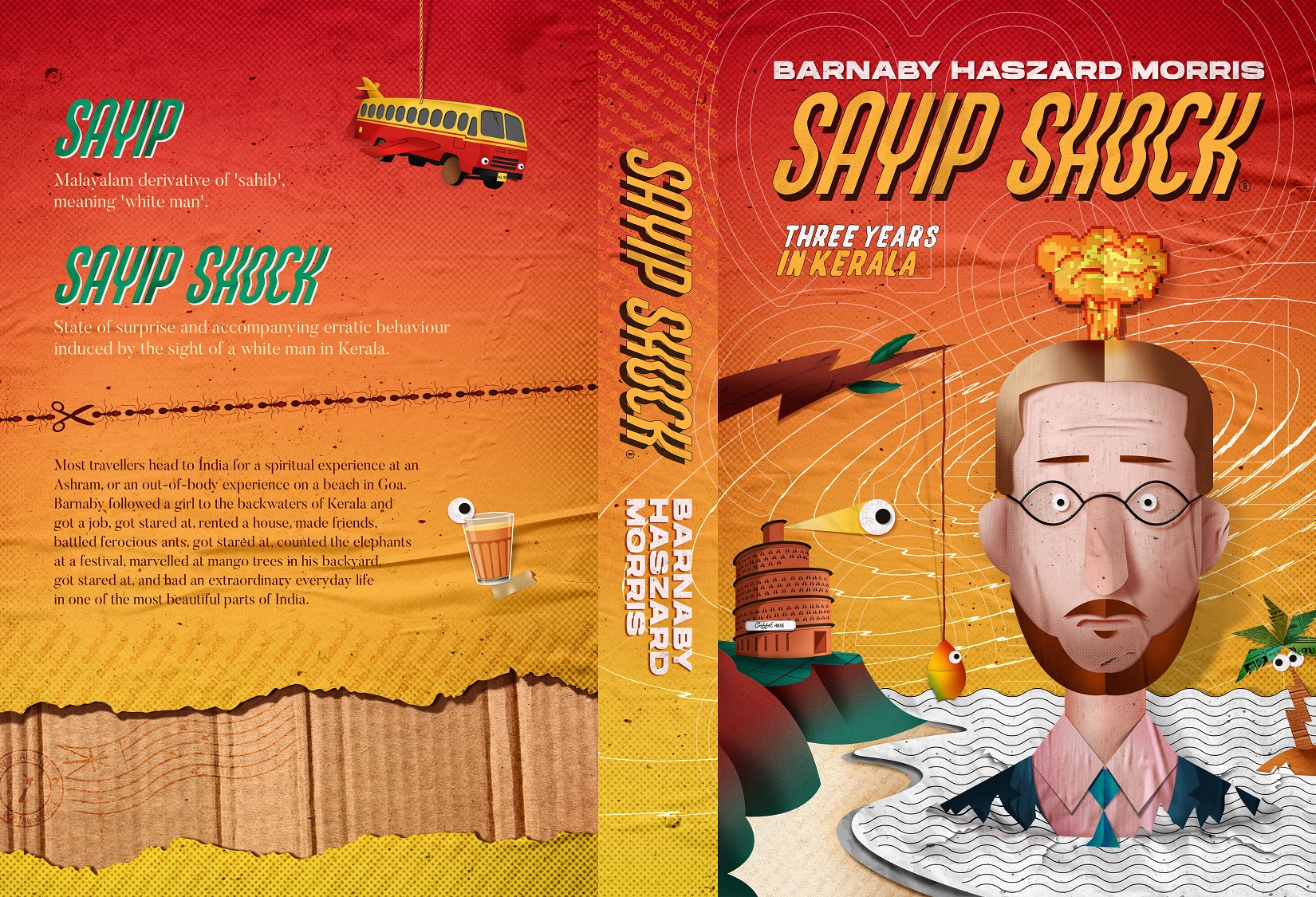
I spent quite a few spare moments in early 2020 flitting from one charity shop to another buying piles of secondhand books, especially those on my 2020 reading list. Five-years-ago me would’ve been confused: why gather so many of these objects when you could get almost all of them from the library or the internet? Even current me is a bit confused, for the same reason. But I live in a big house now, with a set of bookshelves just for me, and I want to fill them. I want to look at the spines and sense that potential. I do however resolve in 2021 to focus my buying in books I know and love, lest I end another year with another pile of books I’m never going to read. I have enough of those in my annual reading lists (here’s 2021, if you’re interested).

Here, in reading order, are some books I particularly admired in 2020.

HUNGER by Knut Hamsun (1890)
DEAD PEOPLE I HAVE KNOWN by Shayne Carter (2019)
NVK by Temple Drake (pseudonym for Rupert Thomson) (2020)
FIERCE BAD RABBITS by Clare Pollard (2019)
HOWARDS END by E. M. Forster (1910)
THE LION, THE WITCH AND THE WARDROBE by C. S. Lewis (1950)
ON WRITING by Stephen King (2000)
NOTHING TO SEE by Pip Adam (2020)
THE HUNDRED THOUSAND KINGDOMS by N. K. Jemisin (2010)
RUFUS MARIGOLD by Ross Murray (2019)
HELLO MUM by Bernadine Evaristo (2010)
USE OF WEAPONS by Iain M. Banks (1990)
MOSHI MOSHI by Banana Yoshimoto (2010)
BEN, IN THE WORLD by Doris Lessing (2000)
UNDER THE SKIN by Michel Faber (2000)
PRODIGAL SUMMER by Barbara Kingsolver (2000)
SURFACE DETAIL by Iain M. Banks (2010)
THE MINISTRY FOR THE FUTURE by Kim Stanley Robinson (2020)
OWLY: THE WAY HOME by Andy Runton (2004)
FIRST CONTACT by Soni Somarajan (2020)
CHINAMAN by Shehan Karunatilaka (2010) (re-read)
AKISSI: TALES OF MISCHIEF by Marguerite Abouet & Mathieu Sapin (2014)

My favourite of these was THE MINISTRY FOR THE FUTURE. I’m still so taken with it, and I’ve noticed a cult of fellow readers spreading the word on Twitter and Facebook. Those that love it REALLY love it. So here’s my review, initially posted on Goodreads and shared in my monthly email newsletter. I hope one or two of you track it down and read it.

THE MINISTRY FOR THE FUTURE
by Kim Stanley Robinson, 2020
 Let’s see if I can do this. The effects of escalating carbon emissions will lead to human catastrophes of extraordinary scale – heat waves, inundations – and when the representatives of affected countries turn up angry to international symposiums and throw their numbers of dead on the table, the world will take notice – but it won’t take action until there is mass financial disobedience, the simple refusal to pay trillions of imaginary dollars owed, at which time the entire financial system will collapse and be reborn under the auspices of central banks trading in currency backed by carbon sequestration. They will only be following the money, true, and money will still rule everything, but the money will now have a sound moral and ethical underpinning. In the meantime, those who hang on to the old ways and power structures — the shipping and airline industries, for example — will be hit by violent acts of highly organised eco-terrorism on a mass scale, some carried out by dark wings of international organisations, whose commitment to a lasting greater good will accept a few million dead if it gets the point across; this in addition to targeted assassinations of the most obscene polluters and pursuers of inequality. Socialism will finally overthrow capitalism in this way, ushering in public ownership of all the basics — home, food, water, job, energy — and a comfortable minimum standard of living mandated through democracy across much of the world. All this but all that carbon has still been burnt, the glaciers are still melting, so some very expensive geological interventions will be necessary: drones to recover the Arctic with sea ice, pumps to draw water up from underneath glaciers and spray it on top so it freezes again, dye sprayed in oceans and over land to reflect more solar rays back into orbit so the sea doesn’t boil so soon. Then there’s the ever-multiplying eco interest groups reforesting and creating larger habitat corridors and generally giving more of the planet back to non-anthropocentric ecosystems, leading to government-backed schemes to buy whole towns out and move their populations to the suburbs and let fauna wander their deserted streets unbothered. A more equitable society is the result, and a more equitable planet, in which humans might endure for longer than they otherwise would have.

So. I found this book utterly compelling, to the point that I need to find some sceptical reviews (edit: found one here) to pick holes in Robinson’s science, which is explained in frequent short chapters and seems sound. These crash courses are so frequent as to comprise about half the book; reading it is like going on a curated Wikipedia tour on climate change economics. There is plot dropped in, often revolving around the titular Ministry and its head but also darting in and out of dozens of other communities across the planet — refugee camps especially — and it is propulsive enough. But it’s the way Robinson constructs his utopia in asides that drew me in so thoroughly. I’ve never read anything like it.

*

Sayip Shock book jacket front and back coverI also published a book in 2020. It’s called ‘Sayip Shock: Three Years in Kerala’. You can buy the ebook for $0.00 or more at Smashwords, or get the Kindle version or physical book on Amazon. Credit to Athul Chathukutty for the amazing cover design and to Tara Dench for the back cover blurb.

Music

As in 2019, I fixated on one album early on and hardly listened to anything else. And as in 2019, it was an album from 2019: ‘Perfumed Earth’ by Purple Pilgrims. They were the third-billed act of three at a big Arts Festival concert I attended the weekend before lockdown, where Weyes Blood (fav artist of the year before) had second billing (you what!) and Aldous Harding was the main act (I left early).

I’d never heard of Purple Pilgrims before. The levels were wrong, the bass drowned them out, they veered occasionally into ethereal floaty pop cliché (billowing tunics and yogic movements), but I’d heard enough to try them in the headphones — and then in the car, and while I was cooking, and while I was washing the dishes. It’s one of those albums with no dud track; I’m Not Saying doesn’t fit with the others so well, but it’s still a really good pop song. Big synths, beautiful and slightly off-kilter guitar and vocal harmonies, killer lyrics that hint at true love and darkness. Ancestors Watching was my most-played track of 2020 (ignoring all the hits from the musicals mentioned in the Movies section below).

*

Aaron Tokona died in June. I spent two weeks listening to Let It Go and Calling On on repeat. Like thousands of other Kiwis, I imagine, screaming “like I’m suffocating” at the climax as they finished off the dishes.

*

It was a great year for new music, according to Vulture and Wisconsin Public Radio. I surfaced from under my Purple Pilgrims-shaped rock in about November and blasted through a number of acclaimed releases. Dua Lipa, Perfume Genius, Phoebe Bridgers, BC Camplight, Ariana Grande, Moses Sumney, Rina Sawayama, Fiona Apple, Four Tet, Ital Tek, Laura Marling, Yves Tumor, Beatrice Dillon. Each album tried a couple of times, then left alone. I liked most of these, could’ve loved some of these, but not now.

A few new albums somehow got through to me. EOB’s Earth was catchier and deeper than I initially realised. TENGGER’s Nomad gave me the sense of a pleasant bush walk, with harmonious synths over trickling streams. HAIM’s Women In Music Pt. III brought my favourite new chart pop in years, although it is very much a summer sound, despite the often cynical and self-flagellating lyrics, so it took me until December to actually get into it.

Then there was The Soft Pink Truth’s ‘Shall We Go On Sinning So That Grace May Increase?’, named for a Bible verse in which Paul the Apostle is fed up with everyone carrying on as they always have in comfort that their Lord will forgive them. Drew Daniel wanted “to make something that felt socially extended and affirming”, and there are several ecstatic moments that make me feel warm inside. But I hear a rough, hard edge through it all; the shimmering bells of ‘Go’, the horn blasts of ‘Sinning’, the major chord call and minor chord response of ‘That’. Not that any of this matters in isolation. It’s the cumulative effect of the album that gives these moments their power, especially in the context of #2020, where some other power is behind the wheel and you’re not sure where you’re headed. Thankfully, ‘Shall We Go On Sinning So That Grace May Increase?’ has a happy ending. I go straight back to the start and go through it all again.

Finally, Ashish Seth’s Firstborn saw the light. It was finished in 2015 and shelved due to the artist’s lack of confidence in the material, then released in 2020 for free, with little fanfare. It gave me many hours of listening pleasure and is layered enough that I’m still noticing new things months later. It’s particularly good to write to. I’ll post my interview with Ashish soon.

A playlist of songs by the artists discussed:

I’m trying something different with music in 2021, following the release calendar more closely and updating a playlist with my favourites each week. Here’s that playlist. Follow along with me?

Movies

IMG_20200408_103859902It’s all online now. I went to the cinema once in 2020 (PARASITE). Our household subscribes to five different film and TV streaming services:

  • Netflix
  • DisneyPlus
  • SKY Go
  • Kanopy
  • Beamafilm

I have never before had immediate access to so many films I want to watch. I try to make sense of them by dutifully adding preferred titles to my watch list, rather than letting the algorithm decide for me, and I pile up 50-odd titles on each service. Of them, I’ve only comprehensively combed SKY Go for content that interests me; each of the others could have dozens or hundreds more films I might enjoy.

Maybe I should give in and follow the algorithm. I’ve spent far more time researching and adding to my watch lists than I have watching the titles on them. I don’t have a lot of time to myself, true, but when I go, and I open up one of the lists, I’m immediately paralysed by indecision. Invariably, I close the tab and go back to my book.

The nadir of this behaviour was SHOPLIFTERS. Kore-eda Hirokazu is one of my favourite directors, one whose films I make a point of seeing. SHOPLIFTERS appeared on the SKY Go one day in 2020 and I thought, yes! Finally!! I get to see this modern classic, Palme d’Or winner, the film that finally brought Kore-eda to wider recognition! I’ll put it on the watch list.

It disappeared off the platform three weeks later. I had not watched it.

*

Not that I didn’t watch a lot of movies in 2020. I just watched the same ones, over and over. In March, my wife instituted Movie Night on Tuesdays, which quickly expanded to Saturdays as well during lockdown. The four of us took turns choosing what to watch, and because my children were two years old, we watched the following films several times:

  • HIGH SCHOOL MUSICAL
  • THE CAT RETURNS
  • COOL RUNNINGS
  • HAMILTON
  • FROZEN
  • MOANA
  • THE MANY ADVENTURES OF WINNIE-THE-POOH
  • Any of the Julia Donaldson shorts

And I am not complaining. I am in fact incredibly proud of my children for taking to THE CAT RETURNS and COOL RUNNINGS, which are slower-paced than most modern fare (in fact, they seem to respond better to more sedate viewing than flashy, heavily edited films). I’m not even complaining about HIGH SCHOOL MUSICAL, whose catchy and knowing songs have become central to our household’s shared set of references (see above). Varsity-age me would’ve been appalled I’d gotten into HIGH SCHOOL MUSICAL. To be honest, so would last-year me. But here we are. Never been a better time to let the sunshine in.

And then there’s HAMILTON, which we all took to so quickly. The kids know the words to most of the first act. It’s still our default car music. HAMILTON is an imperfect masterwork, harmed by its absences but gloriously elevated by pretty much everything that’s there. It works on a number of levels for every second of two and a half hours, with great tunes delivered by incredible vocal performers. I didn’t see how a musical about the founding fathers could be anything but cringeworthy — then I watched it, these people of colour claiming the problematic past for themselves, and I got it.

*

These are the new-to-NZ films and TV series I saw:

PARASITE (good, but enormously overrated)
UNCUT GEMS (Safdies with another bleak, high-tension gift)
DEVS (formally superb, some interesting ideas wasted on a dumb plot)
THE GOOD PLACE: Season 4 (blasted through the entire show in a couple of months, a great initial gimmick built on and sustained to make the defining sitcom of the era)
ONWARD (lesser Pixar but still very enjoyable, and another difficult landing superbly stuck)
HAMILTON (still an obsession several months later)
PORTRAIT OF A LADY ON FIRE (stunning, with two moments of spine-tingling movie magic)

There’s one other film I saw for the first time in 2020 I’d like to mention specifically, and that’s FIRST REFORMED. It’s as bold and brilliant as all the reviews at the time suggested, and dovetails nicely with my favourite book of the year above. Whether or not he gives up in the end, the economy with which director Schrader and star Hawke drag so many of our current social and economic demons to the surface is — as Rev Toller says at the moment of his awakening — exhilarating. In case you’re not getting it, we absolutely must do something about the many ways in which we are destroying our planet. FIRST REFORMED asks: what would you do? How far would you go? And could it ever be enough?

Sport

My favourite sporting moment of the year was when Jürgen Klopp, manager of my beloved Liverpool, who won the league at a canter for the first time in decades, conversed with some fans as he entered the stadium.

Traditionally, sports fans have mythical power, especially in football. They’re the reason for it all, the ever-loyal brotherhood (because they are mostly men). Their deification has graduated from sporting custom to the strategic plan — because to alienate them would surely be economic suicide (although the board at Manchester United have made a fine fist of running a football club with only the shareholders in mind). It’s normal, therefore, for coaches and players to show willingness to engage with fans as they enter the stadium; to give them a quick high five as they run down the tunnel, for example.

In mid-March, a week or two before the Premier League was suspended indefinitely, and a couple of weeks before New Zealand’s level 4 lockdown commenced, Klopp was having none of it. As he strode out with his players, he looked up at the faces of the fans stretching their arms out, hoping for brief physical contact with their heroes — including the wunderbar German manager who had delivered the team’s greatest success since the 80s. He did not indulge them. Instead, he bellowed, “Put your hands away, you fucking idiots!”

And that’s why Liverpool won the league. Klopp wasn’t there to muck around. Every detail would be analysed, every drop of effort expended to the most efficient purpose. And when tradition stood in the way, Klopp shoved it aside. None of his players contracted COVID-19 until after the season was over.

*

During lockdown, I completed 100 keepy-uppies for the first time in my life. I’d break off from the relentless stream of work a few times a day and do two or three attempts, usually getting to about 40, before bounding back inside to the juggling of Word documents. Eventually I got to 80 keepy-uppies, then 90 keepy-uppies, then 100 keepy-uppies. No one was around to see me do it.

I reflected on the wonder of practice; how you can improve a skill simply by repeating it. And I reflected on talent, and ambition; also during lockdown, a friend who plays proper football at club level achieved the ‘around-the-world’ trick, clockwise and anticlockwise. I had as much interest in following suit as I did in perfecting ball tricks when I was in high school, which is zero. My natural talents are to pick the right pass and shoot accurately from distance, not to showboat, and I am content to ply my trade in lunchtime indoor five-a-side every few weeks.

That’s a far cry from the lofty sporting ambitions of my childhood, when I imagined myself a dual international in rugby and cricket. But I’m satisfied I’ve found my level.

Travel

IMG_20200406_084120Ha ha ha. Well. We managed our usual summer holiday in February, to Hawke’s Bay, during which I got sick and we argued a lot. There were some great moments too: descending the grand staircase in an old convent/school we stayed at for a night in Featherston, days on the beach in Waimārama, and particularly our visit to Splash Planet, which begat a long and pretentious blog post.
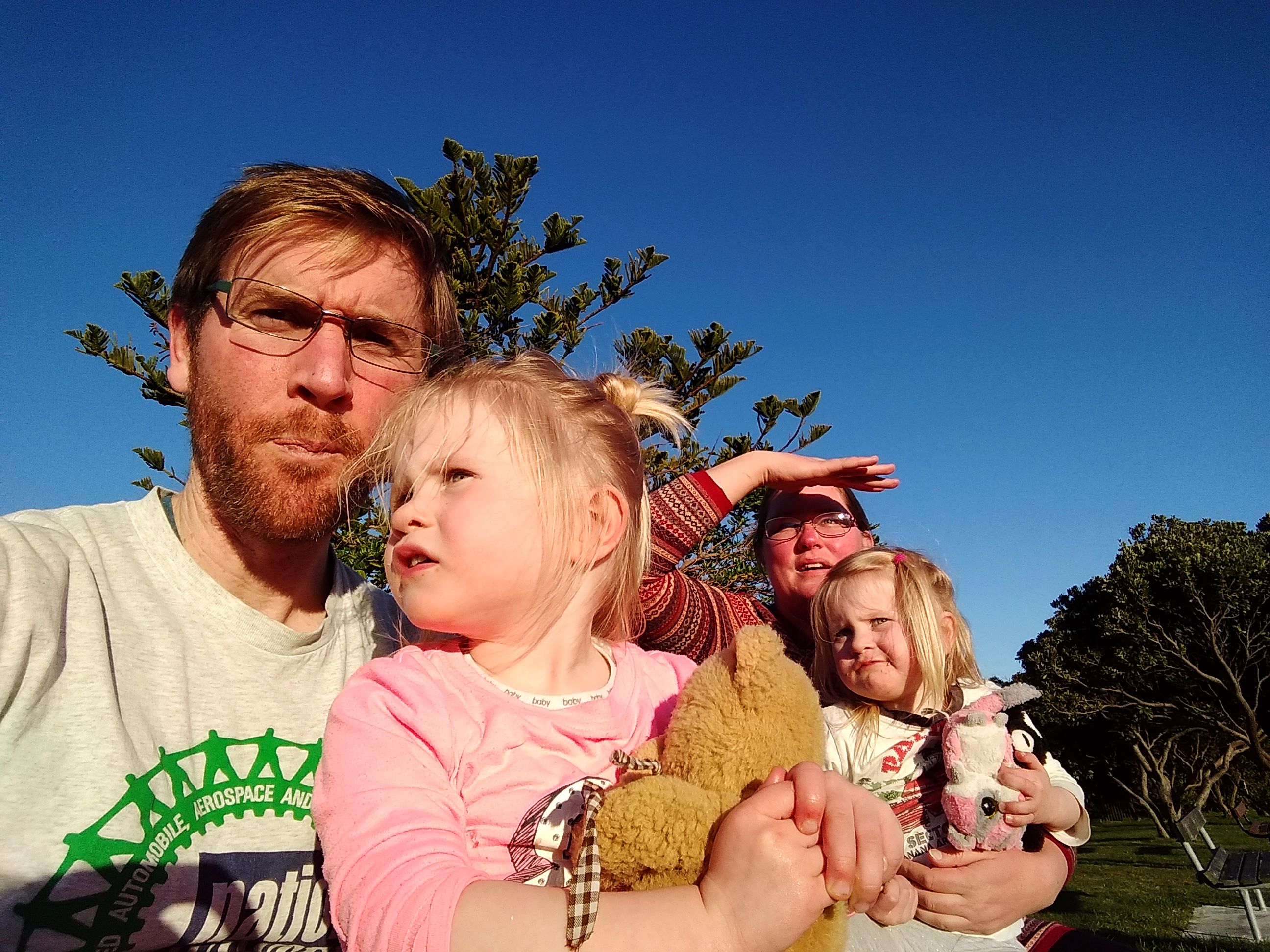
You move around the world and colour in the parts you see. You flood your senses and your mind and try, sometimes desperately, to commit them to your memory. But you can never hold onto them as they were, because your memory is fallible and the world’s constant physical change is undeniable.

There were also two joyous weekends at holiday houses in Foxton Beach. And an expensive night in Auckland during which I ate one of the best (certainly the most expensive) meals of my life. We in New Zealand were lucky to be able to do all this without fear. I wonder when we’ll be able to rock up to Tokyo or Paris again.

People

IMG_20200726_161331352Tara is everything to me. She’s my love, my rock, my inspiration; a source of frustration; my comfort at the wordless end of an exhausting day; my partner in the biggest work of our lives; my favourite cook; my cheerleader; the one who will stare daggers at me or look away in disgust, the one who will look at me with pure openness the way anyone would long to be looked at. I will ignore her sometimes in favour of my phone; other times I follow her around the house like a silly little dog. Long-term intimacy has brought almost everything out of us and I would say we love each other more than ever, even with all the worst parts of ourselves left in. We may never sand those rough edges off. Life is probably more interesting with them.

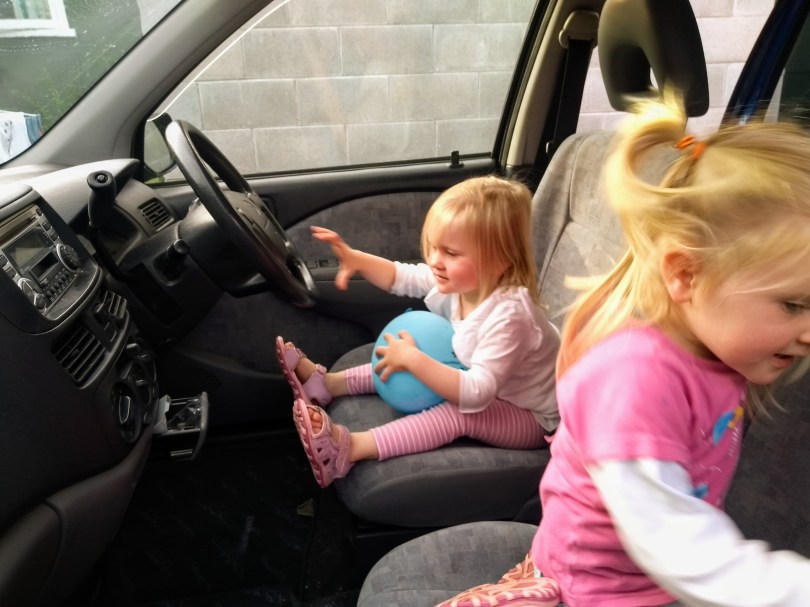
Whenever anyone asks me how the kids are, I try to talk about the things they are doing, rather than ascribe personality traits that may change next week. But they are getting to the point where the things they do are their personalities, in a way. June builds towers out of anything, but especially blocks, and is quite happy to spend two hours in her room each afternoon stacking Duplo on her desk until she can’t reach any higher. Nora wants to be around people as much of the time as possible, and if she can’t be around people, she’ll hold birthday parties for her toys. Both are generally quite shy but increasingly surprise us by introducing themselves to a shopkeeper with confidence. Both want a lolly, right now. They started kindergarten in 2020 and can now use a potty and a toilet; guess which was the bigger milestone in our view. I ignore them sometimes in favour of my phone, too — sometimes you have to if you want them to get to sleep, or to discover the world in their own way — but as much as possible, I try to be with who they are today.

If and when Tara’s parents move in with us, and if we have another child, the times of our little unit of four will come to an end. I’d miss it, of course, but changes like these would bring at least as many gains. Ask me again a year after it happens.

We had the usual visits from far-flung family generous enough to make it to us because we can’t afford to make it to them right now. My dad and stepmother from Auckland, my brother/sister-in-law/niblings from Dunedin. We spent time occasionally with family who live locally, and I always came away thinking ‘we should do that more often’; same goes for the few friends we saw sporadically. But it was a year of focusing on the family unit, especially during those two months or so between March and May. In the worst times, we felt horribly isolated. In the best times, our days seemed crammed full of joy and wonder. I can’t do any of it justice.

During lockdown, I would stop work through the middle hours of the day — approx 1130-1400 — to play with the kids, have family lunch, and put one of my children down for an early afternoon nap. She’d stretch out in my lap, on her back looking up at me, and smile as I rocked her from side to side with my legs, humming songs from MOANA and HIGH SCHOOL MUSICAL and FROZEN. The smile would fade, the long blinks would eventually begin, then she would fall asleep. I can easily imagine looking back at the end of my life and thinking, that was as good as it got.

IMG_20200405_115010

Won’t somebody please think of the children?

After the Prime Minister’s announcement of an imminent shift to COVID-19 alert level 4 (mandatory self-isolation and physical distancing, essential services only), I immediately went out and panic bought a slide.

I entered Kmart as at least three other parents exited with literal armloads of board games. A woman and I circled around the two last remaining slides — massive boxes that wouldn’t fit in our trolleys — until I finally pounced. She stood staring at the last one for a few more seconds before hauling it up.

I only learned at checkout that it cost $139. An insane amount of money, and completely out of character for me, but what if we need it? What if the country locks down even further? What if vigilante mobs sweep the streets in snarling, two-metre-spaced rows? What if the Defence Force is deployed to enforce a full curfew? These are the kinds of thoughts you have because no one knows what, exactly, is going to happen. No one in the country has ever lived through anything like this before. Even in wartime, you could still go out for a drink.

It was just me and the other parents, mostly, stocking up on games and arts and crafts. A minimum of four weeks at home with the children. We love them — they’re a blessing, a joy, we are so lucky to have them and all that — but can you see why we were panic buying playdough and poster paints?

There was also a guy in stubbies yelling into a cellphone, “Nah mate, I’m at Kmart. Yeah nah, it’s basically dead here.” Compared to queues out the door at the supermarket, most definitely.

We’d already been to the supermarket that day. Limit: two of any similar item per customer. I tried to buy a third bottle of milk for my friends in self-isolation (trim milk! As if I would drink that swill) but was quietly and awkwardly denied by the cashier and her supervisor.

When I jetted off to do the Kmart run and pick up those same friends’ dear little dog from the kennels, I forgot to take the trim milk. It’s still sitting in our fridge, unopened. Maybe I’ll end up drinking it after all.

The fuck noise

It had been a trying afternoon, the way it just is sometimes with kids, by the time I got them home from feeding a friend’s cats and laid June down in the living room for a bum change.

As I did so, one of the strings from my hoodie caught under her body and flicked me in the face when I sat up.

“Oh my god! For fuck’s sake!” I said.

June’s eyes went wide. “No make that noise!!” She fixed me with a hard stare. “No make that noise, daddy!”

Nora, calmly playing with Duplo off to the side, said, “No make the fuck noise.”

My anger turned to amusement. I couldn’t stop myself laughing, so I turned my head away from both kids. They still noticed.

“I just wanna say – fuck,” said Nora. “FUCK.”

“I just wanna say fuck too,” said June. “FUCK.”

Did I stop myself laughing even harder?

Did I fuck.

And that was how the fuck noise came to be made often, by the smallest voices in our house, for a couple of weeks.

Phantom Planet

Here’s how this post was initially drafted to end:

So I cut the red AAC wristband, straightened my non-existent tie, and walked off on damp pavements to catch my bus.

When I wrote it, the wristband still encircled my radius, bright and crumpled. I didn’t think it mattered whether or not the words were true; they evoked letting go, a holiday beginning its transition from vivid recency into hazy past. I felt that the inclusion of an absent tie signalled my awareness of whatever lies I allowed into my account. I wondered whether the words written down here would eventually become truth in my memory.

But what actually happened ended up being more interesting than the lie.

The last big activity of this year’s summer holiday with the kids was a trip to Splash Planet. It used to be called Fantasyland, a crumbling, community-built theme park famous for the train that ran around it and the smell of urine in the big castle. There were no water slides or pools with slow-filling buckets that saturate you if you time it right, or wrong.

I think I was about five or six when we went as a family in my own childhood. I recall some bright colours and the thrilling, uncontrolled motion felt by a small child going down a large slide. Above all, I recall the joy of riding that train, possibly with a grudging (though smiling) parent or older brother on child-minding duty.

For months afterwards, possibly years, I would counter any mention of Rainbow’s End with the superiority of Fantasyland. Have you been to Rainbow’s End? they would say. No, but I have been to Fantasyland, which is AWESOME. None of my friends had, so I had the pleasure of smug exclusivity and their complete indifference, because nobody cares if they haven’t been themselves. It’s not so different when you tell fellow thirty-something friends about your travels to the backwaters of Alappuzha or the beaches of Asturias and Cantabria. They’re mildly pleased for you, but they will quickly move on to the boats of the Bosphorus or the golden sands of Bali.

You move around the world and colour in the parts you see. You flood your senses and your mind and try, sometimes desperately, to commit them to your memory. But you can never hold onto them as they were, because your memory is fallible and the world’s constant physical change is undeniable.

When I visited Christchurch at the height of its post-earthquake demolition in 2012, my brain couldn’t make sense of the absence of buildings I used to take for granted. They existed in my memory but were in the process of being crushed, snuffed out, by reality.

A drive past the Tokoroa house in which I grew up was even more disorienting, with the big filbert trees replaced by a high wooden fence. The current residents scowled at me as I drove away. In this case, I could maintain a strong image of the past because it was so familiar to me as a kid, but I’ll bet nobody outside my family can call it up if required. And it was impossible to lay that image over the shocking disparity in front of me.

And that image is also likely to be wrong in some way. We know this from study after study: the brain misremembers. Its truth is mine, and mine alone.

To my surprise, many of the elements that made Fantasyland so memorable for little me were intact. Large slides, though more dilapidated than before. The tiny town. (Or am I inserting that into my memories?) The train.

I had no sense of the physical details and how they had or hadn’t changed. I couldn’t tell you whether the grassy parklands were laid out as before, or whether the train followed the same path around the castle. But I knew this was the place I had been to and loved all those years ago. I felt a child’s uncomplicated delight at being there again. For me, it was easily the highlight of the trip.

Tara cut her wristband off before going to sleep that same day. I kept mine on, not just overnight but for days afterward, even through an entire workday. I liked the way it reminded me of the feeling of being at Splash Planet the way a watch used to remind you of time passing. I liked the way it peeked out garishly from under my cuff.

I also liked showing it to colleagues when they asked how my holiday was. Fortunately, there was nearly always a connection, because so many people have been to Fantasyland and Splash Planet over the years.

That night, we discovered our chest freezer had been switched off for days. Possibly by us, in our harried and sleep-deprived state, or possibly by a vendor who carried out some work on our house while we were gone.

Point is, hundreds of dollars and dozens of kitchen hours’ worth of uncooked meat and home-cooked meals — perfect for, say, a mandatory 14-day self-isolation period — had to be thrown out. I stacked thawed containers of dinner saw on top of the oven and carted them in batches of five to a dark corner of the back yard, where I hiffed their contents onto the lawn. A feast for neighbourhood cats.

After I’d washed out all the containers and left them to dry, I collapsed onto the couch next to Tara, who had buried herself exhausted and grieving in a puzzle. I felt the wristband tug at my skin so I looked at it. There was a small blob of refried beans on the palm side. Time to let this past go, too.

“The really good thing,” said Tara, sarcastic but sympathetic, “is the scissors are out in the shed.”

I stood and went to the laundry, where I spent a minute using a pair of garden shears to uselessly shave colour off the wristband.

Then I went to the kitchen and levered a blade under it. The circle was finally broken. Pop. Toot-toot. Wheeee.

I can still feel the bracelet. It’s like my brain wants it to be there. In twelve hours twenty-four hours forty-eight hours it’ll be gone for good, but in forty-eight days it (or its imperfect neurological echo) won’t be forgotten, because I wrote this.

The call bell

Ding goes the call bell.

I pressed the button fifteen minutes ago when Tara’s tramadol wore off, four hours since the previous dose. A big, angry wound in her abdomen is giving her acute pain. One of our twin infants dozes in my lap, the other in a cot. Tara lies in bed, brows knitted in pain and exhaustion.

It’s about 2am.

There’s a speaker right outside our room. Every couple of minutes, the call bell dings again.

We’re waiting on one of the two overnight duty midwives to come and assist us. After a few more dings, she arrives, and we ask for more pain relief. Of course, she says, and promptly leaves.

Another fifteen minutes pass. In one of the other two dozen rooms served by two midwives, someone else presses the call button. Ding.

Approximately thirty-five minutes after I initially hit the button, the midwife returns with the tramadol. Tara ingests it and waits for it to take effect. Eventually, after a full hour of agony, she gets some relief.

Ding goes the call bell, on through the night and day, summoning health professionals that don’t exist.

*

This is far from the most gruelling episode of our six-day hospital experience when the kids were born, but it’s one that stays with me. It’s symptomatic of a system that is desperately under-resourced.

You look back on times like that and think, well, we got through it. And people are more than willing to tell you it’s just something you have to get through. Some people, anyway.

But I’m sharing this tiny story today because a much worse case of maternity ward understaffing and negligence is being widely reported. A baby died after a labour and birth in which everything that could go wrong did go wrong. Individuals made mistakes but the system overall is accountable.

And if so many people are ringing the bell to say that the system is inadequately resourced, that midwives are constantly at breaking point, that having a baby outside business hours loads significant risk into an already risky process, that the trauma of their hospital birthing experience haunts them for years, why are we still talking? Is anyone listening?

Ding.

superficial spreading melanoma stage 1a breslow skin cancer

Mole’s worth

Skin mole with animal mole nose and feetMy kids think my moles are animals. If they catch a glimpse of my bare stomach, they’ll dash over and say, “Hello mole! How are you? How are you today, mole?” And they’ll reach forward with thumb, forefinger, and middle finger joined, and say, “Here’s some food for you.” This is exactly how they talk to dogs, cats, ducks, etc.

I assume this comes from the many children’s books we’ve read to them that feature moles. Kinda specific, you might think, but you’d be amazed to learn how many picture books revolve around obscure and non-existent beasts. I guess it’s a gateway to empathy, getting little kids to care about and identify with animals so they might do the same with other humans.

Little do they know one of my moles became a cancer. Where’s the empathy there, mole? No more food for you mole!

It gets weirder. Turns out there are animals everywhere. The other day, we were driving past a fire station and one of the kids got super excited. “Hello, fire station!” And then her voice got really high-pitched and playful. “What you doing? What you doing there? Here’s some food for you, fire station.”