Things of 2024

Listen to this post as a podcast:

Front Page
Close-up of bright orange and yellow lichen growing on a rock, surrounded by green grass.

Devoted father and husband. Committed contrarian. Impostor, loner, optimist, troll. Pushing 40. No, hang on. I am 40.

I am a contrarian because in any conversation, my instinct is to first pander and validate, then to get to the substance of it, the opposing argument, the counterfactual. Yeah, they shouldn’t have said that, absolutely – but maybe they’re still carrying some trauma from what happened before. It has indeed been a difficult year – incredibly difficult – but let’s not lose sight of everything we’ve achieved, personally and professionally, which is considerable.

Amid the hand-wringing and despair, which is admittedly tempting, I insist — mostly to myself — there is hope everywhere if you look for it. Marches for peace, iwi-led green restoration projects, the local vege co-op offering a bagful for $15 a week, even if they do often weigh it down with brassica. Then I read ‘The Three-Body Problem’ with its doomsday cult actively seeking the end of humanity and I wonder whether I’m deluding myself. On one hand this, on the other hand that. Most of all, my views are contrary to my other views.

For me, the best thing about getting older is steadily realising how little I know or understand, and consequently how much more there is to learn. Here’s a snapshot of what I noticed in 2024.

Books
A mother reading a storybook to her two daughters while sitting on a bed, surrounded by colorful bedding and plush toys.

I read 52 books in 2024. Earliest published: 1974. It’s a while since I last had a year of reading so skewed to the last half-century.

These books offered a rare combination of audacity, craft, and ideas that made them impossible to forget:

  • ‘We Are Here: An Atlas of Aotearoa’ by Chris McDowall and Tim Denee
  • ‘Gifts’ by Ursula Le Guin
  • ‘The Books of Jacob’ by Olga Tokarczuk
  • ‘In the Skin of a Lion’ by Michael Ondaatje
  • ‘The Unbearable Lightness of Being’ by Milan Kundera (re-read)

Hard to recommend a favourite but if pressed, I would go for ‘In the Skin of a Lion’. It’s a short read, for a start; no-one who reads this post is going to pick up ‘The Books of Jacob’ when they realise it’s 912 pages long. (Those who do may also be sufficiently moved to write their own short story aping it.) Ondaatje’s book has breathtaking scenes to hook any reader and a profound respect for labour, especially the dirty kind. Like one of its central characters, you won’t be able to shake the smell of the leather tanning pits afterwards, and you’ll think differently about the power and value of the collective.

These books left an impression, not as deeply but enough to still linger as another year begins:

  • ‘Dartmouth Park’ aka ‘How to Make a Bomb’ by Rupert Thomson
  • ‘Werner Herzog: A Guide for the Perplexed’ by Paul Cronin
  • ‘Seven Brief Lessons on Physics’ by Carlo Rovelli
  • ‘The Hundred Years’ War on Palestine’ by Rashid Khalidi
  • ‘Small Island’ by Andrea Levy
  • ‘You Are Here’ by David Nicholls
  • ‘Amma’ by Saraid de Silva
  • ‘Being Mortal’ by Atul Gawande
  • ‘Feijoa’ by Kate Evans
  • ‘The Gosden Years’ by Bill Gosden
  • ‘Cloudspotting for Beginners’ by Gavin Pretor-Pinney
  • ‘Outline’ by Rachel Cusk
  • ‘The Three-Body Problem’ by Liu Cixin
  • ‘The Dispossessed’ by Ursula Le Guin

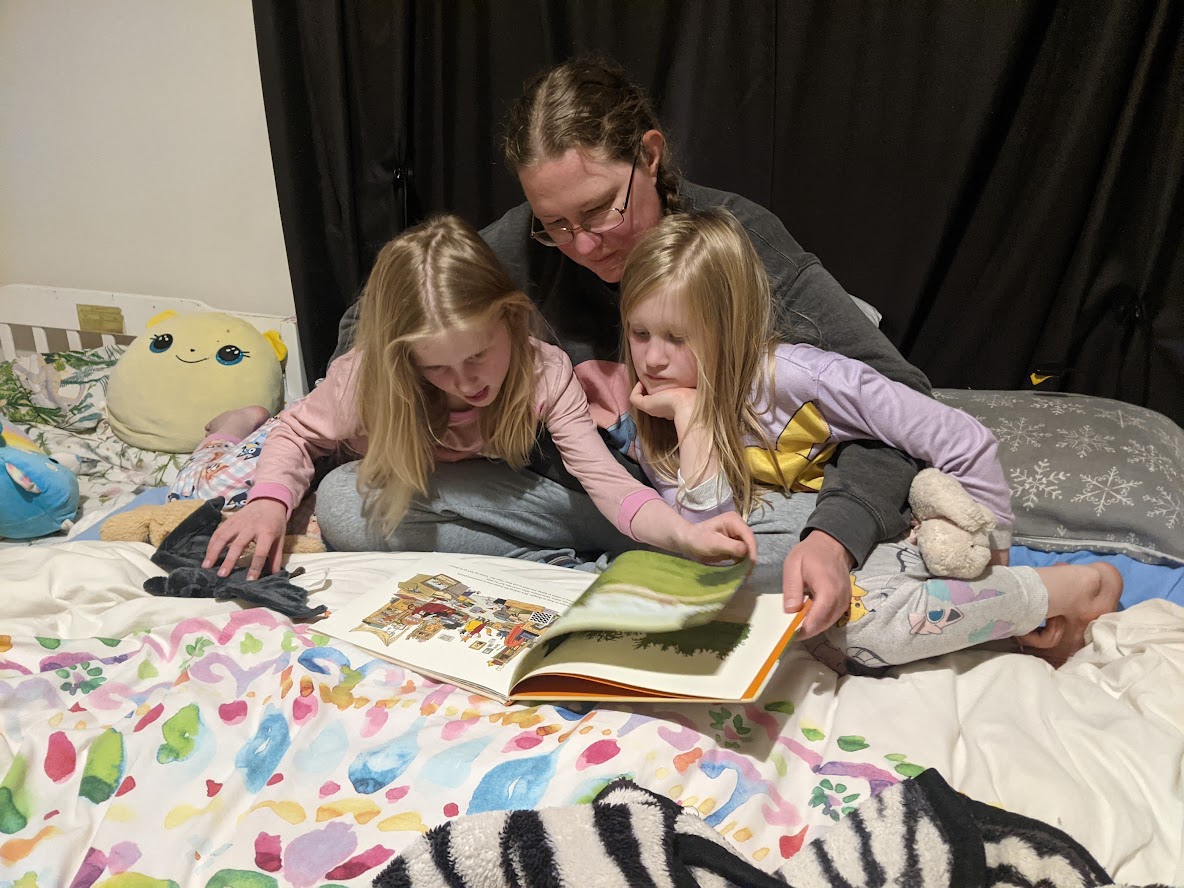
The kids are at a hybrid stage in their reading. They’re capable enough to read by themselves in bed before turning off the light themselves, and they want to do that most nights. But they want us to read them a couple of chapters or picture books first, all cuddled up in a pile on the sofa.

This means I’ve become quite familiar with Yvette Poshoglian’s Ella and Olivia series of early readers — slight, comfortable narratives in which something goes a little bit wrong but everything works out okay in the end. And we all need to be reminded of that sometimes.

The biggest breakthrough, though, was with Cece Bell’s ‘El Deafo’, a full-length comic about how Bell came to terms with sudden onset deafness as a young child. There’s an increasingly popular genre of autobiographical children’s comics dealing with serious issues like these. Raina Telgemeier, author of ‘Smile’ (corrective dentistry) and ‘Guts’ (psychogenic vomiting and therapy) is the champion, and Bell’s contribution is a worthy — and funny — addition.

At heart, these books are about learning to deal with other people knowing what’s different about you. I’m on the fence as to the value of sharing all these awful bits of other people’s childhoods with my sensitive kids because they’re as likely to keep them awake at night as to reassure them. Are they better off not knowing? Would they handle the shunts of the peer group better without a bunch of thought-provoking texts to refer to? I don’t know, but I do think books that reflect the reality of childhood and plot a relatable path through it are a public service, and I often wish there’d been more of them when I was little.

Music

My favourite ten seconds of a song in 2024 were the lead-in and drop for the first chorus of ‘Things You Didn’t Know’ by Clara La San, from fave album of the year Made Mistakes. It’s aloof to that point, a spark in the gloom: four repeated ascending notes, La San’s lead vocal and the “ooh boy” backing it up, and some simple bass and percussion loops. But then a rich bass synth kicks in, and the elements from before shine more brightly. It’s like the floodlights have come on, revealing that what you thought was a small bedroom is in fact an enormous, reverberating cavern.

Clara La San had worked and reworked this half-hour of echoing R&B, her first album, over a few years. The tracks feel lived-in for it, spacious, with an elusiveness that I would say is her signature if it weren’t for her post-breakup lyrics playing it absolutely straight. But I’ve never cared that much about the words. It’s the feeling a song evokes, more than the content. And you can swim in the feelings here. To me she inhabits a space that’s always dark and a bit mysterious, as if she’s addressing you from the other end of a long, unlit tunnel. She released a second album in December, too late in the year for me to properly absorb, and my first impressions were of some sparks of light emerging. But I still want it dark.

A close second was the second part of the chorus in Nilüfer Yanya’s ‘Made Out Of Memory’, the bit that starts with Yanya crying “people wanna blame someone” as if it’s an epiphany, like – finally I understand, it wasn’t personal.

BRAT, the biggest album of the year, didn’t pass me by either. The record about which my increasingly dismissive kids would say, “You ALWAYS listen to this!” Several standouts (and for me, quite some filler too) but the one I’ve come back to most is ‘Sympathy is a knife’ and another bone-rattling bass drop to kick off the chorus.

Other albums that held my attention in 2024:

  • Mon Amour Mon Chéri by Amadou & Mariam
  • Magda by Donato Dozzy
  • Chapultepec by Lao
  • Bright Space by Mikey Enwright
  • Silence Is Loud by Nia Archives
  • No More Water: The Gospel of James Baldwin by Meshell Ndegeocello
  • Everything Squared by Seefeel
  • PRUDE by Drug Church
  • Fragments of Us by Midland
  • Nobody Loves You More by Kim Deal

I’m talking albums still, yep. Spotify continues to push Smart Shuffle at me, switching it back on with every update as if I’d turned it off by accident. Apparently, it’s normal nowadays to open Spotify and browse for something to listen to, which I find gobsmacking when a) the interface expressly discourages exploration, and b) there are still so many other sources from which to discover new music.

There may not be any money in it but I am here to tell you the album is not dead. Go to the new releases on any media outlet that reviews music and test-drive anything you like the sound of. For me, it’s Metacritic and Resident Advisor, with the occasional dip into the ocean of noise that is Album of the Year dot org. From these, I piled up a decent set of absorbing repeat listens — here’s a playlist of samples assembled, naturally, on Spotify.

Movies

Close-up of a blue cartoon character with an open mouth, appearing surprised or excited, displayed on a television screen in a cosy room with houseplants and furniture.

A ranking of new films I saw in 2024. This won’t take long.

  1. THE ZONE OF INTEREST
  2. ENO
  3. FLOW
  4. THE BOY AND THE HERON
  5. INSIDE OUT 2
  6. ORIGIN
  7. POOR THINGS
  8. KUNG FU PANDA 4

I saw ENO and FLOW on the same day, making it two years in a row I’ve done the ‘dialogue-free animation about animals / music industry titan whose name starts with EN and ends in O’ double-feature at the New Zealand International Film Festival (in 2023, it was ROBOT DREAMS and ENNIO). Both films attempt to do something different and new, and although the artificial intelligence conceit at the heart of ENO felt like more of a gimmick than an artistic success, the man’s charisma and intelligence shone brightly. FLOW felt unfinished technically, especially the lighting of the animals, but its sense of the cinematic couldn’t be dimmed. Now that it’s getting all this awards attention, I wonder if there’ll be a director’s cut with retouched shading.

Jonathan Glazer’s THE ZONE OF INTEREST towered above both. It’s a film of operational delivery and domestic routines with an extraordinary soundtrack: genuinely, there are two films here, the one you see and the one you hear. I wasn’t convinced by all the choices made, and I think it’s right to expect perfection of a film about Höss family values and dynamics. I am however happy to follow Glazer into the abyss again and again, because he has that gift of both putting on a show and making you think, often uncomfortably. There’s no-one else like him working today.

A few highlights from the few other films I caught up with in 2024:

  • SHOWING UP
  • ALL OF US STRANGERS
  • AFTERSUN
  • PAST LIVES

All enjoyed in a two-week period in the middle of the year. That was just before I got my Switch.

Tech and Gaming

Screenshot from a video game showing characters receiving experience points and gold coins.

I’ve kept the most profitable entertainment industry of this era mostly at bay for years, content to wallow in Doom mods and Championship Manager 01/02. But then I was gifted a Nintendo Switch in July 2024, and since then, the numbers speak for themselves. In the second half of the year, 100+ hours on FC 24 and Dragon Quest XI respectively, plus another 40-50 hours on a range of other games. An average of two hours a day for six months.

Hence so few movies, and hence zero activity on this blog since June. Nothing stimulates the brain like gaming: flashing lights, bright colours, and a sense of control, even mastery, you’ll rarely experience in daily life. Some games upend these norms, but not many. So, high on this new device, I played some games.

  • FC 24 — it’s a football game, so it was always going to consume my life to some extent. I took Cambridge United from League One obscurity to Premier League glory. More time-pass than obsession, but I cannot be interrupted while playing.
  • Dragon Quest XI: Echoes of an Elusive Age — 100+ hours over six months seems like a lot to be sure. But then Bex said she completed it much faster than your average player would, as in a matter of days, and I felt a bit different about the way I’d gone through it. This JRPG is heavily burdened with cutscenes and dialogue, like an epic TV series you can run around in, so the kids have come to enjoy watching me play it. Indeed, we may have spent more time together with Dragon Quest XI than with anything else in 2024.
  • Golf Story — a 2D golf role-playing game and the first game to sink its claws into me. Good writing and fun gameplay made this a satisfying experience.
  • Lonely Mountains Downhill — mountain biking simulator with fun, exploration friendly tracks and an asymptotic mastery curve. Surprisingly, of all games, this is the one Tara and I have bonded over the most.

Also, have you noticed the explosion of ‘AI’ as a byword for ‘current’? Most major tech companies put it front and centre on their websites, and anyone who wants to keep up with current events now needs to educate themselves, ongoing, like a university professor, so they aren’t duped by deepfakes. I took a friend to task for featuring AI-generated images on his website and he was more bemused than affronted. It’s not that big a deal to most, perhaps because the technology is still relatively nascent. The scary thing is how thoroughly the world’s richest have thrown all their eggs into it. With their commitment, AI — however intelligent — will define our lives for years to come.

Politics

I feel a profound need to just chill, a political imperative to do so, before industrialised society is everything but chill. Otherwise I feel some paralysing mixture of angry, contemptuous, distressed, and amused at the rolling coverage of metaphorical and literal atrocities swamping my socials and my news feeds. Next up from your favoured news outlet, a feature story on the First Lady’s hat. Surely it’s best to sit out the next four years of news.

We’ve come through the waves of COVID-19 and turned the boat backwards. Ka mua, ka muri, goes the whakataukī: walking backwards into the future. This too shall pass. In 2024, I became a school board member, finally fulfilling a long-held promise to myself to get involved in the community somehow. Local is where you can make the biggest impact. Basically anywhere you can kōrero kanohi ki te kanohi (talk face to face). But don’t forget to check in on those friends abroad who can’t absent themselves from the news cycle playing out all around them.

As a colleague once said, storming off to the kitchen to make another coffee: “everyone needs to just fucking chill”. Most of all the planet.

Travel

The snow and ice far beneath us scrolled by. The frames of the Sky Waka pylons were encrusted with stalactites. The weather was good, a photogenic mixture of clouds and sun — a sun that in the vanishing distance illuminated Ngāuruhoe’s striking cone, with Tongariro broad and massive behind it, both dwarfed by the mountain we were ascending. I’ve never seen it like this, I thought.

It — the Sky Waka trip up Ruapehu — was the literal high point of one of our most successful family holidays yet. We used to squabble constantly on our family holidays, worn thin from lack of sleep and unmanaged expectations. Now the kids are older, we’re all better rested and better able to follow through on our grand plans, or deal with it when the plans go out the window. We embrace imperfection, like the boil-water notice in our Alfriston AirBNB — “why are we on a farm?? This is not ‘staying in Auckland’!” — but still cram in the activities, big and small.

It pissed down on us at Rainbow’s End, a proper soaking while on the log flume of all things, and my kids (six years old at the time) said they were cold one time only and then ran to the next thing. Hot pools, whānau meetups, zoo animals, botanic gardens, museums, and the mountains of the central plateau on full and glorious display once again on the way back down. A remarkable week.

Sport

Two things. First, cricket. The most incredible 24 hours of New Zealand cricket of my lifetime, and probably of all time. One Sunday evening in October, the White Ferns won the Twenty20 World Cup against all expectations.
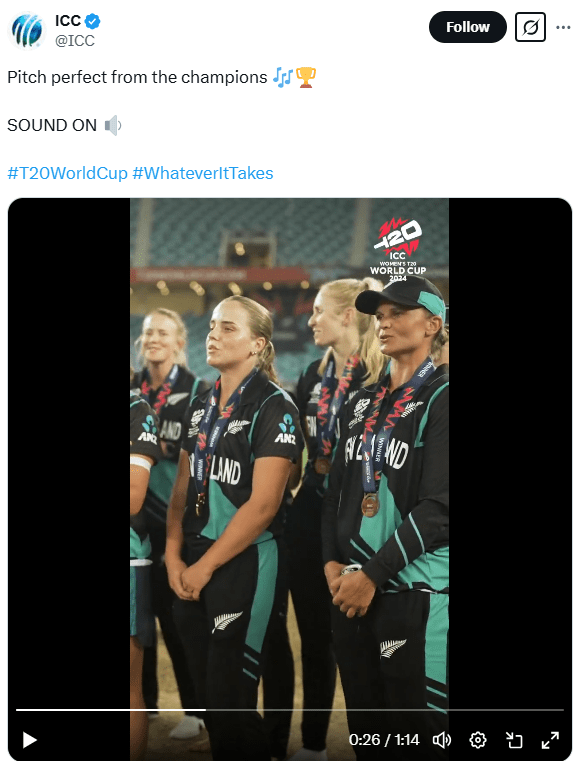
No team has my heart like the White Ferns. I can ride any up or down with the Black Caps, having plumbed many depths with them over the past three decades. But my hope and expectations and belief in the White Ferns is fresh, and vulnerable. I’m overjoyed when they win and bitterly disappointed when they lose. And they lost a lot in the lead-up to that tournament — ten matches in a row — making the march to victory even sweeter, like tumbling off a precipice on a hunt for a mountain spring and finding the water is best at ground level.

In the clip linked above, the players stand barefooted (or sockfooted) on the Dubai turf, grounded at the scene and in the moment of their greatest triumph, acknowledging their captain who’s been through it all in 18 years of international cricket. There’s another, more raucous video of Georgia Plimmer tearing around the changing room and air-guitaring ‘Don’t Stop Believin” with the trophy. But it’s those feet on the ground, swaying in time to the waiata, that stay with me.

Not that the Black Caps aren’t dear to me. I have, after all, plumbed many depths with them over the past three decades. That same day, the Black Caps beat India in a Test match in India, which we’d managed twice in 36 previous Test matches and not since the 1980s, against an India side that had only lost four times in 50 matches during the 2010s. It was completely unexpected; even more surprising, the Black Caps went on to win the second and third Tests as well. No visiting team had ever done that before.

As far as I’m concerned, this is the New Zealand men’s cricket team’s greatest ever achievement. A bigger deal than the World Test Championship win of 2021 or the Champions Trophy win of 2000.

Second, Olympics. Hours and hours on the in-laws’ sofa next door, where their 75-inch TV broadcast the Olympics day and night. The kids having that moment of fascinated inspiration I had as a kid — knowing the Olympics would mean something to me for the rest of my life — and making posters at school saying they want to be in the Olympics doing artistic gymnastics when they grow up. “They’re good gymnasts,” said one of the coaches at the gym they go to for an hour every Wednesday. However long they carry on with it, the spark of sports and athleticism is alive in them.

People

Family selfie with two children and two adults smiling outdoors, wearing hats, in front of a modern building.

We, our family of four, all sleep in the same room. It’s been like this since the kids were three. For at least two years we’d battled to keep them in their own beds, every night another capitulation, with me folded onto a too-short sofa and Tara being kicked in the stomach by at least one child. Then we went on holiday in early 2021 and bunked in all together in various configurations, and all slept sounder than we had since they were born. It seemed foolhardy to return to those nightly battles after that — though we did, for a brief and insane trial period when the kids were five, and gave up quickly.

I’m coming to think of our sleeping arrangement as a metaphor for our shared existence. Biology and circumstance threw these four people together in a giggling, screaming pile; a tight-yet-expanding bubble of all our best and worst selves. We love each other so much and drive each other properly spare. And we do all this in the middle of the night, too.

It is a temporary arrangement. My children are meeting more of the world on their own terms every day, forming their own relationships with school, books, the high bar at the gymnasium, and the rivers and trees and rocks of the great outdoors. But they still want us to watch and tell them how well they’ve done, and they still want us in the room with them when it’s dark. They’ve said a few times that they’re going to kick us out soon, but they haven’t yet summoned the necessary boldness. Our co-dependence is part of who we are.

The same is true of Tara and I. In the four years after we met, we moved in together, moved overseas, came back home, got married, and became parents to twins. We knew pretty early on that we wanted to make a life together, but as with all relationships, you don’t know how that’s going to work day to day until you’re in the thick of it. Now we are eleven years in and more or less incapable of making decisions independently.

Part of how we manage our co-dependence is to needle each other almost constantly. For example, if I say “that’s annoying” about something — a malfunctioning TV remote, a buzzing fly, some new horror on the news app — and I’m within Tara’s earshot, she’ll say, “Did you see your face in the mirror?” And it’s old, and tired, and often much more annoying than the thing I was initially annoyed by. But if she didn’t say it… well, what would be the point of being married? I have no stats on this but I’ll wager a substantial proportion of relationships in the Western world rely on cheap gags about a partner’s face.

I don’t know whether this constant giving of shit (and attendant low-key swearing) offers a good example to our kids. I do know they get that from Tara’s conscientiousness in all aspects of parenting, especially the banal. Keeping the pile together and looking ahead to the next thing.

What’s next? The kids will want their own rooms soon. We’ll stop picking up after them quite so much. We’ll have a big family holiday overseas, one we’ve planned and saved for since 2018. And we’ll stay close to our parents, as much as we can. Trying to keep our feet on the ground and be where we are, just like the White Ferns.

Things of 2021

Front Page

At The Dowse Art Museum, Lower Hutt

Time stretches and collapses. Some things fade as soon as they happen. Others burn themselves into our vision until we look at them again. Our post-pandemic future seems too far off to imagine, 2025 at least before we can say we’re through it. Three whole years! But our future of climate catastrophe is here, now, and threatening to make our lives unrecognisable by as soon as 2030, certainly by 2050. Then: someone clicks their fingers and it’s already been three months since the last phase of that work project, the one that was going to kick into gear again next quarter, so it’s time to review the plans for implementation. But then, I’ve felt every second of the six months since I last published a podcast episode, always aware that I wasn’t working on it, or on any of the dozen or so other projects I have on the go, including this post.

I’m cramming it in as I inch towards 40. But it all falls away in dutiful bliss whenever my family need me, which is most of the time. My salary goes up and we still struggle to save, but also in 2021, I came into a life-changing amount of money and spent it all immediately. As Aotearoa prepares to join the rest of the pandemic-ravaged world, every aspect of life seems less certain, less sacred, than ever, at the same time as needing to hang on to all of it as long as possible.

The hard part is not knowing what to do next. It was all so simple: they told us what to do, and it worked. Now we have to figure most of it out for ourselves. I suppose we always did, but not like this. Never so new and strange and unsettling, for so many millions.

Property

It was the year of selling and buying houses in New Zealand, and we too sold our house and bought a new one. Nine incredibly stressful months throughout which we didn’t know if we’d made the right decision, or if we would ever find the right place. In the end, we found the best place we’d seen in three years of open homes, and somehow we got it. Even better (for us), we seem to have sold at the height of a rising market and bought just after its peak.

You don’t need to hear about my crocodile tears for all those people struggling to pay the rent while I bank a ludicrous capital gain. Our experience fits almost perfectly with Bernard Hickey’s analysis indicating the New Zealand Government’s response to the COVID-19 pandemic to date has seen one of the biggest transfers of wealth from workers to landowners in the history of New Zealand. Very little about it is fair.

What does this mean for us, day to day? There’s a budget and it’s fairly tight. We now live with my parents-in-law, wonderful people with whom we now have to share space, and that is never easy, no matter how wonderful anyone is. Most of all, we all have a home for the foreseeable future, as everyone should, and we have the luxury of thinking five, ten, twenty years ahead, with this roof over our heads at the heart of it.

Health

While trying to teach the kids how to pause and breathe deeply to come back from the brink of fury, Tara realised she was only coaching them at bad moments, immediately after the altercation. And I realised I was doing the same thing to myself — and barely doing it, once in ten lows if that — when I needed to be doing it a few times a day, regardless of mood, because every time I do, it helps. Like drinking water.

No, I’m still not doing it a few times a day. Nor am I meditating, of which I’ve known the extraordinary benefits and potential for otherworldly experiences for a full decade now. Or writing in a journal and getting all those thoughts out of my head, which I used to be really good at. As for going for a run… come on. At least I still drink loads of water.

*

Tara doesn’t want me to die, so she got quite exercised about getting me in for another skin check this year, which I knew I needed. A bunch of my moles were itchy for a couple of months before I finally agreed and booked in with retiring dermatologist Dr Jennifer Pilgrim. What a name! And my mother swears by her.

I disrobed and she looked carefully over my skin. “I see you’ve had a few removed already,” she said, looking at the enormous scars on my back from when I was 16, a memorably unpleasant experience of 160 injections and an hour on a half on a table while benign (though large) moles were removed. “I hope whoever did it has improved since they did these.”

Back at her desk, Dr Pilgrim said, “I don’t see anything I’m worried about. But you need to keep getting checked regularly, and I won’t be doing it.” She gave me the names of a couple of big skin clinics first and told me absolutely not to go to them. “The amount of moles of unusual appearance you have, they’d take one look at you and see the dollar signs and start hacking bits out of you.” Which is more or less what happened to me in my teens, though it was free butchering by the public health system in that case. She sent me away with a couple of names and wished me all the best.

On the way out, as a special treat, my mother was coincidentally in the waiting room, waiting for her skin check. We had a good yarn and I drove home. A few days later, histology confirmed she had a melanoma. So go and get your skin checked.

*

As for COVID-19, we are still only a little way into this thing. The “it’s just a bad flu” crowd seem to be winning and you can all get back to work. I still don’t know exactly how bad it might get in the long term and I don’t think anyone does, even if it’s likely industrialised countries have passed the peak. So let’s socialise outdoors where and when possible, keep wearing masks after we’re told we don’t have to, and normalise sharing vaccination status.

Politics

The absolute audacity of me, a well-meaning liberal with an asset in my name and a solid family network nearby, to think for a second that climate change is the only political issue that matters now. If your rent’s just gone up another hundred dollars a week, or your boss insists you come to work despite being immunocompromised, why should you be thinking about anything beyond survival, today?

Politicians have to constantly examine risk models and make decisions based on what would happen if they made a different one. It must be really hard, especially when anything mildly deviant from the status quo is likely to see them relegated to the opposition benches at the end of their three-year term. While I would like them to make sweeping changes to reframe the way our society works and where value is placed, I understand why they don’t.

All of which doesn’t change the fact that nature and science are indifferent to policies that “build permission”. Sorry to be writing so vaguely and gravely this year! It’s just the times. I’m too burnt out to have a laugh.

Books

Some classics at Pop and Nana Ange’s house

I read 55 books in 2021. 25 were written by women. 8 were written by people of colour. So I still don’t think I’m reading widely enough. Luckily, the remedy is simple.

But here’s what I find interesting: I thought those numbers were way higher, as if each book by a woman was worth 1.5 in my mind, or each book by a person of colour worth 2. I read ‘One of Them’ by Musa Okwonga AND ‘Raceless’ by Georgina Lawton, so I thought I was doing okay. It goes to show the extent to which white men are the default, invisible in their firm grip on the lectern. And it goes to show you can always try harder.

I also stuck almost exclusively to the last fifty years, reading only three books published pre-1971. A pity, because time travel is one of the main reasons I have a reading list. I did however read a lot of new books, despite being a curmudgeon, so it was nice to be up with the zeitgeist for a change.

Some lists and selected reviews from the books I read in 2021.

Loved

  • The Tombs of Atuan by Ursula K. Le Guin (1971)
  • The Five Gates of Hell by Rupert Thomson (1991)
  • Embassytown by China Mieville (2011)

From my review of ‘Embassytown’ on Goodreads:

Ursula K. Le Guin gave this a glowing review in the Guardian, and even a few pages in, it’s easy to see this as a successor to THE LEFT HAND OF DARKNESS and Miéville foremost among her inheritors. And here I am, wondering why I’ve resisted him for so long. A novel about language, and ideas about language, and anthropology, and wrestling with change, and genuinely alien aliens, and thrilling and packed with ‘holy shit’ moments to boot? Like, you’re lucky if you get one such moment in a novel, but EMBASSYTOWN has at least five reveals that blew me away. The sentences are purposefully dense, such that I had to slow down and occasionally re-read to make sense of them, but in a manner that absolutely fits the material. And as I got closer to the end, I slowed down even more — because I didn’t want to find out what happens. I wanted to keep finding out what happens. For as long as possible.

At the most basic level, this is a novel about changing your mind — how that’s possible, though scary, and can be very much to your advantage. How information can bring the possibility of freedom, and how language is the conduit between your mind and that freedom. But it’s about so much more than that as well. I loved it.

One of many ‘holy shit’ moments in ‘Embassytown’

Liked

  • Thief of Time by Terry Pratchett (2001)
  • Guts by Raina Telgemeier (2019)
  • The Illustrated History of Football: Hall of Fame by David Squires (2016)
  • Footnotes: A Journey Round Britain in the Company of Great Writers by Peter Fiennes (2019)
  • Solutions and Other Problems by Allie Brosh (2020)
  • Night Waking by Sarah Moss (2011)
  • We Run The Tides by Vendela Vida (2021)
  • Border Crossings by Andrea Karim (2021)
  • Friends: Understanding the Power of our Most Important Relationships by Robin Dunbar (2021)
  • Times Like These by Michelle Langstone (2021)
  • The Good Girls: An Ordinary Killing by Sonia Faleiro (2021)
  • Revenge of the Lawn by Richard Brautigan (1971)
  • Meg by Maurice Gee (1981)
  • The Lathe of Heaven by Ursula K. Le Guin (1971)
  • Everybody: A Book About Freedom by Olivia Laing (2021)
  • Barcelona Dreaming by Rupert Thomson (2021)

From my review of ‘The Good Girls’:

I was stunned by this book’s central revelation — one of those reading moments where images and ideas flash so quickly through your brain as they coalesce into a briefly coherent picture. I could see Katra, UP, India. I could see journalism and politics. I could see feminism and patriarchy, rich and poor. I could see abject hopelessness, even pitch darkness (if it weren’t for the light Faleiro shines). I could feel my distance from everything that happens in the book, things that could never have happened to me, and yet also feel a sense of connection to the girls and men at its centre. I saw everything and saw that I knew nothing. All of which comes on the shoulders of Faleiro’s astonishing feat of reporting, her clear and insightful prose, and the dots she joins to make some sense of it all. It’s her picture I’m seeing, and I’m glad of that, because as always, she has something compelling to say. But the picture fades; I play Nintendo with my wife and read other books and stop thinking about India, patriarchy, poverty. Until I read another exceptional book that excavates it all once more and makes me see, just for that brief moment. It goes without saying that you should read the blurb for this one and think twice before pressing ahead with it.

Hated

  • Ready Player One by Ernest Cline (2011)

From my review of ‘Ready Player One’:

The masturbatory fantasy of the dominant species in the gamer subculture-turned-overculture — i.e. the white male, fan of Kubrick and Tarantino and Kevin Smith and several other white male directors whose names you could easily guess, fearlessly definitive in his defence of the narrow Pantheon of arts and artists that define not just his personal taste but Taste itself, entirely uncomprehending of women, blind to all but the broadest strokes of identity, concerned in passing with notions of equality but lacking the complexity of thought to see any bumps in the road to utopia once the obstacles to his own wants are removed, ultimately just fine with the capitalist doctrine because money can and will solve everything.

I love how Cline sees the beloved genius at the centre of his story — a dead programmer who fashioned a globally significant game (and eventually a reality-defining quest) after his very favourite films, music, and games — as a benevolent Tastemaker rather than a fascist intent on narrowing all minds down to his level. […] because people like Cline take their taste so insufferably seriously, I also find it very funny. But then I think of Gamergate and the abuse of Kelly Marie Tran and remember that a belief system centred around pop culture worship is actually dangerous.

Here’s what I’m reading in 2022.

Music

Dancing to Orchestra Wellington and the Signature Choir playing ‘Don’t Stop Me Now’ by Queen

My biggest habit change in 2021 was to listen to more new music, following the list of new releases on Metacritic and keeping an open mind. Perhaps I should focus habit formation on health and mindfulness! But I could argue the mental stimulation and sanity brought by wide listening, reading and watching promotes good health. (Couldn’t I?)

I managed to mostly keep up until about September, at which point the house hunt and attendant mental strain had me reaching for the gold I’d already discovered, or The Field’s back catalogue. Because that’s how all but the most carefully trained brains work with art, but especially music: to seek out that which is familiar and comfortable, maybe very slightly surprising, but not so much that you have to work to get into it. The catch-22 being, if you can’t get into something if it isn’t familiar, how do you get into anything? So, I’m proud of the effort I made for three-quarters of the year — and look at the gifts I received in return:

Album I listened to most

  • Fatigue by L’Rain

Top ten favourite albums, in order of release

  • Introducing… by Aaron Frazer
  • Yol by Altin Gün
  • Fir Wave by Hannah Peel
  • For Those I Love by For Those I Love
  • Frontera by Fly Pan Am
  • Fatigue by L’Rain
  • Animal by LUMP
  • If I Can’t Have Love, I Want Power by Halsey
  • Screen Violence by CHVRCHES
  • HEY WHAT by Low

Top fifteen favourite songs

  • Ride With Me by Aaron Frazer
  • Yüce Dağ Başında by Altin Gün
  • Fir Wave by Hannah Peel
  • The Shape of Things by For Those I Love
  • Leafy by Dry Cleaning
  • Avalon by Rhiannon Giddens & Francesco Turrisi
  • Orion From the Street by Field Music
  • Pop Star by Tom Jones
  • Church Girl by Laura Mvula
  • Two Face by L’Rain
  • Gamma Ray by LUMP
  • Big Appetite by Liars
  • I am not a woman, I’m a god by Halsey
  • Lullabies by CHVRCHES
  • Battle by Andrew Hung
  • All Night by Low

Biggest discrepancy between Metacritic rating and my level of enjoyment

  • Dead Hand Control by Baio. Loved it.
  • Or Carnage Nick Cave and Warren Ellis. I think Skeleton Tree was enough Cave to last me a few years.

You may notice the lack of rap or other historically Black genres on there, and lack of metal or classical (or psytrance. Metacritic is limited, and I would love your suggestions for how to spread the net wider, but I think the biggest limitation with my habit change isn’t access to music (or lists of music) but in when I have time to listen to it — and that is when I’m at work, or when I’m in the kitchen. I want something to drive me on if I’m working or cooking, or something to luxuriate in, not something with quick wordplay or intricate drum fills. Mid-tempo, ideally, with indistinct lyrics (if any). That narrows the range down.

I try to take it easy on myself, though. You’re never going to listen to everything, or read everything. But if you make an effort to listen more widely than you usually do, you will be rewarded.

Follow along with my music discoveries in 2022:

Movies

Still from BO BURNHAM: INSIDE, which I watched in four? five? instalments

You all seem to have so much time to watch stuff. My brother visited the other day and went through his Plex account, rattling off dozens of titles he’d watched lately, including several multi-season series. Everyone else is bingeing Squid Game or Succession or whatever. Almost always, my response is the same: haven’t seen it. I am lost to books (and my children) now.

These are the new-to-NZ films and TV series I watched in 2021:

  • NOMADLAND (good)
  • WANDAVISION (sigh)
  • LUCA (wet)
  • BO BURNHAM: INSIDE (inauthentic)
  • VIVO (yawn)
  • IN THE HEIGHTS (long)
  • THE POWER OF THE DOG (mannered)
  • ENCANTO (trying)

None of them were very good, NOMADLAND aside. Sorry to Power of the Dog fans (the rest of my family + festival juries) and Lin Manuel-Miranda fans (my wife) in particular.

These are the new-to-me highlights I watched in 2021.

  • BABETTE’S FEAST (1987)
  • COLUMBUS (2017)
  • LITTLE WOMEN (2019)
  • VAI (2019)

I had plenty to say about COLUMBUS, a masterpiece of precisely drawn and observed connections between people and places, in my Letterboxd review. It’s right there on Kanopy for many library card holders to stream for free, but I am now a proud owner of it on Blu-Ray as I continue my campaign to raise awareness of a terrifying possibility: the streaming services may remove access to your favourite films and shows at any time, for any reason. So buy the disc or the file, store it safely, and enjoy it at your leisure with the smug superiority of one who knows they have directly supported the artists.

Sport

Cricket

Cricket

Travel

The Picturesque Garden at Hamilton Gardens

Early in our relationship, I told Tara of the wonders of Hamilton Gardens. She gave a sly, sideways grin, obviously disbelieving that anything with ‘Hamilton’ in front could never be wonderful, and said, “Sure.”

I mentioned it a few more times. Better than the Wellington Botanical Gardens. Better than any municipal gardens I’ve seen. Quite possibly the best free (for now) attraction in New Zealand. Tara would smile and nod, seeing a sweet country boy loyal to his origins, failing to hear the gospel in his faith.

Every summer since the kids were born, we go on a road trip holiday. A couple of times, we’ve skirted Hamilton, and I’ve tried to build in time to visit Hamilton Gardens. But we never managed it. “Next time eh, dear?” Tara would say, genuinely disappointed for me, but with a hint of that sly grin.

Finally, in 2021, we had a whole day to get between our shitty glamping tent in Raglan (it was next to a noisy carpark, a noisy water pump, and another tent full of three noisy drunkards) and my dad’s place in Auckland. Could it finally happen?

“I’ve deliberately avoided looking up photos,” said Tara.

“Good,” I said.

“I don’t want to spoil it for myself.”

“Good!”

We were cooking in the car as we drove up, fresh from another of the many miscommunications you have travelling with young kids. Hot, tired, frayed around the edges. I slathered everyone in sunscreen and in we went. Under the tension, I couldn’t wait to see the joy on their faces.

We started with my mum’s old favourite, the Japanese Garden of Contemplation, where one of the kids wet themselves. A good start. We moved slowly through the English Rose Garden and the Chinese Scholar’s Garden, separated at first, all trying in fits and starts to connect with the stunning flowers and ponds and sculptures, and to reconnect with each other. Nora and June cuddled the dragons at the entrance to the Chinese garden while Tara and I looked on with forced smiles.

The American Modernist Garden changed the mood. Tara and I stretched out on the sun-loungers while the kids took their shoes off and romped around in the pool their cousins used to splash in a decade and a half earlier. Everyone’s smile came back.

And then into the ones that are still new to me but almost twenty years old now: the Italian Renaissance Garden, the Indian Char Bagh Garden. The kids were gushing over the colour, the columns, the cherubs. And into the actually quite new Fantasy Collection, every one a winner. Delight at the enormous wheelbarrow in the Surrealist Garden. Freestyle singing on the stage at the Chinoiserie Garden. Thoughtful chin-stroking at the Concept Garden. Identifying all the items on the long afternoon tea tables in the Mansfield Garden. The Waikato River snaked along beside at all, every glimpse pointed out by the kids: “River! There’s the river again!”

I turned to Tara as we dragged ourselves back to the car three hours later with weary legs and full hearts.

“Well?”

An exhausted smile. “Amazing! Yes. Best gardens in New Zealand. Hands down.”

People

I posted a picture of one of my children on Instagram in late December. My brother in Dunedin commented, ‘Looks like you have a big kid on your hands!’

They are getting bigger, that’s for sure. Unique, increasingly independent, but strongest together. Full of words and always coming up with koans that make them seem a lot older and wiser than they are. Confidently tackling climbing frames at the playground that would have freaked the shit out of me at their age (and still do). Helping us assemble flat-pack furniture. Still keen for a cuddle most days, and sometimes all day.

I have been with Tara for eight years now, and we’re just past the point when more than half of that has been with kids. They are our life’s work — but so are we, also strongest together, and always trying to be a little bit better together. She is about to push herself outside her comfort zone in a new way, going back to school to study what she has always wanted to study, and I am very excited for her — and a bit proud of her for taking the leap.

Four years of the “four family”, as the kids put it. Now, with my parents-in-law on the other side of an internal wall, we’re six. It’s a new stage of life for all of us, with losses and gains that will in time be forgotten. We will endure and make the most of it together.

Together. Perhaps the biggest change we made this year — at least as big as moving house for the impact it’s had on our lives — was moving the kids back into our bedroom. It had been three years of trying to get them to sleep happily in a separate room, then their own rooms. Seemingly endless nights of sitting with them for an hour or more at bedtime while they slowly worked themselves into sleep. Letting them into our bed in the night when they inevitably cried out for us. We listened to the received wisdom that they have to learn to self-soothe, and as parents, we had to have our own space. Then we went on our summer holiday, and found ourselves all sleeping in the same room a lot, and it was so much easier. And we were like, why aren’t we doing this all the time?

Time — stretching, collapsing, intangible. Bringing the new, the strange, the unsettling. The worst of times, like the best, are always passing away.

Won’t somebody please think of the children?

After the Prime Minister’s announcement of an imminent shift to COVID-19 alert level 4 (mandatory self-isolation and physical distancing, essential services only), I immediately went out and panic bought a slide.

I entered Kmart as at least three other parents exited with literal armloads of board games. A woman and I circled around the two last remaining slides — massive boxes that wouldn’t fit in our trolleys — until I finally pounced. She stood staring at the last one for a few more seconds before hauling it up.

I only learned at checkout that it cost $139. An insane amount of money, and completely out of character for me, but what if we need it? What if the country locks down even further? What if vigilante mobs sweep the streets in snarling, two-metre-spaced rows? What if the Defence Force is deployed to enforce a full curfew? These are the kinds of thoughts you have because no one knows what, exactly, is going to happen. No one in the country has ever lived through anything like this before. Even in wartime, you could still go out for a drink.

It was just me and the other parents, mostly, stocking up on games and arts and crafts. A minimum of four weeks at home with the children. We love them — they’re a blessing, a joy, we are so lucky to have them and all that — but can you see why we were panic buying playdough and poster paints?

There was also a guy in stubbies yelling into a cellphone, “Nah mate, I’m at Kmart. Yeah nah, it’s basically dead here.” Compared to queues out the door at the supermarket, most definitely.

We’d already been to the supermarket that day. Limit: two of any similar item per customer. I tried to buy a third bottle of milk for my friends in self-isolation (trim milk! As if I would drink that swill) but was quietly and awkwardly denied by the cashier and her supervisor.

When I jetted off to do the Kmart run and pick up those same friends’ dear little dog from the kennels, I forgot to take the trim milk. It’s still sitting in our fridge, unopened. Maybe I’ll end up drinking it after all.

Phantom Planet

Here’s how this post was initially drafted to end:

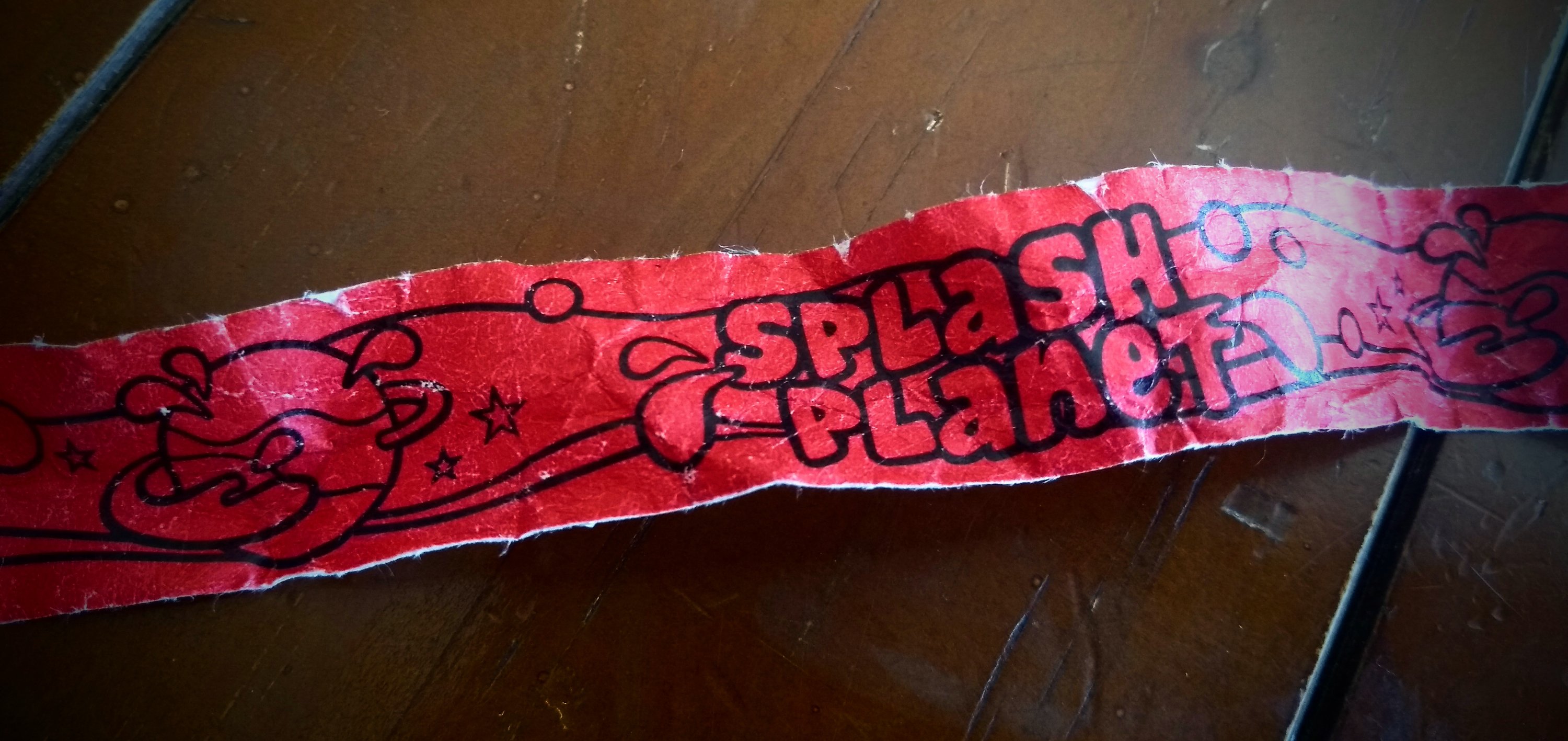
So I cut the red AAC wristband, straightened my non-existent tie, and walked off on damp pavements to catch my bus.

When I wrote it, the wristband still encircled my radius, bright and crumpled. I didn’t think it mattered whether or not the words were true; they evoked letting go, a holiday beginning its transition from vivid recency into hazy past. I felt that the inclusion of an absent tie signalled my awareness of whatever lies I allowed into my account. I wondered whether the words written down here would eventually become truth in my memory.

But what actually happened ended up being more interesting than the lie.

The last big activity of this year’s summer holiday with the kids was a trip to Splash Planet. It used to be called Fantasyland, a crumbling, community-built theme park famous for the train that ran around it and the smell of urine in the big castle. There were no water slides or pools with slow-filling buckets that saturate you if you time it right, or wrong.

I think I was about five or six when we went as a family in my own childhood. I recall some bright colours and the thrilling, uncontrolled motion felt by a small child going down a large slide. Above all, I recall the joy of riding that train, possibly with a grudging (though smiling) parent or older brother on child-minding duty.

For months afterwards, possibly years, I would counter any mention of Rainbow’s End with the superiority of Fantasyland. Have you been to Rainbow’s End? they would say. No, but I have been to Fantasyland, which is AWESOME. None of my friends had, so I had the pleasure of smug exclusivity and their complete indifference, because nobody cares if they haven’t been themselves. It’s not so different when you tell fellow thirty-something friends about your travels to the backwaters of Alappuzha or the beaches of Asturias and Cantabria. They’re mildly pleased for you, but they will quickly move on to the boats of the Bosphorus or the golden sands of Bali.

You move around the world and colour in the parts you see. You flood your senses and your mind and try, sometimes desperately, to commit them to your memory. But you can never hold onto them as they were, because your memory is fallible and the world’s constant physical change is undeniable.

When I visited Christchurch at the height of its post-earthquake demolition in 2012, my brain couldn’t make sense of the absence of buildings I used to take for granted. They existed in my memory but were in the process of being crushed, snuffed out, by reality.

A drive past the Tokoroa house in which I grew up was even more disorienting, with the big filbert trees replaced by a high wooden fence. The current residents scowled at me as I drove away. In this case, I could maintain a strong image of the past because it was so familiar to me as a kid, but I’ll bet nobody outside my family can call it up if required. And it was impossible to lay that image over the shocking disparity in front of me.

And that image is also likely to be wrong in some way. We know this from study after study: the brain misremembers. Its truth is mine, and mine alone.

To my surprise, many of the elements that made Fantasyland so memorable for little me were intact. Large slides, though more dilapidated than before. The tiny town. (Or am I inserting that into my memories?) The train.

I had no sense of the physical details and how they had or hadn’t changed. I couldn’t tell you whether the grassy parklands were laid out as before, or whether the train followed the same path around the castle. But I knew this was the place I had been to and loved all those years ago. I felt a child’s uncomplicated delight at being there again. For me, it was easily the highlight of the trip.

Tara cut her wristband off before going to sleep that same day. I kept mine on, not just overnight but for days afterward, even through an entire workday. I liked the way it reminded me of the feeling of being at Splash Planet the way a watch used to remind you of time passing. I liked the way it peeked out garishly from under my cuff.

I also liked showing it to colleagues when they asked how my holiday was. Fortunately, there was nearly always a connection, because so many people have been to Fantasyland and Splash Planet over the years.

That night, we discovered our chest freezer had been switched off for days. Possibly by us, in our harried and sleep-deprived state, or possibly by a vendor who carried out some work on our house while we were gone.

Point is, hundreds of dollars and dozens of kitchen hours’ worth of uncooked meat and home-cooked meals — perfect for, say, a mandatory 14-day self-isolation period — had to be thrown out. I stacked thawed containers of dinner saw on top of the oven and carted them in batches of five to a dark corner of the back yard, where I hiffed their contents onto the lawn. A feast for neighbourhood cats.

After I’d washed out all the containers and left them to dry, I collapsed onto the couch next to Tara, who had buried herself exhausted and grieving in a puzzle. I felt the wristband tug at my skin so I looked at it. There was a small blob of refried beans on the palm side. Time to let this past go, too.

“The really good thing,” said Tara, sarcastic but sympathetic, “is the scissors are out in the shed.”

I stood and went to the laundry, where I spent a minute using a pair of garden shears to uselessly shave colour off the wristband.

Then I went to the kitchen and levered a blade under it. The circle was finally broken. Pop. Toot-toot. Wheeee.

I can still feel the bracelet. It’s like my brain wants it to be there. In twelve hours twenty-four hours forty-eight hours it’ll be gone for good, but in forty-eight days it (or its imperfect neurological echo) won’t be forgotten, because I wrote this.

Shayne P Carter

I finished reading Shayne Carter’s autobiography Dead People I Have Known (Victoria University Press). It’s an excellent book: reflective, honest, occasionally moving, occasionally funny. It also contains the best descriptions of music since AMADEUS.

I saw Carter perform one time, a Dimmer farewell gig at Bodega in 2012. Bodega is now closed, its central, eyeline-spoiling pillar a collective sigh in the memory of Wellington’s gig-going faithful.

From my vantage point at the extreme right of the room, I gripped the bar on which my beer bottle rested while Carter ripped through one face-melting, feedback-laden guitar solo after another. He seemed in a mood to indulge his fingers more than his voice that day, and that was fine with me. I barely remember him speaking, let alone singing.

What I do remember is his body doubled over in submission to his guitar. His fringe hung down over his sharp-featured face. His lips pursed out in a demonic grin. He must have spent half the gig in that pose.

“The facial expressions,” my friend and I agreed over a beer a few months later when the subject of Shayne Carter live came up. “The facial expressions.”

Years later, she would edit his book. And I would borrow the book from another friend, whose photos are in the book. Just so you know how small New Zealand is.

And I say again, it is an excellent book, worth reading even if you couldn’t name a single one of his songs. It’s almost as good as his facial expressions.

Cheezy Weezys

I was at Waikanae’s famous Fed Up Fast Foods fish ‘n’ chip shop with Stephen when I first encountered Cheezy Weezys.

I felt like they should have been advertised on an A4 printout in all-caps Arial Black, like all the other speciality items, but there they were on the big menu alongside hot dogs and spring rolls, as if they’d always been there.

We speculated as to what Cheezy Weezys might be. I suggested six or seven strips of mozzarella, battered and deep fried. Stephen proposed a scoop of chips with plasticky orange cheese squirted all over them from a bottle.

A subsequent image search proved Stephen right. Given they were called Cheezy Weezys, he was always going to be right.

But we didn’t order the Cheezy Weezys. I decided not to risk it, which is unlike me, because I usually try any old rubbish if it’s junky enough.

In the ensuing weeks, Cheezy Weezys seemed to be everywhere. I assure you, I’d never seen them on a fish ‘n’ chips menu before that rainy evening in Waikanae, and I’ve eaten a lot of fish ‘n’ chips. But there they were, again and again without fanfare, about $5.20 a pop.

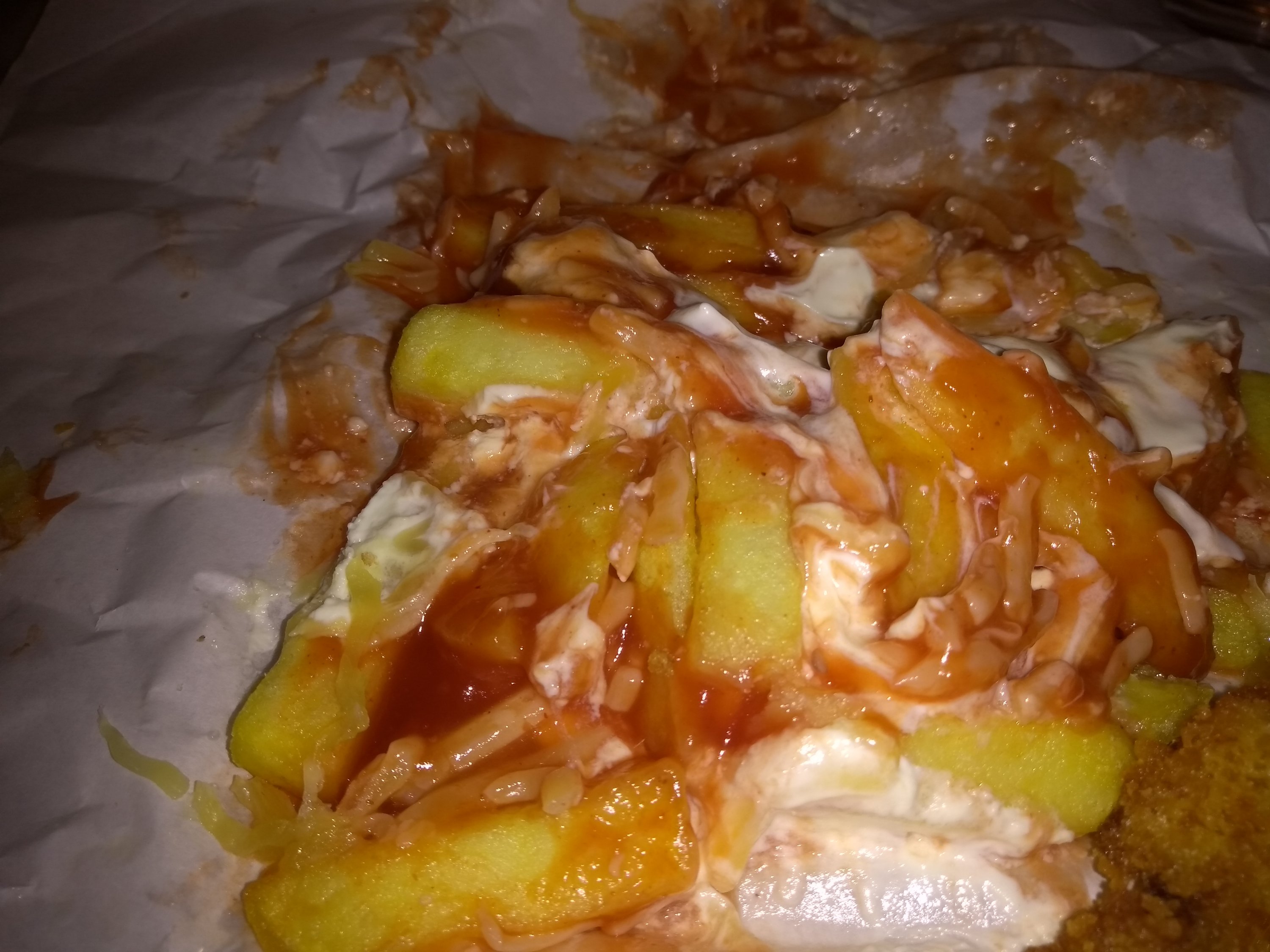
Last weekend, when we went away to Foxton Beach, I cracked. Not only did Mr Grumpy’s have Cheezy Weezys, they also had Curry Chips, Cheese and Gravy Chips, and Blood ‘n’ Guts Chips. I ummed and aahed and eventually decided on Blood ‘n’ Guts Chips.

This is what they handed over:

That’s a scoop of chips, tomato sauce, sour cream, and grated cheese from one of those ready packets with loads of de-caking powder at the bottom.

Needless to say, my fascination with novelty hot chips is cured.

The call bell

Ding goes the call bell.

I pressed the button fifteen minutes ago when Tara’s tramadol wore off, four hours since the previous dose. A big, angry wound in her abdomen is giving her acute pain. One of our twin infants dozes in my lap, the other in a cot. Tara lies in bed, brows knitted in pain and exhaustion.

It’s about 2am.

There’s a speaker right outside our room. Every couple of minutes, the call bell dings again.

We’re waiting on one of the two overnight duty midwives to come and assist us. After a few more dings, she arrives, and we ask for more pain relief. Of course, she says, and promptly leaves.

Another fifteen minutes pass. In one of the other two dozen rooms served by two midwives, someone else presses the call button. Ding.

Approximately thirty-five minutes after I initially hit the button, the midwife returns with the tramadol. Tara ingests it and waits for it to take effect. Eventually, after a full hour of agony, she gets some relief.

Ding goes the call bell, on through the night and day, summoning health professionals that don’t exist.

*

This is far from the most gruelling episode of our six-day hospital experience when the kids were born, but it’s one that stays with me. It’s symptomatic of a system that is desperately under-resourced.

You look back on times like that and think, well, we got through it. And people are more than willing to tell you it’s just something you have to get through. Some people, anyway.

But I’m sharing this tiny story today because a much worse case of maternity ward understaffing and negligence is being widely reported. A baby died after a labour and birth in which everything that could go wrong did go wrong. Individuals made mistakes but the system overall is accountable.

And if so many people are ringing the bell to say that the system is inadequately resourced, that midwives are constantly at breaking point, that having a baby outside business hours loads significant risk into an already risky process, that the trauma of their hospital birthing experience haunts them for years, why are we still talking? Is anyone listening?

Ding.

Louis Sergeant

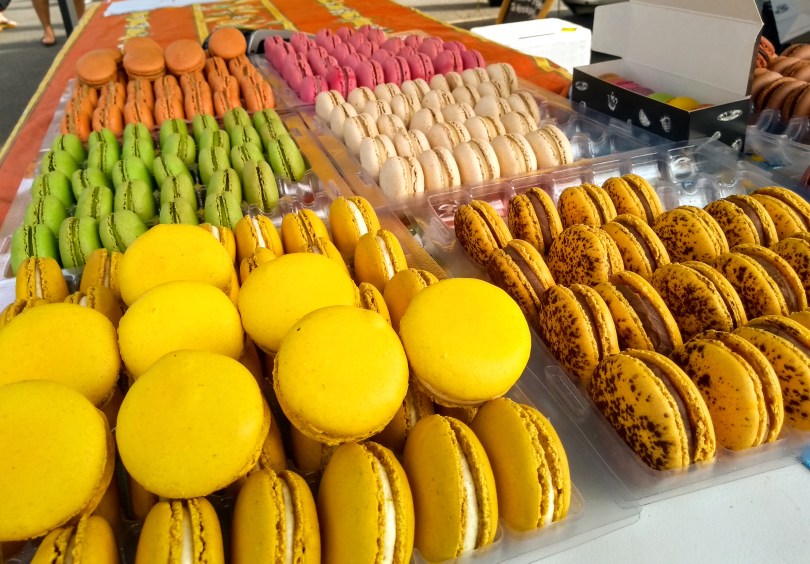
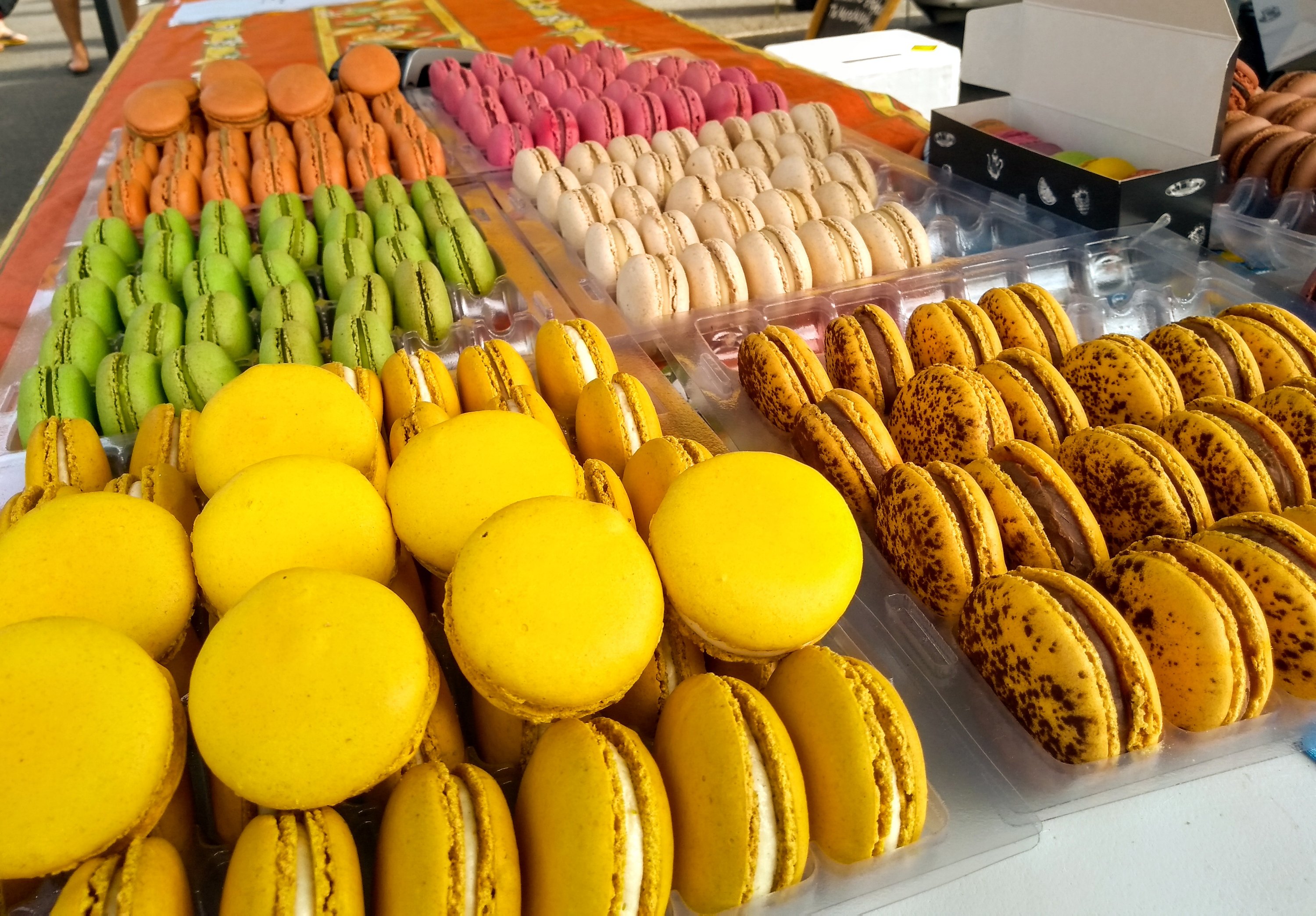
A variety of macarons in different flavours and colours

I saw Louis Sergeant at the vegetable market the other day. He was selling a variety of macarons, some croissants, some pains au chocolat.

Louis Sergeant used to have an inner-city patisserie where delicious dessert sculptures and pots of artisanal tea were conveyed to your table by bright-eyed women in black aprons. The cabinet presented at least a dozen options with shiny mousse spheres, gold flakes, and curved pieces of chocolate. I thought $14 was a rip-off until I tried one.

Then Louis Sergeant opened a second patisserie about two hundred metres away. They both closed within six months, and it seemed like that was that.

But here was Louis Sergeant himself, previously unglimpsed, peddling fine French pastries in a packed carpark alongside greengrocers from Levin.

“Got plans to open another shop soon?” I asked as he bagged a pastry.

“Yes,” he said, after some hesitation.

“My wife and I really miss your patisseries,” I said.

“Thank you,” he replied. “2019 was…” He grimaced and didn’t finish the sentence. I could only imagine the disastrous spreadsheets and red numbers flashing before his eyes.

“I hope 2020 is better,” I said.

“Yes, me too,” said Louis Sergeant.

War of the worlds

Pōhutukawa stamens collected in gutter by road

It’s been cool and damp in Wellington today. Cue a dozen overheard conversations in the office about it being a typical Wellington summer, i.e. over in a flash and barely there to begin with.

In reality, the sun has shone bright in blue skies recently and will shine again soon. But in order to belong, you must sign up to the mass delusion.

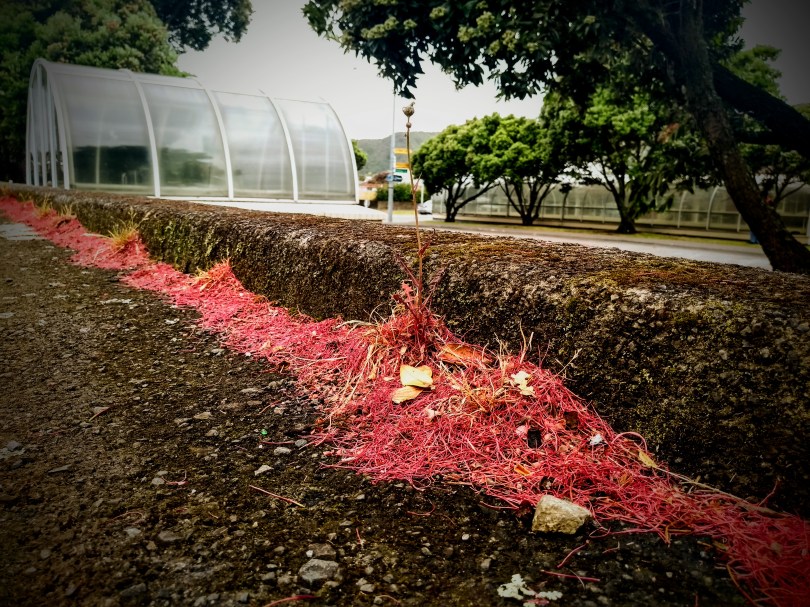
Christmas time is however ending. I know this because everywhere I go, I see millions of brilliant red pōhutukawa stamens collected in drifts on the footpath, like the spreading alien tendrils in War of the Worlds.

The pōhutukawa is also known as the New Zealand Christmas tree because of its vague resemblance to holly and its seasonal blossoms. When the flowers die, their crimson threads fall to the ground in clumps, the blood of Tawhaki under our feet. They’re beautiful and then they’re gone. They are our hair that has fallen out.

You can be sure they’ll be back next spring, though, until we’ve burned it all down — back from the underworld, leaping for the heavens, caught in flight on evergreen branches.

The power of the megaphone, the call to prayer

Flower tributes mosque Auckland New Zealand Christchurch shooting
Neighbours laying flowers at Imam Reza Mosque, New Lynn, Auckland the day after the massacre at Al Noor Mosque in Christchurch, New Zealand (Image by Nick Thompson)

Above all, the people we should listen to after a terrorist attack are the victims. So, before I get into my mediocre white man reckons relating to the March 15 mosque shootings in Christchurch, here are a few examples of Muslims having their voices aired in NZ’s media:

One Family’s Story of Survival and Loss in New Zealand (The Daily podcast, The New York Times)
We warned you. We begged. We pleaded. And now we demand accountability (The Spinoff)
The people we lost (Stuff.co.nz)
Hear their words: Muslim voices on the Christchurch attacks (The Spinoff)

Our media have done very well to boost these voices. It’s been exciting, and a little sobering in retrospect (why is this not normal), to suddenly have so much easily available to read and listen to from groups of people who lack power in our society. For me, it’s prompted a lot of thinking about the intersection of power and speech: who has power, and how do they wield it in their words and actions? Who should have our attention right now, and what are those that do have our attention using it to say?

The Prime Minister, Jacinda Ardern, has gained an enormous amount of national and international attention for her response to the shootings: not just the quick mobilisation of her government to outlaw the kinds of weapons used in the attack, but the uncommon sensitivity and caring she has shown to the victims. This constant examining of her actions has led to plenty of debate. For example, her wearing of a headscarf, which some insist is a symbol of oppression, has been a hot topic for both the white New Zealanders and the Hindu Indians on my Twitter timeline.

Whether or not you agree with how the Prime Minister has conducted herself, she is the most powerful person in the country and the figurehead of our grief. It’s therefore right that her response has been subjected to such scrutiny. I was uneasy about how she was centered in the days after the attacks, particularly in the mass sharing and printing of photos in which she hugged strangers and displayed emotion. It seemed to me that those images should be of victims’ families, or of Muslim adherents left shattered by the targeting of their community. But it’s complex: they didn’t sign up to be part of anything like this, or to be relentlessly photographed, or to play a central role in a crisis. The Prime Minister did, opting into the front pages in the best and worst of times. It’d be strange if she wasn’t there now.

And I got another perspective a few days after the attacks. A Muslim friend in India sent me a one-line email expressing sympathy, and attached four of the more widely shared images of the Prime Minister with her headscarf proudly in place. If her symbolic representation of everyone else’s love and support meant something to a Muslim on the other side of the world, that’s good enough for me.

At the very least, the Prime Minister seems to be aware of her effect on the social landscape. She has led with a view to consciously establishing new norms that are inclusive and hopeful. Get behind me, she seems to say, and we’ll make things better together. That’s more than can be said for various commentators in the American political media, who of course have had plenty to say about Christchurch. Ben Shapiro, who hosts a very popular conservative news podcast, uses up a fair amount of oxygen sharing his views on everything from universities as liberal indoctrination centres, climate change belief as religion, and the anti-Semitism of anyone who supports the idea of Palestininan statehood. Naturally, he was quick to comment on Christchurch, particularly to rebut the idea that white supremacist violence has anything to do with prominent critics of Islam such as himself, Bill Maher, Sam Harris, and indeed President Donald Trump.

Okay, but no. A cursory look at the repeated phrases used in comment threads and social media profiles – #MAGA and its derivatives, Trump Supporter, Not Politically Correct – reveal a collective that is very openly a collective. They just happen to speak the language of individualism. Pull yourself up by your bootstraps. It’s freedom of speech. Not my choice to get offended, buddy. Broader civic discourse has extended the reach of this type of language with phrases like ‘lone wolf’ – a phrase used often to describe the Christchurch attacker, who professed an admiration for Trump and Norwegian terrorist Anders Bering Breivik in his manifesto. The ideologues set the tone and establish communities, and every individual is then empowered to act alone against the Other. (You could say the exact same thing against fundamentalist Islam, which is to say that neither extremity lacks a coherent movement to back them up.)

But to Shapiro and his ilk, it is insane to suggest Trump’s forceful anti-immigrant and anti-Muslim views have anything to do with the Christchurch shooter, let alone any of Shapiro’s own diatribes about Muslim Congresswoman Ilhan Omar or Bill Maher’s panel discussions about the dangers of moderate Islam. Every event happens in isolation, in a Randian vacuum, caused only by the free will of the actors involved. It works the other way, too: if you want to stop climate change, give up meat and take the bus, never mind the staggering emissions from multinational corporates and the lack of political will to actually use power for change.

This is the thinking that dominates our society nowadays. The Christchurch massacre seems to have prompted a closer look at what we as individuals say and do, and how we can collectively mitigate the threat of extremism. If only the likes of Shapiro – and hey, Trump, as if that would ever happen – were able to reflect on the communities they have created; how their words are transformed from mere opinions into calls to action when expressed from a megaphone. That’s the kind of individual responsibility we need right now. And there’s a model for it in Jacinda Ardern.

Sign up for my monthly email newsletter here. Yeah, I know…