Music, An Anchor for Memory

Right now I’m listening to ‘Province’ by TV on the Radio and it’s hot and humid, but the feeling inside and around my body is bitterly cold. The sounds of music and exploding crackers are pretty much constant outside from the three separate temple festivals going on near my house in this little tourist town in rural India, but through these headphones, the song takes me back to an inner silence deeper than most I’ve known.

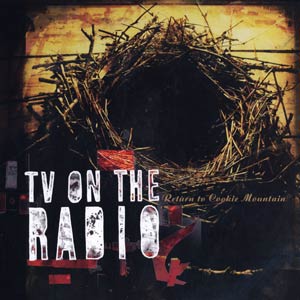
Return to Cookie Mountain, TV on the Radio’s second album, came out in 2006 and I bought it the same weekend it was released. It was the middle of winter and I was living in Christchurch – yeah, that place that got hit by a big earthquake a month ago, but not as big as the one in Japan, but still pretty big.

I was living in the centre of town, in a building which apparently no longer exists, and working just a few minutes away next to the city’s main landmark: Christchurch Cathedral, and its Cathedral Square. I walked that 750 metres to work and back hundreds of times over a year and a half living in that flat, and while the brilliant blue skies and pleasant, dry and warm summers were wonderful, I’ll always remember Christchurch for its winter.
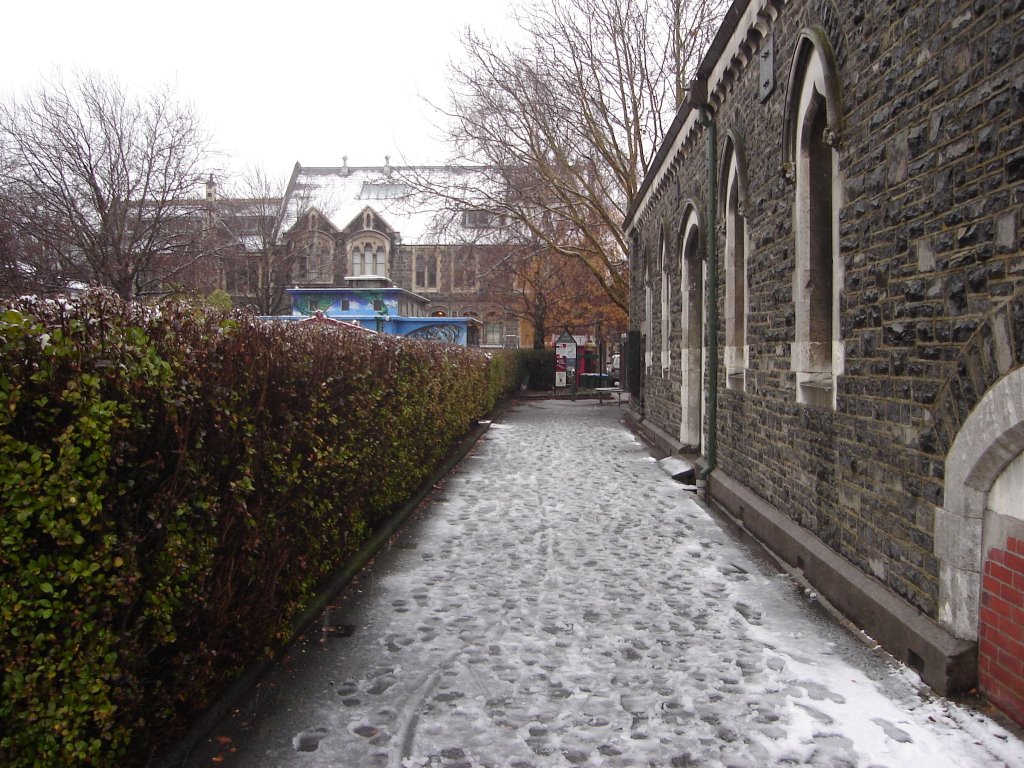
Christchurch winters aren’t desperately cold by global standards, hitting probably -5°C most nights in the July that Return to Cookie Mountain came out. This was cold enough for me, though, having grown up in the warmer North island, but luckily there was a trade-off: of the hundred bone-chilling nights of each year, one (or maybe two if we were very lucky) would be covered with real snow.

To warm that chill in my bones in the evenings, I’d take my CD player and listen to something as I walked. The walk to work was only a song’s worth, or half a song if I was listening to Orbital, and while I sometimes had my earphones in as I walked in the door of the souvenir shop I worked at, I usually felt like I was being a bit gratuitous. I mean, how hard could it be to walk five minutes without a personal soundtrack to occupy me, to handle the world outside my home without cutting out its sounds and replacing them with something which seemed more like part of me?

The walk to the video shop, however, was different. I would go to Alice in Videoland every Thursday evening to drop off last week’s rentals and pick up new ones. Wednesday and Thursday were my days off back then, my weekend, and I could hardly think of a better way to spend an hour than browsing the shelves at Alice’s. And being a full fifteen minutes away, I could fit in three songs, making the CD player a much more reasonable option – and for a good month or so, those three songs were the first three tracks of Return to Cookie Mountain.
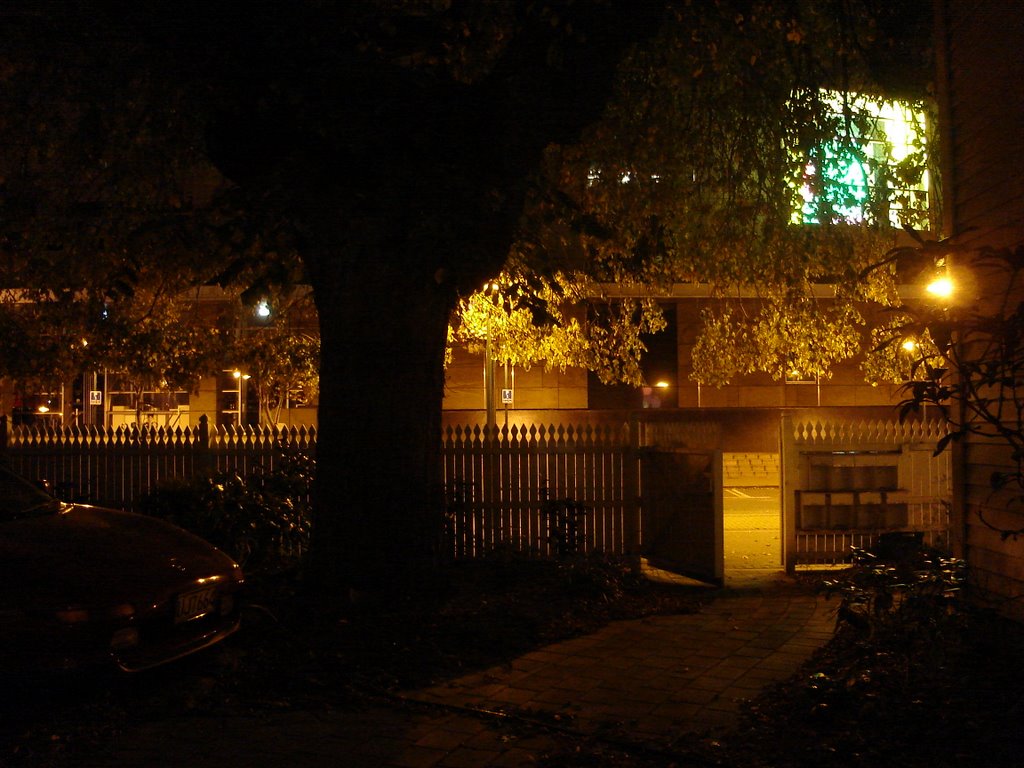
I’d throw on my long black jacket, shove the CD player in the inside pocket, lock the flat behind me and press play as I got out into the street. Shuffling my gangly, poorly conditioned limbs along those gold-tinged, immaculately paved streets with TV on the Radio in my ears was pretty much perfect. I’d go into and through a near-empty Cathedral Square and as I came out the other side to cross Colombo St; a gust of icy wind from the Port Hills would throw my hair up and cool my face, and I’d wrap the front of my coat closed to ward off the cold.

Right about then, Province would start up. And I’d listen to it, Adebimpe, Malone and Bowie wailing about love in harmony as I walked on down High St Mall and then High St, past that cafe (whose name I’ve forgotten) I ate at with Ed and Rach, past Helen’s design studio, the song closing out just as I stepped off the street and into Alice’s – ah, heaters – the new releases there, as always, to greet me.

And I never forgot that feeling, somehow, without ever thinking about it. The music gave me an anchor on which to hang the cold, the coat, the flat and the paving stones, the cathedral and Alice’s, all those feelings enveloped by the sounds in my ears. On those 15-minute walks, ‘Province’ took on its own private meaning for me, one which I didn’t realise at the time: it would be the song that took me back to a certain time in my life, a particular feeling, the subtly indescribable emotion and physicality of it.

It’s simple, really. The memory is stronger than the song, but as an element of my life which remains constant however far I get from the memory, the song is what brings it all back. That’s to say, I can listen to ‘Province’ today in my hot house in India and it will still be the same ‘Province’ as it was four and a half years ago on the cold, dry, clean streets of Christchurch. The memories, dormant in this magnificent organ called a brain, come flooding back as clear as ever when I hear those simple chord progressions struck firmly on the piano.

It isn’t classical conditioning, but I’m sure there was something I concurrently studied in psychology classes that matches up. I see songs like ‘Province’ as an anchor on which I hang my memories, and it may have only been a flash of a millisecond back in 2006 where I felt the music, the cold, the city and everything else that stayed with me, but sometimes that’s enough to bring it all together and cohere into a memory that stays with you for the rest of your life.

Now, tell me your musical anchors.

(My brother wrote about this ages ago, so check out his post too. I give him the credit for getting the idea out first and for being an inspirational older brother who inadvertently plants ideas in my head.)

Imprints: 127 Hours / Cee-Lo Green / Phoenix / CocoRosie

127 Hours (2010, dir. Danny Boyle): Another work of style with just enough substance from Boyle. You probably know by now that it’s a true story about a dude who gets his arm trapped under a rock in a remote canyon, and is faced with a horrible choice. James Franco is good, the film is decent and certainly uplifting, but I’d class it as merely an above-average time-passer. (W) Worth a Look.

Cee-Lo Green – The Lady Killer (2010): Could never live up to my expectations after seeing one of the greatest videos of the years, which features his ‘Fuck You’ to delightful effect, but this is a listenable combination of throwback to Motown-era charm and Gnarls Barkley-ish chopped-clean production. Bright Lights, Bigger City is the best walking or driving song in a while. (W) Worth a Look.

Phoenix – Wolfgang Amadeus Phoenix (2009): I’m still so enraptured at the way track 4, ‘Love Like A Sunset’, was used in Somewhere that when I try to listen to this album, I can barely get past it without hitting repeat. OK, the other songs are good, some of them very good, and I really like this album, and you should listen to it. ‘Love Like A Sunset’ is just ridiculously epic. (R) Recommended.

CocoRosie – La maison de mon rêve (2004): First heard of CocoRosie when they performed the best song of the 00s live with Quinn Walker, but only picked up on their debut album lately – it’s really good, discordant at first glance but quickly altering the way I interact with the world around me. The use of a Godzilla toy’s roar on opener Terrible Angels is a perfect example of their experimental, carefree sound. Don’t know what the rest of their output is like but if it’s the same feeling with better production values, sign me up. (R) Recommended.

Imprints: Yi Yi (A One And A Two) / Robyn / Kylesa

Yi Yi (A One And A Two) (1999, dir. Edward Yang): Brilliant, meditative work about a modern Taiwanese family, their lives and loves, their work and their (almost total lack of) play. Each member of the family signifies a different time of life, from the 8-year-old boy to the 80-something grandmother. The boy’s speech at the end is extraordinary, perhaps worth watching again and again. (H) Highly recommended.

Robyn – Body Talk: this is the collected, 15-track final album released a couple of months ago, not any of the 8-track mini-albums released earlier. And it’s pretty good. Quite reminiscent of Madonna’s Confessions On A Dance Floor, but with plenty more sass and attitude. It isn’t as memorable as Madge’s effort was, which is one of my favourite dancepop albums, but Body Talk is solid and has enough catchy hooks to keep you coming back a few times. None Of Dem is probably the highlight – thanks Rua for showing it to me first on ye Beates Reality. (W) Worth a look.

Kylesa – Spiral Shadow: I first listened to this while ‘playing’ the hilarious ‘game’ Progress Quest, and it fit the mood perfectly. It’s sludgy and a little doomy at times, but a perfect foray for a non-metaller like me into the genre as the prettier and more hopeful aspects help me to stick with it. It isn’t a sticky mass of distorted guitar, either; it has distinct and memorable tracks. Still haven’t figured out exactly what they’re saying, but I like it. (R) Recommended.

Imprints: ‘Paprika’; Amy Winehouse, ‘Back to Black’

Paprika (2006, dir. Satoshi Kon): This fine director’s last film as usual demonstrates his metaphysical insights, this time on the nature of dreams and reality, and uses the potential of animation to create art that really wouldn’t be possible in any other medium. Vastly superior to that other dreams-within-dreams movie that came out earlier this year, give this a chance and be prepared to just go along with the ride… understanding everything isn’t absolutely crucial. Recommended.

Amy Winehouse – Back to Black: I don’t know exactly why I never gave this a go before; probably my distrust of anything too popular. Well, it’s tragic, artful, beguiling and flat-out incredible. Her songwriting is raw but very poetic, and she has this incredibly captivating swagger and charisma. There are a couple of more filler-ish tracks, but they’re still good, and the highlights – like ‘Rehab’, ‘You Know I’m No Good’ and ‘Love Is A Losing Game’ – just have me sitting and shaking my head in astonishment. Jools Holland said she has one of the best voices of anyone of all time, and he knows what he’s talking about. Essential.

Tracks I never tire of: ‘These Words’

‘These Words’, by Natasha Bedingfield, 2004, from the album Unwritten


I was 19 when ‘These Words’ came out and dominated C4 and commercial radio for a few weeks. It had a catchy up-tempo beat, great lyrics (about struggling with writer’s block in the studio), Bedingfield’s strong and passionate voice and a classic video. All these helped me to love it, but what makes me never tire of it is the memory of one of the funniest, and most embarrassing, episodes in my life.

My good mate Tommy and I were on our way out to Taylors Mistake, a beach/peninsula just outside of Christchurch, to go fishing. He had picked me up around midday in his car and, with the summer sun high in a cloudless sky, we wound the windows all the way down and turned the radio up to full volume. The Rasmus – ‘In The Shadows’. Usher – ‘Yeah’. OutKast – ‘Roses’. It was going to be a great day.

Then ‘These Words’ came on. Perhaps it was the heat, but we went a little crazy – not merely singing along, but singing along to each other, gesticulating and grinning widely as we pulled up to an intersection on Moorhouse Drive. With the car idling, we put everything we had into our performance, our voices striving to reach Natasha’s high pitch. The world around us dissolved as we lost ourselves in it.

Halfway through the chorus, as our voices reached a crescendo, I noticed that a car had pulled up next to us. I froze. Then Tommy looked, and he froze. It was FILLED with hot girls – five of them, all staring at us in disbelief… and laughing uproariously.

For those that don’t know the lyrics to ‘These Words’, the chorus – which we were singing at full volume, as we looked into each other’s eyes, when the girls pulled up – goes like this:

These words are my own, from my heart flow
I love you I love you I love you I love you
There’s no other way to better say
I love you
I love you

Of course we stopped singing. Then, after a few seconds of begging the lights to change, now, please now, we started laughing too. And every time I’ve heard the song since, I’ve remembered that moment of sheer panic, followed by the realisation of how hilarious and absurd we must have looked.

Tommy and I never saw those girls again, but we’ll always have ‘These Words’.

View the music video and hear the song by clicking here. Thank you, Tommy, for being a good sport and allowing me to announce this to the world.

Imprints: Four Lions; Erykah Badu & dan le sac vs Scroobius Pip

Four Lions (dir. Chris Morris, 2010): I have never seen a film like this before. It feels like an entirely new kind of satire – very smart, provocative, and extremely funny. Hard to see me finding any better new films than this before the year’s out. Somewhere between highly recommended and essential.

Erykah Badu – Worldwide Underground: Saw the Badu light when I watched Dave Chappelle’s Block Party, and this is a fantastic (if somewhat poorly sequenced) album. She’s like a superhuman, so otherworldly. ‘I Want You’ is a phenomenal track, and Lenny Kravitz’s guitar at the end is RAD. Recommended.

dan le sac vs Scroobius Pip – Logic of Chance: Another solid offering from this beats merchant/spoken word duo. It’s not as good overall as their previous Angles, but it has I think their best track so far in ‘Five Minutes’, and definitely their most catchy – and probably the most enjoyable three minutes of pop all year – in ‘Cauliflower’.

Imprints: ‘A Prairie Home Companion’, LCD Soundsystem – ‘This Is Happening’

A Prairie Home Companion (Robert Altman, 2005): Altman’s final film, about the end of a famous radio show. Light and breezy but with an emotionally resonant core. Wonderful performances from an all-star ensemble cast. Death, or at least ending, casts its shadow over every scene – sometimes literally. Recommended.

LCD Soundsystem – This Is Happening: ‘Dance Yrself Clean’ kicks things off in memorable LCD style – maybe James Murphy’s best lyrics yet – but then oscillates between the sublime and the ridiculous, much like ‘Sound of Silver’ did, but more frequently and with deeper troughs. If ‘Dance Yrself Clean’ is a career highlight, ‘Pow Pow’ is a never-to-be-forgotten embarrassment. Worth a look.

The 00s: Music – 1

Well, you knew it was coming.

1. RadioheadKid A (Parlophone/Capitol)

You can read reams upon reams elsewhere about the qualitative aspects of Kid A and what exactly makes it the best album of the 00s, not to mention one of the most widely acclaimed works of music history, so I’m going to cut all that out and just tell my own story about it.

When I was 15, I spent a week of my August school holidays staying with my brother Ed.  While he and girlfriend Rach were at work, I whiled away solitary hours on the couch watching the Sydney Olympics, playing Driver on PlayStation and listening to the former student, newly commercial radio station uFM.  (And, yes, getting up at 11 in the morning if I was lucky. If you can’t be a horrible layabout when you’re 15, when can you?)  uFM had gotten their hands on a promo copy of Kid A and played about five or six tracks from it each day of the week.   Now, I couldn’t say it was love at first listen, but I was intrigued.   I knew it was a new kind of music for me; there was something intrinsic about it that reached out to the listener, but through the limited scope of commercial radio, I couldn’t put my finger on what it was.

A few months later I put Kid A at the top of my birthday list, not really expecting it to change my life, but definitely wanting to experience it again.  Naturally, Ed bought it for me.  For the following month the disc shuttled back and forth between my home CD player and my Discman, the sounds living in my head whenever I wasn’t listening to it.  ‘Idioteque’ stuck out as an early favourite, but the more ambient tracks – ‘Everything In Its Right Place’, ‘Treefingers, ‘Motion Picture Soundtrack’ – moved me in a way I still couldn’t articulate.  In any case, I swiftly decided as only a teenager can that this was the Best Album Of All Time and I would never, ever get sick of it.

Over the following couple of years, particularly after a wonderful New Year with my brothers and their spouses at Lake Ohakuri, I took it everywhere with me.   I’m not just saying that.  I really did.   I even made a point to listen to it on every car or bus journey leaving or returning to Auckland, where I lived, and every time it offered up some grand realisation or small detail that I hadn’t understood or noticed before.  Those ambient tracks now emerged and revealed themselves fully along with the rest of the album, and over time I felt like I could see, feel and accept ideas about our world that had never even remotely occurred to me before.

I left home, to go to university and then to work.  Kid A came with me in its now tattered case.  I discovered and embraced other Great Albums but always held Kid A above them all, the album that really got me into music, the album that I loved the most.  Every phase of doubt about it – ‘maybe it isn’t actually that amazing after all’ – was struck down as soon as I listened to it again.  With each passing year it became ever more a part of my soul and my being on this Earth, and so it remains today.

Radiohead have released other albums, and I have doubted them and been schooled each time.  But my teenage self turned out to be right: nothing will ever beat Kid A.   It is to me what I understand The Piper at the Gates of Dawn is to my dad – though he will surely expand on that – and Ziggy Stardust is to my mum: a unique relationship with a musical work that impacts you so strongly during your formative years that it never leaves you, or more accurately, you never leave it.  What’s yours?
Most representative track: ‘Optimistic’
My favourite: ‘Everything In Its Right Place’

The 00s: Music – 5-2

5. TV on the RadioReturn to Cookie Mountain (4AD/Interscope)

Indie as a genre ceased in the 00s to mean simply ‘independent’, and took on more of a ‘wet, hipster douches trying to sound plaintive and postmodern to mask the vapidity of their music’ connotation.  Thankfully, TV on the Radio were present to reclaim some of the ground lost by actually using their indieness to push the musical envelope as far as they could.  After one outstanding EP and one inspiring debut album, they delivered Return to Cookie Mountain, one of the more ambitious records ever released by a band that’s just about to make it.  It starts with ‘I Was A Lover’, a disorienting cluster of broken horn and guitar samples over a synth beat, and continues to challenge the listener’s expectations in basically every track on the album.  Through it all, twin frontmen Tunde Adebimpe and Kyp Malone are electrifying, their distinctive and pushed-to-the-limit voices giving extra power to their deep and artful lyrics.  This was an album that was brilliant in ways I never expected it to be, seemingly designed to be hard to pick up.  I think the message TV on the Radio sent in the 00s, on this and their similarly essential other two albums, was that the music world needed a shake-up and that they were the ones who would do it.  Their attitude as thinkers/innovators who don’t mind the odd ‘fuck you’ to the establishment suggests that they might never make a weak album.  They shook me all right, quickly working their way into my thoughts and memories, and I’ll never be the same again.
Most representative track: ‘Wolf Like Me’
My favourite: ‘I Was A Lover’

4. Junior BoysSo This Is Goodbye (Domino)

I came to love So This Is Goodbye when I was the sickest I’ve ever been in my life.  It was the beginning of 2007, and I’d just secured a job in Japan and scored a goal from the halfway line in futsal.  The resulting elation and exhaustion brought on a 40°C fever, which rendered me stricken by hallucinations and unable to focus on a screen or page long enough to browse the net, watch movies or read a book.  Fortunately, I’d just discovered this emotional and precise Junior Boys album, downbeat enough to keep me grounded but with the requisite mechanics and care in arrangement to help maintain a pulse.  There wasn’t a single dud, so I could chuck it on repeat and let it run for the day, discovering new intricacies and rediscovering favourite moments from my stupor.  I suspect everyone who loves this album remembers in detail the time and circumstances during which they first experienced it, infused as it is with such wistfulness, nostalgia and clarity.  It’s a breakup album, so many of them will link it one of their own failed relationships; I can’t tell you about that, though I would love to hear from them.  From the subtle, hinting lyrics of ‘Double Shadow’ to the haunting sparseness of ‘FM’, this album is meticulously dealt and exceedingly tight despite its fragile appearance.
Most representative track: ‘The Equalizer’
My favourite: ‘FM’

3. Girl TalkFeed The Animals (Illegal Art)

Is Girl Talk the music of the 00s?  Night Ripper was the moment at which everyone stood up and took notice of mashups as a viable contender for becoming a consistent presence on the airwaves, but for me, Feed The Animals represented a refinement and deepening of Gregg Gillis’ aesthetic and the apex of his output thus far.  I read in an interview that people at his shows are no longer getting excited at hearing Lil Wayne rap ‘Lollipop’ over ‘Under the Bridge’, instead jumping higher and whooping louder for the fact that it’s one of ‘his’ songs – that is, the audience know his work and are more energised by it than the artists he samples.  I couldn’t imagine a clearer statement of acceptance.  What Gillis does is more than just playing around with sounds that connect in a cool-sounding way, though; a lot of the connections are inspired pieces of pop culture commentary, like opening with a link between The Spencer Davis Group’s ‘Gimme Some Lovin’’ and UGK’s ‘International Player’s Anthem’.  That’s getting pretty nerdy, though, and for me, after the balls-out wow factor of Night Ripper, the Girl Talk sound developed such a stronger emotional core with Feed The Animals, extracting every drop of feeling out of hundreds of songs that seem corny and passé when listened to on their own.  He’s said he won’t be doing any more album-length megamixes like this, instead focusing on creating discrete tracks, and as far as I’m concerned, he can do whatever he wants – I’ll still be first in line on release day.
Most representative track: ‘Shut the Club Down’
My favourite: ‘Give Me A Beat’

2. BurialUntrue (Hyperdub)

The moulded and beaten vocal samples of Burial’s music suggest a voice crying out from the darkness, leaving echoes of moments in time – maybe in the past, maybe in the future.  The words are usually imperceptible, but occasionally there’s a moment of clarity – such as during ‘Shell of Light’, on which “I wasn’t sure if we could be friends” loops over and over.  Your own optimistic or pessimistic nature may inform what you take from that, and what you hear in the fainter samples, but taken at face value these vocals sum up Burial’s uncertain aesthetic.  Even when cutting together an album as consistent and musically grounded as Untrue, he never quite seems at ease.  It’s like he’s constantly switching from looking over his shoulder to see what he’s left behind (or maybe what’s chasing him), and casting his eye as far in front of him as possible, willing something tangible out of the haze.  That said, if that’s the case, he acts as a powerful and skilled creator.  New elements seem plucked from the earth’s soil as he conjures each track and allowed to develop organically into something that just… works.  I mentioned texture(s) when writing about Dan Deacon and Four Tet earlier, and if that word is synonymous with the sounds produced by the most forward-thinking musicians of the day, Burial sits squarely at the top of the pile.  Untrue, only his second album, is his groundwork for a new generation of innovators.
Most representative track: ‘Archangel’
My favourite: ‘Raver’

For the big #1, click here.

The 00s: Music – 10-6

10. Kanye WestLate Registration (Roc-A-Fella, Island Def Jam)

When it comes to Kanye West’s second album, it’s really not worth keeping in mind that Kanye is an arrogant, hubristic, selfish egomaniac who crashes music video award shows and writes ludicrous blogs about his creativity.  Admittedly, Late Registration does look from every angle like a representation of its creator’s psyche: 21 tracks across 70 minutes encompassing overarching themes of the Black Man’s Struggle and selected pivotal events from his own life, all tied together with as much bombast and daring as he can cram in.  However, he wastes no time planting his foot down on ‘Heard ‘Em Say’ and setting off a musical odyssey that never feels bloated or wasteful.  The man will inevitably eat himself before he ever gets truly comfortable – indeed, he might only be comfortable when he is Lord and Master of the Universe, as well as Most Appreciated and Recognised Hip Hop Artiste – but Late Registration, along with two other very good albums, shows that he is at the forefront of popular music trends for a reason and cannot be ignored by anyone.  There is one fact that definitely is worth keeping in mind: this album is as much Jon Brion’s masterwork as it is Kanye’s, their partnership one of the more surprising and successful collaborations of the 00s.
Most representative track: ‘Heard ‘Em Say’
My favourite: ‘Gone’

9. Dan DeaconBromst (Carpark)

If some music is described as being a ‘wall of sound’, Dan Deacon brings to mind a hose of sound spraying with gleeful abandon. With Bromst he naturalised his sound from Spiderman of the Rings with real drums and guitars, but rather than just being an improvement in production values, this led to the hinted-at emotional core of his first major release being elucidated more clearly and openly. It takes a few listens to get past the shock value of having so many layers seemingly trying to out-do one another, but once you do, Bromst reveals several potential levels of appreciation: the story of a ghost wandering away from home, a collection of richly textured compositions, elements of shoegaze/techno/ambient, and some of the most pure enjoyment and fun you can have listening to a record. The chord progressions and song formulas may not be that variable, but the heady mixture of maths and chaos wins out. Not for everyone, but those who like it will love it.
Most representative track: ‘Woof Woof’… or maybe ‘Snookered’
My favourite: ‘Get Older’

8. The StreetsA Grand Don’t Come For Free (Vice/Atlantic)

In-between a glorious debut and a disappointing announcement of redundancy, Mike Skinner mined pure gold.  On those first two albums, I see him as the Ray Davies of the 00s: a quintessentially British-sounding recording artist who, in narrowing his lyrical scope to focus on exactly what he knows, spoke to the hearts of fans worldwide.  A Grand Don’t Come For Free isn’t as simple as a guy churning out a set of quality down-home rhymes, though.  The sharp focus of Original Pirate Material is refined further into a complete story spanning the album, a conceit that often feels beyond the range – or limited by the ego – of the musician in question, but Skinner stays true to his art and to the listener.  From those opening horns, you’re hooked.  Each song works perfectly well on its own and as part of the story, so you can dip in if you must (though it’s hard not to listen from start to finish).  And let’s not forget how vivid his lyrics are, wall-to-wall empty cans taking on a sort of timeless quality.  I lost interest after the grievous disappointment of The Hardest Way To Make An Easy Living, but for this opus The Streets will always be a part of my life.
Most representative track: ‘It Was Supposed To Be So Easy’
My favourite: ‘Empty Cans’

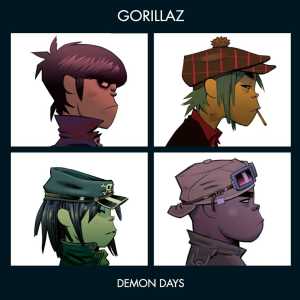
7. GorillazDemon Days (Parlophone/Virgin)

This was my favourite of 2005, and nearly five years on, few other albums of the 00s are as versatile – you can throw it on for a dinner party, a party party, if you’re working or even if you’re having a ‘big talk’ with your significant other.  It’s comfortable but deep, danceable but mellow.  It gives you space but seethes with agitation.  It is of course the brainchild of Damon Albarn, his most successful and probably lasting creation, with help from producer genius Danger Mouse (The Grey Album, Gnarls Barkley).  I still remember how surprised I was on about the fourth of fifth listen after getting it, because Albarn’s debut of this ‘group’ four years earlier was interesting enough but hardly earth-shattering.  I liked this even less at first, too, then Albarn’s lyrics and Danger Mouse’s little touches in production started to worm their way into my brain, and I started listening to it several times in a row every day.  Though the music drifts along without ever pushing you to take notice of it (you will, eventually) Albarn seems incapable of making a record without Saying Something Important, and while having a gospel choir sing “These demon days are so cold inside, it’s so hard for a good soul to survive” might seem pretty hokey and cheesily earnest – ok, it totally is – it’s hard not to love the fact that Albarn desperately wants the listener just to stop coasting for a minute and think.  We cannot have too many artists taking life seriously in these uncertain times.
Most representative track: ‘Feel Good Inc.’
My favourite: ‘Demon Days’

6. M.I.A. – Kala (XL)

M.I.A.’s first album Arular took a couple of goes round for me to take to it, but with Kala, I felt like the kind of music I’d imagined for years in my head had finally synched up with music that actually existed.  It drives and pounds, all hips and fire, with her worldly and socially conscious lyrics scattered loosely over the top.  In fact, where a good number of the other albums on this list – particularly those I’ve put up here in the top end – are meticulously crafted with hardly a drumbeat out of place, Kala is freeform and sometimes barely seems to hold together.  I still remember when I saw her perform in Japan, where her haphazard button smashing on the DJ panel put about 50 extra gunshots in ‘Paper Planes’.  What does keep Kala from imploding under its own pressure, then?  Well, M.I.A. is such a committed artist that it’s the force of her personality as much as anything.  Read any interview: you’ll see that she puts up with absolutely no bullshit and has no problem badmouthing anyone she sees failing to keep it real, or anything that she perceives to be a danger to society (naturally, she’s on pretty much every flying alerts anti-terror list).  I in turn see her as a powerful force for global good, the spokesperson for the growing legions of folks who are mad as hell and not going to take it anymore.  A third album will drop in a few months, and the movement will continue.
Most representative track: ‘Paper Planes’ (please, PLEASE ignore the Slumdog connection)
My favourite: ‘Bamboo Banga’

For the next part, click here.